Gratis gids 10 verborgen natuurplekken in Europa
Gratis gids 10 verborgen natuurplekken in Europa. Meld je aan voor onze nieuwsbrief en ontvang inspirerende reistips en routes voor je volgende groene reis.

Emilia-Romagna is the culinary heart of Italy. Parmesan cheese, prosciutto di Parma, mortadella, ragù alla bolognese: hard to ignore. But if you drive from Bologna into the Apennines, you’ll find yourself in a completely different region: green, quiet, surprisingly wild, and virtually unknown to foreign travelers.
The most beautiful way to connect these two worlds is on foot. The Via degli Dei, the Path of the Gods, starts at Piazza Maggiore in Bologna and ends, after nearly 120 kilometers, at Piazza della Signoria in Florence. Along the way, you’ll pass through deserted mountain passes, ancient beech forests, and mountain villages where lunch takes its time because no one’s in a hurry. Seven days of walking, followed by pasta and local wine in the evening. That’s how Emilia-Romagna works.
Nature Travel Lab selects accommodations and hiking trails in Emilia-Romagna that can be booked directly with the owner or a local specialist.
Choose your favorite region and discover our tips for the best small-scale Nature stays with a sustainable focus. You book directly with the owner, so you are guaranteed the lowest price.
Using these sustainability icons, you can easily see in what area an overnight stay is active with its sustainability policy.


sustainable/local construction

organic/local cuisine

family/local runned/social projects

Sauna/yoga/wellness/treatments

Environment/recycling
Choose your region

Sicily
Tuscany
Valle d’Aosta
Piedmont
Basilicata
Puglia
Campania
Veneto
Lombardy
Lombardy
Lake Garda
South Tyrol
Sardinia
Emilia-Romagna
Umbria
Le Marche
Trentino
Abruzzo
Liguria
Friuli-Venezia-Giulia
Lazio
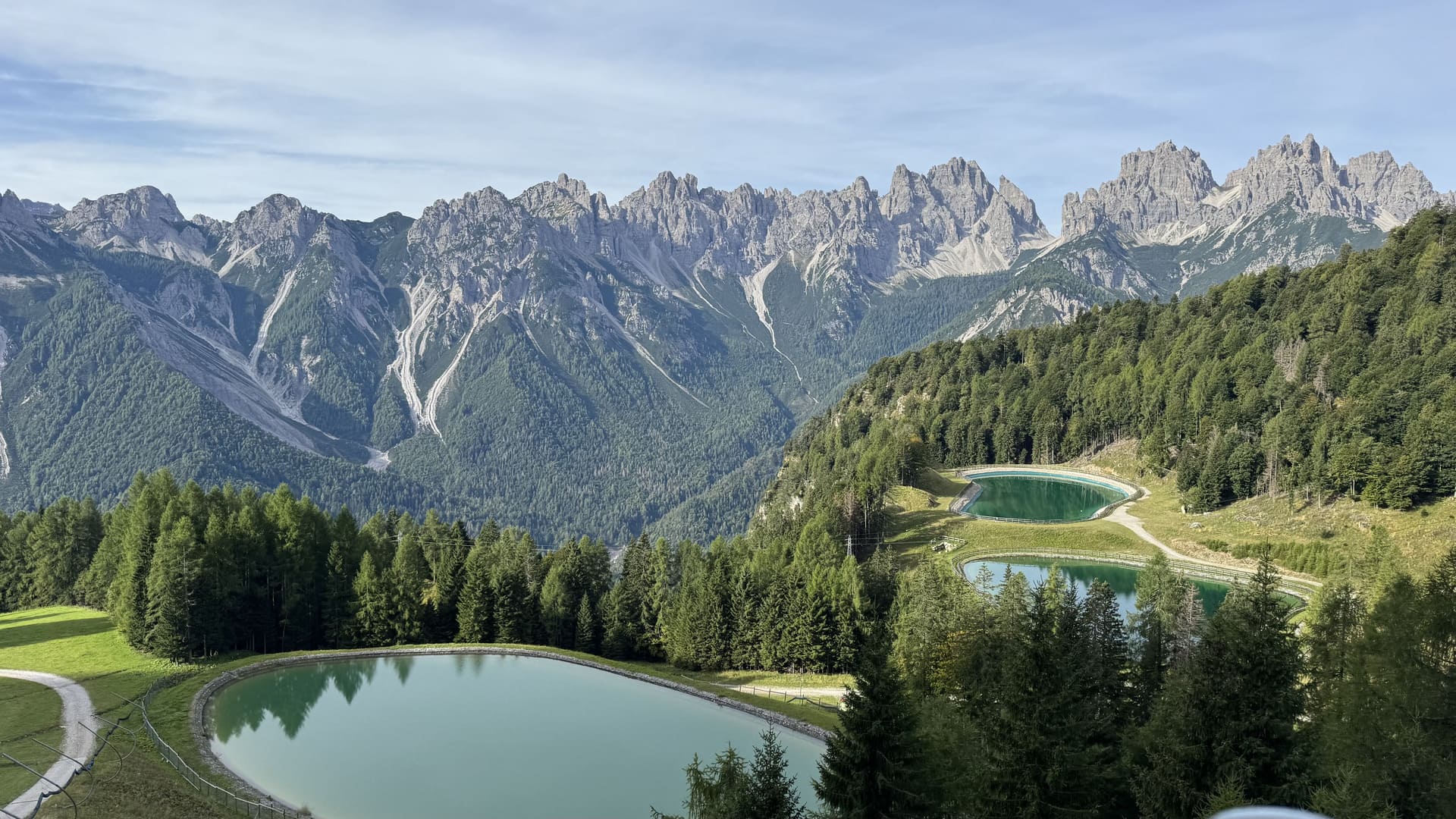
Emilia-Romagna is known for its cuisine, cities, and fast cars. But if you drive south from Bologna into the hills, you’ll discover a completely different region: the northern Apennines, green, quiet, and surprisingly wild. The network of protected areas in Emilia-Romagna includes two national parks, fourteen regional parks, and seventeen nature reserves: stretching from the Apennine ridge to the Adriatic coast.
In the Regional Park of the Hundred Lakes, high in the Parma Valley, the natural landscape consists of alpine flora and forests of chestnut, birch, and conifer trees, home to wolves, otters, roe deer, wild boars, eagles, and owls. Closer to Bologna lie the Calanchi dell’Abbadessa: a surreal landscape of erosion formed by gray clay hills that feels completely different from the rest of Italy. And in the southeast, the region borders the Foreste Casentinesi National Park: ancient beech forests listed as a UNESCO World Heritage Site.
Spring and fall are the ideal seasons; the mountain meadows are in bloom or the forests are turning golden, and the Bolognesi haven’t yet headed out in large numbers toward the Apennines.
The most beautiful walk Emilia-Romagna has to offer begins at Piazza Maggiore in Bologna and ends at Piazza della Signoria in Florence. The Via degli Dei (Path of the Gods) follows the ancient Roman Via Flaminia Militare, built around 187 B.C., straight through the Apennines. The route gets its name from the mountains you pass along the way: Monte Adone, Monte Venere, and Monte Giunone—all named after Roman gods.
The hike, which is nearly 120 kilometers long, requires thorough preparation and good physical conditioning, as it involves a fair amount of elevation gain. Seven days is the ideal pace, allowing you to fully take in the surroundings, stop for lunch, and still enjoy a plate of pasta and a glass of wine in the evening. Along the way, you’ll pass through deserted mountain passes, medieval villages, and vast beech forests where the silence is palpable.
Nature Travel Lab offers the Via degli Dei as an eight-day individual hiking trip with a local specialist, including luggage transport, GPX routes, and overnight stays along the way. You hike—we take care of the rest.
Emilia-Romagna is a region best explored from the inside out. Not from a hotel room in Bologna, but from a spot in the heart of the countryside that makes the region so special. At La Sabbiona, an authentic agriturismo and winery just six kilometers from Faenza, you open the windows in the morning and let your gaze wander over rows of grapevines and rolling hills. On clear days, you can see the faint silhouettes of the Adriatic coast in the distance.
La Sabbiona’s roots date back to the late sixteenth century. Since 1993, Mauro and his family have been working side by side to welcome guests, guided by the wisdom of Grandfather Quinto and a deep love for the land. Their own wine, their own olive oil, a local restaurant, five guest rooms, and four apartments: this is Emilia-Romagna as it has always been.
An hour's drive from Bologna, 45 minutes from Ravenna and the coast. Book direct with the owner via NatureTravelLab.com.
“Nature is our greatest ally and inspiration.”
– Sir David Attenborough
We select the nicest accommodations with all a focus on sustainability policies. Think luxury Treehouses in the middle of nature or a boutique hotel in the countryside. Sustainability categories range from organic cuisine and mindfull focus to waste separation and zero-waist policy.
The accommodations all have something unique and of course a location in or near nature. Spending the night in nature does not always mean sleeping in a tent. Find special and luxurious nature stays for your active vacation or just for your slow travel experience.
The overnight focus on sustainability policy gives attention to comfort and quality.
They often use their own vegetable garden or local cuisine. Much attention is paid to the quality of the accommodation, the environment and the guest.