
Gratis gids 10 verborgen natuurplekken in Europa
Gratis gids 10 verborgen natuurplekken in Europa. Meld je aan voor onze nieuwsbrief en ontvang inspirerende reistips en routes voor je volgende groene reis.

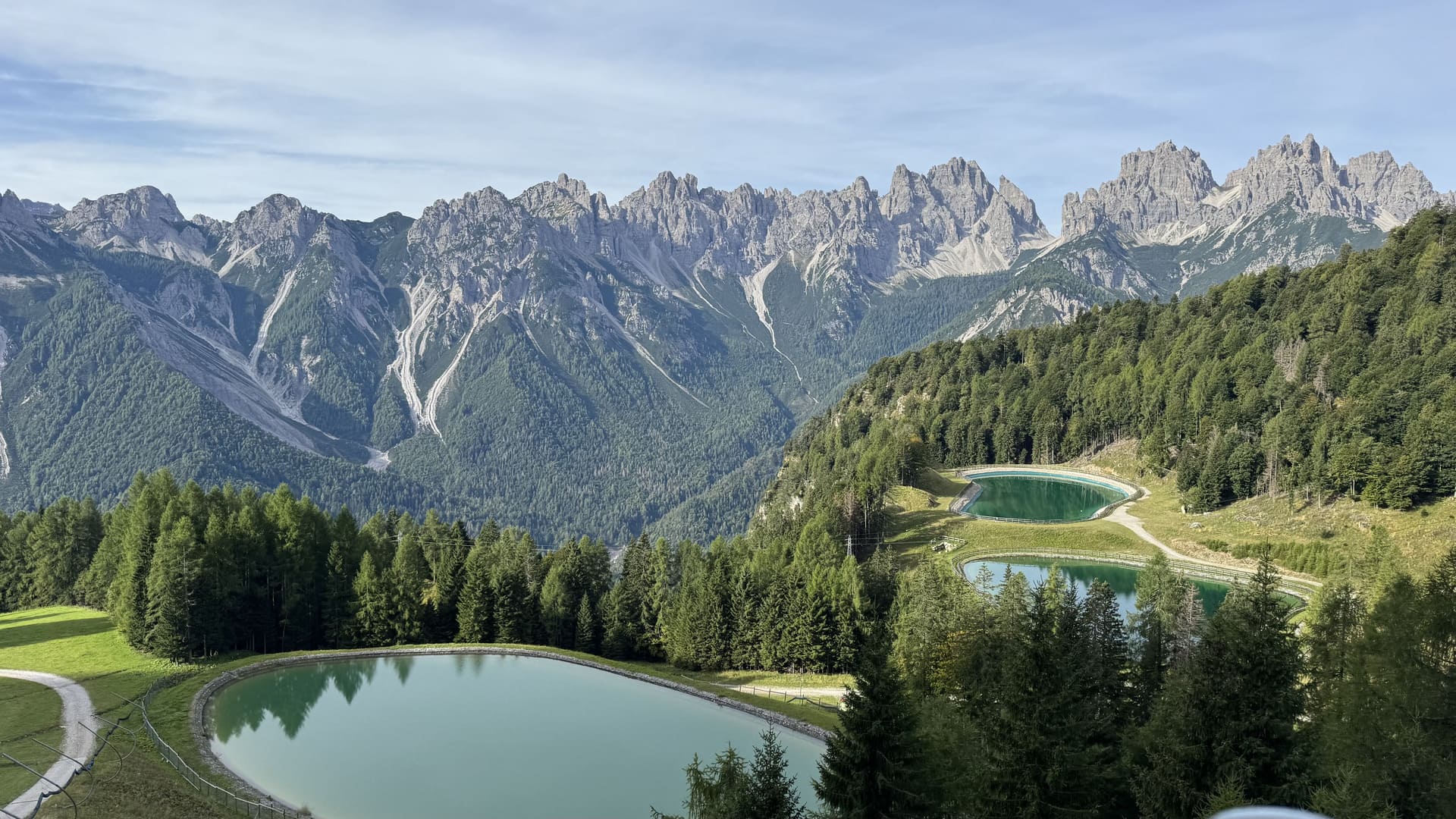
Friuli-Venezia Giulia is located in the far northeastern corner of Italy, on the border with Slovenia and Austria, and is often treated merely as a transit point. That’s a shame. Because just beyond that border lie the Friulian Dolomites, a quieter and less-visited part of the UNESCO World Heritage Site, with mountain villages like Forni di Sopra and Sauris that maintain their own pace at altitudes of over a thousand meters. Sauris even has its own language.
The region stretches from snow-capped mountain peaks through wine-growing plains and karst plateaus to the lagoons on the Adriatic coast near Trieste. Four distinct landscapes in a single region, and not a single tourist in sight in any of them.
Nature Travel Lab offers hiking tips and trails for Friuli; accommodations are listed below. If you come across a unique place to stay, please let us know at naturetravellab.com.
Choose your favorite region and discover our tips for the best small-scale Nature stays with a sustainable focus. You book directly with the owner, so you are guaranteed the lowest price.
Using these sustainability icons, you can easily see in what area an overnight stay is active with its sustainability policy.


sustainable/local construction

organic/local cuisine

family/local runned/social projects

Sauna/yoga/wellness/treatments

Environment/recycling
Choose your region

Sicily
Tuscany
Valle d’Aosta
Piedmont
Basilicata
Puglia
Campania
Veneto
Lombardy
Lombardy
Lake Garda
South Tyrol
Sardinia
Emilia-Romagna
Umbria
Le Marche
Trentino
Abruzzo
Liguria
Friuli-Venezia-Giulia
Lazio
Friuli-Venezia-Giulia is a region with too many facets to be summed up by a single impression. In the north lie the Friulian Dolomites and the Julian and Carnic Alps: rugged, quiet, and largely untouched by tourism. In the south, the lagoons of Grado and the Adriatic coast, teeming with waterfowl and bathed in expansive light. And in between, the Tagliamento: one of Europe’s last wild rivers, with a broad gravel bed that runs like a backbone through the entire region.
The Parco Naturale Regionale delle Prealpi Giulie combines the best of two biogeographic regions: the Mediterranean and the Alps, resulting in exceptional biodiversity. To the west, the Parco Naturale Dolomiti Friulane spans 36,950 hectares of UNESCO World Heritage Site, a true wilderness where deer, chamois, grouse, and marmots live—and where no paved roads run through it.
Friuli rewards slow travel. If you take the time to really get to know a single valley—the mountains, the malgas (mountain huts), and the evenings under the stars above the tree line—you’ll understand why this region feels so different from the rest of Italy.
Friuli is like the Dolomites, but more peaceful. That’s the best way to describe it if you’re visiting for the first time. Forni di Sopra, at 907 meters in the heart of the UNESCO-designated Dolomites, boasts rich biodiversity thanks to its location in a sunny valley surrounded by forests and high mountains; it’s perfect for hikers seeking tranquility who want to combine nature with culture and excellent cuisine. Nearby lies Sauris/Zahre, at 1,212 meters, a German-speaking enclave with its own brewery, a centuries-old woodworking tradition, and hiking trails that take you well above the tree line.
Nature Travel Lab offers two unique hiking tours in and around Friuli. The Alpe Adria Trail and the Juliana Trail combine Friuli’s most beautiful mountain trails with a descent toward Slovenia and Lake Bled: an eight-day journey across two countries, with luggage transport and a guide arranged. If you prefer to explore on your own, the NTL travel guide on hiking from Forni di Sopra and Sauris provides specific routes, rifugio recommendations, and practical travel information for a self-planned trip.
Spring and early fall are ideal: stable hiking weather, fewer crowds, and it gets dark early enough in the evening for stargazing over the mountains.
Friuli doesn’t have to deal with large crowds of tourists. And you can tell by the way the region welcomes its guests: on a small-scale, with a personal touch, and with pride in what’s produced locally—from Prosciutto di San Daniele to the beers of Sauris and the wines of the Collio region.
Nature Travel Lab selects accommodations that match that character: agriturismi in the mountain valleys, rifugi for those who want to sleep at high altitudes, and guesthouses in the villages along the hiking trails. Places where the owner will tell you the next morning which trail is worth taking and where you can have lunch at a malga along the way. Book direct—no third-party platforms involved.
Friuli rewards those who stay longer. Don’t just stay one night and move on—choose a place and, from there, slowly get to know the region. That’s how you truly experience this region.
Nature Travel Lab actively follows developments in Friuli-Venezia Giulia. Do you know of any unique accommodations in the region? Let us know.
“Nature is our greatest ally and inspiration.”
– Sir David Attenborough
We select the nicest accommodations with all a focus on sustainability policies. Think luxury Treehouses in the middle of nature or a boutique hotel in the countryside. Sustainability categories range from organic cuisine and mindfull focus to waste separation and zero-waist policy.
The accommodations all have something unique and of course a location in or near nature. Spending the night in nature does not always mean sleeping in a tent. Find special and luxurious nature stays for your active vacation or just for your slow travel experience.
The overnight focus on sustainability policy gives attention to comfort and quality.
They often use their own vegetable garden or local cuisine. Much attention is paid to the quality of the accommodation, the environment and the guest.

