Gratis gids 10 verborgen natuurplekken in Europa
Gratis gids 10 verborgen natuurplekken in Europa. Meld je aan voor onze nieuwsbrief en ontvang inspirerende reistips en routes voor je volgende groene reis.

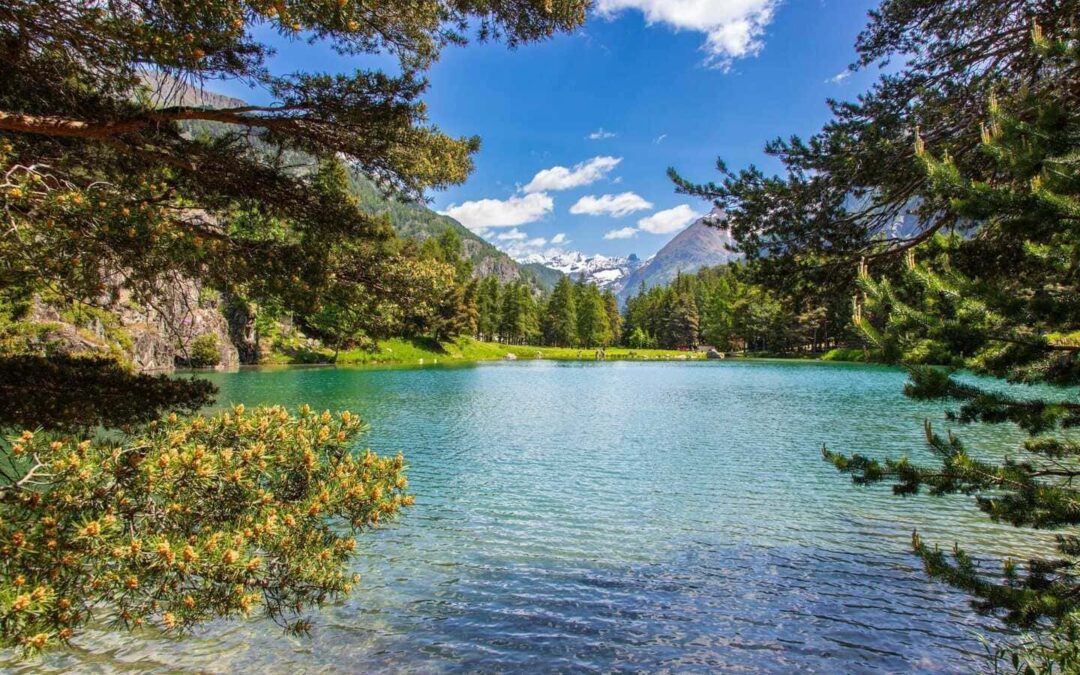
Italy’s smallest region is home to its highest mountains. Mont Blanc, the Matterhorn, Monte Rosa, and Gran Paradiso are all within walking distance of each other here. Nowhere else in Italy will you find four four-thousanders so close together. And yet, Valle d’Aosta is not a region known for ski resorts and mass tourism. It’s a valley that rewards you if you look beyond the famous peaks.
It is quiet in the side valleys. The villages of Cogne, Rhêmes-Notre-Dame, and Valsavarenche are nestled between rock faces and alpine meadows, and have served for decades as a base for hikers heading into Gran Paradiso National Park, Italy’s first national park. Here, you hike among ibex and chamois that hardly regard humans as a threat.
The Aosta Valley is easily accessible by train via Turin and is ideal for a multi-day hiking vacation in the spring or fall, when the crowds of the high season have subsided and the landscape is at its most beautiful. On this page, you’ll find hiking routes, Travel inspiration, and accommodations that you can book direct with the owner.
Choose your favorite region and discover our tips for the best small-scale Nature stays with a sustainable focus. You book directly with the owner, so you are guaranteed the lowest price.
Using these sustainability icons, you can easily see in what area an overnight stay is active with its sustainability policy.


sustainable/local construction

organic/local cuisine

family/local runned/social projects

Sauna/yoga/wellness/treatments

Environment/recycling
Choose your region

Sicily
Tuscany
Valle d’Aosta
Piedmont
Basilicata
Puglia
Campania
Veneto
Lombardy
Lombardy
Lake Garda
South Tyrol
Sardinia
Emilia-Romagna
Umbria
Le Marche
Trentino
Abruzzo
Liguria
Friuli-Venezia-Giulia
Lazio
Valle d'Aosta is Italy's smallest region. But in terms of natural beauty, it is one of the most impressive places in the Alps. To the northwest, the valley borders Mont Blanc; to the north lie the Valais Alps with the Matterhorn and Monte Rosa; and to the south, Gran Paradiso dominates the landscape. Nowhere else in Italy are four four-thousanders so close together.
The heart of the region is the Gran Paradiso National Park, which spans 70,000 hectares around the Gran Paradiso massif. It lies partly in Piedmont and partly in Valle d'Aosta. The park was established in 1922 and was Italy’s first national park. The fact that it still exists at all? That’s thanks to one animal: the ibex was saved from extinction in this park and now numbers nearly 2,800 individuals.
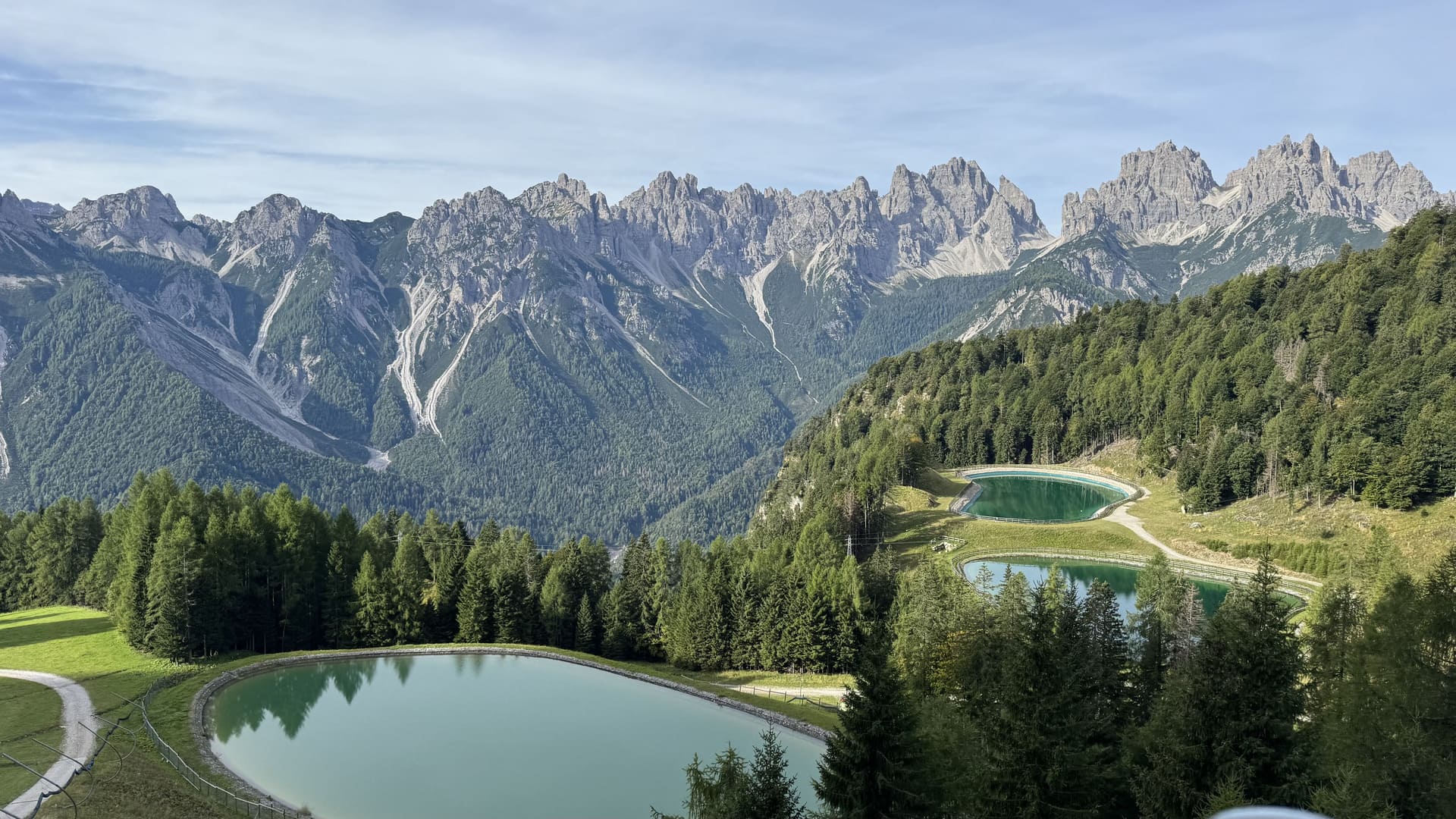
Wildlife here isn’t just a side note but a natural part of a day’s hike. In addition to ibex, the park is home to some 9,000 chamois, marmots, deer, wolves, bearded vultures, and golden eagles. The animals are accustomed to people and sometimes let you observe them from just a few meters away. Beyond that, in the side valleys, you’ll find crystal-clear mountain lakes, waterfalls, alpine meadows, and villages where time seems to pass more slowly than elsewhere. Valle d’Aosta isn’t a discovery—it’s a sense of recognition.
For hikers, Valle d'Aosta is one of the most diverse regions in Europe. Options range from a leisurely morning stroll along a mountain stream to multi-day hiking trails along glaciers and mountain passes above 2,800 meters. You set the pace; the mountains take care of the rest.
The best-known long-distance trails are the Alta Via 1—also known as the Via dei Giganti—which runs along the base of Monte Rosa, the Matterhorn, and Mont Blanc and consists of 17 stages, and the Alta Via 2, which heads deeper into the interior. Those who want to experience the region differently can follow the Cammino Balteo: a hiking trail that winds through more than 40 picturesque villages in the valley, passing vineyards, cheese dairies, and castles along the way. Or choose the Via Francigena, the ancient pilgrimage route from Canterbury to Rome, a beautiful section of which runs through the Aosta Valley—from the Great St. Bernard Pass toward Piedmont.
If you’d like to take shorter hikes, the side valleys offer plenty to explore for a week. Valnontey, Cogne, Rhêmes-Notre-Dame, and Valsavarenche are all excellent base camps in and around Gran Paradiso National Park. In the park alone, there are 553 kilometers of marked trails, mostly based on the old royal hunting trails. Spring and fall are the quietest seasons, and that’s precisely when the park is at its most beautiful.
The Aosta Valley is not a region of large resorts and crowds of tourists. The accommodations that suit this region are small-scale, personal, and often deeply rooted in the landscape. Think of agriturismi with views of glacier-capped peaks, small family-run hotels in authentic mountain villages, and guest rooms in the homes of people who have lived in the valley for generations.
The handpicked accommodations we select at Nature Travel Lab are located in places where you wake up in the morning to a mountain view right outside your window and a breakfast of local specialties on the table (Fontina cheese, local ham, and mountain honey). They’re close to hiking trails, but far enough away from the hustle and bustle of the well-known ski resorts. You book direct with the owner: no middleman, no commission, but a personal message about the best trails in the area.
Whether you're looking for a base for multi-day hikes through Gran Paradiso National Park or a quiet place to unwind from city life, Valle d'Aosta offers small-scale accommodations at their best. Check out the accommodations we've selected below.
“Nature is our greatest ally and inspiration.”
– Sir David Attenborough
We select the nicest accommodations with all a focus on sustainability policies. Think luxury Treehouses in the middle of nature or a boutique hotel in the countryside. Sustainability categories range from organic cuisine and mindfull focus to waste separation and zero-waist policy.
The accommodations all have something unique and of course a location in or near nature. Spending the night in nature does not always mean sleeping in a tent. Find special and luxurious nature stays for your active vacation or just for your slow travel experience.
The overnight focus on sustainability policy gives attention to comfort and quality.
They often use their own vegetable garden or local cuisine. Much attention is paid to the quality of the accommodation, the environment and the guest.