
Gratis gids 10 verborgen natuurplekken in Europa
Gratis gids 10 verborgen natuurplekken in Europa. Meld je aan voor onze nieuwsbrief en ontvang inspirerende reistips en routes voor je volgende groene reis.

Anita hiked the Coast to Coast trail in England. Read her travelogue and tips here.
It had been years since we’d last gone hiking with a full pack. And although we knew how tough it can be to hike with a backpack containing a tent, looking back, those were the most beautiful trips we’d ever taken. When you hike with a backpack, you move slowly. You can’t just choose where you want to sleep or what you want to eat, because you have to be able to hike there in a day, and you have to carry everything you bring with you every step of the way.
But that’s exactly why being on the road brings you so many unexpected moments. One time you might find a little shop in a deserted village selling freshly baked pastries; another time, you’ll be happy just to find a roll of sponge cake somewhere. You can expect anything, but your expectations rarely turn out to be right. That alone makes traveling on foot a wonderful adventure.

We thought hiking with a backpack and a tent was tough enough as it was. That’s why we looked for an existing route in an area where we’d be able to find a place to stay every night. That way, we wouldn’t have to worry about wild camping or planning the route. We found a booklet on Alfred Wainwright’s “Coast to Coast Walk,” which describes the hike from the west to the east coast of England.
Wainwright connected the various regions with his route, and that’s how the Coast-to-Coast was born. It turned out to be a route that isn’t marked everywhere with signs in the landscape, so you have to put in a bit more effort to find your way. But online, we saw a lot of positive reviews about the route itself and the areas you pass through. Plus, we really wanted to go back to the Lake District—we have fond memories of our high school camp there.
The Coast to Coast Trail is 313 km long and runs from St. Bees on the west coast to Robin Hood’s Bay on the east coast. The route passes through beautiful, rugged nature reserves, such as the Lake District, the Pennines, and the North York Moors. We had two weeks to complete the hike. Because the route involves significant ascents and descents and we hadn’t hiked with a heavy backpack in a long time, we wanted to plan our daily stages at 15 kilometers per day. Some days a bit longer, others a bit shorter, depending on where we were staying overnight.
By not choosing stages that were too long, we also had enough energy left to explore the villages in the evenings or along the way. We stayed two nights in two places, which gave us some flexibility in our itinerary in case the weather turned out to be really bad or the walking proved to be more difficult than expected.
You start the route on the west coast in St. Bees. From there, you walk to the east coast as far as Robin Head’s Bay.
We brought too much! Or maybe not… Since it can still be cold and wet, we brought a thick sleeping bag, a thick sweater, and a rain suit. In the first few days, there were almost no shops, so we bought lunch and dinner for a few days whenever we had the chance. We’d brought the cookware set and stove we usually take on cycling trips, but we could have made them a bit more compact. One small pan, two bowls, and two spoons would have been enough.
All in all, the backpack weighed about 15 kg per person, and with water added, it was a few more kilos. Next time, I’m going to try even harder to shed a few kilograms. Although we also spoke with runners who had packed the lightest possible backpacks—they were cold at night and ate nothing but instant meals—so a light backpack does come with its drawbacks.
The route guide lists all the places to stay, and we’d already realized at home that, given the distances we wanted to walk, it wouldn’t be possible to reach a campground every night. In the end, it turned out to be a really nice mix: camping in a pub’s backyard, at a farm campground, and staying at a youth hostel. The most beautiful spot was definitely the Black Sail Hut, a very small cabin, where we spent hours in the evening with the few other guests sitting on the bench in front of the cabin, gazing at the mountains and the sheep passing by.

Would you love to hike this route but find sleeping in a tent a bit too spartan? Along the way, you’ll find not only campgrounds but also B&Bs, hotels, inns, and guesthouses. Below is a list of good B&Bs and hotels along this route. It’s best to book your accommodations (well) in advance if you’re traveling during peak seasons. Here are a few tips for choosing the right place to stay:
We try to fly as little as possible. That’s why, for every trip, we first check if we can get there by public transportation. And that worked out really well for this trip. It took us about 24 hours to get from home to St. Bees, but it was a really pleasant trip. First, we took the train and bus to IJmuiden, and from there we boarded the ferry. You can go straight to your cabin, where we slept wonderfully. In the morning, we boarded the train in Newcastle. And it’s really nice to cross all of England by train and look out the window. Halfway there, there was track work, which made us think we wouldn’t make it to St. Bees that day, but replacement buses were waiting, so by late afternoon we were standing on the beach at St. Bees! If you’re coming by car, there’s very little parking available in St. Bees.

The route booklet includes a booklet with topographic maps on which the route is marked. The booklet also contains a detailed description. In practice, we found that there was always a sign at tricky spots. So while you can’t follow the signs for the entire route, there were definitely a few each day. Just to be safe, we’d downloaded a map of the area onto our phone using Topo GPS. We only used it when we were at the top of a pass in the Lake District and wanted to be absolutely sure we were on the right track. At those moments, it was a great addition! On the day we were heading to Shap, the forecast called for very bad weather on a particularly rugged section of the route. So we took the bus and started our hike from Shap, to avoid ending up in a desolate area during the storm.
These are the routes we walked over the course of 10 days:
Guidebook: Walking the Coast-to-Coast Walk by Terry Mash

The Coast to Coast is 313 kilometers long in total, and most people hike it in 14 or 15 days. It’s possible to do it faster, but this way you’ll hike more comfortably and enjoy the scenery more.
The Coast-to-Coast shouldn’t be underestimated, but it’s not a mountain climb either. Most of the terrain is hilly, except for the highest climb of 780 meters to Kidsty Pike. With an average level of fitness, the route is manageable in 14 days. To prepare, it’s a good idea to exercise for half an hour to 45 minutes about three times a week. You can bypass some of the hills, but of course the best part is taking in England’s most stunning views.
The best time to hike this trail is between March and September. Outside of this period, many lodging options are closed, and the weather is often wet and cold. Spring is also often rainy, but you’ll encounter fewer hikers on the trail. The summer months are the best in terms of temperature, but they’re also a bit busier. The weather can be unpredictable in any month, so it’s wise to always keep an eye on the weather forecasts.
You’ll walk through a highly varied landscape, from rocky coastlines to rolling hills, countryside, heathland, and mountain peaks in the Lake District, all the way to beautiful woodlands and high cliffs above Robin Hood’s Bay.
You’re walking through an area rich in birdlife. The red sandstone cliffs at St. Bees Head are true havens for seabirds. In the Lake District, you’ll encounter curlews and buzzards, as well as tree creepers, pied flycatchers, and redstarts. On the grasslands and heaths, you’ll find hares, and in the North Sea, you might spot seals.


According to tradition, before you start the route, you should pick up a pebble, take it with you, and dip your toe in the Irish Sea. You repeat this when you arrive in Robin Hood’s Bay, and that’s where you leave your pebble behind.
In June, there are a number of local festivals, which can make it difficult to find a place to stay in some areas. The first two weeks of September are also popular times for the coast-to-coast hike.
Travel Guides for England: Here you’ll find Alfred Wainwright’s book *Coast to Coast* and other useful travel guides for England.

I think going on hikes is one of the most wonderful things you can do in life—whether on foot or by bike, for a few days or sometimes a few months. I’ve always read lots of books with travel stories and let my imagination carry me away on other people’s adventures. In the same way, I hope my stories will inspire others to get out into nature. Have a great trip!
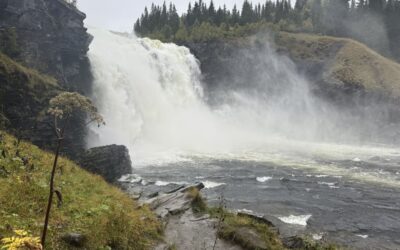
Hiking to Trondheim along ancient pilgrimage trails What’s it like to hike for days along ancient pilgrimage trails to Trondheim? During a trip through Sweden and Norway, I hiked several sections of the St. Olavsleden. From the open border mountains near Skalstugan to...
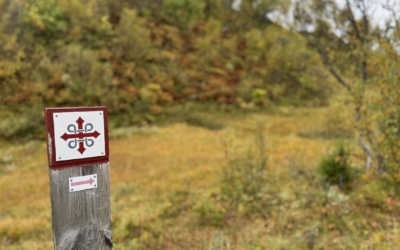
Hiking the St. Olav Trail: Route, Stages, and Tips A thousand years ago, Olav Haraldsson traveled this road northward in search of his crown. He met his death at Stiklestad and was canonized three years later. Since then, pilgrims have followed the same route: from...

Just twenty minutes past the coast lies a completely different Málaga Twenty minutes by car from Málaga Airport, the highway turns into a winding road leading into the mountains. The coast disappears behind you, and ahead lie olive and almond trees, karst rocks, and...
Get inspired
Are you looking for the most beautiful hiking and biking routes? Or do you want information about traveling by train or advice for the most beautiful road trips through nature. Get inspired for your next trip in green; ideas for planning your own trip or opting for an organized trip.