
Gratis gids 10 verborgen natuurplekken in Europa
Gratis gids 10 verborgen natuurplekken in Europa. Meld je aan voor onze nieuwsbrief en ontvang inspirerende reistips en routes voor je volgende groene reis.

On many of my trips to southern Europe, I’d drive as far as Dijon to make a stopover somewhere there. I’d get off the toll road for a bit and find a hotel for a short night’s stay. I’d never realized before just how pleasant that region really is. Definitely consider a longer stop in the Jura—or even make it your final destination—because even though I was only there for three days, the region invites you to slow down and explore.
With the Eurostar and TGV, you can reach Dole—the gateway to the region—from Amsterdam in just eight hours. From there, you can take the scenic railway line Ligne des Hirondelles (the Swallows Line) from Dole to Saint-Claude—one of the most beautiful ways to explore the Jura by train. This is the story of what I encountered along the way: a town, a cheese, a scent, a factory, a mountain. Enough for a long weekend—and a good reason to come back for the rest.
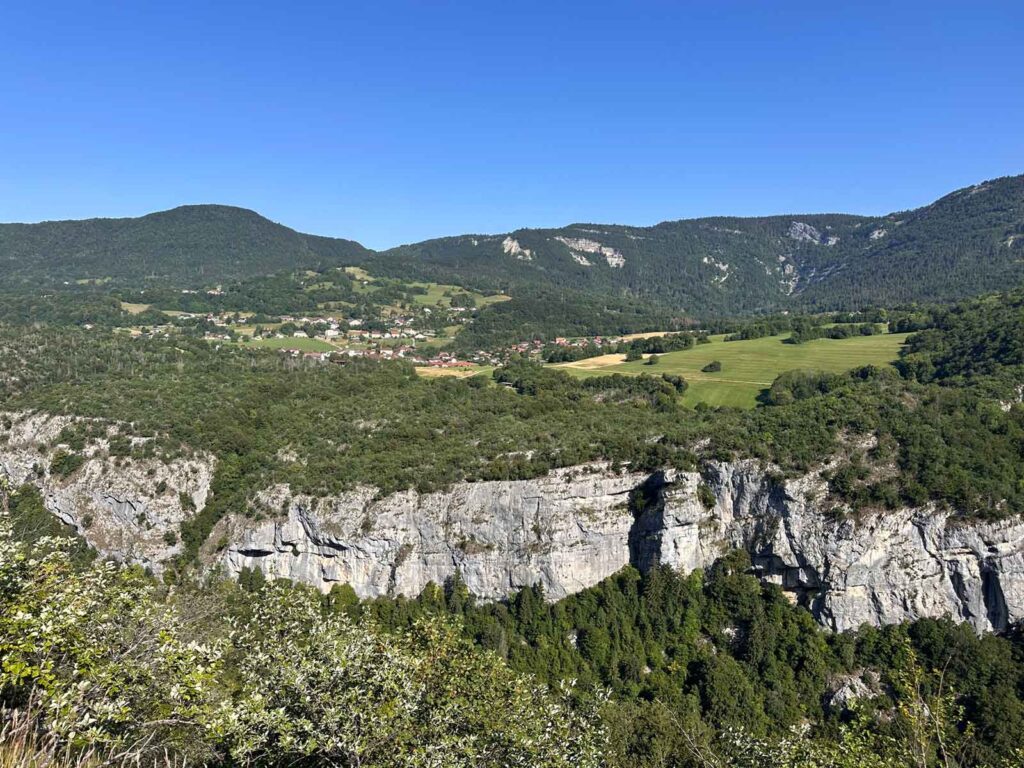
The Jura is a mountain range stretching over three hundred kilometers along the Swiss border: forested plateaus, deep gorges, limestone ridges, and high-altitude meadows. Over millions of years, water and limestone have sculpted a landscape of steep gorges, hidden caves, and waterfalls.
But the Jura is just as much a landscape of people: of cheesemakers who have been carrying on the same Comté tradition for seven centuries, of a painter who captured the region’s springs on canvas, and of an architect who, two hundred years ago, built a utopian factory there that is now a UNESCO World Heritage Site.
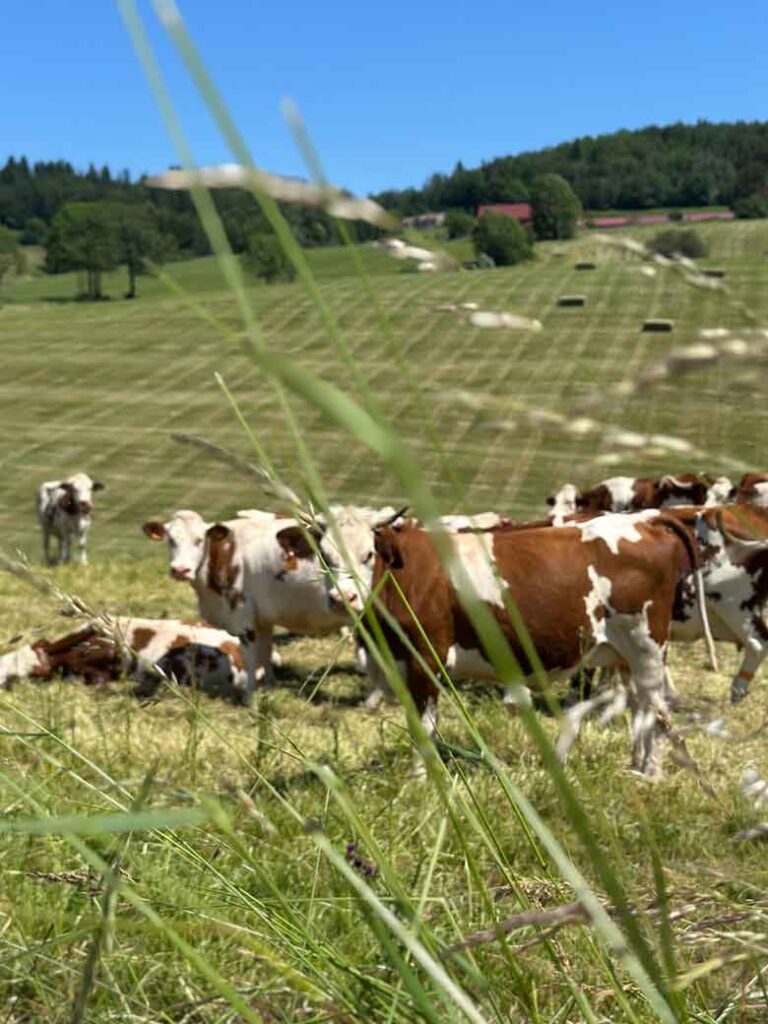
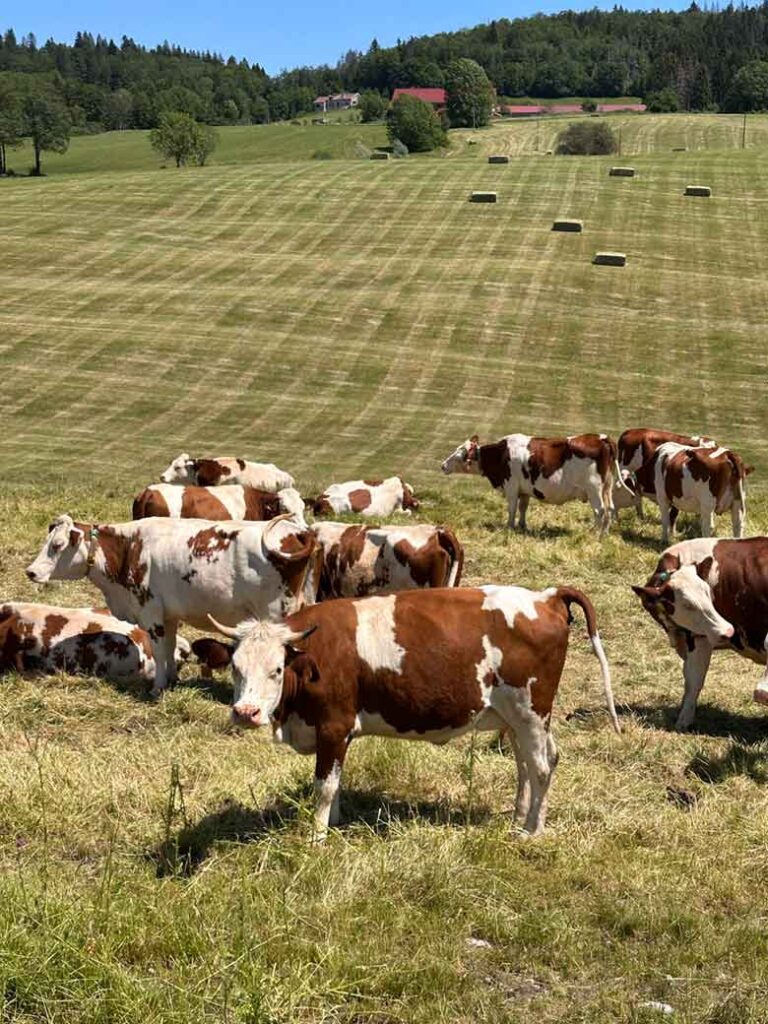
Driving along the country roads of the Jura is also a wonderful journey. In June, the landscape is an endless expanse of green. Rolling meadows alternate with forests, small villages, and limestone hills. Everywhere you look, Montbéliarde cows are grazing, recognizable by their red-and-white coats and dark eyes. They provide the milk for Comté cheese and lend the landscape a picturesque quality. It’s a fresh, expansive, and varied landscape where you’ll find yourself wanting to stop every so often to look around and take pictures.
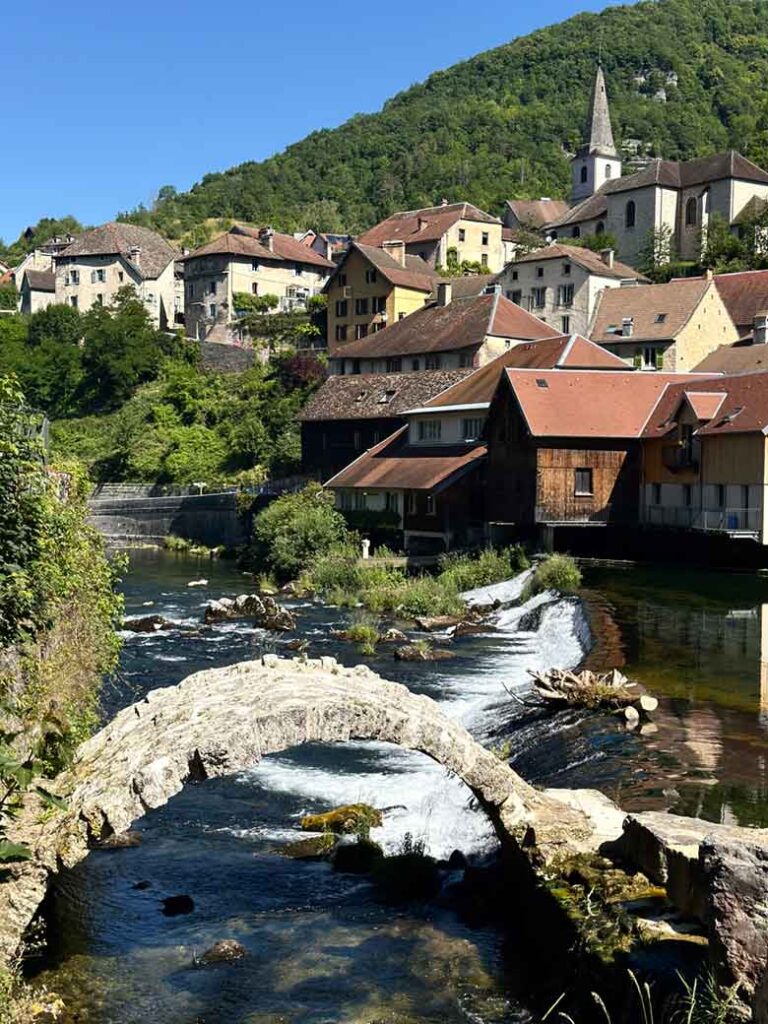
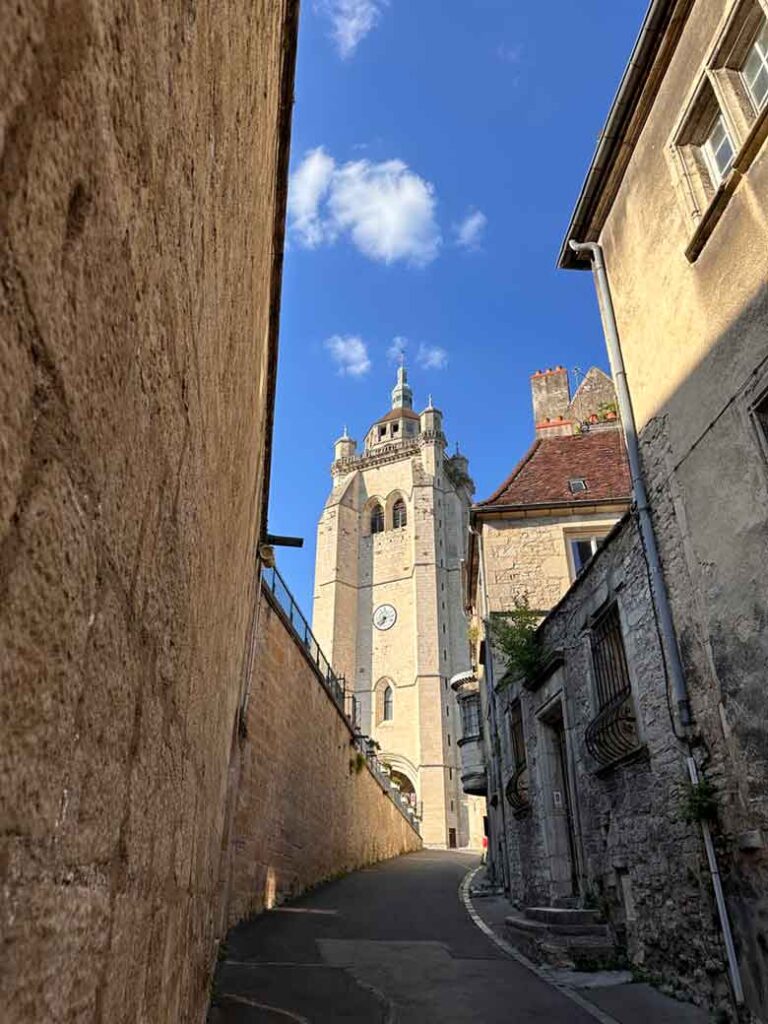
Dole turns out to be a lovely introduction to the Jura. The town is situated on the water and has a historic center. Dole was once the largest town in the Jura, later surpassed by Lons-le-Saunier, but it still retains the charm of a small town with a rich history. The Collégiale Notre-Dame de Dole dominates the town with its 73-meter-high bell tower.
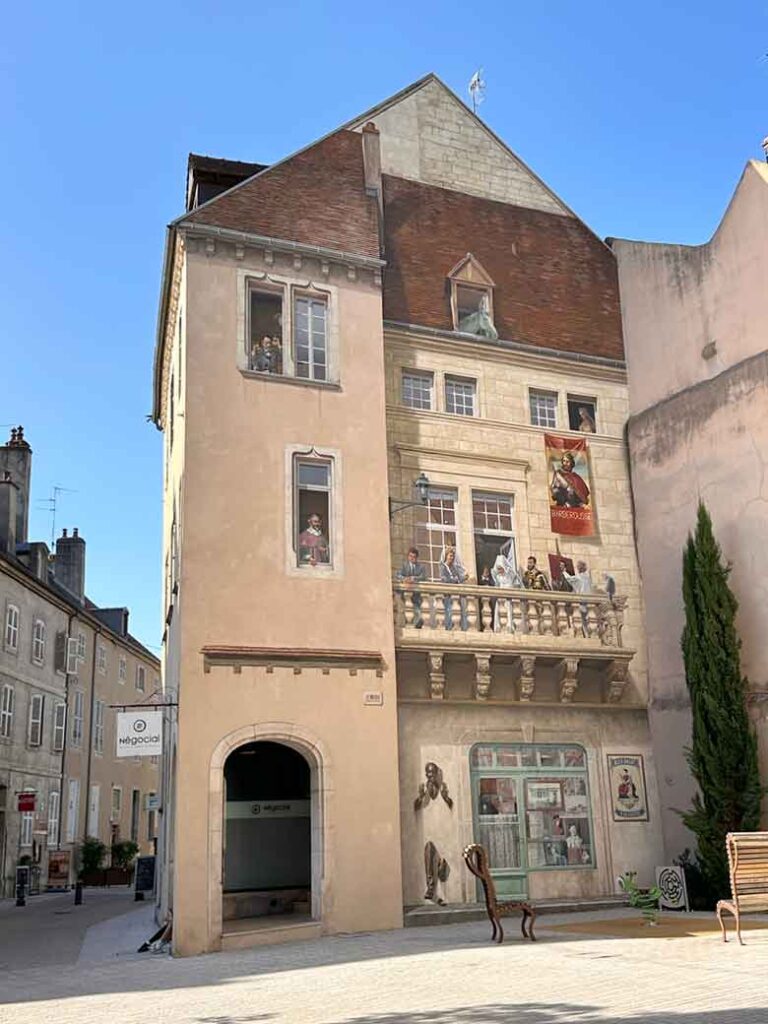
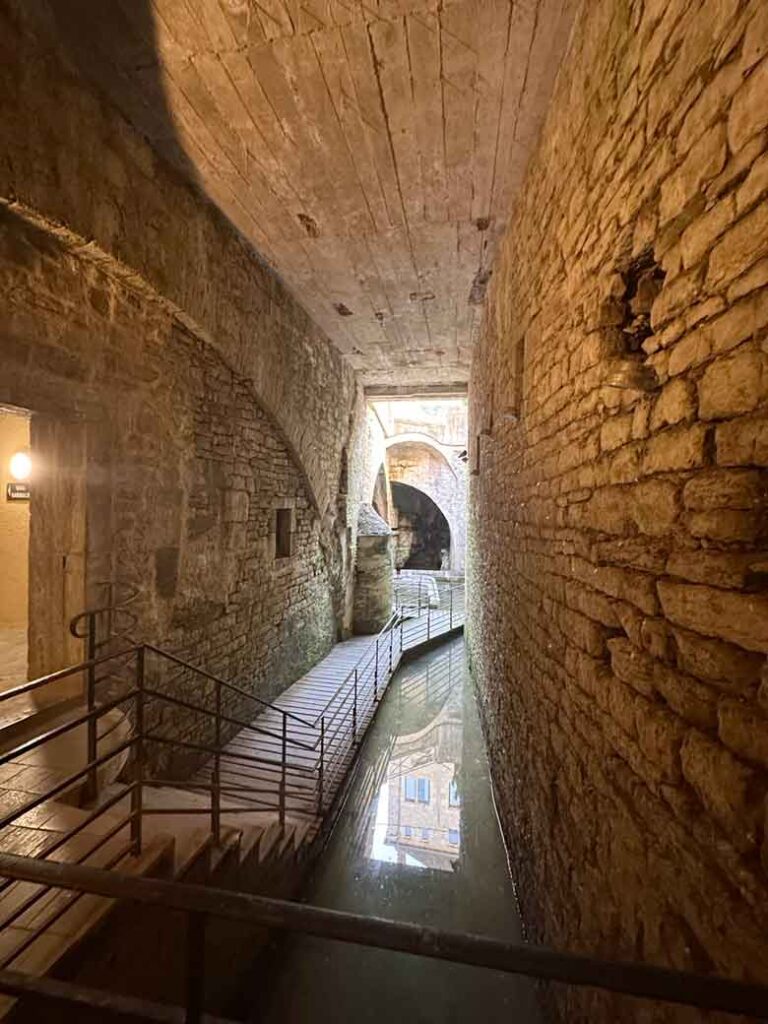
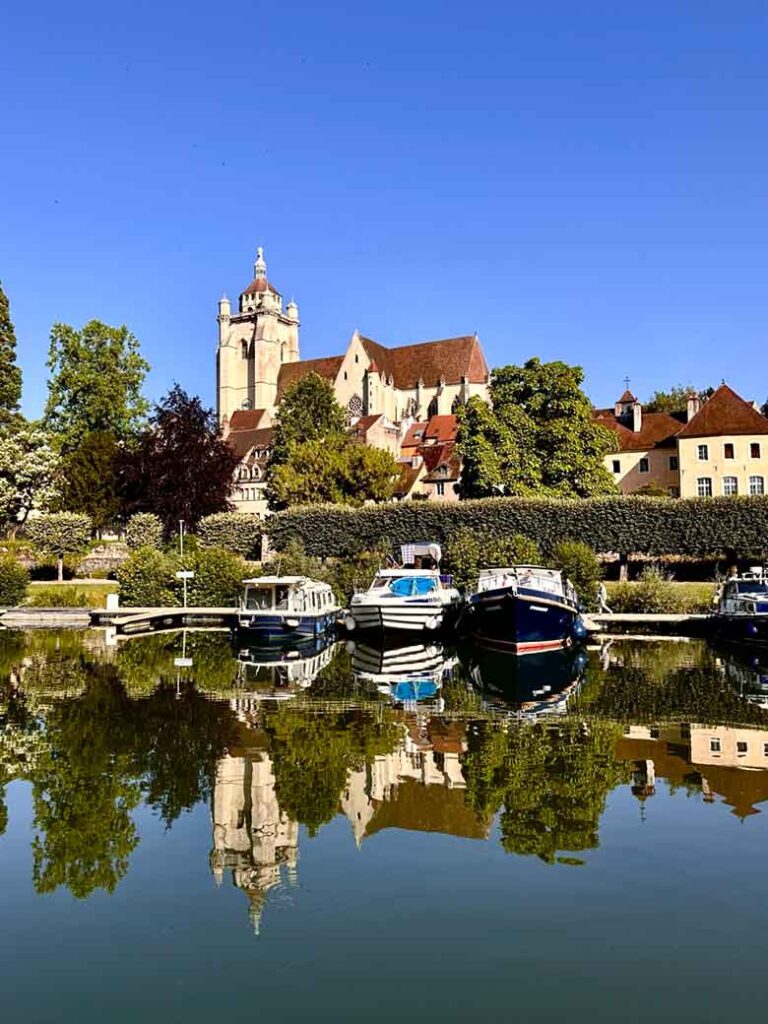
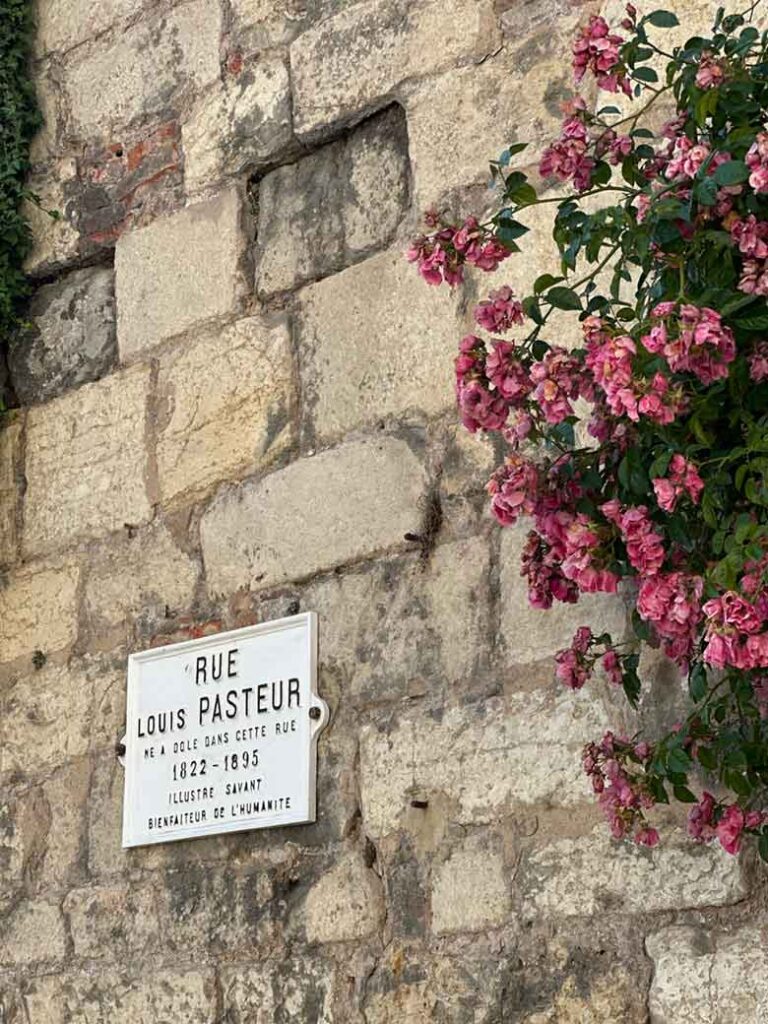
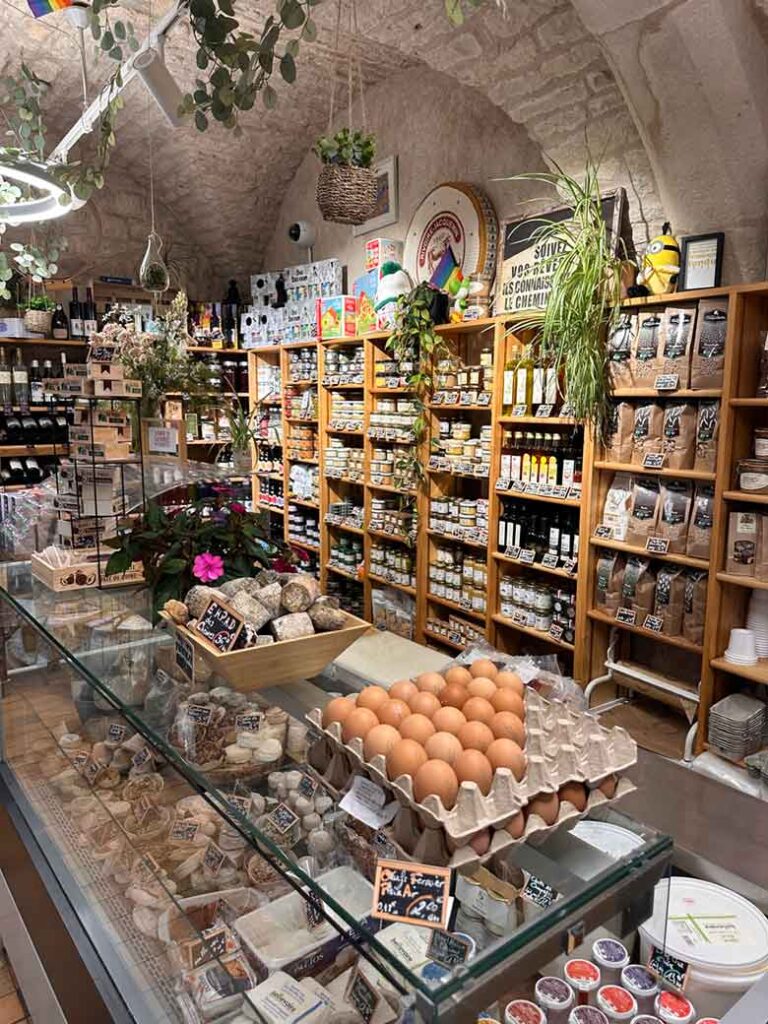
Along the Canal des Tanneurs, old houses stand right on the water’s edge. Tanners and brewers once worked here; sections of the old city wall still serve as a reminder of a bygone era. Louis Pasteur was born in one of the buildings along the canal, which now houses a small museum. The historic city center invites you to wander, with its narrow streets, passageways, delicatessens, a museum of fine arts, and a riverfront where campers parked in the lot can look out over the historic city built against the hillside.
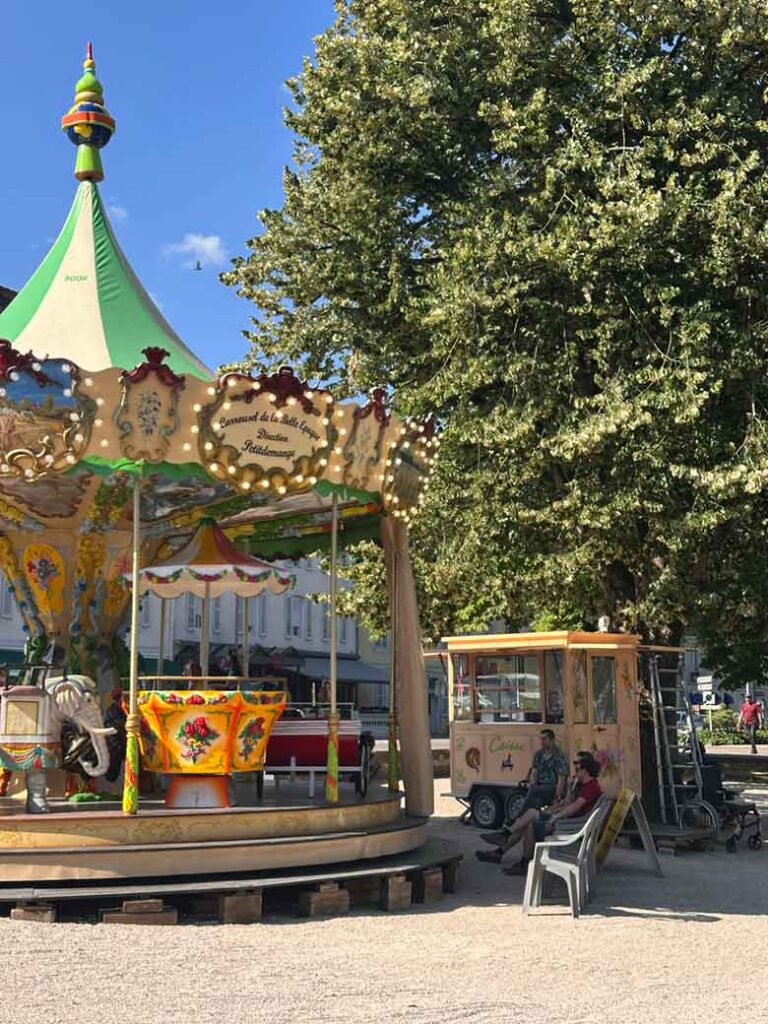
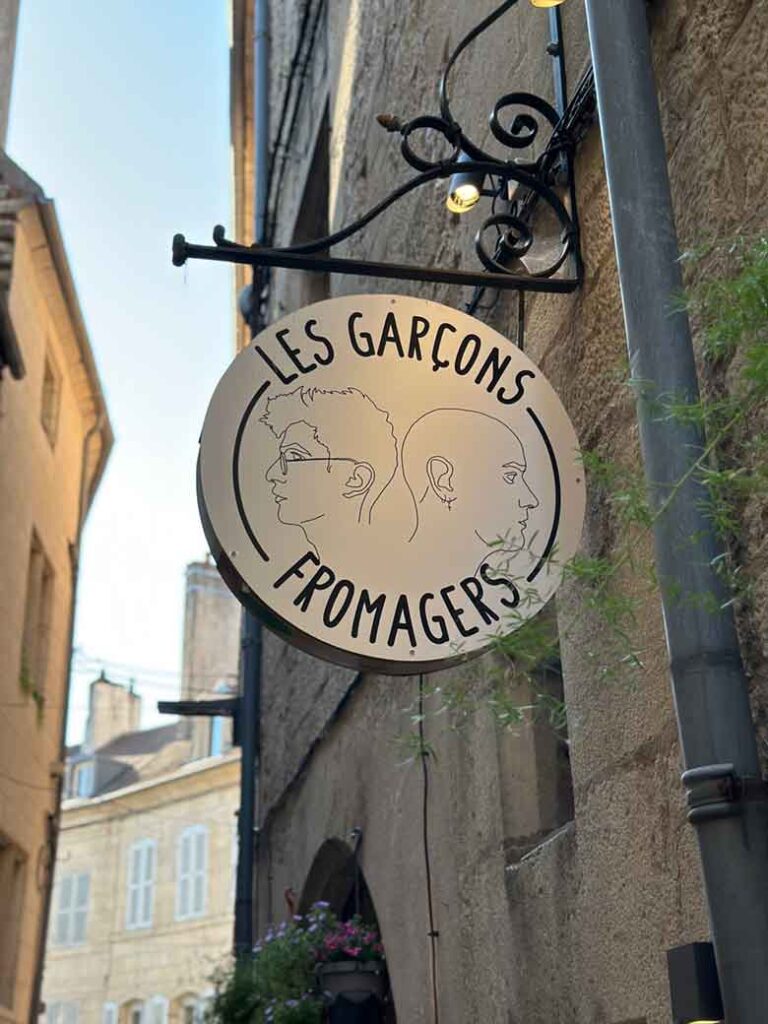
It’s a lot of fun to explore the city on a culinary walking tour that you can do on your own. To sample the local delicacies, pick up the “Dole a croquer” card at the tourist office for €10. This card is good for five tastings. There’s also the “Du chat perché” gourmet weekend at the end of September, which attracted 55,000 visitors in 2025. In August and September, various music festivals bring extra life to the city. You can also explore the area by water: you can rent a small boat without a boating license and sail along the canal toward Ranchot.
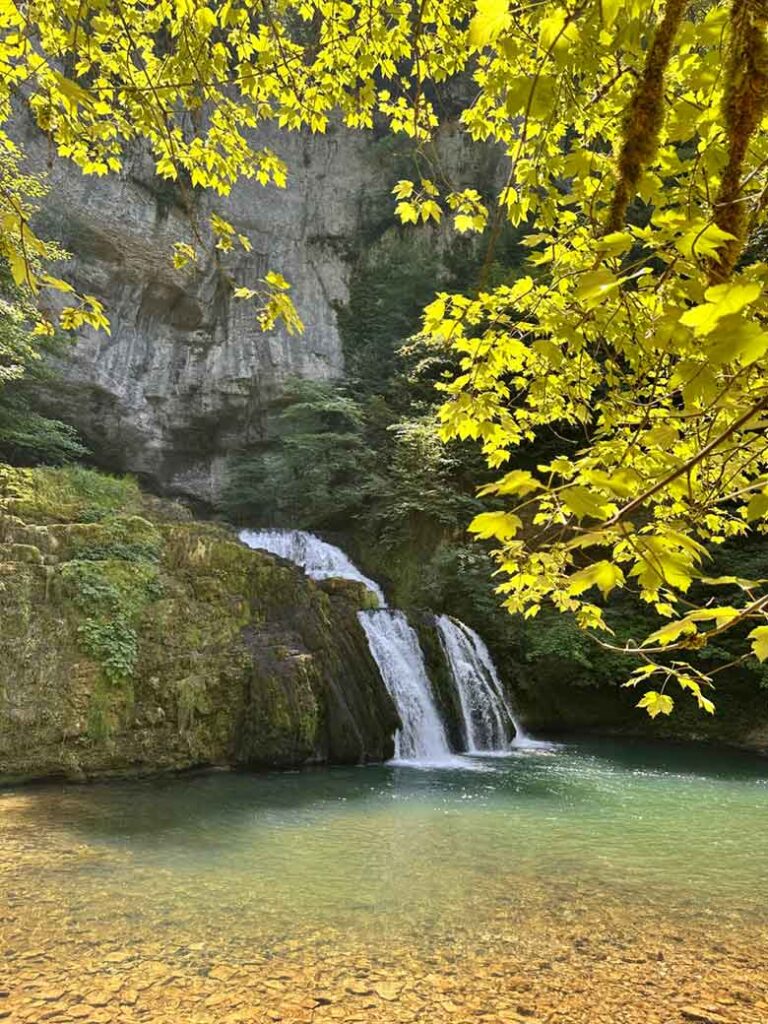
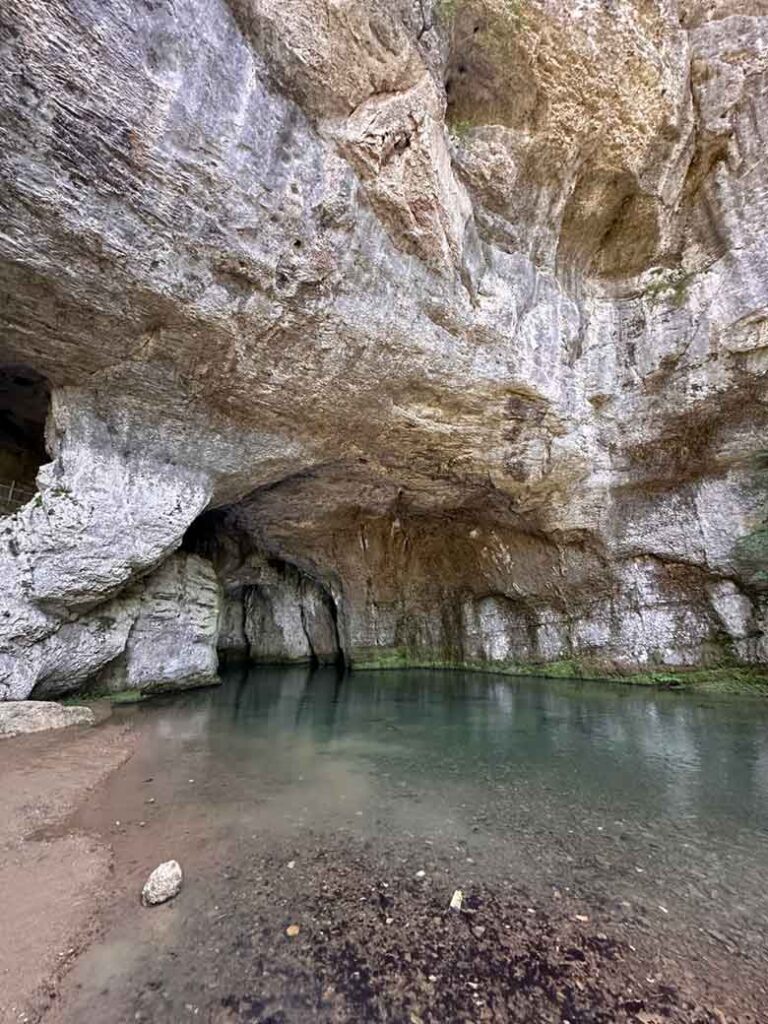
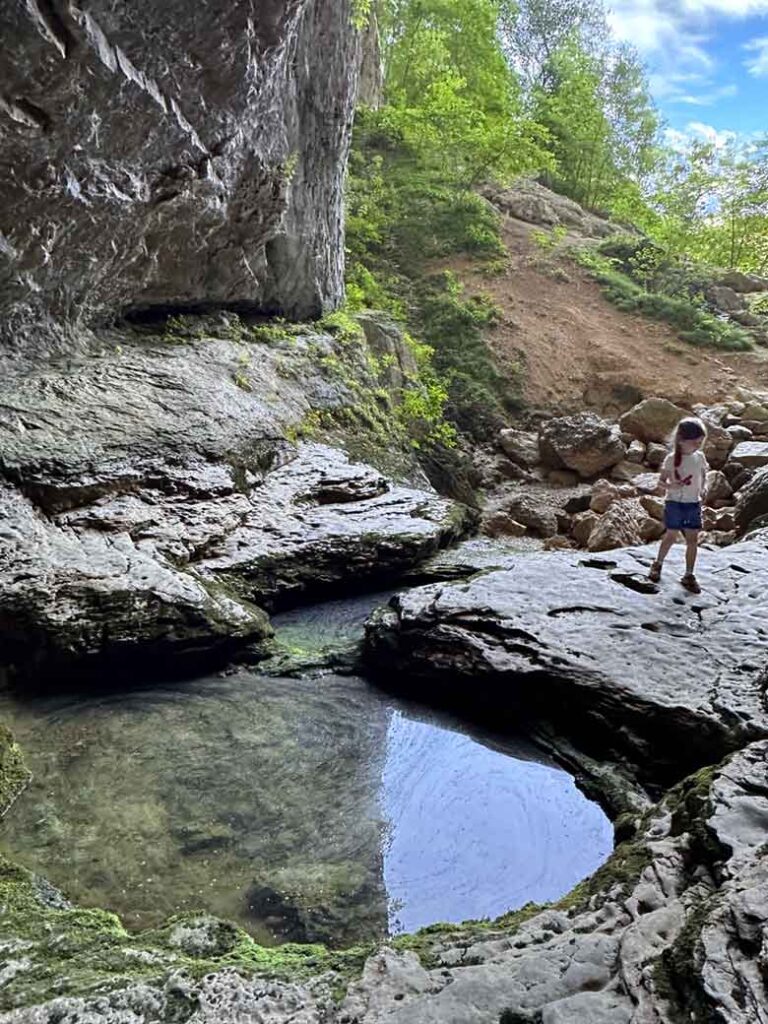
Water is everywhere in the Jura. Rivers disappear underground only to resurface kilometers away, and limestone cliffs have been eroded into caves, springs, and waterfalls. One of the most beautiful examples of this can be found in the Lison Valley.
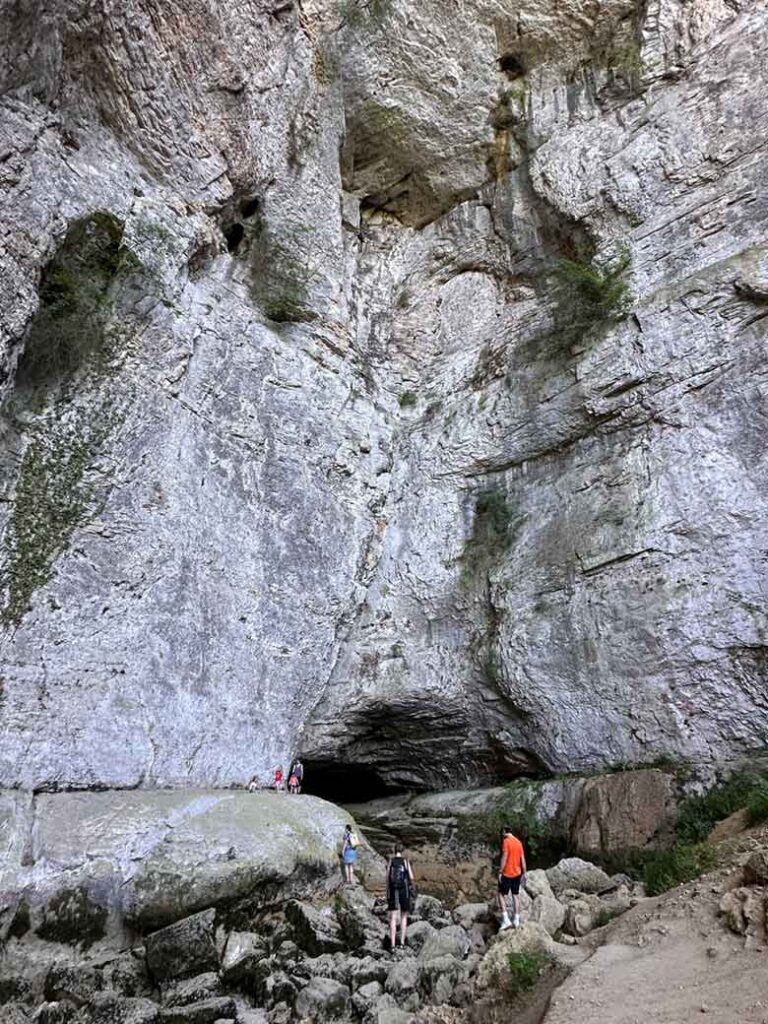
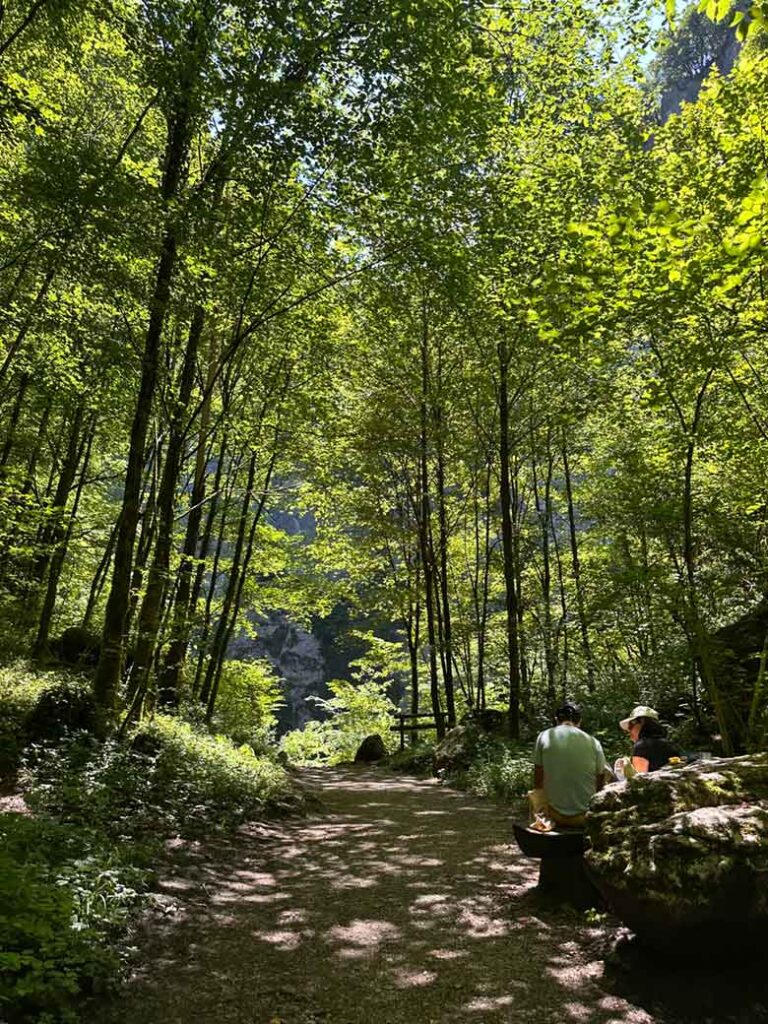
An easy one-and-a-half-hour walk takes you along the turquoise waters of the river to its source, which emerges from the mouth of a high cave. A little further on lies the Grotte Sarrazine, a place immortalized by the painter Gustave Courbet. His paintings depict the same dark rock walls, the bubbling water, and the diffuse light that still sometimes hangs over the valley.
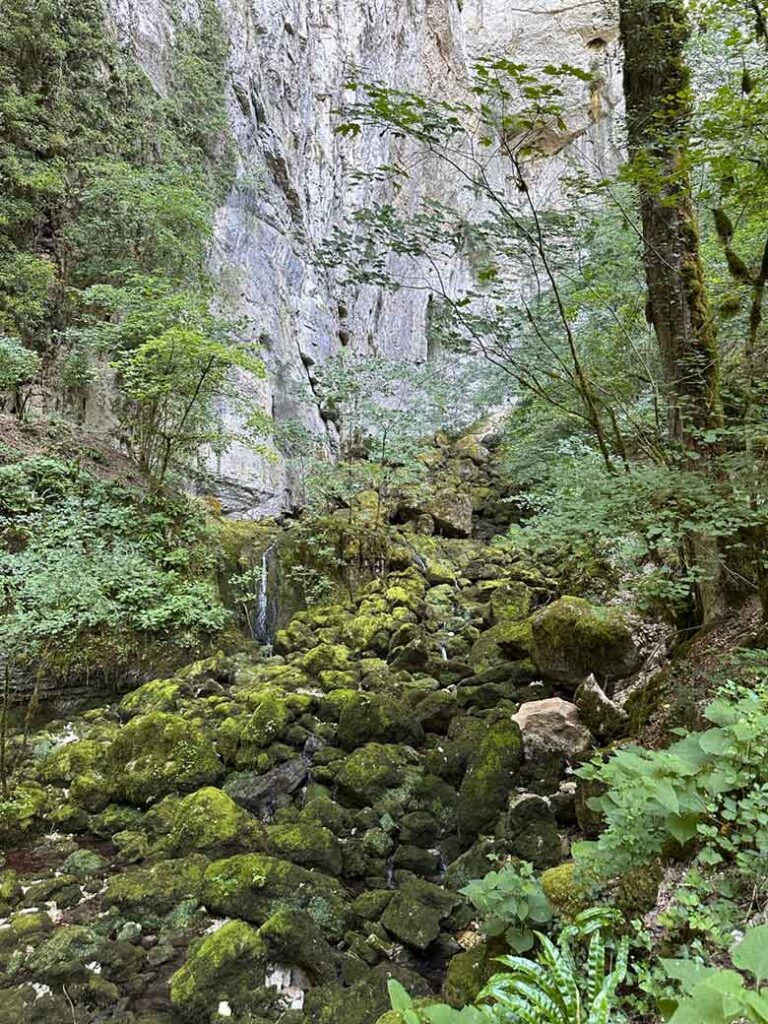
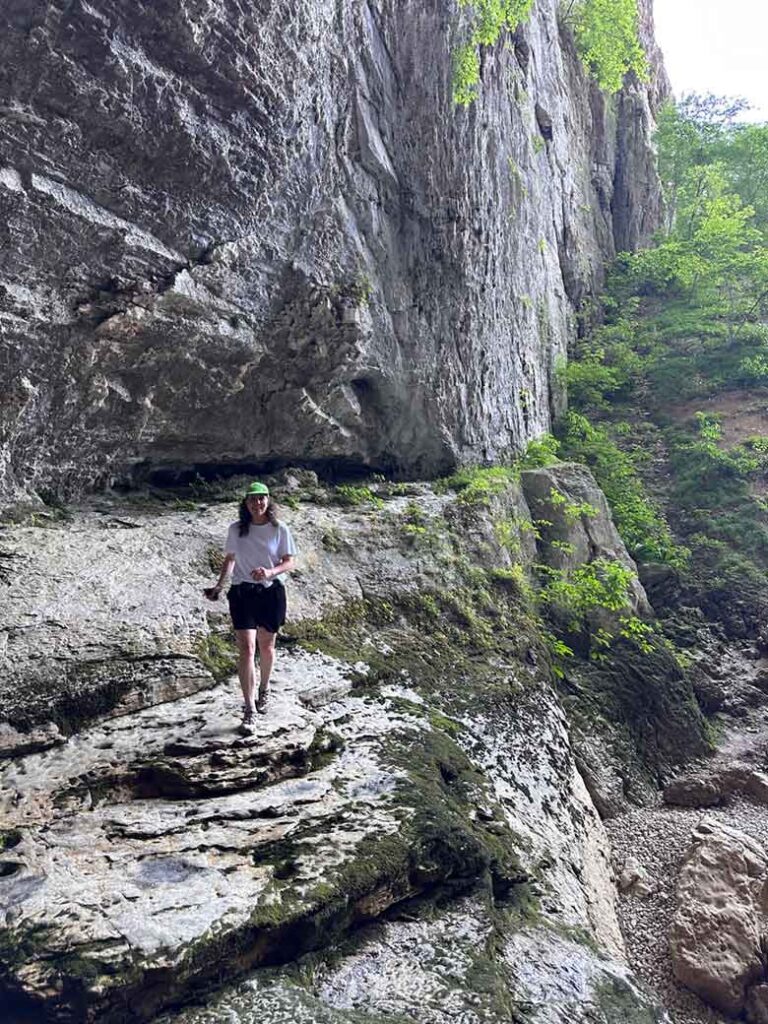
The fact that we can still enjoy the source of the Lison here undisturbed is thanks to a failed power plant. Around 1900, the landscape was in danger of disappearing behind dams and pipelines, but a wave of protests led to the passage in 1906 of one of the first French laws to protect unique landscapes.
At the start of the hike, there is a spacious parking lot and a covered picnic area with restrooms.
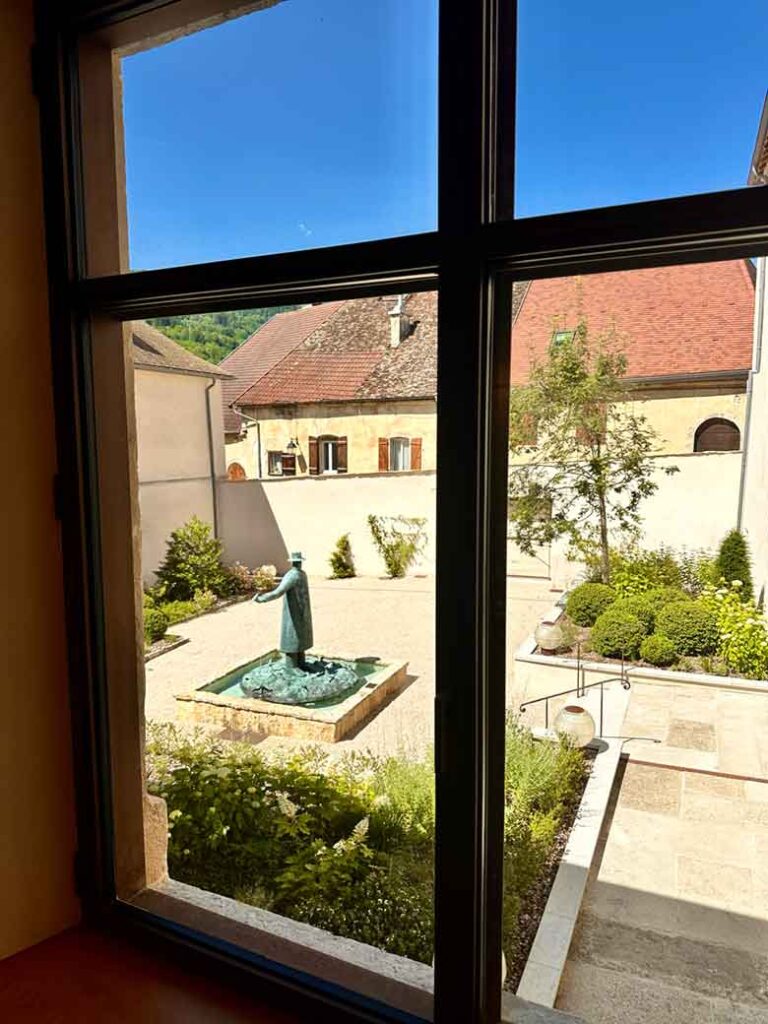
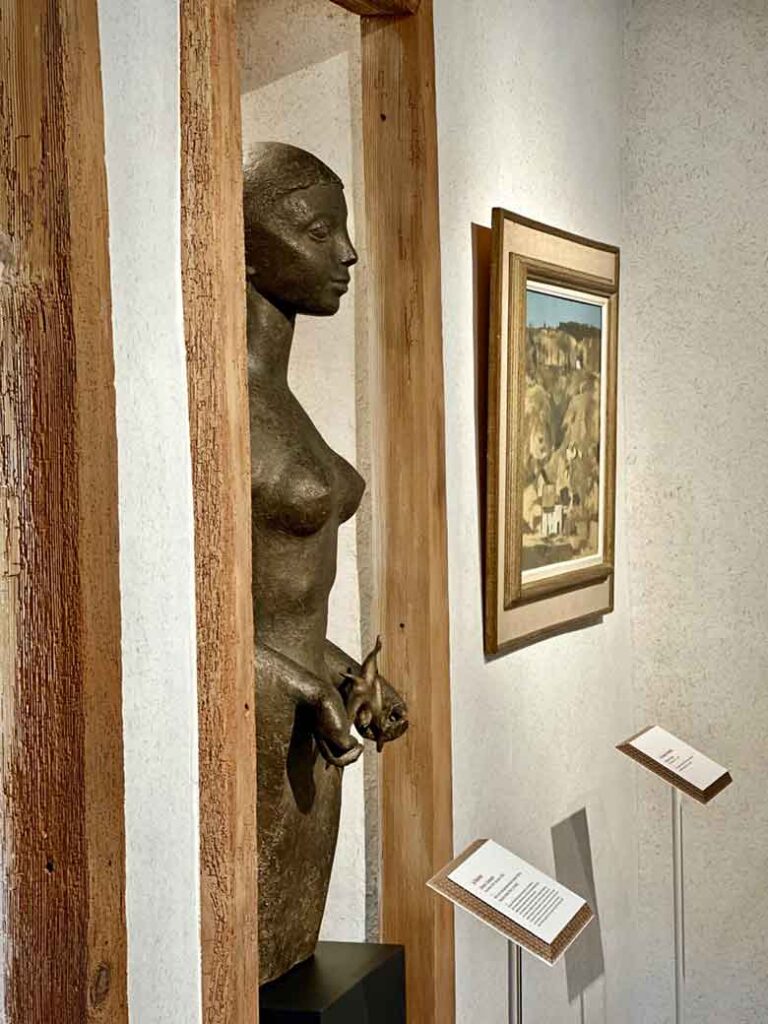
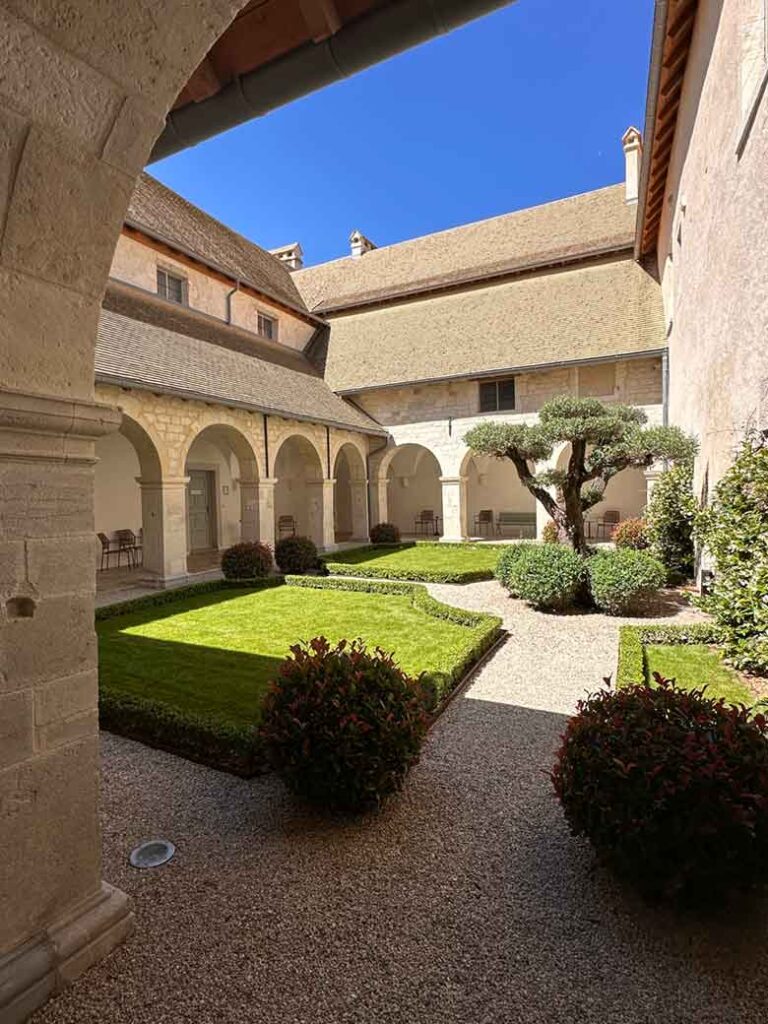
In the nearby village of Mouthier-Haute-Pierre, art and landscape are inextricably linked. The former monastery, which recently opened to the public, houses a collection of some fifty works by 19th- and 20th-century artists from Franche-Comté (Prieuré de Mouthier-Haute-Pierre) .
During your visit, you’ll not only stroll past the paintings, but also through the cloister, the chapter house, and the beautifully landscaped gardens, which offer views of the limestone cirque in which the village is nestled.
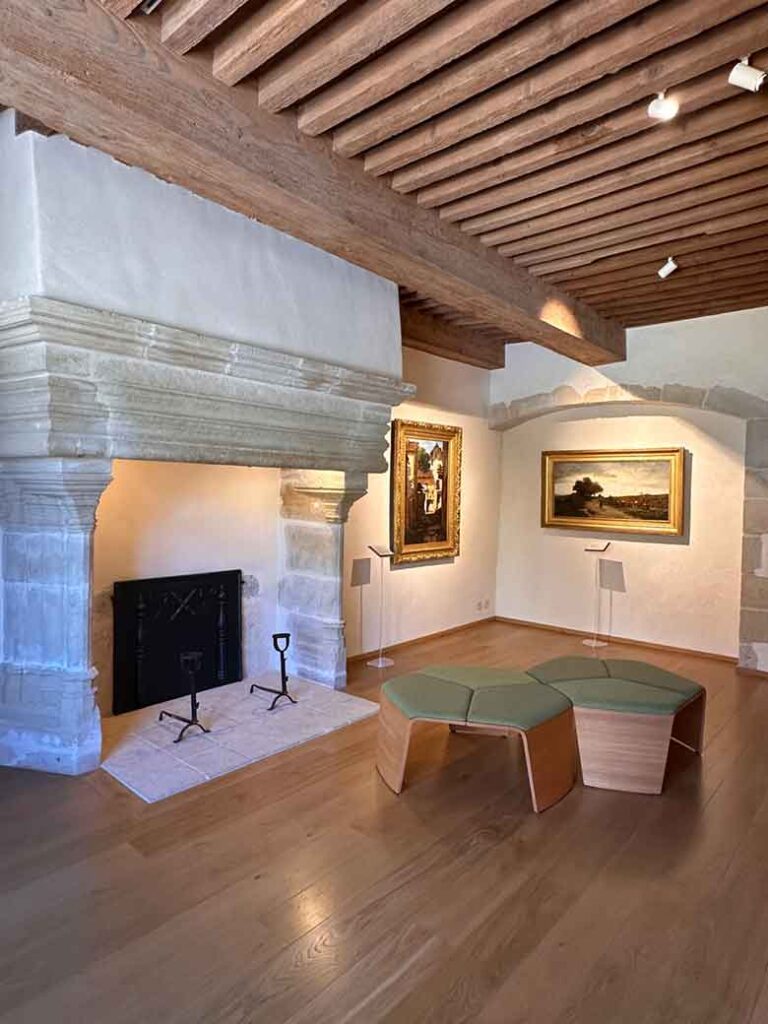
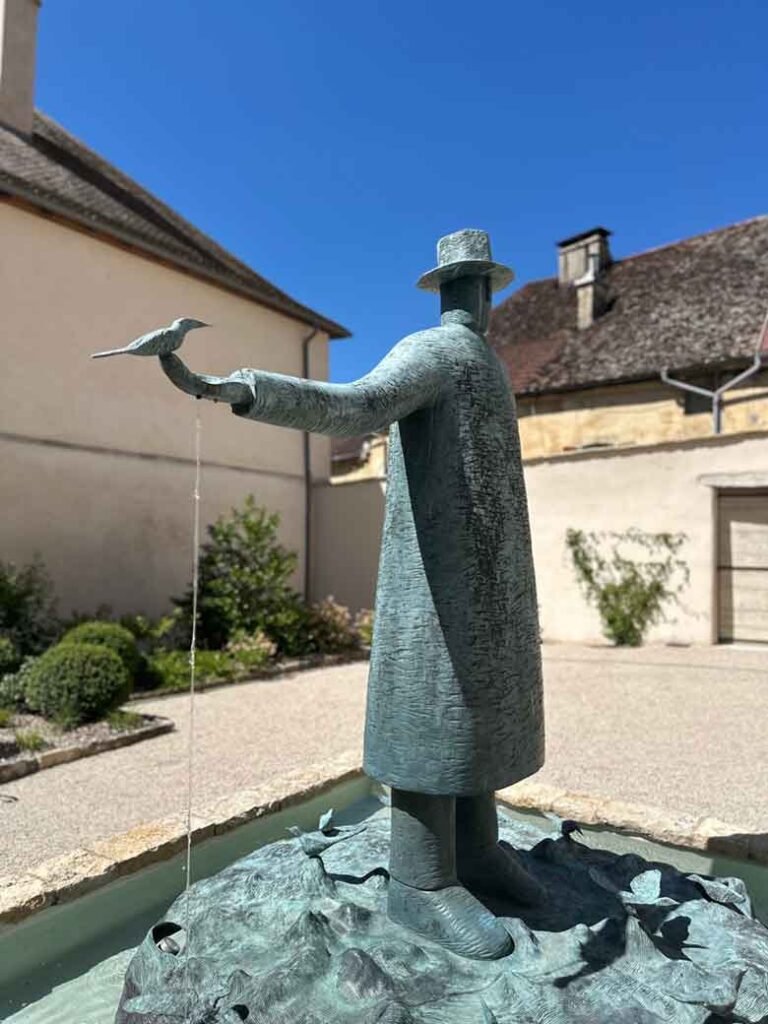
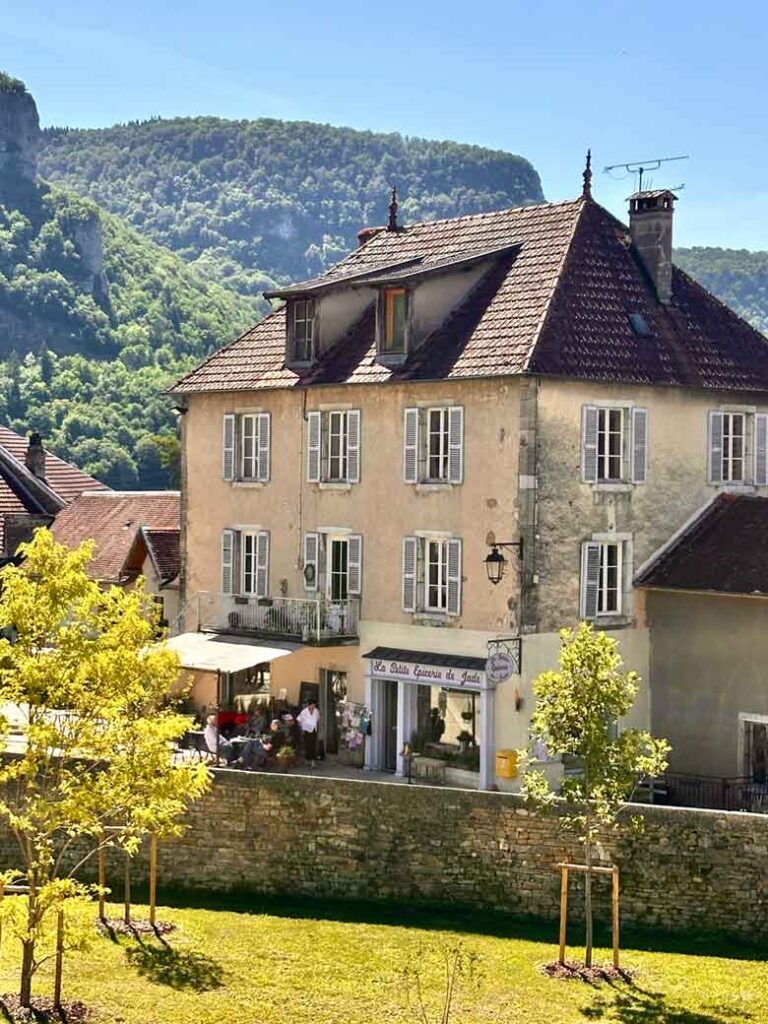
The museum is a private initiative of a major industrialist from the region, who plans to further expand the grounds in the coming years with additional exhibition spaces and possibly even a few hotel rooms. The collection appeals primarily to lovers of regional art, but the unique location and peaceful atmosphere alone make a visit well worth it.
From the garden, you can see a little shop called “La petite epicerie de Jade,” where you can enjoy a simple lunch or pick up a picnic.
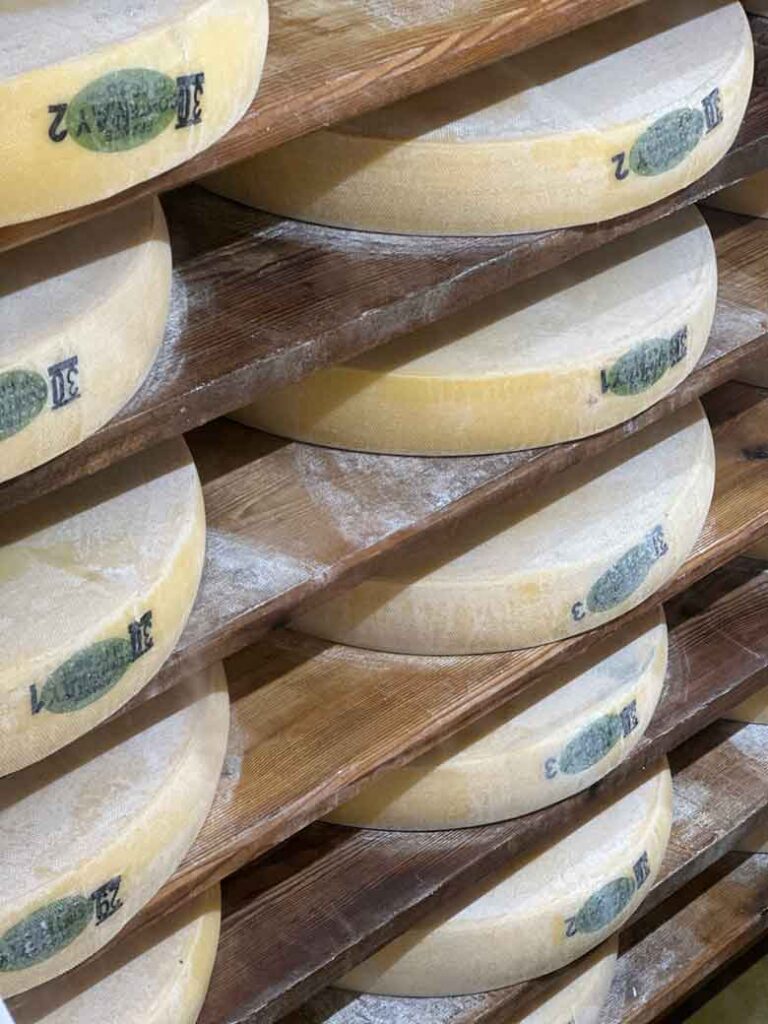
If you want to understand the Jura, you can’t ignore Comté cheese. In Poligny, I visit the Maison du Comté, where I learn the story of a product that is much more than just a regional specialty. Its production is based on a carefully maintained balance between nature, cooperation, and tradition.
That’s how I learned that Comte isn’t made on the farm but always in a cheese factory. Early in the morning, the milk is collected from various farms, then poured into large tanks, and cultures and rennet are added. As soon as the curd thickens, it is cut into pieces. The curd is then heated to about 55 degrees and pressed for twenty hours. A cooperative can produce hundreds of metric tons of cheese per year, but the principle remains small-scale: local milk, daily processing, and long aging.
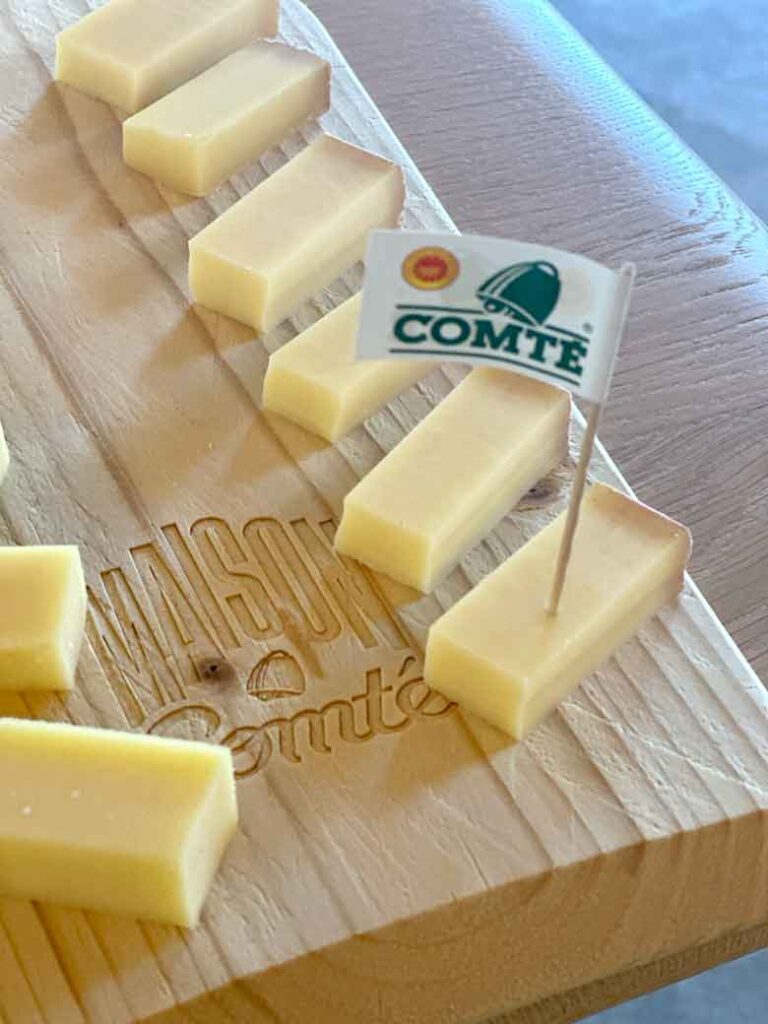
Comté changes with the seasons. Fresh and floral in the spring, nutty and complex after a summer of herb-rich pastures. The cheese reflects the rhythm of the landscape and the diet of the Montbéliarde cows that graze there. At the end of the tour of Maison Comté, you’ll also have the chance to taste both young and aged Comté.
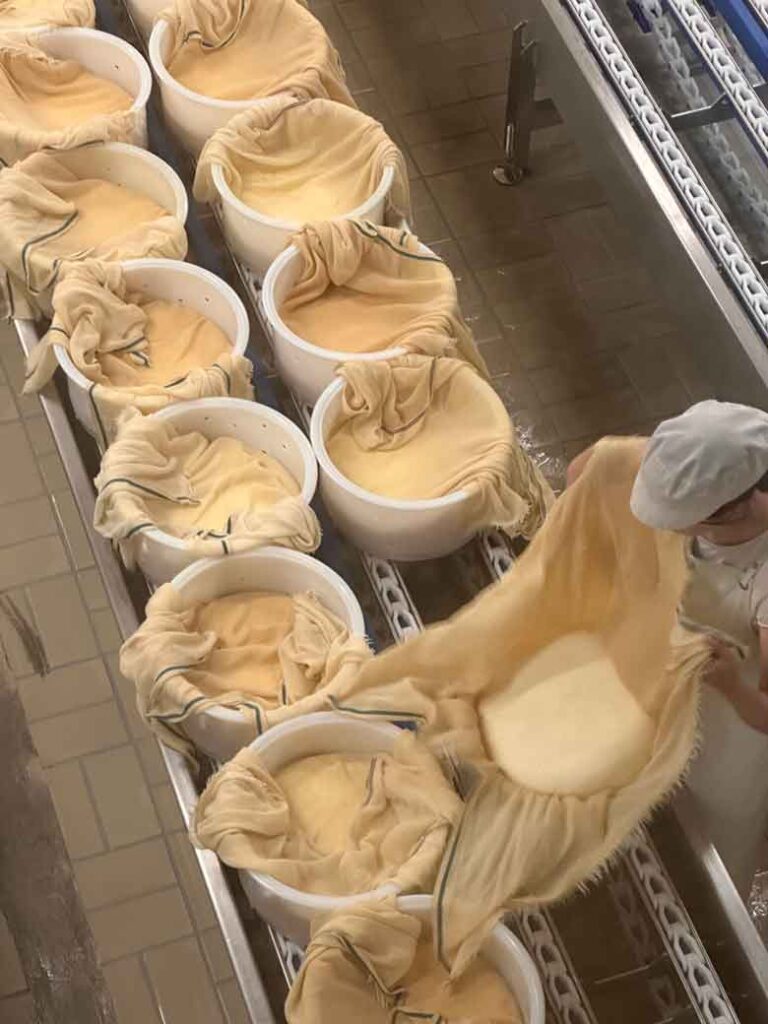
During the tasting, I learn another interesting detail. The color of the band around a Comté says nothing about the cheese’s age, but it does indicate the rating the cheese received after aging. A green band—known as the “Comté clochette”—is for cheeses that score more than 14 out of 20. Cheeses with a brown band received between 12 and 14 points. These are also full-fledged Comtés, though because of their more affordable price, they’re often used for fondue or other hot dishes.
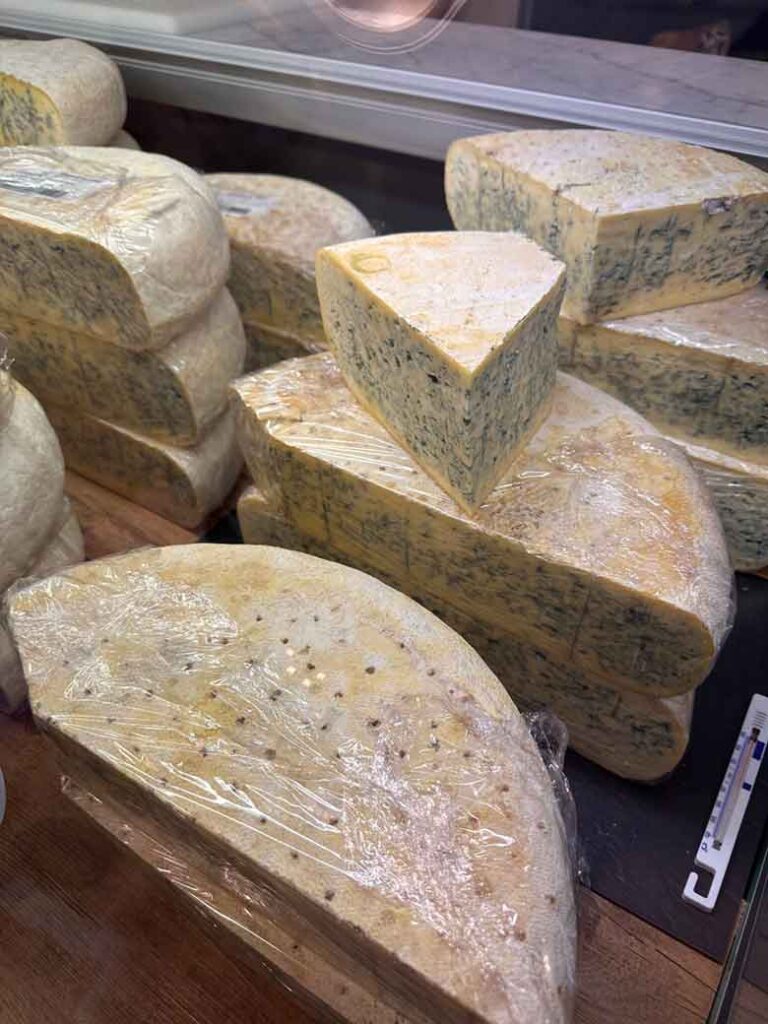
Further south, I visit the Fromagerie de l’Abbaye in Chézery-Forens, one of the last cheese dairies still specializing in Bleu de Gex. This mild blue cheese melts beautifully and is therefore often used for fondue and raclette. In addition to a viewing platform on the first floor, where you can look directly into the workshop, there is a deli where you can, of course, buy both Bleu de Gex and Comté.
There are local stories surrounding Bleu de Gex, such as the legend of a lost monk who was taken in by a farmer and, out of gratitude, is said to have passed on the recipe for the cheese. In a region where gastronomy is often associated with fine dining, these producers remind us that here, flavor begins first and foremost in the landscape itself.
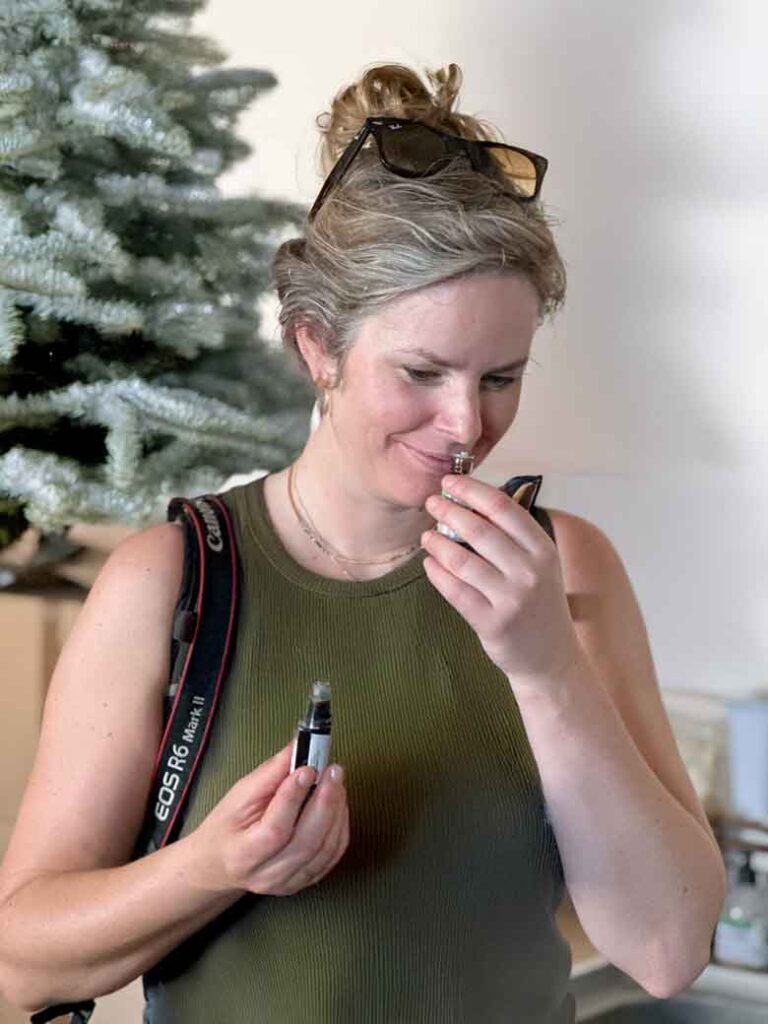
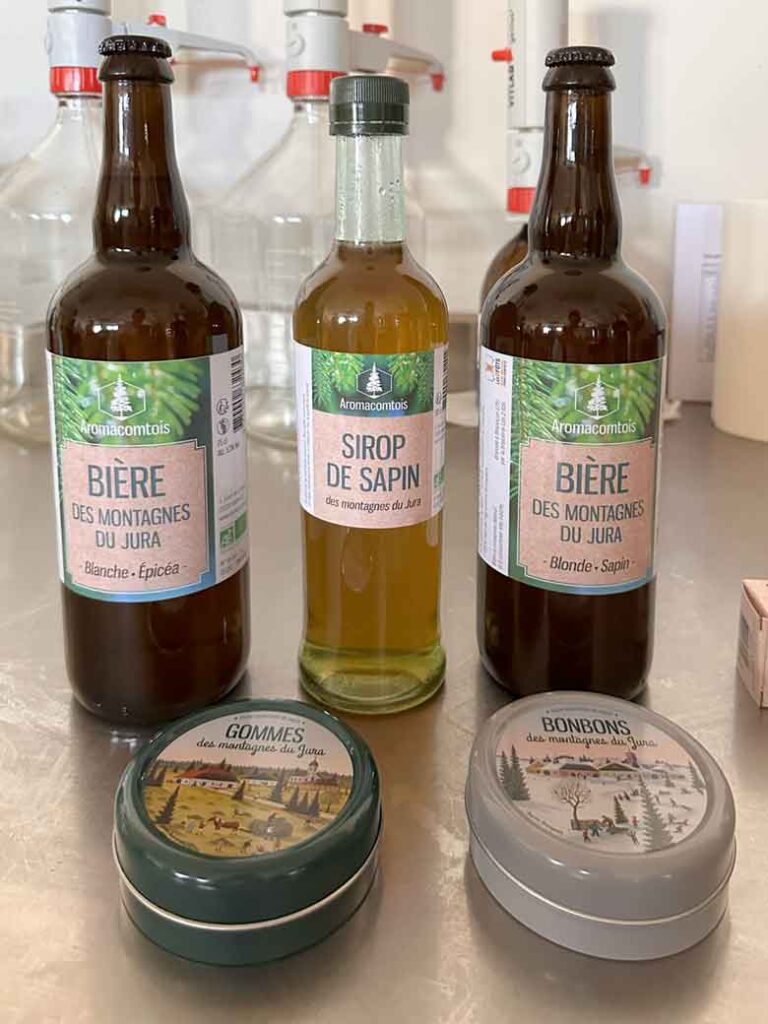
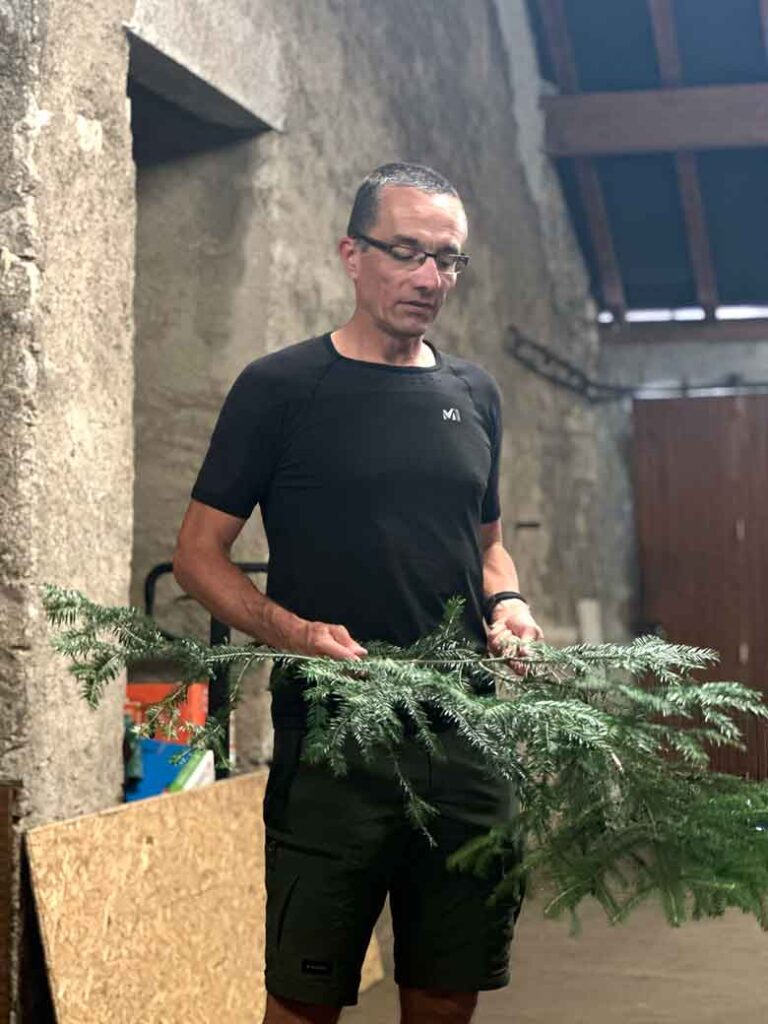
It’s not just cheese—fragrance is also part of the Jura. In Amancey, Aromacomtois works with spruce needles from the surrounding area. The owner, Grégory Haye, began a new chapter in 2017: he wanted to work more closely with nature and took courses in the Jura and the Vosges on how to process pine needles into essential oil.
The area is mainly home to silver firs, recognizable by the two white lines on the underside of their needles. The oil in these needles is harvested from pruning waste that he is allowed to collect from the surrounding forests. The needles are processed using steam. Only 1.2 liters of oil can be extracted from 500 kilograms of needles. As a result, annual production is small: about sixty to eighty liters. This illustrates just how much of the landscape is needed to produce a single bottle of fragrance. In the shop, you can find all kinds of products based on the scent of pine, such as massage oil, beer, as well as soap and candies. You can visit the company: Aromacomtois is located at 3 Place de la Mairie in Amancey and regularly organizes free guided tours.
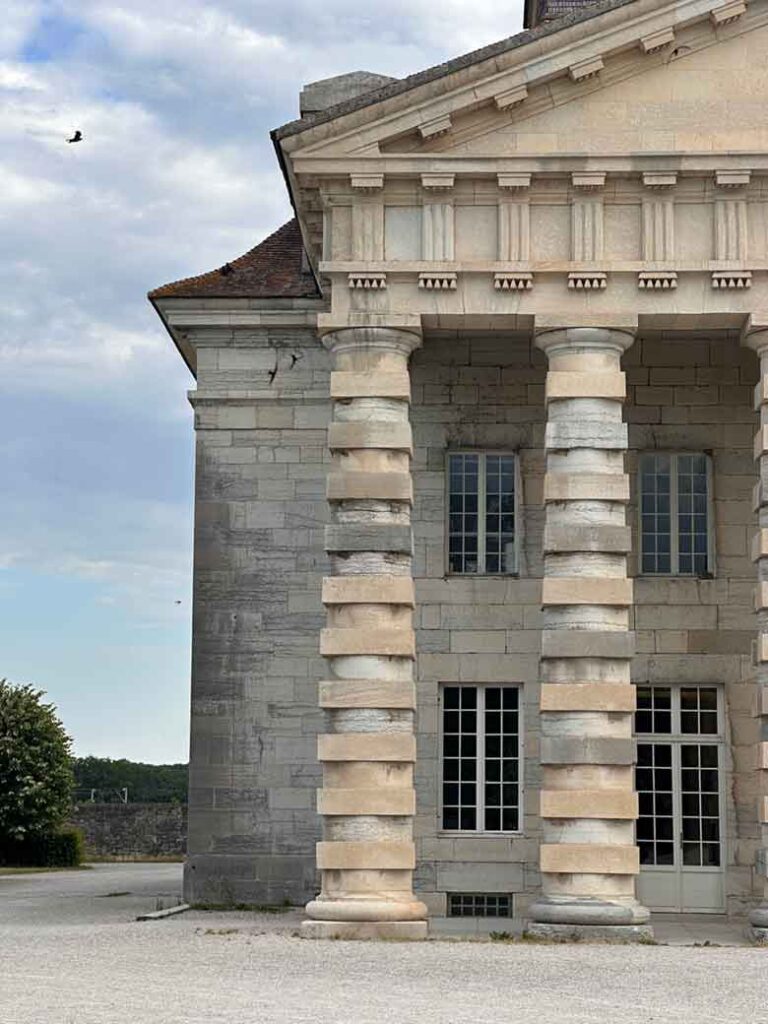
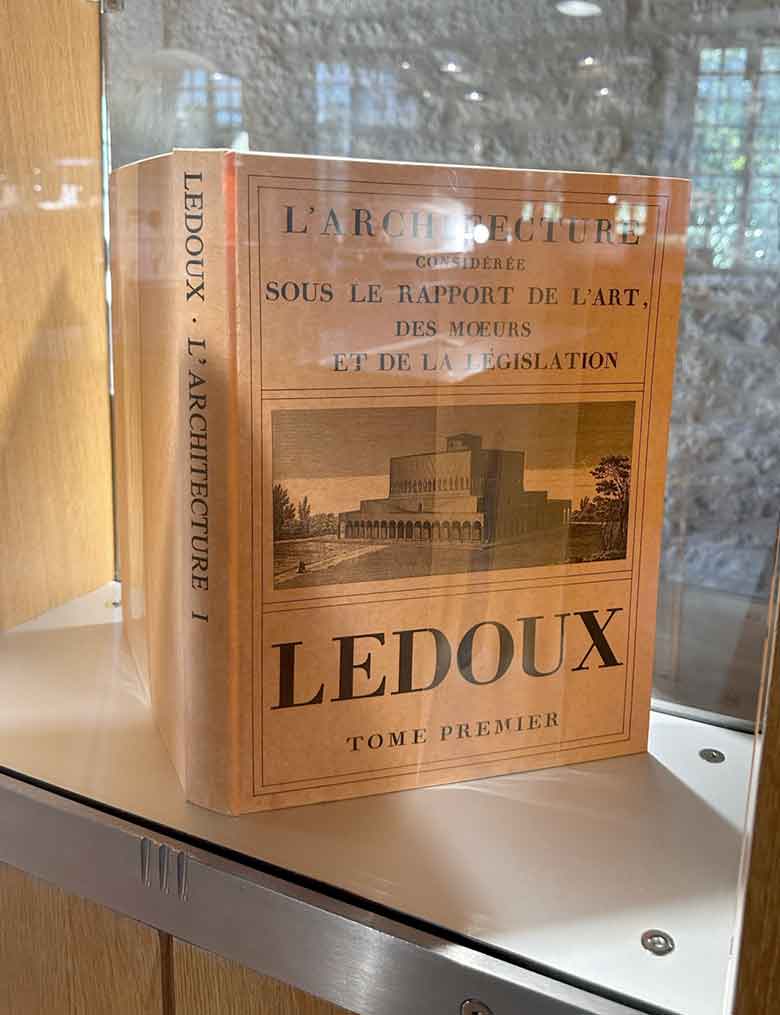
The Jura region has always had to make do with what the landscape provided. At times, this gave rise to remarkable industries. In the 18th century, architect Nicolas Ledoux designed the royal saltworks at Arc-et-Senans, a semicircle of monumental buildings that is now a UNESCO World Heritage Site. What was once a salt production facility is now considered a masterpiece of utopian architecture.
Ledoux didn’t just design a factory; he created a complete vision of ideal living and working. The columns are strikingly monumental for an industrial site. The salt was transported via a wooden pipeline over a distance of about 21 kilometers. In the two museums, you’ll learn not only about salt production but also about Ledoux’s visionary ideas, which in some respects were far ahead of their time.
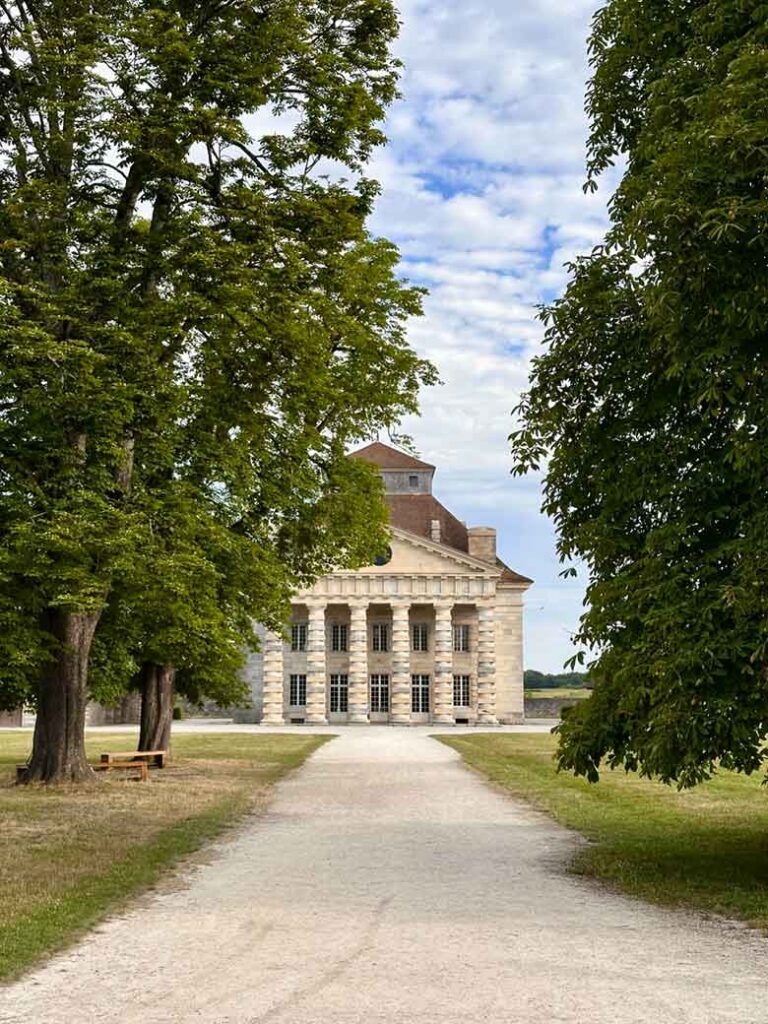
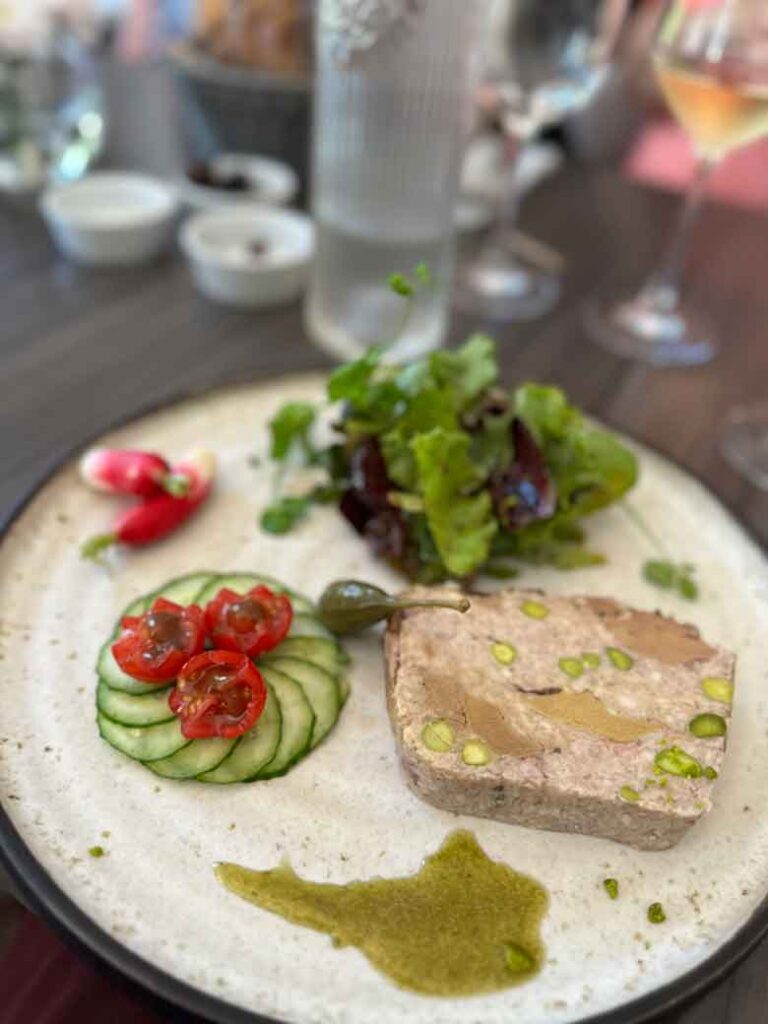
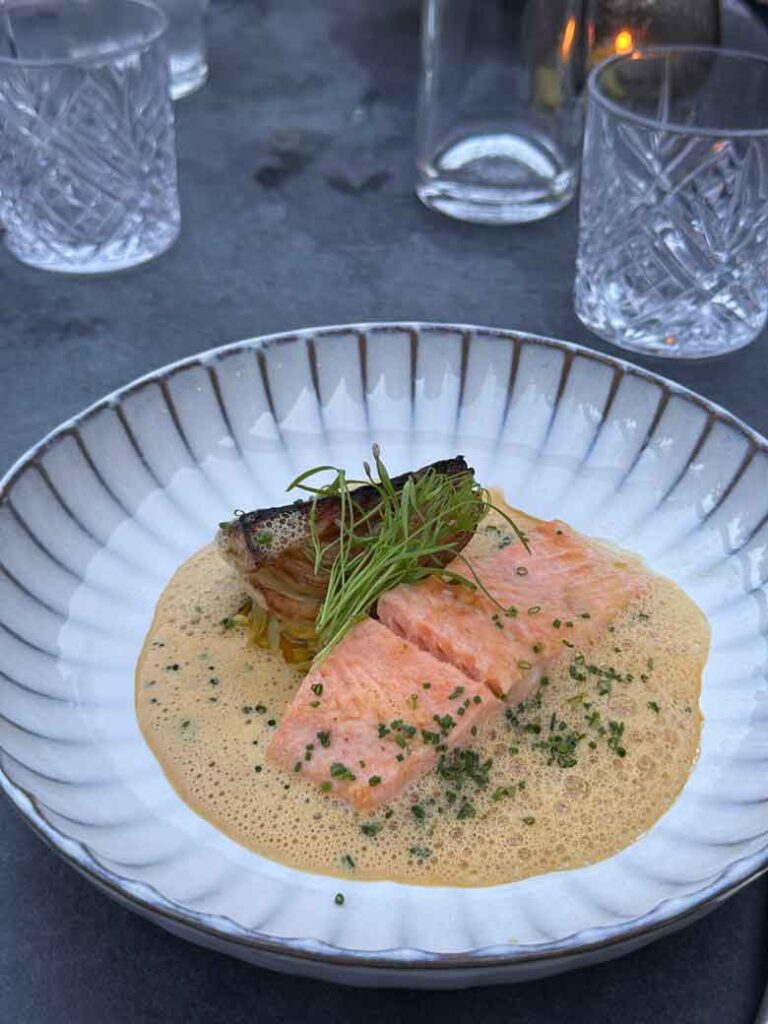
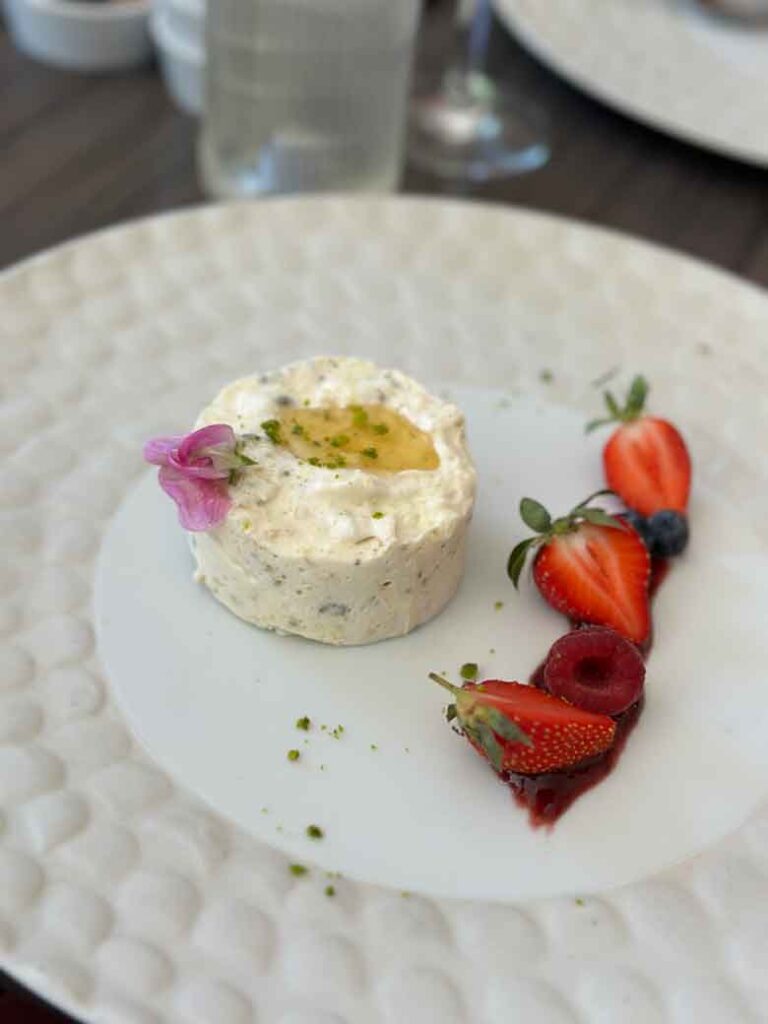
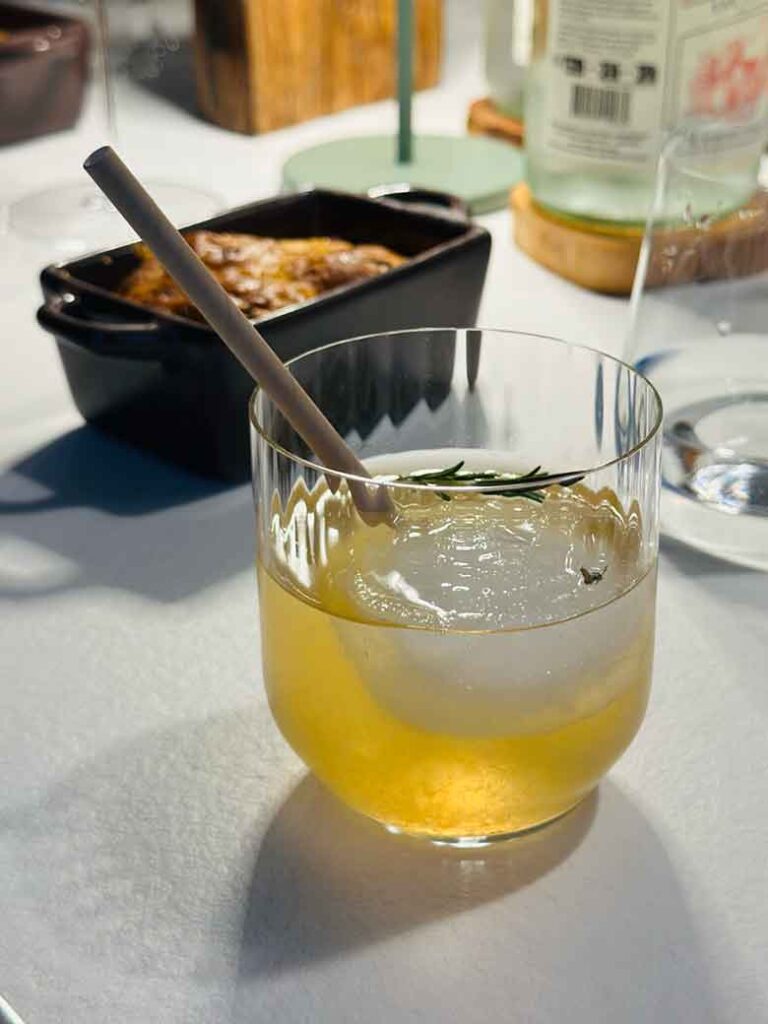
I spend the night there and experience the place at its most beautiful. As soon as the day-trippers leave, it grows quiet among the stately buildings. At sunset, the facades take on a soft yellow hue, and in the early morning, the gardens are reserved exclusively for hotel guests. Nearby, I dine at Le Verfeuille, a Bib Gourmand-awarded restaurant, where local ingredients are beautifully paired with wines from the Jura. Examples of distinctive Jura wines include Vin Jaune, Savagnin, and the light red Poulsard. Be sure to also try the mocktail with its subtle pine flavor.
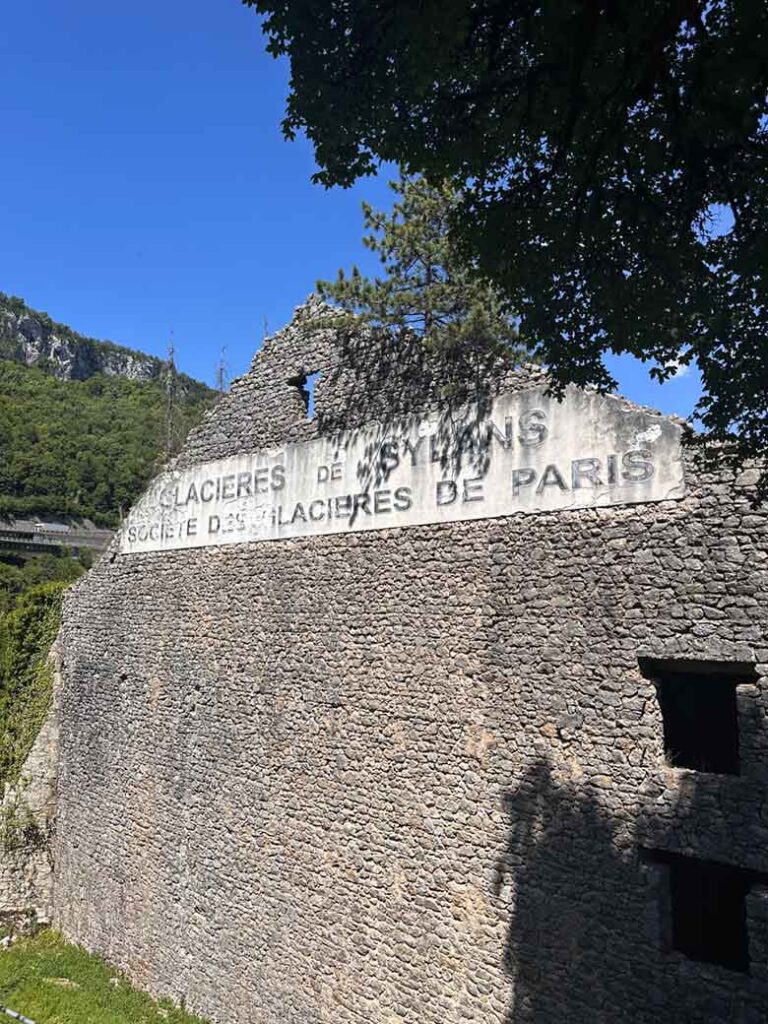
Even more surprising is the story of the former ice mines of Sylans. In 1864, entrepreneur Joachim Moinat came up with the idea of commercially selling natural ice from the lake. Workers cut blocks of ice from the lake, which were then transported to the railroad tracks by horses or cows. Straw and cloth were used for insulation.
The site reopened in 2017, thanks in part to the initiative of a grandson of a former worker. Today, you can use augmented reality to see how this now-defunct ice industry used to operate. It may not be a destination in and of itself, but it’s certainly an interesting stop if you’re in the area.
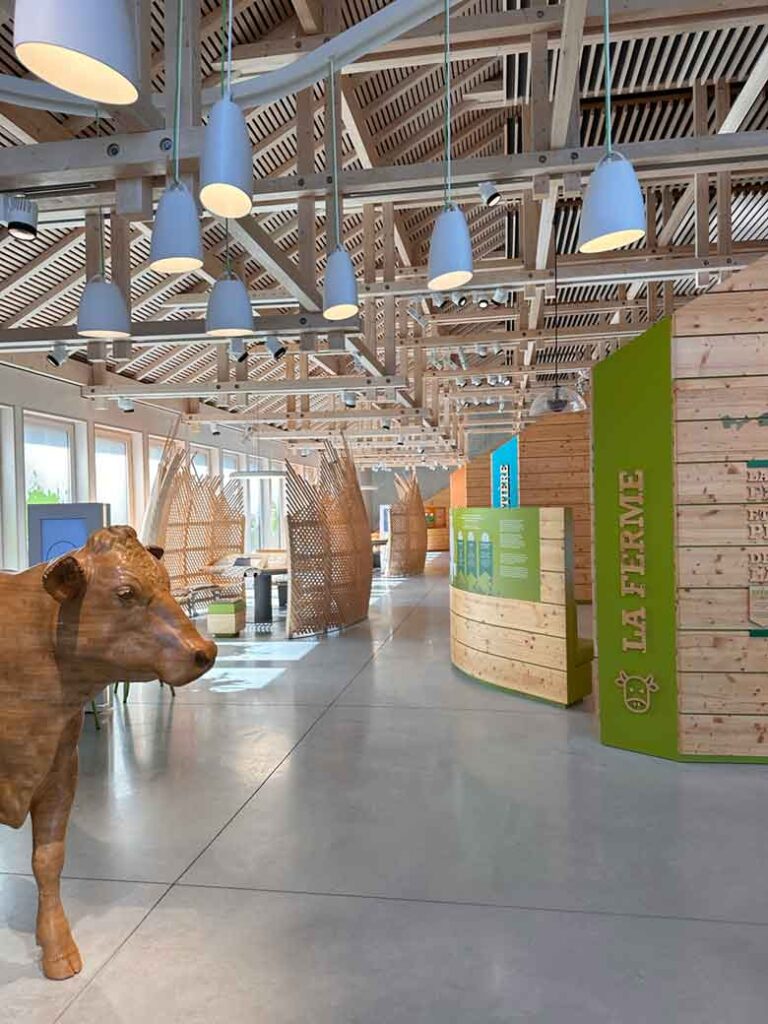
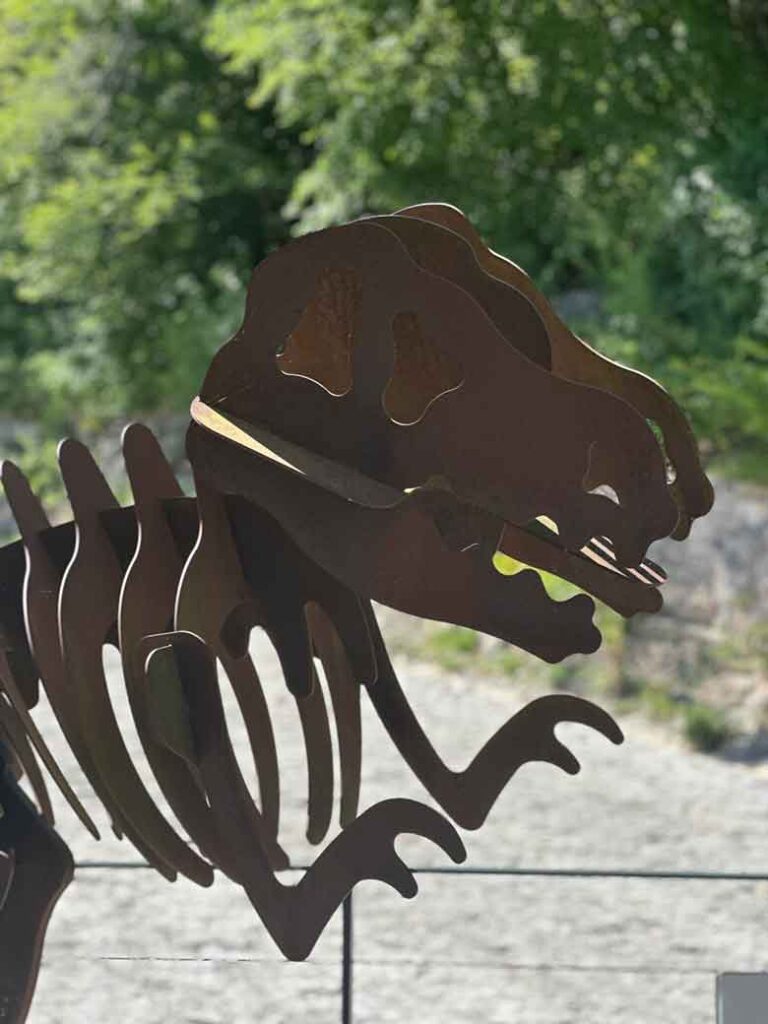
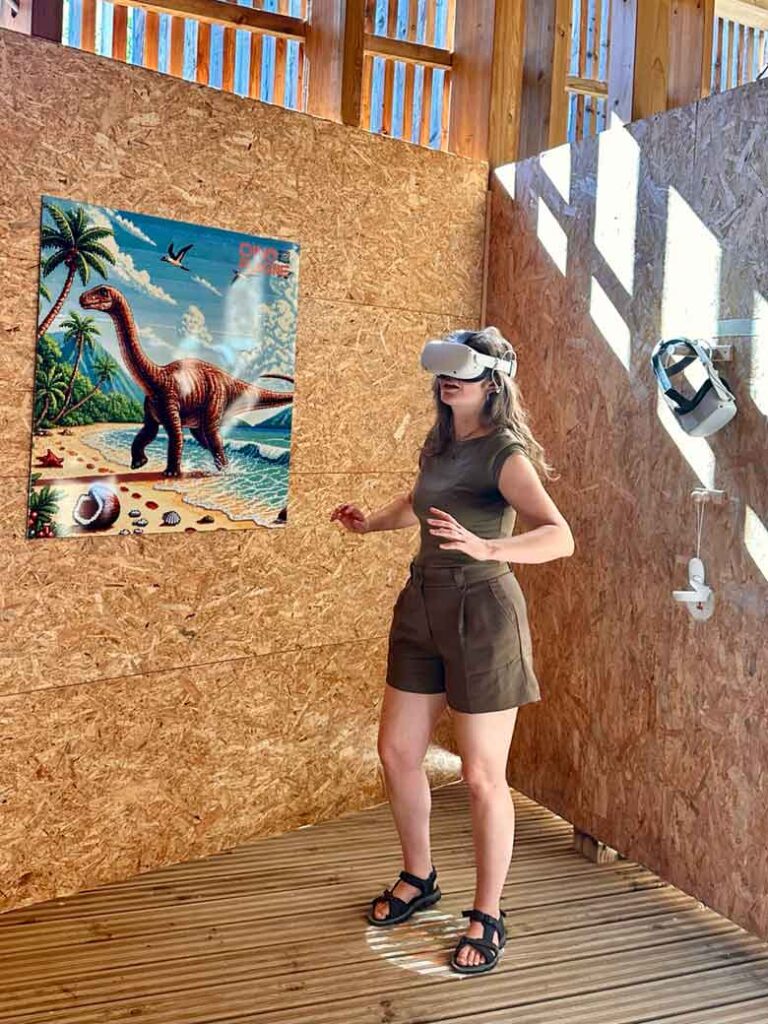
And then there are the dinosaurs. It is no coincidence that the geological period known as the “Jurassic” takes its name from the Jura Mountains. Dinoplagne Park in Plagne is home to the longest known trail of dinosaur footprints in the world. Even those who aren’t usually interested in dinosaurs can easily let themselves be transported here to a world from 150 million years ago.
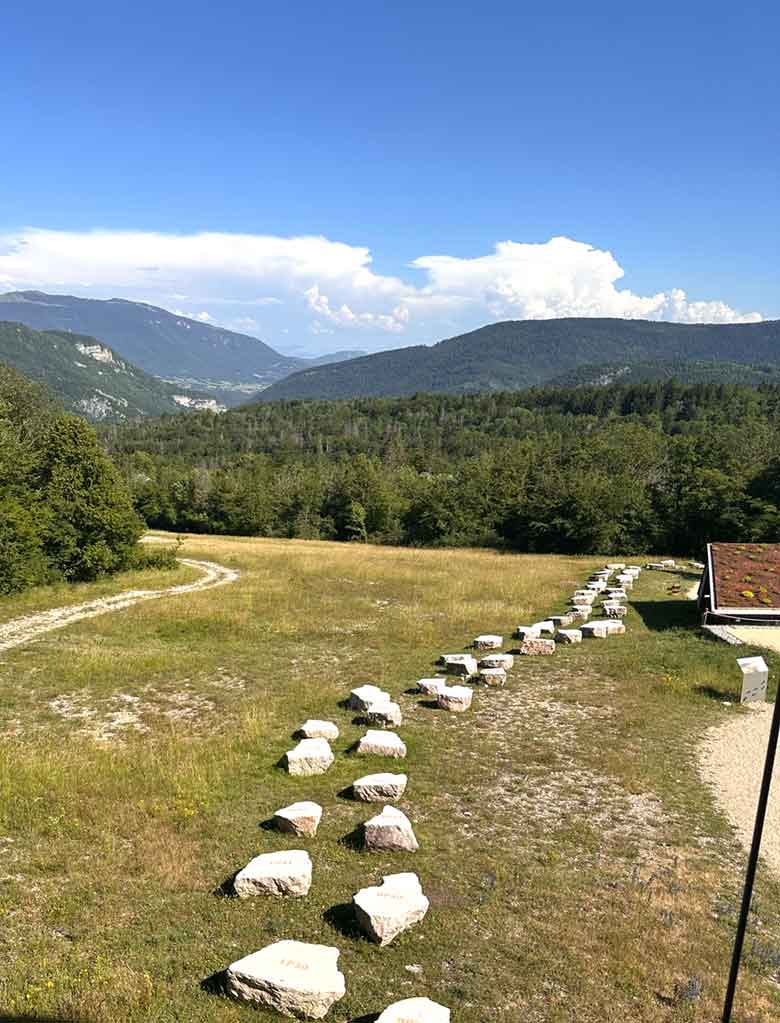
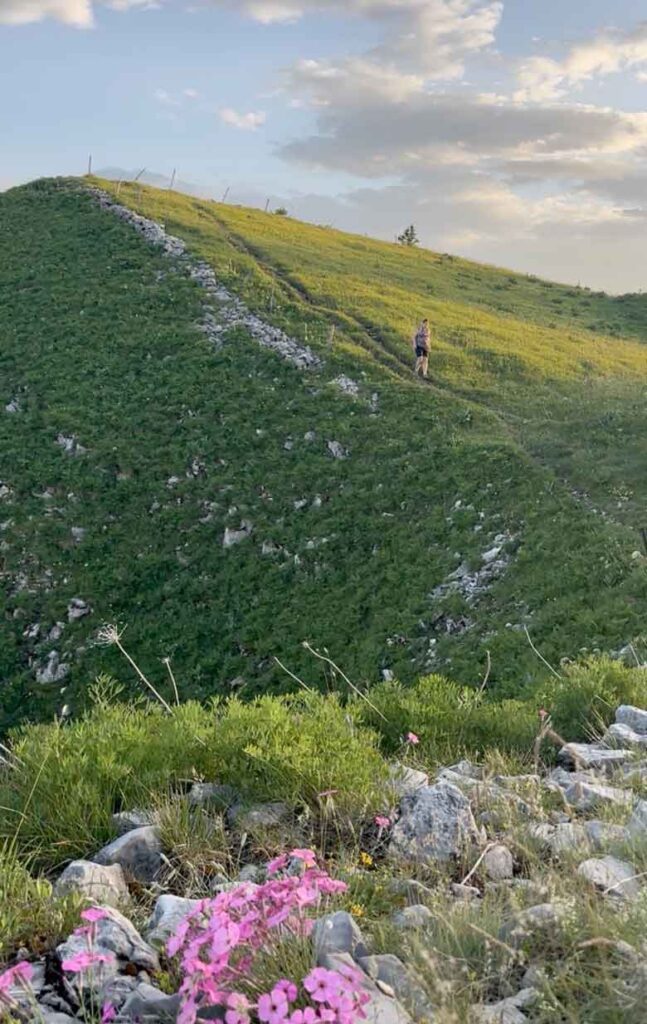
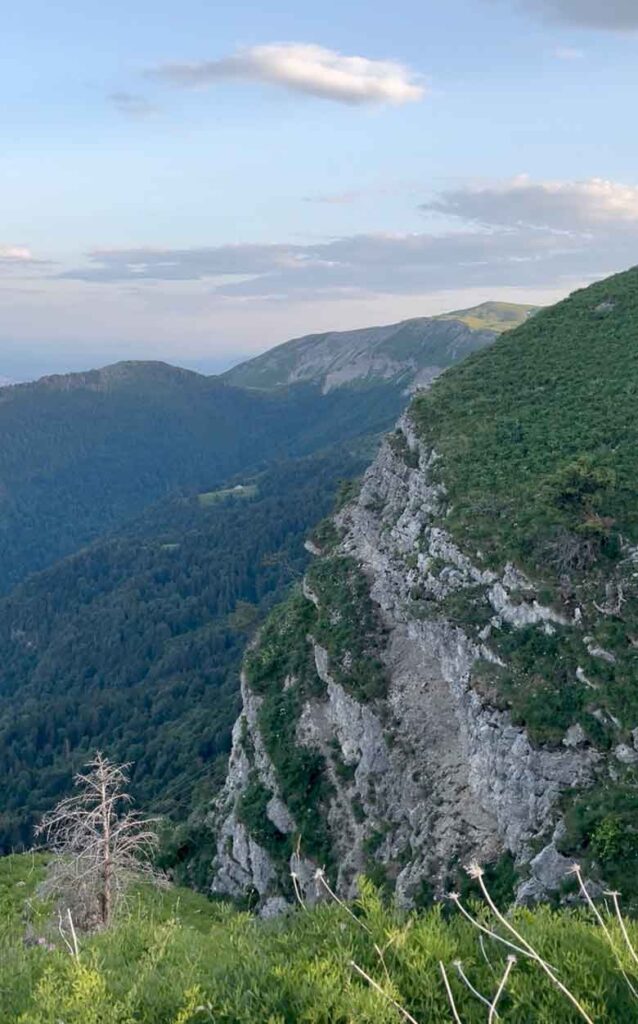
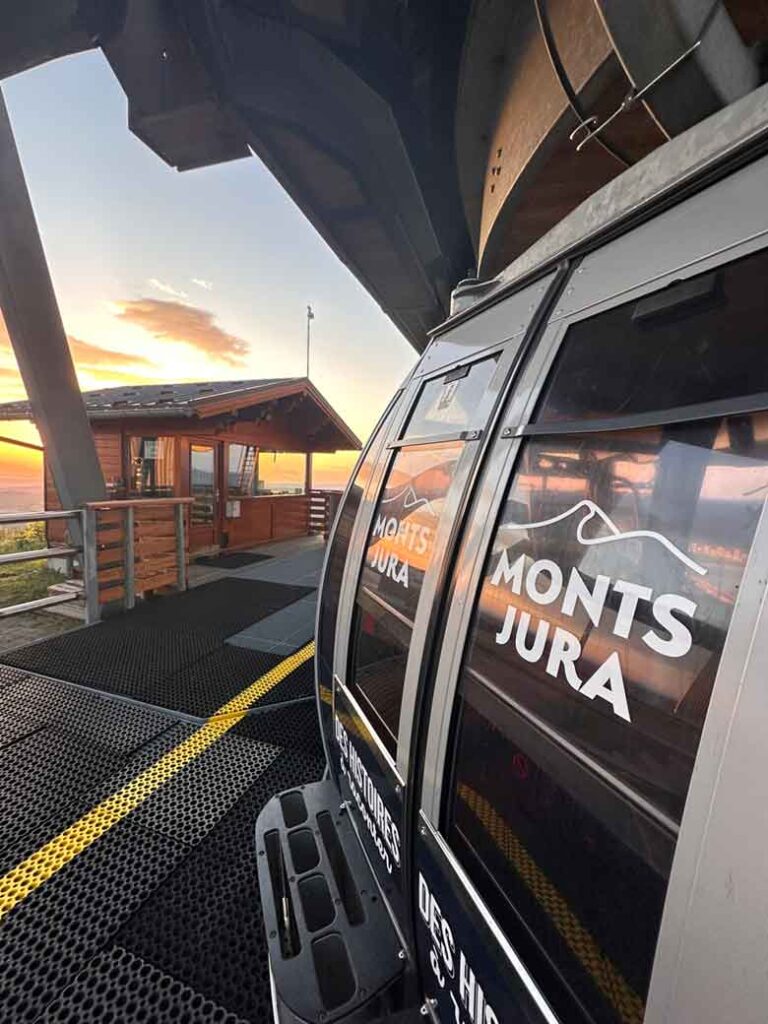
The highest parts of the Jura, a two-hour drive from Dole, appear more rugged than the gently rolling plateaus found elsewhere in the region. From the Col de la Faucille, a trail winds its way up to the ridges of the Haute Chaîne. In the evening light, the grasslands turn golden yellow, and the Alps slowly come into view on the horizon. On a clear day, you can see Mont Blanc.
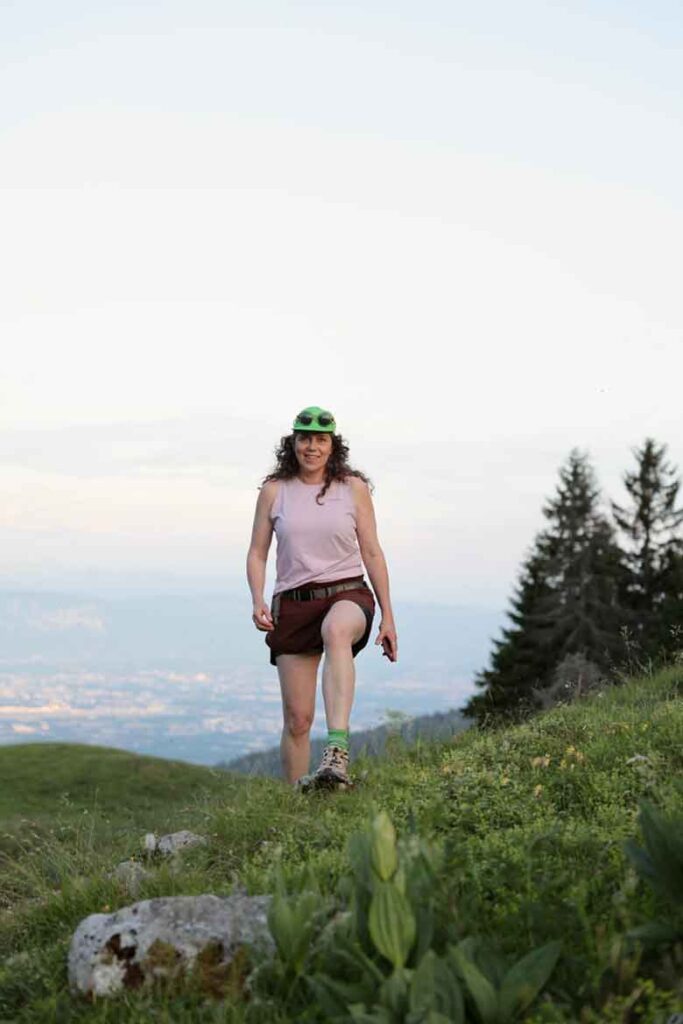
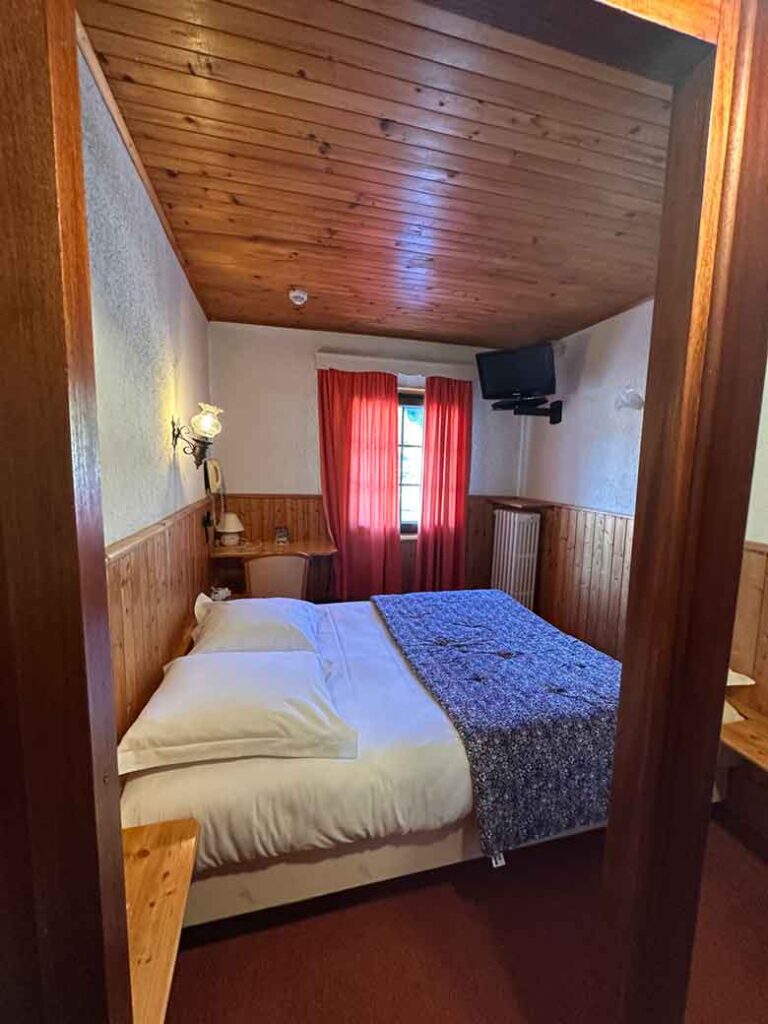
Accompanied by mountain guide Maximilien Vuillard, a one-and-a-half-hour evening hike along a beautiful trail takes us up the mountain toward Petit Montrond. As twilight sets in, everything grows quiet. Up above, a magnificent outdoor surprise awaits: Comté cheese fondue, Jura wine, and a view of the Geneva Valley. The walk back to the hotel is easy even in the dark, along a well-maintained path with a few steps here and there. The white gravel stands out faintly against the dark night. In half an hour, we’re back at the hotel.
Check out the Jura Nature Escape hiking trip and the Echappée Jurassienne
The Jura is a region that reveals itself gradually. It’s a place where a walk along a river’s source can be just as memorable as a visit to a UNESCO World Heritage Site, where the scent of spruce oil lingers from a small distillery, and where a piece of well-aged Comté is always within reach.
Perhaps that is the Jura’s greatest charm: everything here seems to be interconnected. The limestone shapes the valleys, the valleys nourish the grasslands, the grasslands provide milk for the cheeses, and these same landscapes have inspired artists, architects, and travelers for centuries.
If you’re looking for a lesser-known corner of France where nature and culture constantly come together, look no further than the Jura.
For more information, visit @MontagnesduJura.

By Eurostar and TGV, you can reach Dole—the gateway to the region—from Amsterdam in about eight hours. From there, you can drive further into the Jura in a rental car, or transfer to the scenic Ligne des Hirondelles train heading toward Saint-Claude. By car, it’s about 750 kilometers to Dole from Utrecht.
Absolutely. In addition to hiking trails, the region boasts a rich cheese-making tradition (Maison du Comté, Fromagerie de l’Abbaye), culture and art (Prieuré de Mouthier-Haute-Pierre), industrial heritage (Saline Royale, Sylans ice mines), and even dinosaur tracks (Dinoplagne). A driving tour of these sites is just as memorable as a hike.
Comté takes center stage, but the region has more to offer: Bleu de Gex, Vin Jaune, Savagnin, and the light-bodied red Poulsard. At the Maison du Comté in Poligny, you can taste young and aged Comté side by side; at the Fromagerie de l’Abbaye in Chézery-Forens, you can taste Bleu de Gex right at the source.
In just three days, you’ll get a taste of the region’s diversity: one day for Dole and the Lison Valley, one day for Comté and Mouthier-Haute-Pierre, and one day for Arc-et-Senans, Sylans, or an evening hike in the mountains near the Col de la Faucille. For those staying longer, combining your trip with one of the hiking tours through the Jura is a logical next step: Check out the Jura Nature Escape hiking tour and the Echappée Jurassiennehere.
June is highly recommended: the landscape is an endless expanse of green, and the pastures are full of grazing Montbéliarde cows. In late August and September, music festivals bring extra life to Dole, and in late September, the Gourmand Weekend draws thousands of visitors to the city.

Mieke Tacken
I am an interior designer, photographer, and an avid nature hiker. I’ve lost my heart to the simplicity and beauty of hiking vacations. I also appreciate the unique experience of a stay that tells a story about local history or culture. Here, I share my stories and tips—whenever possible, with a light footprint and always with a heart full of wonder.
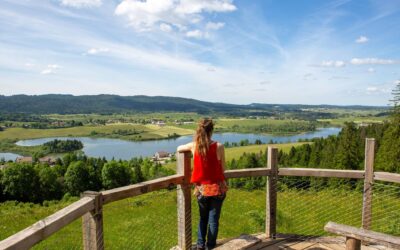
4-Day Hiking Trip in the Haut Jura: Along Lakes, Waterfalls, and Mountains There are few regions in Europe where nature is as unadorned and as distinctly present as in the Jura. Not the Jura you might know from cheese platters and wine lists—though those certainly...
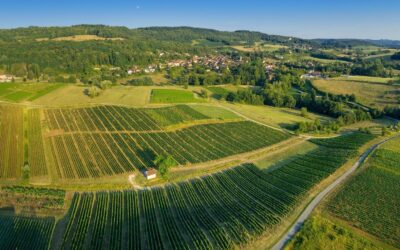
4- or 5-day hiking trip in the Jura Mountains: Echappée Jurassienne There are some trips where every step is a reward. The Echappée Jurassienne hiking tour through the Jura Mountains is one of them. For four or five days, you’ll hike through a landscape that’s...

The Grandes Traversées du Jura: The Most Beautiful Hiking and Biking Routes Les Grandes Traversées du Jura, commonly known as “GTJ,” comprise nearly 400 kilometers of spectacular trails in the mountainous region of eastern France. You can explore the trails on foot,...
Get inspired
Are you looking for the most beautiful hiking and biking routes? Or do you want information about traveling by train or advice for the most beautiful road trips through nature. Get inspired for your next trip in green; ideas for planning your own trip or opting for an organized trip.