Braunschweig: From Five Cities to the Fishing Ponds of Riddagshausen
On the way to Braunschweig from the Harz , I stopped at Wöltingerode Abbey, a monastery that now doubles as a hotel and where you can enjoy an excellent cup of coffee before continuing your drive. It was a nice transition, because once I arrived, Braunschweig also turned out to be a city that reveals a different layer of history on every street corner.
Braunschweig at a Glance: The Oker River as a Green Belt
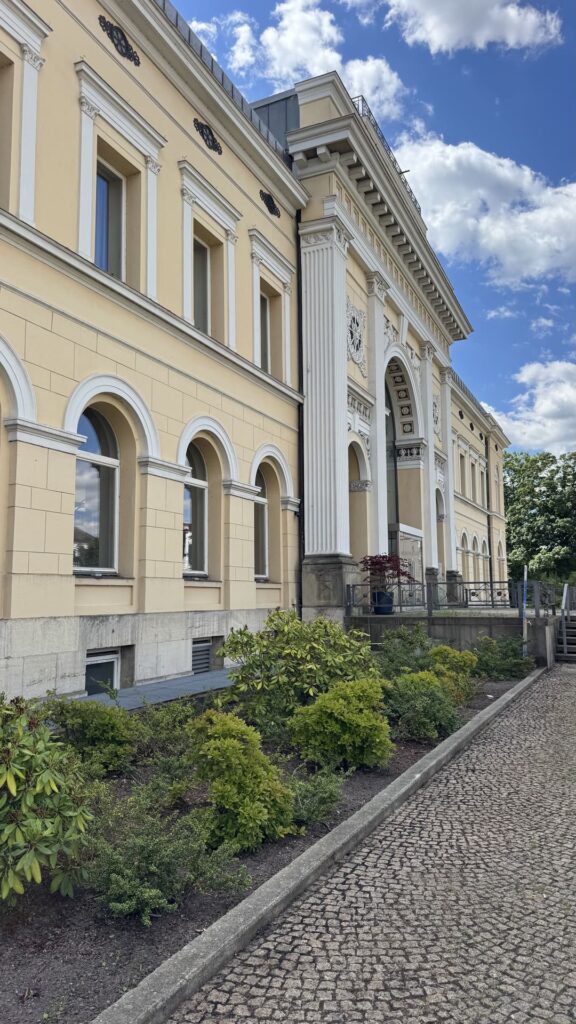
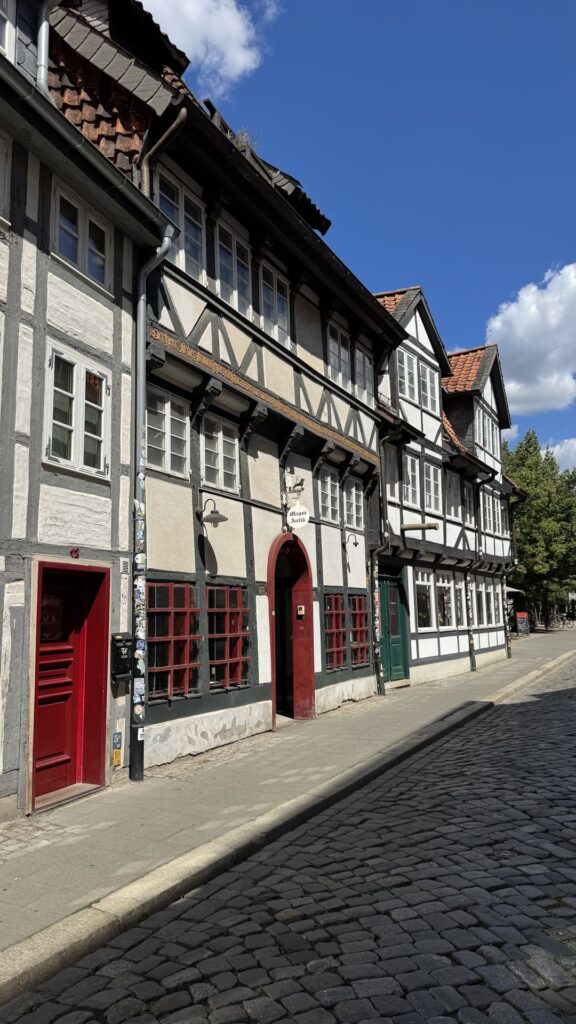
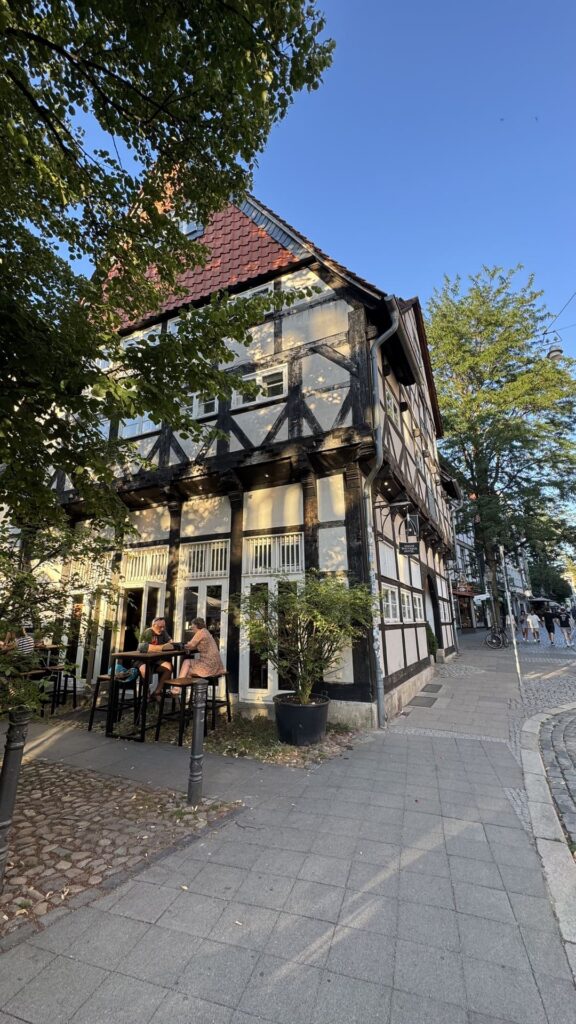
About 250,000 people live there, it has a university, and the Oker River still flows like a green belt around the city center. That greenery is the first thing you notice: a city that feels larger than its size would suggest, but where a few minutes’ walk brings you right back to the water and the trees. The city was bombed in 1944, which also wiped out a large part of the old town. At times, there’s a stark contrast between beautiful centuries-old buildings and modern, rapidly constructed new developments.
The city has a charming and cozy atmosphere. There are many outdoor cafes and a lively scene on and around the Oker.
Five Cities in One
What makes Braunschweig special is that the city once consisted of five independent settlements, each with its own government and its own rights. Altewiek was one of them, with its own town hall that still stands today as a reminder of that era. When you walk through the city center, you’re essentially walking through five former villages that were only later merged into a single city, which immediately explains why the atmosphere varies so much from neighborhood to neighborhood.
Cathedral and Burgplatz
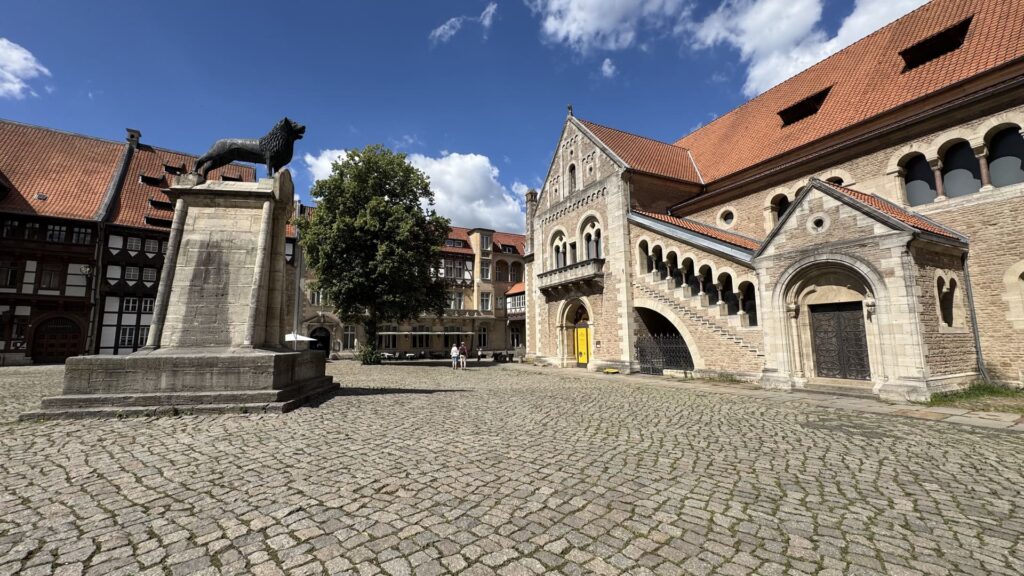
The cathedral stands on Burgplatz; admission is free, and volunteers are on hand who clearly take great pleasure in explaining the city’s history. It’s a great first stop, precisely because it’s so accessible: no admission fee, no rush—just walk in and listen.
Kohlmarkt: A Church That Disappeared, a Cemetery That Remained
There used to be a church on Kohlmarkt. The church itself is gone, but the cemetery beneath it is still there, while above ground, the outdoor cafes now take center stage. A classic example of how this city doesn’t erase its history but simply builds right over it. Three times a day—at 12, 4, and 6 p.m.—the carillon plays here.
The Residenzschloss: Rebuilt Three Times
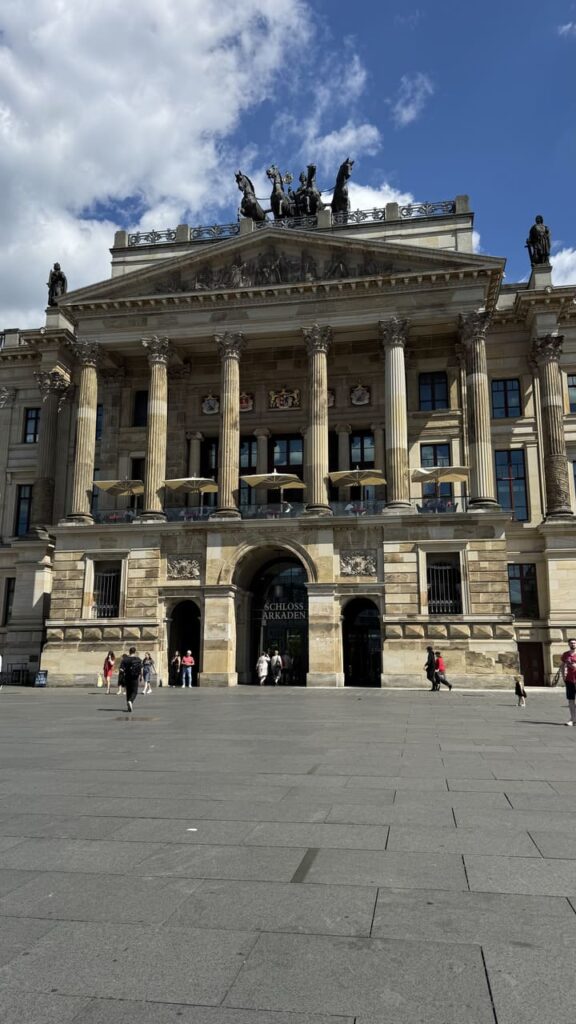
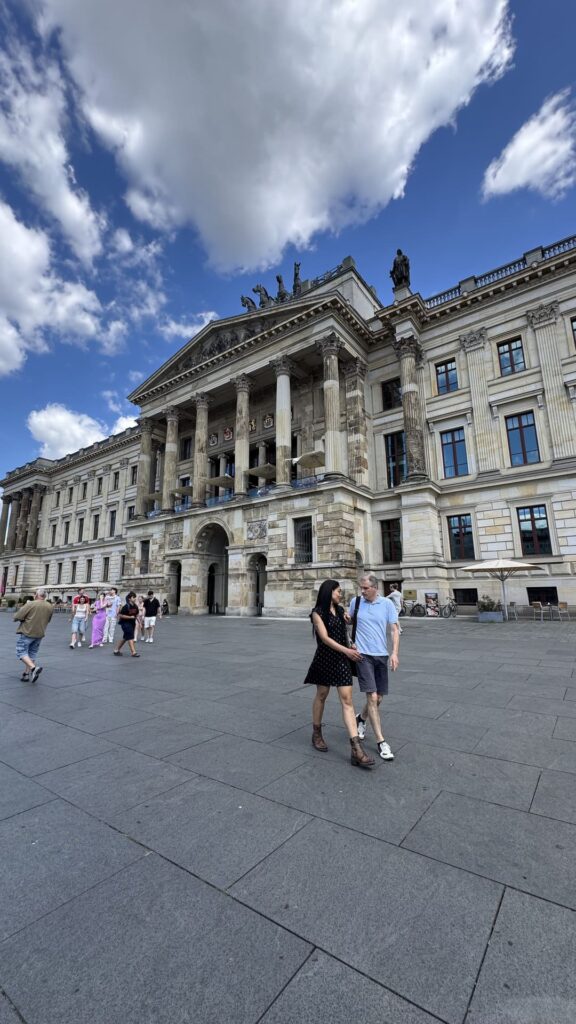
Few buildings in Braunschweig tell as much about the capriciousness of history as the Residenzschloss. The first palace went up in flames in 1830, set ablaze by outraged citizens who wanted to drive Duke Charles II out of the city.
The second palace was built between 1833 and 1841, was severely damaged during World War II, and was subsequently completely demolished in 1960, much to the anger of many.
It wasn’t until 2006 and 2007 that the facade was restored, with more than 600 original components rebuilt to full scale and reinstalled in their historic location. Inside, there is now a shopping center, along with a library, city archives, and a museum.
At the top stands the largest quadriga—a statue featuring four horses—in all of Europe. When the castle museum is open, you can go up to get a close-up view of the horses; it’s a sight well worth seeing.
Magniviertel and the Rizzi Haus
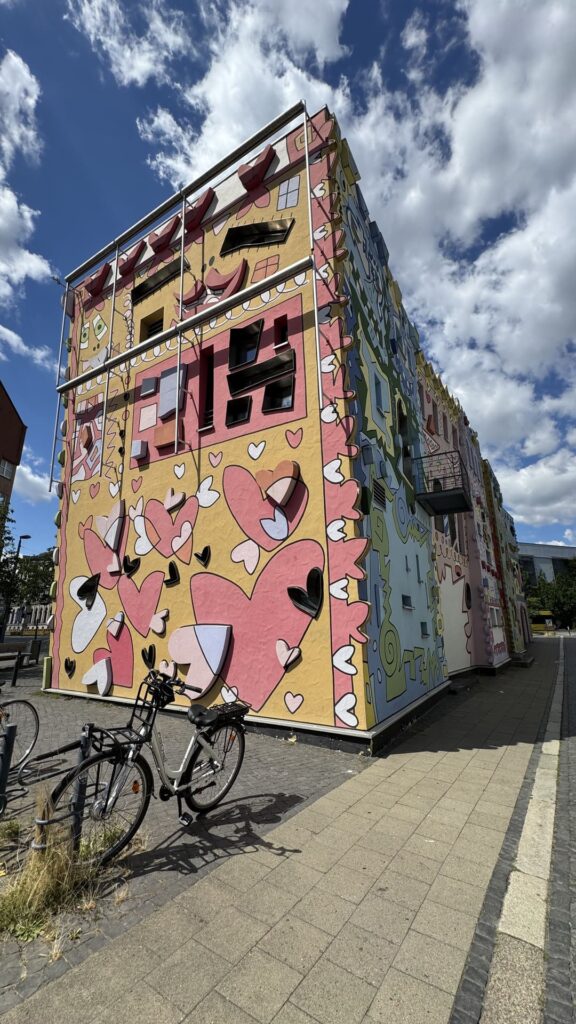
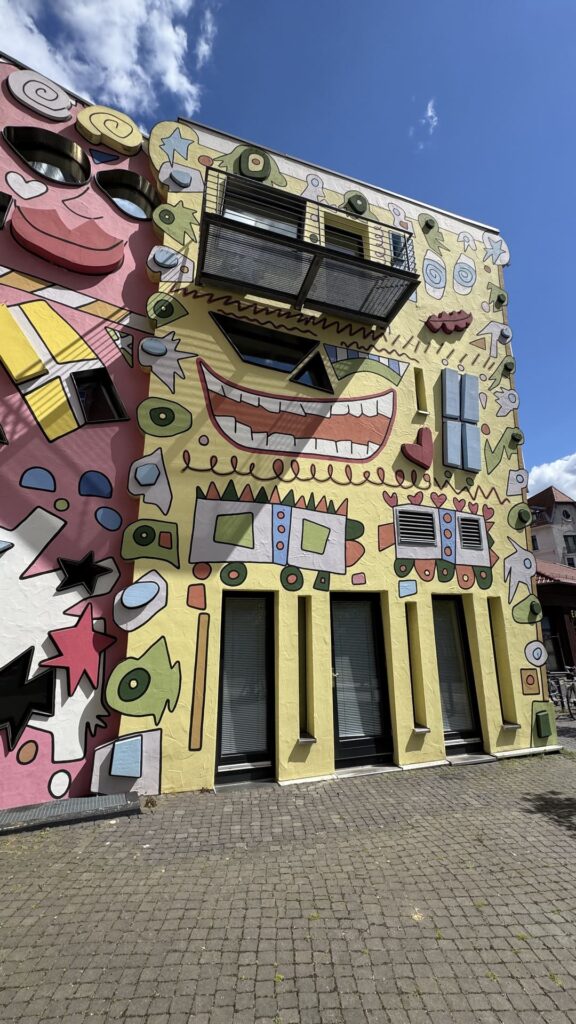
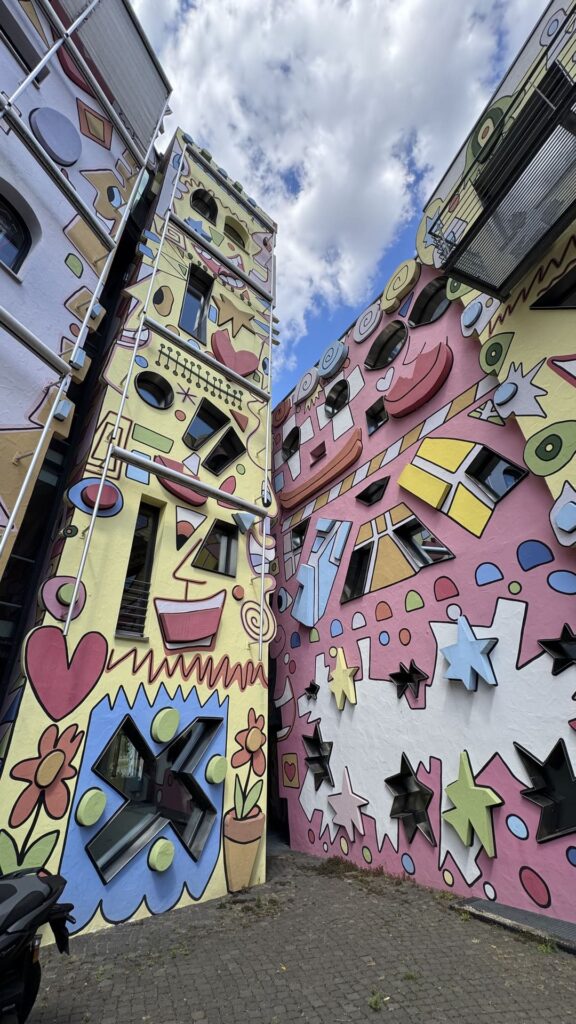
The Magniviertel is one of the city’s most charming neighborhoods, once literally an island within Braunschweig. This is also where you’ll find the Rizzi Haus, the colorful, whimsical building designed by artist James Rizzi, which stands in stark contrast to the rest of the historic city center—and is worth the detour for that very reason.
Riddagshausen Monastery: Nature Created by Monks
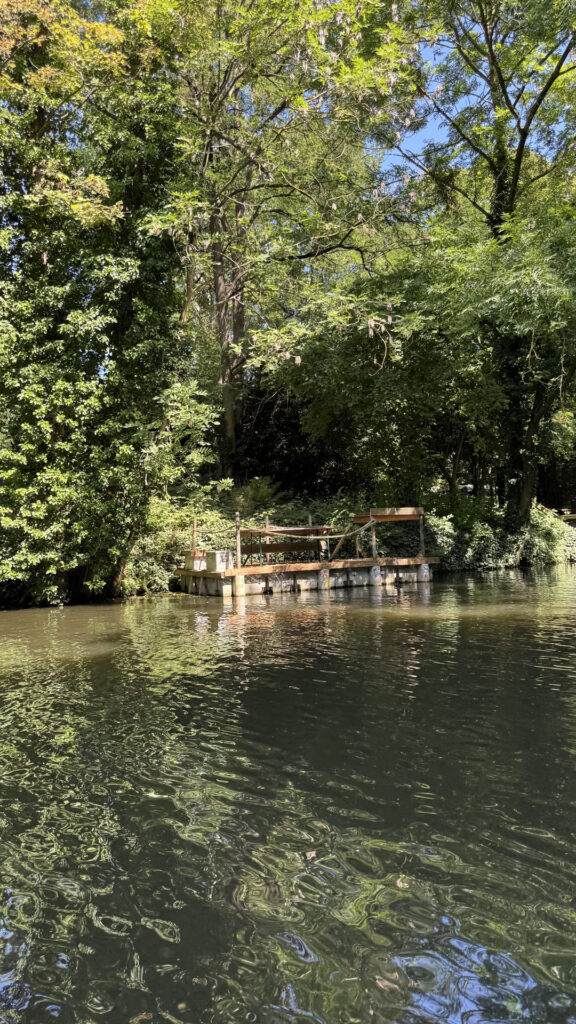
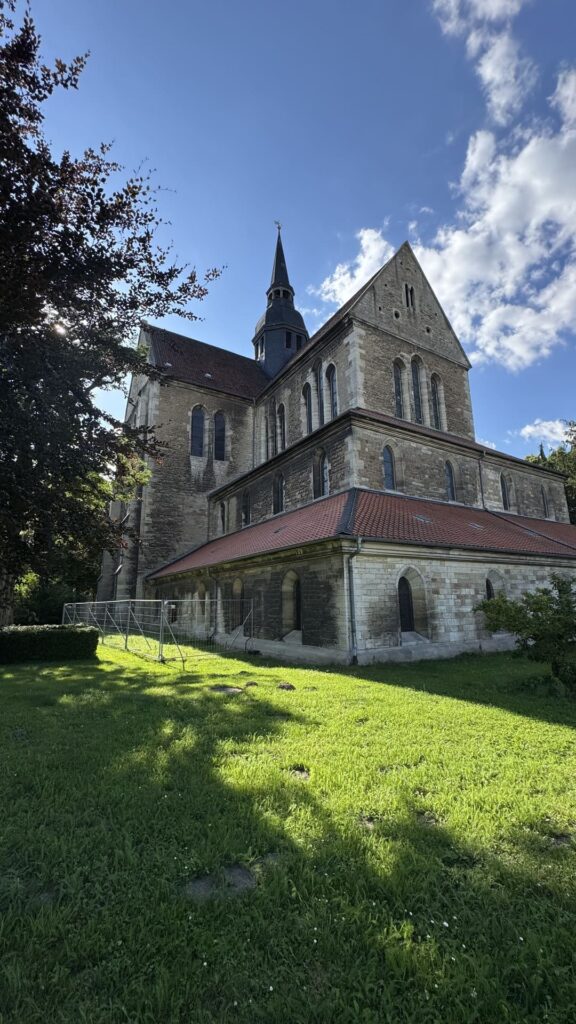
Take bus 413, which departs from City Hall, to reach Riddagshausen Abbey, now a Natura 2000 site. Cistercian monks settled here beginning in 1145 and built 28 fish ponds, 11 of which still remain today.
The neighboring village was granted to them by Henry the Lion in 1146. Fish is still sold here, directly from the fish farmers. The area is also known for its bats and is ideal for a leisurely bike ride.
Franciscan Monastery: Café Kreuzgang and the Beguinage
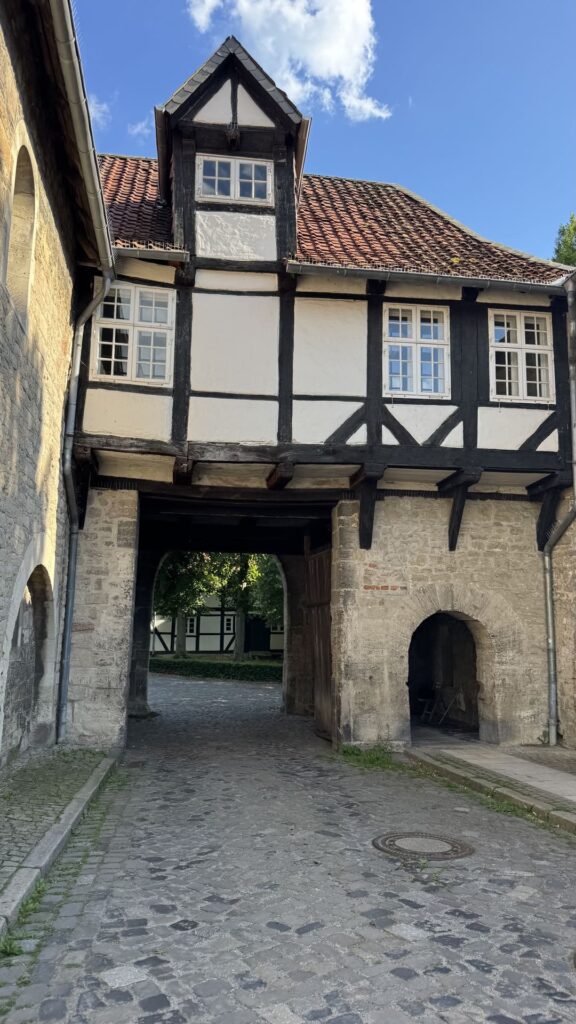
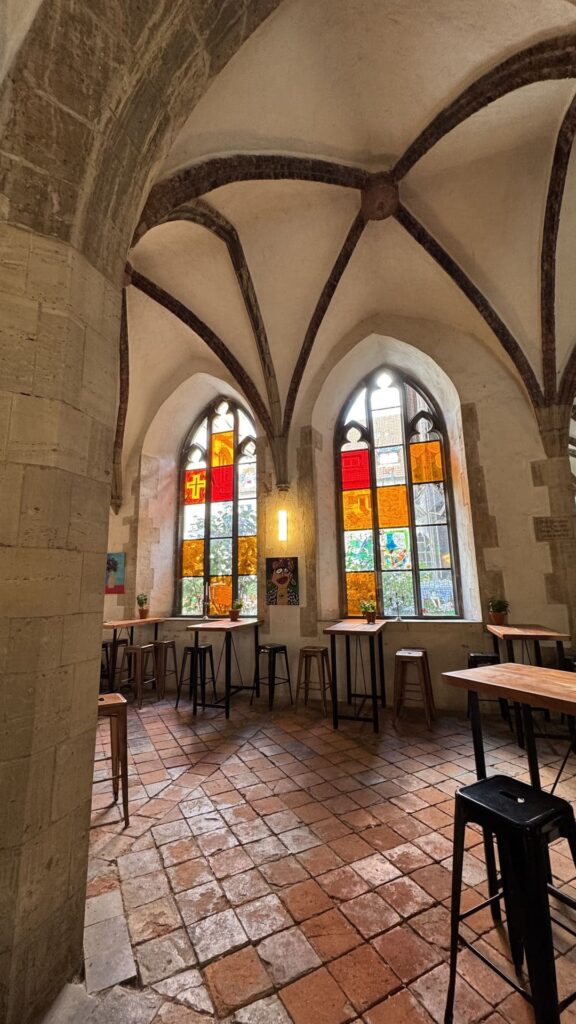
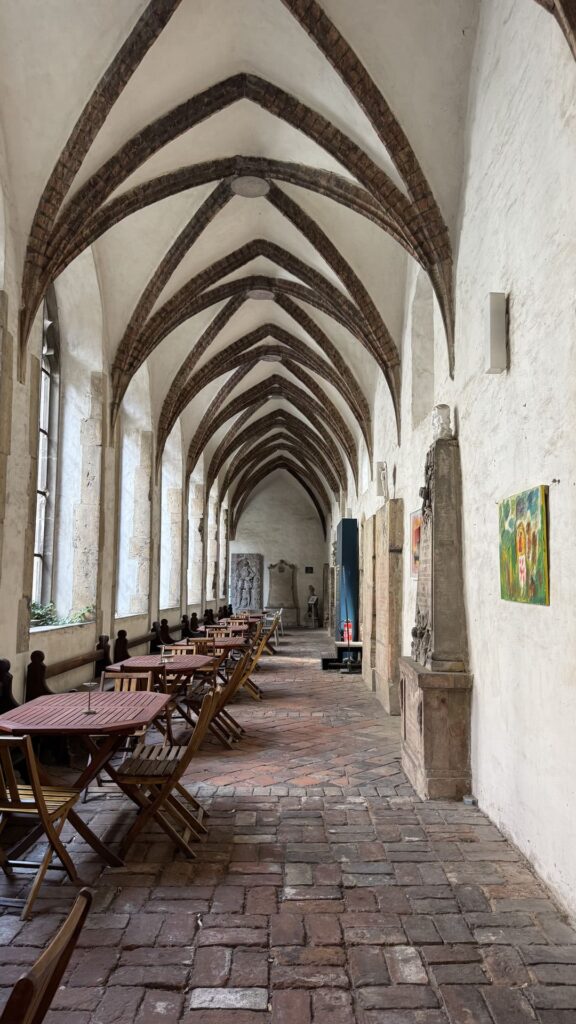
One of the most beautiful hidden spots I came across in Braunschweig. Café Kreuzgang, located in a Franciscan monastery, is open only during the season: starting May 12, Tuesday through Thursday from noon to 6 p.m., Friday and Saturday from 1 p.m. to 8 p.m., and Sunday from 2 p.m. to 6 p.m. It’s closed on Mondays, though there are occasionally events held outside those hours. The café is co-run by people with disabilities, which gives the place a warmth you don’t find everywhere. The beguinage itself is worth a visit, including the interior.
Art and History: Herzog Anton Ulrich Museum and Löwenwall
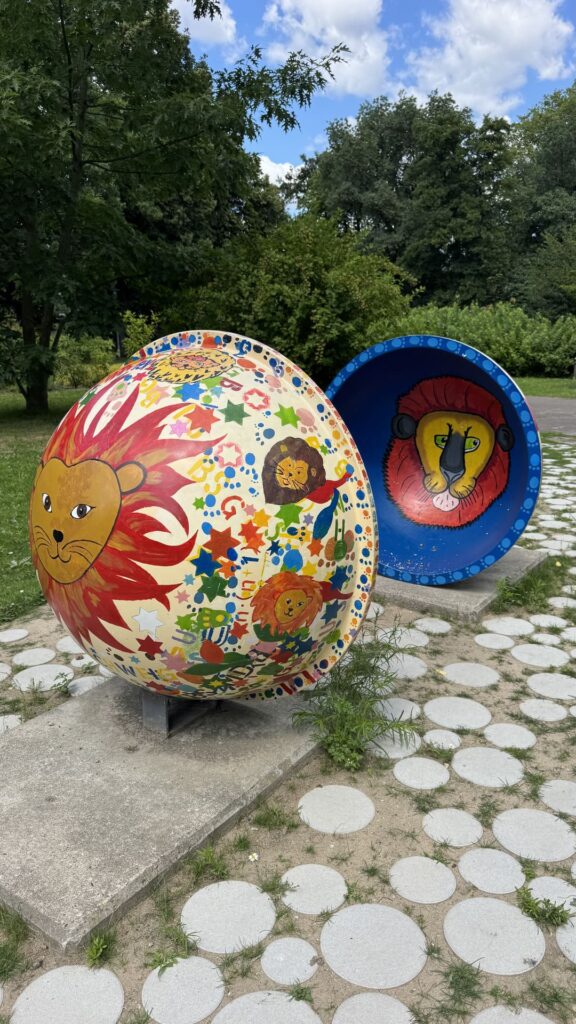
The Herzog Anton Ulrich Museum houses an impressive collection, including works by Rembrandt and Vermeer. Nearby is the Löwenwall, a green space in the city that’s a great place to relax between museum visits.
Dining and Lodging
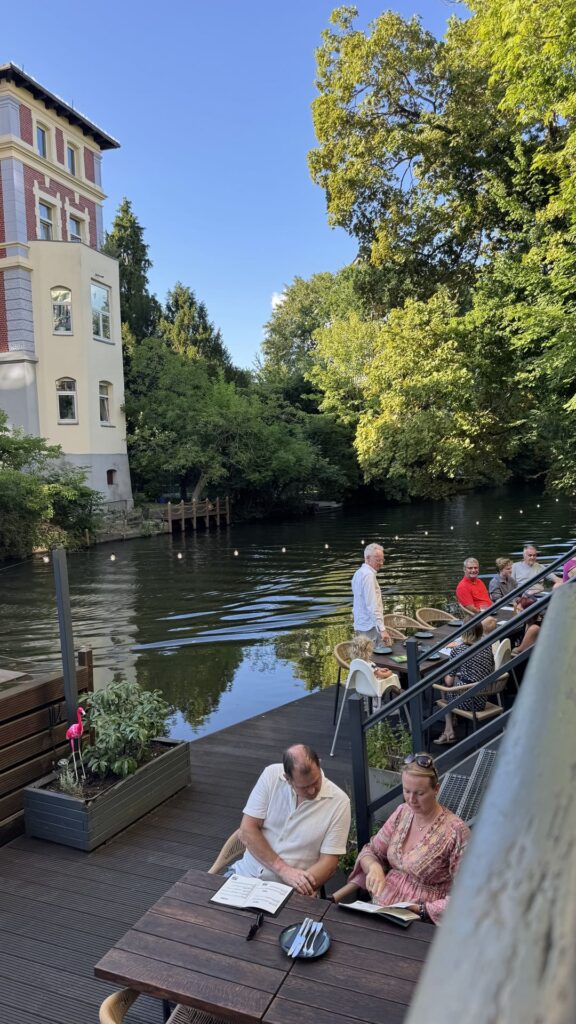
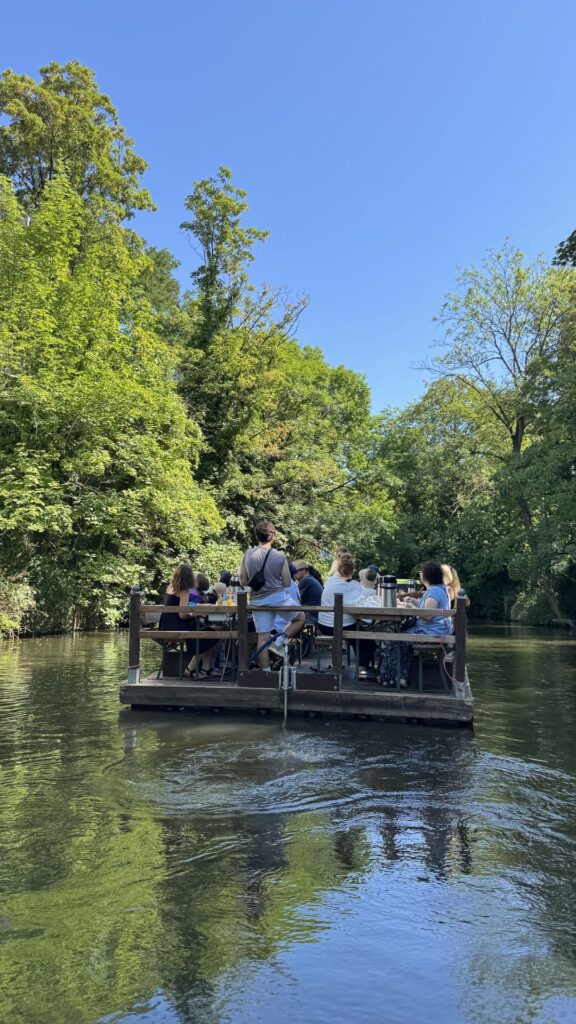
I stayed at the Steigenberger Parkhotel, which has an excellent, central location. For dining, I recommend the Nah am Wasser restaurant on the Oker River, and here’s a tip if you have the time: breakfast on a boat on the Oker is a surprisingly peaceful way to start the day.
Braunschweig: Practical Information
In 1888, Braunschweig got the state’s first train station, which already had a connection to the Harz Mountains at that time.
If you’d like to try some local dishes: asparagus, cabbage, and sausage are often on the menu here, depending on the season.
Combine your visit to Braunschweig with a city trip to Goslar and the lesser-known Wolfenbüttel, both historic towns in the Harz Mountains.
Frequently Asked Questions About Braunschweig
Is Braunschweig a good stopover on a trip through the Harz Mountains?
Yes, the city is a convenient distance from the Harz Mountains and offers a nice mix of mountain scenery and urban history.
Can I get to the Riddagshausen Monastery by public transportation?
Yes, bus 413 from City Hall takes you directly to the monastery and the Natura 2000 area.
How much does it cost to visit the Braunschweig Cathedral?
Nothing—visiting the Dom is free, and volunteers are on hand to explain its history.
Met een passie voor reizen en fotografie én meer dan 30 jaar ervaring in de reisbranche, deel ik graag mijn bijzondere natuur-reistips. Reizen is heerlijk en belangrijk, je ontmoet nieuwe mensen en culturen en het opent je blik op de wereld.
Aachen Off Track: A Green City Trip Featuring a Forest, an Organic Garden, and Charlemagne A city with an imperial history, surrounded by forests stretching all the way to the Belgian and Dutch borders. Aachen cannot be taken in at a single glance: its historic...
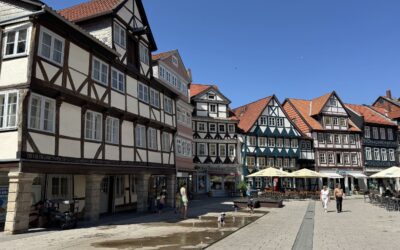
Wolfenbüttel: A Small Town with Big Secrets From Braunschweig , I cycled (on a real old-fashioned bike) to Wolfenbüttel, a lovely ride of about 12 kilometers that ended with lunch at the Beach Club on the Oker. Along the way, I realized why this little town looks so...
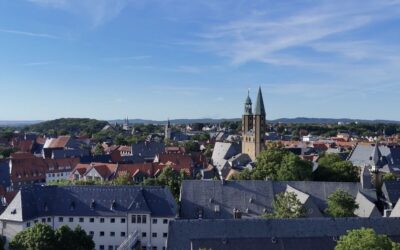
Goslar: A City That Spans Nine Centuries It took the guide two hours to take us on a journey from the 11th century through the Middle Ages, the Prussian era, and the Renaissance, right through the heart of the same city center. Goslar was the starting point of my...
Last September, we had a wonderful six-day hiking vacation from Bologna to Florence (Via Degli Dei). Not only was the weather perfect, but the organization also contributed to this wonderful experience. The hotels were good, and our luggage was always delivered to the hotel before we arrived. The private transfer was on time, and communication via WhatsApp during our hiking week went smoothly as well; responses were quick and clear. We can therefore definitely recommend this hiking vacation through Nature Travel Lab!
Rated 5 out of 5
We hebben afgelopen september een heerlijke wandelvakantie (zes dagen) gehad van Bologna naar Florence (Via Degli Dei). Niet alleen werkte het weer mee, maar ook de organisatie droeg bij aan deze fijne ervaring. De hotels waren goed en onze bagage werd steeds vóór onze aankomst bij het hotel afgeleverd. De privétransfer was op tijd en het contact via WhatsApp tijdens onze wandelweek verliep ook goed; er werd snel en duidelijk gereageerd. Wij kunnen deze wandelvakantie via Nature Travel Lab dan ook zeker aanbevelen!
Johan en Pauline
After reading the report on the “Alpenüberquerung,” we got really excited. The combination of hiking through beautiful nature and the luxury of luggage transport and a reserved hotel perfectly meets our desire to stay active but then be able to enjoy a well-deserved drink and a delicious meal. The hikes were manageable for us and very varied; some basic fitness is required, especially since we aren’t used to the elevation gain. The trip really gives you the feeling that you’re on a hiking expedition, especially since you hike on your own but meet the same fellow hikers in the afternoons and evenings at one of the mountain huts or at the hotel. Highly recommended for hikers who love unspoiled nature combined with the luxury of a hotel!
Rated 5 out of 5
Na het lezen van het verslag van de 'Alpenüberquerung' zijn we enthousiast geraakt. De combinatie van wandelen in de prachtige natuur en de luxe van het bagagetransport en een gereserveerd hotel, beantwoord helemaal aan onze wensen om actief bezig te zijn maar daarna lekker te kunnen genieten van een welverdiend drankje en een lekkere maaltijd. De wandelingen waren voor ons goed te doen en zeer gevarieerd; enige basisconditie is wel vereist, zeker omdat we de hoogtemeters niet gewend zijn. De tocht geeft je echt het gevoel dat je op een wandel-expeditie bent, helemaal omdat je individueel loopt maar 's middags en 's avonds dezelfde lopers treft in één van de hutjes op de berg of in het hotel. Absolute aanrader voor wandelaars die van ongerepte natuur houden gecombineerd met de luxe van een hotel!
Ton & Julia
Peloponnese Hiking Tour
Rated 5 out of 5
Wandelreis Peloponnesos
Mar en Co
A really beautiful six-day hike from Bologna to Florence. Communication with NatureTravelLab and the local agent was excellent. The information packet was waiting for us at the hotel in Bologna, and the app with the route worked great. Luggage transport was well organized every day, and our bags were waiting for us each time we arrived at our new room! We covered more than 1,400 meters of elevation gain, but unfortunately didn’t always get the views we’d hoped for due to cloud cover and some drizzle. Most days had great hiking weather. It was wonderful to walk into Florence on foot and stay there an extra day.
Rated 5 out of 5
Een hele mooie zesdaagse hike van Bologna naar Florence. Communicatie met NatureTravelLab en lokale agent was prima. Infopakket lag klaar in hotel in Bologna en app met route werkte top. Bagagevervoer was elke dag goed geregeld en de tassen stonden er elke dag weer als we aankwamen in onze nieuwe kamer! Meer dan 1.400 hoogtemeters gemaakt, maar hadden helaas niet altijd de gewenste uitzichten door bewolking met wat motregen. Meeste dagen prima wandelweer. Heerlijk om per voet Florence in te lopen en daar nog een dag extra gebleven
Jeroen
We experienced the Walk of the Gods as a great adventure. Our start in Bologna didn’t go quite as planned because our app wasn’t working yet and we couldn’t find a single sign for Via degli Dei in the square. Fortunately, we were quickly able to join two young hikers from Florence who were also doing the hike. After a wonderful night’s stay at the beautiful Rio Verde agritourism farm, Day 2 went much better with the help of the hiking app. Along the way, we enjoyed stunning views, met some great fellow hikers, and sampled delicious local dishes. Unfortunately, the weather wasn’t always on our side, and we had a day of heavy rain, which made the trail very slippery and required us to be careful. It’s a real treat when, on the last day, you can already see Florence in the distance and walk into this beautiful city a few hours later. Thank you so much for your quick and friendly responses to all our questions.
Rated 5 out of 5
We hebben de tocht der Goden als een groot avontuur ervaren. Onze start in Bologna verliep niet helemaal naar wens omdat onze app nog niet werkte en we op het plein geen enkel bordje konden vinden van Via degli Dei Gelukkig konden we snel aansluiten bij twee jonge wandelaars uit Florence die de tocht ook liepen. Na een heerlijke overnachting in een prachtige Agri toerisme Rio Verde verliep dag 2 een stuk beter met behulp van de wandel app. Onderweg hebben we genoten van prachtige uitzichten. Leuke wandelaars ontmoet en heerlijke streek gerechten geproefd. Helaas waren de weer goden ons niet altijd goed gezind en hadden we een dag volop regen waardoor het pad erg glibberig werd en het oppassen was. Het is volop genieten als je de laatste dag al van veraf Florence ziet liggen en deze mooie stad een paar uur later binnen loopt. Dank je wel voor jullie snelle vriendelijke reacties op al onze vragen.
Rob en Jose
We enjoyed the trip. We also made some changes to our itinerary, and the email correspondence went very smoothly. We started in Mantera; the next day, our first and only hike was a really beautiful one. The taxi picked us up right on time. Unfortunately, the second day’s route was almost the same when we cycled to Ostuni. The bikes were well-maintained, including panniers and helmets (these were simply included). You could even bring your own water bottle!!! We found the route very scenic and varied. There were charming little villages where we could stop for lunch or coffee. The app worked great. All the hotels ranged from good to excellent, though we didn’t think the hotel in Leuca was worthy of 4 stars. We followed your advice for the two nights we stayed there. We found Leuca a bit underwhelming for a two-day stay. We would have preferred to stay in Gallipoli or Lecce for two days. We took this trip in April and were very lucky with the weather. It’s still a quiet time of year, but we didn’t mind that. We definitely recommend it!!!
Rated 5 out of 5
We hebben de reis als prettig ervaren. We hebben ook onze reis aangepast en de mails gingen erg vlot. We zijn in Mantera begonnen, de volgende dag onze 1e en enige wandeling was een hele mooie wandeling. Werden netjes opgehaald door de taxi. Helaas was de 2e dag bijna de zelfde route toen we gingen fietsen naar Ostuni. De fietsen waren keurig verzorgd incl.fietstassen en helmen ( Dit zat er gewoon bij) Je zou zelf een bidon kunnen meenemen !!! De route vonden wij heel mooi en afwisselend. Leuke dorpjes om te lunchen of koffie te drinken. Gaat prima met de app. Alle hotels zijn prima tot uitstekend, echter het hotel in Leuca vonden wij geen 4 * waardig. Waar we 2 nachten verbleven zijn we vanuit jullie advies gegaan. We vonden in Leuca iets minder voor 2 dagen. We hadden liever in Gallipoli of in Lecce 2 dagen verbleven. Wij hebben deze reis in april gedaan, hadden veel geluk met weer. Is nog rustig periode, maar dat vonden wij niet erg. Het is zeker een aanrader !!!
Rondreis door Puglia
Thanks to a great tip from Nature Travel Lab, we had a wonderful week in Italy. Fattoria di Maiano, just outside Florence, was a beautiful and peaceful place. And the suggested road trips were a great guide for exploring the region. We’ll definitely check here for tips for our next vacation, too. Highly recommended!
Rated 5 out of 5
Dankzij een gouden tip van Nature Travel Lab een heerlijke week gehad in Italië. Fattoria di Maiano net buiten Florence was een prachtige en rustige plek. En de voorgestelde autoritten waren een heel mooi handboek om de regio te verkennen. Ook voor de volgende vakantie zullen we hier checken voor tips. Zeker een aanrader!
Tara en Roy
We spent a divine week in Italy: we walked the Path of the Gods, from Bologna to Florence—about 135 km spread over 6 days of hiking. Challenging distances and climbs, amazing views, nature, and a warm welcome every time we arrived at the agriturismo or albergo/hotel. All of this was perfectly organized by the Italian company Slow Active Tours, entirely in line with Nature Travel Lab’s itinerary proposal: upon arrival in Bologna, an information packet was waiting for us, complete with a hiking map, a booklet, and passports for the stamps. And the hiking app was very practical for along the way! Our luggage was transported every day and was always waiting for us when we arrived at the next location. Communication was smooth and clear. In short, highly recommended, well worth it, and well-organized.
Rated 5 out of 5
Wij hebben een goddelijke week in Italie doorgebracht: de Godenweg gelopen, van Bologna naar Florence, zo’n 135km verdeeld over 6 wandeldagen. Pittige afstanden en stijgingen, geweldige uitzichten, natuur en steeds weer een gastvrij onthaal bij aankomst in de agriturismo, of albergo/hotel. Dit alles was perfect georganiseerd door het Italiaanse Slow Active Tours, geheel volgens reisvoorstel van Nature Travel Lab: bij aankomst in Bologna lag er een infopakket klaar, met wandelkaart, boekje en paspoorten voor de stempels. En de wandelapp was zeer praktisch voor onderweg! De bagage werd elke dag vervoerd, en was steeds ter plekke als wij aankwamen op de volgende locatie. De communicatie verliep vlot en duidelijk. Kortom, aanrader, zeer de moeite waard en goed georganiseerd.
Roos & Marc
In September, I walked the Cammino Materano. Communicating with Madelon about the booking was a pleasure. To be honest, I was quite nervous because it was my first time doing a multi-day hike—alone and in a region I wasn’t familiar with—but I thoroughly enjoyed it. The hike to Matera was beautiful, and I was able to complete it without any trouble thanks to the clear on-site signage and the routing and advice provided by the GPS app. The rest of the organization was top-notch as well. My luggage always arrived on time at the right destination, and the hotels and B&Bs were of high quality. In addition, the organizers were easy to reach via WhatsApp if I had any questions. Highly recommended!
Rated 5 out of 5
In september heb ik de Cammino Materano gelopen. Het contact met Madelon voor de boeking was plezierig. Eerlijk gezegd vond ik best spannend, omdat het de eerste keer was dat ik een meerdaagse wandeling deed, alleen en in een voor mij onbekende regio, maar het is mij uitstekend bevallen. De wandeling naar Matera was prachtig en heb ik probleemloos kunnen lopen dankzij de heldere bewegwijzering ter plekke en routing en adviezen in de gps app. De overige organisatie was ook top. Mijn bagage was altijd op tijd op de juiste bestemming en de hotels/benb's waren van hoge kwaliteit. Daarnaast was de organisatie goed bereikbaar via whatsapp in geval van vragen. Dikke aanrader!
Barbara
Slovenia was absolutely amazing. A beautiful country, friendly people, lovely hiking trails, and truly top-notch hotels. The staff at the local organization were also very easy to reach and helpful. The hiking was manageable. As Dutch people, we’re not used to high altitudes, of course, so it was pretty tough at times. But it was also a lot of fun.
Rated 5 out of 5
Slovenie was helemaal geweldig. Mooi land, leuke mensen, mooi wandelroutes en echt top hotels. Ook waren de mensen van de lokale organisatie echt goed bereikbaar en behulpzaam. Lopen was goed te doen. Wij zijn als Nederlanders natuurlijk geen hoogtes gewend, dus dat was soms best pittig. Maar ook lekker.
Charlotte
We had a wonderful trip. Everything was well organized. Due to an unfortunate fall, I ended up traveling with my luggage for a day, but that was handled well, too. We really liked all the accommodations. Only the Hotel Hebe in St. Piero a Sieve was a little less impressive, but it was still okay.
Rated 4.8 out of 5
Wij hadden een fijne reis. Alles prima geregeld. Ik ben -door een ongelukkige val- een dag meegereisd met mijn bagage, ook dat werd goed geregeld. We vonden alle accommodaties heel fijn. Alleen hotel Hebe in st Piero a Sieve iets minder, maar wel oke.
Carla
Looks fantastic! I'm definitely going to book a trip with this company... they're committed to sustainability and personalized advice. Definitely worth it.
Rated 5 out of 5
Ziet er fantastisch uit! Ik ga zeker een reis bij deze organisatie boeken...ze staan voor duurzaamheid en persoonlijk advies. zeker de moeite waard.
Belinda
Madelon and her team are true experts. Thanks to their years of experience and passion for travel, they manage to surprise us time and time again.
Beautiful hikes, the most picturesque spots—it’s a real treat.
I highly recommend them!
Rated 5 out of 5
Madelon en haar team zijn echte experts. Door hun jarenlange ervaring en passie voor reizen weten ze ons iedere keer weer te verrassen.
Prachtige wandelingen, de mooiste plekjes en daardoor echt genieten.
Zeer zeker een aanrader!
Richard
Nature Travel Lab provided us with very helpful and honest assistance!
Rated 5 out of 5
We zijn heel adequaat en eerlijk geholpen door Nature Travel Lab!
Peter
If you’re looking for travel itineraries, the most beautiful hikes, and destinations, you can find it all here. You’ll find endless inspiration for your next trip. Beautiful cities are interspersed with nature. You’ll find everything you need to know about practical matters. Plus, there are plenty of tips for sustainable travel. That way, you’ll get the most out of your trip.
Rated 5 out of 5
Ben je op zoek naar reisroutes, de mooiste wandelingen en bestemmingen, dan kun je het hier allemaal vinden. Je vindt oneindig veel inspiratie voor een volgende reis. Mooie steden worden afgewisseld met natuur. Je leest alles over praktische zaken. Daarnaast worden er veel tips gegeven om duurzaam te reizen. Zo haal je alles uit je reis.
Marijke
45
Laat je inspireren
Ben je op zoek naar de mooiste wandel- en fietsroutes? Of wil je informatie over reizen met de trein of advies voor de mooiste roadtrips door de natuur. Laat je inspireren voor je volgende reis in het groen; ideeën om je eigen reis te plannen of te kiezen voor een georganiseerde reis.
Om je de beste gebruikerservaring te bieden, gebruikt deze website cookies. Door toestemming te geven ga je hiermee akkoord.
Functional
Altijd actief
The technical storage or access is strictly necessary for the legitimate purpose of enabling the use of a specific service explicitly requested by the subscriber or user, or for the sole purpose of carrying out the transmission of a communication over an electronic communications network.
Voorkeuren
De technische opslag of toegang is noodzakelijk voor het legitieme doel voorkeuren op te slaan die niet door de abonnee of gebruiker zijn aangevraagd.
Statistics
The technical storage or access that is used exclusively for statistical purposes.De technische opslag of toegang die uitsluitend wordt gebruikt voor anonieme statistische doeleinden. Zonder dagvaarding, vrijwillige naleving door je Internet Dienst Provider, of aanvullende gegevens van een derde partij, kan informatie die alleen voor dit doel wordt opgeslagen of opgehaald gewoonlijk niet worden gebruikt om je te identificeren.
Marketing
De technische opslag of toegang is nodig om gebruikersprofielen op te stellen voor het verzenden van reclame, of om de gebruiker op een site of over verschillende sites te volgen voor soortgelijke marketingdoeleinden.