
Gratis gids 10 verborgen natuurplekken in Europa
Gratis gids 10 verborgen natuurplekken in Europa. Meld je aan voor onze nieuwsbrief en ontvang inspirerende reistips en routes voor je volgende groene reis.

We regularly go to Texel for a day of biking. We take the ferry to the island with our bikes on board. It really feels like a vacation, and it’s so close by. Some parts of the island get crowded, but outside the villages, you can enjoy the beautifully varied nature and the sea, whether on foot or by bike, all year round.
I had heard that Sabien Bosman (a fantastic chef whom I’ve met before) hosts tastings at the research organization Wadzilt. Wadzilt is an initiative on Texel that focuses on saline agriculture and growing crops in saline conditions.


Time to experience it for myself. In September, I stopped by her place to learn more about the saltwater research—and to taste it, of course.
Battling a strong headwind, I arrive at the restored sheep barn just outside the center of Den Hoorn. With a group of about 15 people, we’re going to sample Sabien’s culinary creations made with local produce grown on salty soil.
But first, we’ll hear an introduction from Marc van Rijsselberghe. That’s right, the father of. But also the son of; because Marc’s mother, Lies, was the one who first took the initiative to establish an anthroposophical children’s home, which later became a care farm (the Novalishoeve is right next to the sheep pen). In addition to quality education, she was interested in healthy and organic food, and with Wadzilt, Marc has carried on her passion for making the world a better place.
Marc’s presentation begins with a quote from Einstein: “Logic will get you from A to B. Imagination will take you everywhere.”
Salinization is a global problem. Worldwide, 96% of all water is saltwater, less than 1% is brackish (a mixture of salt and fresh water, but saltier than fresh water), and about 2% is fresh water. Salinization poses a threat to agriculture, but it also offers opportunities.
At the test site on Texel, experiments are being conducted with various salt concentrations to determine which organisms survive and at what concentrations the flavor is preserved. There is no underground freshwater flow on Texel. With the assistance of VU University Amsterdam and the Ministry of Agriculture, this knowledge was put into practice.
Marc experimented with various vegetables in both salty and less salty soil. Many of the tests failed, and the plants were “killed” and discarded.
Research was also conducted on potato cultivation in salty soil. Different potato varieties react differently to salty soil. Hundreds of potato varieties were tested, but only a handful survived the salty soil.
Marc gained worldwide fame for his salty potato—which actually has a sweet flavor. Because of their research, they were nicknamed the “potato whisperers of Texel.”
The university is no longer involved in the research on Texel, but is now conducting tests worldwide to determine which potatoes and vegetables can survive in local saline soil. Van Rijsselberghe provides free advice to farmers from all over the world, with no commercial interest.
During and after Marc’s interesting story, Sabien serves us appetizers made from locally grown produce. Everything tastes equally delicious: vegetarian oysters, stuffed pumpkin, watermelon with cheese. Combinations of sweet and salty. Carrots, cabbage, and cauliflower all take on a different flavor thanks to the salty soil.


What I find remarkable is that fruits like strawberries and tomatoes actually taste much sweeter when grown in salty soil. The salt goes into the leaves, not the fruit. Cauliflower even starts to smell like honey. Sea kale is salt-tolerant, and purple cauliflower varies by variety. Seaweed is rich in nutrients but doesn’t go well with potatoes… Nutrient levels have declined over the years due to soil depletion and an unbalanced nutrient supply in the soil.
After a delicious lunch, we go outside and are told about what’s being grown in the greenhouse and the water tanks. Sea banana—I’d never heard of it before—is deliciously juicy and a bit spicier than samphire. And it has even more nutrients, such as omega fatty acids. The fleshy leaves are green, yellow, and sometimes even fiery red. Sea banana is native to Australia.


Ice plant is a beautiful little plant with glossy leaves. It looks as if it’s frozen. It’s native to Africa, but these days you see it more and more in Mediterranean countries, and it’s now also being grown on Texel. The plant draws moisture from the soil as well as a great deal of salt. The leaves are healthy; they contain hardly any calories but are rich in vitamins A and C, potassium, calcium, and folic acid.
Sea banana isn’t very well known here yet, but it’s gaining popularity on Texel. You can sample the different flavors at the “Zilte Proeftuin.”
Some people consider seaweed to be the food source of the future. It absorbs CO2, purifies seawater, and requires very little to grow. What’s more, it’s packed with nutrients.
At Wadzilt, seaweed is grown sustainably: in tanks on land; nature is left undisturbed, and the seaweed grows year-round under optimal conditions. This results in flavorful, high-quality seaweed.


After the tour of the little “laboratory,” we take a look around the Novalishoeve. Then we hop on our bikes to catch the boat—with a bag of salty chips. We finish them off before we even get on the boat.
Waddengoud is both a regional designation and a quality label for agricultural, horticultural, and fishery products from the Wadden Sea region.
Waddengoud-certified products meet requirements regarding origin, ecological sustainability, and quality. The focus is on experiencing the unique qualities of the Wadden Sea region (such as nature, the salty sea, islands, and open spaces).
The Salt Farm Foundation is a Dutch nonprofit foundation focused on saline agriculture. The initiative aims to find solutions to salinization and climate change in agriculture. The foundation was founded by Marc van Rijsselberghe, an entrepreneur with experience in organic farming.
The foundation’s goal is to share knowledge about saline agriculture in order to address food shortages and contribute to poverty alleviation. They offer practical solutions for growing salt-tolerant crops on saline soil, provide global advice on saline agriculture, and are involved in international projects.
The foundation has held ANBI status (“Algemeen Nut Beogende Instelling,” or “Public Benefit Organization”) since 2016 and receives 5 to 10 requests for advice each week from around the world. It collaborates with universities and has conducted years of research into agricultural production on saline soils. The foundation has demonstrated that it is possible to grow crops on saline soils through the proper selection of crops, irrigation techniques, water management, and fertilization.


Tip: Sabien Bosman has written a wonderful cookbook about cooking with and growing saltwater vegetables: ZILT.
The Saltwater Taste Garden is the heart of Wadzilt. It’s definitely worth a visit if you’re spending a day or a weekend on Texel. Here, you can sample saltwater vegetables and herbs. The garden offers a wide variety of unique crops that have adapted to salty conditions, such as sea bananas and vegetarian oysters.
You can stop by for a tour or tasting by appointment. Click here for opening hours and reservations. Depending on availability, you can also buy fresh saltwater vegetables.
Wadzilt also offers educational programs aimed at raising awareness about salinization and sustainable agriculture. These are a great option for a company outing, for example. These programs are often part of broader initiatives by the Salt Farm Foundation, which is committed to research and development in saline agriculture techniques.
Read here about exploring the Wadden Sea coast in Friesland and Groningen.

With a passion for travel and photography and over 30 years of experience in the travel industry, I love to share my special nature travel tips. Travel is wonderful and important, you meet new people and cultures and it opens your view of the world.
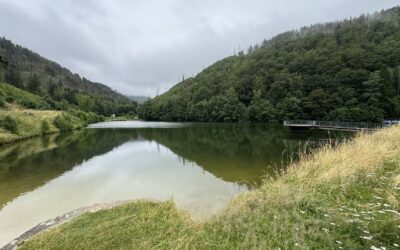
Harz National Park: Seeing the Forest Through Different Eyes "What a somber entrance," I thought as I drove into the Harz National Park. The densely forested area gradually gives way to a sort of lunar landscape. The dismal sight of the many hectares of dead trees...

Cinque Terre by Train from Levanto: Train Schedules, Tickets, and Tips The railroad through the Cinque Terre dates back to 1874 and is still the only practical way to connect the five World Heritage villages. Cars are hardly welcome there: the streets are too narrow,...

Bear Watching in Slovenia: An Evening in the Observation Hut Near Postojna Bear watching in Slovenia might be closer than you think: in the forests near Postojna, just over an hour from Ljubljana. Nathalie joined us in the observation hut one evening. Slovenia is...
Get inspired
Are you looking for the most beautiful hiking and biking routes? Or do you want information about traveling by train or advice for the most beautiful road trips through nature. Get inspired for your next trip in green; ideas for planning your own trip or opting for an organized trip.