
Gratis gids 10 verborgen natuurplekken in Europa
Gratis gids 10 verborgen natuurplekken in Europa. Meld je aan voor onze nieuwsbrief en ontvang inspirerende reistips en routes voor je volgende groene reis.

I’ve taken four round-trip tours of Sardinia, each lasting about 2 to 3 weeks, the last one in May 2024. In this article, I’ll take you on a tour of Sardinia’s most beautiful spots, along with personal tips, unique places to stay, and practical travel advice.
Would you like to discover the most beautiful spots in Sardinia? The island will surprise you with its turquoise bays, mountainous landscapes, mysterious nuraghi, and colorful villages. It’s the ideal destination for nature lovers, hikers, and those seeking peace and quiet.


Highlights: Stintino, Costa Smeralda, Maddalena Islands, Castelsardo
The north coast is a mix of rugged coastlines, luxurious seaside resorts, and hidden coves.


Special tip: Go biking or hiking on the island of Caprera: peace, nature, and history.
A group of 7 islands (and many small islets surrounding them), with La Maddalena as the main island. Beautiful beaches, coves, and the clearest turquoise water. Two of the islands are inhabited (Maddalena and Caprera) and connected by a bridge. The remaining islands are uninhabited. The town of La Maddalena is a small seaside resort with restaurants, shops, and ice cream parlors.
There are also a number of hotels on the island of Maddalena. It’s definitely worth staying here for a few days to go hiking or biking.
The archipelago has a national park with 18,000 hectares of protected area and no less than 180 kilometers of coastline. It is home to more than 700 different plant species and serves as a breeding ground for seabirds such as cormorants and gulls. Moreover, its mild climate makes it a pleasant place to visit all year round.

Nuraghi are mysterious towers in Sardinia dating from the Bronze Age (ca. 1,500 B.C.). They can be found all over the island, particularly in the interior. They are now among Sardinia’s most important archaeological heritage sites. There are likely more than 6,000 of them. These simple towers, varying in height, served as refuges or as the foundation for a village.


Highlights: Gennargentu Mountains, Gorropu Gorge, Cala Goloritzè, Orosei
The distance from Olbia to Orosei is approximately 85 km.
The east coast of Sardinia is perfect for nature lovers and active travelers.


Hiking route tip: From Dorgali to Gorropu via the Oddoene Valley. Ancient forests, caves, and nuraghi.
We took a hike to the Gorropu Gorge, also known as Su Gorropu. There are several access routes, some a bit more challenging and others easier hiking trails. We took a jeep from Cala Gonone to the trailhead for the gorge (cost: about €20). From there, it’s about a 2-hour hike to the gorge. You can also choose to have the jeep pick you up only for the return trip (uphill).
There you’ll find unique flowers and plants, as well as the euproto, Europe’s rarest amphibian. It is the most impressive gorge in Italy and in Europe.
Note: Admission to the gorge is approximately €6 (cash). There are three hiking trails of varying difficulty levels, available with or without a guide. More information about the Gorropu Gorge.
You can also drive from Dorgali to the hiking trail leading to the gorge via the Oddoene Valley (drive to the s’Abba Arva Bridge). From there, continue on foot past ancient forests, caves, and nuraghes.


Highlights: Costa Rei, Villasimius, Cagliari, Sant’Antioco
The distance from Orosei to Villasimius is approximately 185 km.
Here you’ll find the most beautiful beaches in Sardinia, where the sea resembles that of the Caribbean.
Instagrammable: the Capo Sandalo lighthouse on Isola di San Pietro.
TIP: On this 8-day hiking trip along the southwest coast of Sardinia, you’ll also explore both Sant’Antioco and Isola di San Pietro.
The peninsula in southwestern Sardinia is accessible by car via a bridge. It has a rich history, as it was a strategic location on the Phoenicians’ trade route. The peninsula is still relatively undiscovered by international tourists, but it is very popular among Italians themselves.
Isola Sant’Antioco boasts beautiful natural scenery and stunning beaches. For example, Maladroxia near Sant’Antioco, with its thermal waters, or Cala Lunga Beach near Calasetta. There are also charming historic towns, such as the capital, Sant’Antioco (the oldest town in Sardinia), and Calasetta.
“Nido dei Passeri” (Sparrow’s Nest) near Calasetta is a spot between two rocks where many birds nest. It’s not very easy to find, but well worth the effort. Park your car in the large square. From there, it’s about a 200-meter walk. Walk a little further to the Mangiabarche lighthouse, located on a small island off the coast. It’s a beautiful spot.
Sant’Antioco is located about 85 km from Cagliari
Next to Isola Sant’Antioco lies Isola di San Pietro. This small island can be reached by boat from Calasetta on Isola Sant’Antioco (about 45 minutes). You can board the boat on foot or by car. Isola di San Pietro has many North African and Ligurian influences. Don’t miss the beautiful Carloforte Lighthouse, built in 1864, and Capo Sandalo with its rocky cliffs.


Highlights: Piscinas, the Sinis Peninsula, Bosa, Alghero
The distance from Cagliari to Alghero is approximately 260 km.
The west coast is surprisingly diverse: rugged nature, archaeology, and culture.
Tip: Rent a bike or an electric two-seater from Velsar in Alghero and explore Porto Conte.


Highlights: Foresta Marganai, nuraghi, menhirs
Sardinia is more than just beaches. Inland, you’ll find tranquility, forests, and history.
Adventure tip: Take the Trenino Verde into the countryside. Slow but unforgettable
This forest is one of the richest and greenest areas in southern Sardinia. The Marganai National Forest is located in the Sulcis-Iglesias area in southwestern Sardinia. The national forest covers no less than 3,650 hectares of the territory of Domusnovas, Fluminimaggiore, and Iglesias.
A beautiful hiking area in one of Italy’s oldest mountain regions. Rugged peaks ranging from 200 to 1,000 meters in height. Extensive forests of holm oaks and pine trees.
Along the streams, you may encounter wild boars, wildcats, hares, and foxes. In some areas, the Corsican red deer and the mouflon have been reintroduced. In addition, peregrine falcons and, more rarely, golden eagles can be seen here. The Linasia Botanical Garden and the Grotta di San Giovanni are worth a visit.
In the summer, it’s wonderfully cool there for a walk. You can reach the forest via the SS126 Iglesias-Guspini or via the SS130, taking the Domusnovas exit. It does take a bit of searching, though.
Read more here about unique accommodations in Sardinia. You can book directly with the owner.
I Liberotti in Orosei
A unique spot surrounded by nature. Just 2 rooms with a garden right on the beach. Plenty of hiking opportunities in the area. Read more about it here I Liberotti, a wonderful spot by the sea.


Glamping Butterfly House in Olmedo, near Alghero
Stay in glamping tents at a beautiful nature park featuring a unique butterfly garden within a biosphere reserve. A one-of-a-kind overnight stay surrounded by nature. Read more here Glamping Butterfly House.


Agriturismo Pira Pinta
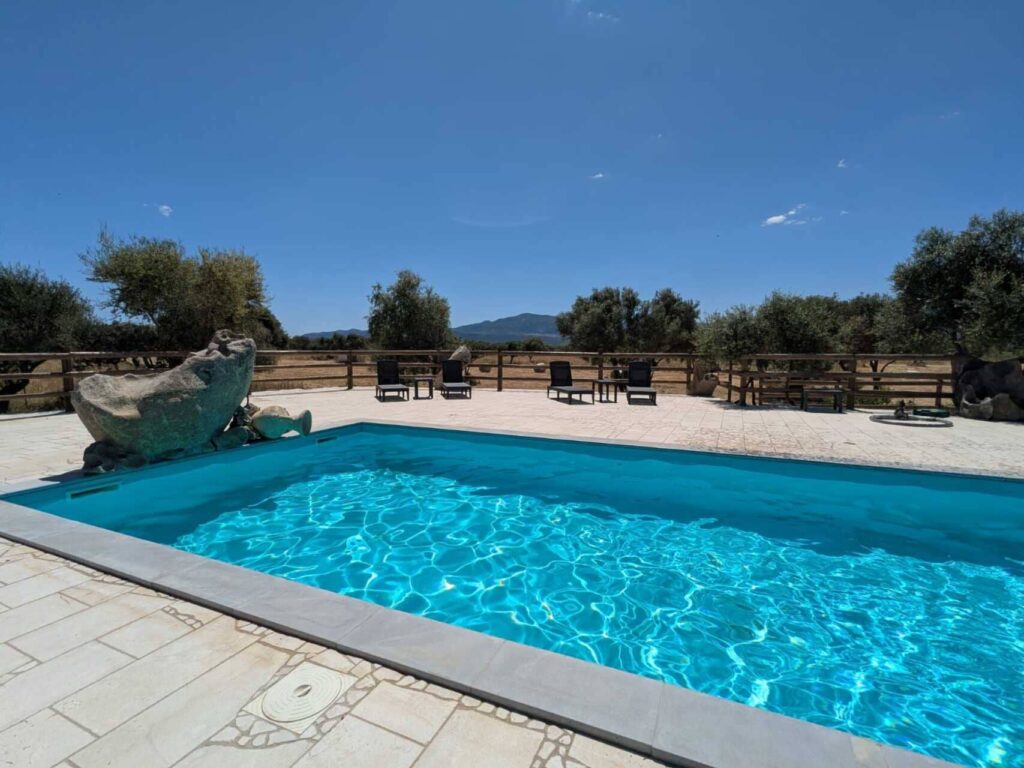
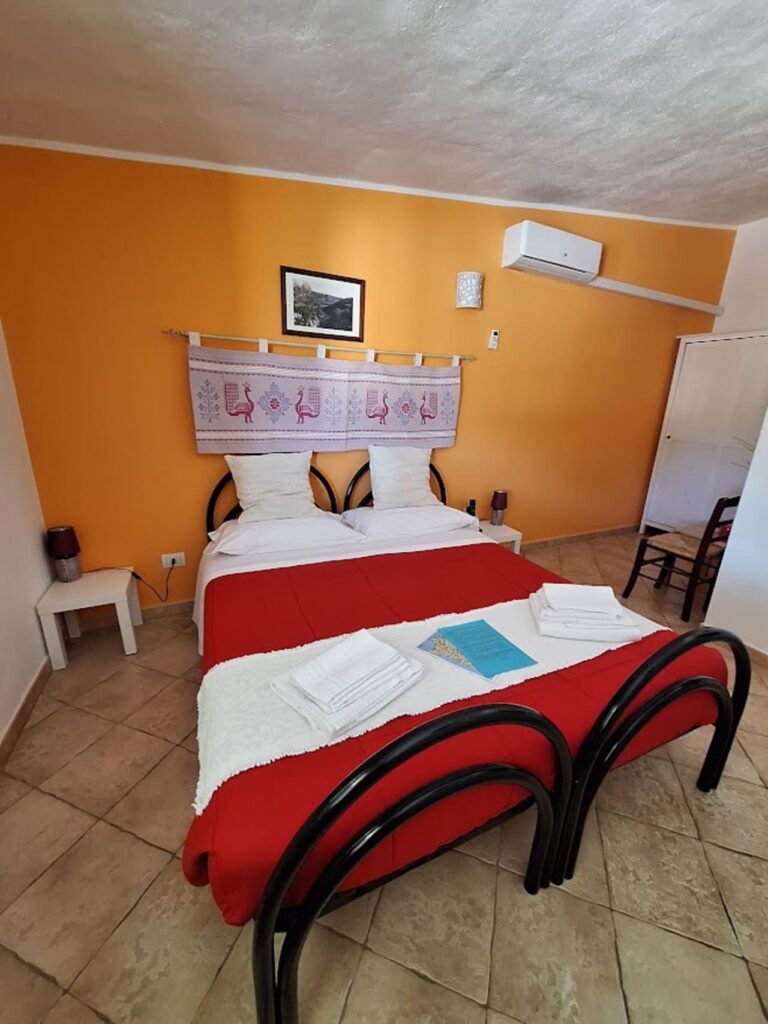
A delightful agriturismo with a pool in Dorgali, near the Gorropu Gorge. You can choose from rooms or apartments at this welcoming agriturismo, which features farm animals and produces its own wine and cheese. Read more about Agriturismo Pira Pinta.

Agriturismo Sa Conca Ruia
A warm welcome near Orosei. Antonio and Martina extend a warm welcome to you at their agriturismo. Delicious local cuisine, a beautiful (hidden) location in a lovely hiking area. Read more about Agriturismo Sa Conca Ruia.


It can get quite windy in Sardinia. In the summer, the breeze provides a pleasant coolness, which is why the island is so popular with sailors.


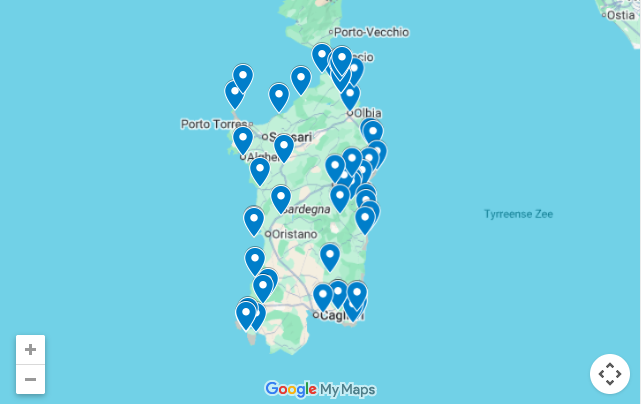
Sardinia has four distinct regions, each with its own highlights. In the north, the Maddalena Islands and La Pelosa Beach near Stintino are must-sees. On the east coast, the Gorropu Gorge and Cala Goloritzè Bay are the biggest draws. In the south, the flamingos near Cagliari and the island of Sant’Antioco stand out. The interior surprises visitors with its mysterious nuraghi and the Foresta Marganai. If you want to see it all, you’ll need at least ten days.
May and June are the best months for hiking or biking. The macchia is in bloom, the Gorropu Gorge is easily accessible, and daytime temperatures average between 18 and 24 degrees. The beaches are practically empty, the agriturismi have plenty of room, and prices are significantly lower than in the summer.
September and October are the best options. The sea is still warm enough for a swim, nature is at its most beautiful after the dry summer, and the island has regained its peaceful atmosphere. Hiking trails in the interior are therefore easily accessible.
July and August are busier and hotter, with temperatures reaching over 35 degrees inland. Long walks can be tough during this time; beaches and coastal towns are crowded, especially with Italian vacationers. It is, however, the best time to visit if you’re looking for nothing but sun and sea.
November through April is quiet and green, but mountain trails can be slippery after rain. The Gorropu Gorge is sometimes inaccessible after heavy rainfall due to high water levels in the gorge.
The most popular trip duration is ten to fourteen days: enough time to visit three or four regions without having to change accommodations every day. Eight days is enough to explore either the north or the south; with fourteen days, you can also include the interior. Keep in mind that Sardinia is larger than most people realize; it’s over 270 kilometers from north to south, and the roads are narrow and winding.
Absolutely. The island has hiking trails for every level, from accessible coastal paths to challenging mountain hikes. The Gorropu Gorge in the east is one of Italy’s most impressive hikes. Along the southwest coast, there are multi-day coastal routes, such as the 8-day route past Sant’Antioco and San Pietro. Inland, trails wind through the Foresta Marganai and past nuraghi. A rental car is essential for reaching the trailheads.
The hike to Gorropu is perfectly manageable for most people in good physical condition, but it does require some preparation. The trail is unpaved and runs over large limestone boulders. Sturdy hiking boots aren’t just a luxury—they’re essential. Be sure to bring plenty of water. Expect a total hiking time of three to four hours for the round trip, depending on your pace and how far you venture into the gorge.
The gorge itself ends after a few hundred meters at large boulders that block the passage. Continuing further requires climbing experience and equipment. For most visitors, the starting point of the gorge is more than worth the trip.
Best time to visit: May and June or September. In the height of summer, the heat makes the trail difficult; after heavy rainfall in the winter, the water level in the gorge may be too high to walk safely.
Access: You can reach the starting point either by jeep shuttle from Cala Gonone (approximately €20 per person; return trip can also be booked separately) or by car through the Oddoene Valley from Dorgali to the s’Abba Arva Bridge. Admission to the gorge itself costs approximately €6. Payment in cash is required at the entrance.
Difficulty: moderate. No technical climbing, but the terrain is unpaved and some physical fitness is required.
Most travelers rent a car; that is by far the most practical option. The main north-south highway is the SS131 (the “Statale”), which connects Cagliari to the north via Sassari. For a longer stay, the Trenino Verde is a unique alternative: a historic narrow-gauge train that traverses the interior at a pace that suits the island.
Yes, and that’s exactly what we recommend. The agriturismi, bed & breakfasts, and small-scale nature accommodations on NatureTravelLab can all be booked direct with the owner (without going through large booking platforms). This way, your travel budget goes directly to the local business owner, and you’ll have personal contact regarding your stay and the surrounding area. Check out our Sardinian accommodations in nature.
For me, Sardinia is the perfect place to combine peace and quiet, nature, and culture. Every part of the island has its own charm. From hikes through rugged mountainous areas to relaxing on a secluded beach, you can still find truly unspoiled spots there.
Want to discover Sardinia’s most beautiful spots on your own? Plan your trip carefully, take your time in each region, and let yourself be surprised. Sardinia isn’t a destination you visit just once. I keep coming back.

With a passion for travel and photography and over 30 years of experience in the travel industry, I love to share my special nature travel tips. Travel is wonderful and important, you meet new people and cultures and it opens your view of the world.

Slow Food Puglia: Tasting Mussels and Clementines in Taranto Starting in the summer of 2026, in the province of Taranto, in the far south of Italy, you can literally sample what small-scale local producers have to offer. At the same time, during these excursions,...
Gitschberg Jochtal: Hiking in the Summer, Skiing Away from the Crowds in the Winter Eight villages, no well-known name, and yet 300 kilometers of marked hiking trails in the summer and 55 kilometers of ski runs in the winter: that’s the Gitschberg Jochtal, on the...
Get inspired
Are you looking for the most beautiful hiking and biking routes? Or do you want information about traveling by train or advice for the most beautiful road trips through nature. Get inspired for your next trip in green; ideas for planning your own trip or opting for an organized trip.