Arctic Awakening: A Slow Travel Tour of Lofoten and Vesteralen in the Spring
Everyone I spoke to said the same thing: go in the summer or the winter. Summer for the midnight sun. Winter for the northern lights. Spring wasn’t really an option.
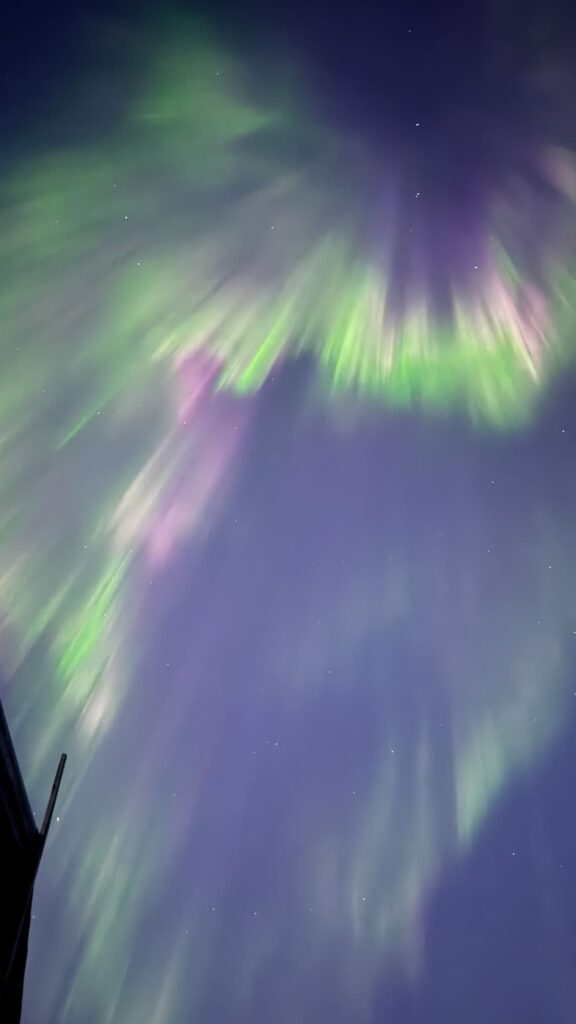
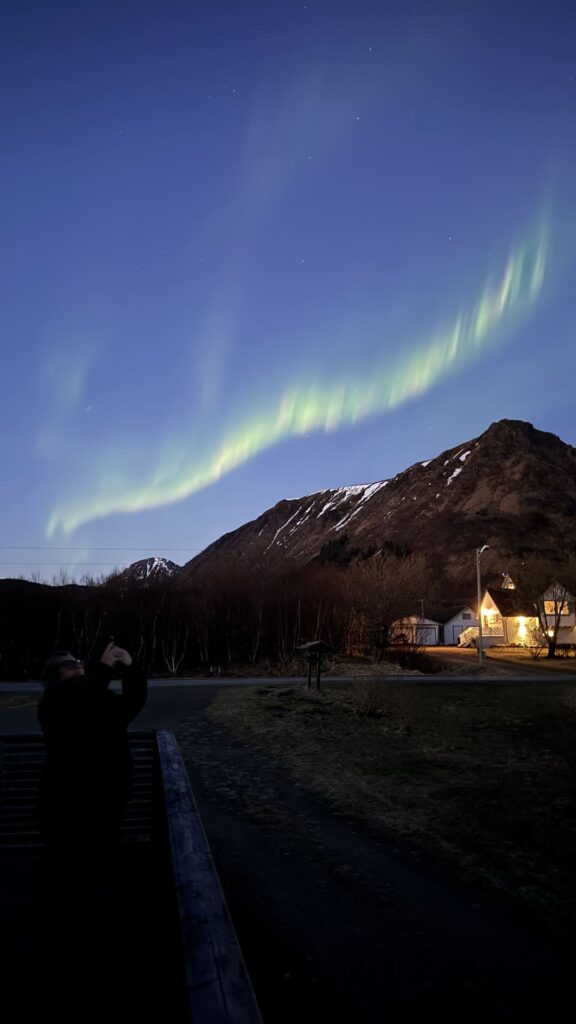
I ended up going in April anyway. Partly because I wanted to experience northern Norway as it really is, not as it presents itself to tourists. What I found surprised me. The roads were empty. The fishing villages were peaceful. And the people I met—from a landlady who tells the legend of her place in the evenings to a chef who turned out to be an Oscar-nominated filmmaker—gave the trip a depth I hadn’t expected. Okay, and I got lucky: we saw the Northern Lights on our last night.
This isn’t a tour designed to simply check off the Lofoten Islands. It’s a tour designed to help you understand northern Norway—its landscape, culture, and cuisine. Two archipelagos, two distinct characters, one route.
I took this trip in April and, to be honest, I wasn’t really sure what to expect beforehand. I’d heard of the Lofoten Islands, but I knew next to nothing about Vesteralen. And spring wasn’t exactly the time of year most people recommended for a trip.
What I found: two archipelagos, each with its own rhythm, featuring landscapes that constantly make you stop in your tracks, with a light that never ceases to fascinate, no matter the time of day. And places that stay with you not just because they’re spectacular, but because the people behind them are. This is the route as I traveled it. My advice: plan for at least 3 nights in each place. That way, you’ll truly experience the culture, the people, and the beautiful nature.
“Don’t just tick off the highlights. Instead, gain a deeper understanding of the area, its people, their culture, and the local cuisine.”
When to go: why spring is the best time
The Lofoten and Vesteralen Islands can be visited year-round, but each season calls for a different approach. Below is my honest assessment, based on my own experience as well as what I heard from locals about the seasons I didn’t get to experience myself.
Spring (April–June): quiet, bright, and affordable
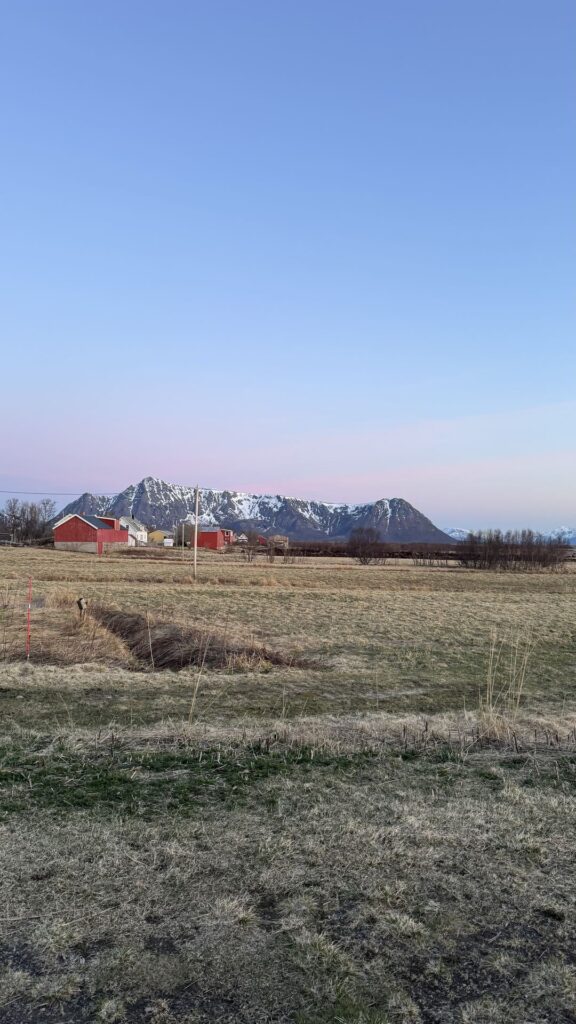
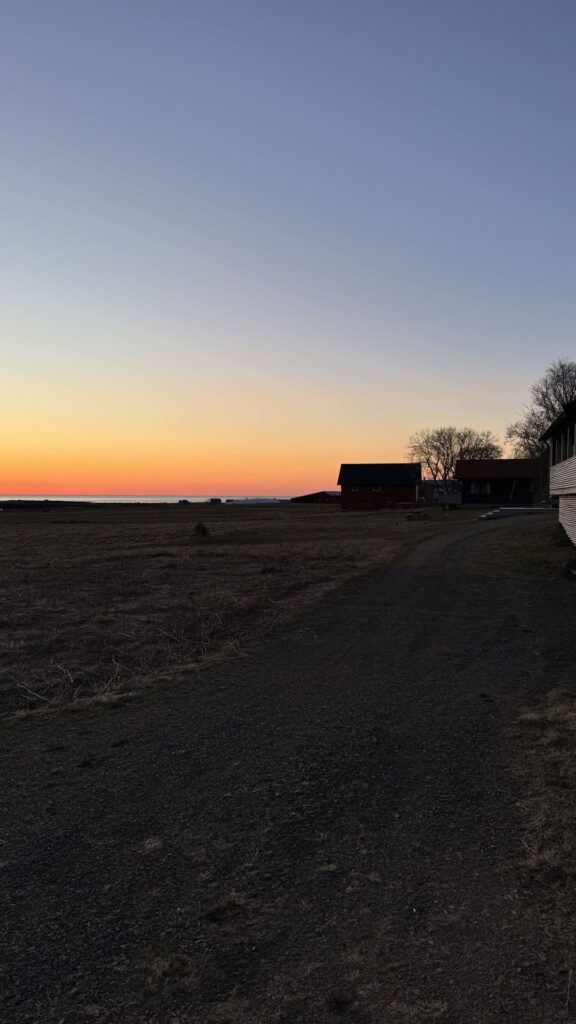
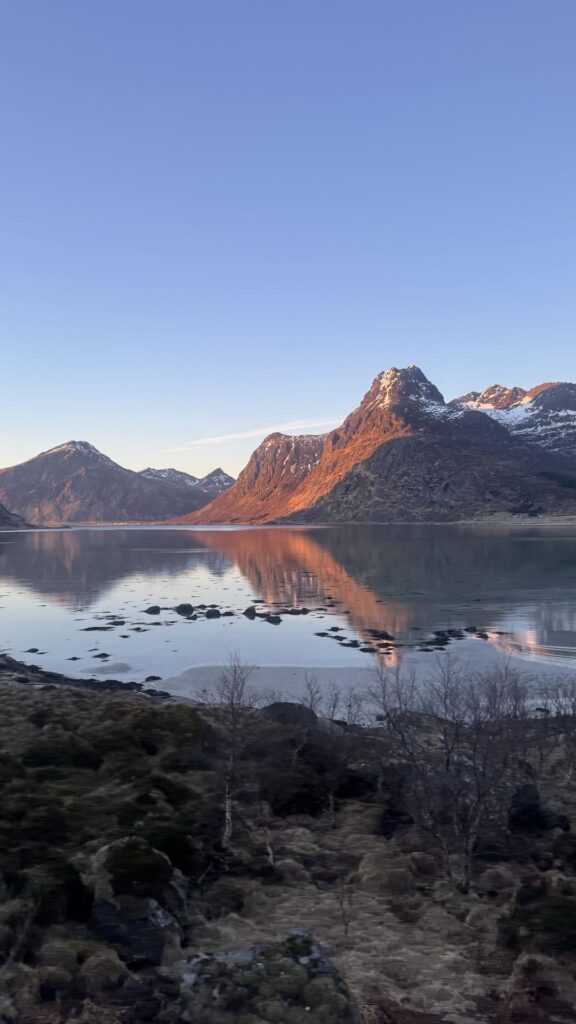
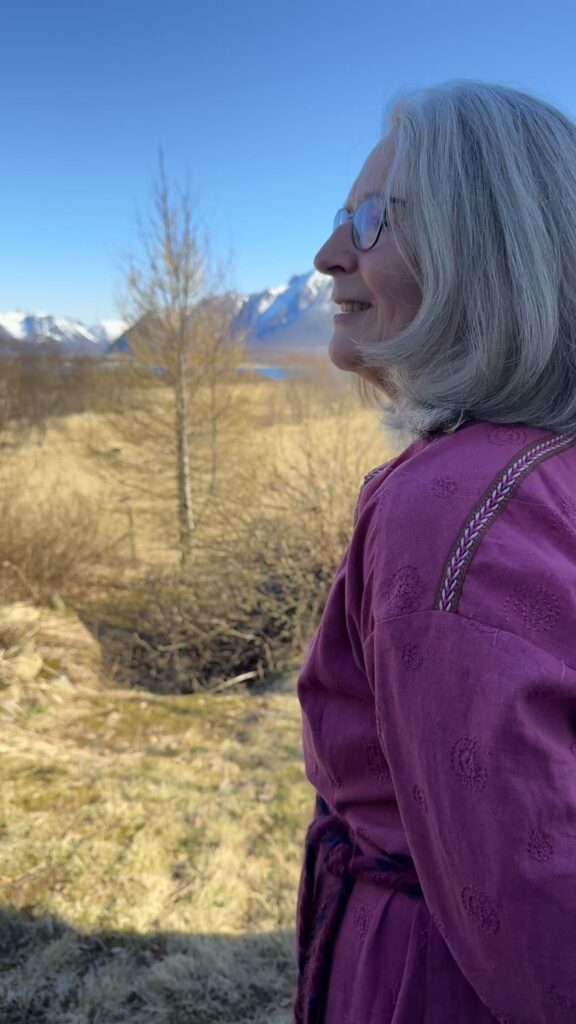
In my opinion, April and May are the best months for this tour of the Lofoten and Vesteralen islands. The roads are empty, accommodations are available, and the light is extraordinary: long, golden-yellow, and perfect for photography.
The islands breathe, and you experience the Lofoten and Vesteralen as they have always been. In April, there may still be snow on the mountaintops (and even on the roads), which makes the landscape even more dramatic. At the end of April, the puffins return to the cliffs at Bleik. It really feels as if the islands are just waking up.
To be honest: the weather is unpredictable. The week after I got home, we got a good amount of snow. I was lucky. But rain makes the mountains here even more beautiful, not less so.
Summer (July–August): beautiful, but crowded
The E10 (the only main road in the Lofoten Islands) is frequently backed up with RVs and campers in August. The roads are narrow. Parking lots at popular spots are packed before you even get there. Accommodations are scarce and more expensive. Visit in the summer for the midnight sun, but expect crowds.
Fall (September–October): the quiet alternative
Fall is similar to spring: peaceful, with beautiful light and fewer tourists. The Northern Lights begin to appear regularly in September and October. It’s ideal for hikers and photographers who want to avoid the summer crowds.
Winter (November–March): adventure for experienced travelers
Spectacular northern lights, but the roads can be tricky if you’re not used to snow. Daylight is limited, and there are also many tourists who aren’t used to driving in those conditions. That leads to the usual delays. A special experience for those who are ready for it. For everyone else: go in the spring or fall.
Lofoten or Vesteralen? Start in Lofoten, end in Vesteralen
The Lofoten and Vesteralen are close to each other but feel very different. I’d say: do both. Start in the Lofoten and end in Vesteralen. That way, you’ll work your way up to the most beautiful and peaceful part.
The Lofoten Islands: dramatic and inhabited
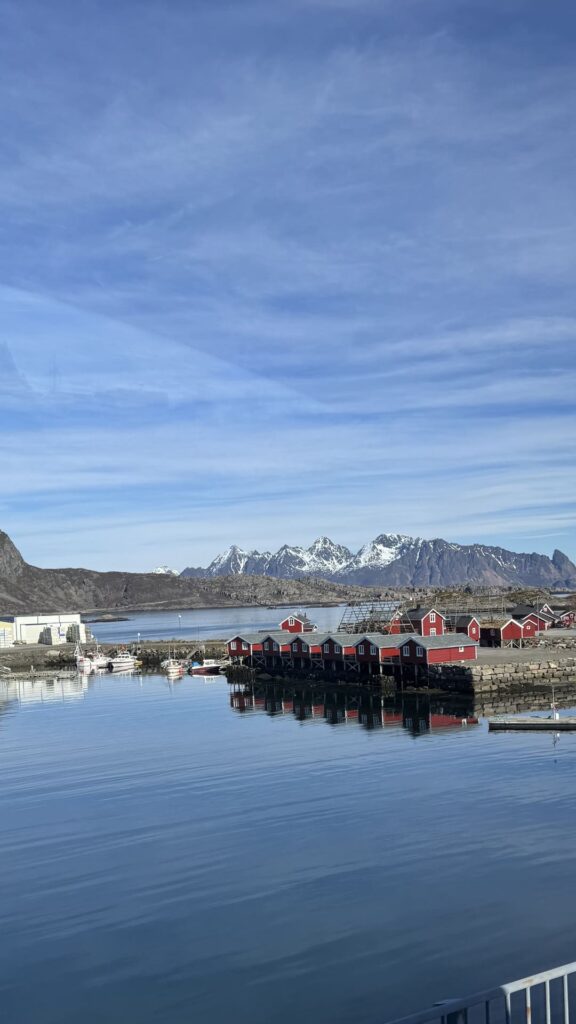
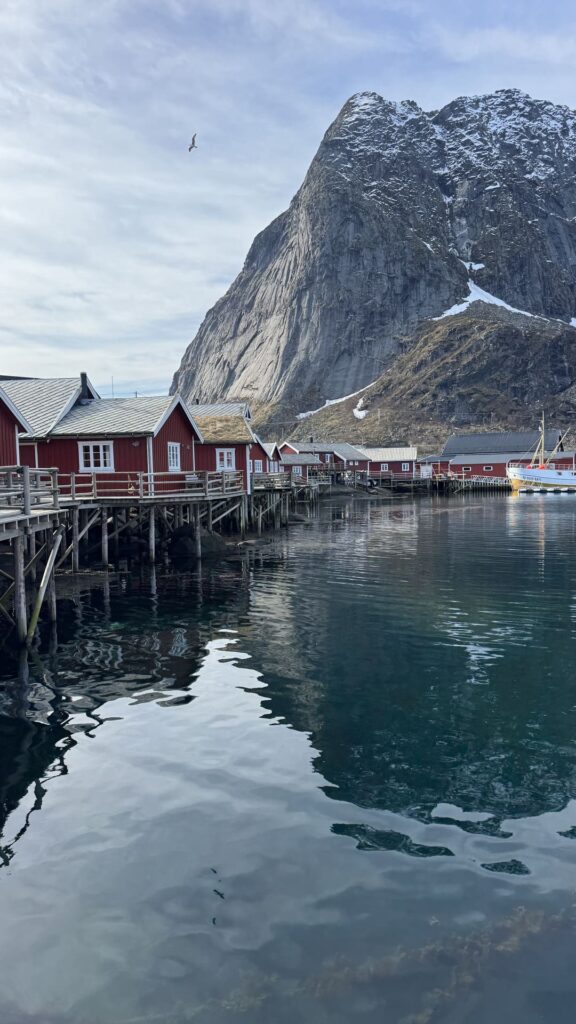
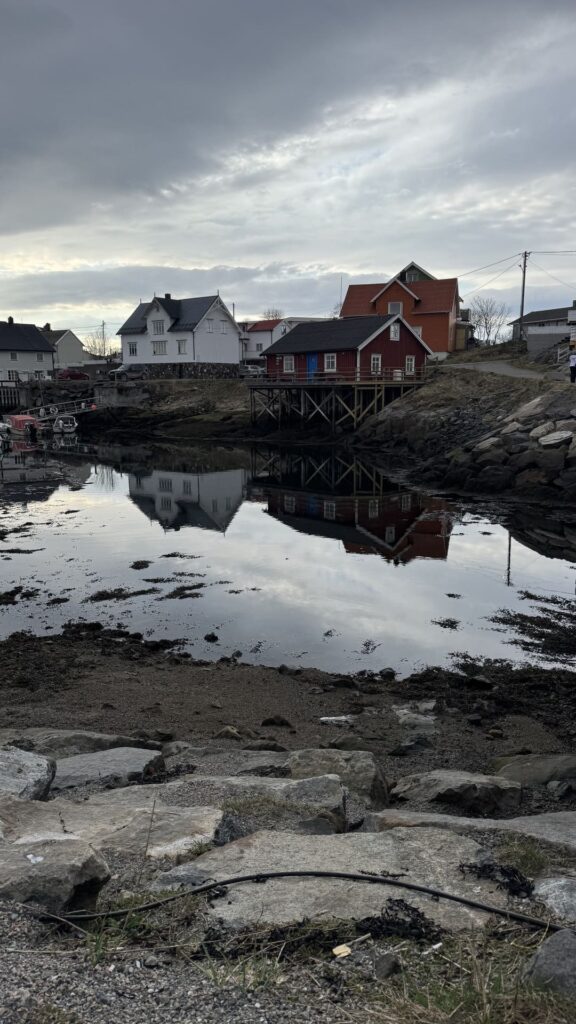
Pointed mountains rising straight out of the sea, fishermen’s cottages in red and ochre yellow, villages that look like they belong in any travel photo. The Lofoten Islands are the famous name, and rightly so. In the spring, you have them all to yourself. Life here still revolves around cod (skrei), and you can see that everywhere. But the real reason to stay longer is what lies behind the scenery: an organic goat farm that wins international awards, a former fishing village now bustling with galleries, an owner who has dedicated her life to the history of the fishermen who once lived here. That’s the Lofoten that stays with you.
Vesteralen: more open and quieter
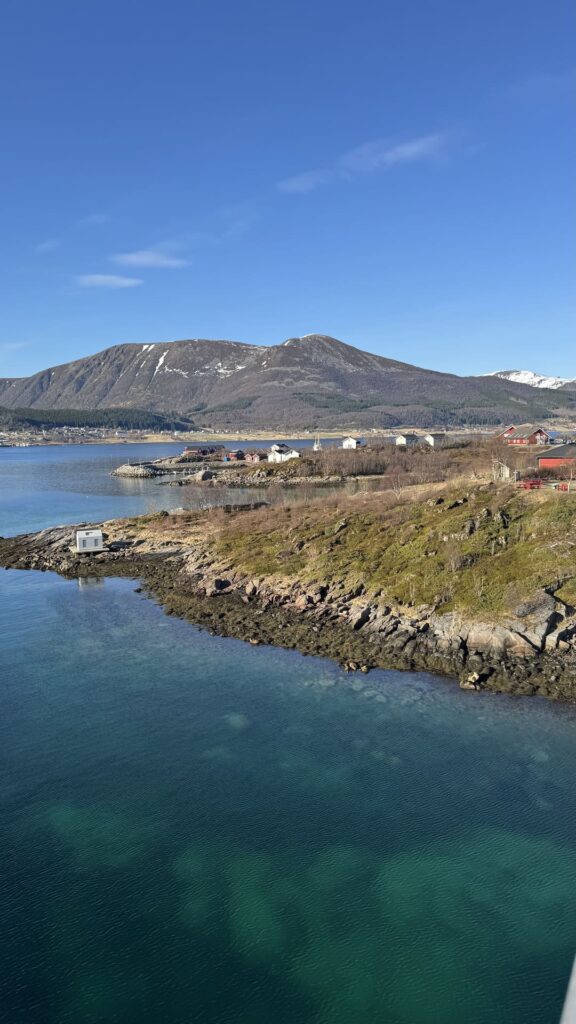
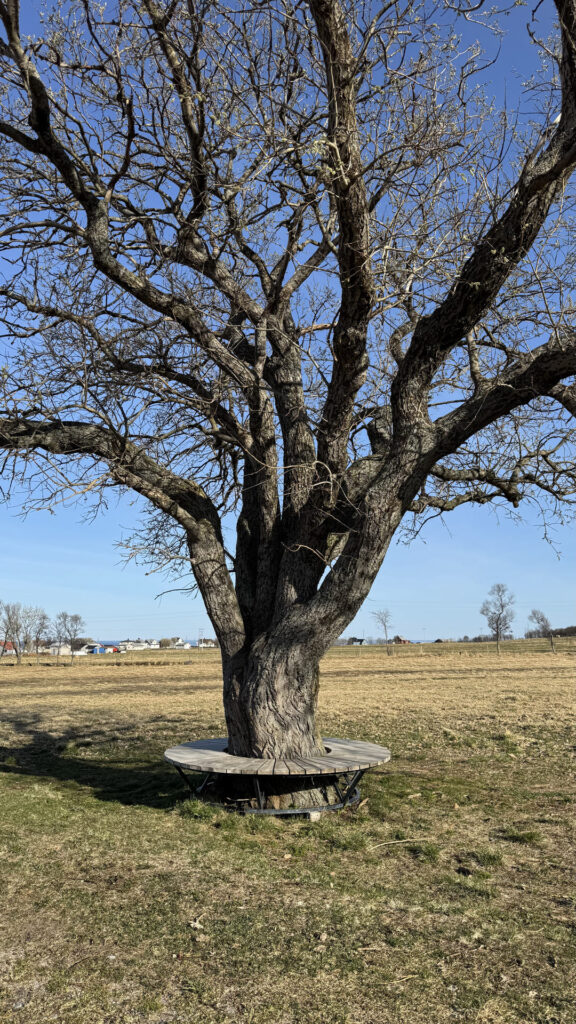
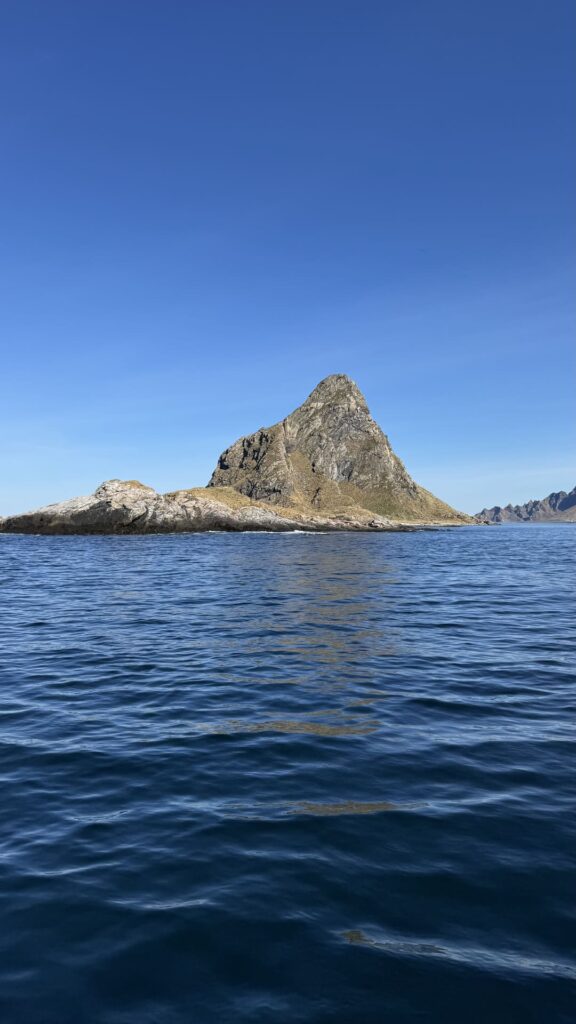
I knew next to nothing about Vesteralen before this trip. The archipelago lies northeast of the Lofoten Islands and immediately feels more peaceful. The mountains here are gentler and rounder. Less dramatic in photos, but they get under your skin more deeply if you stay for a few days. Quieter, more expansive, less geared toward mass tourism. It has whales year-round near Andenes, thousands of puffins on a cone-shaped rocky island, and garden benches bolted into the ground because the wind here is relentless. And it has Marmelkroken; the place I saved for last.
The route: from Svolvaer to Andøya
This is the route I took: from east to west across the Lofoten Islands, then by ferry to Vesteralen and north to Andøya. You can reverse the order, but this direction makes sense: you start in the busier part and end in the quietest, most authentic, and remote corner.
Starting point
Svolvær, Lofoten (airport or ferry from Bodø)
Endpoint
Andenes, Andøya, Vesteralen
Total duration
At least 10–14 days in advance for the best experience
Transportation
A rental car is recommended; travel by ferry and bus is also possible in some cases
Best period
April–June (spring) or September–October (fall)
Language
Norwegian; English is widely spoken
Stage 1: Starting point Svolvaer: Start here, but don’t stay
Svolvaer is the most touristy spot on the route. It’s easily accessible and serves as a convenient starting point. Anker Brygge is a great place to spend the first night. Right on the water, with fresh fish. Use the evening to recover from the trip and stock up on groceries; shops become scarcer the further west you drive.
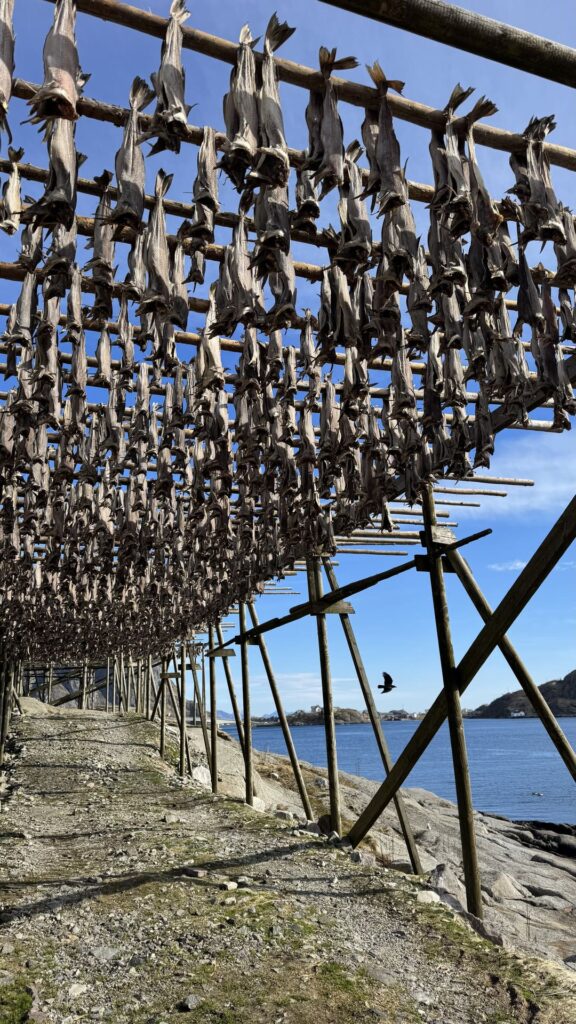
Reine is what many Lofoten villages claim to be but few actually are: authentic. With a population of about 300, cod hanging to dry on wooden racks, and a hike to Reinebringen that says it all. Plan to stay here for at least 3 nights. There’s more to do than you can handle in a single day.
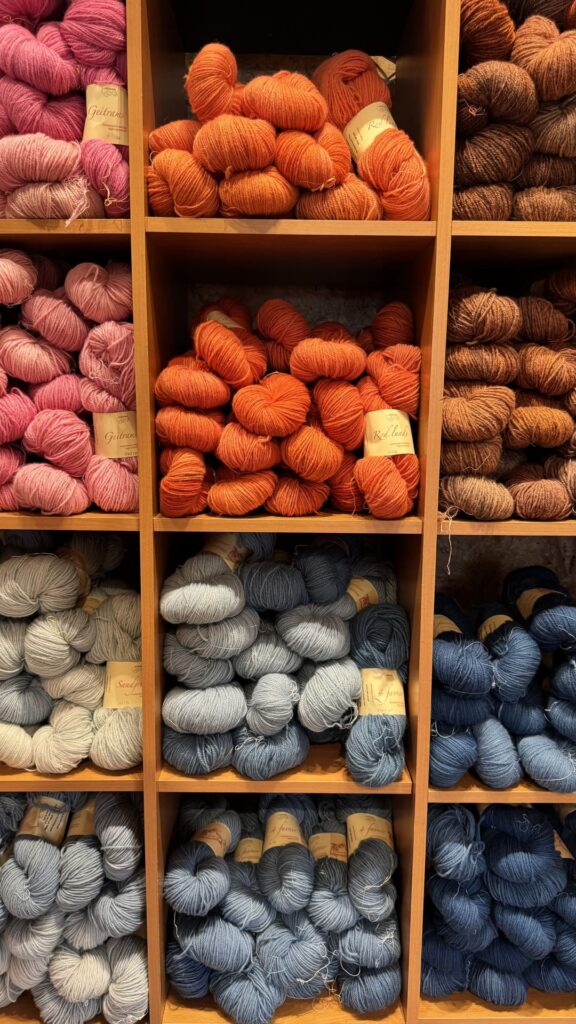
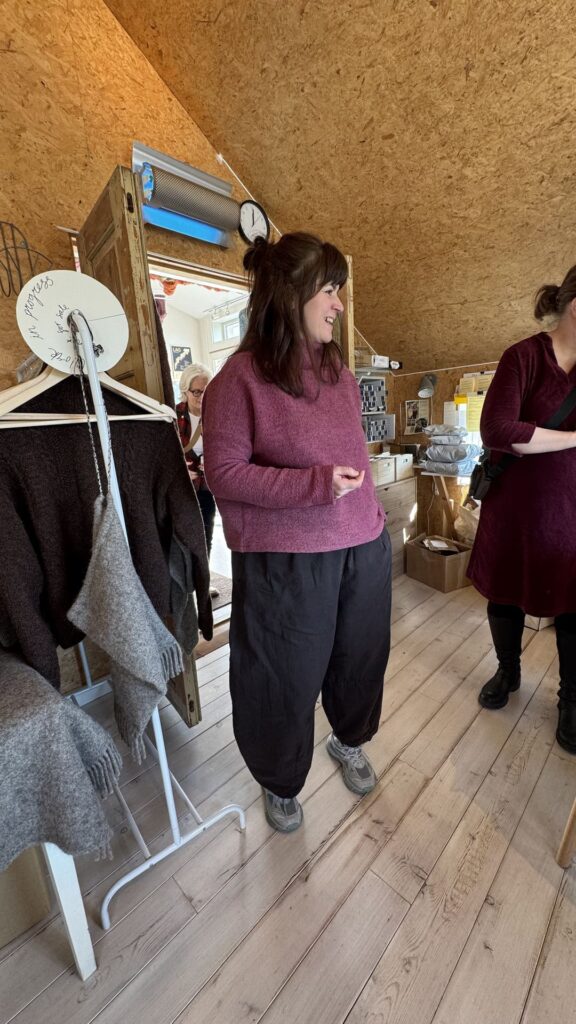
A former fishing village in decline that is now bustling with galleries and creative studios. In the spring, you can take a leisurely stroll around the area. Combine your visit with a stop at Lofoten Wool in nearby Stamsund (sheep’s wool dyed with natural plants; workshops available upon request).
Stage 4: Villa Lofoten, Kvalnes: Step Back in Time
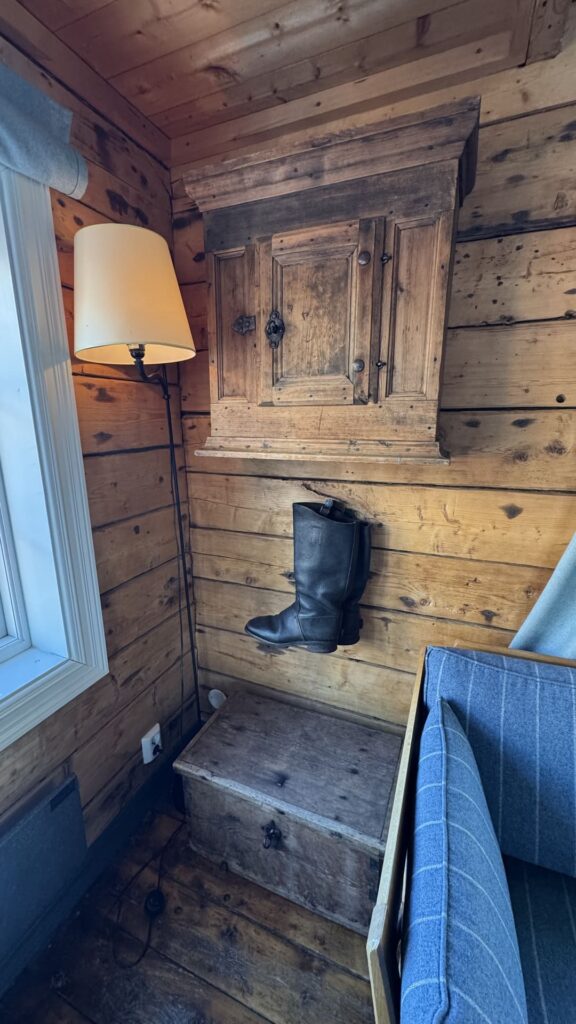
Not a hotel. A cluster of restored historic fishermen’s cottages in Kvalnes, where owner Aaslaug welcomes you personally. Ask to see the self-produced art film about the location (featuring beautiful music by Susanne Lundeng). After that, you’ll understand why this place exists. At least 3 nights. This is a place to truly slow down.
From Fiskebøl to Melbu on the island of Hadseløya. You can also take the tunnel. The atmosphere changes immediately after the crossing: more open space, less traffic, and fewer people at the same viewpoint.
Stage 6: Stokmarknes: the birthplace of Hurtigruten
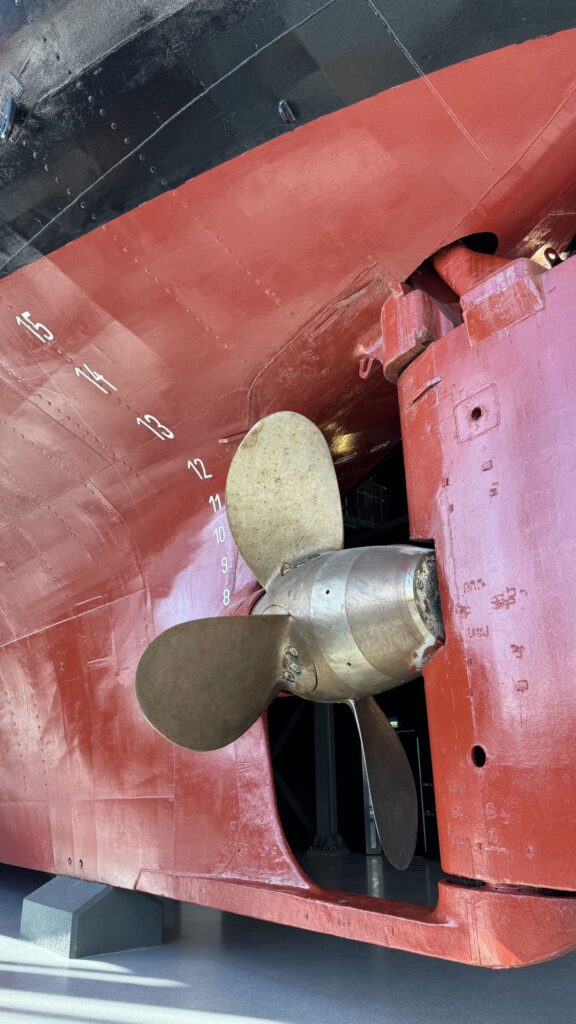
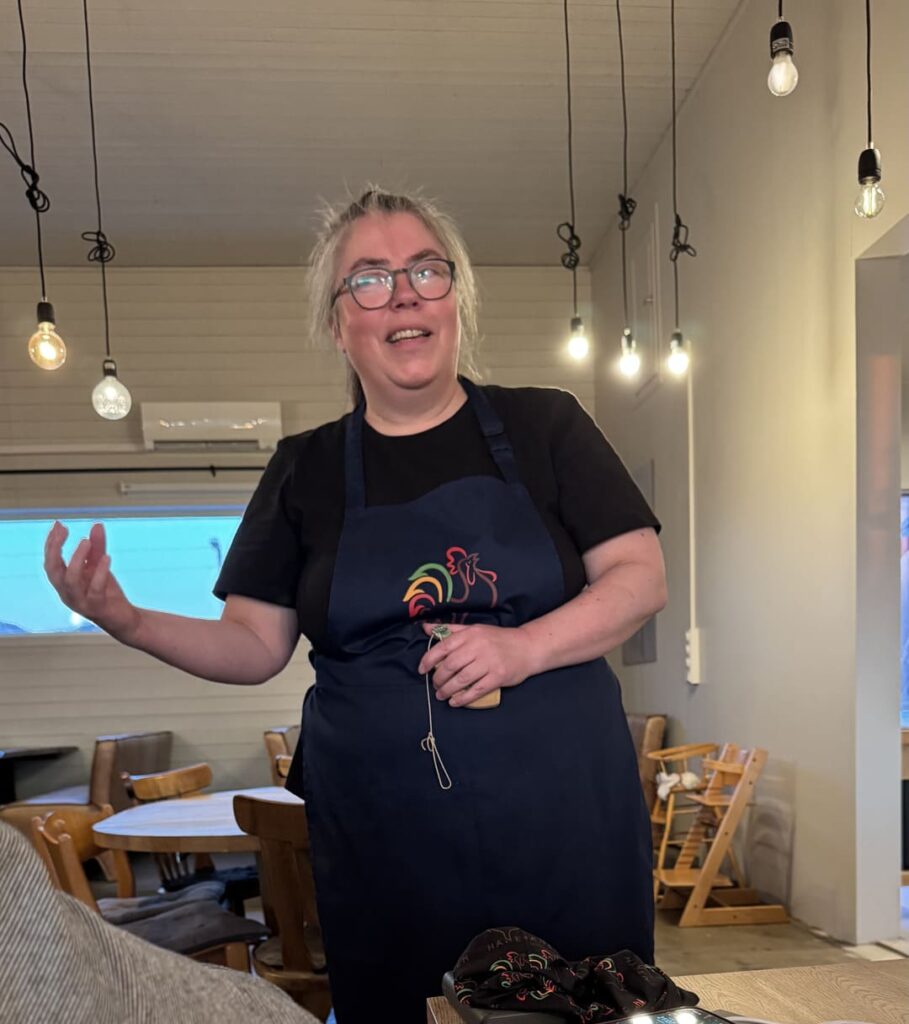
A museum built around a massive ship that you can explore from top to bottom. And Restaurant 1893, where a 29-year-old chef cooks exclusively with local ingredients in a way that will surprise you. Two things you wouldn’t expect to find in a town of 2,000 people.
On the island of Langøya, an organic sheep farm offering a farm-to-table lunch and a carrot cake you’ll never forget. In Vesterålen, an organic winery—the northernmost in Norway—featuring its own (non-alcoholic) wines. Two Hanen members who demonstrate how to live in harmony with nature.
Stage 8: Marmelkroken, Andøya: saving the best for last
Along the Norwegian Scenic Route on the west coast of Andøya. Ocean views, wild biodiversity, local cuisine. The hospitable owner, Lisbeth, who tells the legend of Marmelkroken and sends a text message when the northern lights begin. I hadn’t expected it. It was the highlight of the entire trip.
Stage 9: Andenes: puffins and what’s opening in 2027
At the end of April, thousands of puffins arrive on the cone-shaped rocky island of Bleiksøya. Whales can be spotted in the area year-round. And in June 2027, The Whale will open here: an architectural experience center dedicated to the biology and culture of whales, designed by Danish architect Dorte Mandrup.
A slow travel tour of the Lofoten and Vesteralen is also a culinary journey. Here are three producers I visited myself who are more than worth the trip:
Lofoten Gardsysteri: award-winning goat cheese
Near Unstad Beach, Dutch couple Mariëlle and Hugo run an organic goat farm that produces award-winning cheeses. The cheese tasting, served with homemade bread and butter, makes for a satisfying lunch. I took a piece home with me. Open Monday through Saturday starting in May/June.
Norheim Vingard: wine that goes against the grain
On Vesteralen, this organic winery produces non-alcoholic wine using a fully circular business model. And 20% of the proceeds go to sustainable projects. The conditions are harsh: garden benches bolted into the ground. You can really taste the difference.
Martha Haugen Gård: Farm-to-table with Sami roots
An organic sheep farm on the island of Langøya, offering a farm-to-table lunch. Maya took over the farm from her parents in 1988 and converted it to fully organic practices. The area is home to Viking and Sami settlements. The carrot cake is legendary.
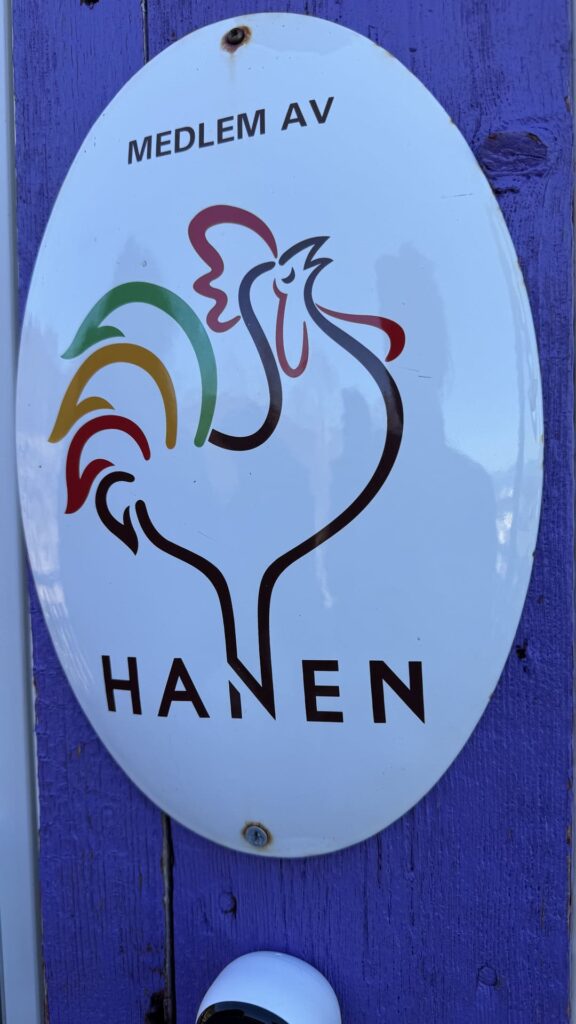
Hanen: the quality seal that tells you it’s the real deal
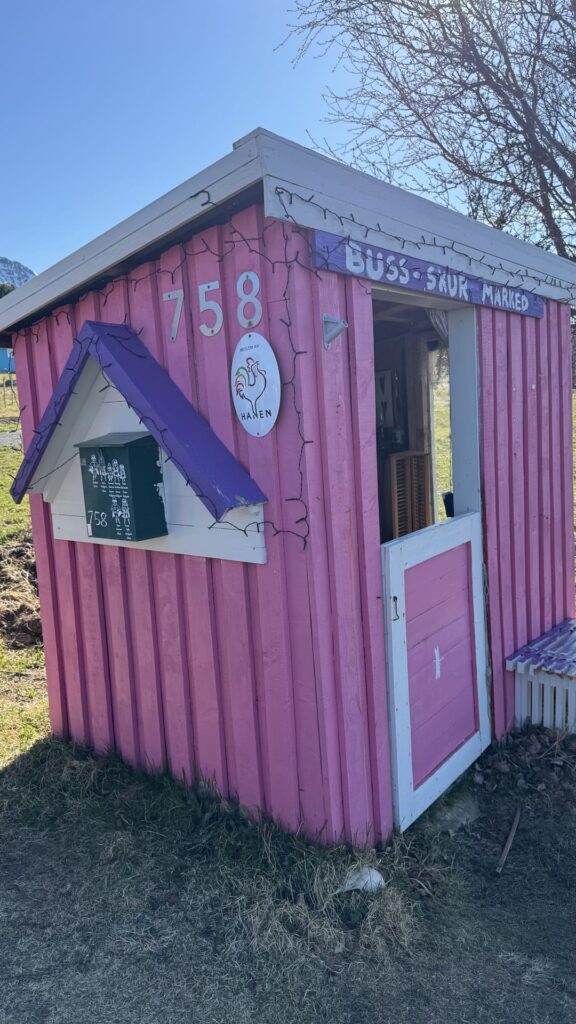
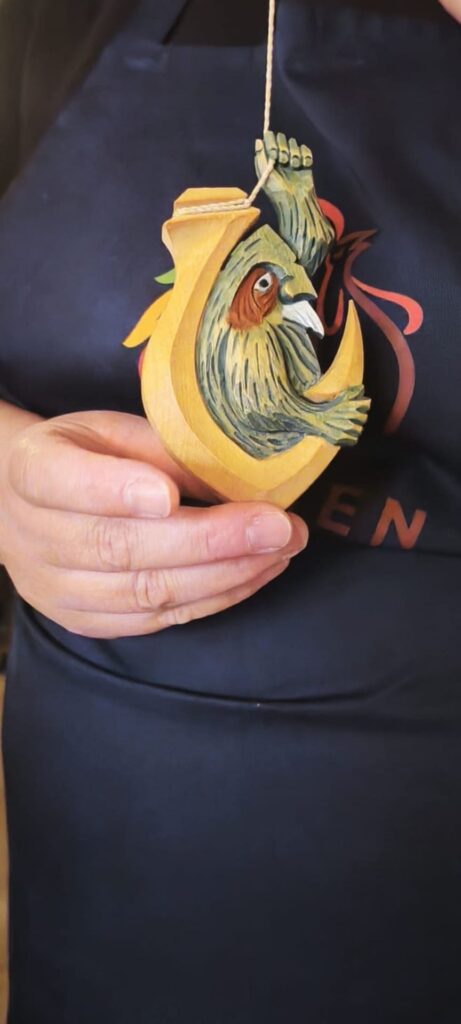
Some of the destinations on this route are members of Hanen, the Norwegian quality network for rural tourism and local products. There are about 620 businesses throughout Norway, all of which share a commitment to culture, sustainability, and authenticity.
On this route, those places are Villa Lofoten, Martha Haugen Gård, Norheim Vingard, and Marmelkroken. You can tell not only by the sign on the door, but especially by the owners themselves. The way they welcome you, what they serve, and how they talk about their place. Choosing a Hanen member means choosing a place that exists because someone truly believes in it.
Things to do in Lofoten and Vesteralen
Reinebringen hike: 2,000 Sherpa steps, about 1.5 hours uphill, views of the Lofoten Islands (Reine)
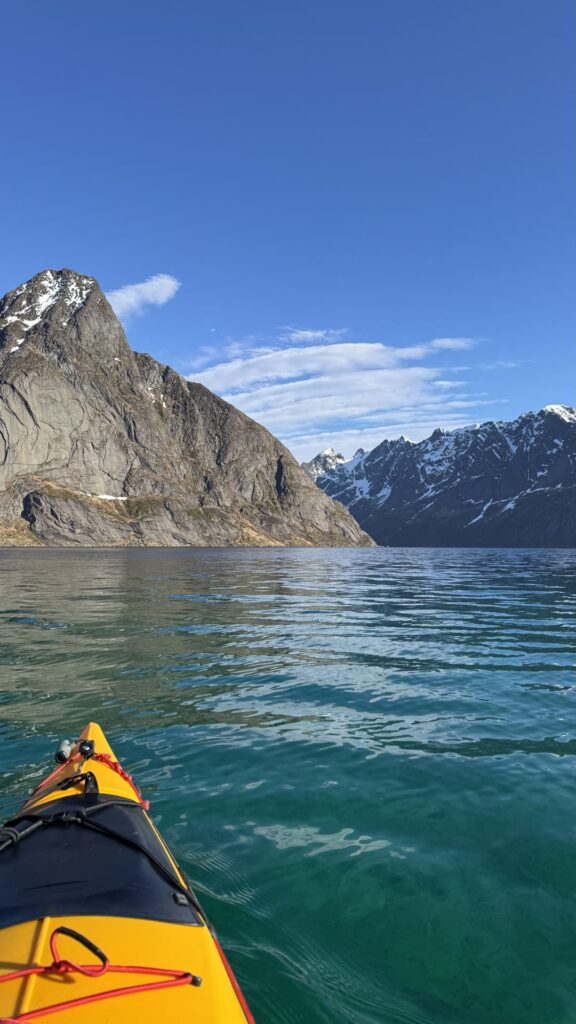
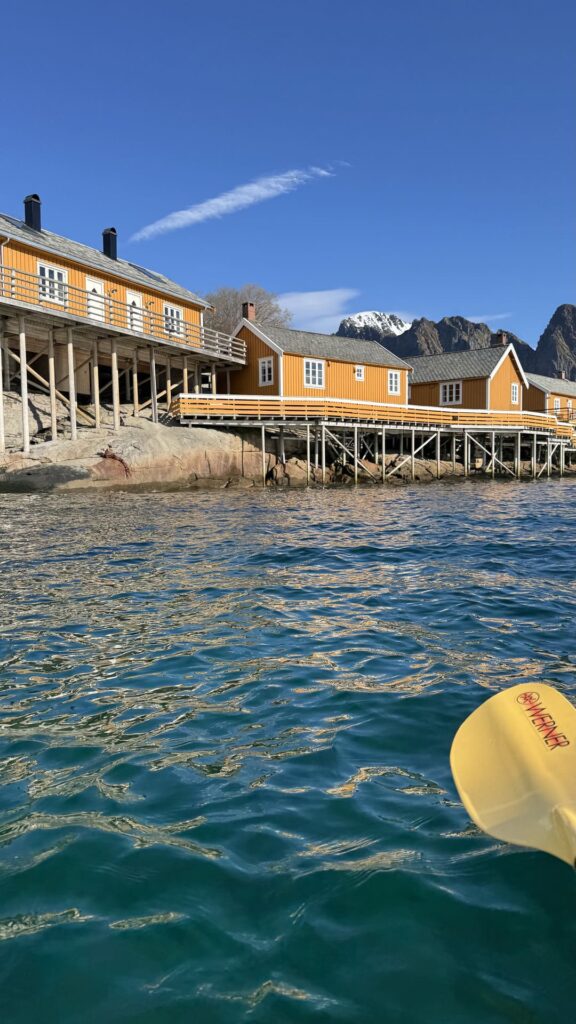
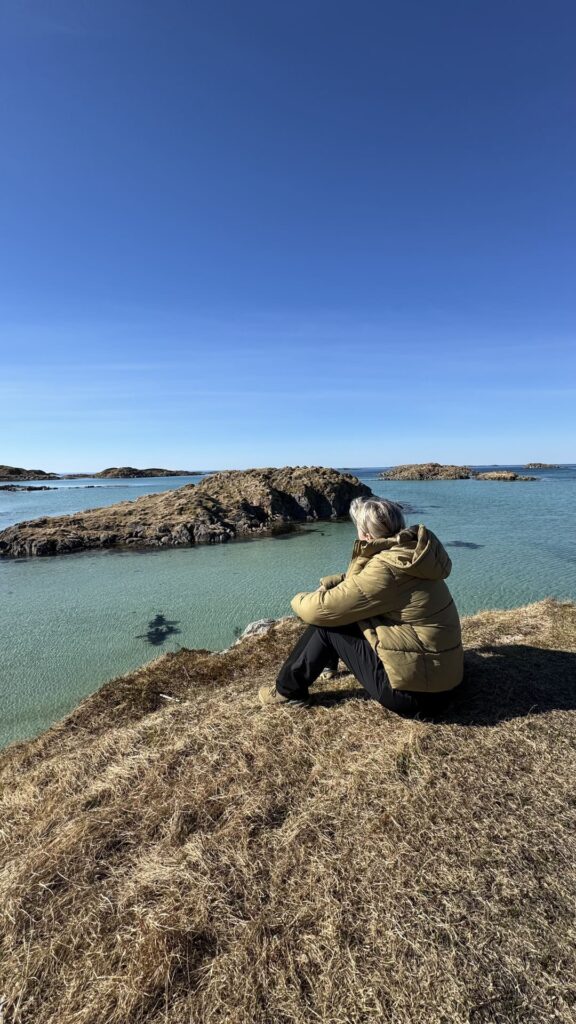
Sea kayaking: with guide Jann (Lofoten-aktiv). Uninhabited islets and white-sand beaches
Bleik–Stave Coastal Route: A 9-km bike ride along rocky coastlines and beaches on Vesteralen
Norwegian Scenic Route Andøya: 58 km – relatively flat – cycling route along the west coast of Andøya
Spotting puffins at Bleiksøya: late April through summer, by boat from Bleik
Whale watching from Andenes: available year-round
Birdwatching excursion at Marmelkroken: bald eagles, auks, waterbirds
Atelier Nøss: Art in a Former Sheep Barn Near Marmelkroken
Cheese Tasting at Lofoten Gardsysteri: Delicious Cheeses at Unstad
Photography workshops at Villa Lofoten: offered during the off-season
What to pack for spring? Pack like a Norwegian
Spring in the Lofoten and Vesteralen isn’t a Mediterranean vacation. That sounds logical, but the reality still takes you by surprise. Not because it’s so cold, but because the weather can change so quickly. In April, there were days when I was out taking photos in a T-shirt. And days when I put on every layer I had with me. Sometimes both on the same day.
The Norwegians have a term for this: the five-layer rule. But in practice, it boils down to one principle: never wear cotton. Cotton absorbs moisture, doesn’t dry, and quickly cools your body down as soon as you stop moving after a climb. Wool (preferably merino wool) is the standard here. It keeps you warm when wet and helps control odor after a day of hiking.
Clothing: the basics
Merino wool base layer (long style): the absolute essential, even when it doesn’t seem cold
A fleece or wool sweater as a mid-layer: at Lofoten Wool in Stamsund, you can take a nice one home with you
Waterproof softshell or hardshell jacket with a hood: windproof is just as important as waterproof
Waterproof pants or rain pants: for hikes like Reinebringen, these are a must-have
Sturdy, waterproof hiking boots: a must-have for mountain trails
Lighter sneakers or slip-ons for exploring the villages and dining at restaurants
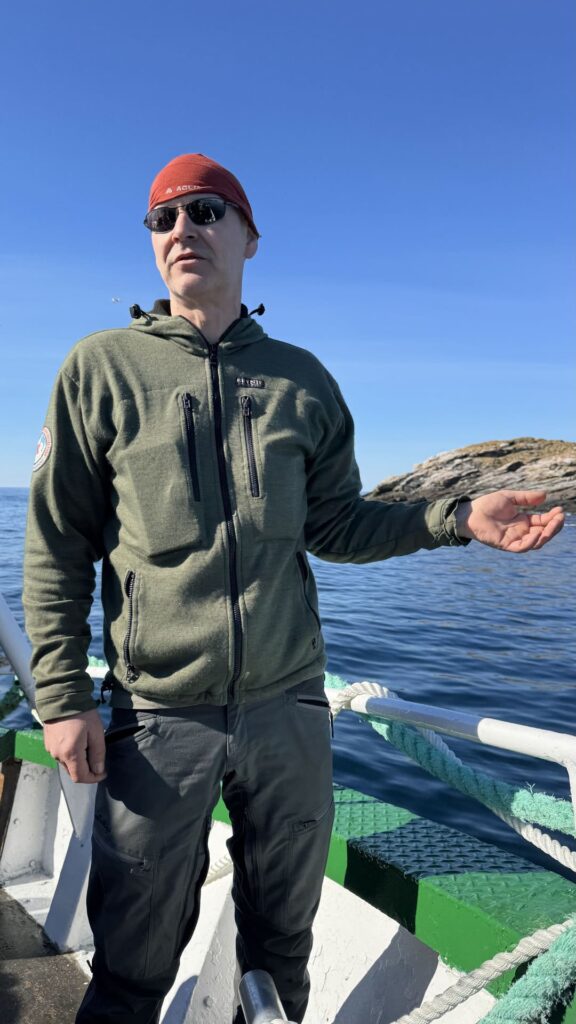
Hat and gloves: even in April, especially on a boat or at the top of a mountain
Sunglasses: the light is low and bright, especially on the water and when there’s snow on the peaks
A lightweight down jacket as an extra layer: perfect for evenings outdoors at Marmelkroken
Footwear: keep this in mind
The roads and trails in the Lofoten and Vesteralen have varied surfaces. You can go from asphalt to rocky trails to muddy paths in just 15 minutes. Waterproof hiking boots with good traction aren’t just an option—they’re a must, especially for hikes like Reinebringen or the Bleik–Stave coastal route. High-top boots are better than low-top ones on wet trails.
Convenient to carry in your bag
Small backpack (20–30 liters) for day trips (with a dry change of clothes in the top compartment)
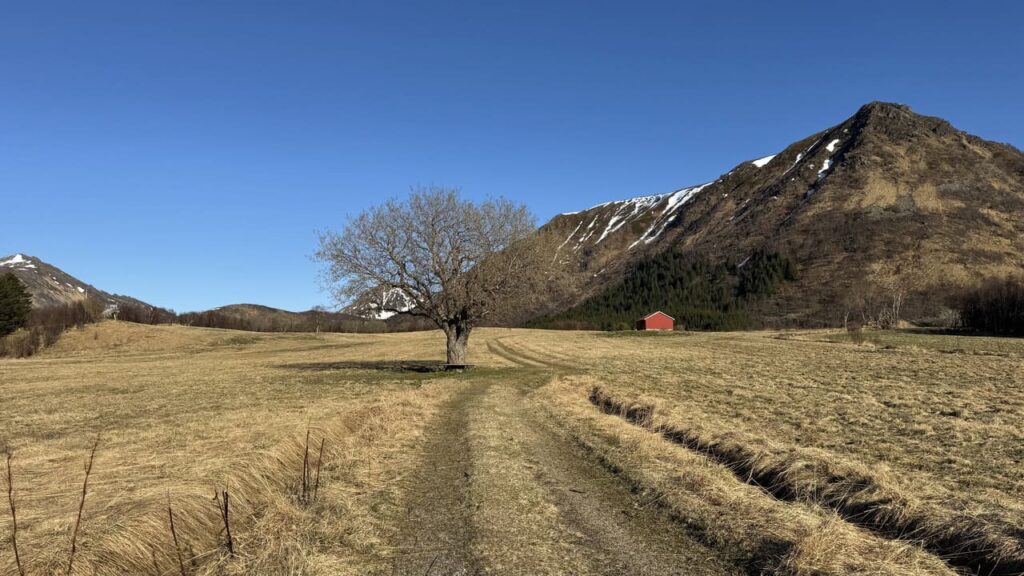
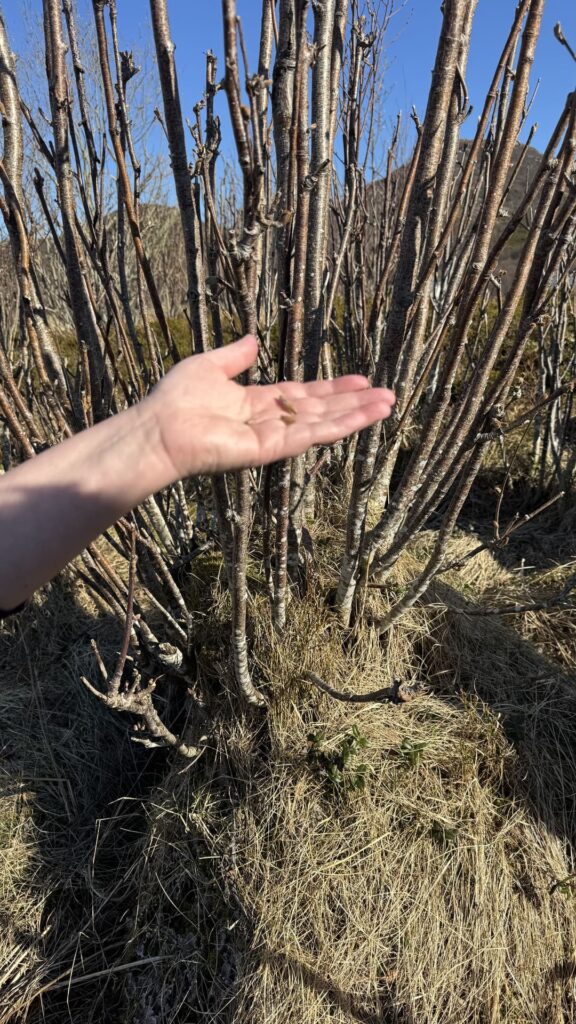
Water bottle or thermos: coffee by a tree tastes better when it’s still warm
Binoculars: for puffins, bald eagles, and the whales off Andenes
Headlamp: It stays light late into the evening in April, but it’s always handy on a late-night walk
Charger and power bank. Not all fishing cabins have electrical outlets
Travel documents: Norway is not an EU member state but is part of the Schengen Area (valid passport or ID)
Debit card. Cash is rarely accepted in Norway
Photography and Nature
If you want to photograph birds—and you will, at Bleik and Marmelkroken—a pair of binoculars with good light sensitivity is more valuable than a big camera. For the puffins on the water, a telephoto lens is definitely handy. And for the Northern Lights: keep your expectations for April deliberately low. But bring a tripod just in case it does happen. I captured mine with my iPhone in hand.
What you don’t need to bring
Leave your fancy evening wear at home. The Norwegians show up at the table in casual clothes, and no one bats an eye. A formal jacket is the one thing you really don’t need here.
Getting to Lofoten and Vesteralen
By plane
Widerøe flies to Svolvær (Lofoten) and Andenes (Vesteralen) from Bodø. You can also fly to Evenes (Harstad/Narvik Airport), with a bus connection to Svolvær (about 3.5 hours).
By train and bus
Night and day buses connect Stockholm with Narvik. From June through September, buses run daily between Tromsø, Senja, Vesterålen, and the Lofoten Islands. Check reisnordland.no (buses) and vy.no (trains).
By ferry
The Bodø–Moskenes route is the classic crossing to the Lofoten Islands (about 3.5 hours). Between the archipelagos, you can drive via Fiskebøl–Melbu or through the tunnel.
By car
Driving your own car to the Lofoten Islands is an option if you have the time. However, this is only possible in the summer, as not all roads are open during the other seasons. A rental car gives you the most freedom for this route. Be aware of roadwork on the Leknes–Napp tunnel (until December 2027). There is only one main road (E10) in the Lofoten; in Vesteralen, there are more route options.
Practical Information for the Lofoten and Vesteralen Tour
Best time to visit
April–June (spring); September–October (fall)
Puffins
Late April–August on Bleiksøya near Bleik, Andøya
Whales
All year round at Andenes; peak season in winter and early spring
Northern Lights
September through early April; best in dark spots such as Marmelkroken
Frequently Asked Questions About Lofoten and Vesteralen in the Spring
Is a visit to the Lofoten Islands worth it in the spring as well?
For slow travel: yes. In April and May, the roads are empty, accommodations are plentiful, and you can explore the islands without crowds everywhere. Summer brings the midnight sun, but also traffic jams and packed parking lots. Spring and fall are better for the experience.
What is the difference between the Lofoten and Vesteralen?
The Lofoten Islands are better known and more dramatic: jagged mountain peaks, narrow roads, and iconic fishing villages. They attract many visitors in the summer. Vesteralen lies to the northeast, is quieter, and features gentler mountains and a more expansive landscape. Vesteralen offers year-round whale watching and has less tourist traffic, even in the summer. Both archipelagos are ideal for combining into a single tour.
When do the puffins come to Bleik?
The puffins arrive on the rocky island of Bleiksøya near Bleik (Andøya) in late April. They breed here until summer and then head back out to sea. They return to the exact same nesting site every year and are monogamous. A puffin can live up to 50 years. The best time to see them is from April through July.
Can I do the Lofoten and Vesteralen tour without a car?
Partially. The Lofoten Islands are accessible by plane (Widerøe to Svolvær) or by ferry (Bodø–Moskenes). Buses run along the E10, but service is limited outside the summer season. Remote locations such as Villa Lofoten in Kvalnes and Marmelkroken are virtually inaccessible without a car. A rental car offers the most freedom.
Is there a chance of seeing the Northern Lights in the spring?
In April, the chances of seeing the Northern Lights decrease rapidly as the nights grow shorter. However, sightings are still possible in April, especially in dark locations such as Marmelkroken on Andøya. The best months for viewing the Northern Lights are from September through early April.
How long should a good road trip be?
Plan on at least 10 to 14 days for a tour that covers both the Lofoten and Vesteralen archipelagos. This will allow you to stay at least 2 to 3 nights at each stopover—which is necessary to truly experience the area. If you have less time: choose one archipelago and explore it thoroughly.
What types of accommodations are best suited for slow travel in the Lofoten and Vesteralen?
Small, independent accommodations with a story to tell. In the Lofoten Islands: Reine Rorbuer, Anker Brygge, and Villa Lofoten in Kvalnes. In Vesteralen: Marmelkroken on Andøya. All three can be booked directly with the owner. Villa Lofoten and Marmelkroken are both HANEN members.
With a passion for travel and photography and over 30 years of experience in the travel industry, I love to share my special nature travel tips. Travel is wonderful and important, you meet new people and cultures and it opens your view of the world.
Dovrefjell in the Fall: Musk Ox Safari from Oppdal A musk ox doesn't run away. If danger threatens, it either stands its ground or charges right at it. That works against a wolf, but not against a train. That's what our guide, Hannes, tells us as we walk across the...
Hiking to Trondheim along ancient pilgrimage trails What’s it like to hike for days along ancient pilgrimage trails to Trondheim? During a trip through Sweden and Norway, I hiked several sections of the St. Olavsleden. From the open border mountains near Skalstugan to...
Last September, we had a wonderful six-day hiking vacation from Bologna to Florence (Via Degli Dei). Not only was the weather perfect, but the organization also contributed to this wonderful experience. The hotels were good, and our luggage was always delivered to the hotel before we arrived. The private transfer was on time, and communication via WhatsApp during our hiking week went smoothly as well; responses were quick and clear. We can therefore definitely recommend this hiking vacation through Nature Travel Lab!
After reading the report on the “Alpenüberquerung,” we got really excited. The combination of hiking through beautiful nature and the luxury of luggage transport and a reserved hotel perfectly meets our desire to stay active but then be able to enjoy a well-deserved drink and a delicious meal. The hikes were manageable for us and very varied; some basic fitness is required, especially since we aren’t used to the elevation gain. The trip really gives you the feeling that you’re on a hiking expedition, especially since you hike on your own but meet the same fellow hikers in the afternoons and evenings at one of the mountain huts or at the hotel. Highly recommended for hikers who love unspoiled nature combined with the luxury of a hotel!
Peloponnese Hiking Tour
A really beautiful six-day hike from Bologna to Florence. Communication with NatureTravelLab and the local agent was excellent. The information packet was waiting for us at the hotel in Bologna, and the app with the route worked great. Luggage transport was well organized every day, and our bags were waiting for us each time we arrived at our new room! We covered more than 1,400 meters of elevation gain, but unfortunately didn’t always get the views we’d hoped for due to cloud cover and some drizzle. Most days had great hiking weather. It was wonderful to walk into Florence on foot and stay there an extra day.
We experienced the Walk of the Gods as a great adventure. Our start in Bologna didn’t go quite as planned because our app wasn’t working yet and we couldn’t find a single sign for Via degli Dei in the square. Fortunately, we were quickly able to join two young hikers from Florence who were also doing the hike. After a wonderful night’s stay at the beautiful Rio Verde agritourism farm, Day 2 went much better with the help of the hiking app. Along the way, we enjoyed stunning views, met some great fellow hikers, and sampled delicious local dishes. Unfortunately, the weather wasn’t always on our side, and we had a day of heavy rain, which made the trail very slippery and required us to be careful. It’s a real treat when, on the last day, you can already see Florence in the distance and walk into this beautiful city a few hours later. Thank you so much for your quick and friendly responses to all our questions.
We enjoyed the trip. We also made some changes to our itinerary, and the email correspondence went very smoothly. We started in Mantera; the next day, our first and only hike was a really beautiful one. The taxi picked us up right on time. Unfortunately, the second day’s route was almost the same when we cycled to Ostuni. The bikes were well-maintained, including panniers and helmets (these were simply included). You could even bring your own water bottle!!! We found the route very scenic and varied. There were charming little villages where we could stop for lunch or coffee. The app worked great. All the hotels ranged from good to excellent, though we didn’t think the hotel in Leuca was worthy of 4 stars. We followed your advice for the two nights we stayed there. We found Leuca a bit underwhelming for a two-day stay. We would have preferred to stay in Gallipoli or Lecce for two days. We took this trip in April and were very lucky with the weather. It’s still a quiet time of year, but we didn’t mind that. We definitely recommend it!!!
Thanks to a great tip from Nature Travel Lab, we had a wonderful week in Italy. Fattoria di Maiano, just outside Florence, was a beautiful and peaceful place. And the suggested road trips were a great guide for exploring the region. We’ll definitely check here for tips for our next vacation, too. Highly recommended!
We spent a divine week in Italy: we walked the Path of the Gods, from Bologna to Florence—about 135 km spread over 6 days of hiking. Challenging distances and climbs, amazing views, nature, and a warm welcome every time we arrived at the agriturismo or albergo/hotel. All of this was perfectly organized by the Italian company Slow Active Tours, entirely in line with Nature Travel Lab’s itinerary proposal: upon arrival in Bologna, an information packet was waiting for us, complete with a hiking map, a booklet, and passports for the stamps. And the hiking app was very practical for along the way! Our luggage was transported every day and was always waiting for us when we arrived at the next location. Communication was smooth and clear. In short, highly recommended, well worth it, and well-organized.
In September, I walked the Cammino Materano. Communicating with Madelon about the booking was a pleasure. To be honest, I was quite nervous because it was my first time doing a multi-day hike—alone and in a region I wasn’t familiar with—but I thoroughly enjoyed it. The hike to Matera was beautiful, and I was able to complete it without any trouble thanks to the clear on-site signage and the routing and advice provided by the GPS app. The rest of the organization was top-notch as well. My luggage always arrived on time at the right destination, and the hotels and B&Bs were of high quality. In addition, the organizers were easy to reach via WhatsApp if I had any questions. Highly recommended!
Slovenia was absolutely amazing. A beautiful country, friendly people, lovely hiking trails, and truly top-notch hotels. The staff at the local organization were also very easy to reach and helpful. The hiking was manageable. As Dutch people, we’re not used to high altitudes, of course, so it was pretty tough at times. But it was also a lot of fun.
We had a wonderful trip. Everything was well organized. Due to an unfortunate fall, I ended up traveling with my luggage for a day, but that was handled well, too. We really liked all the accommodations. Only the Hotel Hebe in St. Piero a Sieve was a little less impressive, but it was still okay.
Looks fantastic! I'm definitely going to book a trip with this company... they're committed to sustainability and personalized advice. Definitely worth it.
Madelon and her team are true experts. Thanks to their years of experience and passion for travel, they manage to surprise us time and time again.
Beautiful hikes, the most picturesque spots—it’s a real treat.
I highly recommend them!
Nature Travel Lab provided us with very helpful and honest assistance!
If you’re looking for travel itineraries, the most beautiful hikes, and destinations, you can find it all here. You’ll find endless inspiration for your next trip. Beautiful cities are interspersed with nature. You’ll find everything you need to know about practical matters. Plus, there are plenty of tips for sustainable travel. That way, you’ll get the most out of your trip.
45
Get inspired
Are you looking for the most beautiful hiking and biking routes? Or do you want information about traveling by train or advice for the most beautiful road trips through nature. Get inspired for your next trip in green; ideas for planning your own trip or opting for an organized trip.
To provide the best experiences, we use technologies like cookies to store and/or access device information. Consenting to these technologies will allow us to process data such as browsing behavior or unique IDs on this site.
Functional
Always active
The technical storage or access is strictly necessary for the legitimate purpose of enabling the use of a specific service explicitly requested by the subscriber or user, or for the sole purpose of carrying out the transmission of a communication over an electronic communications network.
Voorkeuren
De technische opslag of toegang is noodzakelijk voor het legitieme doel voorkeuren op te slaan die niet door de abonnee of gebruiker zijn aangevraagd.
Statistics
The technical storage or access that is used exclusively for statistical purposes.De technische opslag of toegang die uitsluitend wordt gebruikt voor anonieme statistische doeleinden. Zonder dagvaarding, vrijwillige naleving door je Internet Dienst Provider, of aanvullende gegevens van een derde partij, kan informatie die alleen voor dit doel wordt opgeslagen of opgehaald gewoonlijk niet worden gebruikt om je te identificeren.
Marketing
De technische opslag of toegang is nodig om gebruikersprofielen op te stellen voor het verzenden van reclame, of om de gebruiker op een site of over verschillende sites te volgen voor soortgelijke marketingdoeleinden.