
Gratis gids 10 verborgen natuurplekken in Europa
Gratis gids 10 verborgen natuurplekken in Europa. Meld je aan voor onze nieuwsbrief en ontvang inspirerende reistips en routes voor je volgende groene reis.

Matera is a UNESCO World Heritage Site and made headlines in the international press as the European Capital of Culture. And yet, Basilicata remained Italy’s best-kept secret. Behind Matera lies a region that is the second least densely populated in the country after the Aosta Valley: rocky mountain ridges, deep gorges, Italy’s largest national park, and villages that have barely changed over the past centuries.
The Pollino Mountains (which separate Basilicata and Calabria) are so quiet and unspoiled that you can encounter wolves, griffins, and golden eagles there. The Lucanian Dolomites are bizarre rocky peaks in the heart of southern Italy that make travelers look at the map with a mix of wonder and bewilderment. And when you reach the peaks of the Pollino, on clear days you can see three seas at once: the Ionian, the Tyrrhenian, and the Adriatic.
Basilicata isn't a region that shouts for attention. But once you're there, you'll understand why. Nature Travel Lab selects small-scale accommodations in Basilicata that can be booked directly with the owner.
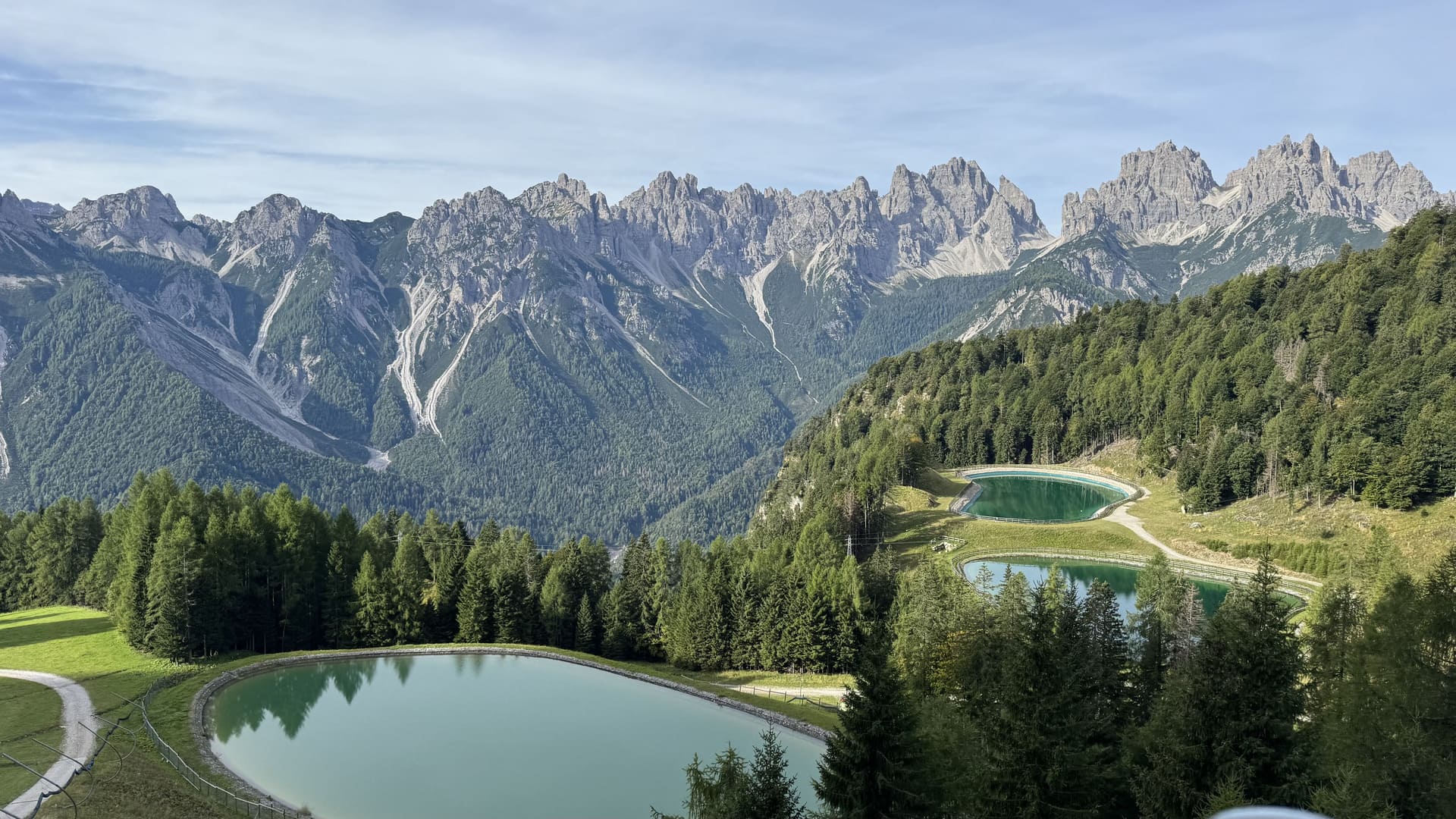
Choose your favorite region and discover our tips for the best small-scale Nature stays with a sustainable focus. You book directly with the owner, so you are guaranteed the lowest price.
Using these sustainability icons, you can easily see in what area an overnight stay is active with its sustainability policy.


sustainable/local construction

organic/local cuisine

family/local runned/social projects

Sauna/yoga/wellness/treatments

Environment/recycling
Choose your region

Sicily
Tuscany
Valle d’Aosta
Piedmont
Basilicata
Puglia
Campania
Veneto
Lombardy
Lombardy
Lake Garda
South Tyrol
Sardinia
Emilia-Romagna
Umbria
Le Marche
Trentino
Abruzzo
Liguria
Friuli-Venezia-Giulia
Lazio
Basilicata is perhaps Italy’s best-kept secret. After the Aosta Valley, it is the least densely populated region in the country, and it shows. Rugged mountain landscapes, deep gorges, vast forests, and centuries-old villages that have barely changed. No crowds, no staged scenery. Just nature taking its own course.
Nearly one-third of the region consists of protected nature reserves, including two national parks, three regional parks, and eleven nature reserves. The largest is the Parco Nazionale del Pollino, which is also the largest national park in all of Italy. Rare tree species such as the loricato pine grow in the park, and golden eagles and griffon vultures circle overhead. If you’re lucky, you might spot an Apennine wolf. Opposite them lie the Lucanian Dolomites: bizarre rock formations you’d expect to find in northern Italy, but which appear right here in the middle of the south.
Basilicata is at its very best outside of peak season. In the spring, the mountain meadows are in bloom; in the fall, the landscape turns a deep golden color. This is Italy as it once was everywhere: if you’re willing to drive a little out of your way.
Hiking in Basilicata means choosing between two very different worlds. In the south lie the Pollino Mountains: wild, high, and at times downright inhospitable. The hikes take you through remote areas where you might encounter wolves, golden eagles, wildcats, and porcupines along the way. From the summit of Monte Dolcedorme (on clear days), you can see the Ionian Sea, the Tyrrhenian Sea, and the Adriatic Sea all at once. It’s one of the most impressive panoramas in all of Europe, yet virtually unknown to foreign travelers.
To the north lie the Lucanian Dolomites, a more accessible alternative. Around the villages of Castelmezzano and Pietrapertosa, hiking trails wind through a landscape of jagged rock peaks and deep valleys. You’ll find several hiking trails and cultural attractions in these mountains, which are part of the Lucanian Apennines. The area around Matera offers a completely different kind of hike: past rock churches, prehistoric caves, and the quiet ravines of the Murgia.
Spring and fall are ideal. Summers are hot, and winters in the mountains are cold and snowy. If you visit during the off-season, you’ll practically have Basilicata all to yourself.
Basilicata calls for a different way of traveling. Not from hotel to hotel, but at a slower pace, with a fixed base from which you can get to know the region. The accommodations selected by Nature Travel Lab fit that pace: small-scale agriturismi, estates with their own produce, and guesthouses where the owner will tell you the next morning which trail is worth exploring.
Imagine an agriturismo just a short distance from Matera, surrounded by the San Giuliano Nature Reserve—an area where birdwatchers can spot rare species and hikers can enjoy the silence all to themselves. Or a stay in the Lucanian Dolomites, within walking distance of the most spectacular village trails in southern Italy. Book direct with the owner, without going through a platform.
Basilicata isn't a region that immediately captures your attention. But once you're there, you understand why Francis Ford Coppola once said of it: "Here you see the earth as it was meant to be."
“Nature is our greatest ally and inspiration.”
– Sir David Attenborough
We select the nicest accommodations with all a focus on sustainability policies. Think luxury Treehouses in the middle of nature or a boutique hotel in the countryside. Sustainability categories range from organic cuisine and mindfull focus to waste separation and zero-waist policy.
The accommodations all have something unique and of course a location in or near nature. Spending the night in nature does not always mean sleeping in a tent. Find special and luxurious nature stays for your active vacation or just for your slow travel experience.
The overnight focus on sustainability policy gives attention to comfort and quality.
They often use their own vegetable garden or local cuisine. Much attention is paid to the quality of the accommodation, the environment and the guest.


