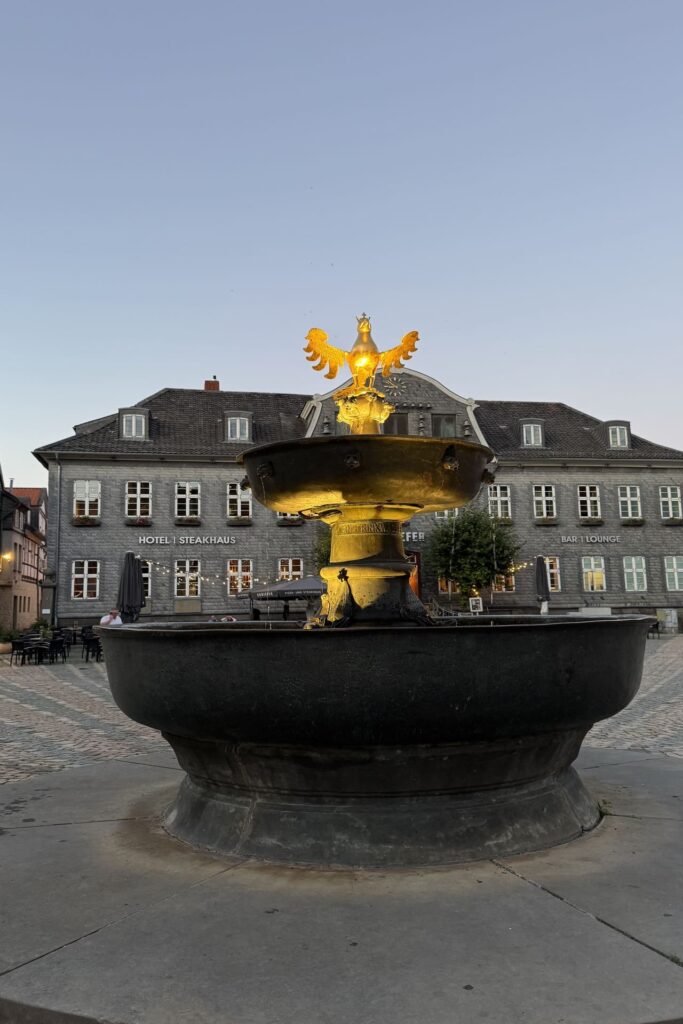
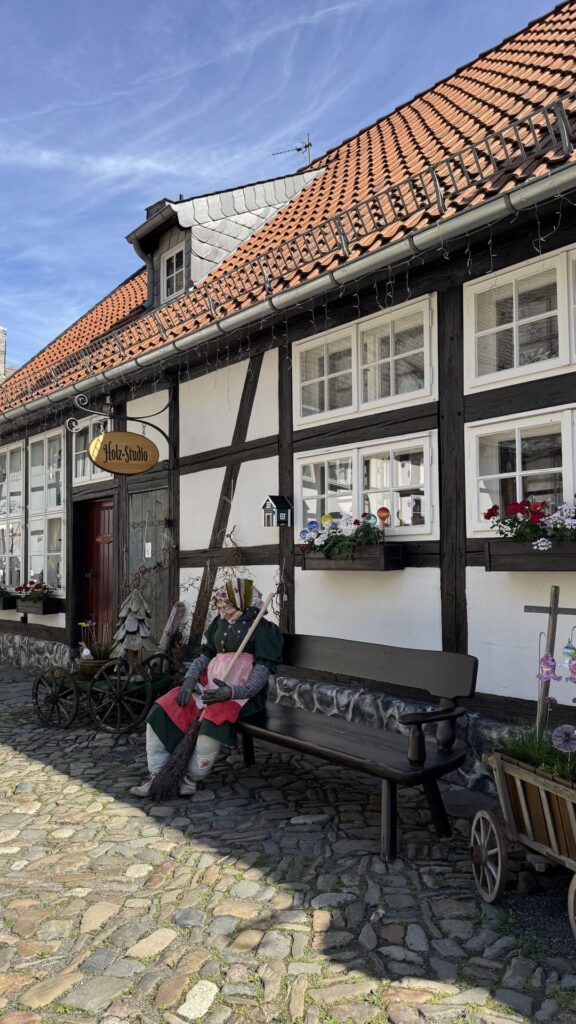
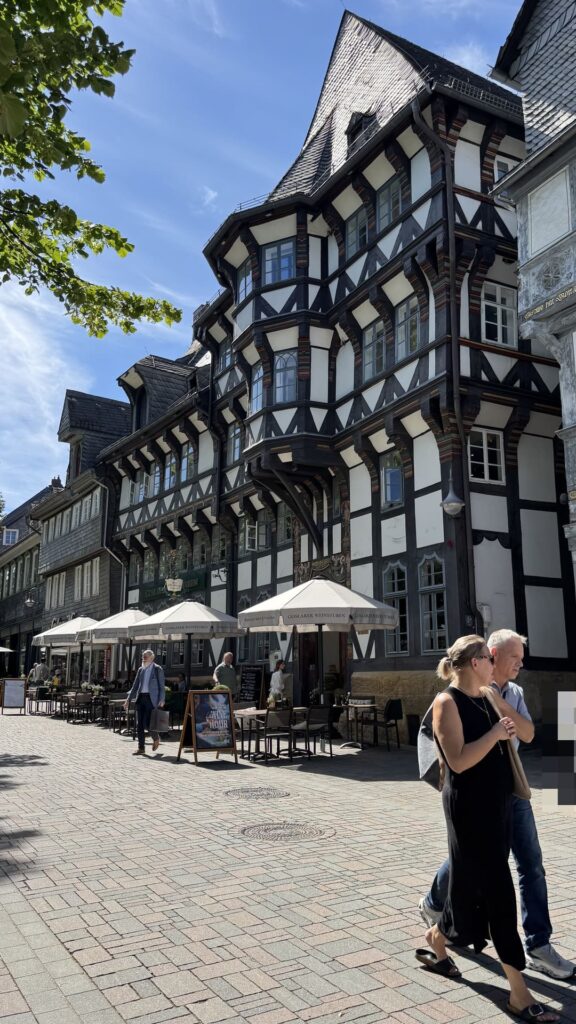
It took the guide two hours to take us on a journey from the 11th century through the Middle Ages, the Prussian era, and the Renaissance, right through the heart of the same city center. Goslar was the starting point of my journey through the Harz, and in hindsight, a logical choice: nowhere else in the region is so much history packed so closely together as in this half-timbered town on the edge of the mountains.
This UNESCO World Heritage city, with its many historic buildings, has been and continues to be carefully restored in several areas. On the outskirts of the city, a major festival is underway—the Schützen- und Volksfest Goslar—which takes place annually for 10 days in early July. It offers a lovely contrast to the city’s centuries-old history.
A palace larger than the church
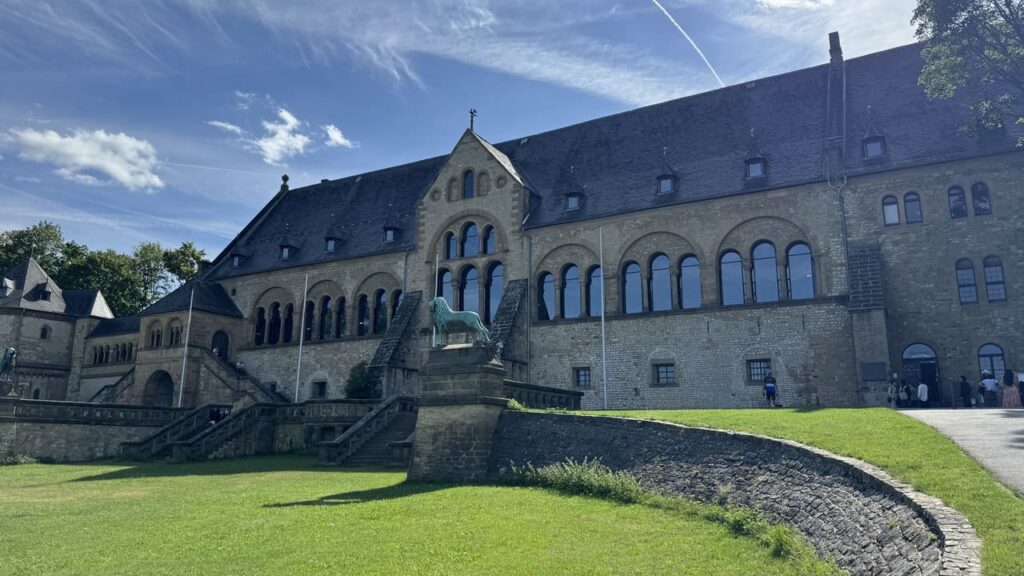
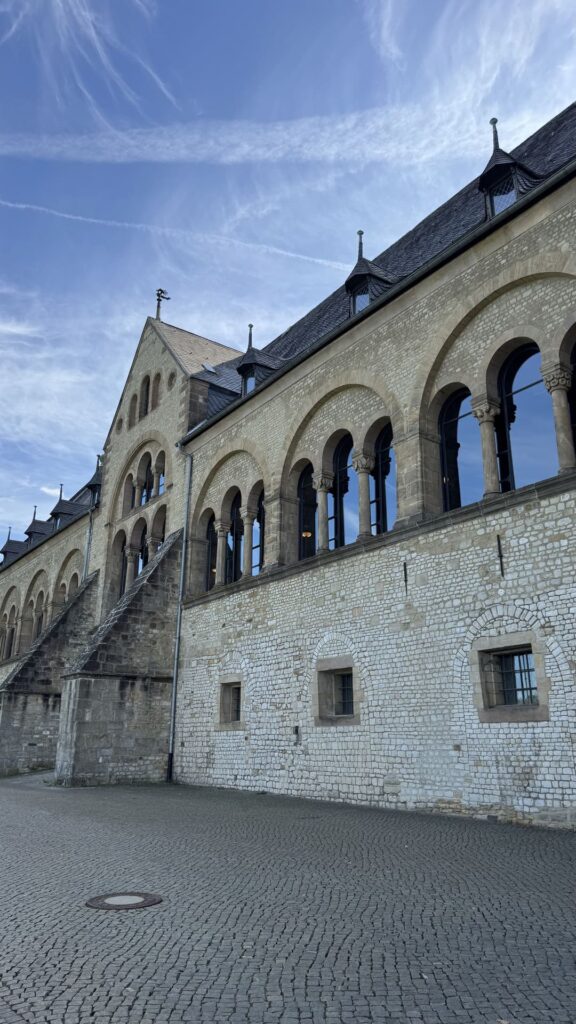
Goslar owes its status as an imperial city to Henry III, who had his imperial palace built here in the 11th century. The guide pointed out to us that at the time, the palace was larger and more imposing than the church next to it—something that was by no means a given back then. A clear statement: the emperor’s secular power took precedence over the church’s here.
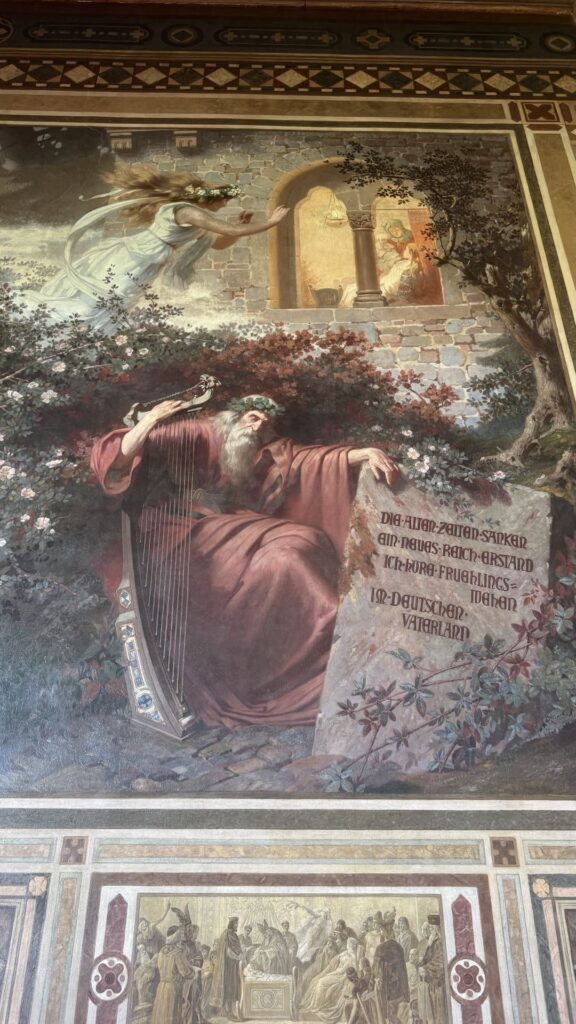
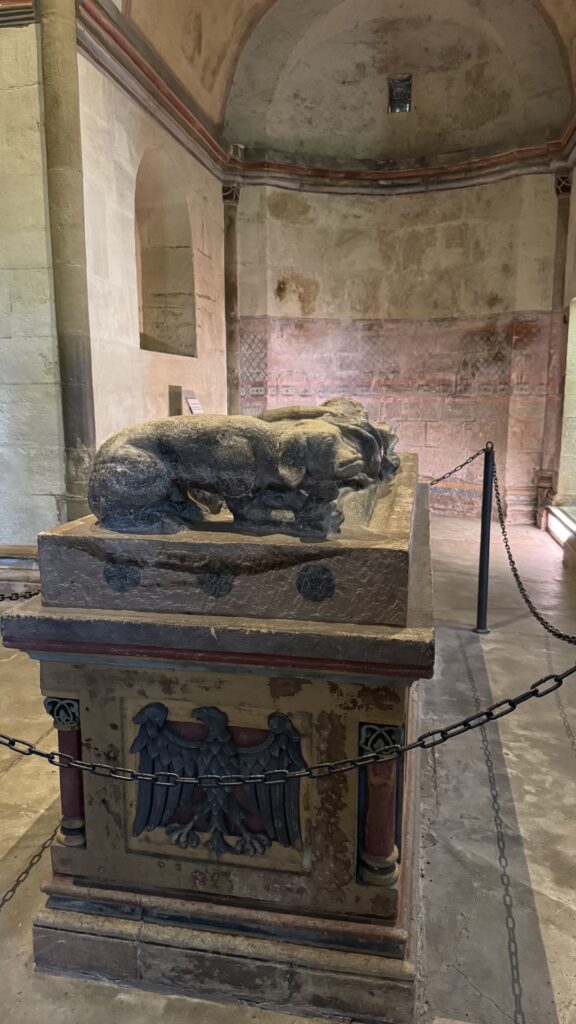
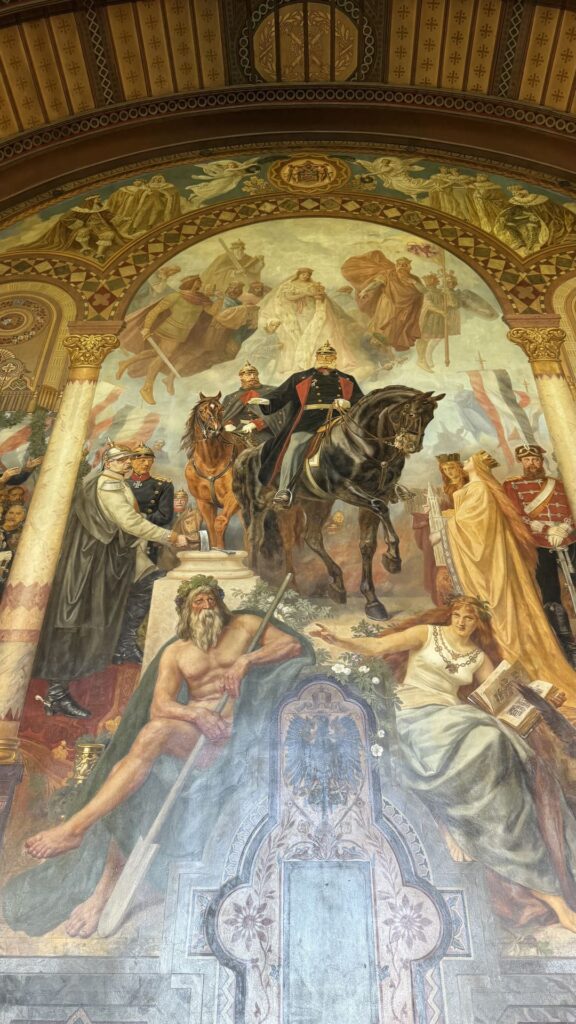
The impressive Imperial Hall features 68 historic 19th-century murals depicting the history of the German Empire. A few steps down lead to St. Ulrich’s Chapel, where only the heart of Emperor Henry III (1056) is buried in a sarcophagus because of his special connection to the city.
The Huldigungssaal: Late Gothic Splendor Behind Glass
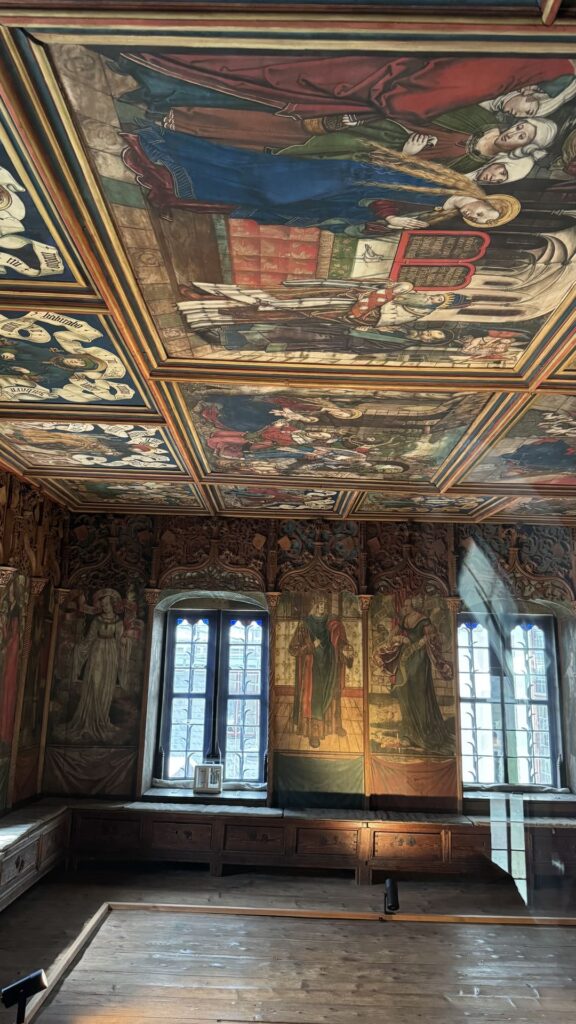
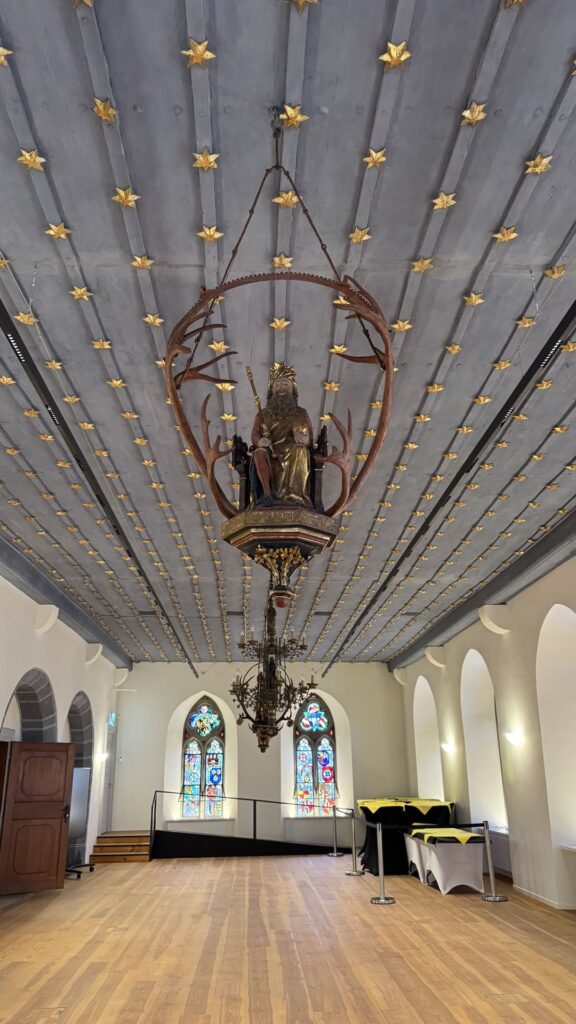
Hidden inside the town hall, right in the middle of the market square, is one of Germany’s best-preserved halls. The Huldigungssaal was decorated between 1505 and 1520, with its walls, ceiling, and even the window niches completely covered in panel paintings and rich wood carvings. Unfortunately, you’re no longer allowed inside these days; you can only look in through a glass wall. This is to protect the artwork following a thorough restoration. Some of the depictions date back to Roman times.
Carillon and a Red Reminder of Industry
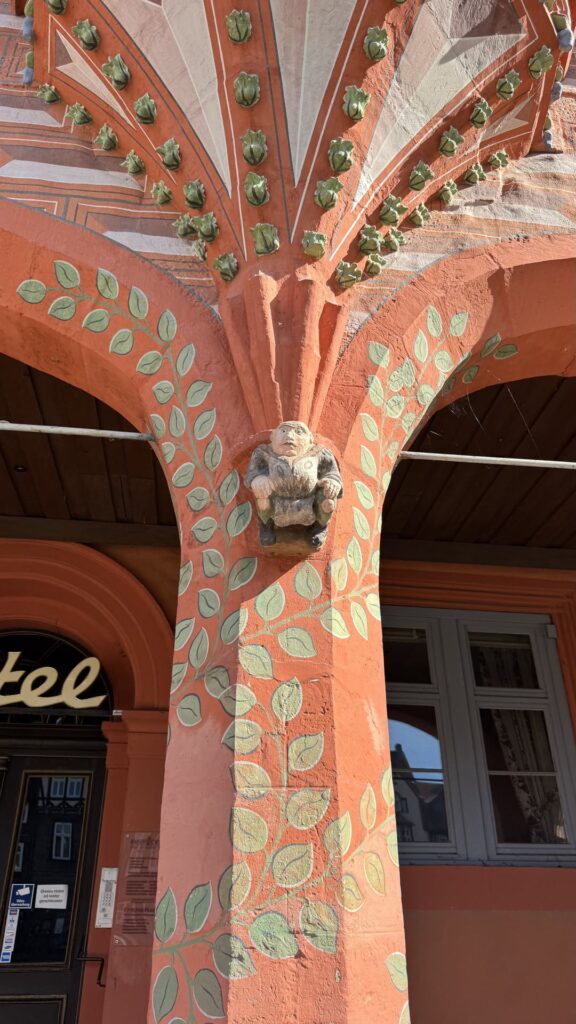
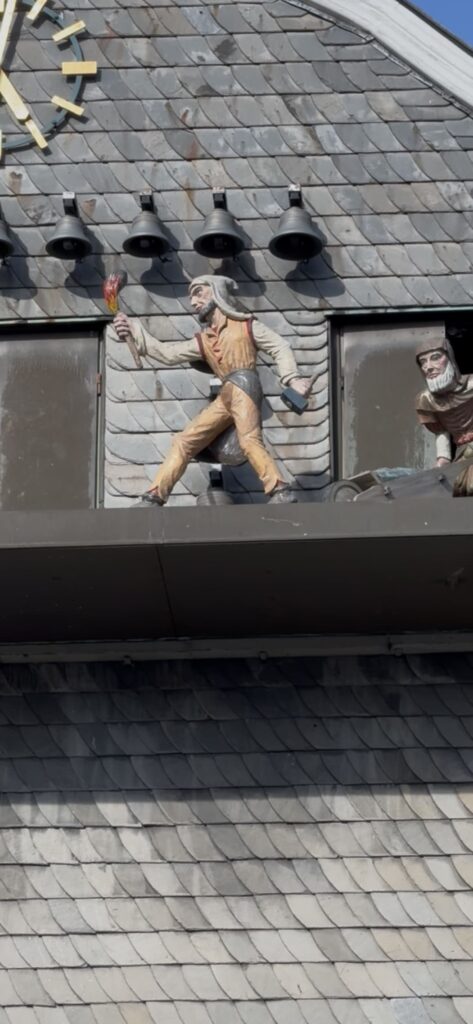
On the square in front of City Hall, the carillon plays at nine, twelve, three, and six o’clock. We watched the six o’clock chime (though the clock actually read five o’clock). The red building on the other side of the square is an old guild hall built by merchants in the late 15th century. It is now a hotel undergoing renovation.
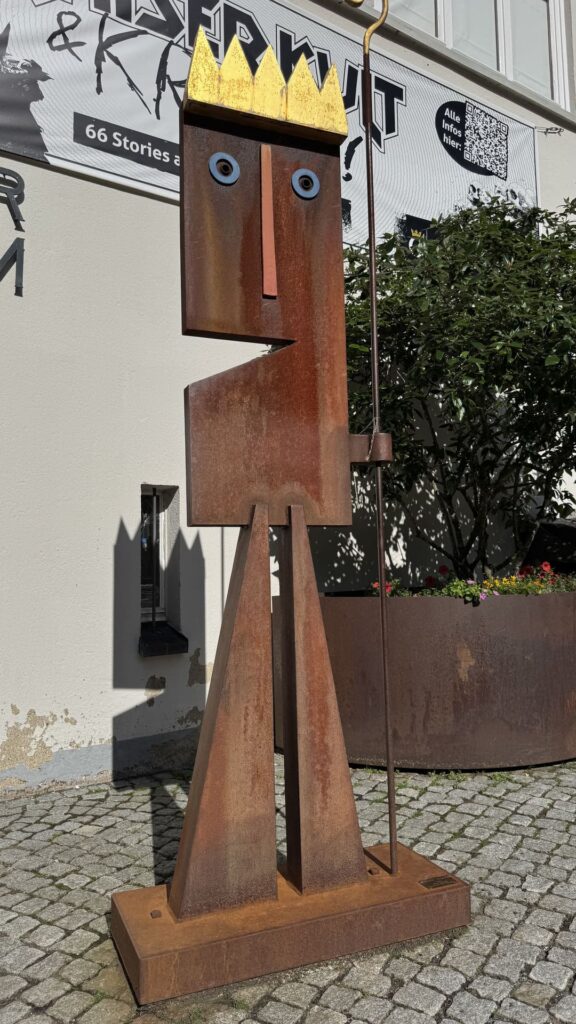
The statue of the little man “pooping ducats” on the side of the building had a double meaning; on the one hand, it symbolized the city’s wealth, and on the other, it served as a warning to pay your debts on time.
Murals with a political message
Inside the Kaiserpfalz itself are impressive 19th-century murals depicting the history of the German Empire. Under Emperor Wilhelm I, the interior was lavishly decorated with Romantic murals depicting the heroic deeds of the medieval Holy Roman Emperors, culminating in a painting in which Wilhelm I, Frederick III, and Bismarck had themselves depicted as the natural successors to those medieval emperors.
The paintings were created shortly after the Franco-Prussian War of 1870–1871, during a period when Prussia emphatically demonstrated its position of power in Europe, including through art.
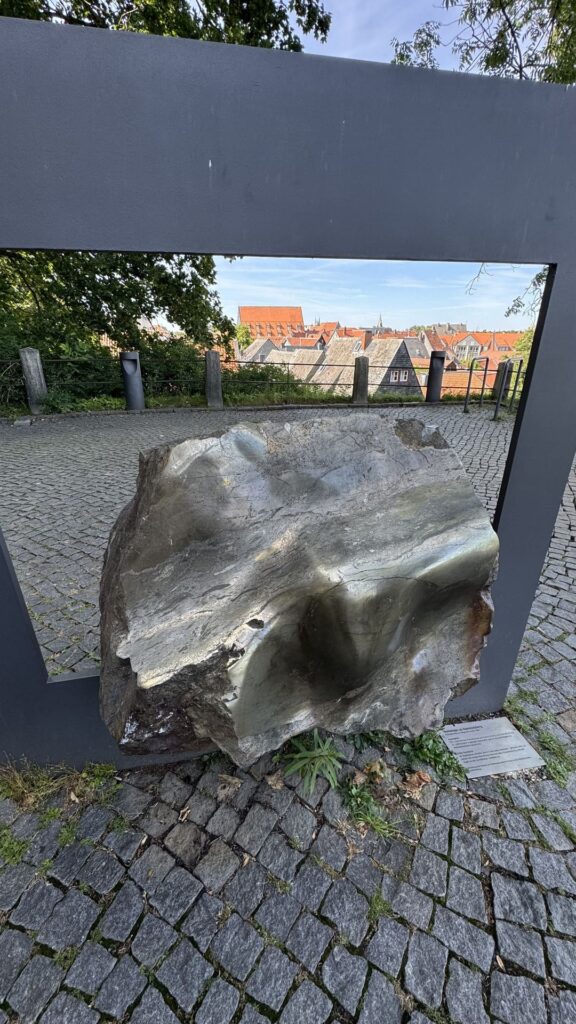
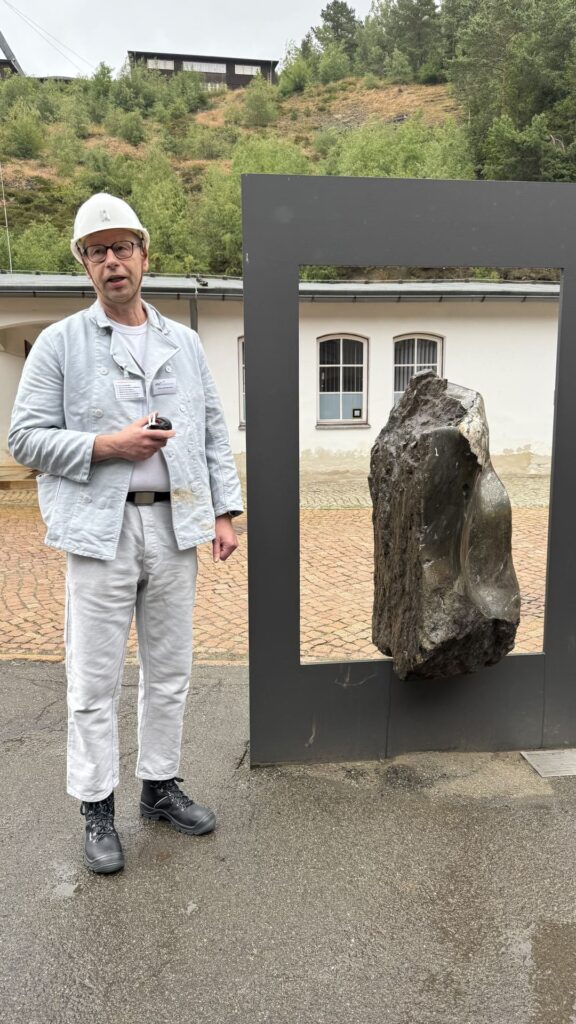
In front of the Imperial Palace stands a statue made of a large piece of stone called the Erzbrocken. It is a large, broken piece of ore that symbolizes the importance of the mining industry to the city.
Traces of Industry: The Last Mill and the City’s Name
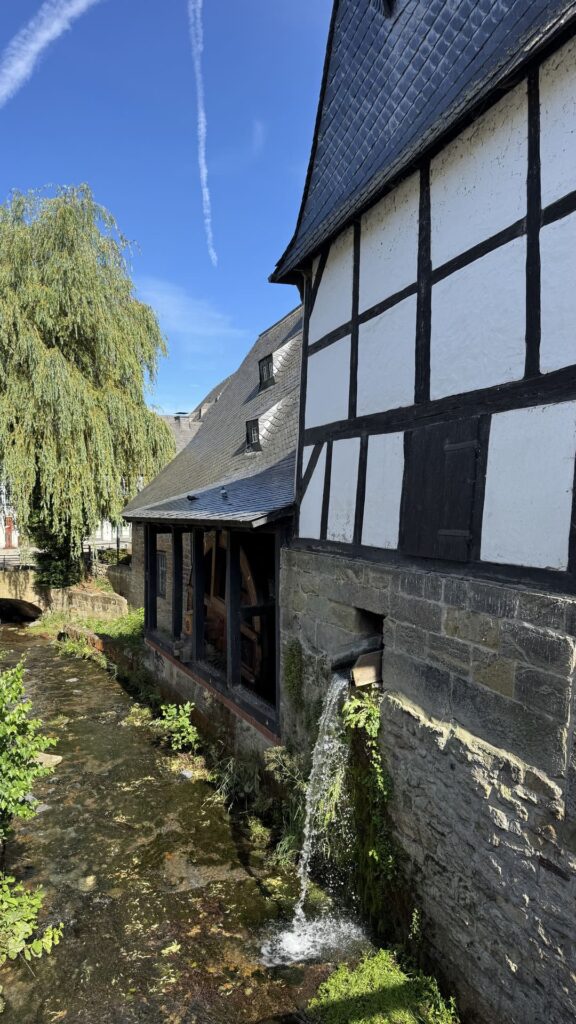
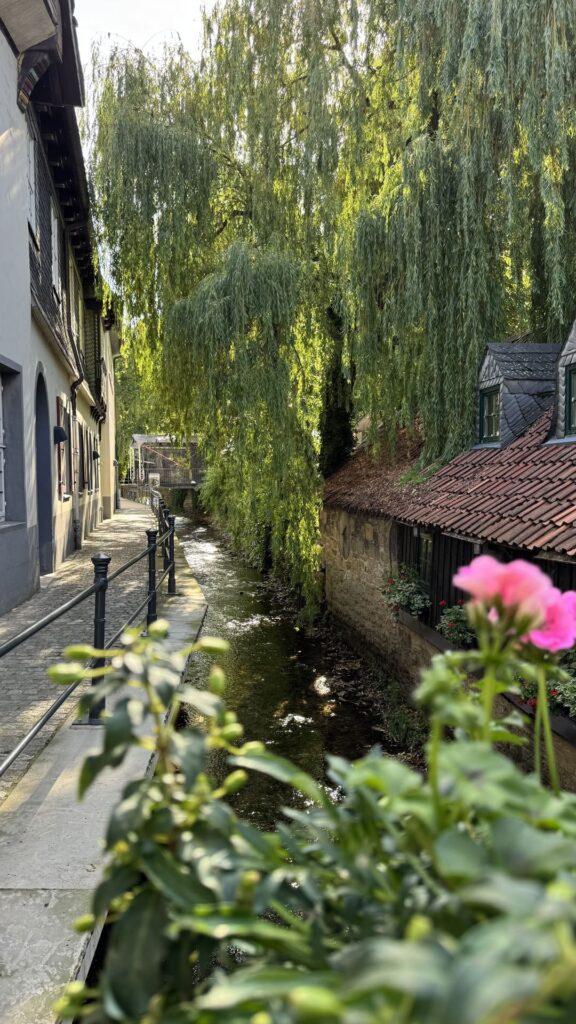
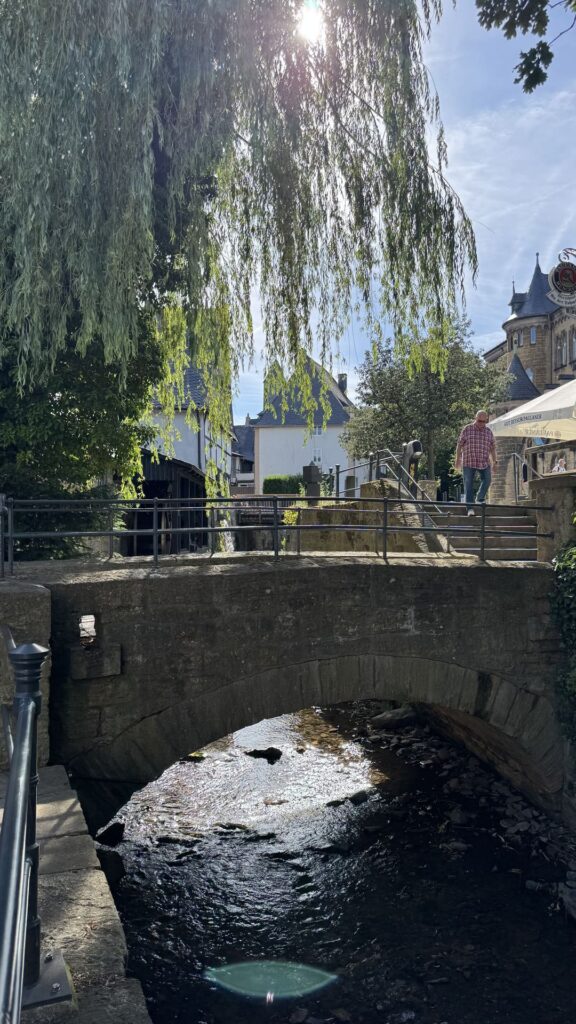
Of the thirty mills that once stood along the Gose, only one remains standing. One of them used to process tree bark into tanning agents for the leather industry—a detail that vividly illustrates how closely this town was intertwined with the nature around it. The name Goslar also refers to this: it presumably means something like “resting place on the Gose,” in an area that was once mostly marsh and forest before a town emerged here.
Five Churches and an Imperial Prize
Goslar still has five churches today, a fraction of what the city once boasted. Once a year, an imperial prize is also awarded here, a tradition that dates back to the time when the city was allowed to call itself Kaiserstadt.
A medieval almshouse, now best known for Christmas
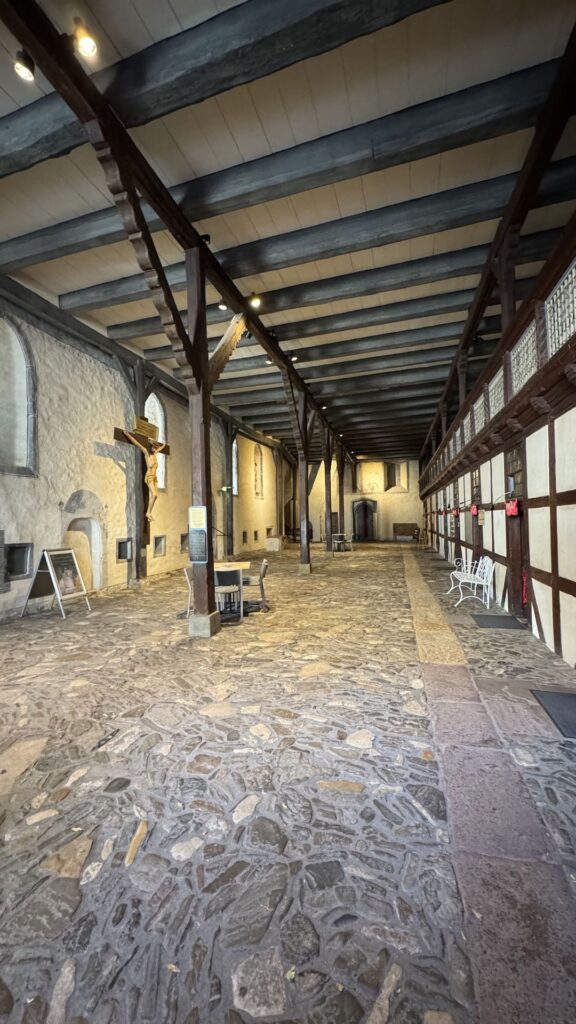
Right next to the Kaiserpfalz stands a building that, at first glance, doesn’t stand out much, but has one of the city’s most remarkable histories. The Große Heilige Kreuz was founded in 1254 as a hospital and orphanage, and in addition to the sick and orphans, it also provided shelter to travelers and pilgrims. Today, the small rooms that once served as living quarters house arts and crafts workshops.
During the Advent season, the building becomes part of the city’s Christmas spirit, featuring its own musical program alongside the stalls on the market square. It’s a wonderful example of a building that was once intended for the poorest of the poor, and now plays a heartwarming role during one of the most festive times of the year.
From Border Town to Competitor: Goslar and the Fall of the Wall
Before the fall of the Wall, Goslar attracted many visitors, mainly because the city was located so close to what was then the border with East Germany. After 1989, that changed: cities that had been inaccessible for decades, such as Quedlinburg and Wernigerode, suddenly became accessible again and took over a portion of that tourism.
Rammelsberg: The Mines Beneath the City
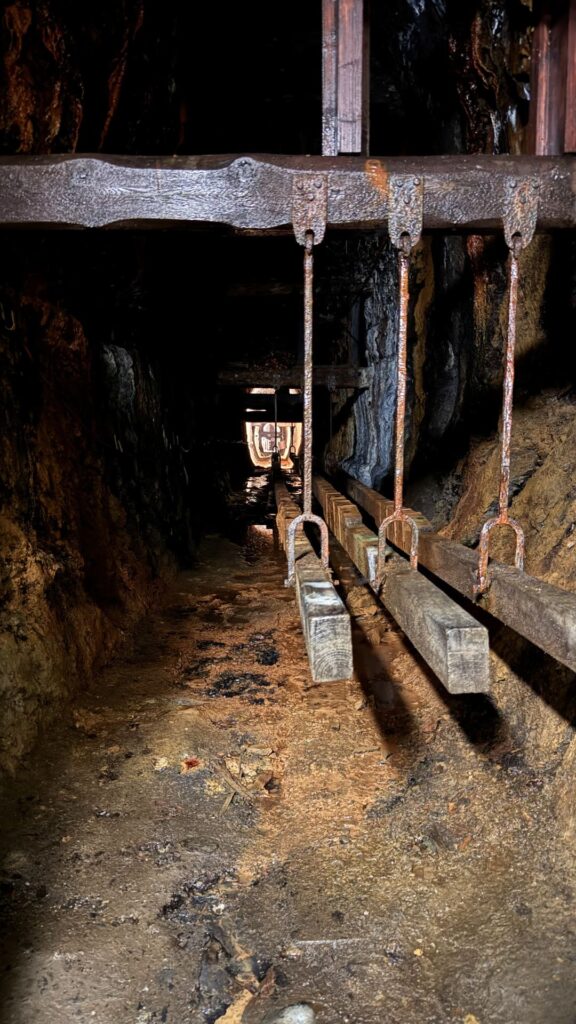
From Goslar, I visited the Rammelsberg mines, which, along with the Old Town, are part of the UNESCO World Heritage List. The underground tour was one of the most impressive parts of the entire trip: narrow passages, old mining technology, and a tangible sense of just how much work was done here over the centuries. If you visit Goslar, you shouldn’t miss this.
Accommodations and Dining
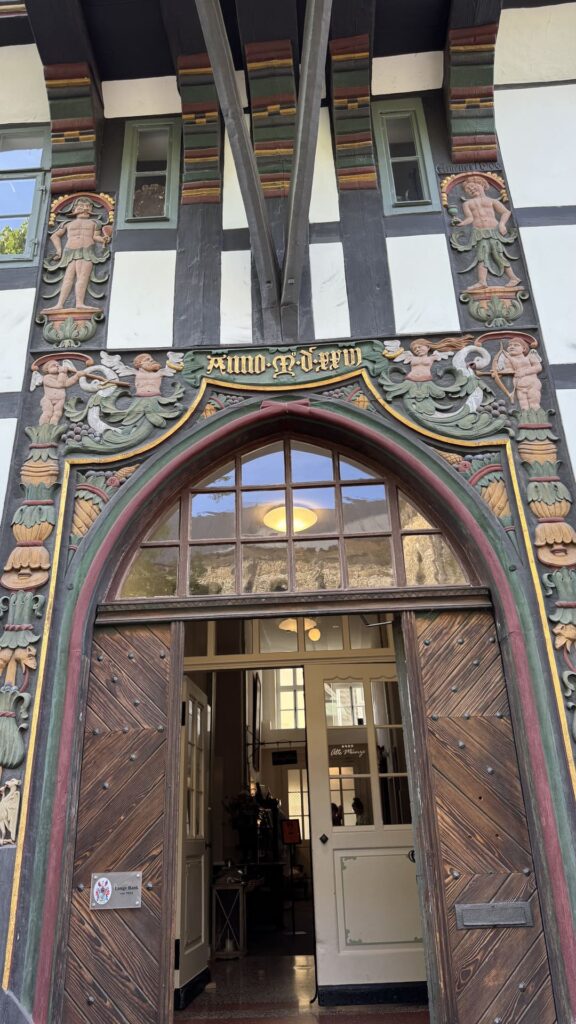
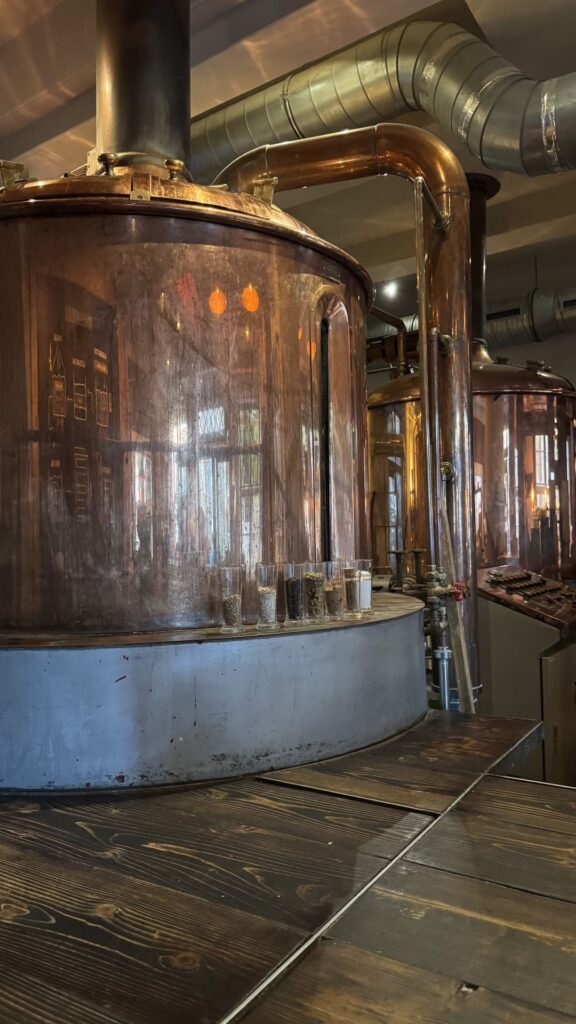
I stayed at the Romantik Hotel Alte Münze, right in the heart of the city, with an authentic atmosphere that fits in well with the rest of Goslar. I had dinner at Brauhaus Goslar—to be honest, it’s a bit touristy, but perfect for a first night in town. For a delicious Kaffee und Kuchen, head to the historic café on the market square.
Goslar: Practical Information
Goslar is about 450 kilometers from Utrecht.
With the Harz Card , you get discounts at many museums in Goslar and the surrounding area. For example, the card grants you one free admission to the Rammelsberg Mines, the Kaiserpfalz, and City Hall. You can purchase the card for 48 hours or for 4 days. The card also offers many benefits outside of Goslar. You can order it online or at one of the many local tourist offices.
With the Deutschland-Ticket, for €63 a month, you can travel not only by bus and regional train but also on the historic steam train through the Harz Mountains—a fun addition to your trip if you’re already in the region.
Rammelsberg Mines: In addition to daily guided tours, there is also an interesting museum.
TIP: Combine your visit to Goslar with two other historic cities near the Harz Mountains: Braunschweig and the lesser-known Wolfenbüttel.
Frequently Asked Questions About Goslar
Is Goslar a UNESCO World Heritage Site?
Yes, Goslar’s historic city center has been listed as a UNESCO World Heritage Site since 1992, along with the Kaiserpfalz, the Oberharzer Wasserwirtschaft (the world’s largest historic water management system used for mining), and the Rammelsberg mines.
How much time should I set aside for a visit to Goslar?
Plan on spending at least half a day in the city center, and a full day if you also want to visit the Rammelsberg Mines.
Is Goslar a good base for exploring the Harz Mountains?
Absolutely. The town is located on the edge of the mountains and is well connected to other destinations in the Harz region, including Braunlage and Torfhaus.
With a passion for travel and photography and over 30 years of experience in the travel industry, I love to share my special nature travel tips. Travel is wonderful and important, you meet new people and cultures and it opens your view of the world.
Aachen Off Track: A Green City Trip Featuring a Forest, an Organic Garden, and Charlemagne A city with an imperial history, surrounded by forests stretching all the way to the Belgian and Dutch borders. Aachen cannot be taken in at a single glance: its historic...
Wolfenbüttel: A Small Town with Big Secrets From Braunschweig , I cycled (on a real old-fashioned bike) to Wolfenbüttel, a lovely ride of about 12 kilometers that ended with lunch at the Beach Club on the Oker. Along the way, I realized why this little town looks so...
Braunschweig: From Five Cities to the Fishing Ponds of Riddagshausen On the way to Braunschweig from the Harz , I stopped at Wöltingerode Abbey, a monastery that now doubles as a hotel and where you can enjoy an excellent cup of coffee before continuing your drive. It...
Last September, we had a wonderful six-day hiking vacation from Bologna to Florence (Via Degli Dei). Not only was the weather perfect, but the organization also contributed to this wonderful experience. The hotels were good, and our luggage was always delivered to the hotel before we arrived. The private transfer was on time, and communication via WhatsApp during our hiking week went smoothly as well; responses were quick and clear. We can therefore definitely recommend this hiking vacation through Nature Travel Lab!
After reading the report on the “Alpenüberquerung,” we got really excited. The combination of hiking through beautiful nature and the luxury of luggage transport and a reserved hotel perfectly meets our desire to stay active but then be able to enjoy a well-deserved drink and a delicious meal. The hikes were manageable for us and very varied; some basic fitness is required, especially since we aren’t used to the elevation gain. The trip really gives you the feeling that you’re on a hiking expedition, especially since you hike on your own but meet the same fellow hikers in the afternoons and evenings at one of the mountain huts or at the hotel. Highly recommended for hikers who love unspoiled nature combined with the luxury of a hotel!
Peloponnese Hiking Tour
A really beautiful six-day hike from Bologna to Florence. Communication with NatureTravelLab and the local agent was excellent. The information packet was waiting for us at the hotel in Bologna, and the app with the route worked great. Luggage transport was well organized every day, and our bags were waiting for us each time we arrived at our new room! We covered more than 1,400 meters of elevation gain, but unfortunately didn’t always get the views we’d hoped for due to cloud cover and some drizzle. Most days had great hiking weather. It was wonderful to walk into Florence on foot and stay there an extra day.
We experienced the Walk of the Gods as a great adventure. Our start in Bologna didn’t go quite as planned because our app wasn’t working yet and we couldn’t find a single sign for Via degli Dei in the square. Fortunately, we were quickly able to join two young hikers from Florence who were also doing the hike. After a wonderful night’s stay at the beautiful Rio Verde agritourism farm, Day 2 went much better with the help of the hiking app. Along the way, we enjoyed stunning views, met some great fellow hikers, and sampled delicious local dishes. Unfortunately, the weather wasn’t always on our side, and we had a day of heavy rain, which made the trail very slippery and required us to be careful. It’s a real treat when, on the last day, you can already see Florence in the distance and walk into this beautiful city a few hours later. Thank you so much for your quick and friendly responses to all our questions.
We enjoyed the trip. We also made some changes to our itinerary, and the email correspondence went very smoothly. We started in Mantera; the next day, our first and only hike was a really beautiful one. The taxi picked us up right on time. Unfortunately, the second day’s route was almost the same when we cycled to Ostuni. The bikes were well-maintained, including panniers and helmets (these were simply included). You could even bring your own water bottle!!! We found the route very scenic and varied. There were charming little villages where we could stop for lunch or coffee. The app worked great. All the hotels ranged from good to excellent, though we didn’t think the hotel in Leuca was worthy of 4 stars. We followed your advice for the two nights we stayed there. We found Leuca a bit underwhelming for a two-day stay. We would have preferred to stay in Gallipoli or Lecce for two days. We took this trip in April and were very lucky with the weather. It’s still a quiet time of year, but we didn’t mind that. We definitely recommend it!!!
Thanks to a great tip from Nature Travel Lab, we had a wonderful week in Italy. Fattoria di Maiano, just outside Florence, was a beautiful and peaceful place. And the suggested road trips were a great guide for exploring the region. We’ll definitely check here for tips for our next vacation, too. Highly recommended!
We spent a divine week in Italy: we walked the Path of the Gods, from Bologna to Florence—about 135 km spread over 6 days of hiking. Challenging distances and climbs, amazing views, nature, and a warm welcome every time we arrived at the agriturismo or albergo/hotel. All of this was perfectly organized by the Italian company Slow Active Tours, entirely in line with Nature Travel Lab’s itinerary proposal: upon arrival in Bologna, an information packet was waiting for us, including a hiking map, a booklet, and passports for the stamps. And the hiking app was very practical while on the trail! Our luggage was transported every day and was always waiting for us when we arrived at the next location. Communication was smooth and clear. In short, highly recommended, well worth it, and well organized.
In September, I walked the Cammino Materano. Communicating with Madelon about the booking was a pleasure. To be honest, I was quite nervous because it was my first time doing a multi-day hike—alone and in a region I wasn’t familiar with—but I thoroughly enjoyed it. The hike to Matera was beautiful, and I was able to complete it without any trouble thanks to the clear on-site signage and the routing and advice provided by the GPS app. The rest of the organization was top-notch as well. My luggage always arrived on time at the right destination, and the hotels and B&Bs were of high quality. In addition, the organizers were easy to reach via WhatsApp if I had any questions. Highly recommended!
Slovenia was absolutely amazing. A beautiful country, friendly people, lovely hiking trails, and truly top-notch hotels. The staff at the local organization were also very easy to reach and helpful. The hiking was manageable. As Dutch people, we’re not used to high altitudes, of course, so it was pretty tough at times. But it was also a lot of fun.
We had a wonderful trip. Everything was well organized. Due to an unfortunate fall, I ended up traveling with my luggage for a day, but that was handled well, too. We really liked all the accommodations. Only the Hotel Hebe in St. Piero a Sieve was a little less impressive, but it was still okay.
Looks fantastic! I'm definitely going to book a trip with this company... they're committed to sustainability and personalized advice. Definitely worth it.
Madelon and her team are true experts. Thanks to their years of experience and passion for travel, they manage to surprise us time and time again.
Beautiful hikes, the most picturesque spots—it’s a real treat.
I highly recommend them!
Nature Travel Lab provided us with very helpful and honest assistance!
If you’re looking for travel itineraries, the most beautiful hikes, and destinations, you can find it all here. You’ll find endless inspiration for your next trip. Beautiful cities are interspersed with nature. You’ll find everything you need to know about practical matters. Plus, there are plenty of tips for sustainable travel. That way, you’ll get the most out of your trip.
45
Get inspired
Are you looking for the most beautiful hiking and biking routes? Or do you want information about traveling by train or advice for the most beautiful road trips through nature. Get inspired for your next trip in green; ideas for planning your own trip or opting for an organized trip.
Om je de beste gebruikerservaring te bieden, gebruikt deze website cookies. Door toestemming te geven ga je hiermee akkoord.
Functional
Always active
The technical storage or access is strictly necessary for the legitimate purpose of enabling the use of a specific service explicitly requested by the subscriber or user, or for the sole purpose of carrying out the transmission of a communication over an electronic communications network.
Voorkeuren
De technische opslag of toegang is noodzakelijk voor het legitieme doel voorkeuren op te slaan die niet door de abonnee of gebruiker zijn aangevraagd.
Statistics
The technical storage or access that is used exclusively for statistical purposes.De technische opslag of toegang die uitsluitend wordt gebruikt voor anonieme statistische doeleinden. Zonder dagvaarding, vrijwillige naleving door je Internet Dienst Provider, of aanvullende gegevens van een derde partij, kan informatie die alleen voor dit doel wordt opgeslagen of opgehaald gewoonlijk niet worden gebruikt om je te identificeren.
Marketing
De technische opslag of toegang is nodig om gebruikersprofielen op te stellen voor het verzenden van reclame, of om de gebruiker op een site of over verschillende sites te volgen voor soortgelijke marketingdoeleinden.