
Gratis gids 10 verborgen natuurplekken in Europa
Gratis gids 10 verborgen natuurplekken in Europa. Meld je aan voor onze nieuwsbrief en ontvang inspirerende reistips en routes voor je volgende groene reis.

Slow travel means traveling slowly and mindfully: you stay in one place longer, move around less, and opt more often for nature, local experiences, and a leisurely pace instead of “checking everything off the list.” The result is usually simple: more peace of mind, more authentic moments, and often a smaller environmental footprint.
Travel less, stay longer, experience more deeply.

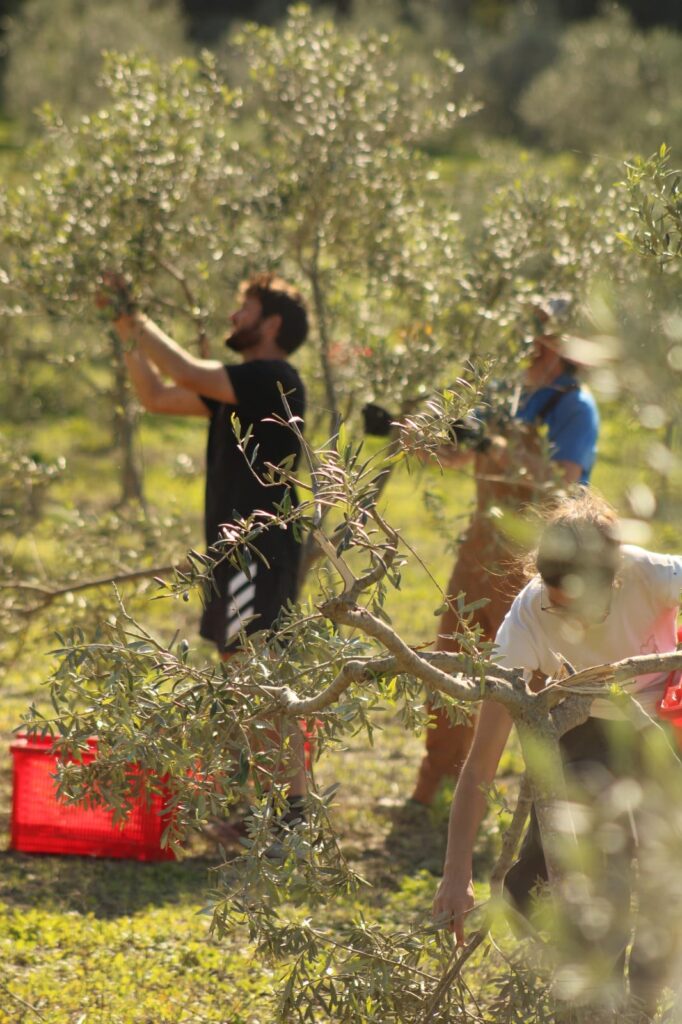

Slow travel is not a competition to see “who travels the slowest,” nor does it necessarily mean “never flying again.” Above all, it’s a way of traveling in which you consciously choose quality over quantity. Relaxation and enjoying your surroundings and the scenery of your destination are the top priorities.
Slow travel is, in fact:
Slow travel is not:
Okay, I’m in on this too, but I really try to showcase the lesser-known spots on my Instagram channel. Don’t just follow the crowd for the same old snapshots of the highlights—take a detour. Just a short distance from the famous highlights, you’ll often find unique and peaceful spots for your one-of-a-kind photo—not just another one in a long line….
(That “supporting local businesses” is also exactly why Nature Travel Lab prefers to refer you to places where you can book directly with the owner.)


That’s often the case, especially because you travel less and are more likely to choose transportation with lower emissions.
Milieu Centraal states that flying can have a 10- to 15-times greater environmental impact than the same trip by train (especially for shorter distances).
The IEA also notes that rail emissions per passenger-kilometer are, on average, about one-fifth those of flying.
Every day you travel costs energy: transportation, fresh towels, turning the AC on and off, and extra consumption along the way. Slow travel is often naturally simpler.
Quieter trails, more connection, less pressure on nature and residents. And honestly: your vacation suddenly feels twice as spacious.


These are the kinds of places where you naturally slow down: beautiful nature, a strong local identity, and plenty to do without having to rush.
Tip: Make it a “slow” trip right from the start (train trip, hiking trip, bike route) instead of just a destination.
I think this is underrated: when you eat what the region has to offer, your trip immediately feels more fulfilling. For example:
On Nature Travel Lab, you’ll increasingly find accommodations that are committed to sustainability (organic, locally sourced, vegetarian/vegan options).


Slow travel is linked to the broader Slow Movement (slowing down). A well-known starting point is Slow Food, which emerged in Rome in 1986 as a reaction to fast-food culture.
The core principles have remained the same: less rush, more quality, and greater attention to local identity.
A related movement is Cittaslow (Slow Cities), launched in 1999: a network of cities and municipalities committed to quality of life, local identity, and livability. There are hundreds of member cities and towns worldwide.
Traveling slowly and mindfully: travel less, stay longer, experience things more deeply.
“Langzaam toerisme” is the Dutch term for “Slow travel.” And it’s actually a better description than it seems. It’s not just about traveling slowly, but about traveling mindfully: fewer kilometers, more experiences. You choose one region, stay there longer, eat local food, get around on foot or by bike, and let the place sink in rather than just checking it off your list. In Europe, this fits perfectly with the way many destinations are best experienced: off-season, without rushing, and via the back roads.
There’s no minimum, but staying at least 3 nights per spot helps a lot.
Slow travel in Europe is easier than you think: the rail network connects countries without requiring you to fly, the lesser-known destinations are often just a stone’s throw from the crowds, and outside of peak season, you’ll have them practically to yourself. Slow travel in Europe isn’t a luxury—it’s a choice.
Slow travel is clearly on the rise. According to the European Travel Commission, the percentage of travelers who consciously choose slow travel rose from 22% in 2025 to 26% in 2026. Relaxation is now the top reason for traveling: 56% of travelers choose their trip primarily to relax, and 37% specifically seek out nature for mental peace. Travelers are increasingly opting for fewer stops, longer stays of four to seven nights per location, and destinations off the beaten path. In short: Slow travel is no longer a niche; it’s simply the direction in which travel is heading.
A “slow city trip” is a city trip where you focus on a single city or neighborhood instead of visiting three cities in five days. Ideally, you’ll travel there by train, choose a neighborhood, wander around without a set plan, and discover where the locals have lunch. No checklist of must-sees—just room for whatever you happen to come across. You only really get to know cities like Ghent, Bologna, or Porto when you stay a few days longer than planned.
Not automatically. It becomes more sustainable, above all, if you travel less and make more conscious choices (regarding transportation and accommodations).
Absolutely. Children often thrive on rhythm, repetition, and having one comfortable, familiar place.
Traveling on foot and by bike is the slowest, and often the most immersive in nature.
No. But if you do fly, Slow travel makes even more sense because you stay longer and avoid domestic flights.
As far as I’m concerned, Slow travel is the most fulfilling way to travel: you don’t come home thinking, “I’ve seen it all,” but rather, “I’ve truly experienced it.” Start small: choose one region, stay longer, and give yourself some breathing room. Chances are you’ll come home with fewer “highlight” photos… and more memories.

With a passion for travel and photography and over 30 years of experience in the travel industry, I love to share my special nature travel tips. Travel is wonderful and important, you meet new people and cultures and it opens your view of the world.
Harz National Park: Seeing the Forest Through Different Eyes "What a somber entrance," I thought as I drove into the Harz National Park. The densely forested area gradually gives way to a sort of lunar landscape. The dismal sight of the many hectares of dead trees...
Cinque Terre by Train from Levanto: Train Schedules, Tickets, and Tips The railroad through the Cinque Terre dates back to 1874 and is still the only practical way to connect the five World Heritage villages. Cars are hardly welcome there: the streets are too narrow,...
Bear Watching in Slovenia: An Evening in the Observation Hut Near Postojna Bear watching in Slovenia might be closer than you think: in the forests near Postojna, just over an hour from Ljubljana. Nathalie joined us in the observation hut one evening. Slovenia is...
Get inspired
Are you looking for the most beautiful hiking and biking routes? Or do you want information about traveling by train or advice for the most beautiful road trips through nature. Get inspired for your next trip in green; ideas for planning your own trip or opting for an organized trip.