
Gratis gids 10 verborgen natuurplekken in Europa
Gratis gids 10 verborgen natuurplekken in Europa. Meld je aan voor onze nieuwsbrief en ontvang inspirerende reistips en routes voor je volgende groene reis.

Puglia, in the heel of the boot, is an ideal place for cycling. The terrain is fairly flat and rolling. It’s especially wonderful to visit here in the spring and fall. Pleasant temperatures, varied natural scenery, authentic Italian culture, delicious cuisine, and quaint villages.
What’s more, the region has become increasingly accessible in recent years. You can easily get here by both public transportation and plane, and it’s still a truly authentic slice of Italy.


Below, we describe the 8-day cycling tour that we took ourselves with a reputable local travel specialist. The route begins in Alberobello and ends in Lecce. You’ll get a wonderful glimpse of Puglia in just one week, but you can, of course, extend your trip.
You can plan this cycling trip entirely on your own. If, like us, you’d prefer to have it organized—with luggage transport, bikes, and hotels—read more below.
Located in the Valle d’Itria, Alberobello is one of the towns where the trulli are well preserved (UNESCO World Heritage Site). Trulli are limestone dwellings characteristic of the southern region of Puglia. They are built without cement and feature conical stone roofs. Every year, many tourists flock to Rione Monti, the neighborhood home to about a thousand trulli, which have been fully restored into hotel rooms, tourist shops, restaurants, or wine bars.
In the Rione Aia Piccola neighborhood, on the southeastern slope of the city, you’ll find about 400 trulli, but these are used as homes or vacation rentals. You’ll encounter far fewer tourists in this neighborhood. Feel free to wander around the city—your camera will be working overtime here.


The day begins with the “welcome briefing” and the handoff of the bicycles, which may or may not include a pannier, helmet, and smartphone mount.
The route to Ostuni passes through Martina Franca, Locorotondo, and Cisternino. It’s a rolling route, except for the approaches to the villages, which are all perched on top of hills; you’ll have to pedal a bit harder there.


TIP: When in Ostuni, try the meatballs at Trattoria Fave e Fogghje. Reservations are highly recommended.
As you cycle toward Manduria, you’ll see the landscape gradually change from the Itria Valley to the Salento plain, where olive groves give way to vineyards and farms. Along the way, you’ll pass through towns such as:
TIP: If you’re staying at B&B Sine Tempore, be sure to order the aperitivo featuring the local Primitivo di Manduria. It’s a delightful way to unwind in the garden of this beautiful B&B.


First, head downhill toward the coast, after which the flat route offers a variety of sights along the way.


A flat route, mostly along a bike path that winds along the coast, passing through towns like Torre Panne and Torre Vado. Early in the season, not much is open yet, but you can see that everyone is busy preparing for the summer.


The route is known for being challenging, but also for being the most beautiful hike. The challenge lies mainly in the many ascents and descents, which are more than compensated for by the stunning views along the coast.


A flat route, with the first section passing through the countryside near the Alimini Lakes. This area is home to an ecosystem with a considerable diversity of animal and plant species.

From Lecce, you can take public transportation back to the airport in Bari or Brindisi, or extend your stay a little longer.
From April through October, average temperatures are pleasant. The summer months can sometimes be too hot for outdoor activities, with temperatures above 30⁰C. In the fall, humidity can rise. In general, there is little rain in this region.
During the summer months, you can fly from the Netherlands with Transavia to Brindisi (from Rotterdam Airport) or to the capital of Puglia (Bari) from Schiphol.
Ryanair offers flights from Eindhoven to Brindisi and from Belgium (Charleroi) or Germany (Düsseldorf Weeze Airport) to Bari.
Eurowings offers a flight from Düsseldorf Airport to Brindisi.
Within Italy, public transportation—including both train and bus services—is well-organized and affordable. Alberobello is easily accessible from Bari and Lecce. Train tickets from Trenitalia can be ordered online in advance, but you can also buy them at the station.
After arriving at the Bari or Brindisi airport, you can easily travel to the starting point of your active cycling vacation.
Private transfer: If you’re taking an organized tour, you can also choose to use private transfers (which you can book as an add-on). The tour operator will meet you upon arrival at Bari or Brindisi Airport and take you to the starting point of the trip; at the end of the trip, they will pick you up at the final destination and take you back to the airport.
Italians are respectful of cyclists, and although the route mostly follows bike paths and roads suitable for cyclists, there are also sections where you’ll need to ride on highways to reach your destination. Wearing a bike helmet is not required, but it is recommended.
You can plan this trip entirely on your own, but you can also leave it to local experts. Our experience with this small local organization has been nothing short of excellent. They offer a variety of cycling vacations (as well as hiking vacations) in Puglia.
Includes
Exclusive and available for booking
When you request a quote, we’ll forward it to our local partner, who will confirm the price and availability directly with you (in English). If you agree, you confirm the trip. You pay the same price as if you were booking directly. You’ll handle the rest of the booking and payment directly with the local provider (with whom we have a good working relationship and established agreements). We’re always available to answer any questions you may have.
"*" indicates required fields
There are various ways and places to extend your cycling trip through Puglia—whether you’d like to take an extra hike or spend a day soaking up the culture in one of the Baroque cities.
From Otranto, you can take a walk of about 9 km. If you walk southeast from Otranto, you’ll soon reach the Laghetto Cave di Bauxite. The lake was formed during bauxite mining in a quarry and is now a popular destination because of its beautiful colors; the bright orange of the bauxite stands out against the blue sky and the surrounding greenery.
Following the route, you’ll reach the rugged and jagged coastline, where the water has free rein. Here, you’ll also enjoy a view of the Faro di Punta Palascìa, the lighthouse at Italy’s easternmost point. Be sure to bring your swim gear so you can take a dip at Baia delle Orte.
If the sea is too rough, stop by the Orte restaurant, where you can enjoy the spectacle of the sea from the terrace. Follow a section of the Cammino del Salento to return to Otranto.


The beautiful city of Lecce, known by several nicknames—such as “the Florence of the Baroque” or “the Rome of the South”—and brimming with sights, is perfect for exploring on foot. In addition to the art and Baroque architecture, you’ll find narrow streets lined with white buildings, charming shops and boutiques, and a wide variety of cafés and restaurants.
Be sure to check out the amphitheater in Piazza Sant’Oronzo, where numerous artists and musicians perform, the Basilica di Santa Croce, which dates back to 1114 but was completely rebuilt in 1659, and the 12th-century Castello Carlo V. All of these buildings are adorned with countless ornaments carved from “pietra dorata” (gilded stone). This is a type of stone that’s easy to work with, quarried in the immediate vicinity of the city. Despite the city’s popularity and crowds, a visit to Lecce is truly a must on any trip to Puglia.


If you’re flying to Bari from the Netherlands, spending the night in this port city is more than worth it. In Bari Vecchia, you can enjoy wandering through the charming alleys, with a sight to see around every corner.
The Basilica of San Nicola, the Norman-Swabian Castle, the Cathedral of San Sabino, and the harbor are definitely worth a visit. In this historic part of town, you’ll find a wide selection of restaurants where you can sample local specialties. The new part of town is characterized by wide shopping streets that run perpendicular to one another, where you can find just about every well-known brand.


Although Matera is not located in Puglia but in the Basilicata region, it’s well worth a visit if you’re in southern Italy. This cluster of old white-stone houses, cave dwellings, authentic churches, and a maze of alleys and stairways is a popular destination. The Sasso Caveoso and Sasso Barisano have been on the UNESCO World Heritage List since 1993 and lie beneath the current city center in a valley where you can wander endlessly. In Sasso Barisano, you’ll find, among other things, the Casa Grotta di Via Fiorentini, where you can see how people and animals used to live. To learn more about the history, you can visit Sasso Caveoso visit Casa Noha in Sasso Caveoso. Here, through film footage and historical documents, they provide a glimpse into life in the Sassi in the past.


From Matera, you can take a walk through Parco della Murgia Materano to visit the rock churches. On the other side of the valley, along the Gravina and Jesce rivers, you’ll have a truly breathtaking view of the Sassi of Matera.
With a little luck, you might also come across a shepherd here with his herd of Podilica cows, a breed native to this region. They are known for their great strength, require very little to survive, and produce milk with a rich, herbaceous flavor. Each cow wears a large cowbell so the shepherd can easily find them; the sound of these bells can be heard from far away.


From Ostuni, you can cycle to the coast. You’ll pass through vast olive groves before arriving at the Parco Naturale Dune Costiere, a sprawling nature park of dunes and wetlands along the beach. At Lido Morelli, you’ll find a lovely sandy beach where you can rent lounge chairs and umbrellas. There’s also a bar here where you can enjoy a cup of coffee or a light lunch. To learn more about olive oil production, it’s well worth booking a tasting on your way back to Ostuni—for example, at the beautiful Masseria Il Frantoio.



With a passion for travel and photography and over 30 years of experience in the travel industry, I love to share my special nature travel tips. Travel is wonderful and important, you meet new people and cultures and it opens your view of the world.

Slow Food Puglia: Tasting Mussels and Clementines in Taranto Starting in the summer of 2026, in the province of Taranto, in the far south of Italy, you can literally sample what small-scale local producers have to offer. At the same time, during these excursions,...
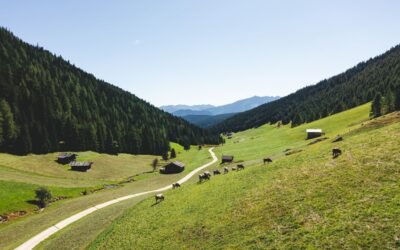
Gitschberg Jochtal: Hiking in the Summer, Skiing Away from the Crowds in the Winter Eight villages, no well-known name, and yet 300 kilometers of marked hiking trails in the summer and 55 kilometers of ski runs in the winter: that’s the Gitschberg Jochtal, on the...
Get inspired
Are you looking for the most beautiful hiking and biking routes? Or do you want information about traveling by train or advice for the most beautiful road trips through nature. Get inspired for your next trip in green; ideas for planning your own trip or opting for an organized trip.