
Gratis gids 10 verborgen natuurplekken in Europa
Gratis gids 10 verborgen natuurplekken in Europa. Meld je aan voor onze nieuwsbrief en ontvang inspirerende reistips en routes voor je volgende groene reis.

Starting in the summer of 2026, in the province of Taranto, in the far south of Italy, you can literally sample what small-scale local producers have to offer. At the same time, during these excursions, you’ll learn more about the traditions of the Puglia (Apulia) region and the challenges faced by growers.
On behalf of Nature Travel Lab, Ambassador Nathalie was the first to try out the excursions to a local mussel and citrus grower. The growers are members of Slow Food Italia, the movement that works with the TUI Field to Fork program to create a fairer, more socially responsible, and more sustainable food system.
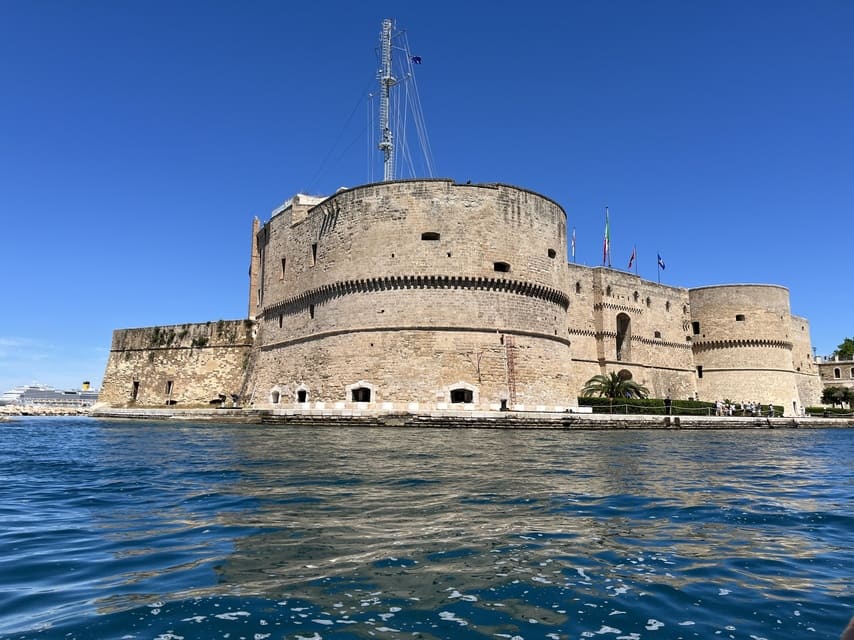
From the boat in the little harbor of Taranto (Tarante in Dutch), the view of the old town is impressive. The cathedral towers above everything, and as we leave the small harbor, the Aragonese Castle—also known as Castel Sant’Angelo—quickly comes into view. The midday sun beats down fiercely on the light beige walls.
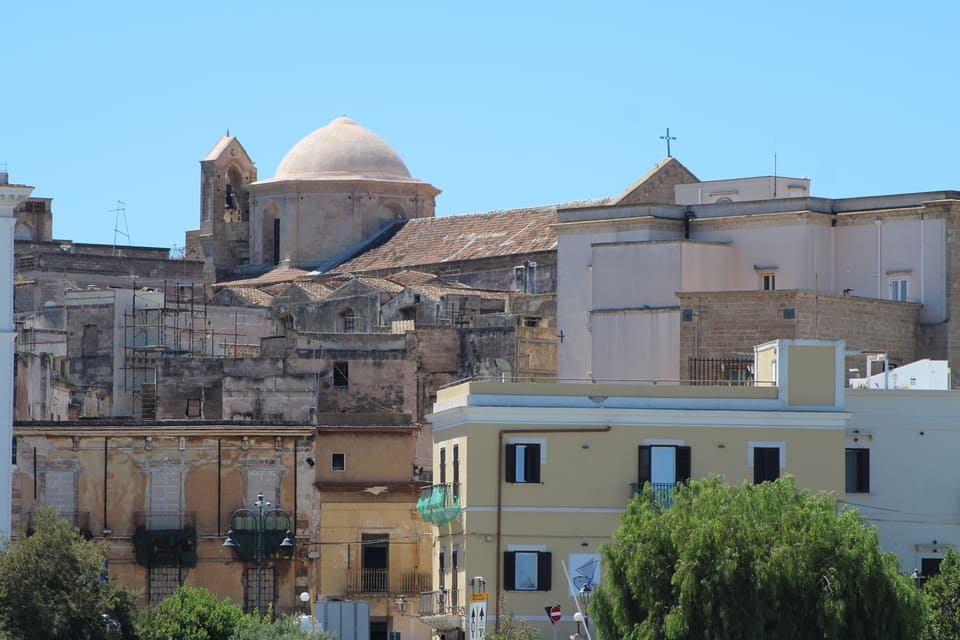
Part of old Taranto is a shadow of its former self, but change is clearly in the air. It looks like many buildings are being restored to their former glory. And that’s a good thing, because Taranto has a rich history. During the Greek-Spartan era, Taras was all-powerful, partly due to its strategic location.
To our right is the open sea, known here as the Mar Grande. Just around the corner from the castle, we sail into a canal, passing under a swing bridge. This unique bridge, dating from the late 19th century, connects the old part of the island (Borgo Antico) with the modern district (Borgo Nuovo). In addition, the bridge is actually used to let (large!) ships pass through.
It’s supposed to be spectacular when the bridge opens, but right now it remains closed. The massive structure spans a canal that connects the two seas. Now I understand why Taranto is called “the city between two seas,” because we’re now sailing from the canal into a sort of inland sea, the Mar Piccolo.
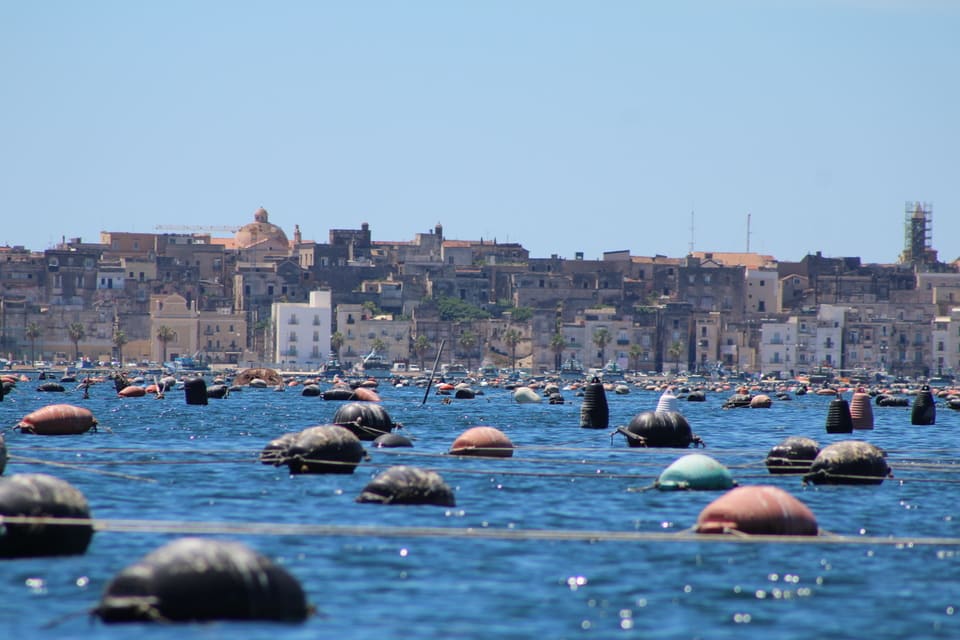
Soon I see dozens, perhaps even hundreds, of buoys in the water. Here and there, poles with dark cloths tied to them stick up out of the water. The buoys are all lined up in a row. These turn out to be sections of “mussel beds.” As we sail closer to a section of the buoys, I suddenly notice something changing in the water. It looks like a strong local current or some kind of whirlpool. The captain of our boat, Giovanni De Vincentiis, smiles and says, “This isn’t the Bermuda Triangle, but the first of a total of 34 underground freshwater springs in the Mar Piccolo. In Italian, we call them citri.”
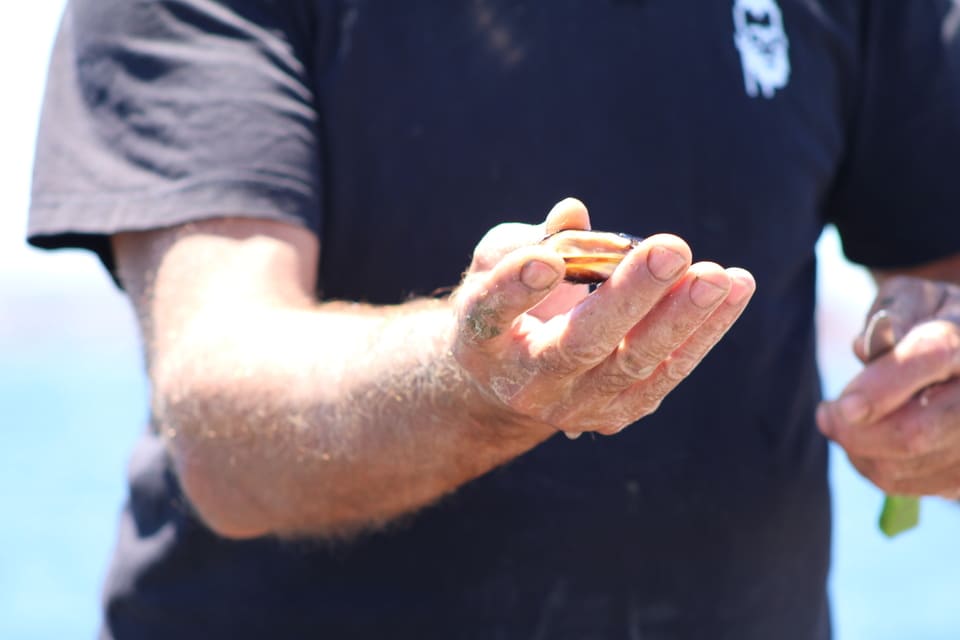
The presence of these “underground rivers” is ideal for mussel farming, because they make the seawater less salty. Mussels have been farmed in Taranto since Roman times. In short, it’s a very old tradition.” Giovanni puts on his dark green baseball cap, which features the WWF logo and the word “Taranto” underneath. He works with Slow Food Italia, with whom we’re out and about today.
Mussel farming, on which hundreds of families depend, is struggling in Taranto. For years, the area has been plagued by pollution from the steel industry. That problem has been thoroughly addressed, but there have been no harvests for two years now because it has been far too hot. Climate change is taking its toll on southern Italy. Fortunately, they’ve been able to preserve mussel seed. These are young, newly hatched mussels (mussel spat) that are about one to two centimeters in size. This “seed” forms the basis of mussel farming. Part of the crop is moved to the other body of water, the Mar Grande, where the mussels can grow deeper in the water in a cooler spot.
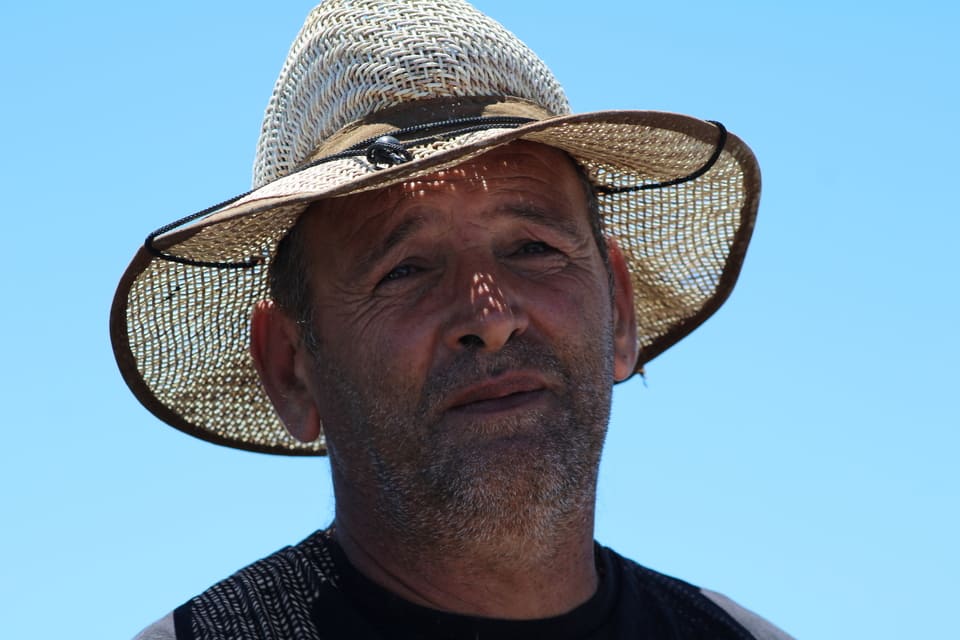
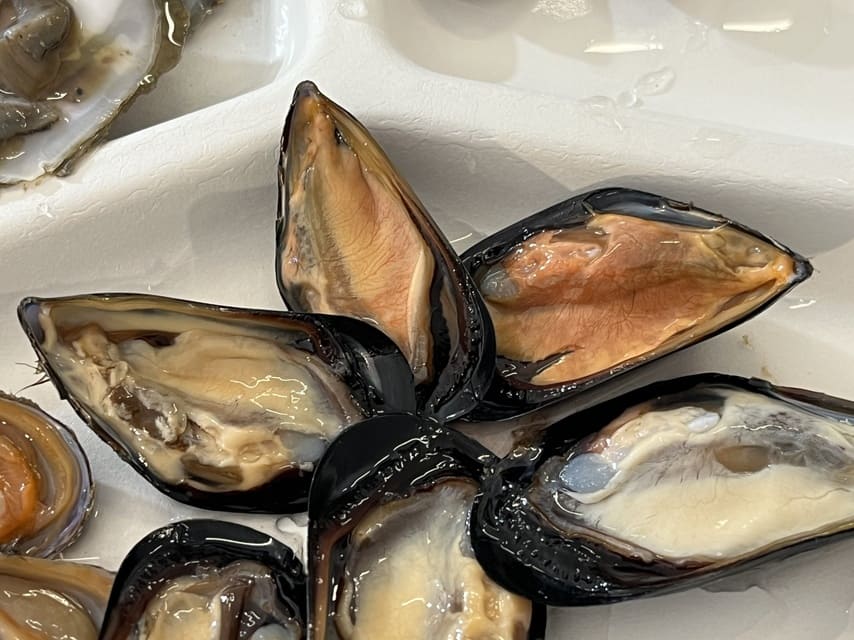
We sail a short distance further and then dock next to Cesare’s mussel boat; he is one of the mussel farmers who collaborate with Slow Food Italia (SFI). Experts from the organization provide training to the mussel fishermen on traditional, sustainable methods of mussel farming, where, for example, the use of plastic is strictly prohibited. Only natural materials are used.
Cesare leans out of his boat and pulls up a rope covered with young mussels that have attached themselves to it. His rough hands move swiftly over the mussel shells. The farmers here do all the work by hand.
“We see the mussel farmers in Taranto as the guardian angels of the sea,” says Francesca of Slow Food Italia. “For this trade to survive, it’s essential that the Mar Piccolo and the food the sea provides be well protected. This place is teeming with life!”
Did you know that this is also a very important habitat for seahorses? The loggerhead sea turtle is also regularly spotted here, as are dolphins. In short, there’s plenty to protect! Fortunately, there are now twenty mussel farmers working with us toward a more sustainable future. And this is just the beginning.”
Cesare checks on his “babies” every day. “It starts in November, when the ropes with the mussel spat go into the water. By March, they’ve grown into small mussels. This year they’re bigger than usual. They’re already seven or eight centimeters long,” he says proudly. Cesare, now in his mid-fifties, has been sailing since he was five. His father took him out on his boat every day. He now has two children of his own, but they wouldn’t dream of taking on this hard work. “My 25-year-old son is a barista,” he says aloud with a laugh, which adds extra laugh lines to his tanned face.
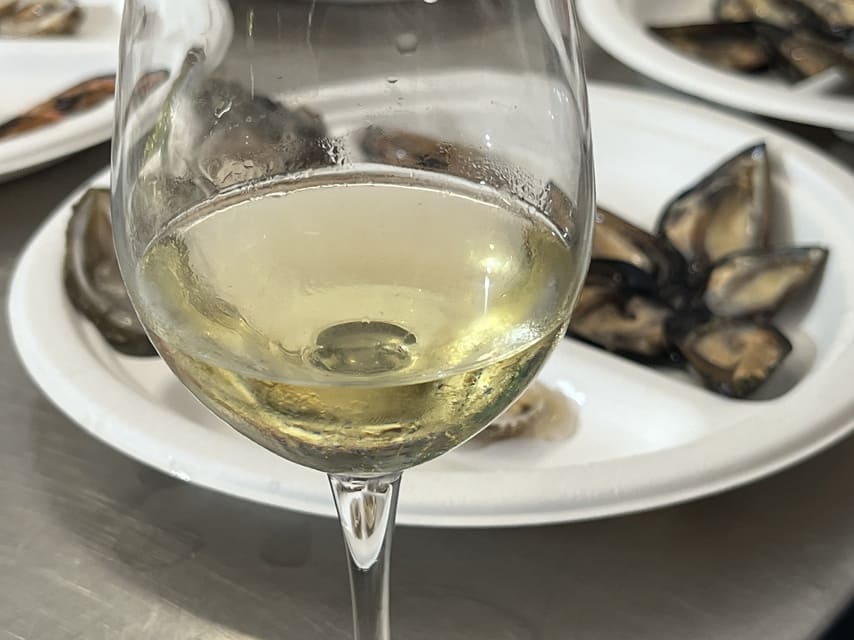
Cesare sells his harvest to the small processing company Slow Food Luciano, which in turn supplies restaurants such as Stella Maris, near the port of Taranto. It doesn’t get much fresher than that. We go inside, and a few moments later we’re enjoying mussels, oysters, and marinated fish balls among the Italians. And after lunch, of course, we have an Espressino—a kind of mini-cappuccino that’s only served in the south.
It’s a little less hot in the early evening. The sun is sinking lower and lower, casting long shadows across the fields. The soft light is beautiful. We’re on our way to Palagiano, about a twenty-minute drive from the coast of Taranto. Traditional farming methods are used in this part of the Ionian coast. The citrus fruits grown here are world-famous.
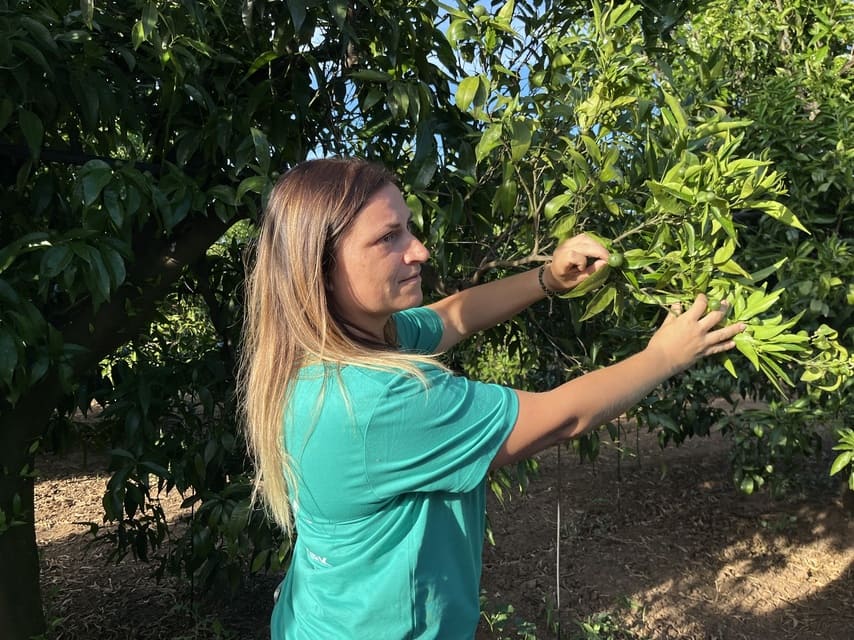
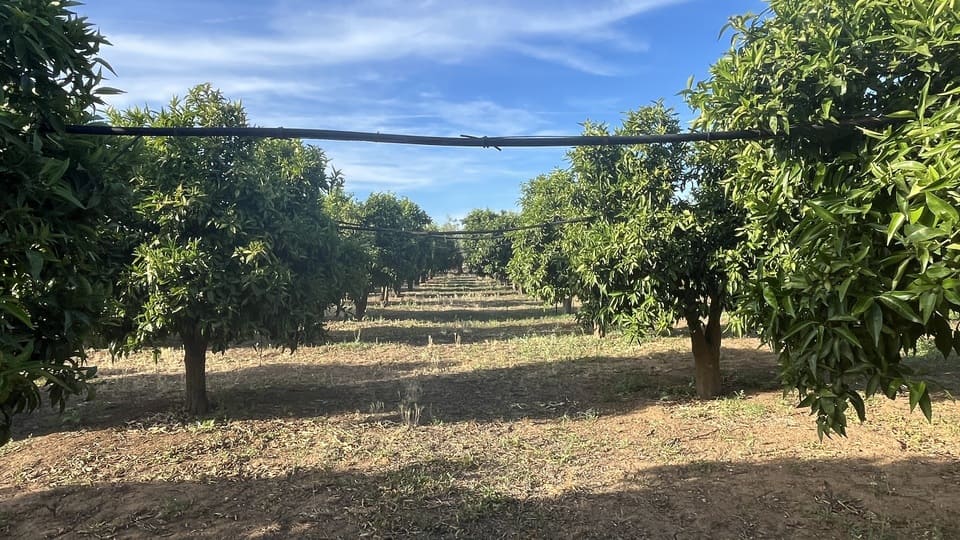
Palagiano is also known as the City of Clementines. That works out well, because we’re going on a field trip to visit one of the citrus farmers. As we approach the orchard, I see olive trees with enormous trunks lining the edges. “The old, sturdy olive trees—some of which are hundreds of years old—provide good protection against the harsh sirocco wind and other weather conditions,” explains Annalisa Palanga as she proudly shows us around her orchard.
She is a fourth-generation farmer who specializes in growing traditional clementines. Her grandmother passed the land down to her granddaughter. She is now forty and has been running the farm for five years, but she still works closely with her family. “We have 5,000 trees here, some of which are already 80 years old. They still produce delicious fruit. You’ll get to taste plenty of it later,” she says with a smile.
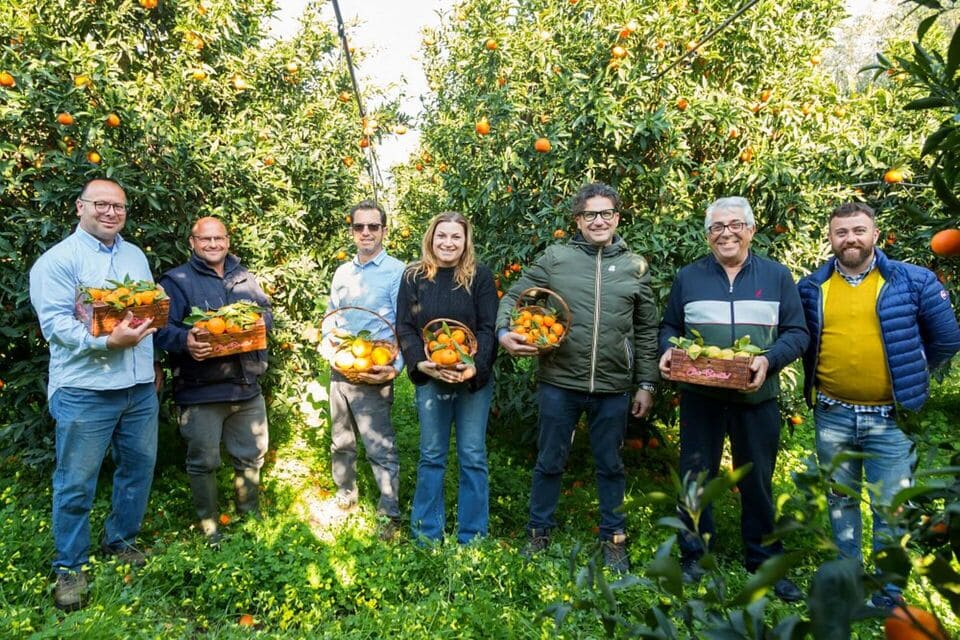
Once the citrus trees are three years old, they begin to bear fruit. Grasses and herbs are allowed to grow among the trees. Another important feature of traditional methods is that no chemical pesticides are used. Nor is a tractor used to till the soil.
Annalisa then holds out a small basket filled with dried clementine peels. “Whenever I smell this, I think back to when I was young. I associate this scent with my family.” She is then asked what a typical day is like for her. “I often get up as early as five o’clock because it’s still nice and cool then. I take a walk around my trees to check how everything is doing and whether they need water. During harvest season, we get up really early and work mainly in the early morning,” she explains.
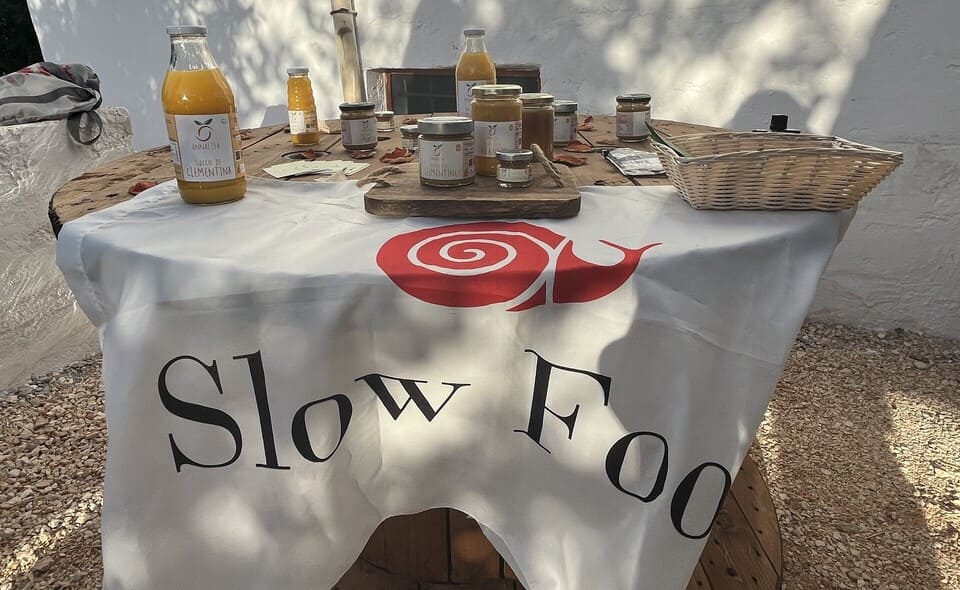
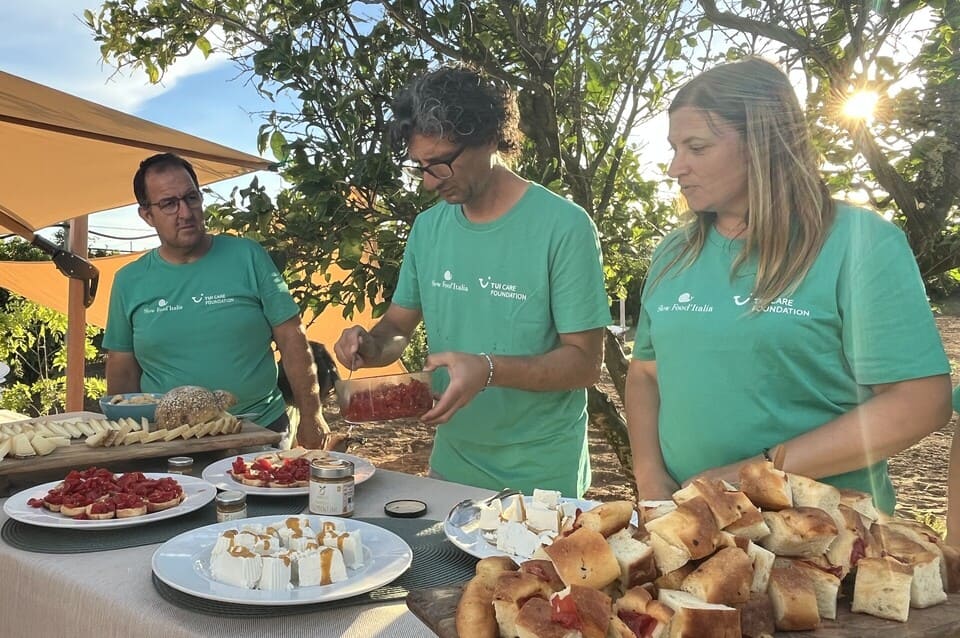
Together with other growers, Annalisa has joined Slow Food Italia. This year, for the first time, walking tours with tastings for tourists are being organized in the historic citrus grove, which can be booked through Musement. We get a sneak peek: at the edge of the orchard, we taste the most delicious clementine juice I’ve ever had. It has such a rich flavor!
Next, we’re served fresh ricotta, onto which clementine jam is drizzled with a graceful gesture. The white of the Italian cheese and the orange jam create a vibrant combination. It’s almost a shame to eat it. I also discover the flavor of Caciocavallo Podolico, an exclusive Italian cheese made from the milk of cows that are still traditionally milked by hand. You can taste herbs, grasses, and even vanilla in this absolutely delicious cheese.
Of course, a local rosé is served with the aperitif—it pairs perfectly. We wrap up the tasting with the most delicious sorbet I’ve ever had. Ice cream maker Gaitano from La Cremeria uses Annalisa’s clementines for his sorbets. No milk is used—just water, juice, and a little sugar. Understandably, he won’t reveal the recipe. “What a divine flavor!” I exclaim. I can definitely see why his sorbets win awards.
It’s really wonderful that you can experience these traditions while also helping to support the livelihoods of local farmers and fishermen and protect biodiversity in southern Italy. There are plenty of challenges, so every little bit helps. And I’m heading home with some delicious jars of marmalade from Annalisa’s orchard.
The region Puglia (Apulia) in southern Italy has a long tradition of citrus and mussel farming. Unfortunately, these ways of life are under increasing pressure due to climate change, environmental pollution, rising costs, and international competition from large-scale food production. These challenges threaten local biodiversity, traditional knowledge, and families’ livelihoods. Tourism offers opportunities, but without targeted measures, traditional producers often struggle to benefit from them.
The TUI Field to Fork Puglia program addresses these challenges by strengthening sustainable food production and linking it to the tourism sector, thereby creating better income opportunities for rural communities.
In partnership with Slow Food Italia, this two-year initiative supports local citrus and mussel farmers in protecting biodiversity. It also creates an additional source of income by offering authentic tourist experiences, such as the excursions we took.
Ambassador Nathalie has been invited by the TUI Care Foundation to visit projects in Puglia.
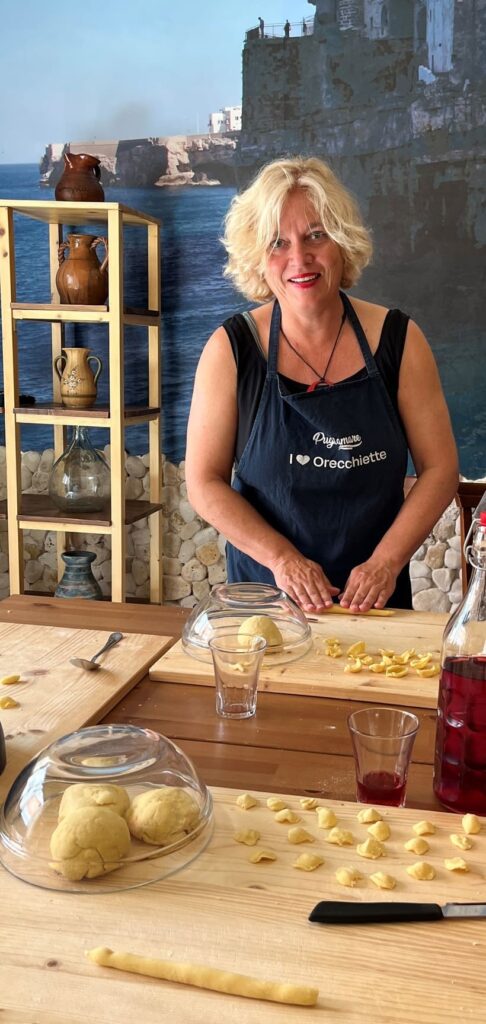
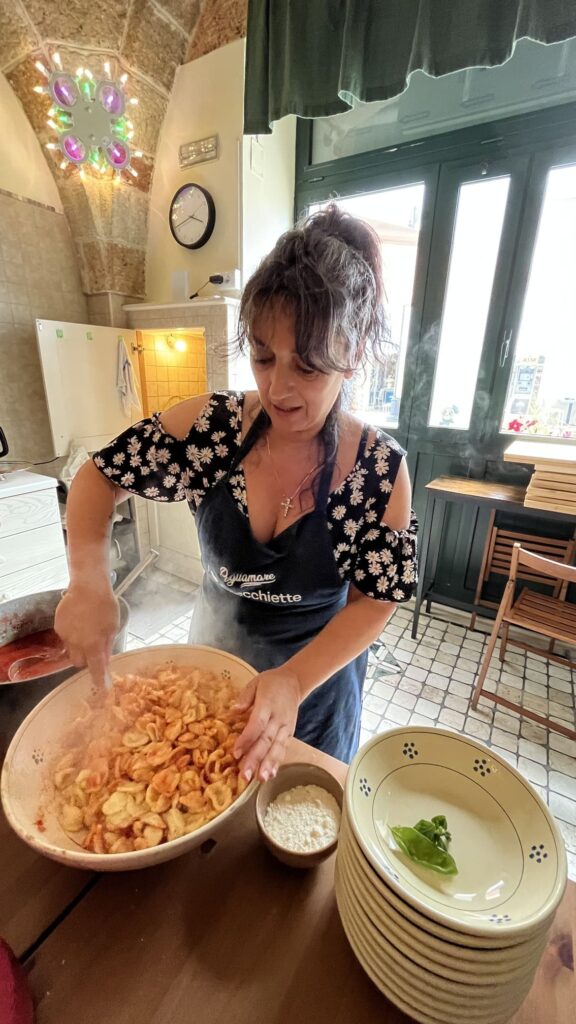
Would you like to try your hand at working with local ingredients during your trip through southern Italy? Then book a cooking workshop on making orecchiette. Orecchiette, a type of pasta shaped like little ears, is a variety of pasta found mainly in the southern Italian regions of Basilicata and Puglia.
During the workshop led by Rosaria (who also speaks a little Dutch) or one of her colleagues, you’ll learn everything there is to know about pasta and the culture of Puglia. At the end of the workshop, you’ll enjoy a plate of pasta while sipping a glass of rosé. It doesn’t get much more local than this. For more information, visit the Cucina Pugliese website.
Slow Food Italia is the movement to which the mussel and citrus growers in this story belong. Through the TUI Field to Fork program, it is working to create a fairer, more socially responsible, and more sustainable food system in Puglia.
It is a two-year initiative that combines sustainable food production with tourism to provide local citrus and mussel farmers in Puglia with an additional source of income and to protect biodiversity in the region.
The walking tour with tasting at Annalisa Palanga’s citrus grove in Palagiano can be booked through Musement. The mussel tour on the Mar Piccolo near Taranto will also be available soon.
Orecchiette (literally “little ears”) is a type of pasta shaped like little ears, originating from the southern Italian regions Basilicata and Puglia. You’ll learn how to make it during a cooking workshop at Cucina Pugliese, led by Rosaria or one of her colleagues.
The excursions will be available for booking starting in the summer of 2026. Read more about them here Slow Food Puglia.
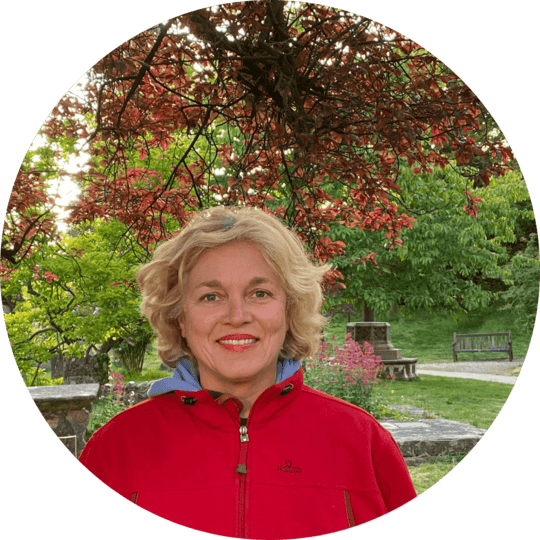
Nathalie
Bonjour, my name is Nathalie. France is my great passion. I take just about every opportunity to travel to France (preferably by train) to highlight undiscovered gems.
Whether cycling, hiking or climbing. I prefer to combine nature and culture so France is the place to be!
In addition to writing and vlogging, I organize (group) trips in cooperation with magazines and travel agencies.
For Nature Travel Lab, I also like to take occasional trips into my own country, the United Kingdom and whatever else comes my way. Will you join me?

Aachen Off Track: A Green City Trip Featuring a Forest, an Organic Garden, and Charlemagne A city with an imperial history, surrounded by forests stretching all the way to the Belgian and Dutch borders. Aachen cannot be taken in at a single glance: its historic...
Gitschberg Jochtal: Hiking in the Summer, Skiing Away from the Crowds in the Winter Eight villages, no well-known name, and yet 300 kilometers of marked hiking trails in the summer and 55 kilometers of ski runs in the winter: that’s the Gitschberg Jochtal, on the...
Get inspired
Are you looking for the most beautiful hiking and biking routes? Or do you want information about traveling by train or advice for the most beautiful road trips through nature. Get inspired for your next trip in green; ideas for planning your own trip or opting for an organized trip.