
Villa Capodarco
- B&B with a pool in Le Marche
- 2 kilometers from the sea
- 6 rooms and suites
- Spa with jacuzzi and Turkish steam bath
- E-bike rentals

In Sardinia, it’s not just the map that determines your route, but also the “maestrale”; this northwesterly wind can sweep across the island for days on end in the spring and fall. Once you know that, you’ll cycle along the west coast from north to south—and not the other way around. It’s one of those things you only learn once you’ve cycled there. Sardinia is bigger than you think, hillier than you’d expect, and surprisingly quiet outside of summer.
On this page, you’ll find everything you need to know about cycling in Sardinia: which coastline suits you best, how challenging the routes are, when to go, and how to get to the island with your bike. If you’re looking for the most beautiful beaches, hikes, and sights, check out our guide to the most beautiful places in Sardinia.
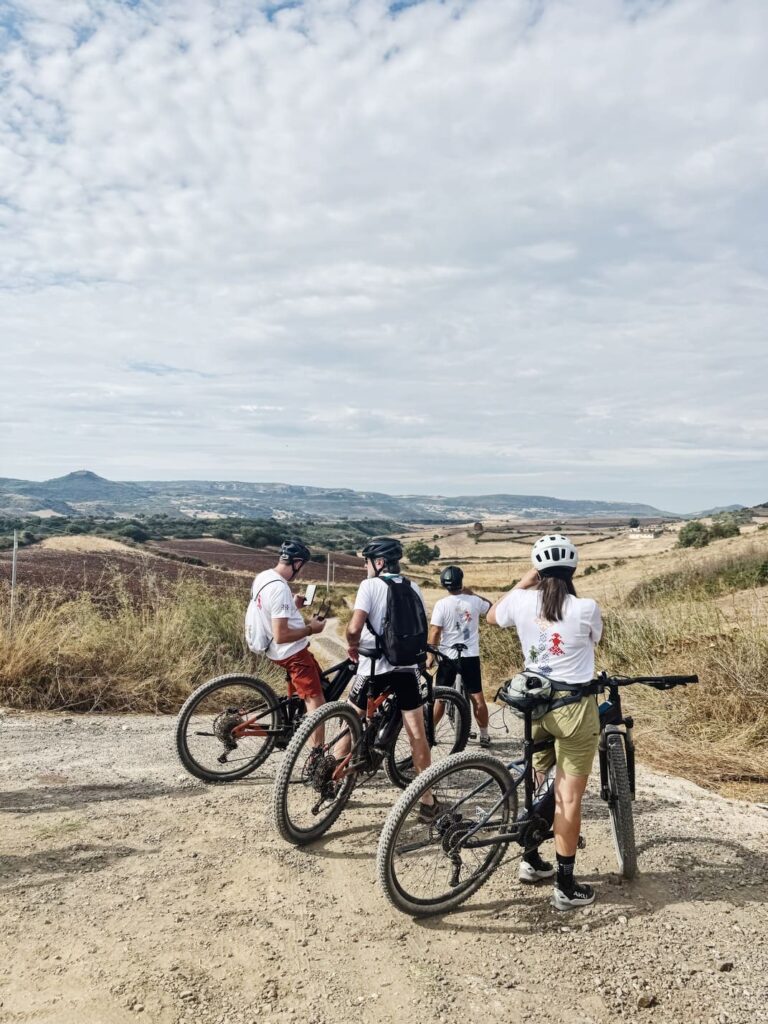
Sardinia is too big to cycle around in a week. If you want to see the entire island, you’ll quickly rack up 1,000 kilometers or more. So choose a coastline. Here’s what you’ll cycle through in each region, not what you’ll see:
What you’ll ride: short, steep climbs along the coast and longer climbs inland toward Tempio Pausania at the foot of Monte Limbara. Few flat kilometers. The coastal roads around Porto Cervo and Baia Sardinia are busy with car traffic in July and August, but quiet the rest of the time. You can take your bike on the ferry from Palau to La Maddalena and across the bridge to Caprera.
For whom: active cyclists or e-bikers who want to combine granite hills and cork oak forests with the coast. You’ll cycle this route on a cycling vacation through Northern Sardinia, from the Costa Smeralda to Alghero.
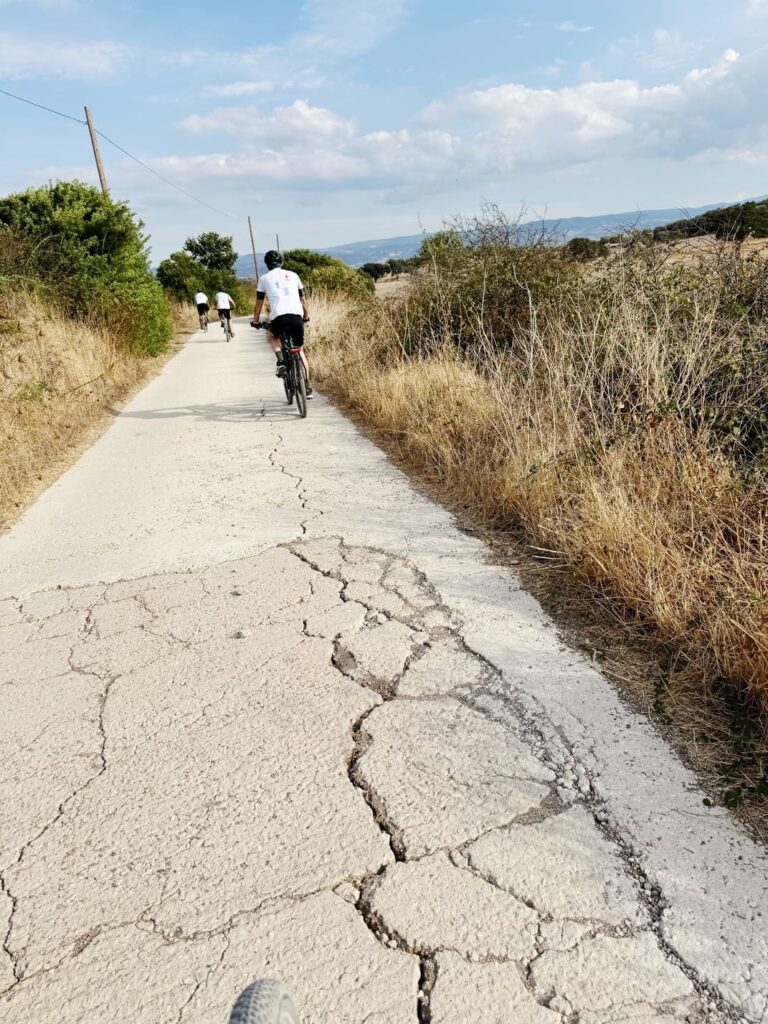
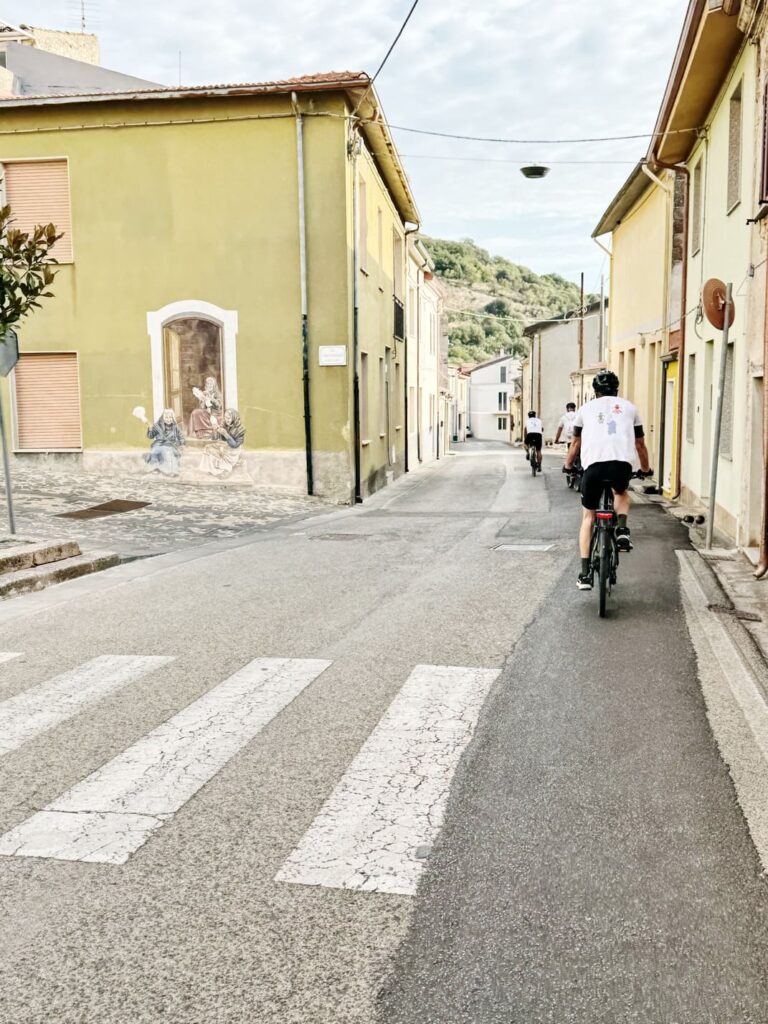
What you’ll be cycling: the SP105 between Alghero and Bosa, a stretch of over 40 kilometers high up along the cliffs, with no villages along the way. One of Italy’s most beautiful coastal roads, but with long climbs and little shade. Be sure to bring plenty of water. Around the Porto Conte Nature Park near Alghero, there are flat bike paths perfect for a rest day.
Who it’s for: If you’re looking for a day trip to extend your journey after the “Northern Route,” which ends in Alghero. For accommodations near Alghero, check out Agriturismo La Genziana.
What you’ll be cycling: the flattest stretch of Sardinia. Quiet roads along lagoons, rice paddies, and straight farm roads around Arborea. Ideal for cycling. Note: there’s no shelter from the wind anywhere here.
For whom: everyone. This is the start of the cycling vacation through southern Sardinia.
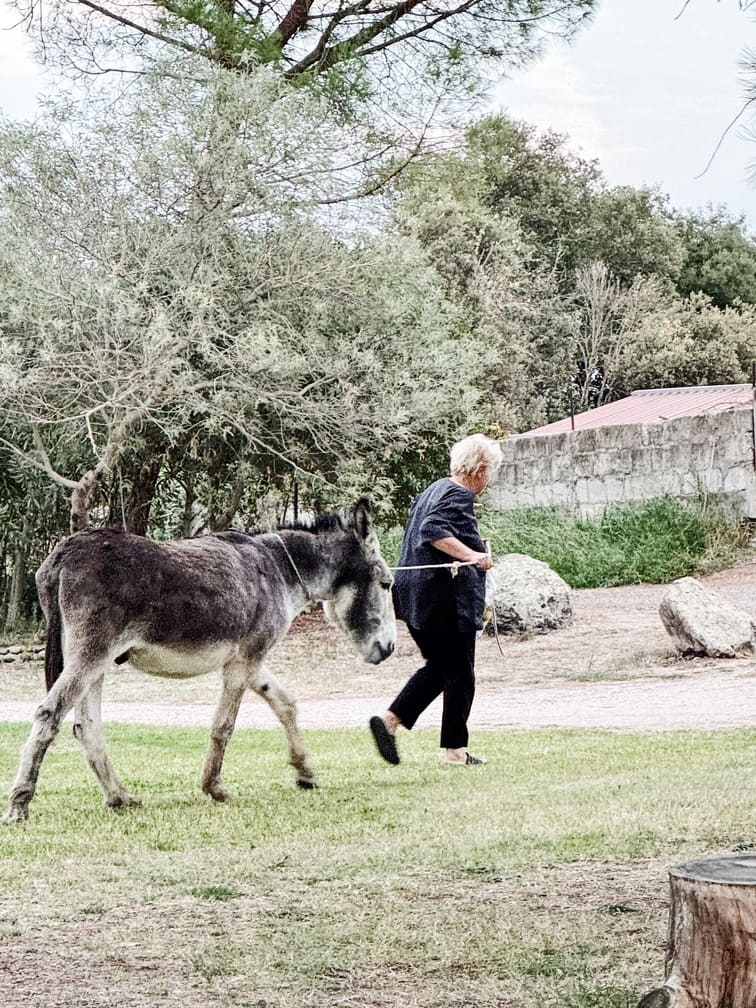
What you’ll ride: the ruggedest stretch of the west coast. Challenging climbs through the hills around Arbus and among the old mines of Buggerru and Nebida, with long descents toward the sea. Take the ferry from Portoscuso to Carloforte and on to Sant’Antioco. Bikes can be brought along for a small fee. Sant’Antioco is connected to the mainland by a causeway.
Who it’s for: cyclists who enjoy open landscapes and don’t shy away from a climb.
What you’ll ride: the coastal road between Teulada and Chia, with a continuous series of short climbs and descents along the bays and cliffs. After that, the terrain flattens out as you head toward Pula and Cagliari. Busy in high season, but a blast in the spring and fall.
Who it’s for: Most cyclists, possibly with an e-bike. This is the final leg of the cycling vacation through southern Sardinia.
What you’ll ride: the Orientale Sarda (SS125) from Dorgali to Baunei, featuring the Genna Silana Pass at over 1,000 meters. Long climbs, few villages, and—during the season—RV traffic on a narrow road.
Who it’s for: road cyclists and experienced cyclists. For a cycling vacation with luggage, this is the most challenging part of the island.
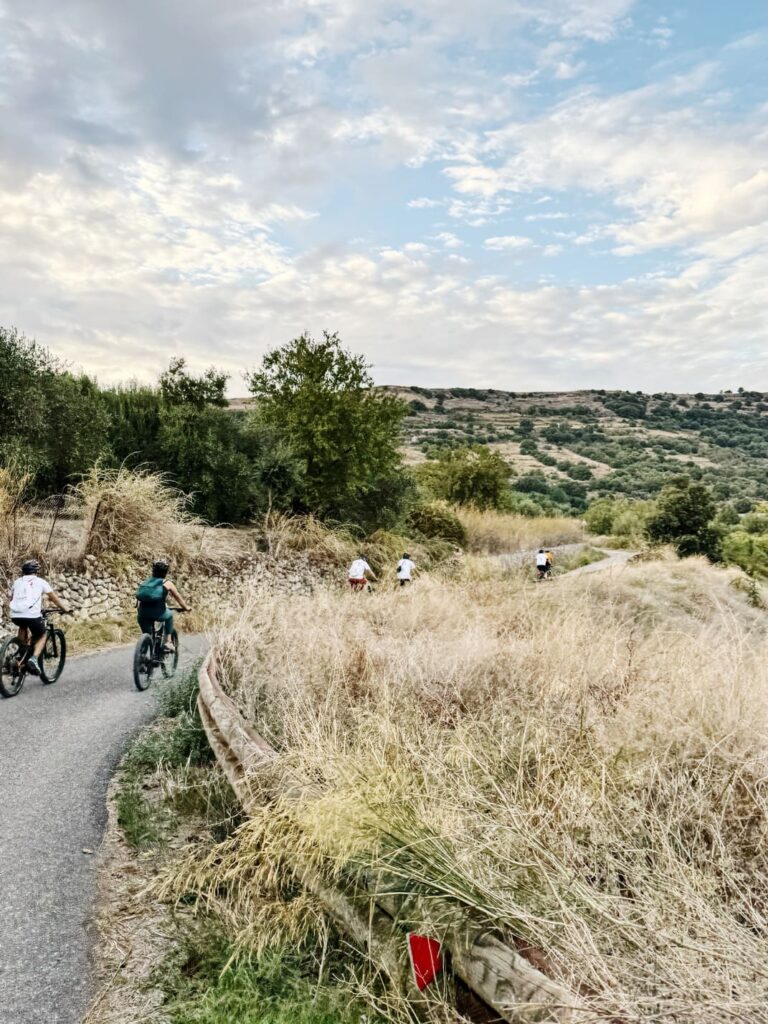
What you’ll ride: long climbs through the mountainous heart of the island, around Nuoro and the Gennargentu massif. Almost no other cyclists, but plenty of sheep.
Who it’s for: athletic cyclists with an e-bike or road bike who are looking for peace and quiet.
Sardinia is largely hilly. It’s not about high mountain passes, but rather the constant ups and downs: a 50-kilometer stage can easily have 600 to 900 meters of elevation gain. A rough breakdown:
There are still very few dedicated bike paths. Plans for a tourist bike route across the entire island have been in the works for years, but for now, you’ll mainly be cycling on provincial roads (SP). These are quiet outside of the summer season. Avoid the major state highways (SS) whenever possible. E-bikes are available for rent throughout the island and can be added to both cycling tours.
For cyclists, it all comes down to three things: temperature, wind, and daylight.
In the spring and fall, the maestrale can blow at wind force 6 or higher for several days in a row. That’s why you’ll cycle from north to south along the west coast. The cycling tour through southern Sardinia follows exactly that route. Cycling in the spring and fall also helps the island itself, which struggles under the weight of mass tourism in the summer.
Sardinia is one of the few Mediterranean islands that you can easily reach from the Netherlands and Belgium without flying, using your own bike. You travel by train to an Italian port city and take the ferry from there—often an overnight ferry.
Most ferries allow you to bring your bike—sometimes for free, sometimes for a small fee. On Italian trains heading to the ports, you often need to reserve a bike space. Check the terms and conditions for each ferry line and train before you book.
If you do fly, you’ll land in Olbia or Alghero for the north and in Cagliari for the south. You can bring your own bike on the plane, but renting one locally is usually easier.
We’ve compiled a list of the most beautiful places to stay in Sardinia, surrounded by nature.
You can plan your own trip, but in Sardinia it’s more of a puzzle than you might think. Inland, villages are far apart; outside of summer, not all hotels are open; and your route determines whether you’ll spend the whole day on a busy state highway or a quiet country road. An independent cycling trip through our local specialist solves all that: a carefully selected route on your phone, accommodations geared toward cyclists, luggage transport, and phone support. You’ll still be cycling on your own, at your own pace.
With Nature Travel Lab, you can book a trip like this direct with the local organizer. Fill out the quote form on the trip’s page, and we’ll put you in touch with them and remain available to answer any questions.
Read all about the cycling vacation through Northern Sardinia.
Read all about the cycling vacation through southern Sardinia.
Not everyone cycles for a whole week. Even if you’re visiting Sardinia by car or public transportation, you can still enjoy a few days of cycling there.
Yes. Outside of the summer, the roads are quiet, the climate is mild, and the landscape is varied. Sardinia is, however, largely hilly: expect to climb almost every day, except around Oristano and the Sinis Peninsula.
April, May, September, and October. Temperatures range from 18 to 25 degrees, and the roads are quiet. In July and August, it’s too hot for comfortable cycling.
That depends on your skill level. The north (Gallura and Costa Smeralda) is hilly and varied. The west and south coasts, from Oristano through the Costa Verde to the Costa del Sud, start out flat and become more rugged. The east coast and the interior are mountainous and suitable only for experienced cyclists.
Most of the routes are hilly, with 600 to 900 meters of elevation gain per 50-kilometer stage. The only flat section is around Oristano. With an e-bike, most of the routes are manageable for average cyclists.
Yes. The maestrale, a northwest wind, can blow strongly for several days in a row, especially in the spring and fall. That’s why you should cycle along the west coast from north to south, with the wind at your back.
Yes. Take the train to Genoa, Livorno, or Civitavecchia, and then take the ferry to Olbia, Porto Torres, or Cagliari. Bicycles are allowed on most ferries.
Yes. In larger towns such as Alghero, Olbia, Cagliari, and Oristano, bike shops rent out city bikes, road bikes, mountain bikes, and e-bikes by the day or by the week. If you’re on an organized cycling tour, you’ll book your bike or e-bike through a local specialist.
An 8-day self-guided cycling tour with 7 nights’ lodging, breakfast, itineraries, and luggage transport costs approximately €800 per person (Southern Sardinia) or €920 per person (Northern Sardinia) through Nature Travel Lab. Bike rentals and transfers are additional.
Fill out the quote form on the trip page. Nature Travel Lab will put you in touch with the local specialist, and you’ll book direct with them.

With a passion for travel and photography and over 30 years of experience in the travel industry, I love to share my special nature travel tips. Travel is wonderful and important, you meet new people and cultures and it opens your view of the world.
Sant’Antioco: The Island in Sardinia You Can’t See in a Day Sant'Antioco is an island off the southern coast of Sardinia. You drive there from Sardinia across a causeway, but you arrive in a different world: a town that calls itself the oldest in Italy, tombs that...
Cycling Vacation in Southern Sardinia: Along the West Coast from Cabras to Pula On day three of this cycling trip, you’ll ride into a desert. Not in Africa, but on the west coast of Sardinia, where the sand dunes of Piscinas rise more than fifty meters high. A day...
Get inspired
Are you looking for the most beautiful hiking and biking routes? Or do you want information about traveling by train or advice for the most beautiful road trips through nature. Get inspired for your next trip in green; ideas for planning your own trip or opting for an organized trip.