
Gratis gids 10 verborgen natuurplekken in Europa
Gratis gids 10 verborgen natuurplekken in Europa. Meld je aan voor onze nieuwsbrief en ontvang inspirerende reistips en routes voor je volgende groene reis.

I went cycling in this rugged and surprisingly peaceful region of Piedmont, where mountain passes give way to fragrant valleys. It turned out to be an ideal destination if you enjoy hiking or mountain biking; though an e-mountain bike is certainly no luxury.
Read all the tips here for this centuries-old salt route, along which mules once carried their loads of “white gold” from the Ligurian coast to the interior. Today, it is one of the most beautiful routes for experiencing the transition from the Alps to the Mediterranean.
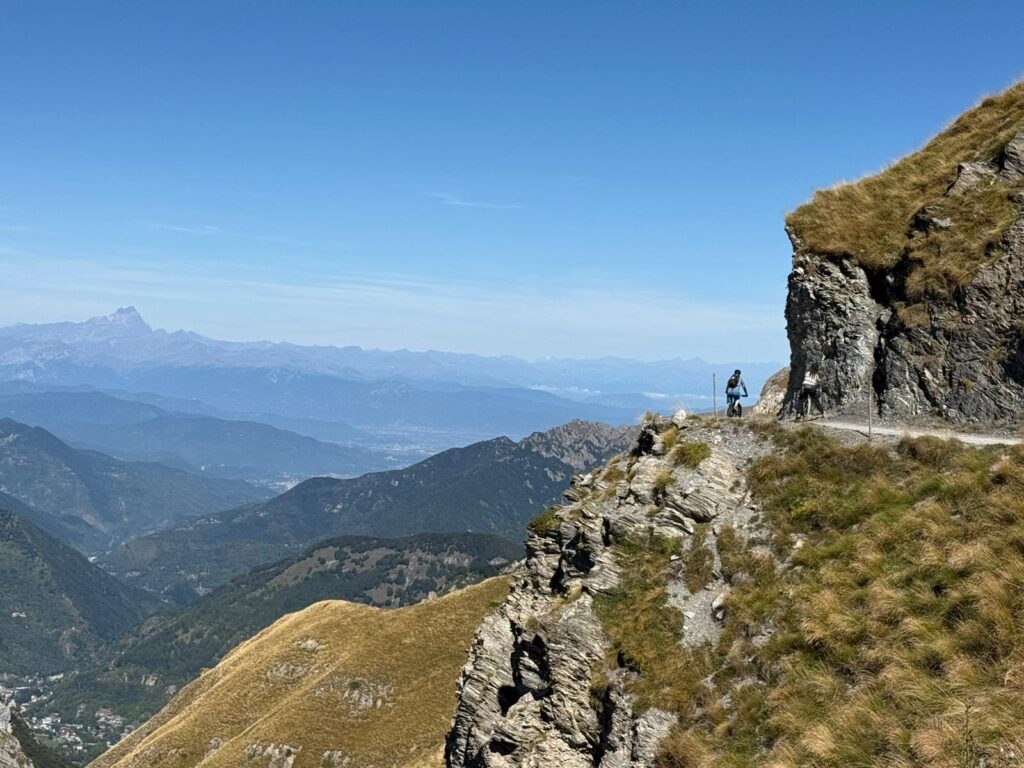
In the southwest of Piedmont, where the Alps slope down toward the Mediterranean Sea, lies a region that has yet to be discovered by foreign tourists. The Cuneo Alps form a link between the mountains and the plains, between Italy and France, and between tradition and new forms of mountain tourism.
Here, in a single day, you can travel from the lively city of Cuneo to quiet mountain passes and abandoned fortresses. It’s a region that invites you to take your time.
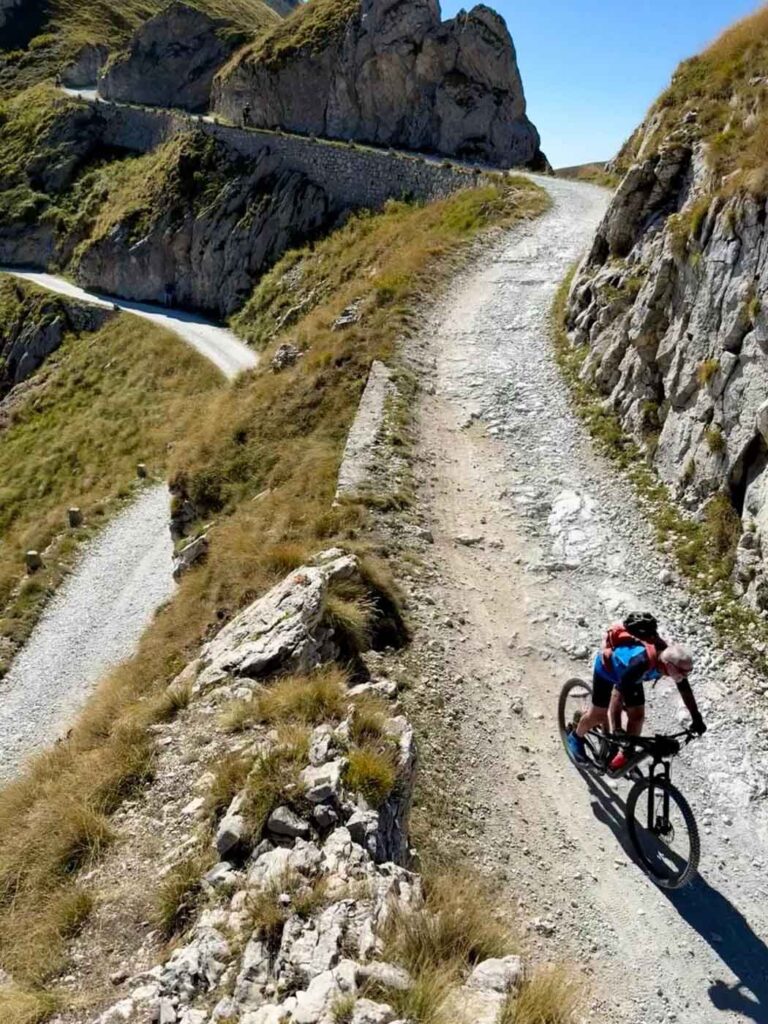
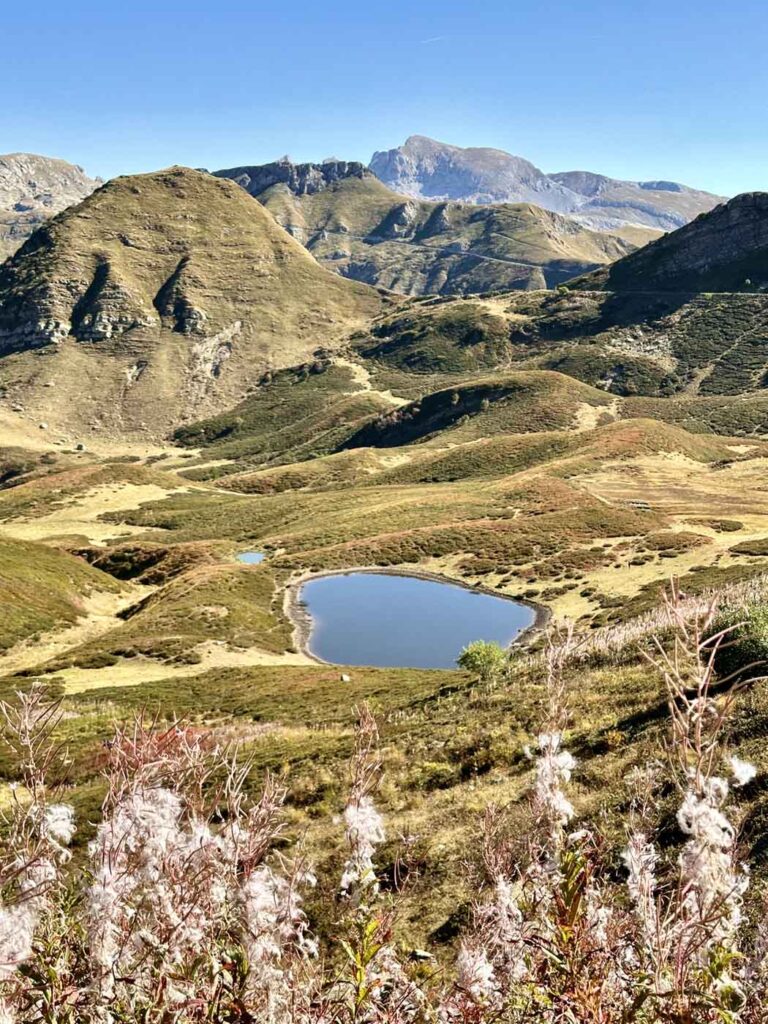
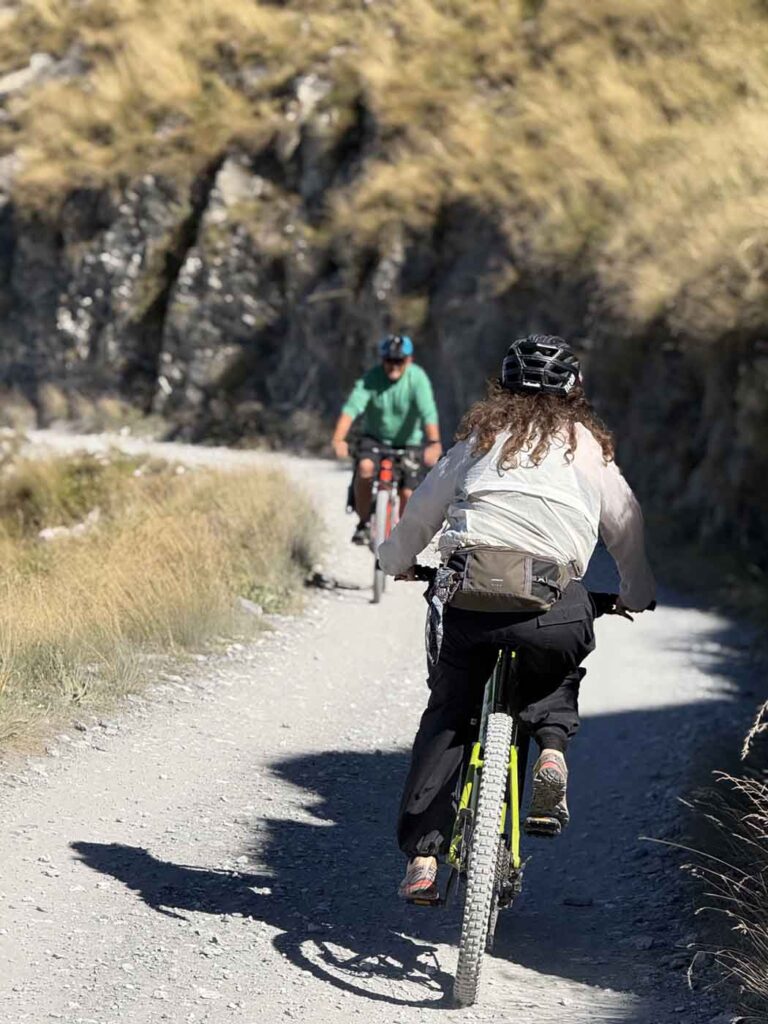
There are countless hiking and biking trails in the region; we chose one: the old salt road, the Via del Sale. For centuries, mules traveled this route carrying loads of salt from the Ligurian coast to the Po Valley. This trade route brought not only salt but also flavors: salted fish and anchovies were traded across the mountain passes and found their way into local recipes that are still prepared today.
From the town of Cuneo—more on that later—we drove toward the Alps early in the morning, following the road that winds gently upward through the green Valle Vermenagna. After a brief stop in Vernante, with its colorful Pinocchio murals, we reached Limone Piemonte, the mountain village at the foot of the Riserva Bianca ski resort.
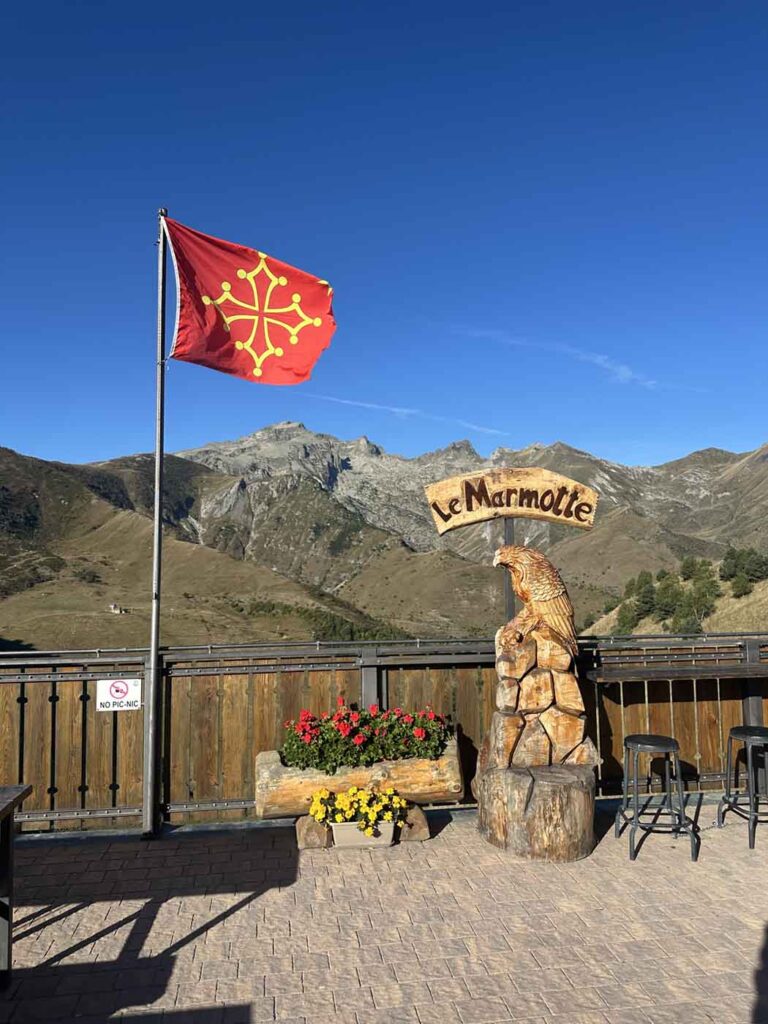
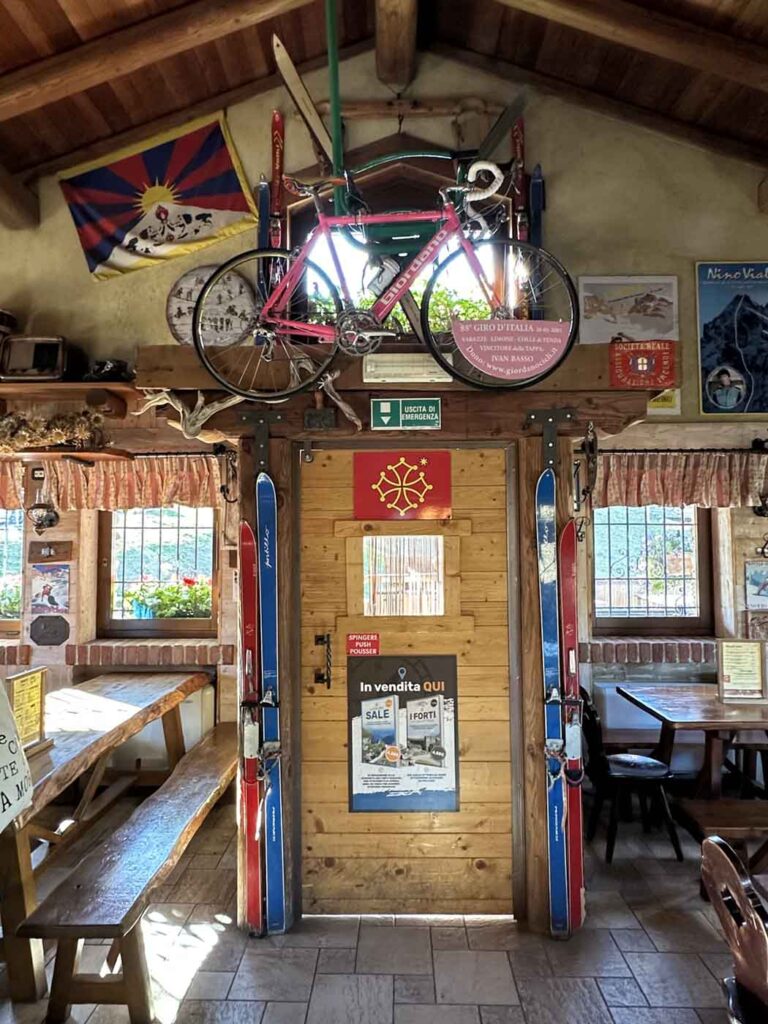
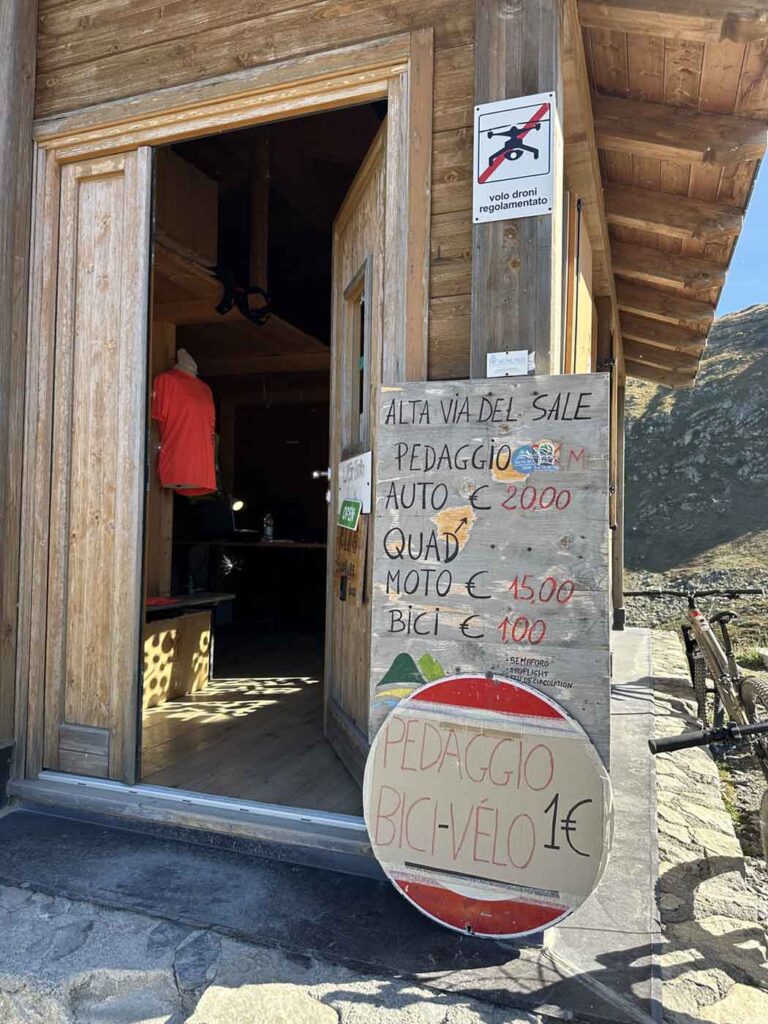
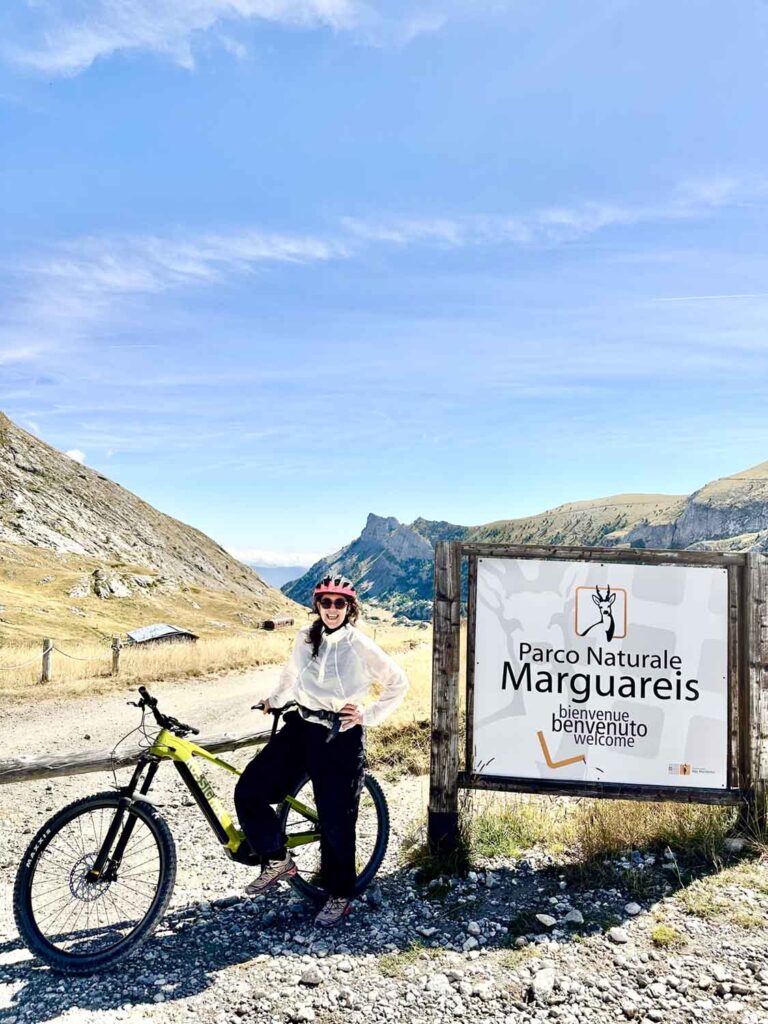
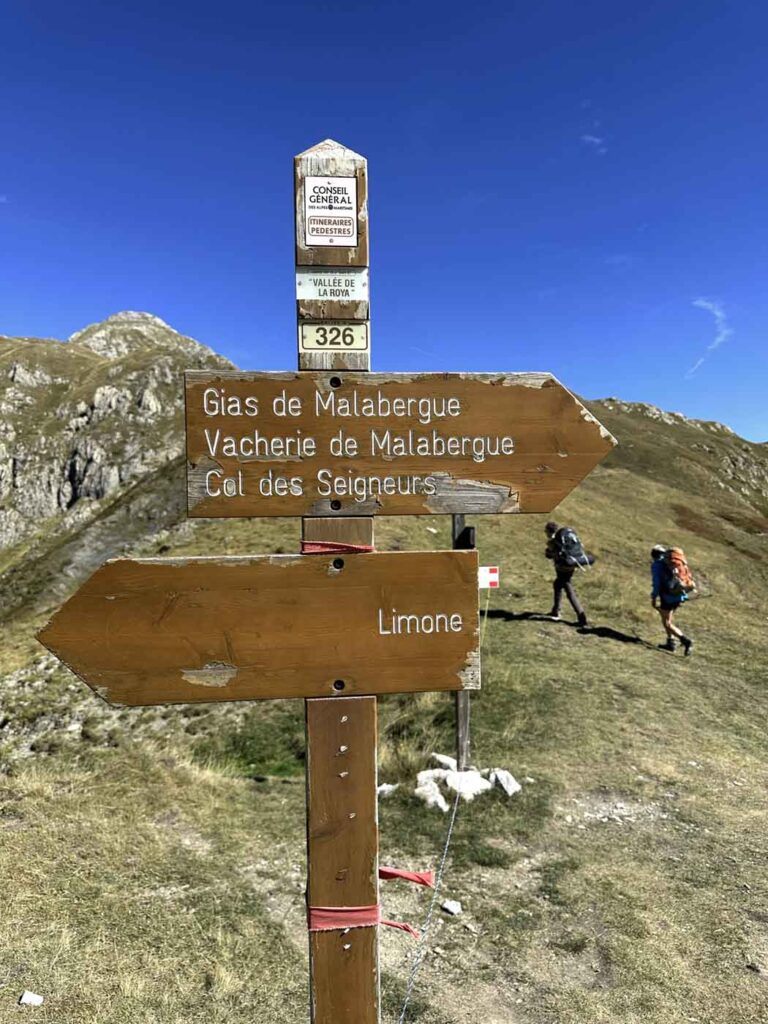
In Limone Piemonte, you’ll find a wide selection of comfortable accommodations—a perfect base for hiking or biking trips. We drove a few more kilometers uphill to the parking lot at Rifugio La Marmotta, the starting point of our mountain bike ride along the legendary Alta Via del Sale.
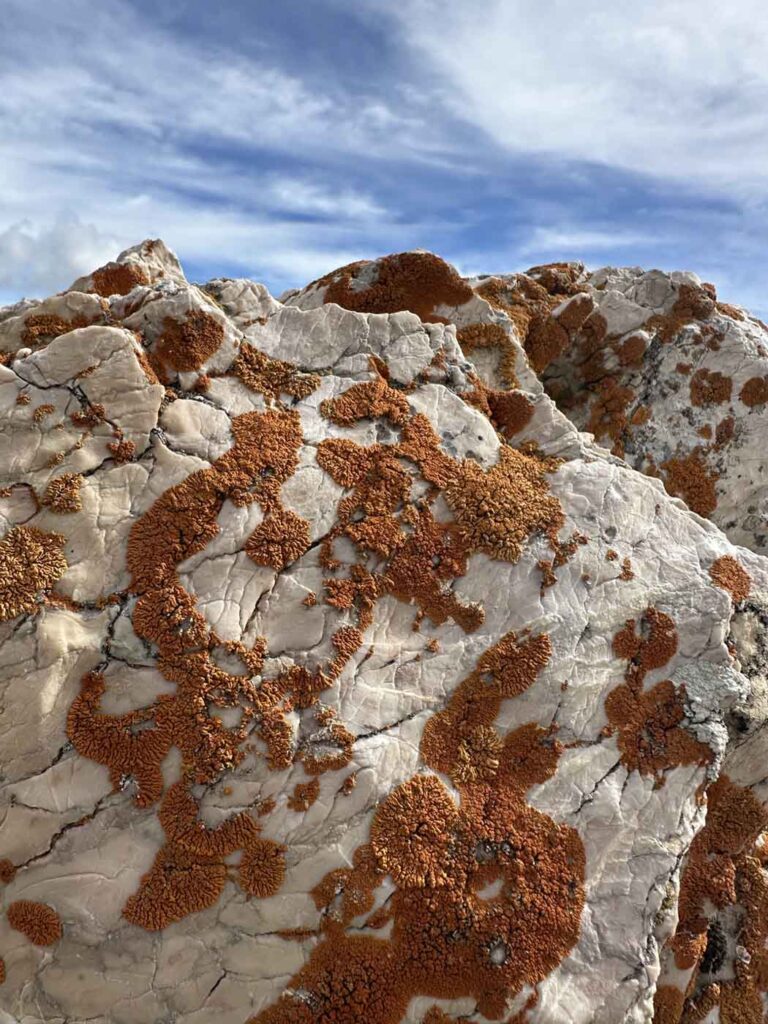
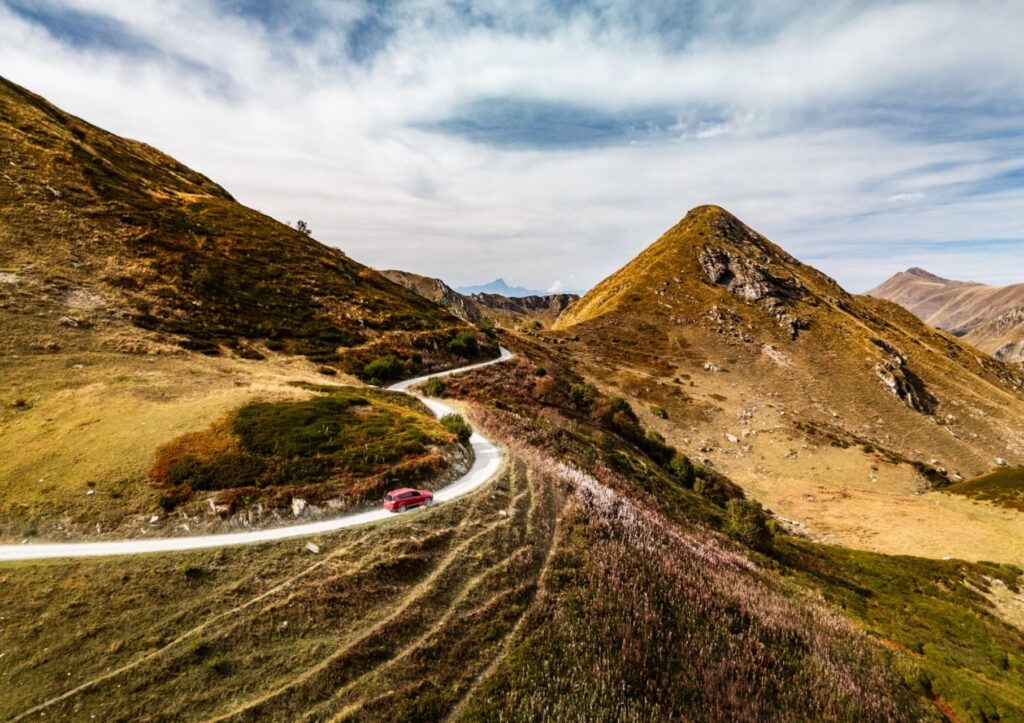
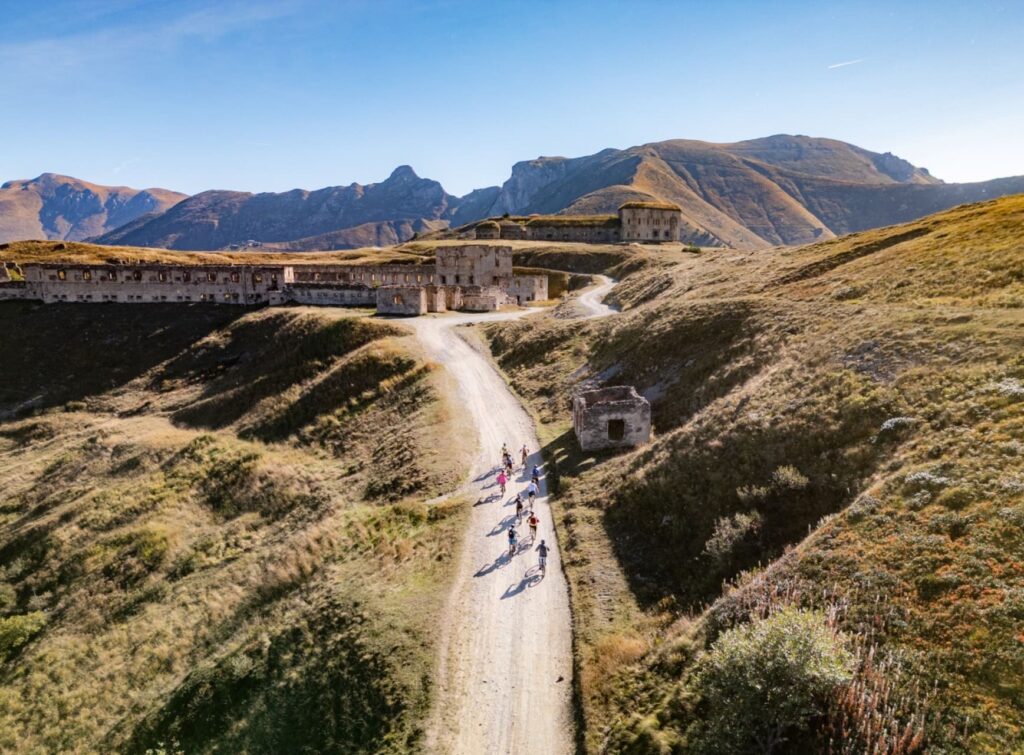
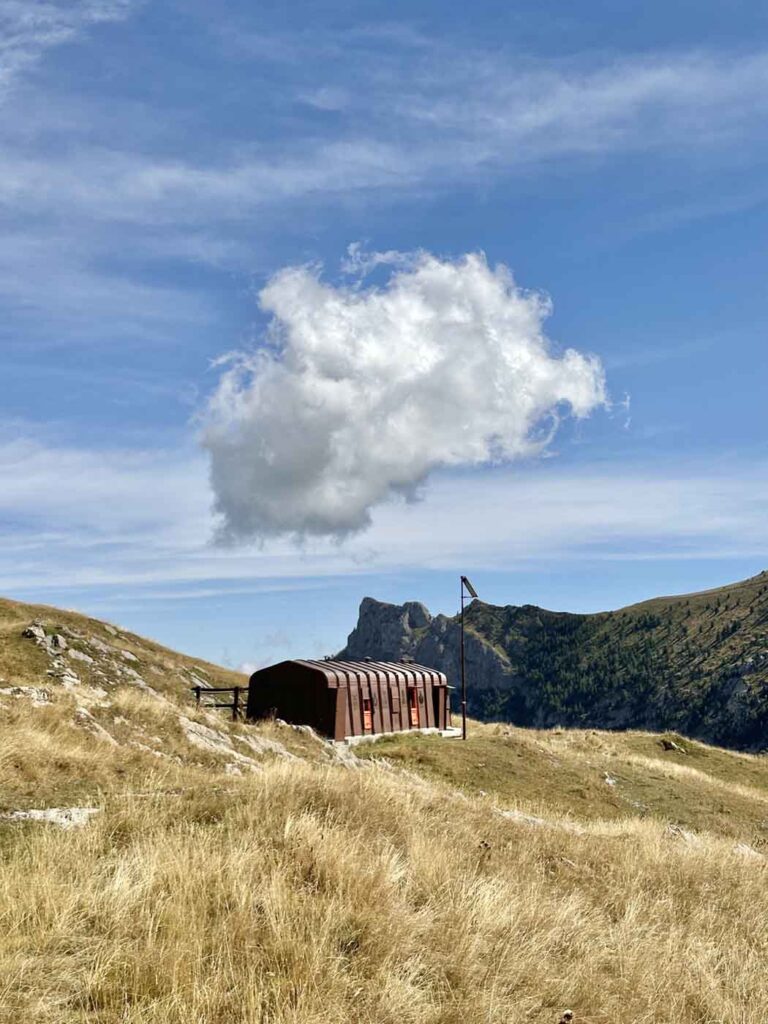
At an altitude of over 1,900 meters near Colle di Tenda lies Forte Colle Alto, also known as Forte Centrale. This impressive structure was built by the Italians between 1881 and 1885 as a strategic military base to guard the border. Ironically, it was never actually used for military purposes: rapid advances in military technology quickly rendered it obsolete.
After World War II (in 1947), the border between Italy and France shifted, and the fortress came to lie on French territory. Today, the French have left the structure to the elements—a weathered monument where the wind howls through empty corridors and the Alps stretch endlessly all around you. A special place for anyone who loves history and abandoned forts.
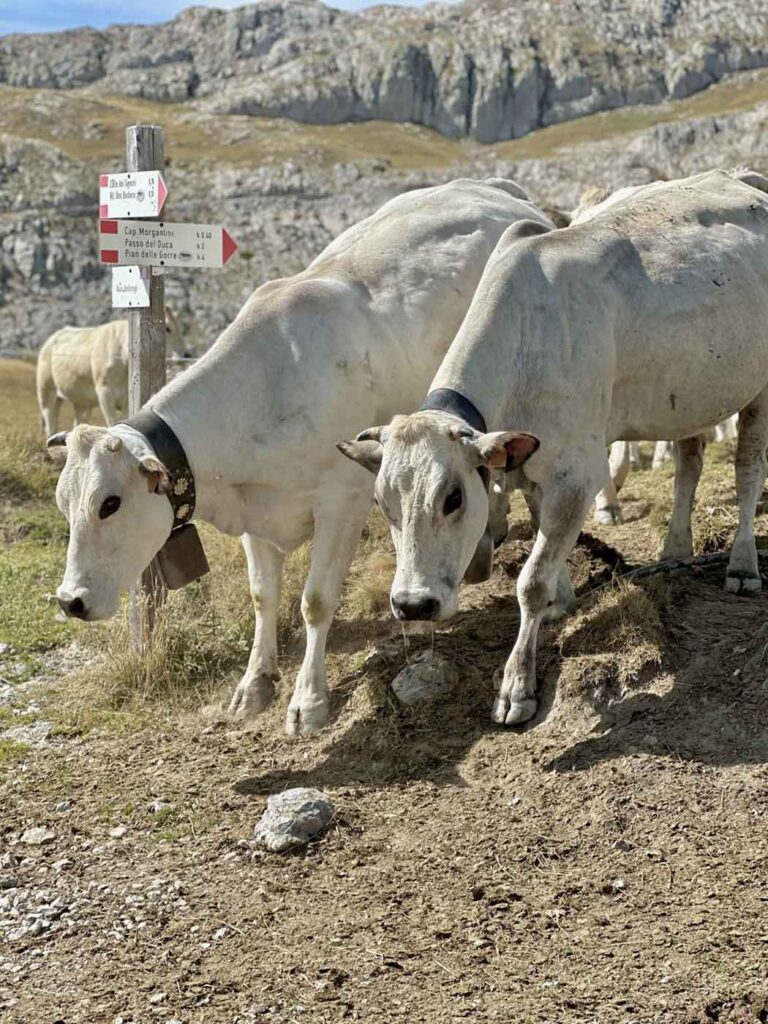
The road is wide enough for vehicles along the entire route, making it easy to cycle, although wide tires are recommended due to the rocky sections. It feels pleasantly empty and quiet. Just the wind and the sound of pebbles tapping against your frame. You’ll pass a ski lift, a mountain lake, a few cows, and a shepherd with his sheep—and beyond that, nothing but vast valleys with sweeping views.
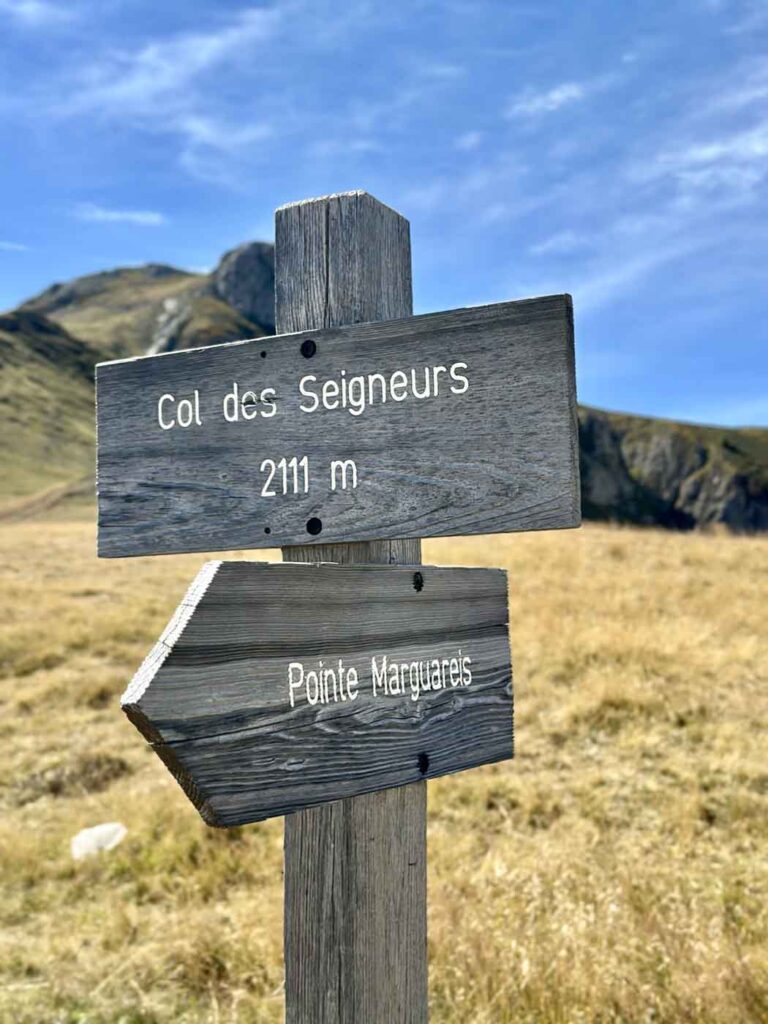
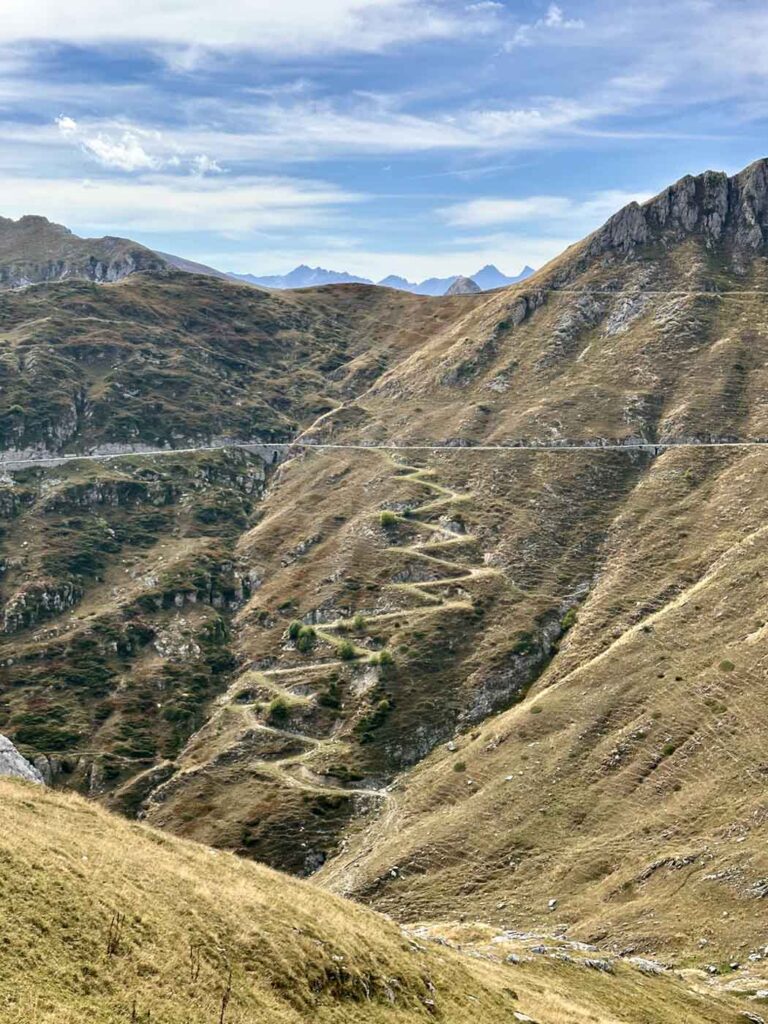
After the fort, the climb to the Boaria hairpin bend begins. This is one of the most beautiful sections of the Alta Via del Sale. The trail climbs steadily here and remains easy to bike as long as it’s dry. At the final bend—known as the Boaria Balcony—an impressive view opens up over the Valle Vermenagna and the surrounding peaks. It’s a natural spot to stop for a moment: there’s room to park your bikes, have a drink, and take some photos. From here, you can see how the route winds its way further uphill toward the Colle di Tenda.
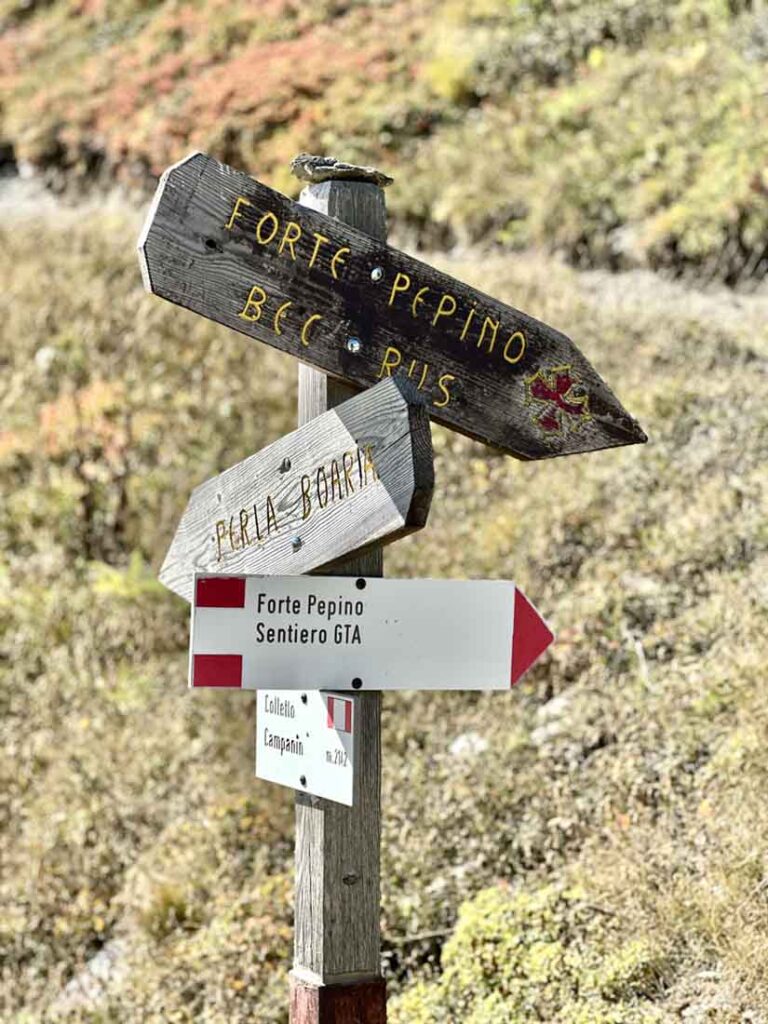
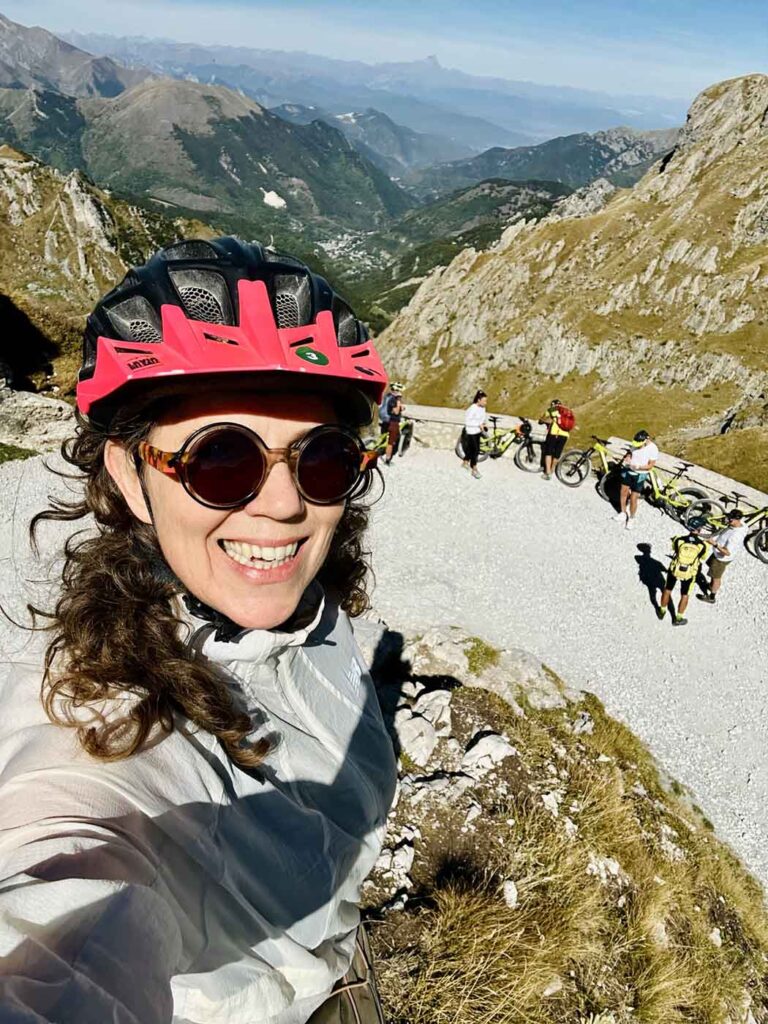
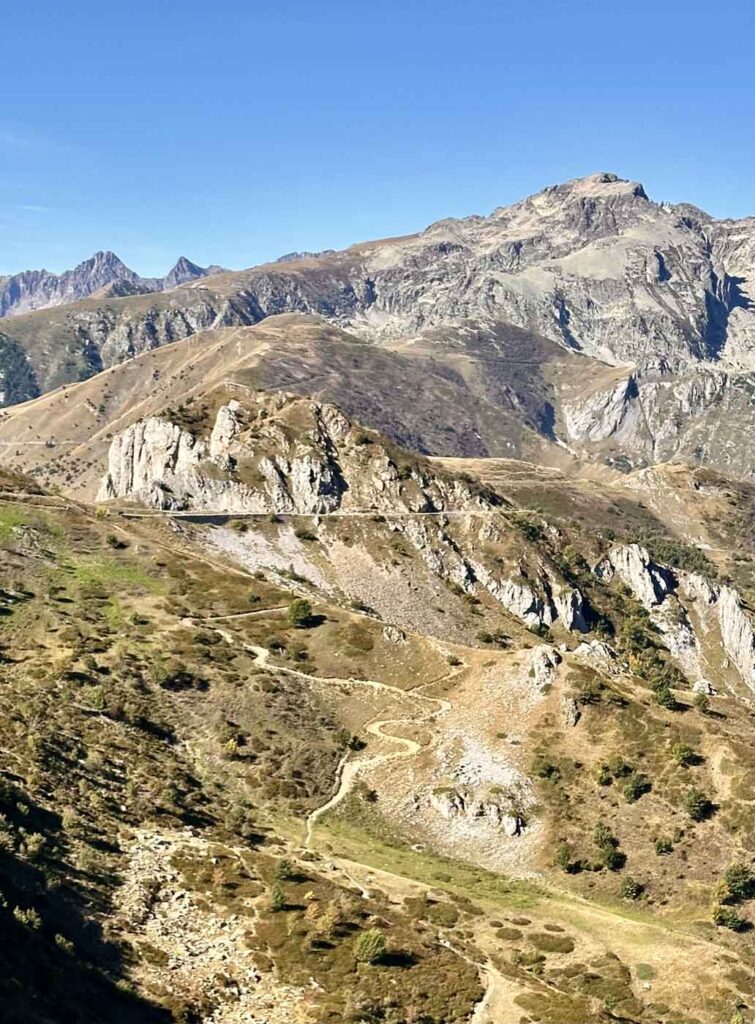
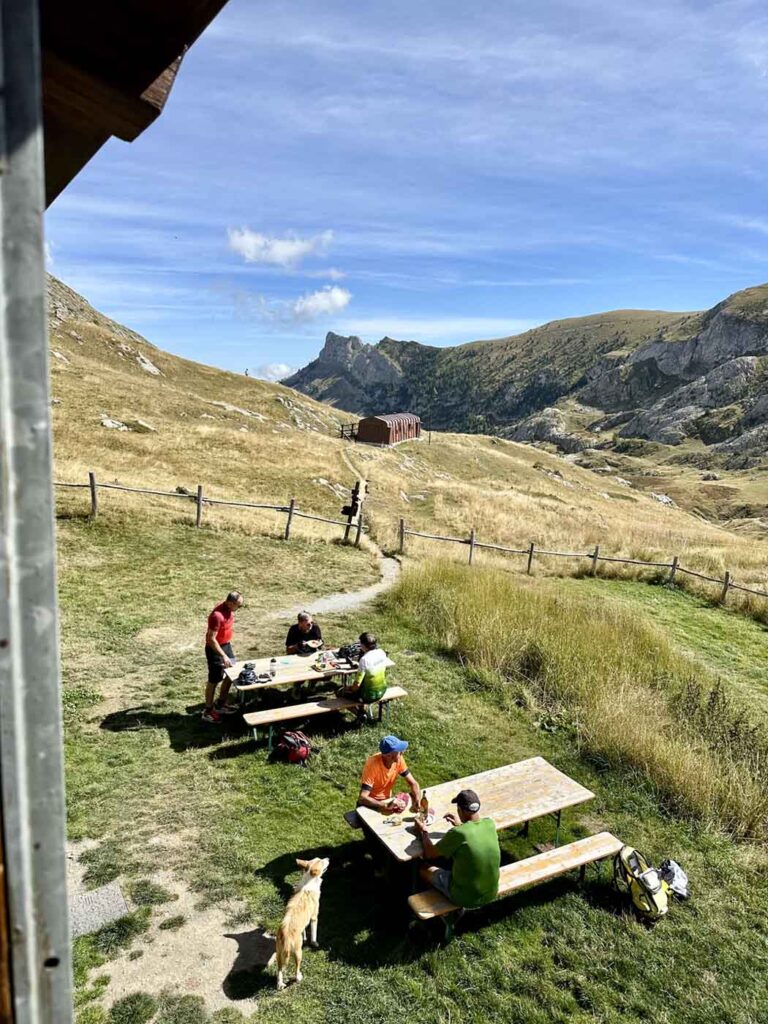
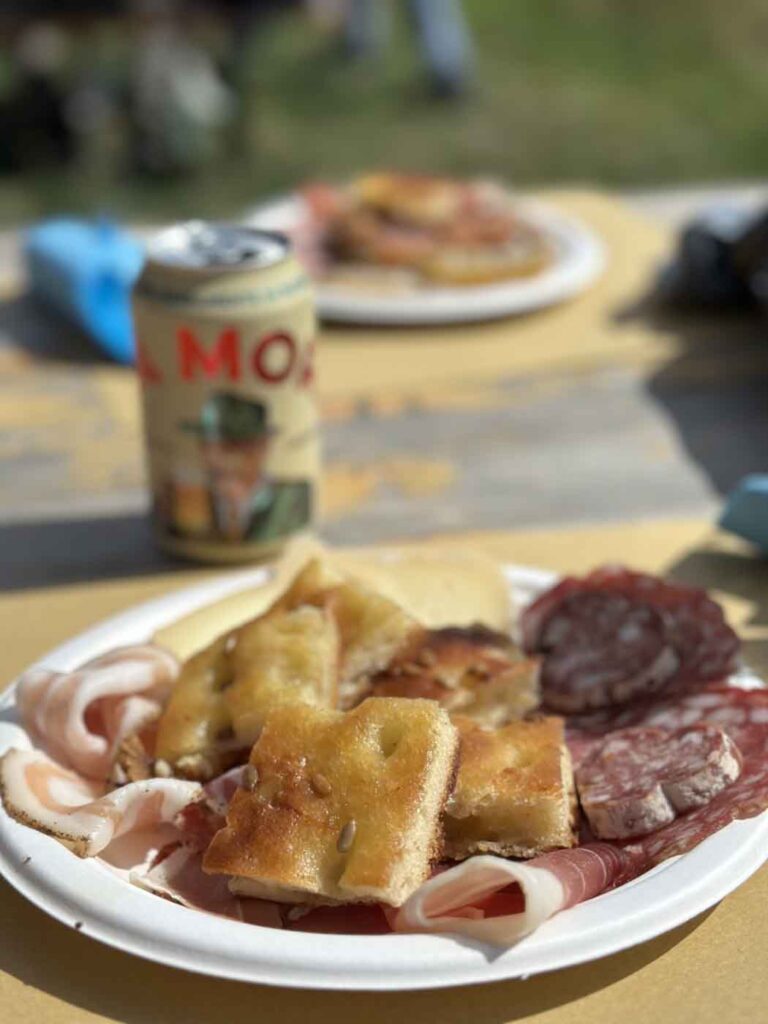
Halfway up, at Rifugio Don Barbera, a reward awaits: a platter of local cold cuts and cheeses, followed by steaming polenta with game ragout. The food is simple but excellent—exactly what you hope to find at this altitude.
The route continues toward the Ligurian coast, but we turn back. The return trip along the same trail offers plenty of new views. So many, in fact, that I occasionally check to make sure I’m still on the right track. Even the real speed demons will get their fix—for the last 20 minutes, you can race down the mountain pretty fast. Though of course, you don’t have to—taking it slow is wonderful too!
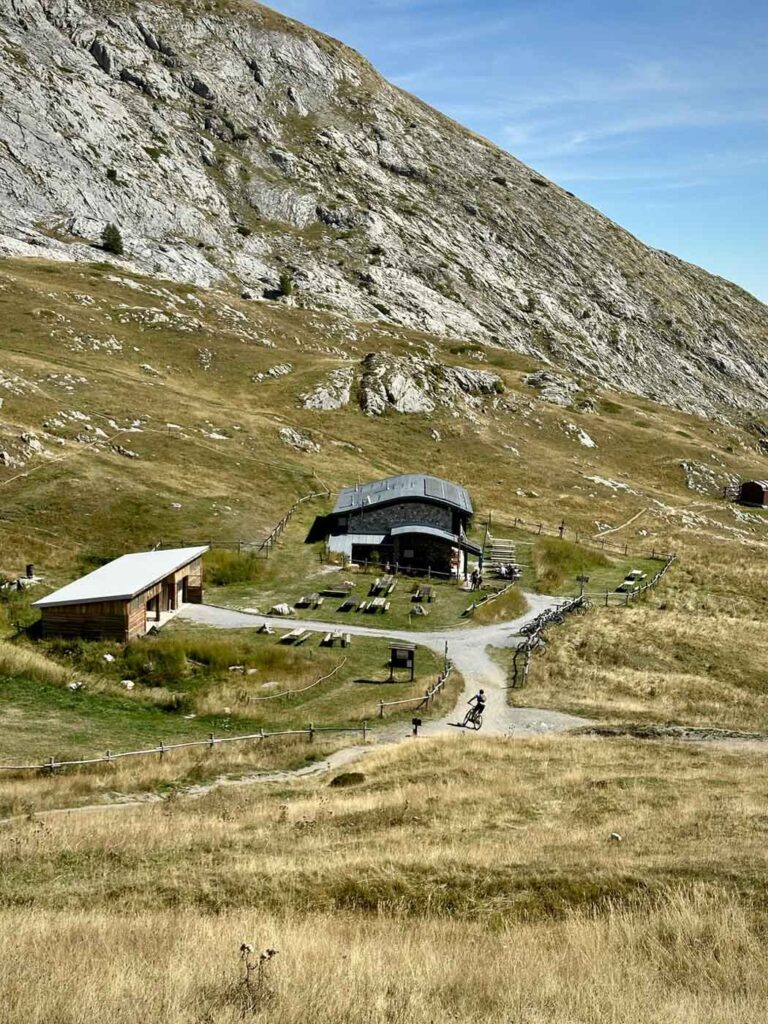
A spa awaits us in Vernante: we’re staying at Relais de Nazionale, which features a wonderful wellness center with various saunas. The rooms are tastefully and authentically decorated, with lots of wood and artisanal details.
In the evening, we head over to Il Nazionale, across the street. Here, regional cuisine is refined and reinvented, earning the restaurant a Michelin star. We sample risotto with wild herbs, meat from local farmers, and desserts featuring hazelnuts and chocolate.
The route described above is easily accessible from Cuneo. The city lies at a crossroads: to the east, the Po Plain stretches endlessly, a checkerboard of fields and rivers, and to the west, the Alps rise abruptly. It is a lively city, free from mass tourism, and the perfect springboard to the Piedmontese mountains.
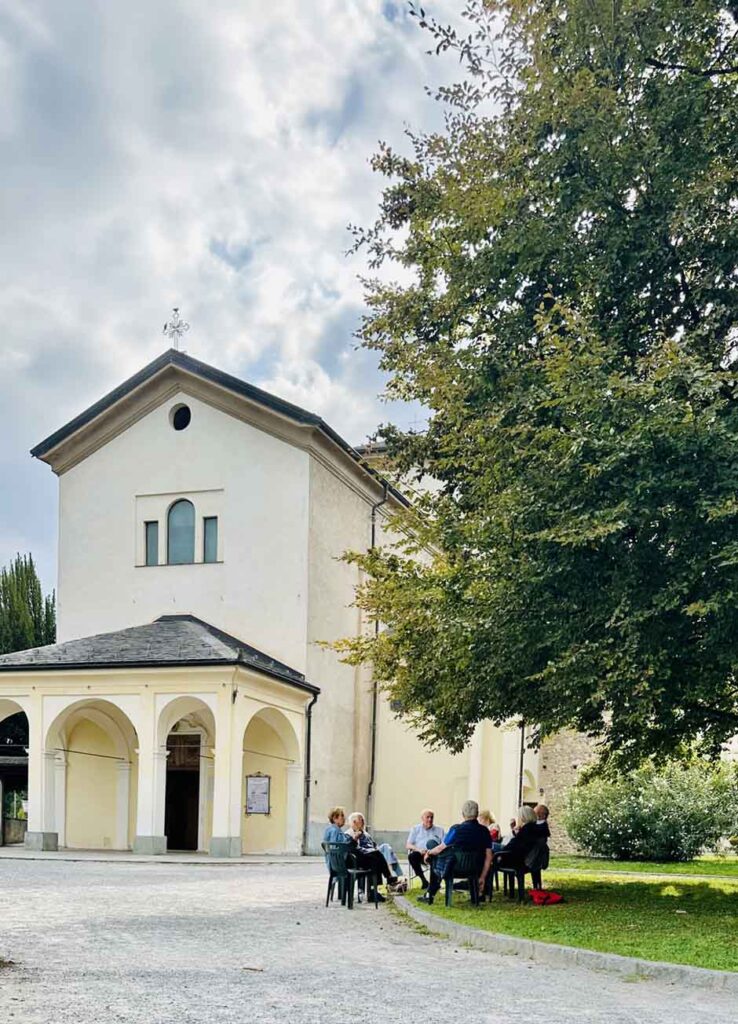
My first impression? A city that feels both organized and laid-back. In front of the church, elderly people sit in the shade of chestnut trees, with a view of Monte Bisalta. The little church is located on Viale degli Angeli, a wide, tree-lined avenue with about 1,200 trees. Outside of rush hour, the street is closed to car traffic, giving pedestrians and cyclists plenty of space. It gives the city a peaceful, relaxed atmosphere.
Every Tuesday, the historic Piazza Galimberti comes alive with the market. As soon as you walk under the long arcades, the atmosphere becomes intimate: coffee bars, pastry shops, and stores with shop windows where time seems to have stood still. It reminds me of Turin, but Cuneo is smaller.
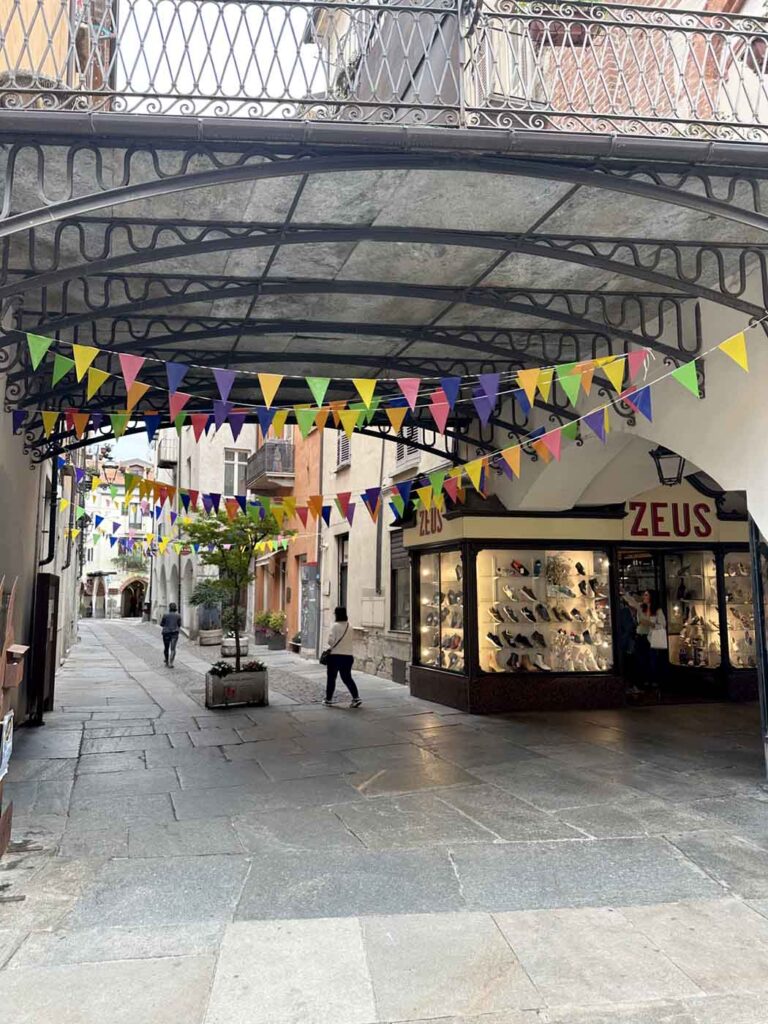
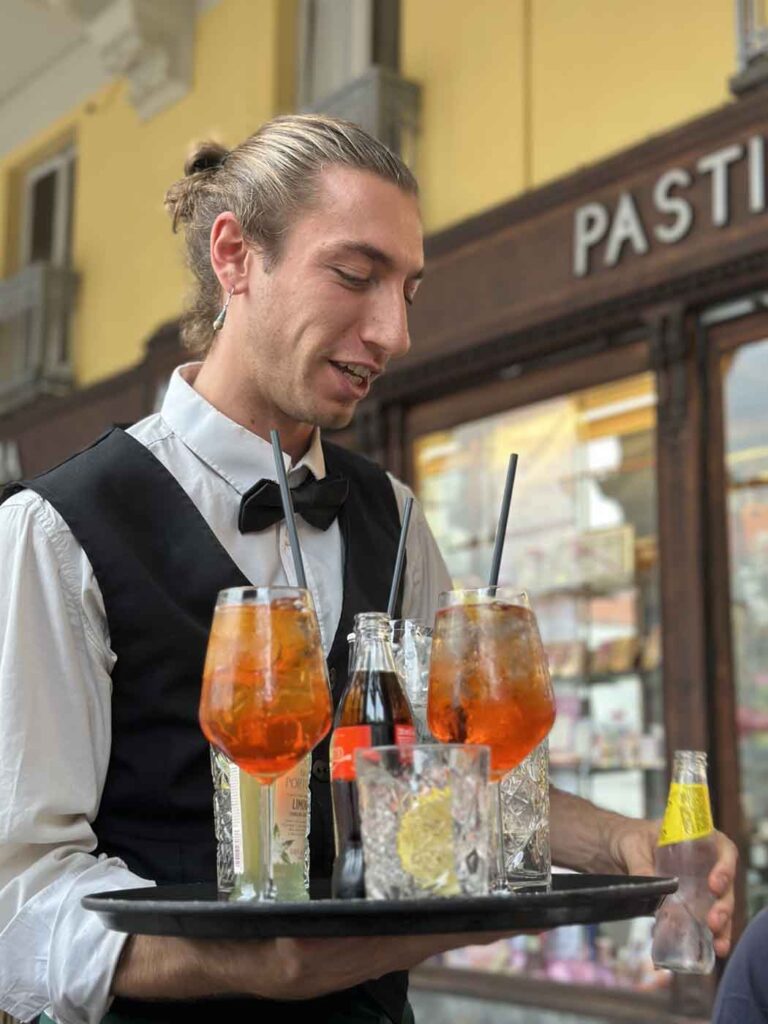
Cuneo is all about gastronomy. In restaurants like Il Nuovo Zuavo, you can taste how classic Piedmontese cuisine has been revitalized without losing its roots: tajarin, a delicate egg pasta, served with ragù made from local beef, and vitello tonnato so light and airy that you just can’t stop spooning it up.
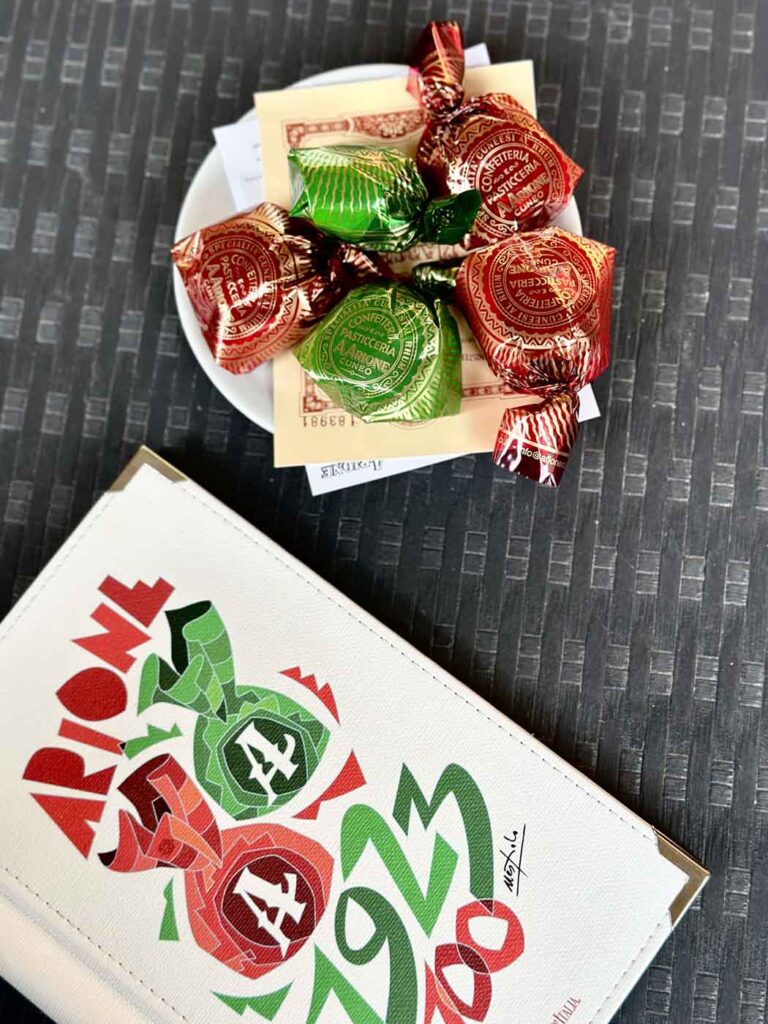
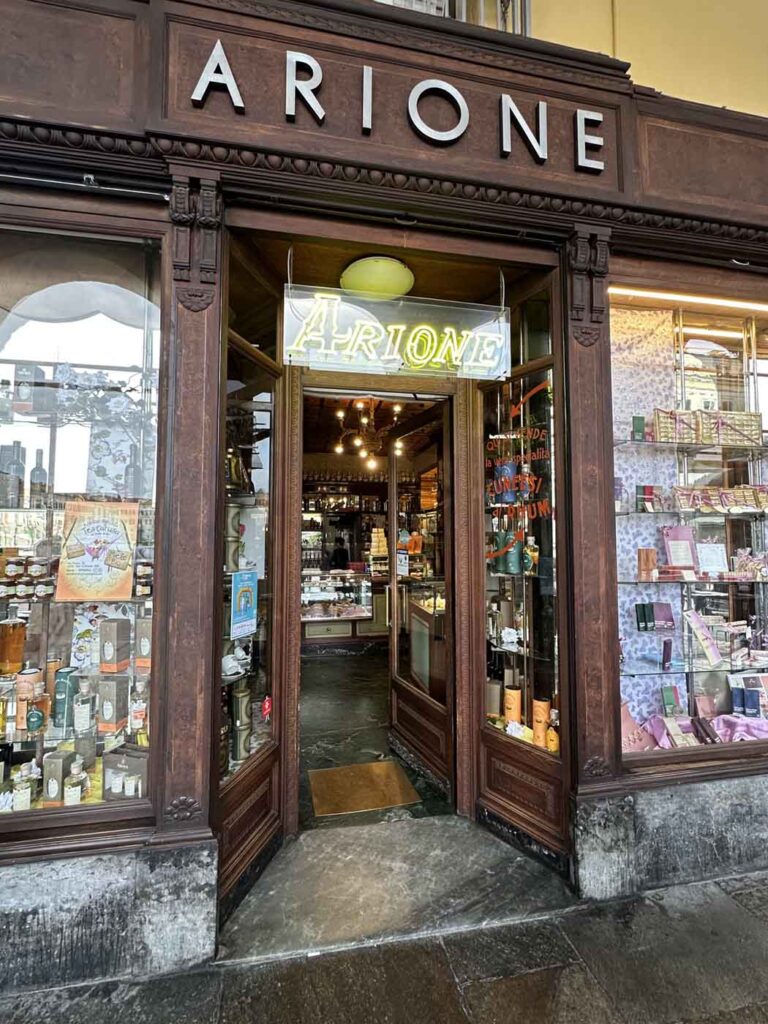
And then there’s Pasticceria Arione, a institution since the 1920s. This is where the famous Cuneesi al Rhum were born: dark chocolate bonbons filled with a creamy chocolate-rum cream. Ernest Hemingway had them shipped to the U.S., and I can see why: first, the satisfying crack of the outer shell; then, the smoothness of the filling; and finally, the warm, fiery kick of the rum. When I got home, I was disappointed that I’d only brought two back with me.
We’re staying at the Phi Hotel Principe. Classic, immaculate rooms and an exceptionally good breakfast buffet, featuring everything from rolled oats and chia seeds to freshly cut vegetables for making your own juice. There’s plenty of choice, including delicious pastries and croissants, and the staff is exceptionally friendly.
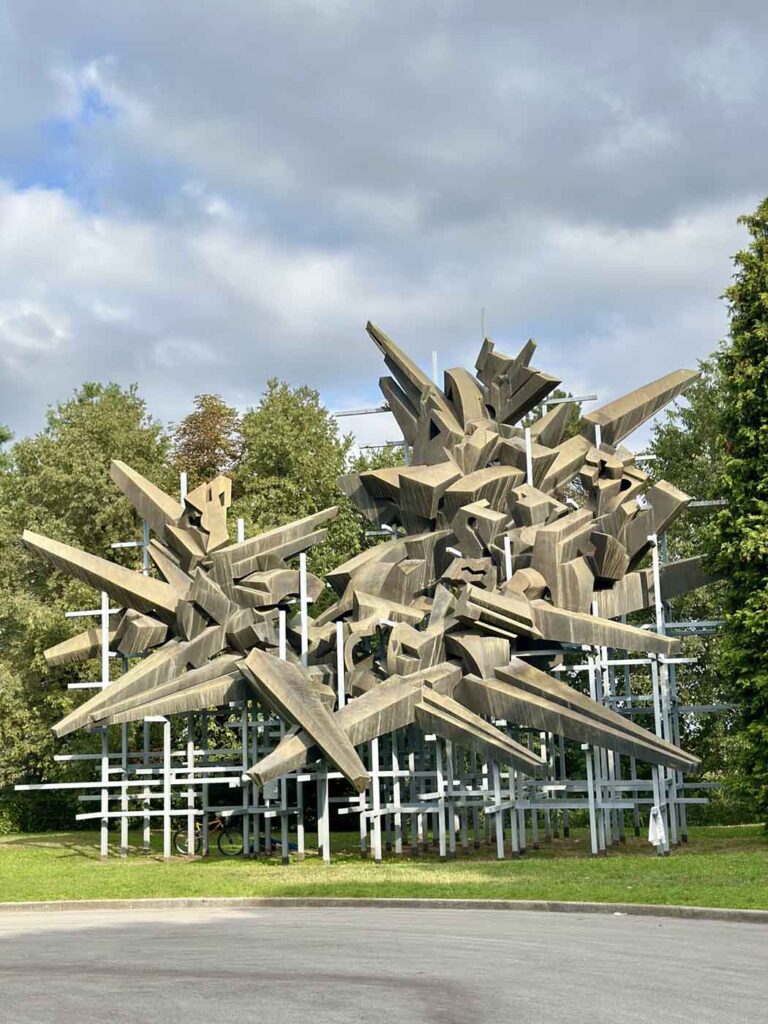
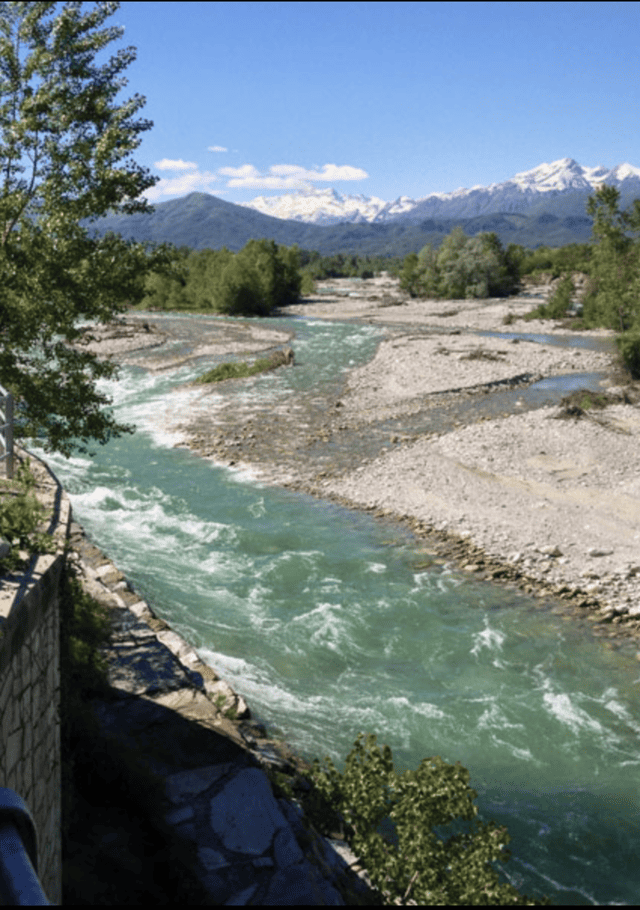
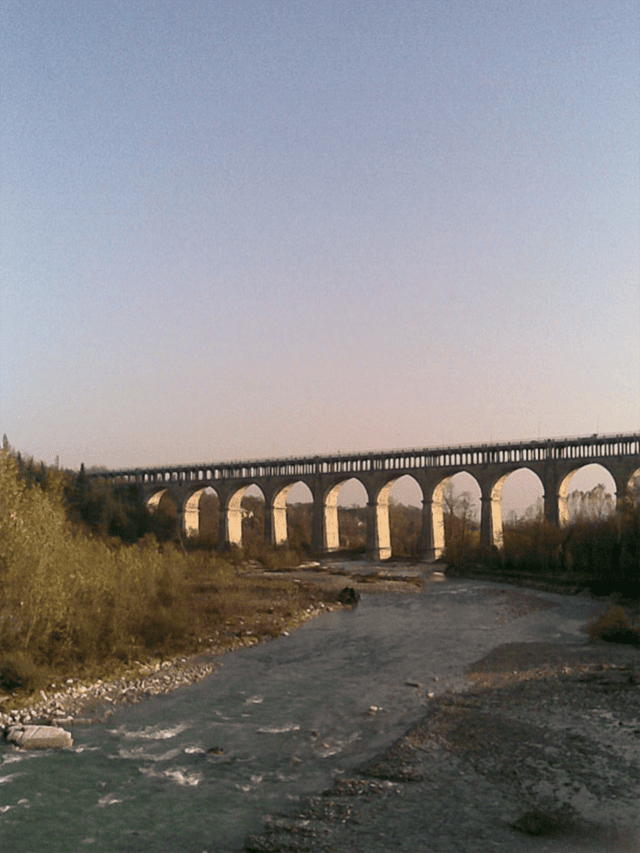
Cuneo, triangular in shape, is surrounded by two rivers. Between the Stura and the Gesso lies a unique urban Nature reserve: the Gesso Stura River Park, also known as “the park with a city inside.” Since 2018, it has formed a continuous 27-kilometer green ribbon of car-free trails, ideal for cyclists and hikers. You can hear the murmur of the water, see many butterflies flitting among wildflowers, and pass the impressive double-deck viaduct, the official starting point of the route.
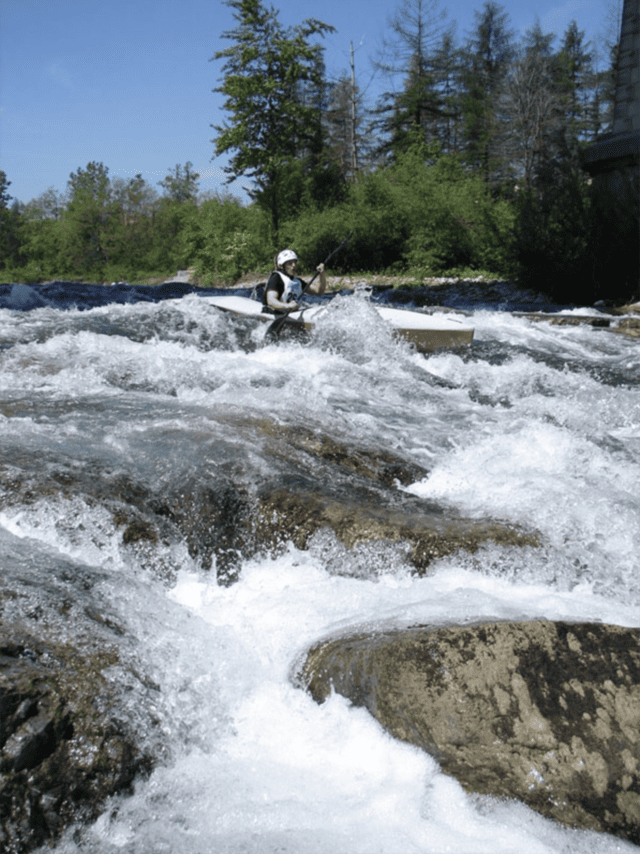
The park is also an ideal destination for sports enthusiasts. Thanks to its extensive facilities, you can enjoy a wide range of activities there year-round: from cross-country skiing in the winter to running, cycling, tennis, and beach volleyball in the warmer months. Water sports enthusiasts will also find plenty to do here. At the Le Basse, non solo acqua canoe club , you can go canoeing on the Stura di Demonte River or test your balance on the nearby climbing wall.
You can rent bikes at the tourist office in Cuneo—the perfect way to explore the park.
The Cuneo Alps are surprisingly unassuming. No massive ski resorts or crowded mountain passes, but villages that have retained their own rhythm and trails that still offer space for silence. The combination of Italian hospitality, good food, and unspoiled nature makes this corner of Piedmont an ideal destination if you enjoy active travel without the crowds. And once you’ve breathed in the scent of resin and salt on the Alta Via del Sale, you’ll understand why this trail has been inspiring people to set out on journeys for centuries.
Our journey continues toward Langhe, Monferrato and Roero, where we’ll go gravel biking.
Best time to visit
: From late June to early October. Conditions are usually best in July and September: stable weather, little remaining snow, and light traffic.
Accessibility
Cycling & Routes
An e-MTB or mountain bike with wide tires is recommended. The Alta Via del Sale is car-free on Tuesdays and Thursdays; on other days, tolls apply and car traffic is restricted. GPX routes, tickets, and up-to-date information: www.altaviadelsale.com.
GPX routes and descriptions can be found at www.visitcuneese.it.
Cuneo Tourist Office
Via Pascal 7, Cuneo
T: +39 0171 690 217

Mieke Tacken
I am an interior designer, photographer, and an avid nature hiker. I’ve lost my heart to the simplicity and beauty of hiking vacations. I also appreciate the unique experience of a stay that tells a story about local history or culture. Here, I share my stories and tips—whenever possible, with a light footprint and always with a heart full of wonder.

With a passion for travel and photography and over 30 years of experience in the travel industry, I love to share my special nature travel tips. Travel is wonderful and important, you meet new people and cultures and it opens your view of the world.

Slow Food Puglia: Tasting Mussels and Clementines in Taranto Starting in the summer of 2026, in the province of Taranto, in the far south of Italy, you can literally sample what small-scale local producers have to offer. At the same time, during these excursions,...
Gitschberg Jochtal: Hiking in the Summer, Skiing Away from the Crowds in the Winter Eight villages, no well-known name, and yet 300 kilometers of marked hiking trails in the summer and 55 kilometers of ski runs in the winter: that’s the Gitschberg Jochtal, on the...
Get inspired
Are you looking for the most beautiful hiking and biking routes? Or do you want information about traveling by train or advice for the most beautiful road trips through nature. Get inspired for your next trip in green; ideas for planning your own trip or opting for an organized trip.