Slow travel in Alentejo: The Most Beautiful Villages, Towns, and Natural Landscapes
Are you looking for a quieter, more authentic part of Portugal? Then the Alentejo is a great destination. This vast region in southern Portugal is often overlooked by tourists who head straight to the Algarve. And that’s exactly what makes it so special to me.
The region has a long history of foreign rule. Much of this history is still visible in the towns and in the region’s current architecture. What’s more, the region boasts fantastic cuisine and delicious wines. It’s a combination of stunning natural beauty and wonderful people who understand what the rest of the world seems to have forgotten…
I’ll take you to Alentejo—also known as the “Tuscany”known as Portugal. Read about the most beautiful places in Alentejo:
Nature: Costa Vicentina, Serra d’Ossa, Castro Verde Biosphere Reserve
Towns & Cities: Monsaraz, Marvão, Estremoz, Castelo de Vide, Vila Viçosa, Mértola, Serpa, and more
Here, you’ll travel at a leisurely pace, mindfully, and with an appreciation for nature—the perfect destination for Slow travel.
Alentejo Nature Parks
Costa Vicentina & Southwest Alentejo Natural Park
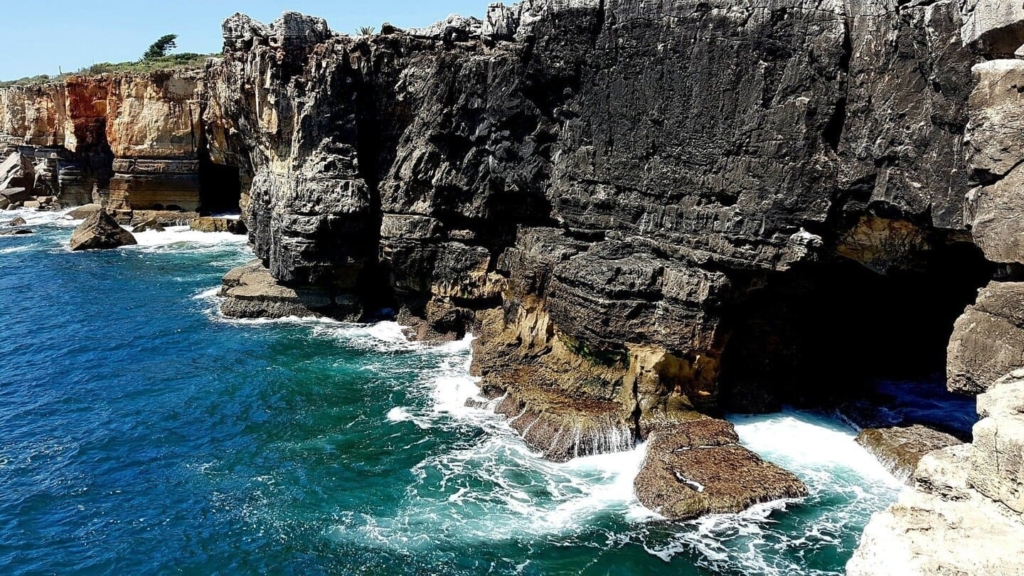
Europe’s best-preserved stretch of coastline, with steep cliffs, quiet coves, and fishing villages. The Rota Vicentina (Fishermen’s Trail & Historical Way) runs along the ocean here. Expect stork nests on the rocks, dunes full of flowers (such as the endemic Plantago almogravensis), and spectacular sunsets.
Tip: Plan 1–3 stages, and travel outside the high season to enjoy peace and quiet and help preserve nature.
São Mamede Natural Park
The Serra de São Mamede Natural Park is located around the city of Portalegre, near Marvão and Castelo de Vide. It features rocky peaks, valleys, rivers, chestnut forests, and cork oak forests. There is a wide variety of flora and fauna. It’s a wonderful place for walking, hiking, biking, and birdwatching.
To plan and navigate hiking and biking routes, download maps and routes from the Wikiloc app so you can use them without an internet connection:
Portagem, PR1 MRV, Marvão Trail (10.07 km)
Galegos, PR2 MRV, Galegos Trail (12.77 km)
The entire route: Marvão to Galegos (19.04 km)
The Serra d’Ossa: Hiking in the Mountains
Between Redondo, Estremoz, and Borba, granite hills rise up, dotted with cork oak forests and offering sweeping views. It’s ideal for hiking and mountain biking. Here you’ll find wineries, quiet country roads, and well-marked trails. It’s a wonderful place if you want to get away from the crowds.
Accommodation Tip in Serra d’Ossa: Convento de São Paolo
Birdwatching in Castro Verde, a UNESCO Biosphere Reserve
The Castro Verde grain steppe is a mosaic of ecosystems home to rare birds such as the Montagu’s harrier, the black-bellied sandgrouse, the common crane, and the Iberian imperial eagle. It is also home to wild rabbits and the Iberian lynx.
TIP: Birdwatching in Mértola
In Mértola, you can spot falcons, swallows, and jackdaws nesting in the historic castle walls. Bring binoculars and respect the nesting areas.
Stargazing in Monsaraz (Dark Sky Alqueva)
Around the Lake Alqueva you’ll find one of Europe’s darkest night skies. Monsaraz is a beautiful fortified village overlooking the lake. It’s perfect for a stargazing tour at the observatory. During clear months, you can see the Milky Way with the naked eye; with a guide, you can observe nebulae and planets.
Tip: Plan your visit for the new moon and book a small-scale tour.
Almendres Cromlech, Portugal’s Stonehenge
About 15 kilometers from Évora lies the Almendres Cromlech, one of the largest megalithic complexes in Europe. The oldest stones are believed to have been placed there around 5,000 B.C. This magical place is nestled among cork and olive trees and is open to the public. Please respect the site: stay on the trails and do not touch the stones.
Cromlechs are vertical stones that support another horizontal stone in a distinctive circle.
The Most Beautiful Villages and Towns in Alentejo
1.Évora: European Capital of Culture 2027
Évora is a city rich in Roman, Moorish, and Portuguese influences. With a UNESCO-designated historic center, a beautifully preserved Roman temple, the Capela de Ossos, and a wonderful museum, Évora is well worth a visit. It is one of the best-preserved medieval cities and has been on the UNESCO World Heritage List since 1986.
Wines from Évora and the surrounding area are world-famous. The town has several wine bars and shops, as well as a tasting room where you can sample the wines. Traditional reds, whites, and rosés are all grown here. Cartuxa Winery is a well-known Portuguese wine producer in the city; as a nonprofit organization, it reinvests its profits back into the community.
2. Estremoz: Azulejos and marble in a historic white town
Estremoz is one of the “marble towns” of the Alentejo and is famous for its marble quarries. The marble is used in buildings, church interiors, and sidewalks; the town is also known as the “white city.”
Estremoz is a charming, historic town with a history dating back more than 700 years. The town originated as a fortress in the Middle Ages, strategically located between Portugal and Spain. Here you’ll see the typical Alentejo-style white houses with ochre-yellow accents.
There is an upper town and a lower town, with old city walls, a castle, shops, and the famous traditional Saturday market.
The Bonecos de Estremoz are colorful clay figurines that have been on UNESCO’s list of intangible cultural heritage since 2017. Stop by the small workshop in town: Centro Interpretativo do Boneco de Estremoz. Handmade and hand-painted.
Berardo Museum: a museum in the center of Estremoz, housed in a former palace overlooking the castle. It features one of the largest private collections of tiles in Portugal. Here, you can learn more about Portuguese azulejos and their evolution.
Have you already visited and seen everything? Then stop by the Michelin-starred Legacy Winery restaurant in Estremoz, located just outside the city on the Herdade das Servas estate. A culinary experience in an intimate setting.
3. Marvão, wine, and olive oil near Spain
Marvão is located near the Spanish border, on a granite cliff at an elevation of about 860 meters. It offers breathtaking views of the surrounding hills and plains of the Alentejo. Hike up to the13th-century medieval fortress, which offers panoramic views stretching far into Spain. Narrow streets lined with white houses, local cuisine, and delicious Alentejo wines. Do you love hiking, tranquility, nature, and history? Then Marvão is the destination for you.
Event in Marvão: Al Mossassa Festival Celebrates Arab Roots
An annual historical festival dating back to the 9th century in honor of the founder of Marvão. A blend of Islamic, Jewish, and Christian influences. Reenactments include encampments, sword duels, archery, and a market featuring plenty of music and dance.
Admission: approx. €2
Every year in early October
Sustainable and Adventurous Trip to Marvão with the Easy Rider
Want to explore Marvão in an adventurous way? Rent a sustainable EZ Raider. Take a tour on four-wheeled electric vehicles through the surrounding countryside, past megalithic monuments, the Sever River, and the old Beirã train station. The longest route takes about 3 hours.
Marvão-Beirã Station and Guesthouse
This old former railroad station connected Portugal with Spain. It remained in use from 1880 to 2012. On the EZ Raider tour, you’ll pass by this beautiful building with its azulejos. The old restaurant area has now been converted into accommodations for travelers. You can stay here in rooms or apartments.
Olive Museum in Marvao
The Lagar Museu of António Picado Nunes is an olive oil museum in Galegos. António produces olive oil here from the local Galega olive. The family business has been in operation since 1953. The museum showcases traditional olive oil pressing methods using antique equipment. You can take guided tours of the olive groves, the museum, and, of course, taste the oil.
The restaurant serves delicious food prepared with its own olive oil. It is produced 100% naturally, without any added chemicals.
4. Baixo Alentejo: European Wine City 2026
Baixa Alentejo is a subregion of Alentejo in the southeast. The “city” has been named the European Wine City 2026, with a focus on both traditional techniques and innovative, organic viticulture. Numerous events, festivals, and tastings are planned for 2026.
Other must-see villages in the Alentejo
Monsaraz: a white fortified village with cobblestone streets and views of Lake Alqueva. Perfect to combine with stargazing. Tip: watch the sunset from the castle walls.
Castelo de Vide: a town near Marvão with a charming Jewish quarter and flower-filled streets. Stroll through the old streets and visit the synagogue.
Juromenha: a ghost town steeped in history, with a view of the Guadiana River
Redondo: a small town with a castle, known for its decorative pottery and DOC wine.
Moura: a historic city on the border with Spain, with a rich history and Arab influences
Nisa: According to legend, it was founded by a group of settlers from Nice in the early days of Portugal. Delicious sheep’s-milk cheese, colorful streets, and a13th-century castle.
Portalegre: a charming little town with a cathedral and the hometown of writer José Maria dos Reis Pereira (José Regio); the house where he lived for 30 years now serves as a museum.
Alcáçovas: a historic site that played an important role in the war between Spain and Portugal in the15th century. Paço dos Henriques is a historic13th-century building featuring a mix of architectural styles.
What does Alentejo mean?
Alentejo literally means “across the Tagus,” or “além do Tejo.” To the north of Alentejo lies the Centro region, and to the south, the Algarve. It is Portugal’s largest region—roughly the size of Belgium—but not yet as well known as a vacation destination. Vast, forested hills and countryside. The coastline is rugged and rocky, interspersed with wide sandy beaches.
Alentejo, Land of Cork and Wine
The Alentejo has the largest cork production in the world. The trees can be recognized by their orange trunks. You’ll travel through“montado” landscapes(cork oak savannas), olive groves, and vineyards. Once every nine years, the bark is harvested by hand. In addition to wine corks, it is used to make bags and shoes.
Taste local wines (red, white, and rosé) in and around Évora and visit small producers who work with drought-resistant grape varieties.
The Most Beautiful Coastline and Beaches in Alentejo
Sines: A 15-kilometer-long stretch of nature reserve with clear water and beautiful sandy beaches. Lagoons home to rare fish species and thousands of migratory birds. Swimming is permitted, except within the protected area.
The Southwest Alentejo and Costa Vicentina Natural Park, with more than 90 kilometers of land and coastline. Many beaches, traditional villages, and 35 certified sites featuring unique plant species and birds.
Alentejo: Practical Tips
How do you get to Alentejo?
The region is located exactly between the Algarve and central Portugal, and it depends a bit on which part of the Alentejo you want to visit. You can fly to either Lisbon or Faro with airlines such as Transavia. By car, it’s just over 2,000 kilometers.
How far is it from Lisbon to Alentejo?
The distance from Lisbon to Évora is about 150 km (a 2-hour drive). You can also easily take the train from Lisbon to Évora. From this medieval town, you can easily explore the region.
When is the best time to visit Alentejo?
The green spring, with fields full of wildflowers, is a wonderful time to visit the Alentejo.
It’s already getting warm in early summer.
Thanks to the mild winters, it’s actually wonderful to explore this region in the fall or winter.
Tips for Where to Stay in Alentejo
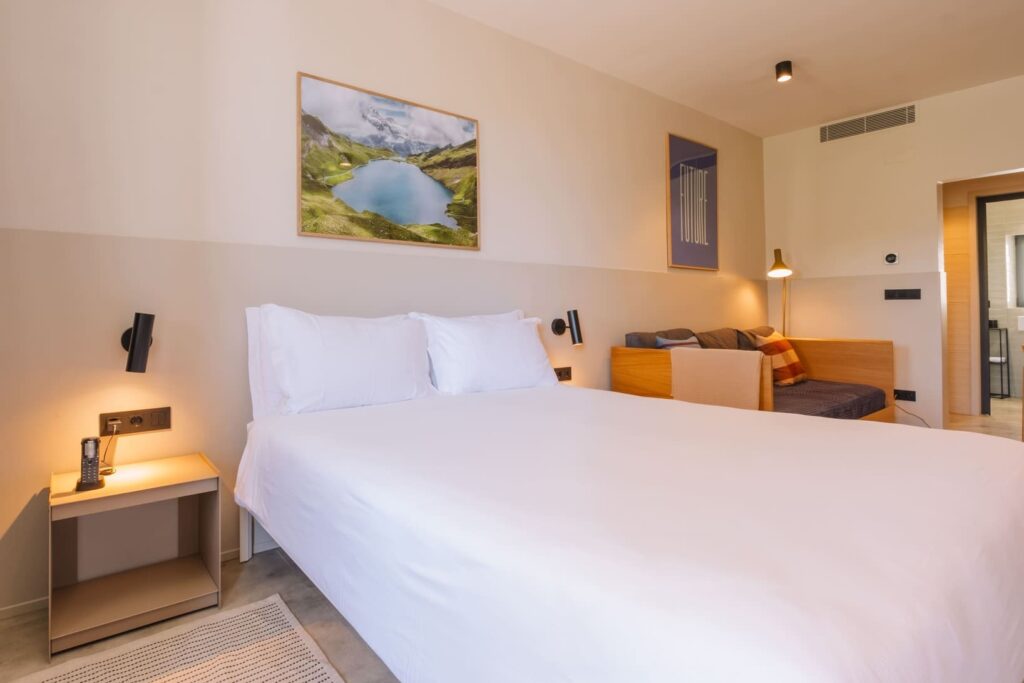
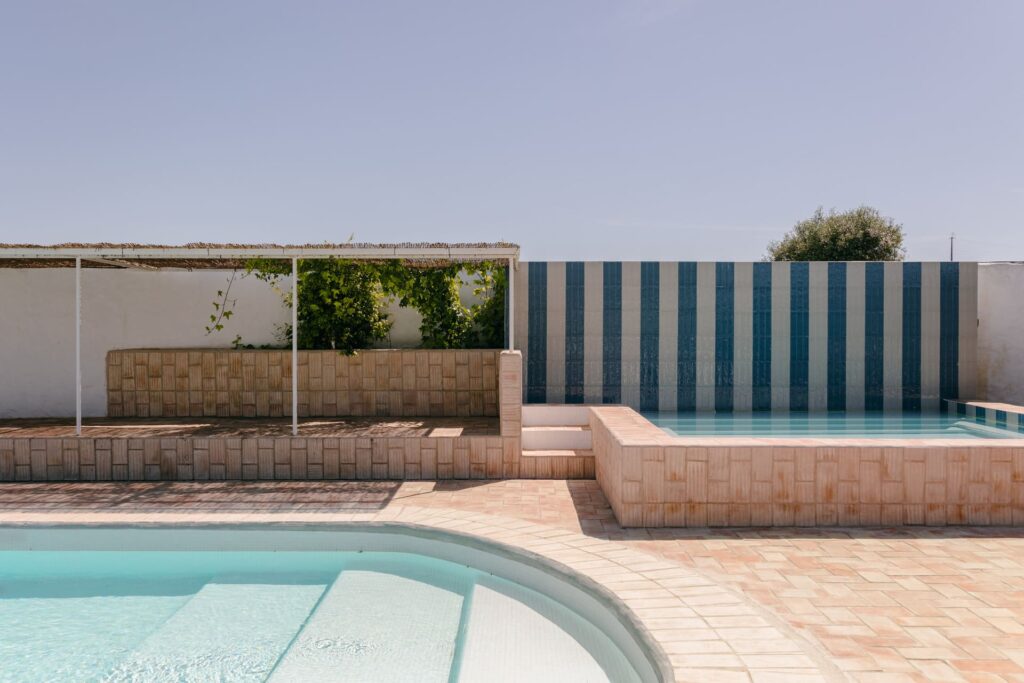
Craveiral Farmhouse is a wonderful nature stay surrounded by nature, with all the comforts you need.
Gandum Village is an hour’s drive from Lisbon. A sustainable hotel where sustainability goes hand in hand with enjoyment and great food.
Redondo and the wooden walking trails of the Passadiços da Serra d’Ossa
Hiking in Alentejo
In northern Alentejo, you can hike the Feel Nature trail, which takes you up the São Mamede Mountains to the Portas de Rodão Natural Monument.
No fewer than 11 Transalentejo routes run along the Spanish-Portuguese border, offering spectacular views of the hills along the Guadiana River, the Portuguese Stonehenge, and Lake Aqueva.
The Montado trails take you past golden plains, cork oak forests, and olive groves.
Alentejo, a great cycling destination
New highways make the old EN roads quieter: ideal for cyclists. Flat terrain alternates with rolling hills.
Cycling in the Serra d’Ossa
No fewer than 686 km of bike paths (of which approximately 155 km are marked), three entrances with service points (repair, bike wash, changing rooms). Routes range from easy to challenging. Click here for more information.
One of the most beautiful yet little-known train journeys in southern Europe is “A Raia” (the line). CP’s Raiano train runs twice a day between Entroncamento and Badajoz in Spain—or vice versa—a beautiful journey of about 300 kilometers.
The route runs along the Tagus River and takes you past castles such as Almourol, charming villages, rugged streams, and cork forests on a drive that lasts about 4 hours. You can take this trip for less than €13.
The train connects the Portuguese rail network to the Spanish border. From Entrocancamento, you can take the train on to Lisbon, and from Badajoz, you can travel to and from Madrid in Spain. Click here for the train schedule.
With a passion for travel and photography and over 30 years of experience in the travel industry, I love to share my special nature travel tips. Travel is wonderful and important, you meet new people and cultures and it opens your view of the world.
Hiking and Wild Swimming Along the Tagus: River Beaches, Vultures, and Castles in Central Portugal Above the river, griffon vultures circle with a wingspan of over two and a half meters. Down below, someone is panning for gold in a tributary. And on the riverbank, a...
Nature in Central Sweden: Waterfalls, Viewpoints, and Bears Around Ytterhogdal If you drive north on the E45, you’ll pass through Ytterhogdal. Most people just drive right through here. That’s understandable—Lapland beckons. But not far from the geographic center of...
Last September, we had a wonderful six-day hiking vacation from Bologna to Florence (Via Degli Dei). Not only was the weather perfect, but the organization also contributed to this wonderful experience. The hotels were good, and our luggage was always delivered to the hotel before we arrived. The private transfer was on time, and communication via WhatsApp during our hiking week went smoothly as well; responses were quick and clear. We can therefore definitely recommend this hiking vacation through Nature Travel Lab!
After reading the report on the “Alpenüberquerung,” we got really excited. The combination of hiking through beautiful nature and the luxury of luggage transport and a reserved hotel perfectly meets our desire to stay active but then be able to enjoy a well-deserved drink and a delicious meal. The hikes were manageable for us and very varied; some basic fitness is required, especially since we aren’t used to the elevation gain. The trip really gives you the feeling that you’re on a hiking expedition, especially since you hike on your own but meet the same fellow hikers in the afternoons and evenings at one of the mountain huts or at the hotel. Highly recommended for hikers who love unspoiled nature combined with the luxury of a hotel!
Peloponnese Hiking Tour
A really beautiful six-day hike from Bologna to Florence. Communication with NatureTravelLab and the local agent was excellent. The information packet was waiting for us at the hotel in Bologna, and the app with the route worked great. Luggage transport was well organized every day, and our bags were waiting for us each time we arrived at our new room! We covered more than 1,400 meters of elevation gain, but unfortunately didn’t always get the views we’d hoped for due to cloud cover and some drizzle. Most days had great hiking weather. It was wonderful to walk into Florence on foot and stay there an extra day.
We experienced the Walk of the Gods as a great adventure. Our start in Bologna didn’t go quite as planned because our app wasn’t working yet and we couldn’t find a single sign for Via degli Dei in the square. Fortunately, we were quickly able to join two young hikers from Florence who were also doing the hike. After a wonderful night’s stay at the beautiful Rio Verde agritourism farm, Day 2 went much better with the help of the hiking app. Along the way, we enjoyed stunning views, met some great fellow hikers, and sampled delicious local dishes. Unfortunately, the weather wasn’t always on our side, and we had a day of heavy rain, which made the trail very slippery and required us to be careful. It’s a real treat when, on the last day, you can already see Florence in the distance and walk into this beautiful city a few hours later. Thank you so much for your quick and friendly responses to all our questions.
We enjoyed the trip. We also made some changes to our itinerary, and the email correspondence went very smoothly. We started in Mantera; the next day, our first and only hike was a really beautiful one. The taxi picked us up right on time. Unfortunately, the second day’s route was almost the same when we cycled to Ostuni. The bikes were well-maintained, including panniers and helmets (these were simply included). You could even bring your own water bottle!!! We found the route very scenic and varied. There were charming little villages where we could stop for lunch or coffee. The app worked great. All the hotels ranged from good to excellent, though we didn’t think the hotel in Leuca was worthy of 4 stars. We followed your advice for the two nights we stayed there. We found Leuca a bit underwhelming for a two-day stay. We would have preferred to stay in Gallipoli or Lecce for two days. We took this trip in April and were very lucky with the weather. It’s still a quiet time of year, but we didn’t mind that. We definitely recommend it!!!
Thanks to a great tip from Nature Travel Lab, we had a wonderful week in Italy. Fattoria di Maiano, just outside Florence, was a beautiful and peaceful place. And the suggested road trips were a great guide for exploring the region. We’ll definitely check here for tips for our next vacation, too. Highly recommended!
We spent a divine week in Italy: we walked the Path of the Gods, from Bologna to Florence—about 135 km spread over 6 days of hiking. Challenging distances and climbs, amazing views, nature, and a warm welcome every time we arrived at the agriturismo or albergo/hotel. All of this was perfectly organized by the Italian company Slow Active Tours, entirely in line with Nature Travel Lab’s itinerary proposal: upon arrival in Bologna, an information packet was waiting for us, including a hiking map, a booklet, and passports for the stamps. And the hiking app was very practical while on the trail! Our luggage was transported every day and was always waiting for us when we arrived at the next location. Communication was smooth and clear. In short, highly recommended, well worth it, and well organized.
In September, I walked the Cammino Materano. Communicating with Madelon about the booking was a pleasure. To be honest, I was quite nervous because it was my first time doing a multi-day hike—alone and in a region I wasn’t familiar with—but I thoroughly enjoyed it. The hike to Matera was beautiful, and I was able to complete it without any trouble thanks to the clear on-site signage and the routing and advice provided by the GPS app. The rest of the organization was top-notch as well. My luggage always arrived on time at the right destination, and the hotels and B&Bs were of high quality. In addition, the organizers were easy to reach via WhatsApp if I had any questions. Highly recommended!
Slovenia was absolutely amazing. A beautiful country, friendly people, lovely hiking trails, and truly top-notch hotels. The staff at the local organization were also very easy to reach and helpful. The hiking was manageable. As Dutch people, we’re not used to high altitudes, of course, so it was pretty tough at times. But it was also a lot of fun.
We had a wonderful trip. Everything was well organized. Due to an unfortunate fall, I ended up traveling with my luggage for a day, but that was handled well, too. We really liked all the accommodations. Only the Hotel Hebe in St. Piero a Sieve was a little less impressive, but it was still okay.
Looks fantastic! I'm definitely going to book a trip with this company... they're committed to sustainability and personalized advice. Definitely worth it.
Madelon and her team are true experts. Thanks to their years of experience and passion for travel, they manage to surprise us time and time again.
Beautiful hikes, the most picturesque spots—it’s a real treat.
I highly recommend them!
Nature Travel Lab provided us with very helpful and honest assistance!
If you’re looking for travel itineraries, the most beautiful hikes, and destinations, you can find it all here. You’ll find endless inspiration for your next trip. Beautiful cities are interspersed with nature. You’ll find everything you need to know about practical matters. Plus, there are plenty of tips for sustainable travel. That way, you’ll get the most out of your trip.
45
Get inspired
Are you looking for the most beautiful hiking and biking routes? Or do you want information about traveling by train or advice for the most beautiful road trips through nature. Get inspired for your next trip in green; ideas for planning your own trip or opting for an organized trip.
Om je de beste gebruikerservaring te bieden, gebruikt deze website cookies. Door toestemming te geven ga je hiermee akkoord.
Functional
Always active
The technical storage or access is strictly necessary for the legitimate purpose of enabling the use of a specific service explicitly requested by the subscriber or user, or for the sole purpose of carrying out the transmission of a communication over an electronic communications network.
Voorkeuren
De technische opslag of toegang is noodzakelijk voor het legitieme doel voorkeuren op te slaan die niet door de abonnee of gebruiker zijn aangevraagd.
Statistics
The technical storage or access that is used exclusively for statistical purposes.De technische opslag of toegang die uitsluitend wordt gebruikt voor anonieme statistische doeleinden. Zonder dagvaarding, vrijwillige naleving door je Internet Dienst Provider, of aanvullende gegevens van een derde partij, kan informatie die alleen voor dit doel wordt opgeslagen of opgehaald gewoonlijk niet worden gebruikt om je te identificeren.
Marketing
De technische opslag of toegang is nodig om gebruikersprofielen op te stellen voor het verzenden van reclame, of om de gebruiker op een site of over verschillende sites te volgen voor soortgelijke marketingdoeleinden.