Hiking and Wild Swimming Along the Tagus: River Beaches, Vultures, and Castles in Central Portugal
Above the river, griffon vultures circle with a wingspan of over two and a half meters. Down below, someone is panning for gold in a tributary. And on the riverbank, a couple orders a gin and tonic, while the children from the campground next door whiz across the water on a zip line. Welcome to the Tagus River basin, between Mação and Belver.
This region in central Portugal, on the border with Alentejo, is off the radar for most tourists. Unfairly so. Here you’ll find river beaches with crystal-clear water, marked hiking trails past water mills and waterfalls, medieval castles perched high above the river, and village restaurants where the fishermen themselves cook the catch. Lisbon is an hour and a half drive away.
The Tagus River Around Mação and Belver: A Brief Overview
Where: the Tagus (Tejo) River valley and its tributaries, such as the Zêzere, in the municipalities of Mação, Gavião, and Abrantes, in Central Portugal
Distance: about an hour and a half’s drive from Lisbon via the A23
Best time to visit: spring and fall for hiking; June through September for swimming
Don’t miss: Praia do Alamal, the PR1 hiking trail near Belver, the Queixoperra waterfalls, a boat tour past the vulture colonies, and the Convento de Cristo in Tomar
Note: The travel times in this article are calculated from Moinho da Fadagosa, just outside Mação.
Wild Swimming: The Most Beautiful River Beaches Along the Tagus
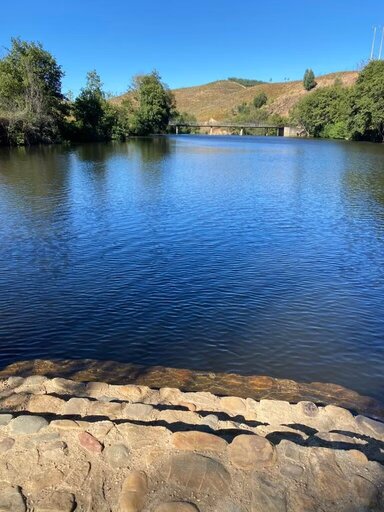
The Portuguese have a word for a swimming spot along a river: praia fluvial. In this region, they’re everywhere. The larger ones have a small bar, restrooms, and sometimes canoes for rent in the summer. Outside of that, you often have them all to yourself.
Praia do Alamal
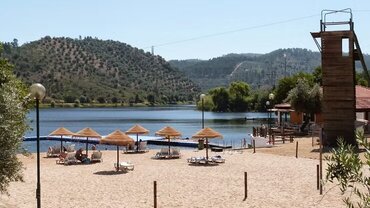
It’s the most famous river beach in the region—and for good reason. You’re right on the Tagus River with a view of Belver Castle across the way, and the beach restaurant serves tapas. It’s a 25-minute drive, but it’s nicer to walk from Belver: cross the bridge and follow the promenade, and you’ll be there in less than an hour. Then you’ll really have earned that ice cream.
Ortiga River Beach
A lively beach next to a campground, with a bar, canoes for rent, and a cable car across the water (ask at the bar if it’s open). It can get crowded during peak season. Combine your visit with the PR1 hiking trail, which passes by here, and enjoy lunch in the village.
Carvoeiro River Beach
While Alamal and Ortiga are located on the Tagus River, Carvoeiro sits high in the hills. That makes a difference of a few degrees on really hot days. The beach is beautifully landscaped with little bridges, a bar, and a barbecue area. The road leading there feels like a drive to the end of the world. Keep driving anyway—it’s worth it.
Pego da Rainha
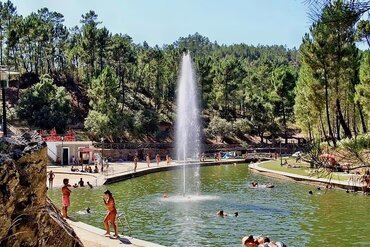
A small waterfall at the foot of a massive rock face, with birds of prey circling overhead. It’s hard to find, which is exactly why you’ll often have it all to yourself. Bring a picnic and your swimsuit.
Swimming spot near Moinho da Fadagosa
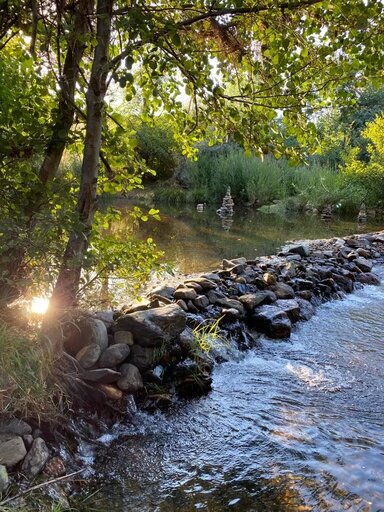
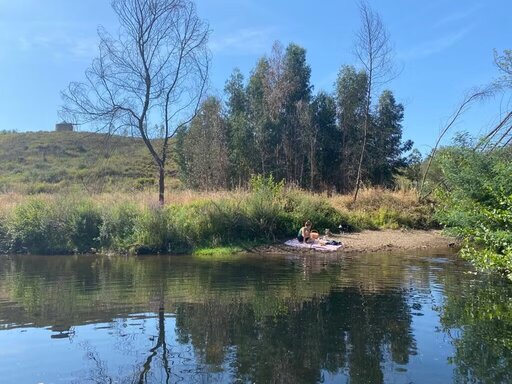
Where the Aziral and the Ribeira das Eiras meet, at the foot of the hill where the windmill stands, there is a small beach where the water is deep enough for swimming all year round. It’s a 150-meter walk from the windmill for guests staying there.
Hiking Along the Tagus: Three Routes Worth Exploring
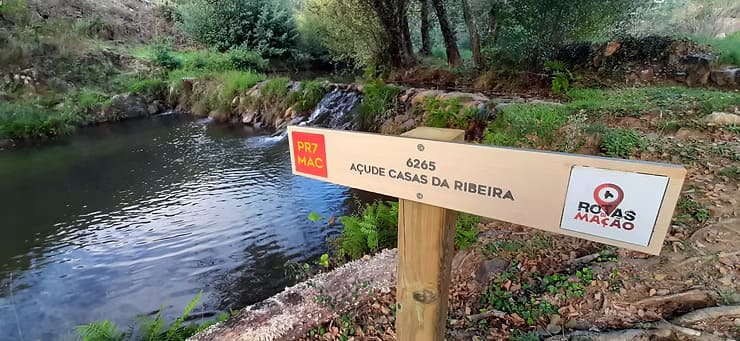
The municipality of Mação has established a network of marked hiking trails, known as the Rotas de Mação. You can recognize them by their yellow-and-red markings and the code PR (pequena rota, short route).
PR1 Belver: castle, river beach, and village (16 km)
A 16-kilometer loop connecting Belver, Praia do Alamal, and Ortiga. Some sections are quite challenging, but you’ll be rewarded with views of the Tagus River, a castle, two river beaches, and a few bars. Not a bad trade-off. If you’d prefer a shorter hike, just walk the section from Belver to Alamal and back.
PR5 Queixoperra: Watermill and Witches’ Cauldrons (approx. 10 km)
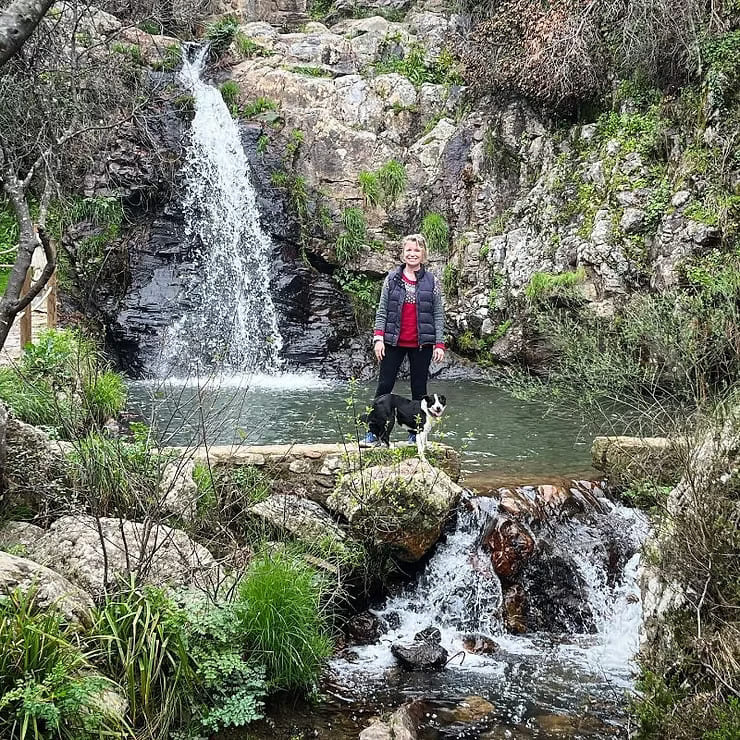
The entire loop is about ten kilometers; the southern section is a little more than half that distance. You’ll walk along forest trails to an azenha—a watermill perched on a steep rock face—and past the levadas, the small canals that carry water to the mill. The highlight is the Poço das Talhas: a series of natural pools and small waterfalls that the stream has carved out of the rock in the shape of cauldrons.
The trail is considered easy, but it does have a few steep sections, so be sure to wear sturdy shoes. If you just want to see the mill and the waterfalls, it’s a 20-minute walk from the village of Queixoperra.
If you visit on the weekend, the mill might be running, and you can buy cornmeal. The recipe for broa, the traditional cornbread, is posted on the wall in the little museum.
PR7 and Castelo Velho do Caratão: Sunset Over Three Rivers
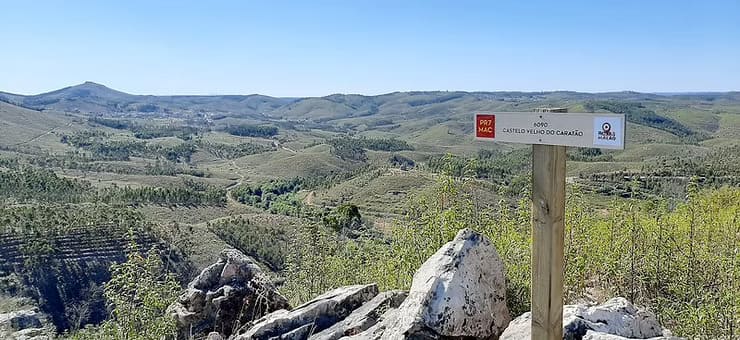
A short but steep climb takes you to a Neolithic defensive fort, 250 meters above sea level. Nothing remains of the fort itself except for the rocks on which it stood. The view of the Eiras, Aziral, and Caratão rivers as they converge is all the more impressive, especially at sunset.
Since the 1940s, archaeologists have found items here including swords, arrowheads, and goldsmiths’ tools. These finds are on display at the Museu de Arte Pré-Histórica in Mação. The name Caratão is related to “carat,” and people still search for gold along the riverbanks.
On and along the water: vultures, otters, and canoes
Boat tour on the Tagus. From Praia do Alamal, a skipper will take you on a two-hour cruise along a stretch of the river that’s virtually inaccessible by land. You’ll see colonies of griffon vultures on the cliffs, the remains of a long-forgotten railroad line, and a landscape where hardly anything has been built. If you speak Portuguese, you’ll get the stories thrown in for free. If not, just sitting back and relaxing is a great plan, too.
Canoeing near Constância. In Constância, the Zêzere flows into the Tagus. Here you can rent canoes and paddle a stretch of the river—for example, with NaturZ.
Wildlife spotting. Otters, turtles, and crayfish live along the rivers. Kingfishers dart across the water, and in the evening you can hear tawny owls and nightingales. Wild boars are plentiful, though you rarely see them. Birdwatchers can visit a permanent bird-watching hide on the Tagus.
Villages and castles in the area
Belver (15 minutes)
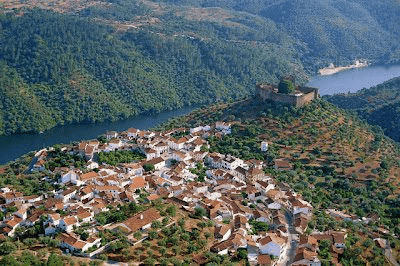
A white village nestled against a hill, crowned by a late 12th-century castle and offering a sweeping view of the Tagus River. At the weaving museum, the Núcleo Museológico das Mantas e Tapeçarias, you can try your hand at a traditional loom. The castle and the museum are closed on Mondays and Tuesdays.
Constância (30 minutes)
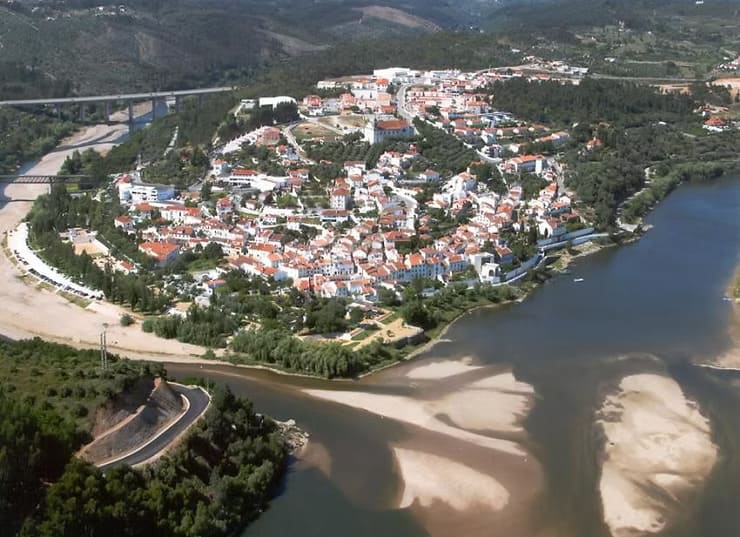
A quiet little town where the Zêzere and Tagus rivers meet, with a river beach and gardens dedicated to the poet Luís de Camões, who is said to have once lived here. Ten minutes away is the Parque Ambiental de Santa Margarida, featuring hiking trails, red squirrels, and a butterfly house. Don’t miss the queijinhos do céu, a local treat that tastes even better than it sounds.
Abrantes (30 minutes)
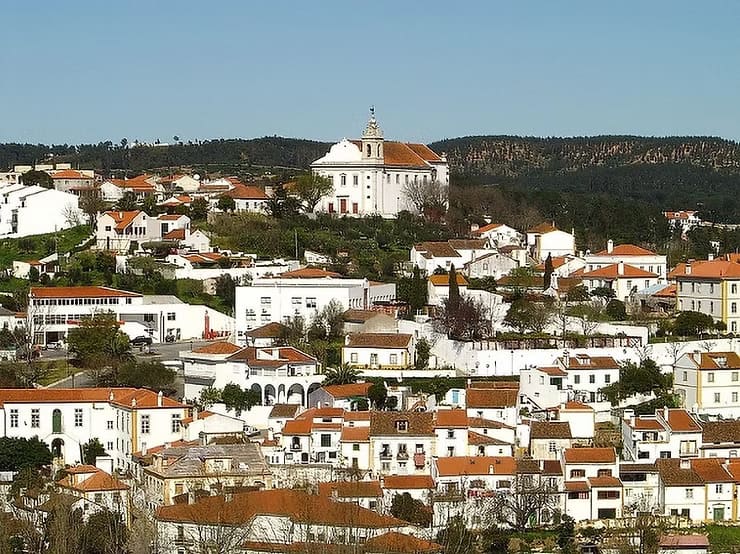
The nearest major city. The old town, with its castle and gardens, sits atop a hill, while the newer part of town lies below. It’s a great place to enjoy coffee and pastries in a small square. Keep in mind that shops close for a few hours around lunchtime and don’t reopen on Saturday afternoons.
Tomar (50 minutes)
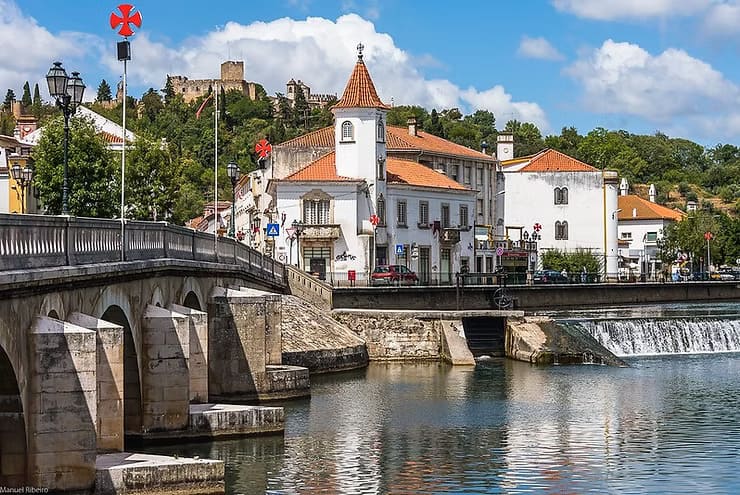
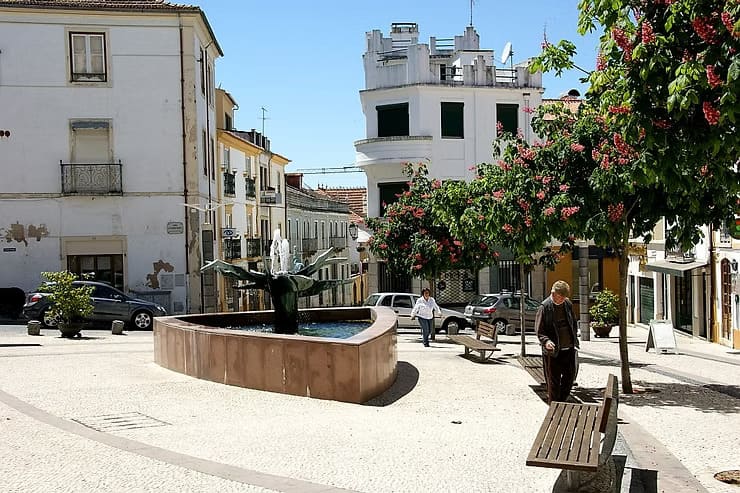
A charming little town by the river, with a park and a square where you can spend hours people-watching. Perched above it is the Convento de Cristo, the former headquarters of the Knights Templar and a UNESCO World Heritage Site. Set aside at least half a day to explore it.
Castelo de Vide and Marvão (about an hour)
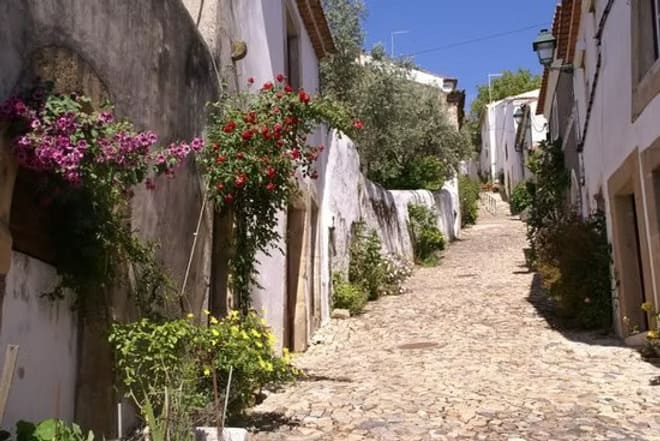
Castelo de Vide is a fortified town near the Spanish border, with a maze of cobblestone streets and a rich Jewish history that you can explore in the medieval synagogue. The spring water is known for its purity, so bring a bottle to fill up. Fifteen minutes away lies Marvão, a castle village perched on a rocky outcrop, and in between lies Portagem, with a natural swimming pool in the river.
The capital of the northern Alentejo isn’t the most beautiful city in Portugal, but it is situated in the heart of a fine wine region. The Guy Fino Tapestry Museum (Museu de Tapeçaria Guy Fino) can turn even the biggest cynic into a tapestry lover.
Tasting: olive oil, wine, and river fish
Casa Anadia near Abrantes. Tucked away behind an industrial park lies an estate dating back to the 14th century, where olive oil has been produced since the 18th century. Since 2022, you can take a guided tour of the house, gardens, chapel, and museum, concluding with an olive oil tasting. Reservations required.
Wine from Alentejo. There are some interesting wineries around Portalegre. Guests at Moinho da Fadagosa can have owner Simon—who is a wine expert himself—arrange a visit.
Eat like the locals. Here are a few spots that top the lists of local foodies:
O Pescador near Mação: owned by a fisherman, serving river fish from the Tagus
O Bigode in Ortiga: named after the owner’s mustache; cash only
O Castelo and Sabores de Guidintesta in Belver
Leopoldinha in Constância
Abrigo da Alma in Tomar
Confraria in Castelo de Vide
Solar do Forcado and TombaLobos in Portalegre
For a rainy day: the Forest Museum in Proença-a-Nova
The Centro Ciência Viva da Floresta in Proença-a-Nova focuses on the role of trees and forests in Portugal. It’s designed to be interactive, presented mostly in English and Portuguese, and enjoyable for adults.
Highlight: the real helicopter simulator used to train firefighting helicopter pilots. Afterward, you can look out from the café over a pond and the small airfield next to it, where paragliders take off.
Three Days Along the Tagus: A Sample Itinerary
Day 1: Belver and the Tagus: In the morning, visit the castle and the weaving museum in Belver, then walk to Praia do Alamal for lunch and a swim. In the afternoon, take a boat tour past the vulture colonies.
Day 2: Watermills and Gold: Hike the PR5 trail near Queixoperra, passing the watermill and the Poço das Talhas. Spend the afternoon by the river at Praia Fluvial do Carvoeiro. Watch the sunset at Castelo Velho do Caratão.
Day 3: Templars and canoes: morning visit to the Convento de Cristo in Tomar; afternoon canoeing in Constância, followed by queijinhos do céu as a treat.
Best Time to Visit the Tagus Valley
Spring (April through June) and fall (September through November) are the best times for hiking: the temperature is pleasant, the hillsides are ablaze with color, and you’ll have the trails mostly to yourself. The river water is warmest from June through September. In July and August, temperatures in the interior rise significantly, and the larger river beaches get crowded on weekends. During this time, opt for the quieter spots in the hills.
How do you get there?
By car: From Lisbon, take the A1 and A23 to reach Mação in about an hour and a half. A car is handy, as many river beaches and hiking trails aren’t accessible by public transportation.
By train: The railway line along the Tagus River (Linha da Beira Baixa) stops at Abrantes and Belver, among other places. So you can take the train from Lisbon and either rent a car there or arrange to be picked up.
Where will you stay?
For a few days of rest between hikes, Moinho da Fadagosa is a unique place to stay: a restored stone windmill for two people on a hilltop near Mação, with its own swimming spot in the river and owners who know the region like the back of their hand. You can book direct with them.
With a passion for travel and photography and over 30 years of experience in the travel industry, I love to share my special nature travel tips. Travel is wonderful and important, you meet new people and cultures and it opens your view of the world.
Nature in Central Sweden: Waterfalls, Viewpoints, and Bears Around Ytterhogdal If you drive north on the E45, you’ll pass through Ytterhogdal. Most people just drive right through here. That’s understandable—Lapland beckons. But not far from the geographic center of...
Hiking in Arouca: The Most Spectacular Hiking Trails in Portugal's Lush North 516 meters long, 175 meters above a raging river, and no turning back halfway across. That’s the Arouca 516 suspension bridge, the icon of the Arouca UNESCO Global Geopark. This geopark is...
Hiking along the Opal Coast: 3 Days on the GR120 Vast beaches, seawater in the most beautiful shades of blue, green fields. Hiking along the Opal Coast means becoming one with nature—with a touch of history here and there. In short: the Opal Coast on foot Route:...
Last September, we had a wonderful six-day hiking vacation from Bologna to Florence (Via Degli Dei). Not only was the weather perfect, but the organization also contributed to this wonderful experience. The hotels were good, and our luggage was always delivered to the hotel before we arrived. The private transfer was on time, and communication via WhatsApp during our hiking week went smoothly as well; responses were quick and clear. We can therefore definitely recommend this hiking vacation through Nature Travel Lab!
After reading the report on the “Alpenüberquerung,” we got really excited. The combination of hiking through beautiful nature and the luxury of luggage transport and a reserved hotel perfectly meets our desire to stay active but then be able to enjoy a well-deserved drink and a delicious meal. The hikes were manageable for us and very varied; some basic fitness is required, especially since we aren’t used to the elevation gain. The trip really gives you the feeling that you’re on a hiking expedition, especially since you hike on your own but meet the same fellow hikers in the afternoons and evenings at one of the mountain huts or at the hotel. Highly recommended for hikers who love unspoiled nature combined with the luxury of a hotel!
Peloponnese Hiking Tour
A really beautiful six-day hike from Bologna to Florence. Communication with NatureTravelLab and the local agent was excellent. The information packet was waiting for us at the hotel in Bologna, and the app with the route worked great. Luggage transport was well organized every day, and our bags were waiting for us each time we arrived at our new room! We covered more than 1,400 meters of elevation gain, but unfortunately didn’t always get the views we’d hoped for due to cloud cover and some drizzle. Most days had great hiking weather. It was wonderful to walk into Florence on foot and stay there an extra day.
We experienced the Walk of the Gods as a great adventure. Our start in Bologna didn’t go quite as planned because our app wasn’t working yet and we couldn’t find a single sign for Via degli Dei in the square. Fortunately, we were quickly able to join two young hikers from Florence who were also doing the hike. After a wonderful night’s stay at the beautiful Rio Verde agritourism farm, Day 2 went much better with the help of the hiking app. Along the way, we enjoyed stunning views, met some great fellow hikers, and sampled delicious local dishes. Unfortunately, the weather wasn’t always on our side, and we had a day of heavy rain, which made the trail very slippery and required us to be careful. It’s a real treat when, on the last day, you can already see Florence in the distance and walk into this beautiful city a few hours later. Thank you so much for your quick and friendly responses to all our questions.
We enjoyed the trip. We also made some changes to our itinerary, and the email correspondence went very smoothly. We started in Mantera; the next day, our first and only hike was a really beautiful one. The taxi picked us up right on time. Unfortunately, the second day’s route was almost the same when we cycled to Ostuni. The bikes were well-maintained, including panniers and helmets (these were simply included). You could even bring your own water bottle!!! We found the route very scenic and varied. There were charming little villages where we could stop for lunch or coffee. The app worked great. All the hotels ranged from good to excellent, though we didn’t think the hotel in Leuca was worthy of 4 stars. We followed your advice for the two nights we stayed there. We found Leuca a bit underwhelming for a two-day stay. We would have preferred to stay in Gallipoli or Lecce for two days. We took this trip in April and were very lucky with the weather. It’s still a quiet time of year, but we didn’t mind that. We definitely recommend it!!!
Thanks to a great tip from Nature Travel Lab, we had a wonderful week in Italy. Fattoria di Maiano, just outside Florence, was a beautiful and peaceful place. And the suggested road trips were a great guide for exploring the region. We’ll definitely check here for tips for our next vacation, too. Highly recommended!
We spent a divine week in Italy: we walked the Path of the Gods, from Bologna to Florence—about 135 km spread over 6 days of hiking. Challenging distances and climbs, amazing views, nature, and a warm welcome every time we arrived at the agriturismo or albergo/hotel. All of this was perfectly organized by the Italian company Slow Active Tours, entirely in line with Nature Travel Lab’s itinerary proposal: upon arrival in Bologna, an information packet was waiting for us, including a hiking map, a booklet, and passports for the stamps. And the hiking app was very practical while on the trail! Our luggage was transported every day and was always waiting for us when we arrived at the next location. Communication was smooth and clear. In short, highly recommended, well worth it, and well organized.
In September, I walked the Cammino Materano. Communicating with Madelon about the booking was a pleasure. To be honest, I was quite nervous because it was my first time doing a multi-day hike—alone and in a region I wasn’t familiar with—but I thoroughly enjoyed it. The hike to Matera was beautiful, and I was able to complete it without any trouble thanks to the clear on-site signage and the routing and advice provided by the GPS app. The rest of the organization was top-notch as well. My luggage always arrived on time at the right destination, and the hotels and B&Bs were of high quality. In addition, the organizers were easy to reach via WhatsApp if I had any questions. Highly recommended!
Slovenia was absolutely amazing. A beautiful country, friendly people, lovely hiking trails, and truly top-notch hotels. The staff at the local organization were also very easy to reach and helpful. The hiking was manageable. As Dutch people, we’re not used to high altitudes, of course, so it was pretty tough at times. But it was also a lot of fun.
We had a wonderful trip. Everything was well organized. Due to an unfortunate fall, I ended up traveling with my luggage for a day, but that was handled well, too. We really liked all the accommodations. Only the Hotel Hebe in St. Piero a Sieve was a little less impressive, but it was still okay.
Looks fantastic! I'm definitely going to book a trip with this company... they're committed to sustainability and personalized advice. Definitely worth it.
Madelon and her team are true experts. Thanks to their years of experience and passion for travel, they manage to surprise us time and time again.
Beautiful hikes, the most picturesque spots—it’s a real treat.
I highly recommend them!
Nature Travel Lab provided us with very helpful and honest assistance!
If you’re looking for travel itineraries, the most beautiful hikes, and destinations, you can find it all here. You’ll find endless inspiration for your next trip. Beautiful cities are interspersed with nature. You’ll find everything you need to know about practical matters. Plus, there are plenty of tips for sustainable travel. That way, you’ll get the most out of your trip.
45
Get inspired
Are you looking for the most beautiful hiking and biking routes? Or do you want information about traveling by train or advice for the most beautiful road trips through nature. Get inspired for your next trip in green; ideas for planning your own trip or opting for an organized trip.
Om je de beste gebruikerservaring te bieden, gebruikt deze website cookies. Door toestemming te geven ga je hiermee akkoord.
Functional
Always active
The technical storage or access is strictly necessary for the legitimate purpose of enabling the use of a specific service explicitly requested by the subscriber or user, or for the sole purpose of carrying out the transmission of a communication over an electronic communications network.
Voorkeuren
De technische opslag of toegang is noodzakelijk voor het legitieme doel voorkeuren op te slaan die niet door de abonnee of gebruiker zijn aangevraagd.
Statistics
The technical storage or access that is used exclusively for statistical purposes.De technische opslag of toegang die uitsluitend wordt gebruikt voor anonieme statistische doeleinden. Zonder dagvaarding, vrijwillige naleving door je Internet Dienst Provider, of aanvullende gegevens van een derde partij, kan informatie die alleen voor dit doel wordt opgeslagen of opgehaald gewoonlijk niet worden gebruikt om je te identificeren.
Marketing
De technische opslag of toegang is nodig om gebruikersprofielen op te stellen voor het verzenden van reclame, of om de gebruiker op een site of over verschillende sites te volgen voor soortgelijke marketingdoeleinden.