
Gratis gids 10 verborgen natuurplekken in Europa
Gratis gids 10 verborgen natuurplekken in Europa. Meld je aan voor onze nieuwsbrief en ontvang inspirerende reistips en routes voor je volgende groene reis.

Portugal is all about sun, sea, and pastel-colored towns. That’s true. But if you take the highway inland and head toward Central Portugal, you’ll discover a completely different country. A land of granite and glacial valleys, of the scent of pine and vast, quiet plateaus. A mountainous landscape that only took on its current form after thousands of years of ice, wind, and erosion—and which today is one of Europe’s best-kept secrets.
The Serra da Estrela is Portugal’s largest protected nature reserve. No mass tourism, no packed parking lots, no lines. Instead, more than 375 kilometers of hiking trails, spectacular bike routes along volcanic peaks and glacial valleys, and a landscape that reveals a different side of itself in every season. Discover the real Portugal: on foot or by bike.
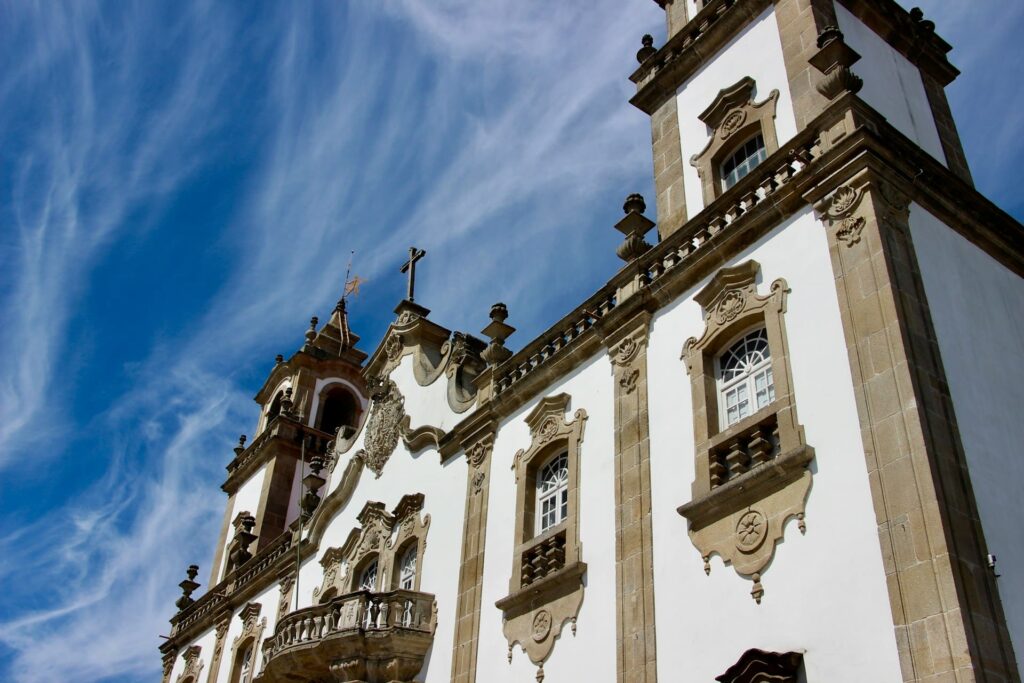
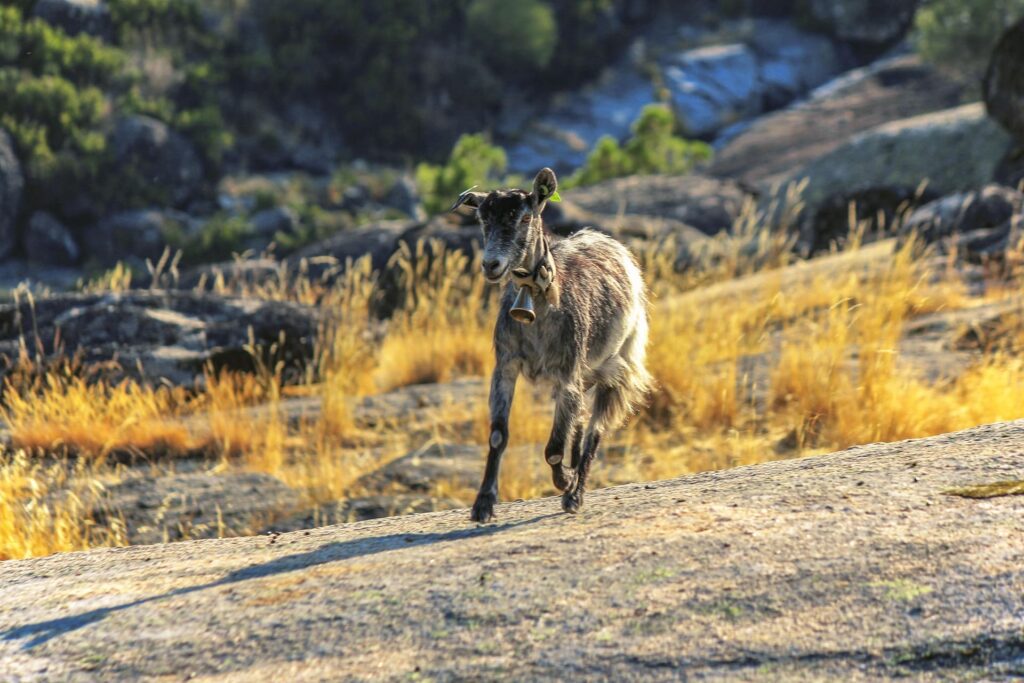
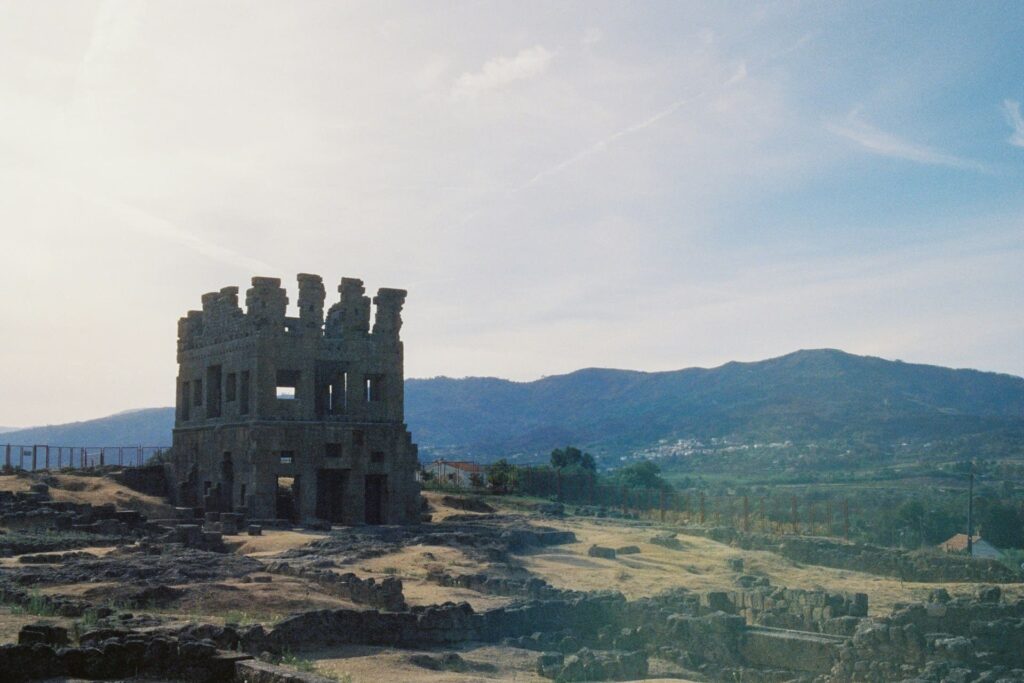
The Serra da Estrela is a mountain range in the heart of Portugal, stretching across more than 100,000 hectares and nine municipalities. It has been a protected nature park since 1976—the largest in Portugal. But the landscape itself is much older than that protected status. Its foundations were laid some 300 million years ago, when continents collided and molten magma solidified into granite. Millions of years later, during the last ice age, glacial tongues carved the valleys wide and deep. The result: a landscape that looks as if a giant had shaped it—with enormous granite boulders, narrow mountain lakes, and valleys that run straight as an arrow into the mountains.
In 2020, the area was designated a UNESCO Geopark under the name Estrela Geopark. This recognition is well-deserved: the geological diversity is exceptional, with rocks dating back some 600 million years. But the Serra da Estrela is also a living landscape. You’ll find sheep on the plateau (of the breed that produces the famous Serra da Estrela cheese), the distinctive Serra da Estrela dog (one of the oldest breeds in the Iberian Peninsula), and a rich variety of flora, including juniper, heather, broom, and wildflowers.
The Serra da Estrela is large enough to get lost in (about the size of the province of Utrecht), but compact enough to see the highlights over a long weekend. These are the places you shouldn’t miss.
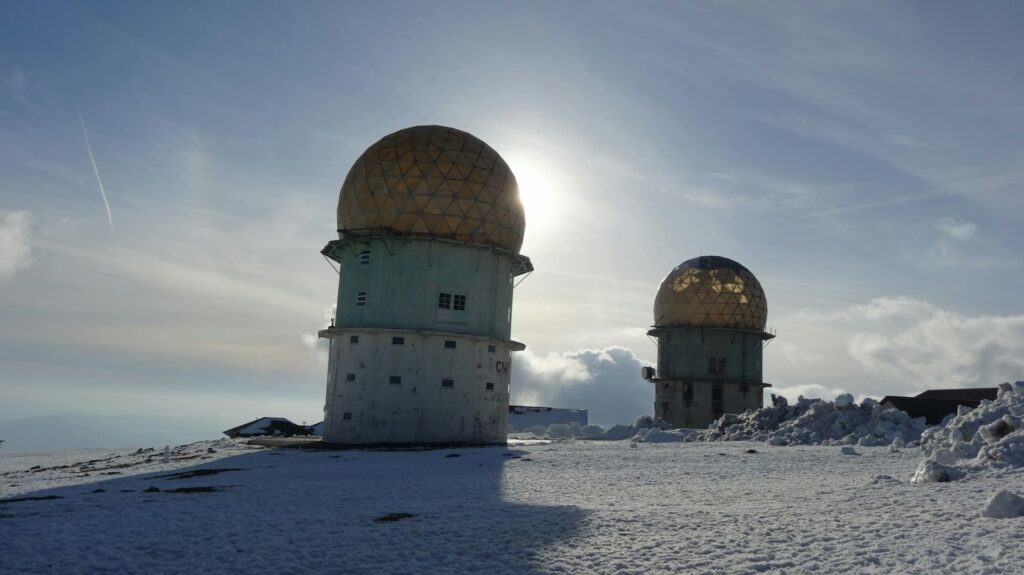
Torre is the highest peak on the Portuguese mainland and the most visited spot in the park. The drive there is an experience in itself: winding mountain passes with panoramic views of the plateau, which can be covered in a thick layer of snow in winter. Once you reach the top, you’ll find a wide plateau with a stone tower rising above it as the “official” 2,000-meter landmark. On a clear day, the view extends deep into Spain.
Accessible on foot via various trail routes, but also by road.
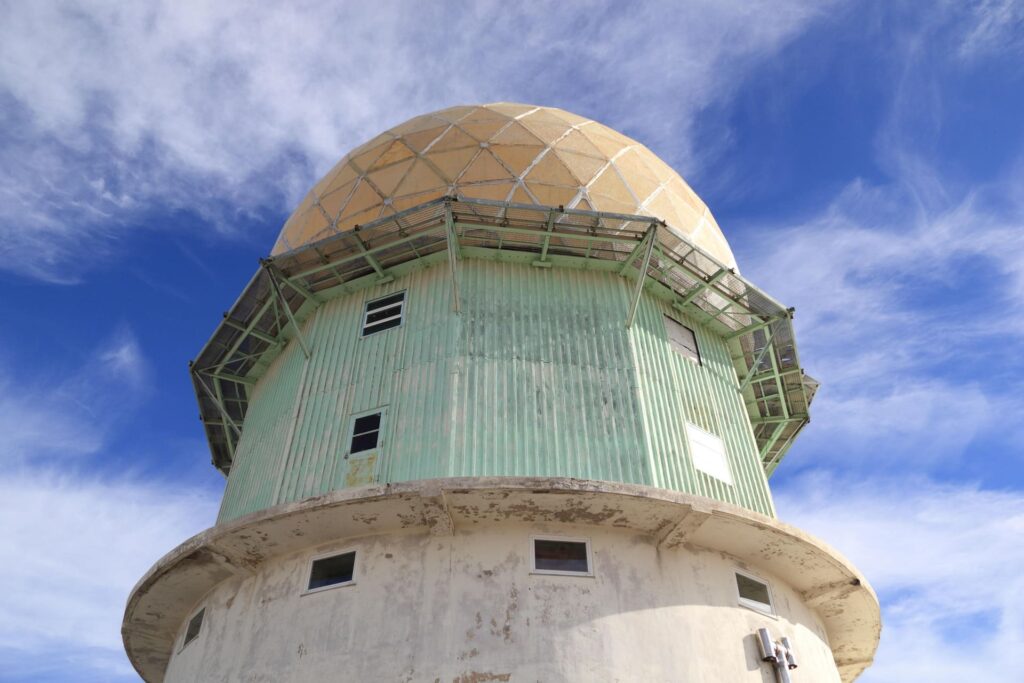
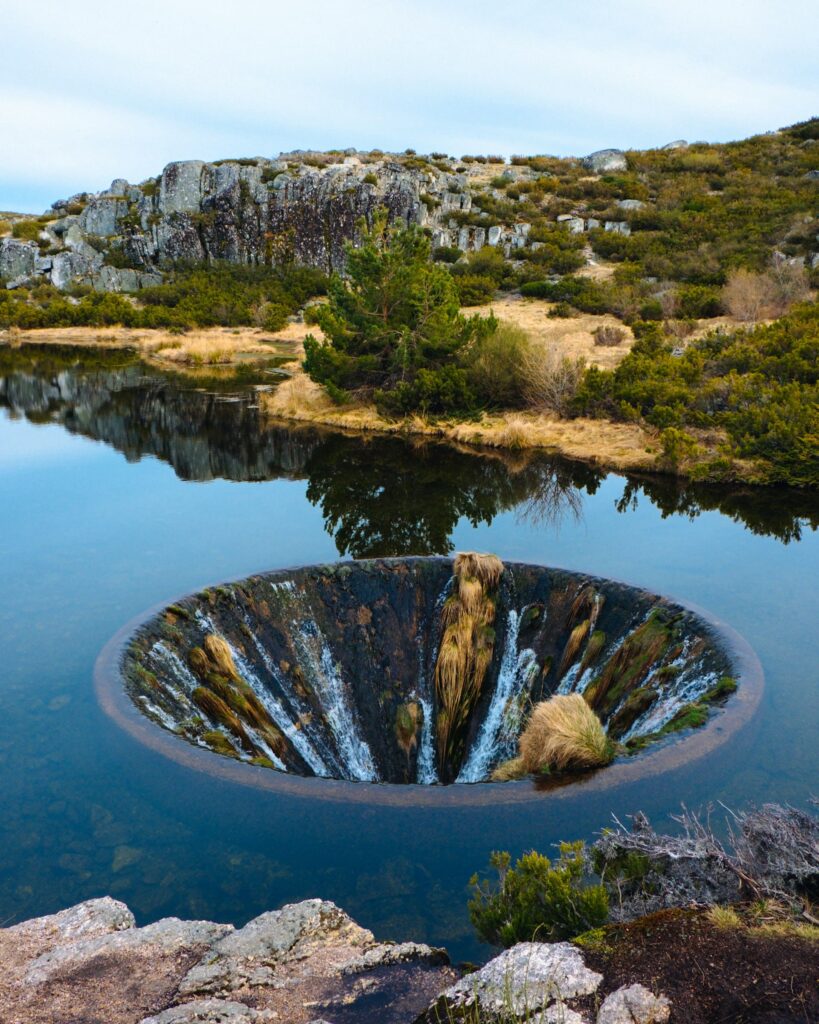
One of the most iconic spots in the park (and one you won’t find anywhere else in Europe). At first glance, it looks like an ordinary mountain lake. But in the middle is a circular opening—a sort of stone funnel through which the water disappears. It is actually a hydraulic engineering structure from 1955, built to channel water from Lagoa Comprida through a tunnel to a lower reservoir. But the sight—the water vanishing in the middle of the tranquil mountain lake—is undeniably magical.
The hiking trail from Lagoa Comprida to Covão dos Conchos is suitable for all skill levels.
At an elevation of 1,437 meters, in the heart of the park, lies the Valle do Rossim: a vast glacial plateau with a clear mountain lake that has served as grazing land for sheep for centuries. Today, it’s a peaceful spot for kayaking, hiking, or simply sitting on the shore.
The trail along the lake is one of the most beautiful and peaceful walks in the park. It is also suitable for mountain bikers.
Manteigas is a small spa village in the green heart of the park, located in the spectacular Zêzer Valley—the largest glacial valley on the Iberian Plateau. Some of the park’s most beautiful hiking trails begin and end around the village, including the trail that passes by the Poço do Inferno waterfall.
The Fragão do Corvo and Penhas Douradas (the golden rock formations at an elevation of 1,450 meters) are within cycling distance and offer spectacular views of the valley and the city of Guarda.
After a long day of hiking, there’s nothing better than a dip in the ice-cold water of a Portuguese river beach. Praia Fluvial de Loriga, located in the Loriga glacial valley, is one of the most beautiful. Surrounded by granite and mountainsides, it features a beach bar where you can grab a sandwich afterward. Note: In the summer, it’s a popular local spot, so be sure to arrive early.
If you want to understand what life in the mountains was like for centuries, you should visit Linhares da Beira. This medieval mountain village is remarkably well-preserved: stone houses, the ruins of a medieval castle, and narrow streets where no cars drive. On clear days, paragliders circle above the village; the thermals there are excellent. Folgosinho, a few kilometers away, has a similar atmosphere and is home to the legendary Café Albertino, where you don’t need a menu.
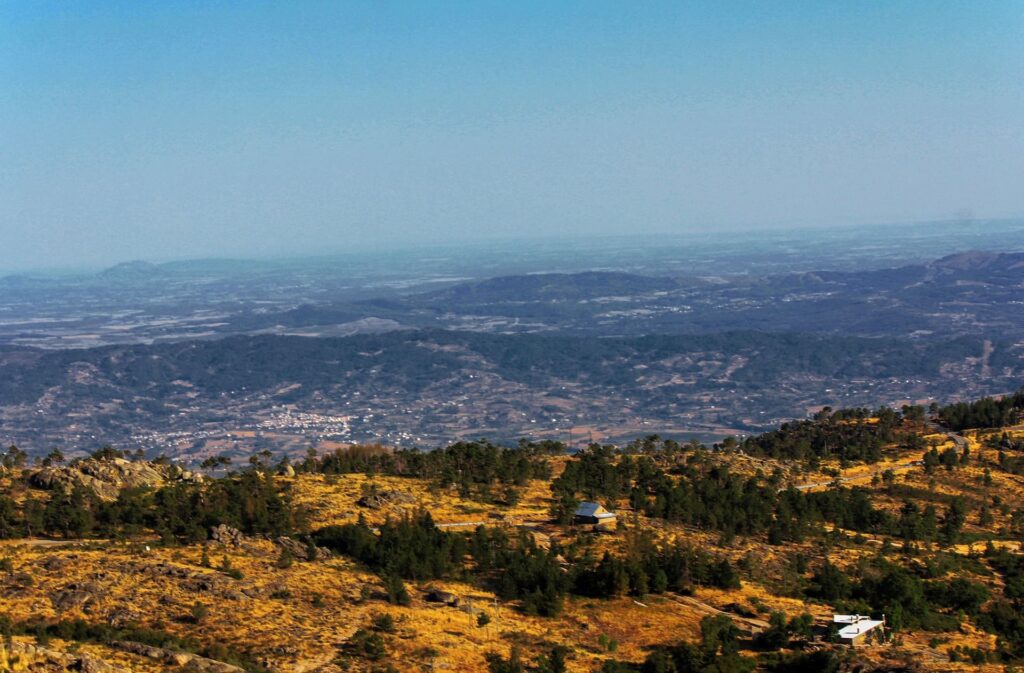
The Serra da Estrela hiking network is the most extensive of all Portuguese nature parks. With more than 375 kilometers of marked trails—divided into three main routes (T1, T2, and T3) and six side routes—there’s something for every pace and skill level. Whether you’re going for a two-hour hike or planning a multi-day trek, the scenery is always rewarding.
If you’re not looking for a physical challenge but still want to experience the landscape on foot, these are the routes for you:
If you want to cover more kilometers and aren’t afraid of a little elevation gain, here’s a selection of some of Portugal’s most beautiful half-day routes:
If you really want to immerse yourself in the park, the three main trails—T1, T2, and T3—offer multi-day backpacking trips through the heart of the Serra da Estrela. Each route takes three to four days and winds through varied landscapes: from granite plateaus to green valleys, from villages with slate-roofed houses to the barren plateau around Torre. The GR33 (the Great Zêzere Route) is also an impressive, longer trek.
The starting point, Covilhã, is located on the edge of the park and is accessible by train from Lisbon and Porto.
The Serra da Estrela is one of Portugal’s most challenging—and at the same time most rewarding—cycling destinations. The area offers a wide variety of routes: from technical mountain bike trails through rugged mountain slopes to winding scenic roads that have been attracting road cyclists for decades. And more recently, there’s a growing selection of e-bike routes for those who want to explore the landscape without wearing out their legs.
Torre is a classic cycling climb and has been part of the Tour of Portugal (Volta a Portugal) for decades. There are four routes to the summit, with those from Covilhã and Seia being the most popular. The route from Unhais da Serra is the toughest: a 20.8-kilometer climb with an average gradient of 6.4%. It’s a real challenge, but the view from the top will make it all worth it.
The mountain biking network in and around the park is extensive. Whether you’re a beginner or an advanced rider, there’s always a route that’s right for you:
The combination of elevation changes and vast open spaces makes the Serra da Estrela perfect for e-biking. With an e-mountain bike, you can ride routes that you wouldn’t—or could hardly—tackle on a regular bike, and reach places that aren’t accessible by car.
Local provider Estrela E-bike (Manteigas) offers more than ten routes with a low technical difficulty level and also organizes multi-day programs lasting two to three days. Routes can be ridden independently or with a guide, and are loaded onto a GPS device. The boutique hotel Pena D’Água in Covilhã also rents out e-bikes that allow you to ride directly into the park.
The Serra da Estrela is worth visiting all year round, but each season has its own unique character. Here’s what you can expect:
Spring is the best season for hikers and cyclists who want to experience the Serra da Estrela at a leisurely pace and at its most beautiful. The slopes are covered with blooming heather, wild daffodils, and gentians. It’s still cool at higher elevations, but the sun shines for a long time. Few tourists, all hiking trails open—perfect hiking weather.
Warm and sunny, but also the busiest season at the popular spots. Torre can get very crowded on summer weekends. The river beaches, such as Praia Fluvial de Loriga, are at their best and attract many day-trippers. It’s best to go for a walk early in the morning or choose the lesser-known trails. Stay overnight in the park itself: the crowds thin out in the evening, and the atmosphere changes completely.
Fall is perhaps the most spectacular season. The beech and oak forests slowly change color from green to gold, ochre, and red. The Rota das Faias is truly breathtaking in October. The weather is cooler, making it ideal for longer hikes. It’s the favorite season for photographers and nature lovers.
Snow in Portugal? You’ll find it here. The Serra da Estrela is the best place on the Portuguese mainland for winter sports enthusiasts. Around Torre and Penhas da Saúde, you have a chance of snow from December through February. Enjoy snowshoeing and skiing on the modest ski slope. The landscape is serene, quiet, and awe-inspiring. Not all hiking trails are accessible, but the atmosphere is unparalleled.
A visit to the Serra da Estrela isn’t complete without sampling the local cuisine. The region is home to some of the most highly acclaimed products in all of Portugal.
The Serra da Estrela is located in central Portugal and is easily accessible from the major cities. It’s about a 3-hour drive from Lisbon and 2.5 hours from Porto. By train, you can take IC connections to Covilhã, Guarda, or Celorico da Beira (towns on the edge of the park). From the station, you can take a taxi or local bus further into the park. A car offers the most freedom, especially if you want to visit multiple places.
The best base for hikers and mountain bikers is Manteigas: a small village in the heart of the park, right next to the most beautiful trailheads. If you’d prefer a larger town as your base, with more amenities, restaurants, and good train service, choose Covilhã. Located 17 kilometers from the park, the town offers everything you need for a comfortable home base.
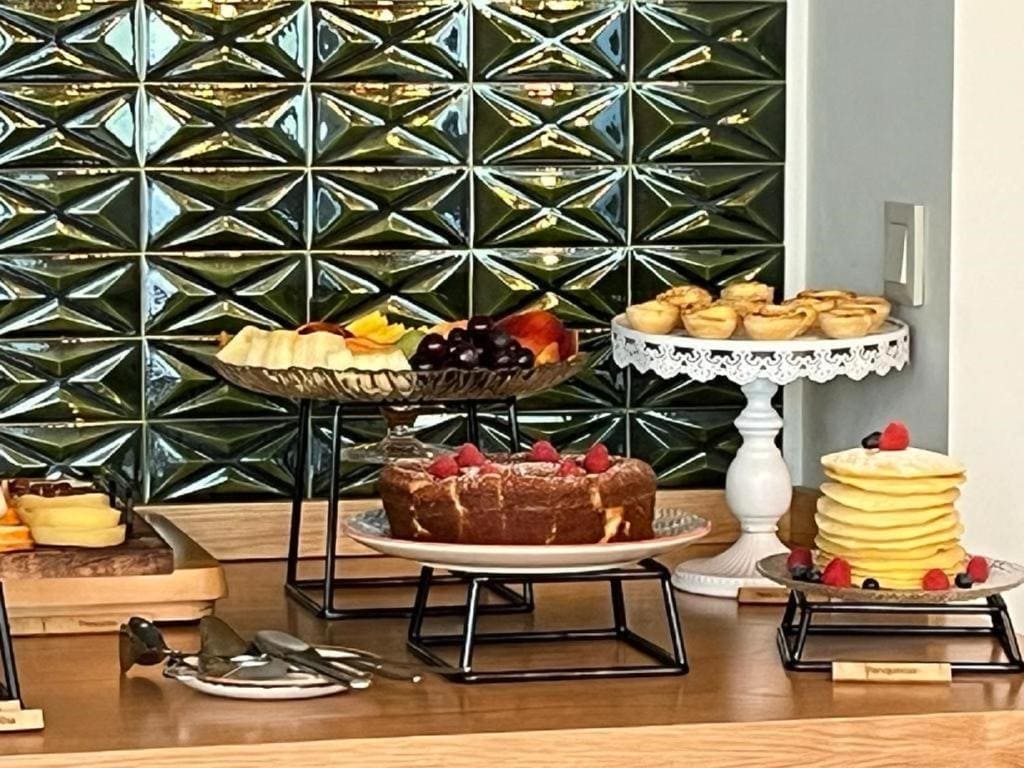
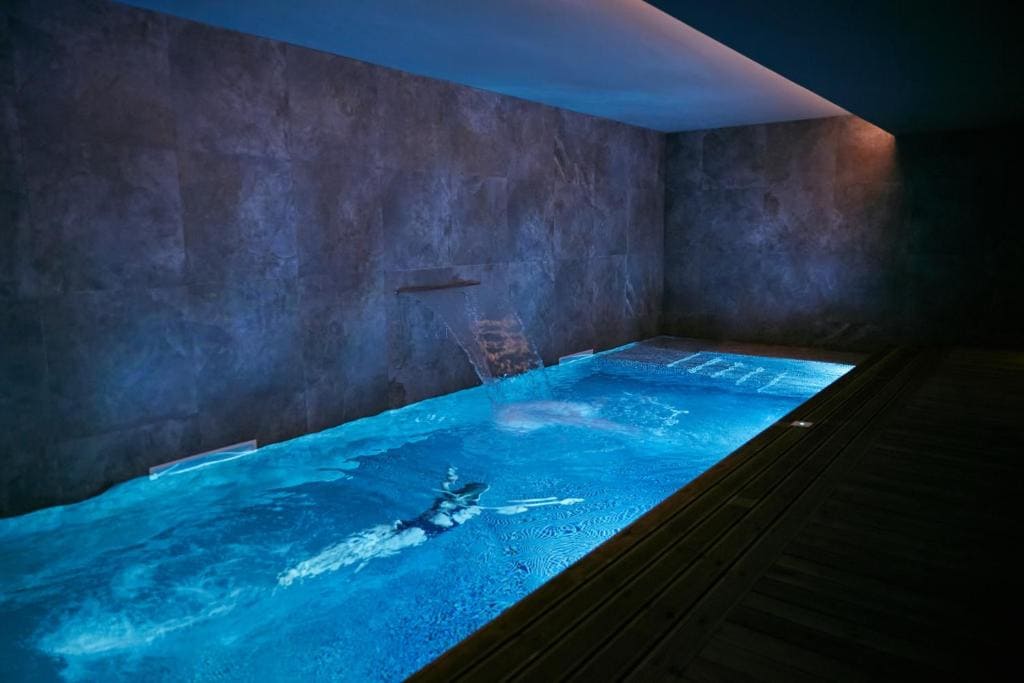
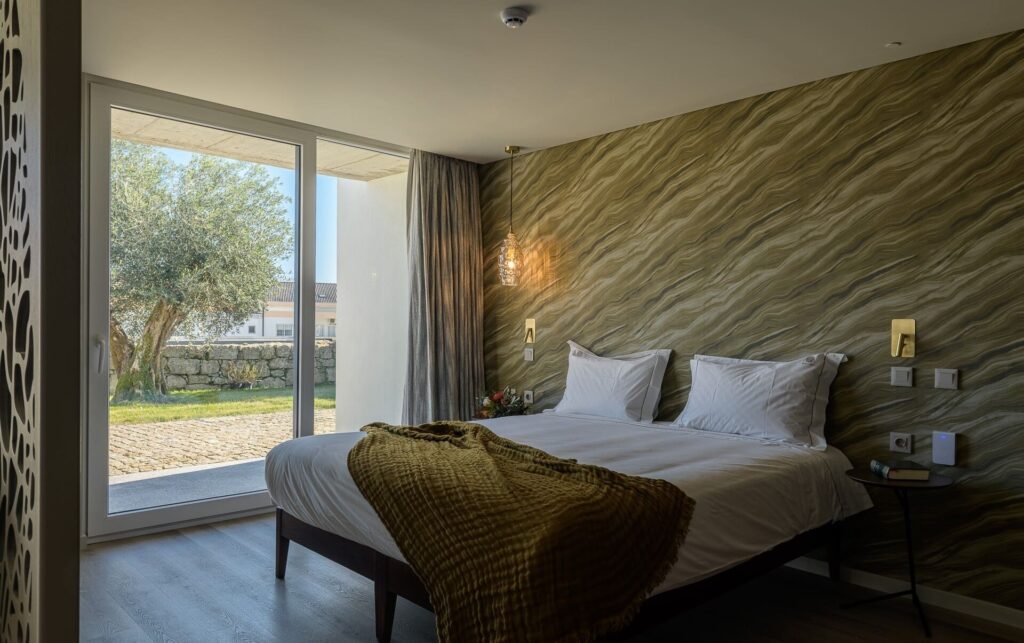
2. Terras do Salvado: an agritourism property with 5 villas nestled between the Serra da Estrela and the Serra da Gardunha in Fundão. A charming home with a “slow” philosophy. Learn more about Terras do Salvado.
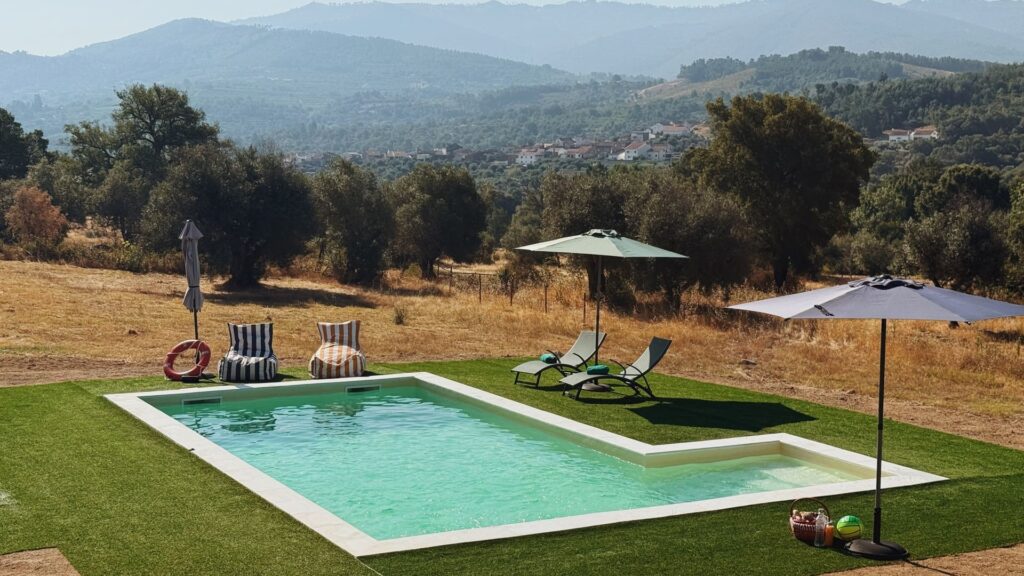
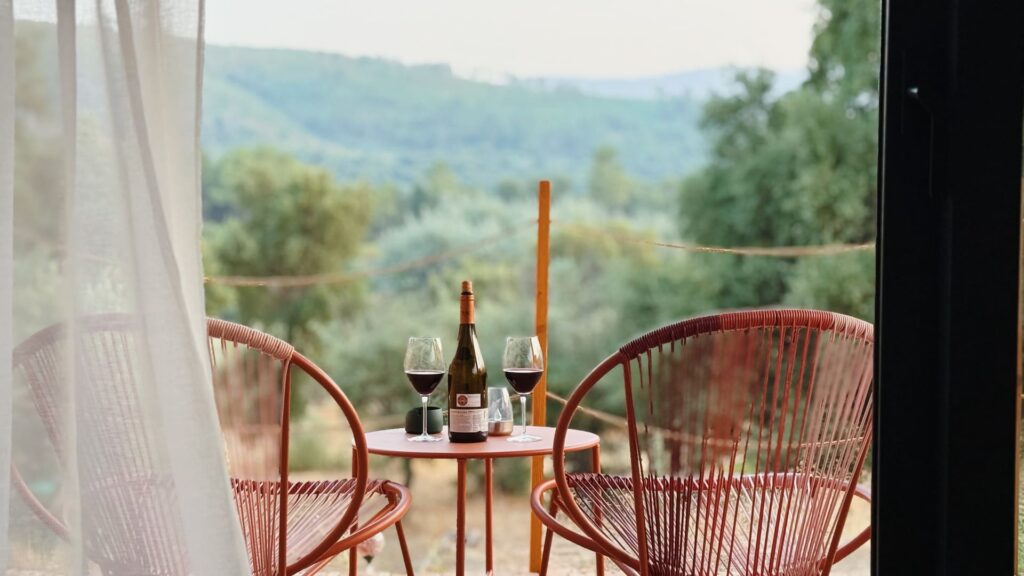
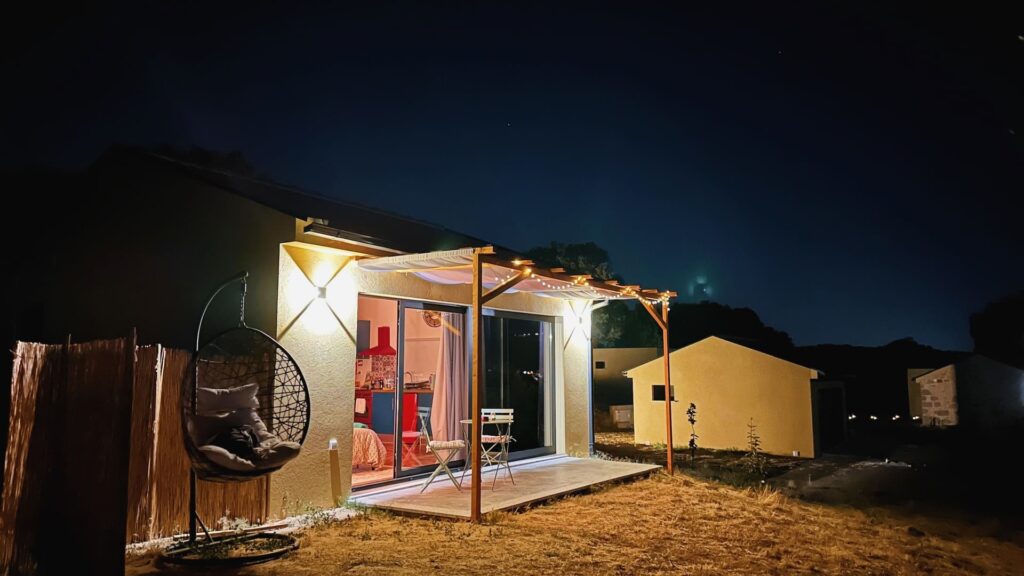
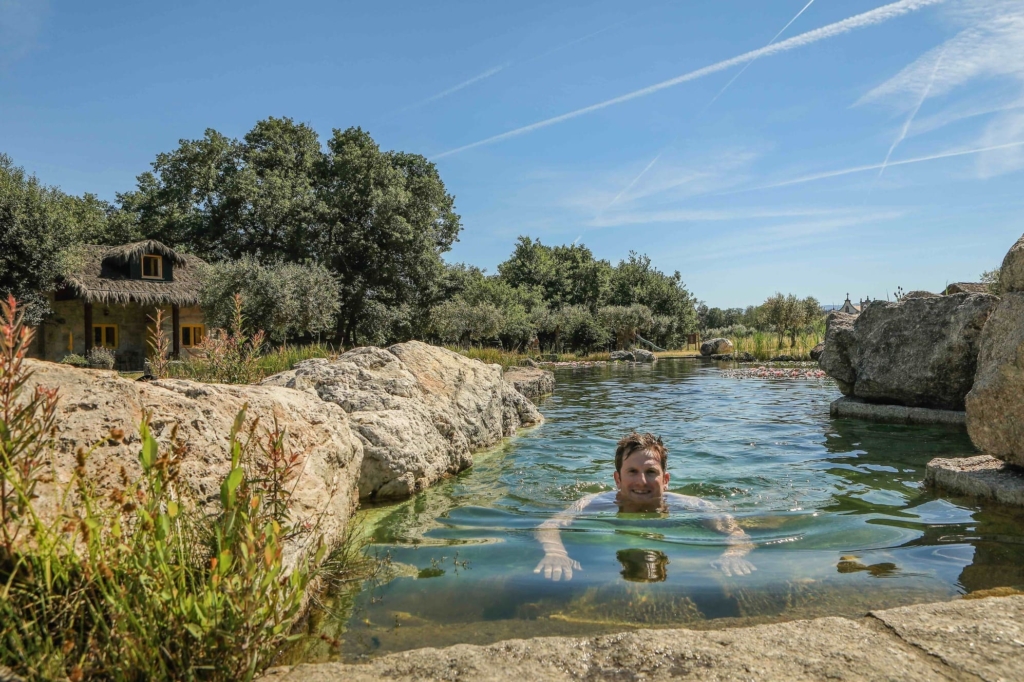
3. Chão do Rio: sustainable accommodations 12 km from the Serra da Estrela. 7 cottages, free bikes, and a natural swimming pool. Learn more about Chão do Rio.
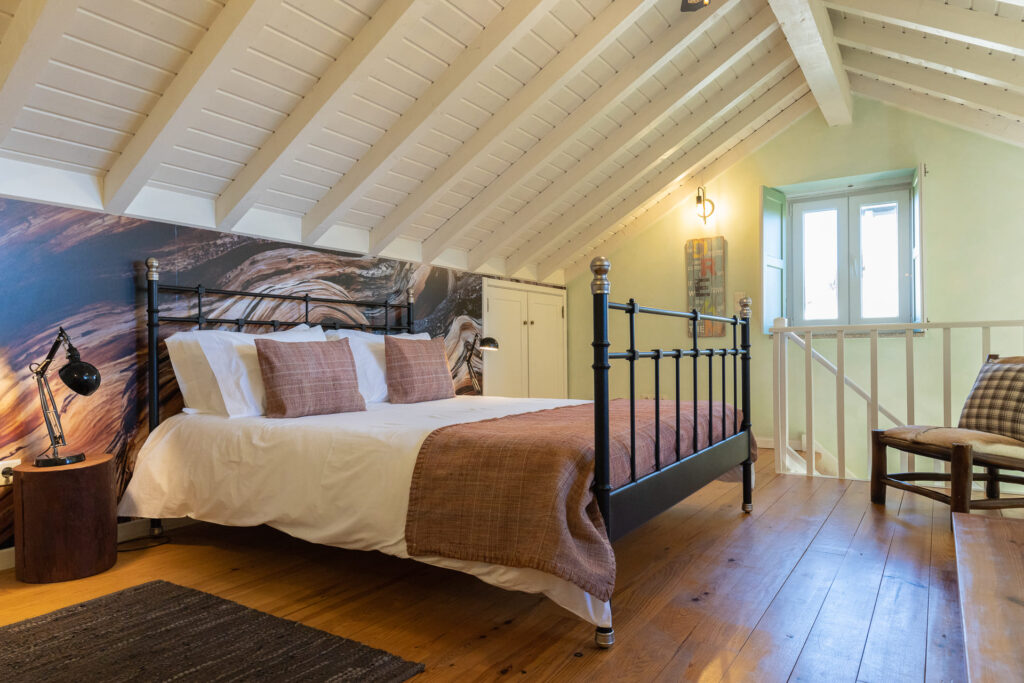
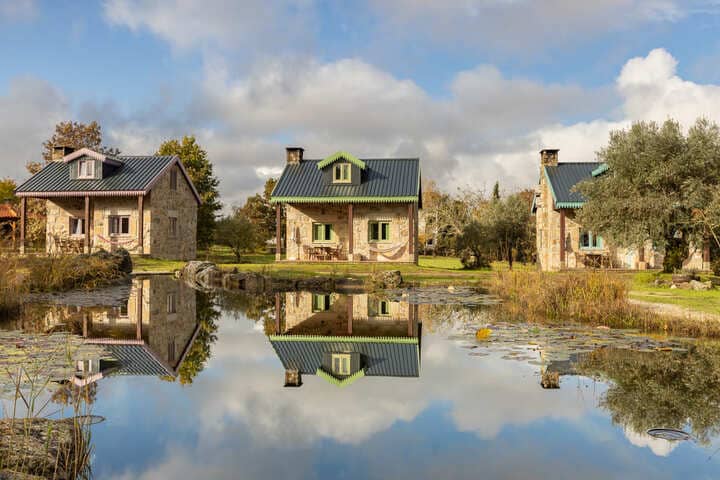
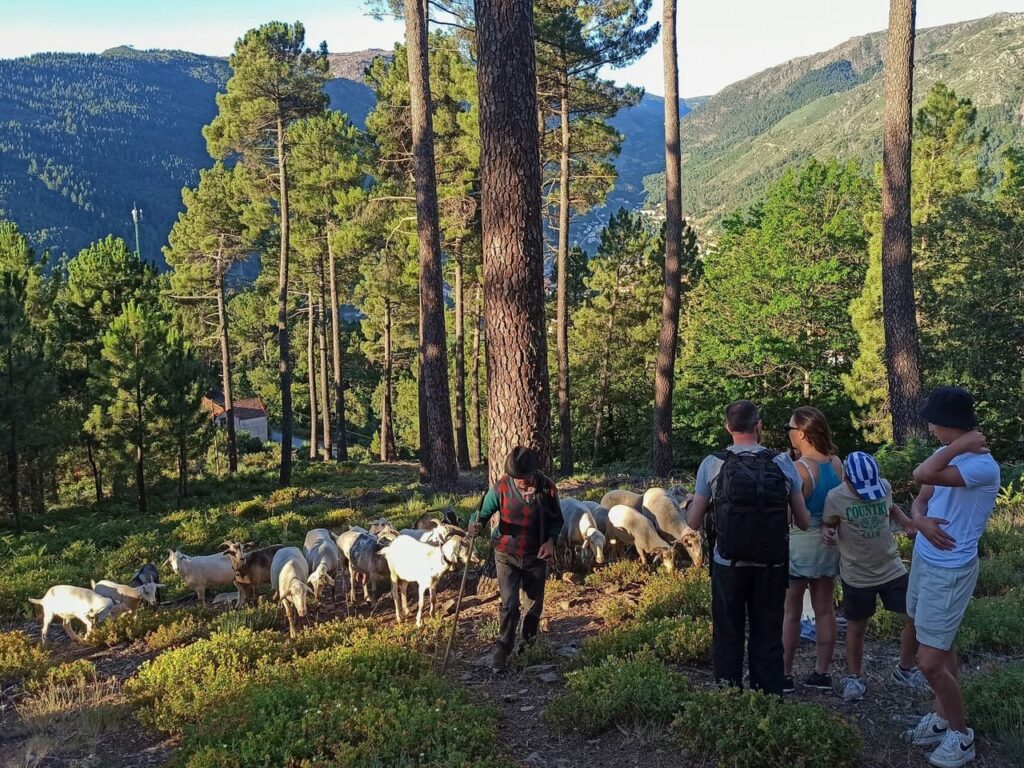
4. Casa Cerro da Correia: Situated in a beautiful location on the edge of the nature park, this vacation home can accommodate 8 people. You can go out with the shepherd, explore beautiful hiking trails, and enjoy a cheese tasting. A sustainably certified destination! Read about Casa Cerro da Correia.
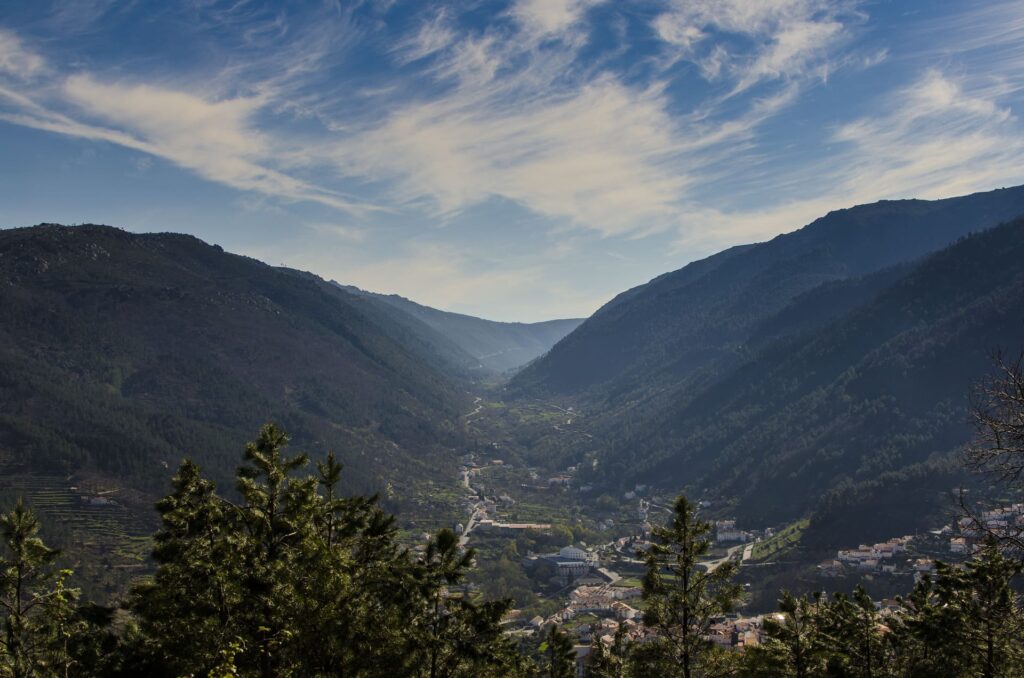
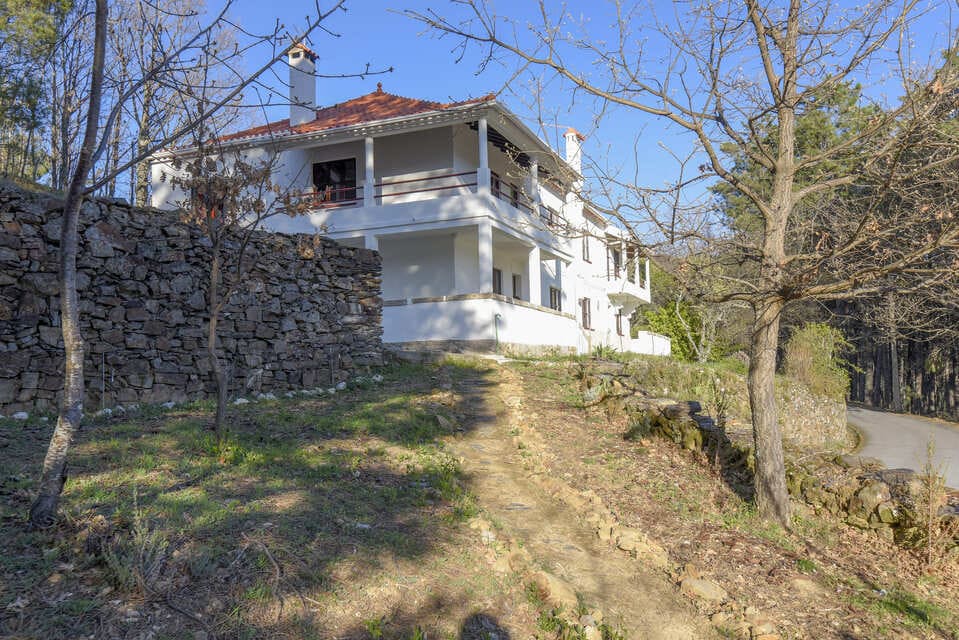
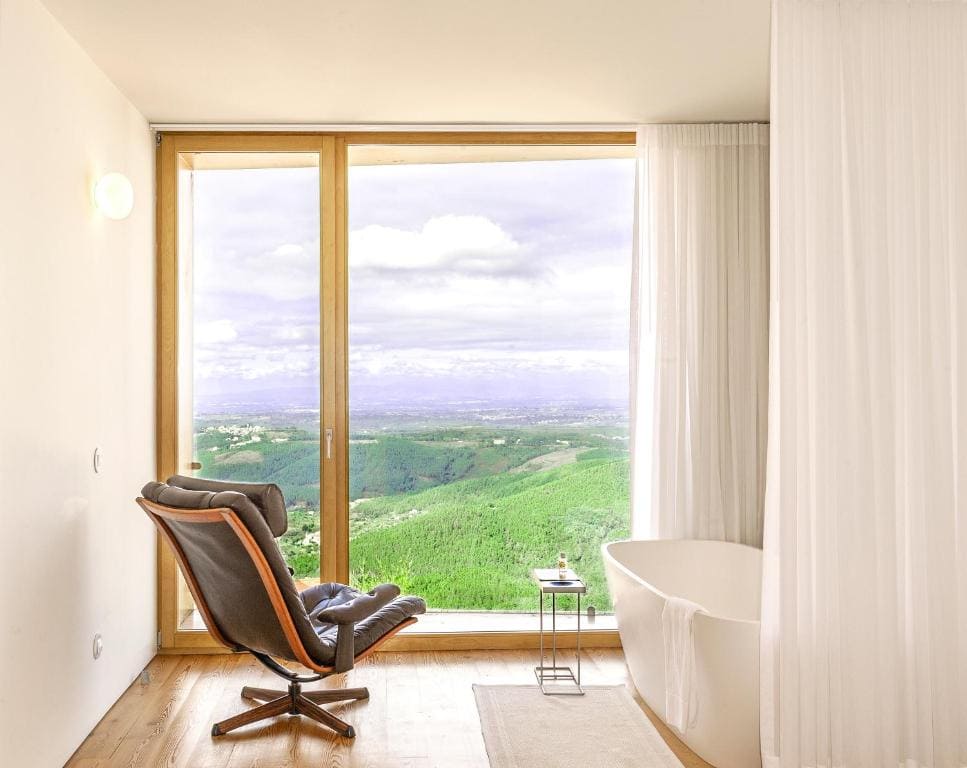
5. Casas da Lapa: hospitality and luxury amid the natural beauty of Seia, one of the historic mountain villages of the Serra da Estrela. 15 rooms and suites, operated with a commitment to sustainability. Learn more about Casas da Lapa.


Spring (April–June) and fall (September–November) are ideal for hikers and cyclists: pleasant weather for walking, fewer crowds, and spectacular natural scenery. Summer is warm but crowded at the popular spots. Winter is perfect for snow enthusiasts and alternative sports.
Absolutely. The park offers trails for all skill levels, ranging from short, one-hour walks along mountain lakes to multi-day hikes. With an e-bike, even cycling routes with significant elevation changes are accessible to people who aren’t in top shape.
You can take the train to Covilhã or Guarda. From Covilhã, local buses run to the park; taxis are available for specific trailheads. For greater freedom of movement within the park itself, a rental car is recommended. Local e-bike rental companies also offer multi-day programs that include transportation to and from the hotel.
The Estrela Geopark encompasses the nine municipalities of the Serra da Estrela and was designated a UNESCO Global Geopark in 2020. This recognition is based on the landscape’s exceptional geological value: rocks dating back 600 million years, glacial valleys from the last ice age, and a high level of biodiversity. The Geopark protects and promotes these values for visitors and future generations.
A weekend gives you enough time to see the main attractions and go on one or two nice hikes. Ideally, give yourself at least three to four days: that way, you’ll have time for a longer hike, a day of cycling, and time to slow down and explore a small farming village like Manteigas or Folgosinho.
The Rota das Faias (beech forest trail, spectacular in the fall), the Garganta de Loriga (top-rated on AllTrails), the Covão dos Conchos circuit (suitable for all skill levels), and the Poço do Inferno route starting from Manteigas are among the absolute highlights. For a multi-day experience, the T1 or T2 main route is an unforgettable choice.

With a passion for travel and photography and over 30 years of experience in the travel industry, I love to share my special nature travel tips. Travel is wonderful and important, you meet new people and cultures and it opens your view of the world.
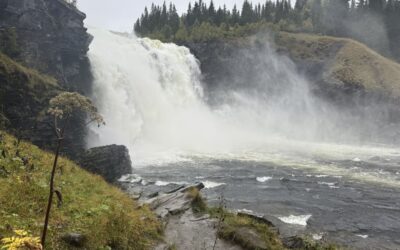
Hiking to Trondheim along ancient pilgrimage trails What’s it like to hike for days along ancient pilgrimage trails to Trondheim? During a trip through Sweden and Norway, I hiked several sections of the St. Olavsleden. From the open border mountains near Skalstugan to...
Hiking the St. Olav Trail: Route, Stages, and Tips A thousand years ago, Olav Haraldsson traveled this road northward in search of his crown. He met his death at Stiklestad and was canonized three years later. Since then, pilgrims have followed the same route: from...
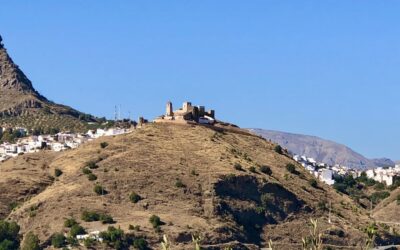
Just twenty minutes past the coast lies a completely different Málaga Twenty minutes by car from Málaga Airport, the highway turns into a winding road leading into the mountains. The coast disappears behind you, and ahead lie olive and almond trees, karst rocks, and...
Get inspired
Are you looking for the most beautiful hiking and biking routes? Or do you want information about traveling by train or advice for the most beautiful road trips through nature. Get inspired for your next trip in green; ideas for planning your own trip or opting for an organized trip.