Camino Lebaniego: Hiking from Santander to the Picos de Europa
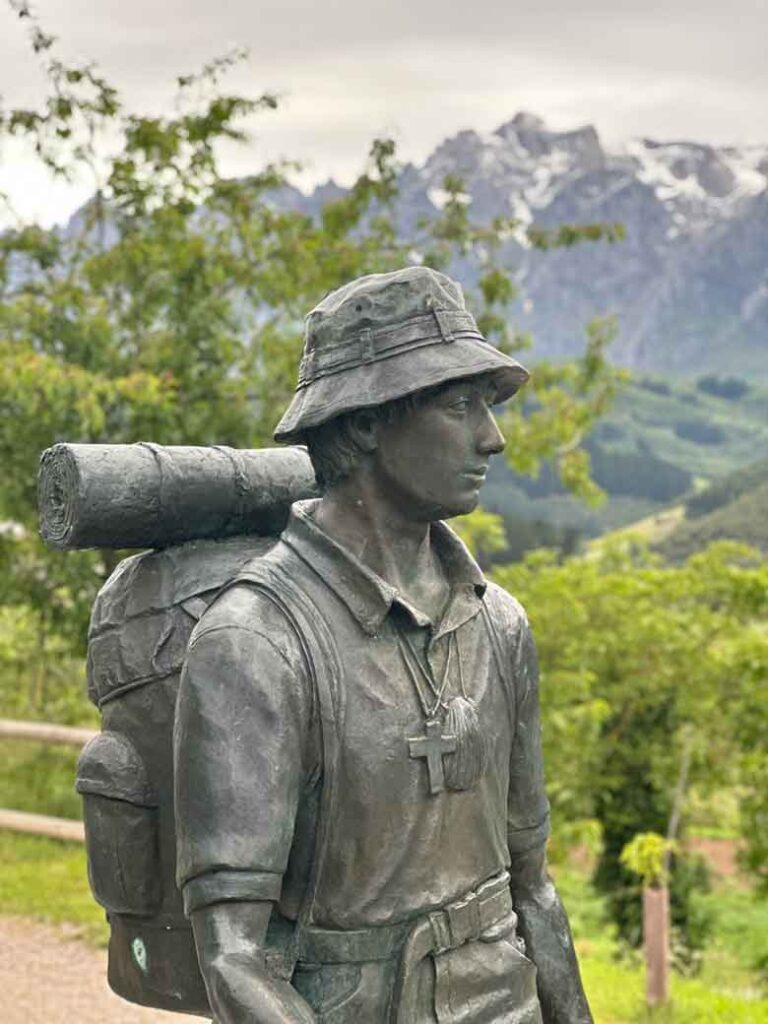
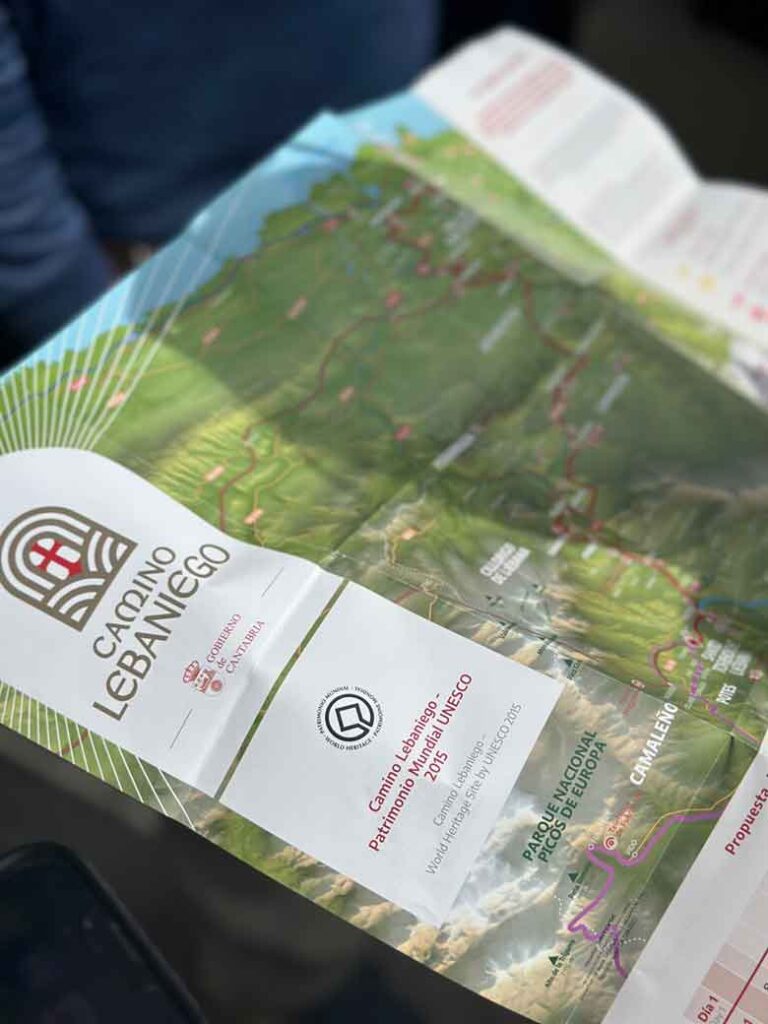
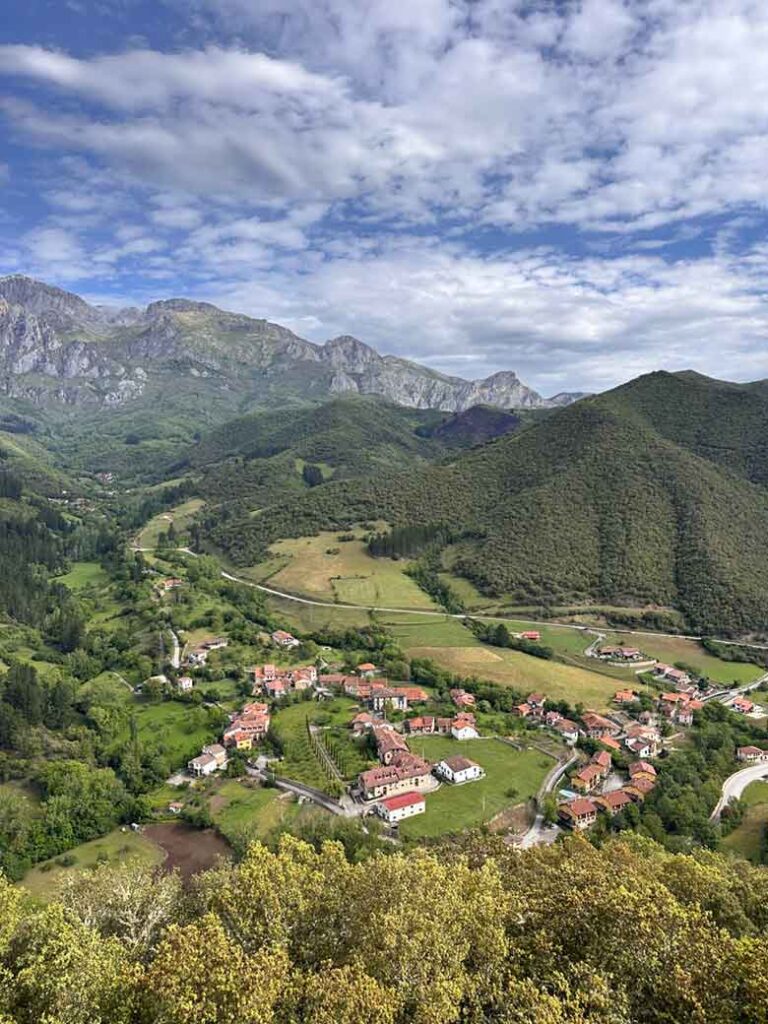
The Camino Lebaniego is a beautiful multi-day hike where the landscape gradually changes along the way; over the course of about seventy kilometers, you’ll walk from the Cantabrian coast near San Vicente de la Barquera to the Monastery of Santo Toribio de Liébana, deep in the green mountains of northern Spain. From fishing villages to quiet mountain hamlets. Over rolling hills to the rugged peaks of the Picos de Europa. It is a relatively unknown Camino, and that is precisely what makes this route so interesting.
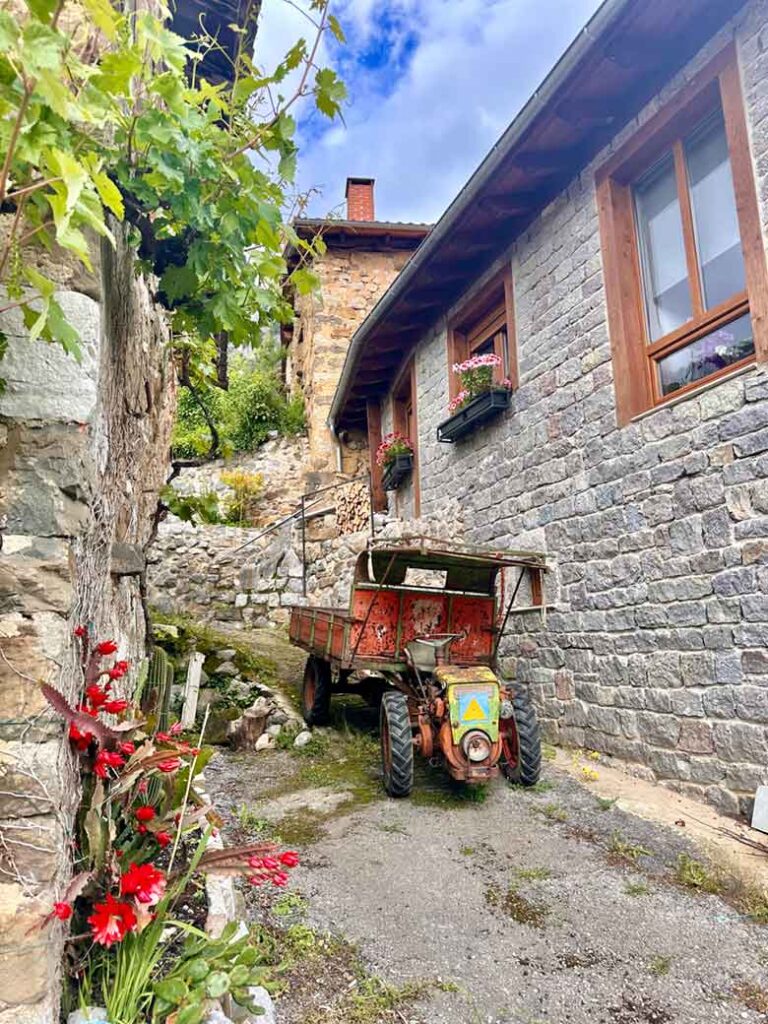
I walked a large part of the route from Santander. While the major pilgrimage routes to Santiago have become quite well-trodden, the Camino Lebaniego still feels remarkably unspoiled. You walk through villages where people are simply going about their day. A tractor drives by. Residents sit in the shade outside a bar. Laundry is hanging out to dry in a yard as you walk past with your backpack. It’s never crowded, and no one seems particularly impressed by hikers.
A forgotten pilgrimage route in northern Spain
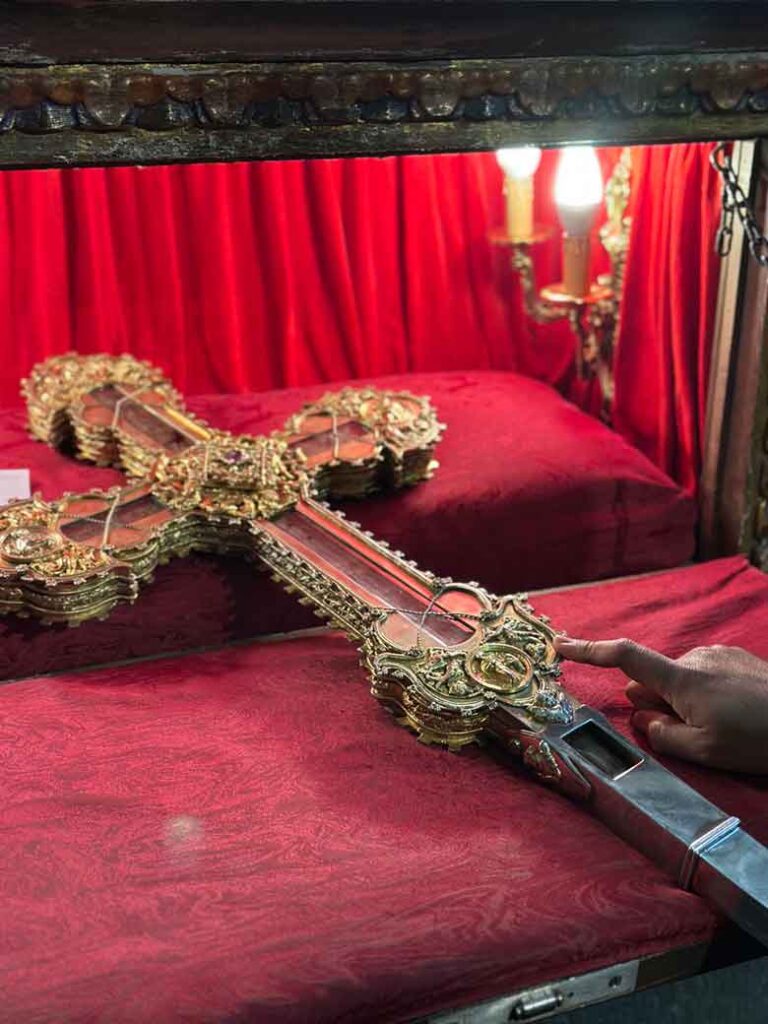
Historically, the Camino Lebaniego is a branch of the Camino del Norte. Pilgrims traveling along the northern coast toward Santiago could turn inland at San Vicente de la Barquera to visit the monastery of Santo Toribio. According to Catholic tradition, a large fragment of the Cross of Christ is preserved there.
Religion still plays a role along the way, but nowhere does the route feel burdensome or ceremonial. What really sticks with you is the landscape—the gradual transition from sea to mountains.
At around 70 kilometers, the Camino Lebaniego is relatively short, but don’t let the distance fool you. The later stages, in particular, involve a significant amount of elevation gain. So plan for more time than you might expect.
The route can be completed in three days of vigorous hiking, but if you prefer a more leisurely pace, you might want to opt for four or five stages.
Santander, Comillas, and an unexpected Gaudí
We begin our journey in Santander. After a brief stay on the Cantabrian coast—which, by the way, also has some fantastic surf spots—we continue on to the village of Comillas. This is before the official start of the Camino. It’s a stop that’s definitely worth making.
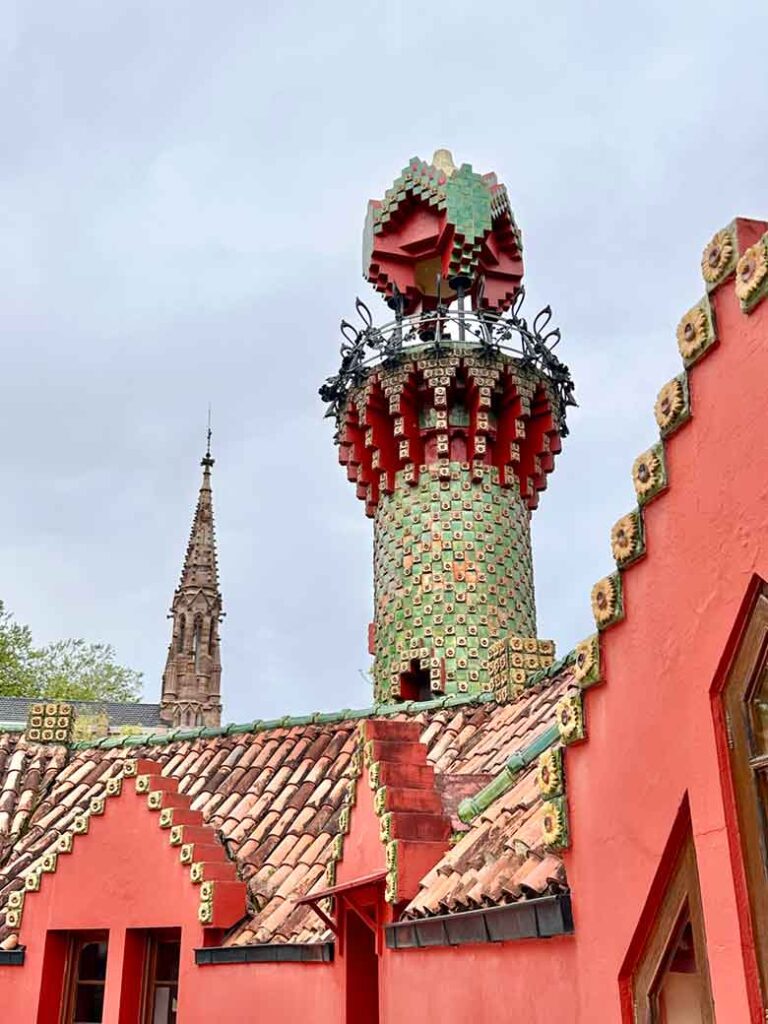
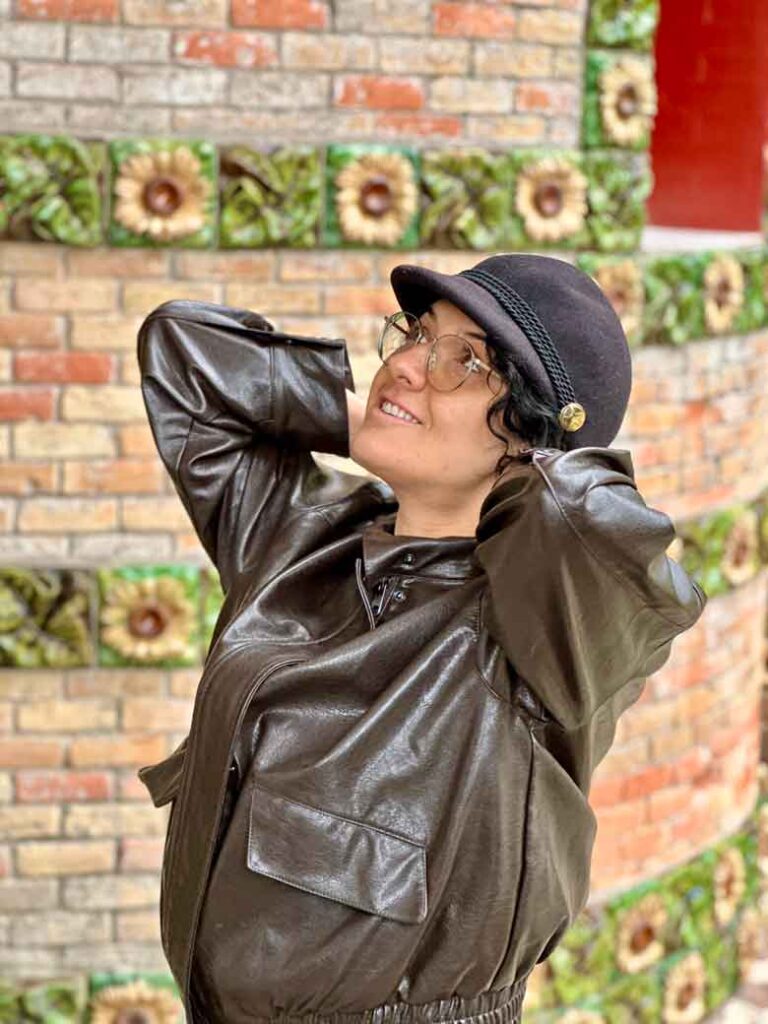
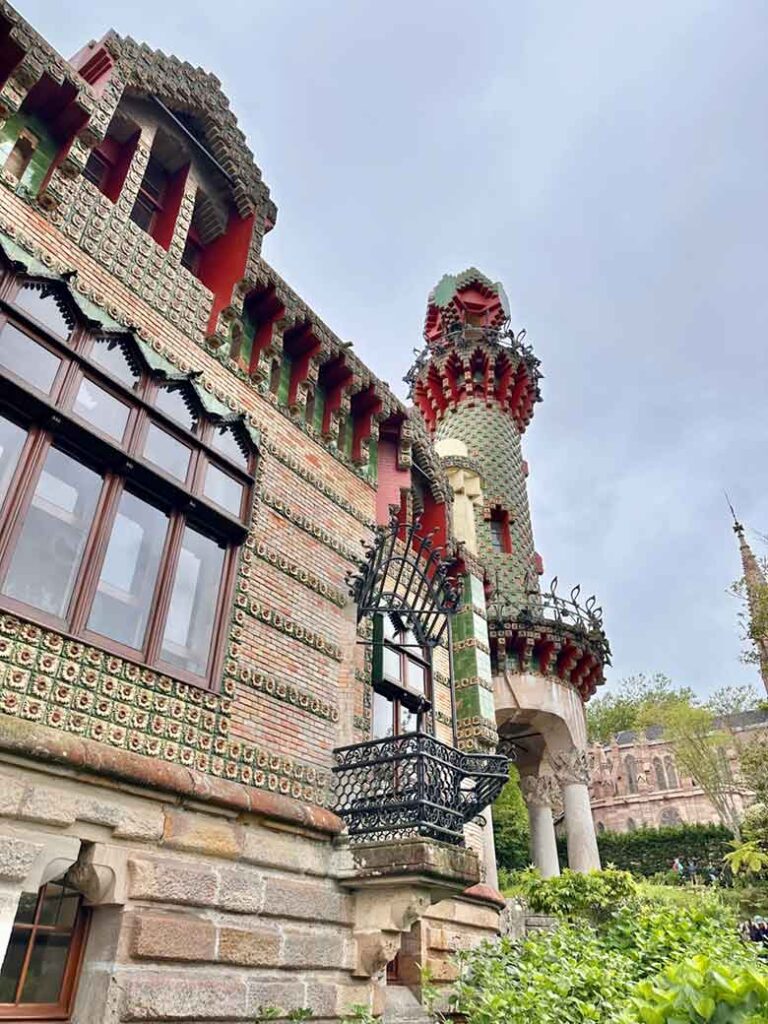
In Comillas, there is El Capricho, a striking modernist residence designed by Antoni Gaudí. The colorful building, with its ceramic sunflowers, playful turret, and organic details, still feels surreal in the Cantabrian landscape today. It is one of Gaudí’s few works outside Catalonia and reveals his early fascination with natural forms, music, and decoration.
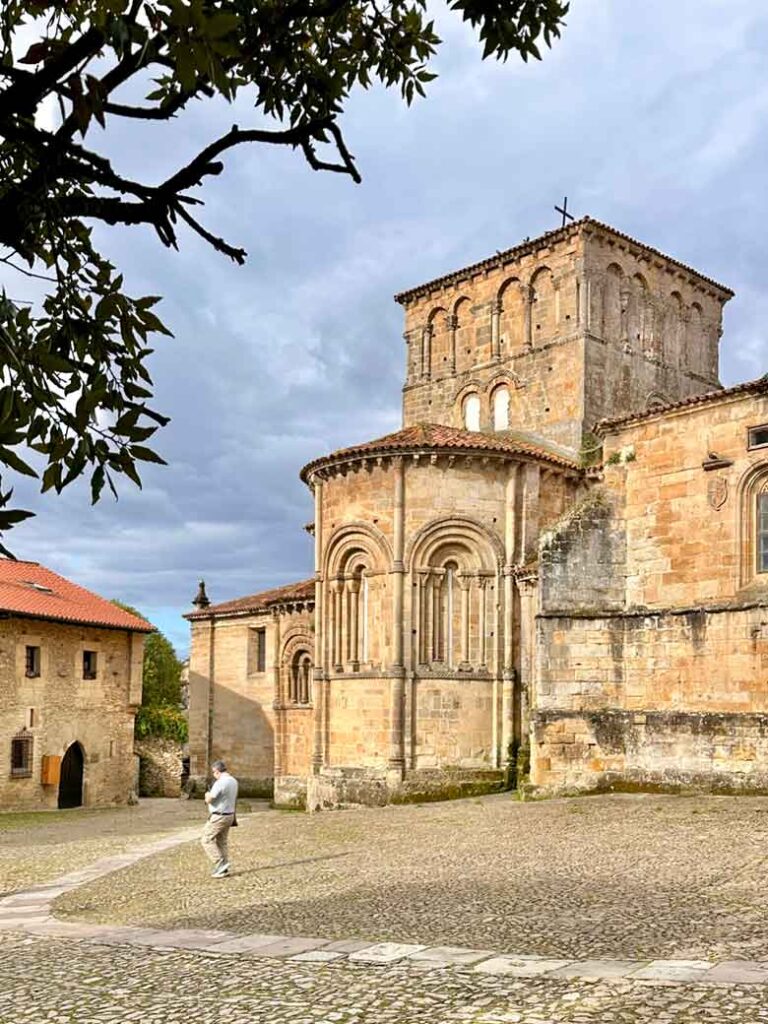
From there, we continue on to Santillana del Mar. It’s one of the most famous historic villages in northern Spain, and it certainly shows: during the high season, the narrow streets fill with day-trippers, souvenir shops, and outdoor cafes. Still, it’s worth taking a stroll around, precisely because the medieval streetscape has remained so remarkably intact. Nestled among the heavy stone houses and wooden balconies is the Romanesque Colegiata de Santa Juliana, built around a former monastery.
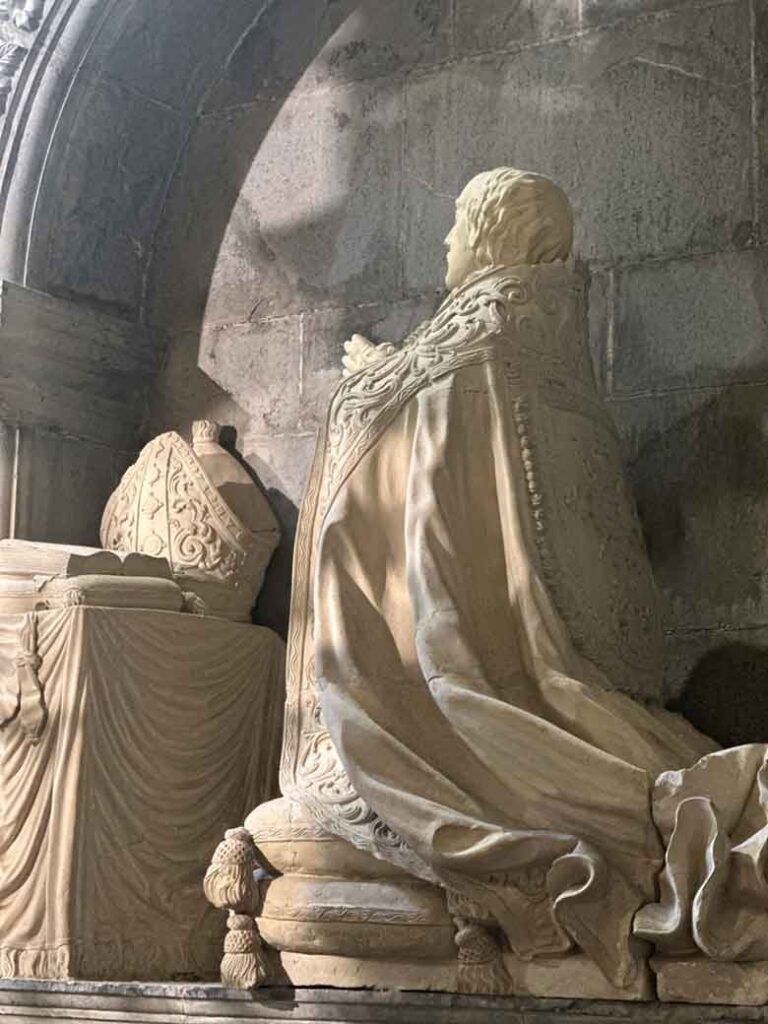
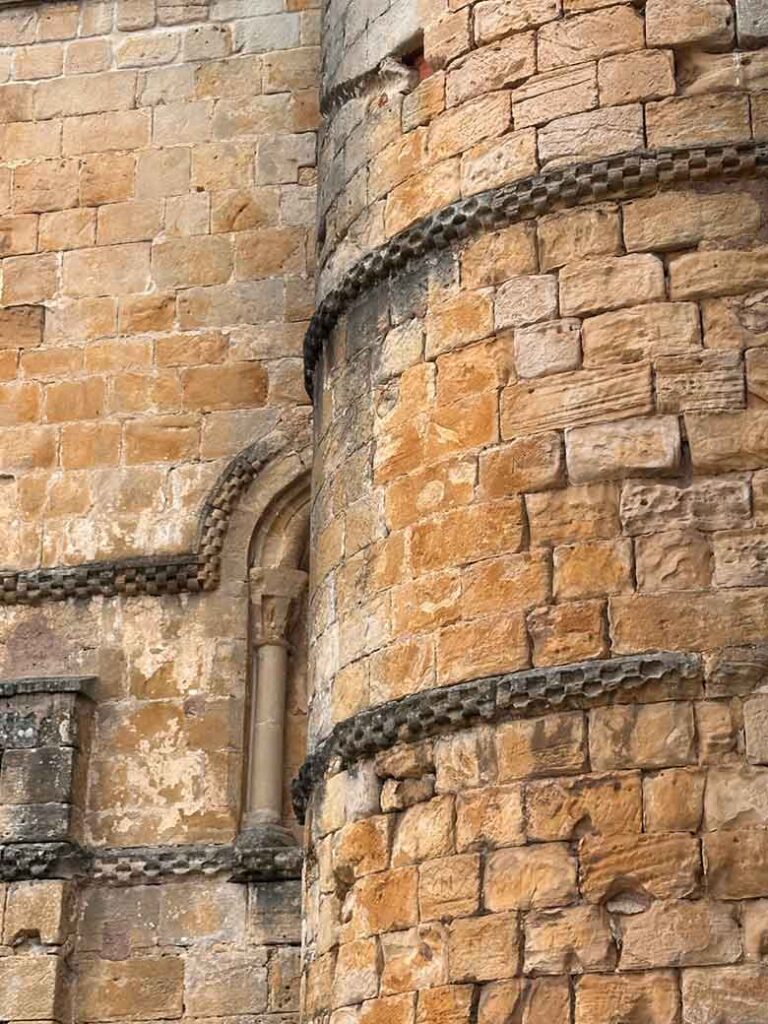
In the middle photo below, you can see the horizontal bands on the Colegiata de Santa Juliana featuring small block-shaped protrusions, creating a checkerboard pattern. This is typical of many Romanesque buildings along ancient pilgrimage routes in northern Spain, including the Camino de Santiago and the Camino Lebaniego. For pilgrims today, it feels like a silent code of the Camino: you see the blocks appear and immediately know that travelers, monks, and walkers have passed through here for centuries.
San Vicente de la Barquera: where the sea and the mountains meet
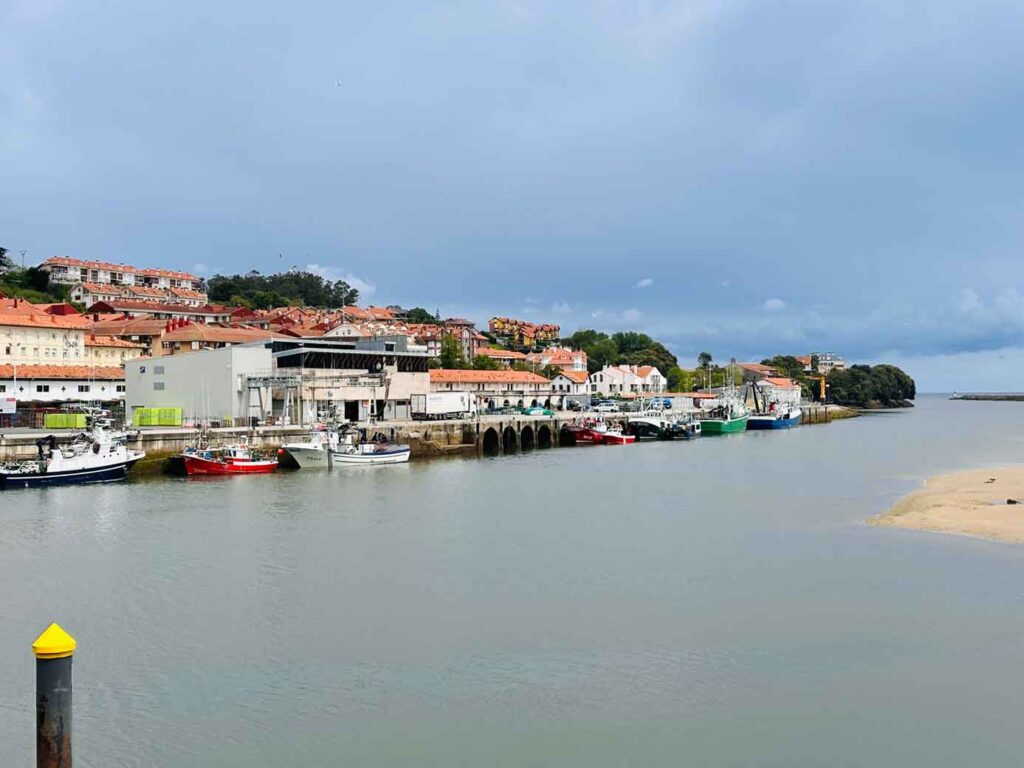
And then we arrive in San Vicente de la Barquera: the true starting point of the Camino Lebaniego. The route’s KM0 marker is located at the Iglesia de Santa María de los Ángeles. If you draw an imaginary straight line from here toward the mountains, it will lead you to the monastery of Santo Toribio.
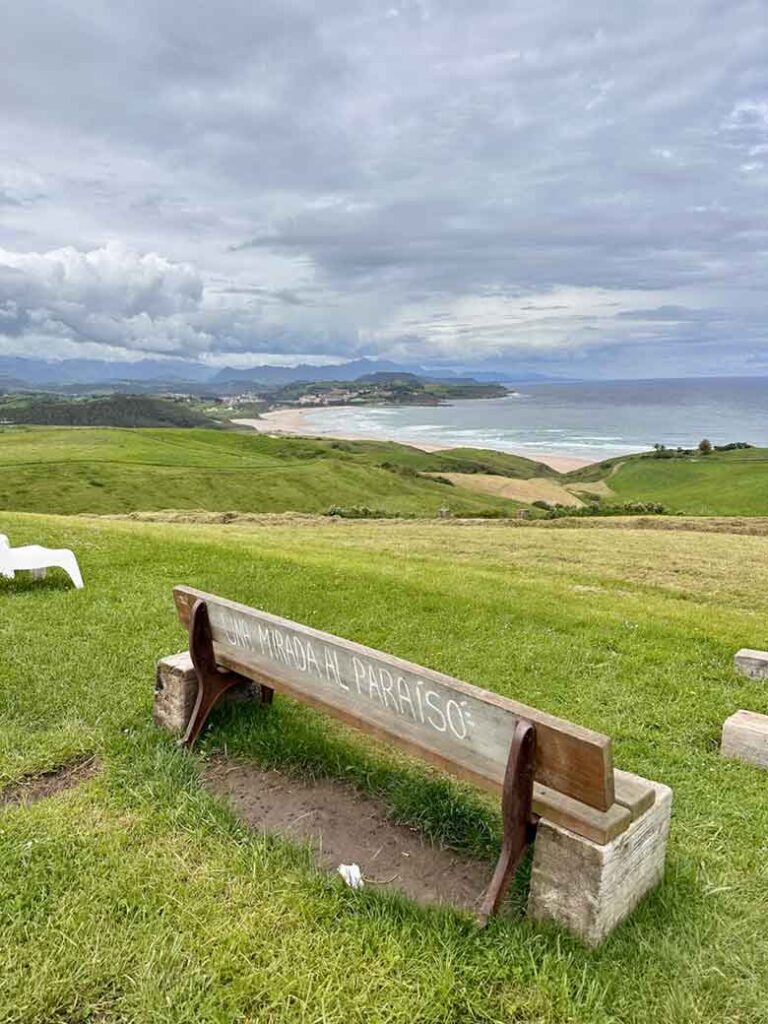
San Vicente de la Barquera is one of those coastal towns in northern Spain where you can easily end up staying longer than planned. An old town center with weathered stone houses, fishing boats in the harbor, and beyond them, on a clear day, the peaks of the Picos de Europa. That contrast is quite unique: the sea and high mountains in a single view.
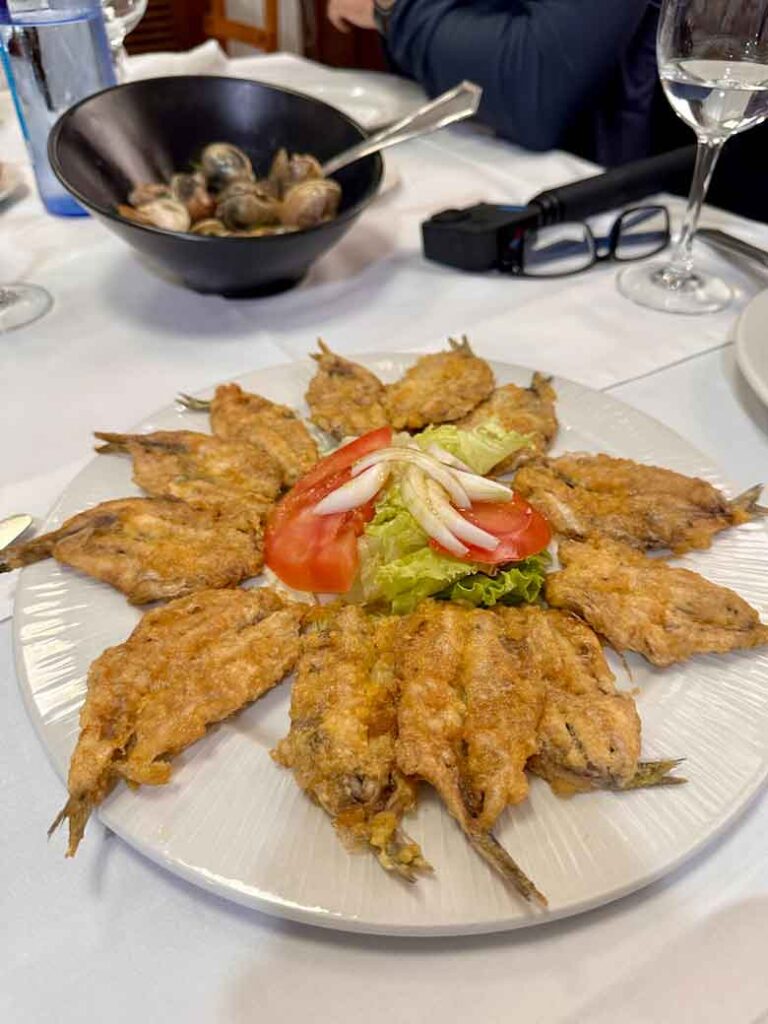
After enjoying some delicious fresh seafood dishes for lunch at El Bodegon restaurant, we leave the coast behind via small roads and country lanes. Slowly, the sea fades from view behind us.
Green hills and the rhythm of northern Spain
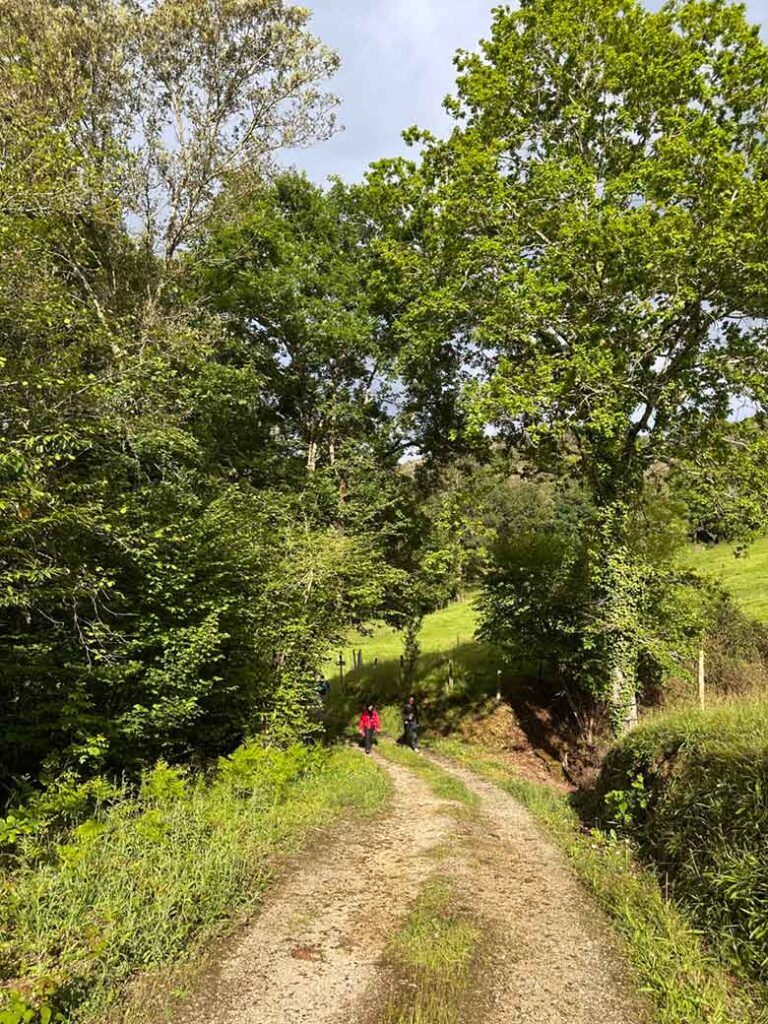
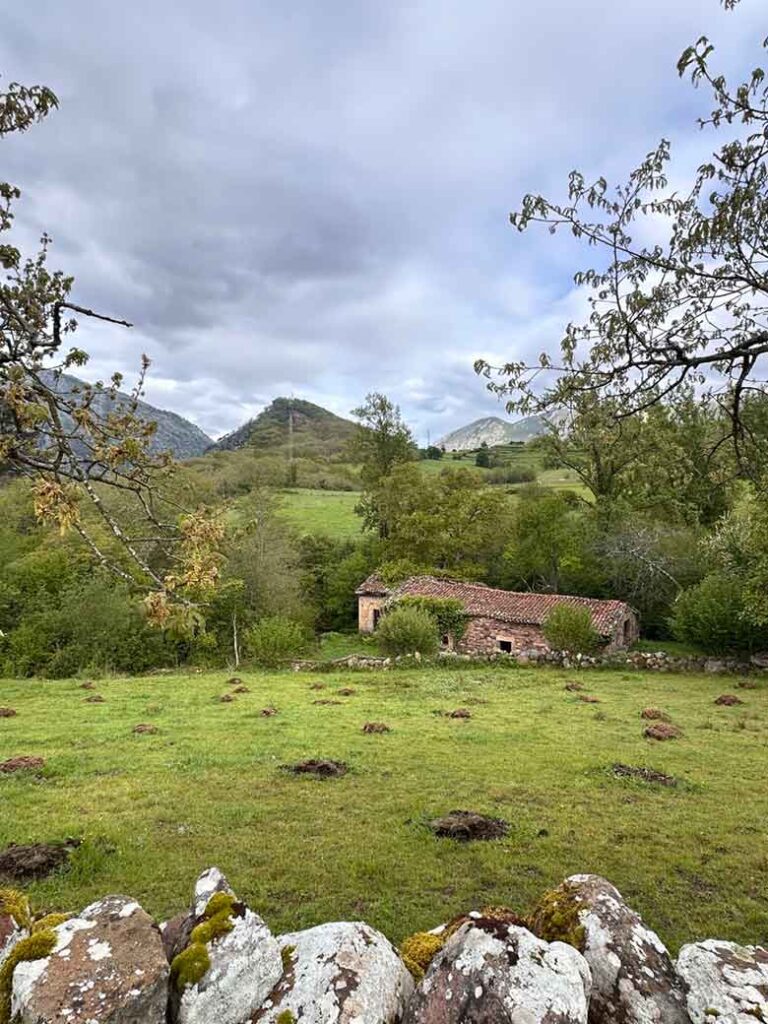
The first stages of the Camino Lebaniego aren’t flat, but they’re easygoing. The landscape consists of green hills, meadows, eucalyptus forests, and scattered hamlets. Those eucalyptus forests are not native to the area but were once planted on a large scale for the paper industry, which has since largely disappeared from here.
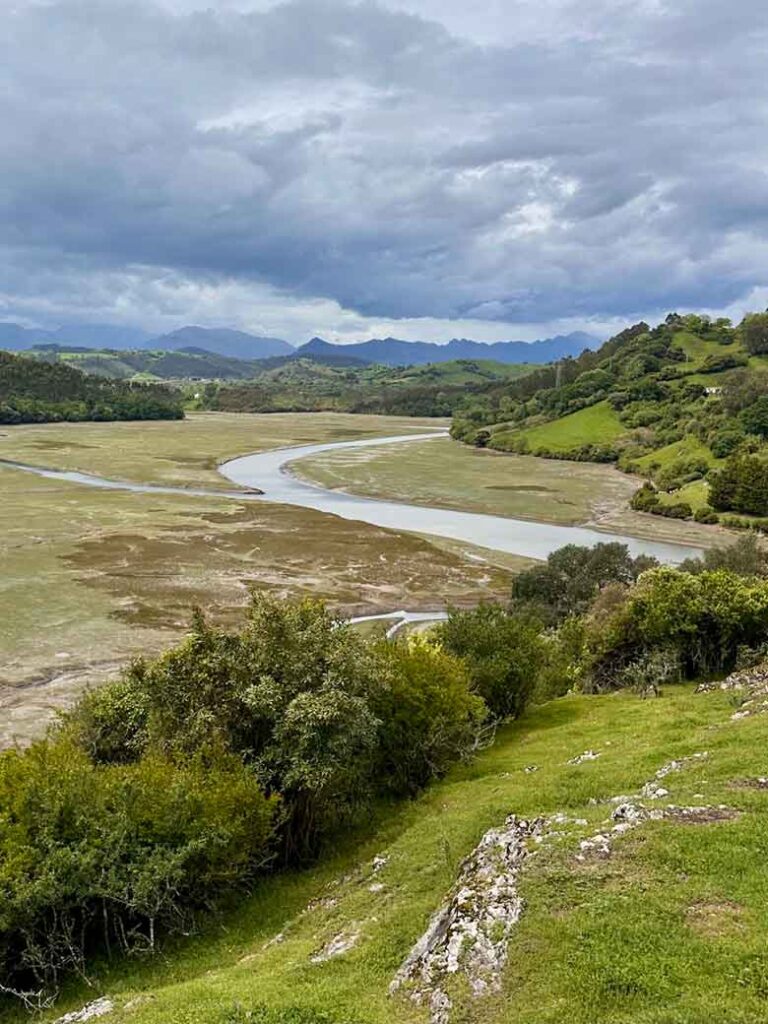
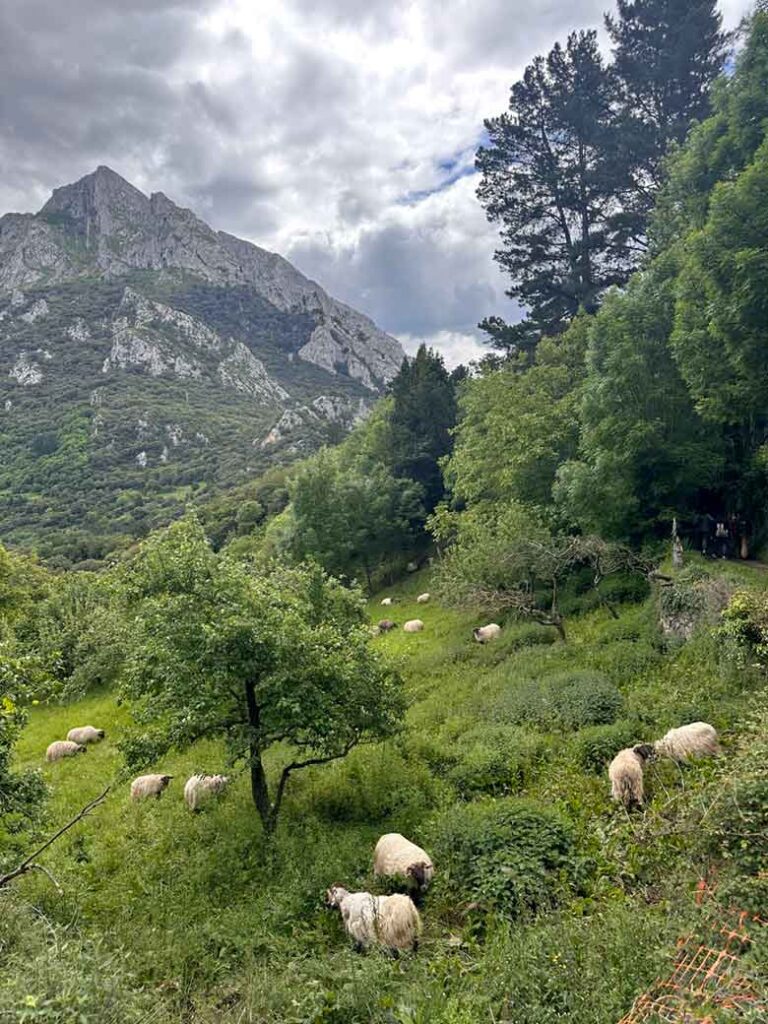
Northern Spain is surprisingly different from the arid south. It’s greener, wetter, and wilder, too. Sometimes it feels Basque or Irish. Wispy patches of fog hang between the hills, and the sky is constantly changing color.
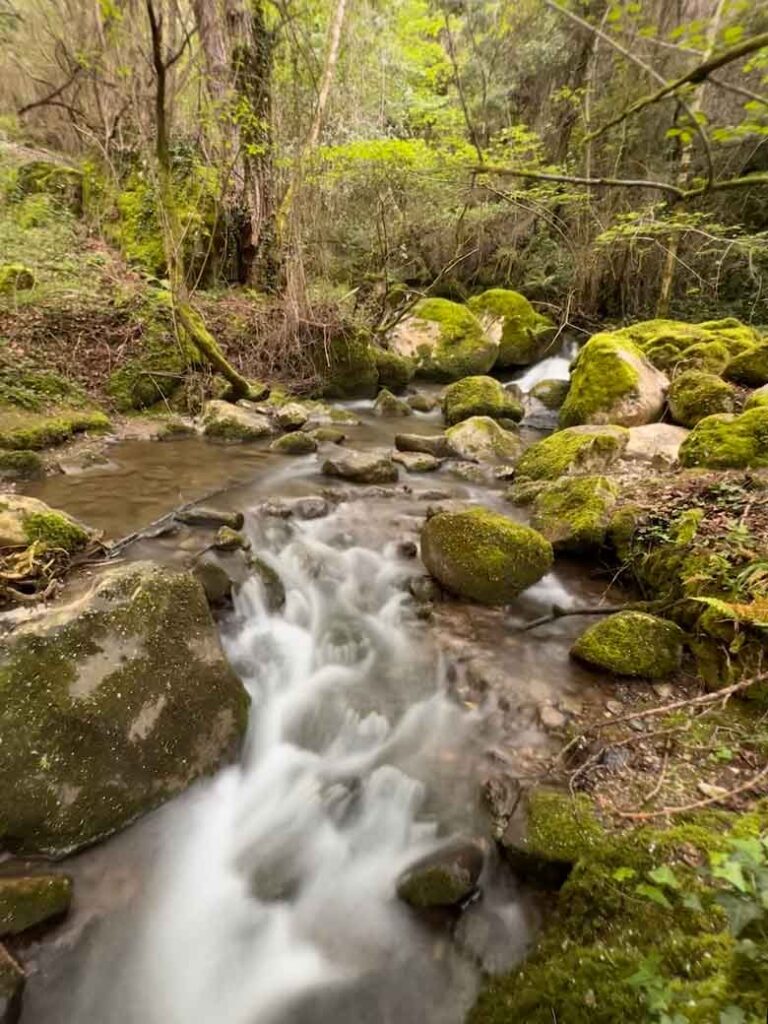
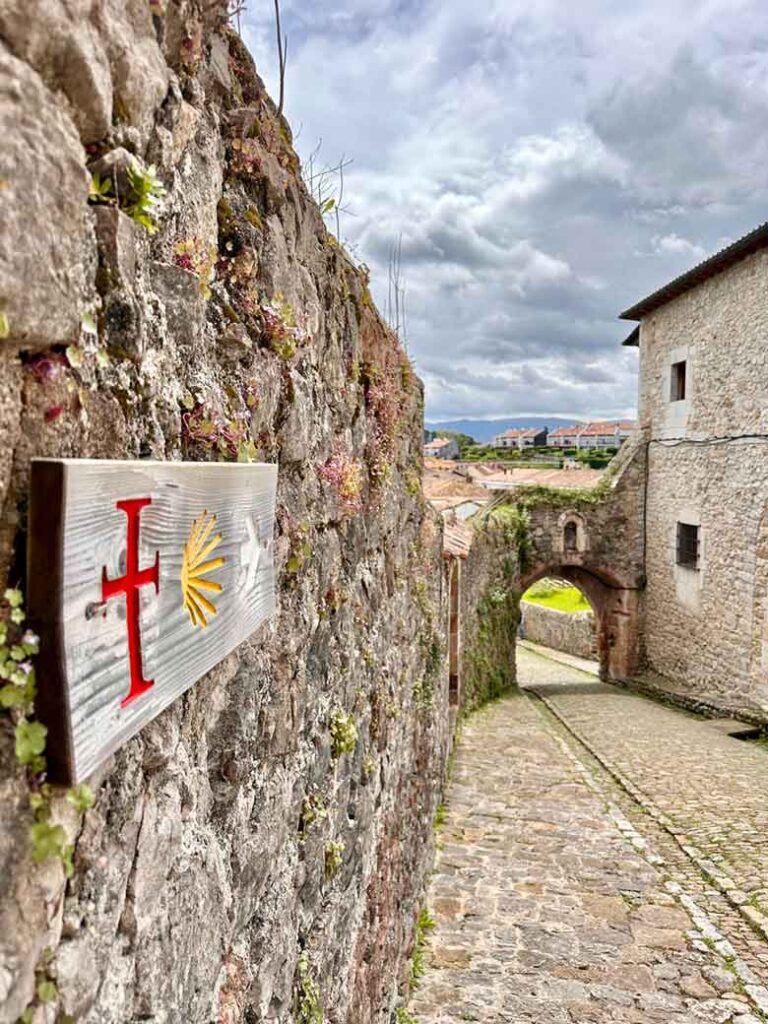
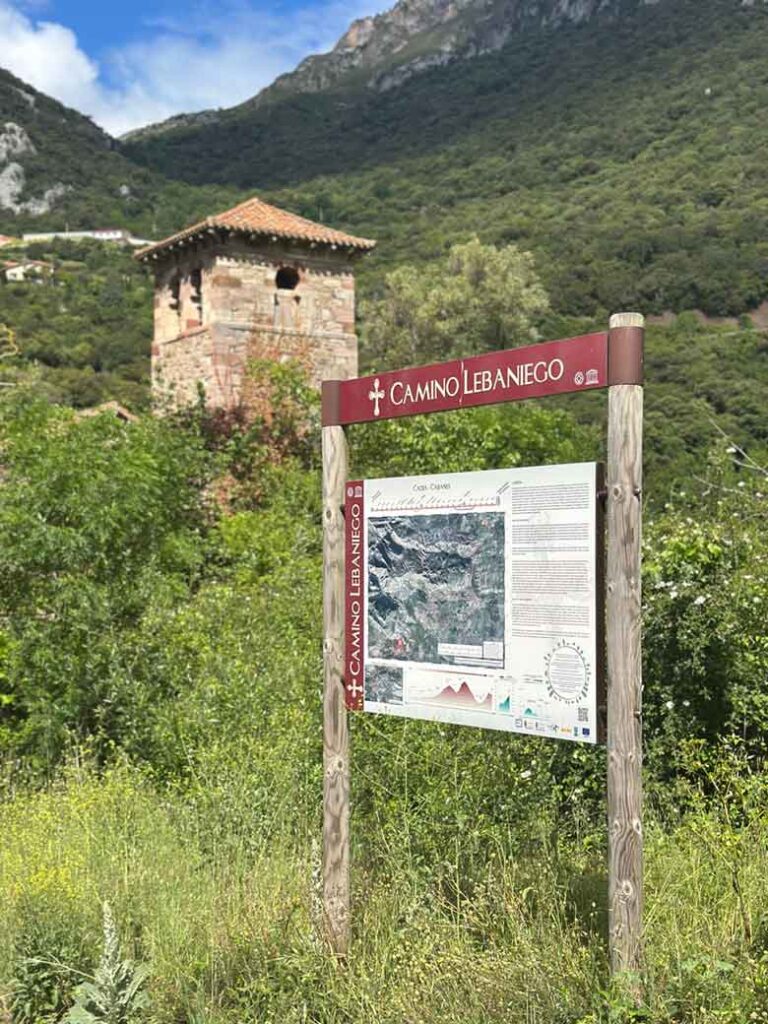
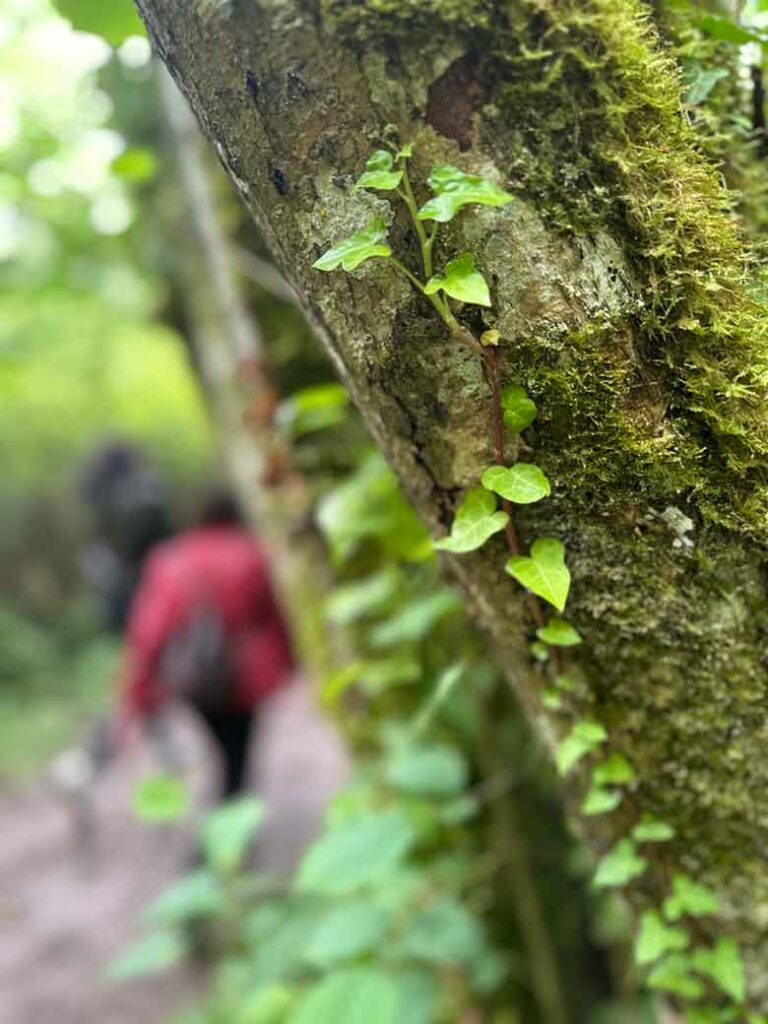
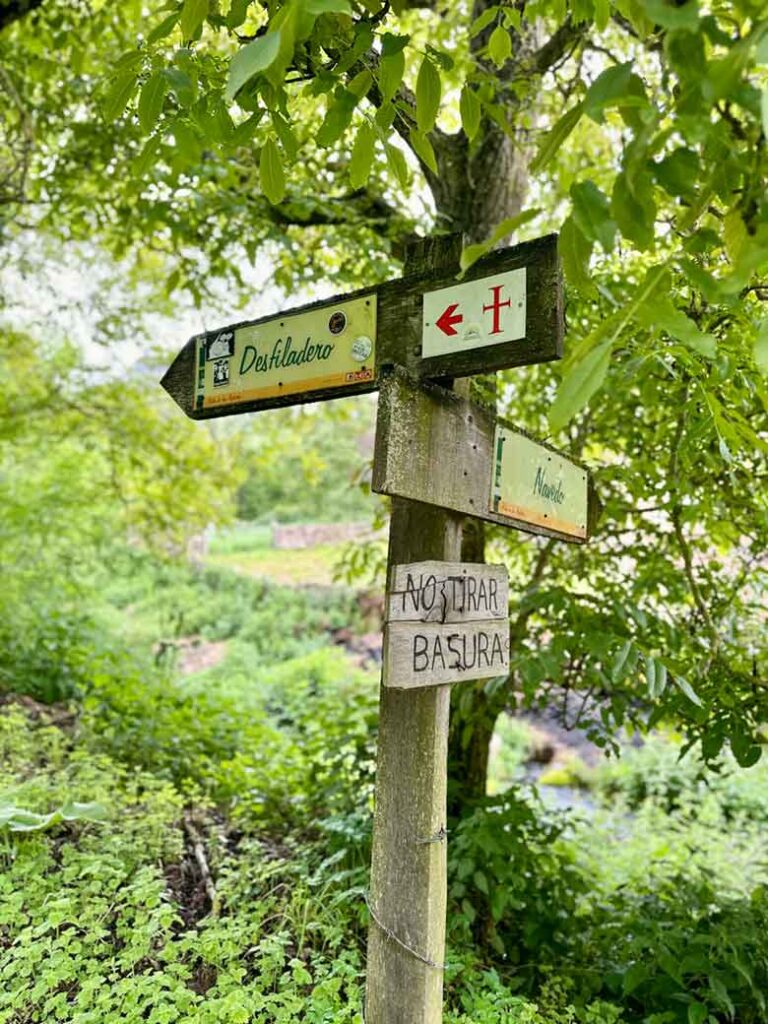
Along the way, we pass small churches, streams, rivers, and hamlets. The route is well marked with red crosses and signs, but it’s never crowded. Sometimes we walk for hours without encountering a single person. That might make the Camino Lebaniego less social, but also less staged. You don’t have to join a stream of pilgrims anywhere.
What really stands out along the way is how closely daily life here is still connected to the landscape. Cows roam freely. Hay bales lie on the hillsides. Small vegetable gardens border the route. And people eat late here. At 3:30 in the afternoon, I still saw people sitting down for lunch.
Cicera: where the mountains come closer
Around Cicera, the atmosphere of the route changes noticeably. The mountains draw closer. The valleys grow narrower. Roads wind steeply upward, and the air feels cooler. Cicera itself is spectacularly perched on a hillside, overlooking deep green valleys. It’s the kind of village where dogs sleep right in the middle of the street. From here on, the hike starts to feel more serious.
The Camino Lebaniego isn’t technically a difficult route, but don’t underestimate it. Some sections involve significant climbs, and after rain, they can get muddy. We’re walking the route in May, and after a few rainy days, we’re glad we have our waterproof hiking boots.
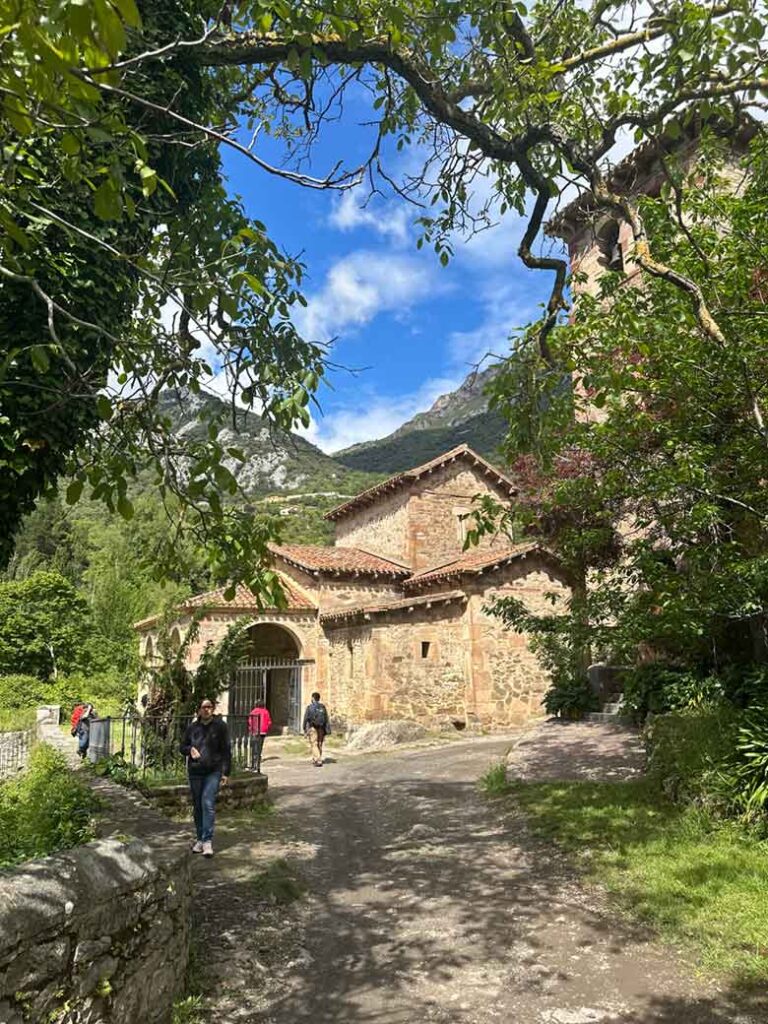
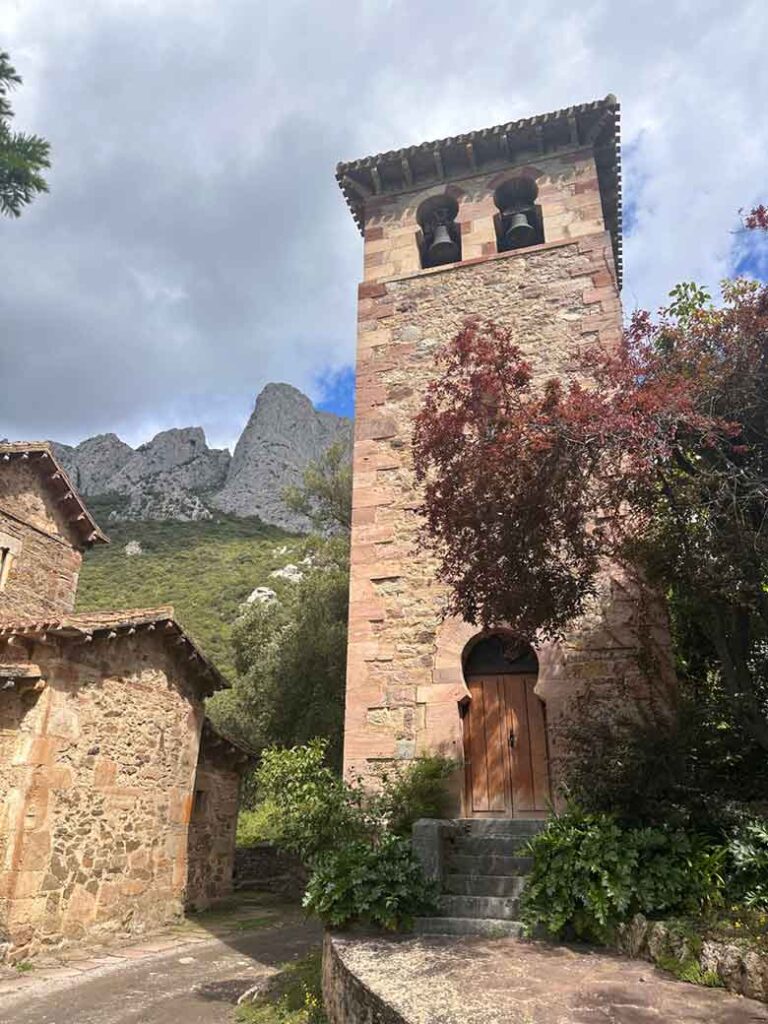
The small Mozarabic Church of Santa María de Lebeña (shown here in the middle photo) is tucked away among green hills on the outskirts of Lebeña and is often overlooked by travelers on their way to Potes. The church dates back to the 10th century and is considered one of the best-preserved examples of early medieval Mozarabic architecture in northern Spain, built during a period when Christian and Islamic influences were still clearly intertwined. Inside, it is austere and compact, with horseshoe arches, thick stone walls, and filtered light. On certain days, a brief Spanish-language explanation of the church is provided; for foreign visitors, the text is also available in Dutch on paper.
The first glimpse of the Picos de Europa
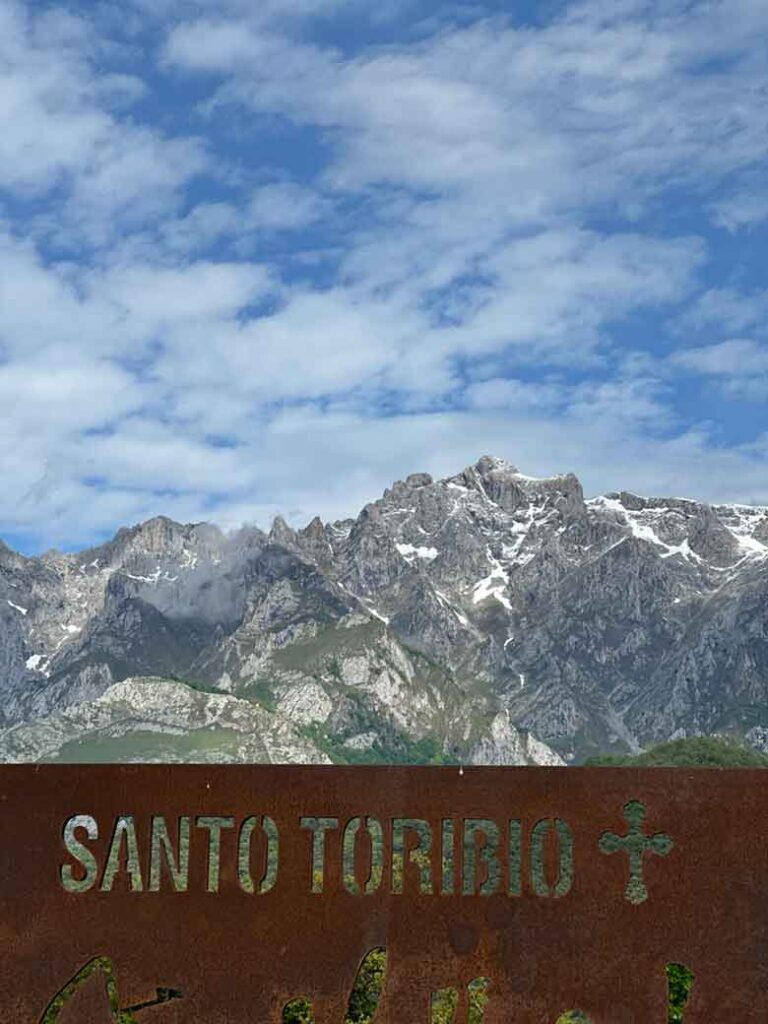
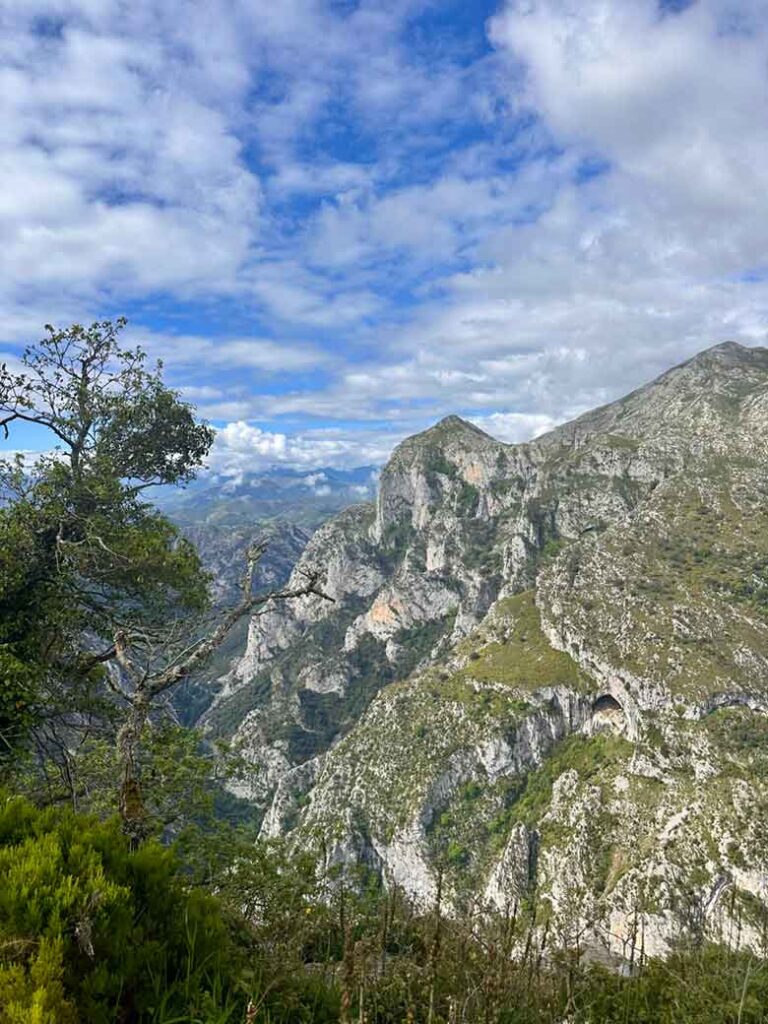
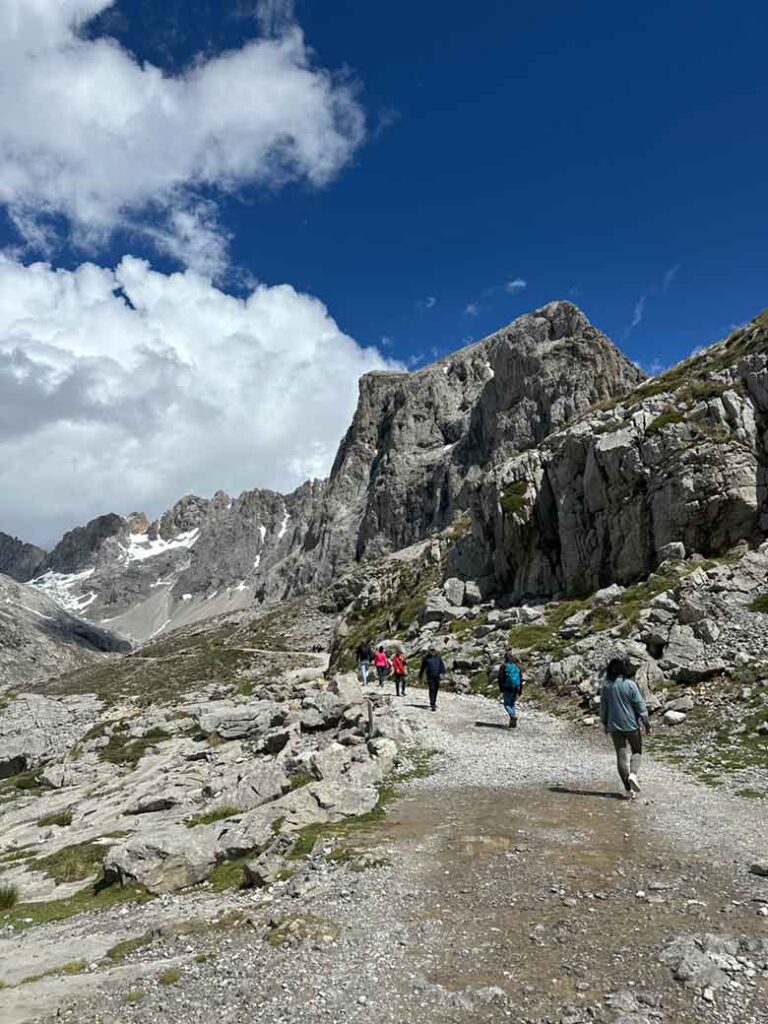
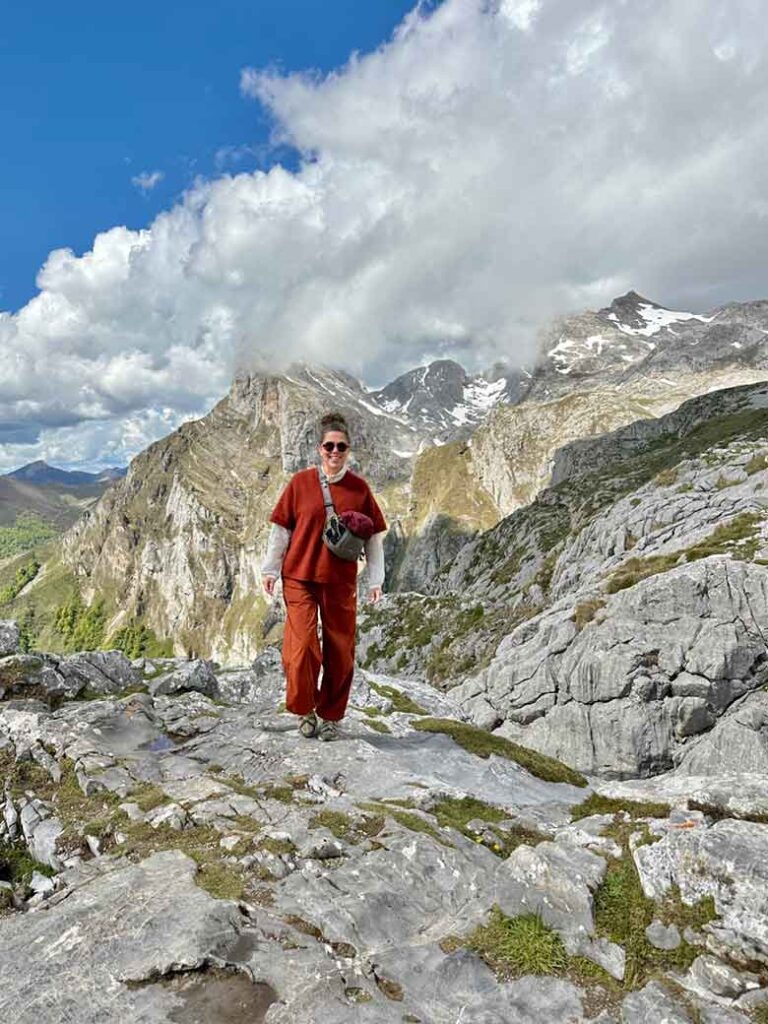
The Picos de Europa are no gentle mountains. They rise abruptly from the landscape, with limestone peaks, deep gorges, and jagged rock formations. Unlike the Alps, they appear more compact and rugged.
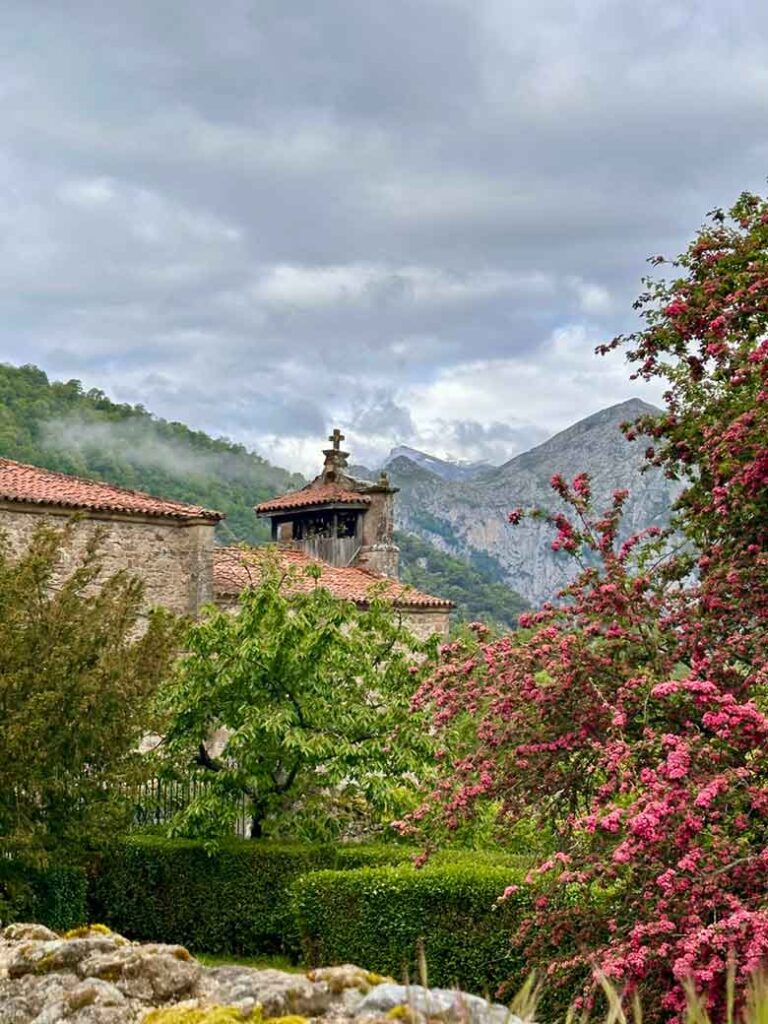
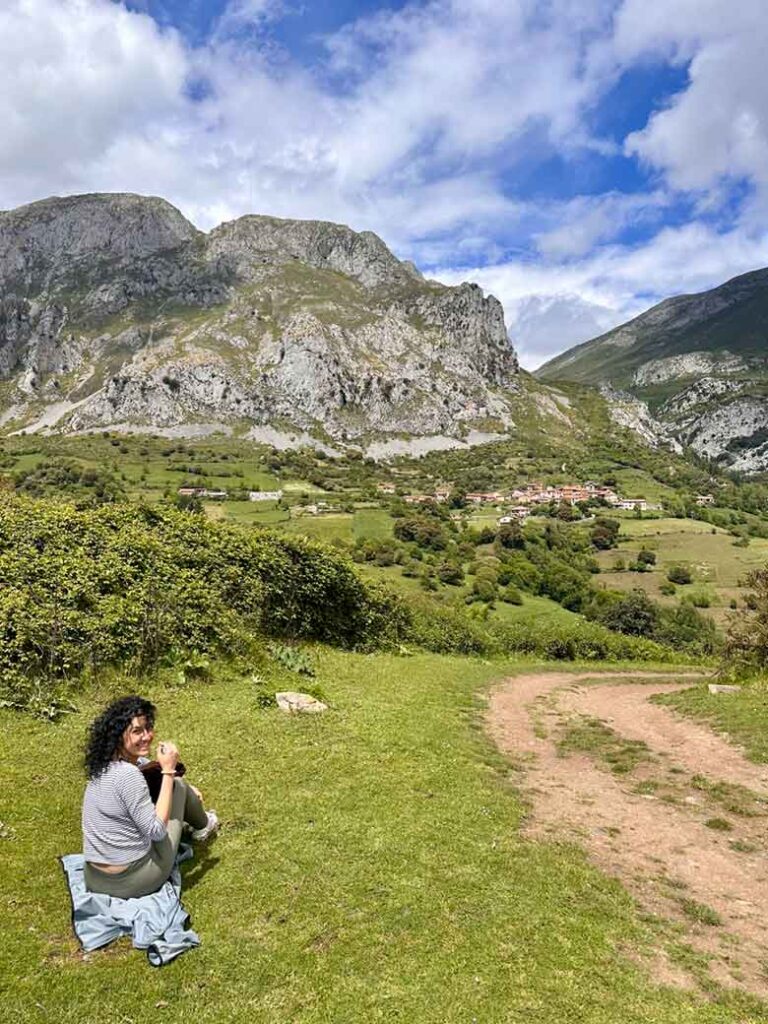
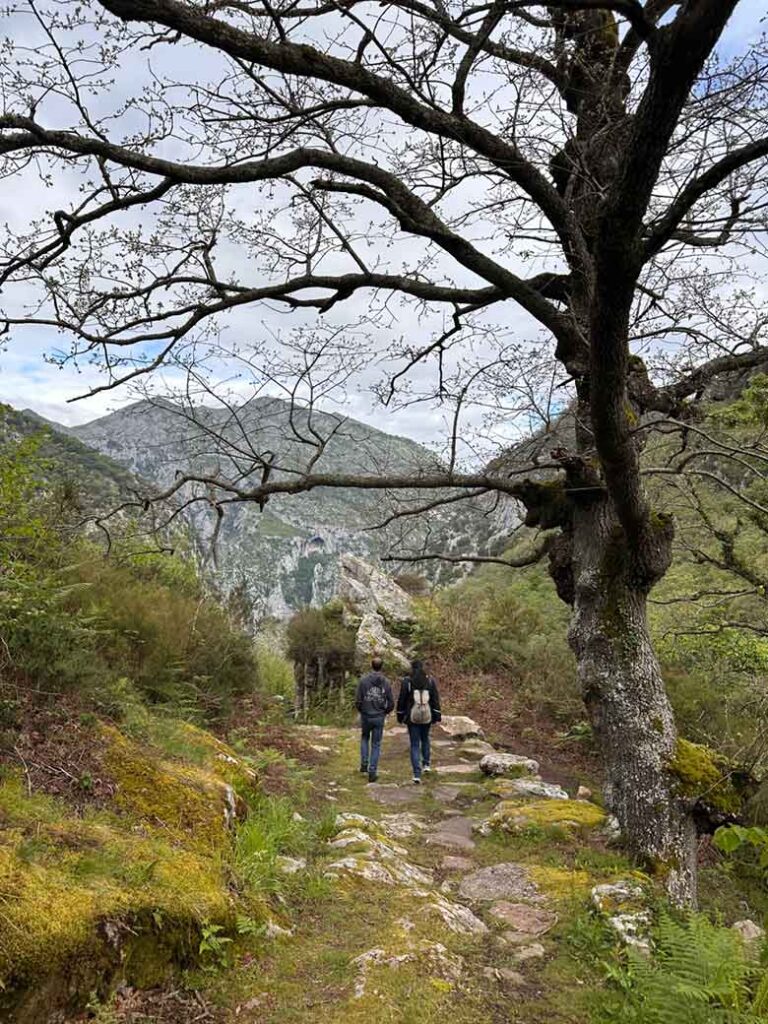
The Camino Lebaniego doesn’t cut straight through the high mountains, but winds along their foothills. Yet the mountains are always there. One of the most beautiful aspects of this route is that you see those mountains gradually come into view. Every day, they seem to grow larger.
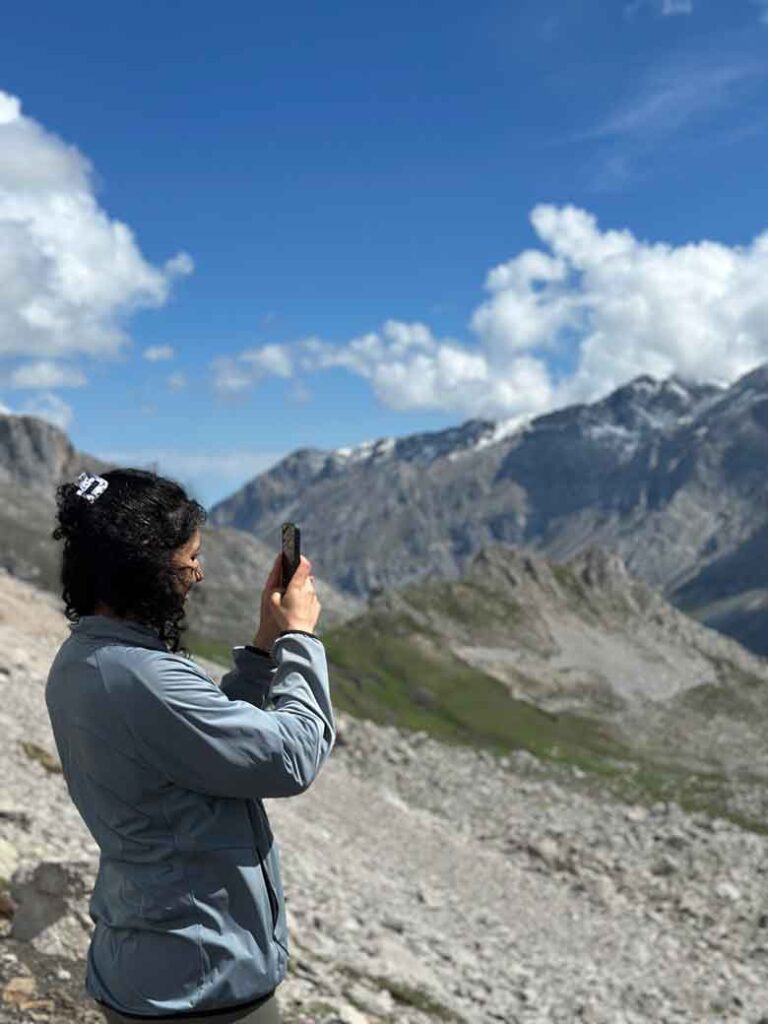
And then, all of a sudden, there’s that moment when you round a bend and the Picos stretch out before you in all their glory. It’s almost theatrical, but without the crowds you often encounter in other European mountain regions.
Cocido lebaniego and simple hospitality
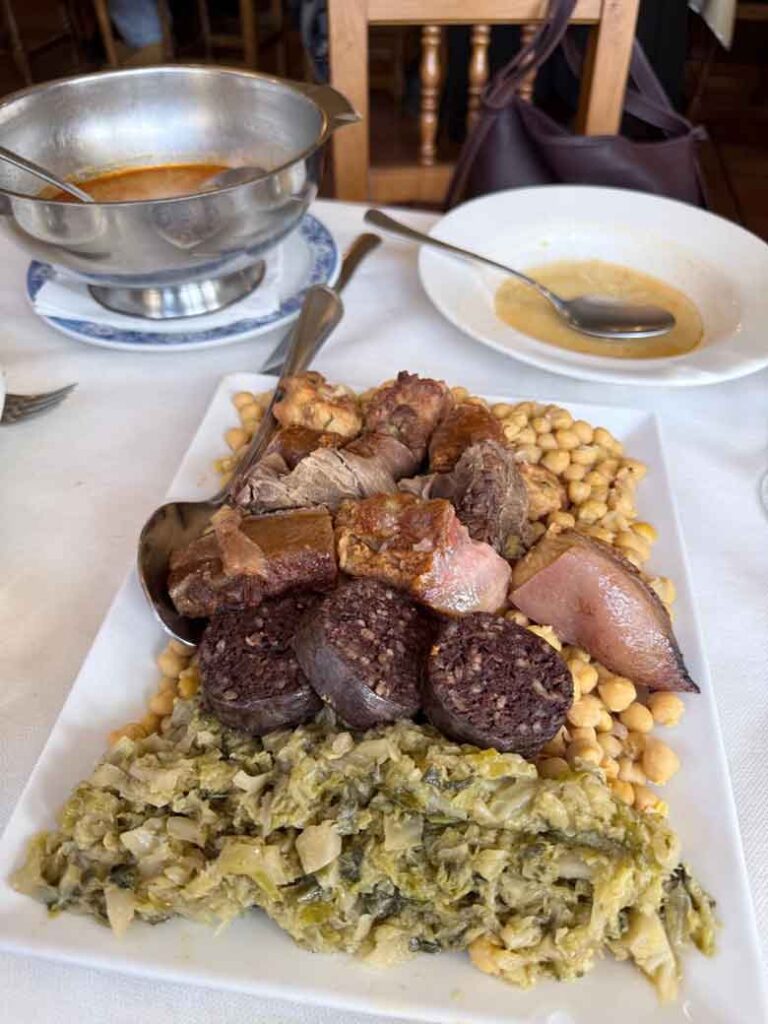
After a day of hiking, we end up at a sidewalk café where we order a plate of cocido lebaniego: a hearty local stew with chickpeas, cabbage, and meat. The cooking liquid is served as a flavorful soup. It’s not haute cuisine, but it’s just right after hours of walking.
Along the way, you’ll also get a constant sense of northern Spain, which still feels relatively unpolished here. No hotspots or perfectly curated pilgrim experiences. The hospitality feels simple and sincere.
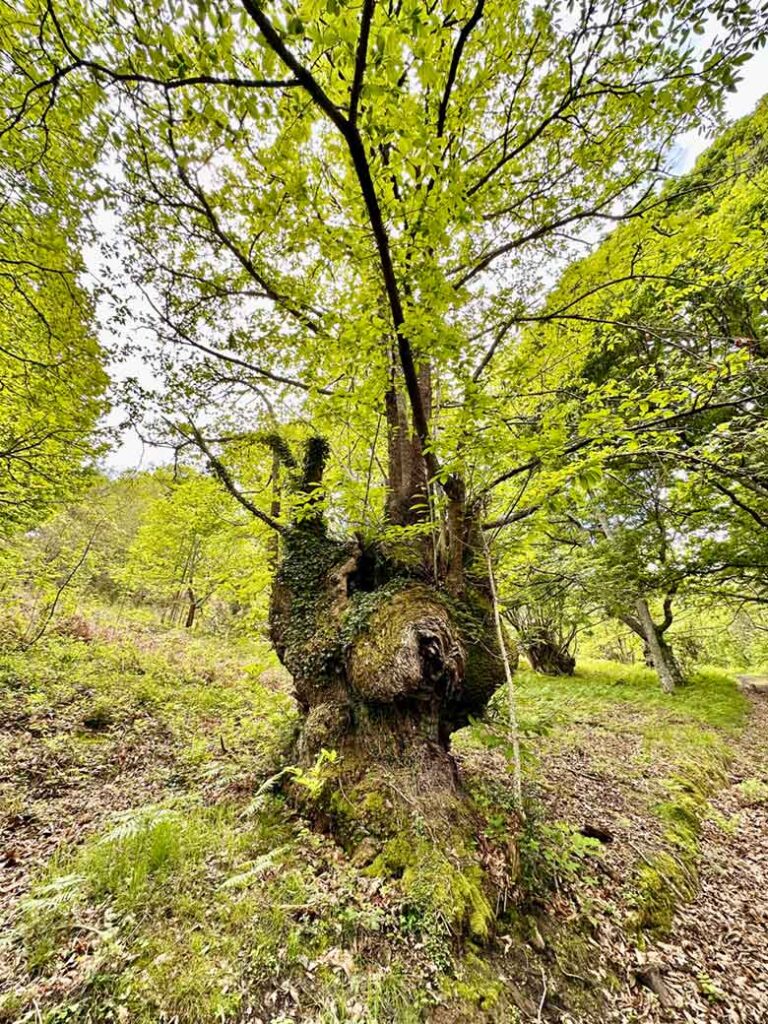
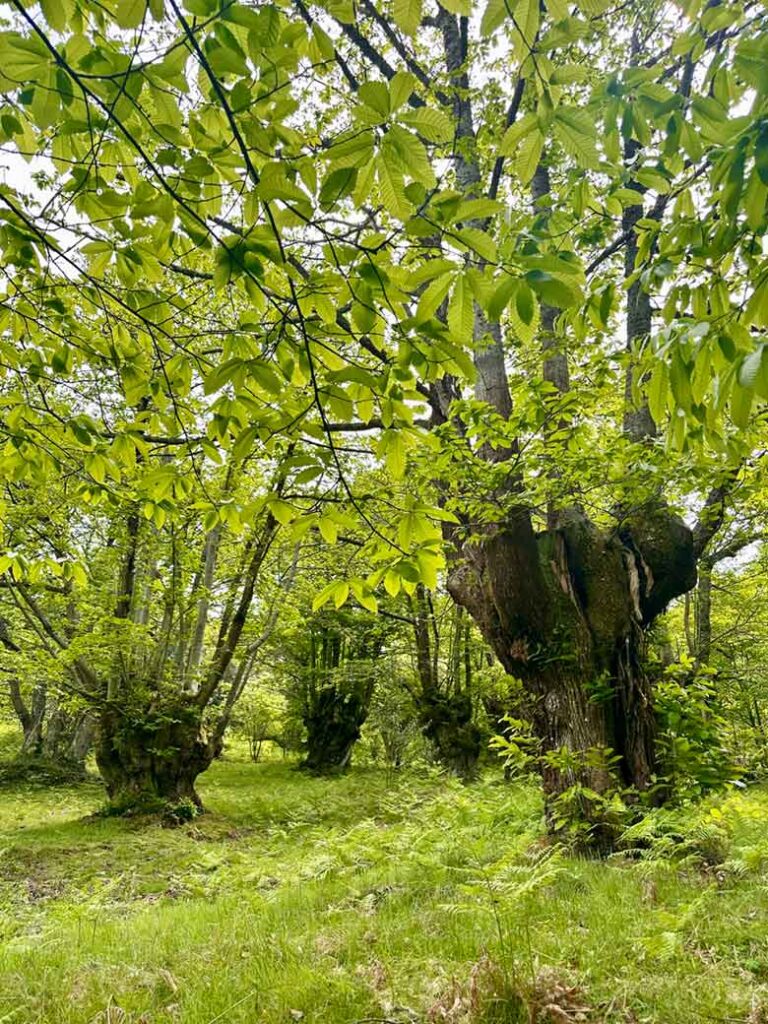
Another highlight along the way are the ancient chestnut trees scattered along parts of the route. Some of them are said to be over a thousand years old and have enormous, gnarled trunks that look like sculptures. Especially around Cillorigo de Liébana and heading toward Lebeña, you’ll come across several old chestnut forests, once vital for food and timber for the valley’s residents. In the fall, the slopes here turn a deep golden brown, but even in the spring, the trees add a lot of character to the landscape of the Camino Lebaniego.
Arrival at Santo Toribio de Liébana
The final few kilometers to the Monastery of Santo Toribio de Liébana start in Potes, a lively mountain town that often serves as a base for exploring the Picos de Europa. This last stretch of the route is mostly on paved roads, but with the mountains as a backdrop.
At the monastery, we are welcomed by the two monks who still live there, and they show us the famous cross. Even though we didn’t walk the entire Camino, we are welcomed as true pilgrims and are even allowed to touch the wooden cross for a moment.
Potes: the perfect base for exploring the Picos de Europa
If you have the time, you should definitely stay in Potes or the surrounding valleys for a few more days.
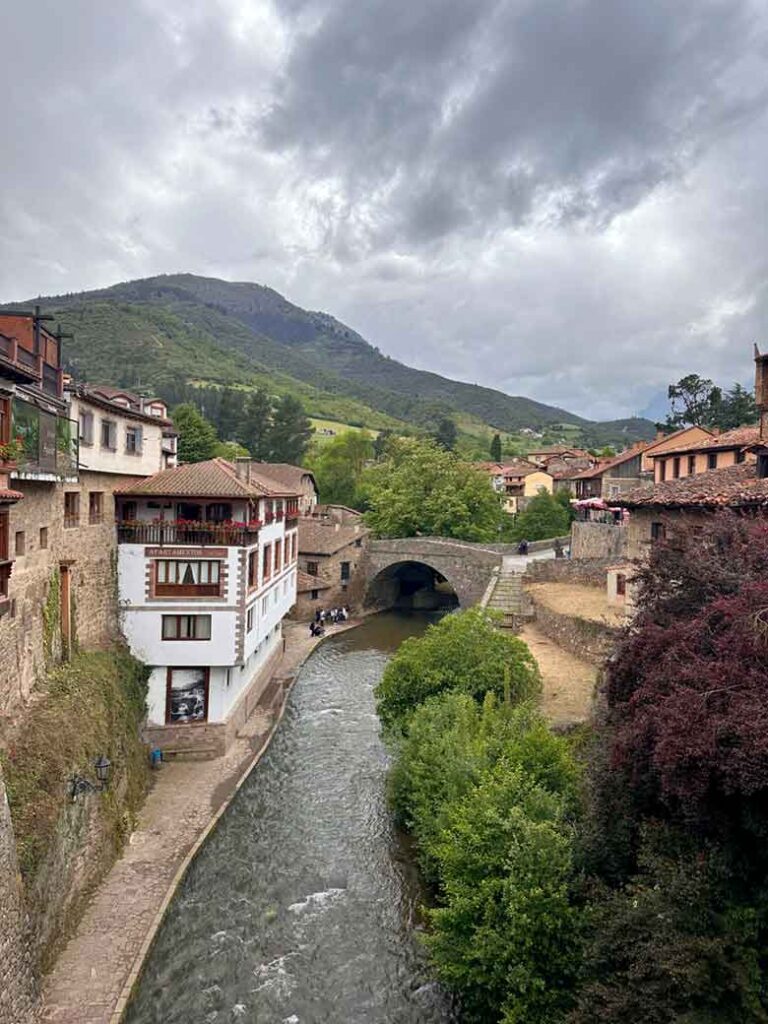
Potes itself has narrow streets, stone bridges, and a surprisingly lively atmosphere for such a small mountain town. Hikers, climbers, and local families mingle here. The medieval Torre del Infantado tower in Potes not only offers views of the Liébana Valley but also a glimpse into the region’s history, with exhibitions on Beato de Liébana and ancient Apocalypse codices. From the crenellated roof, you can look out over the red roofs of Potes and the mountains of the Picos de Europa.
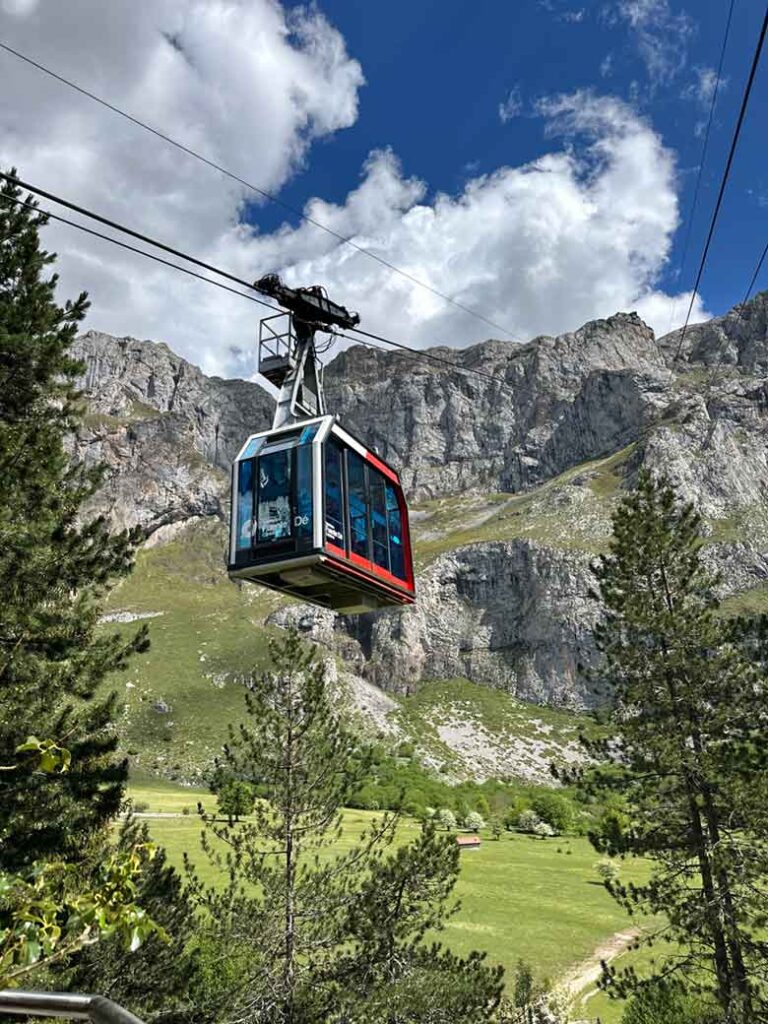
From Potes, you can continue on to Fuente Dé, where a cable car takes you deep into the mountains of the Picos de Europa. You can also opt for shorter hikes through the Liébana Valley, passing through chestnut forests and mountain meadows.
Practical tips for the Camino Lebaniego
Distance: The Camino Lebaniego is approximately 70 kilometers long.
Number of days: Most hikers complete the route in four or five stages. It’s possible to do it faster, but then the days will be quite long.
Best time to visit: Spring and fall are ideal. In the summer, northern Spain stays cooler than the south of the country, but some sections can still feel warm.
Difficulty: Moderate. There are several steep climbs, especially as you head inland and into the mountains.
Accommodations: Along the way, you’ll find small hotels, guesthouses, and a few albergues. The route is relatively quiet, but it’s still a good idea to make reservations during the high season.
We stayed at the following places:
Hotel Bahia in Santander: a large hotel on the waterfront in the heart of the city.
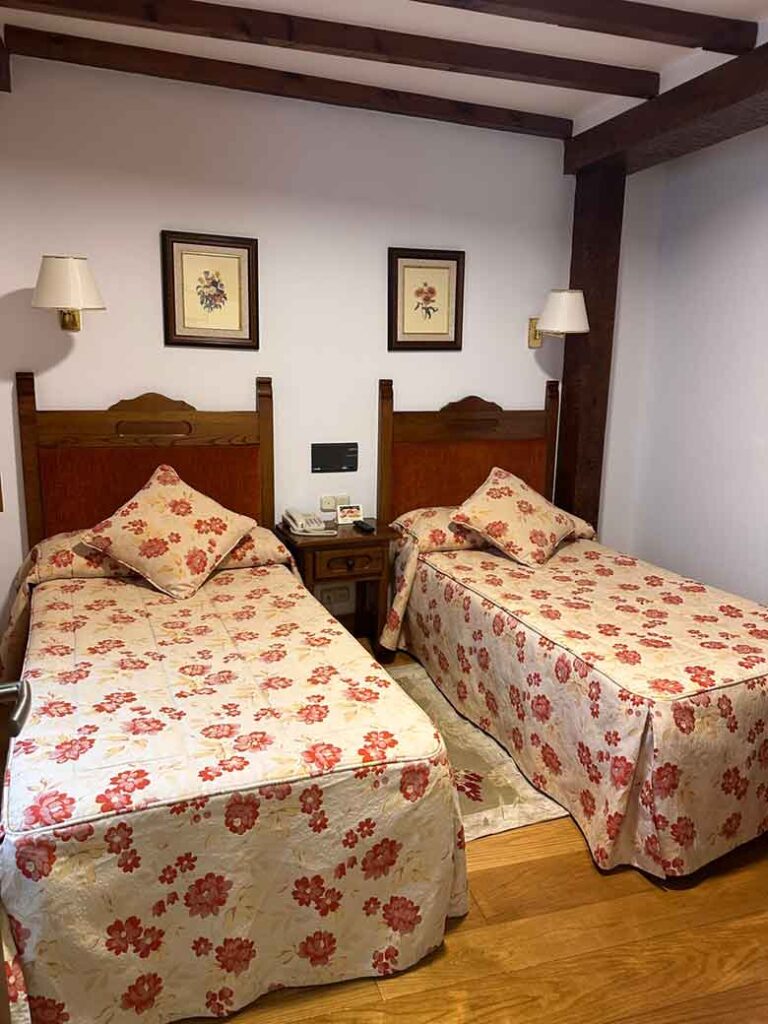
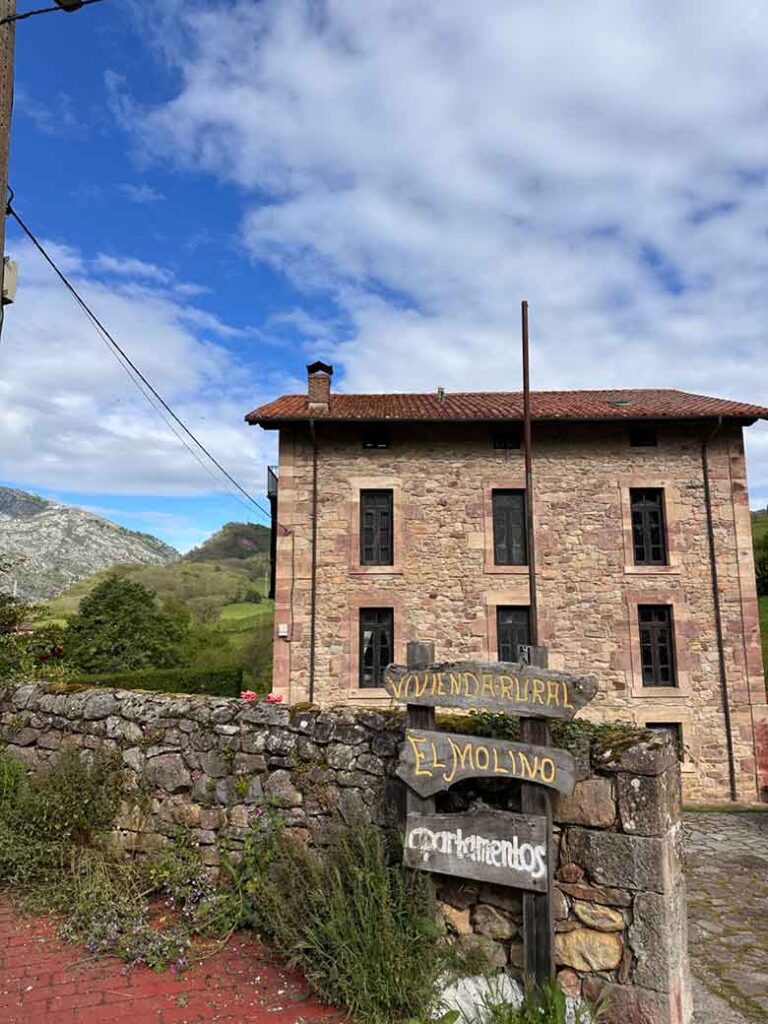
Molino de Cicera in Cicera: a beautiful old country house with stylish rooms. Dinner at Taberna de Otto, though we found the food there to be mediocre.
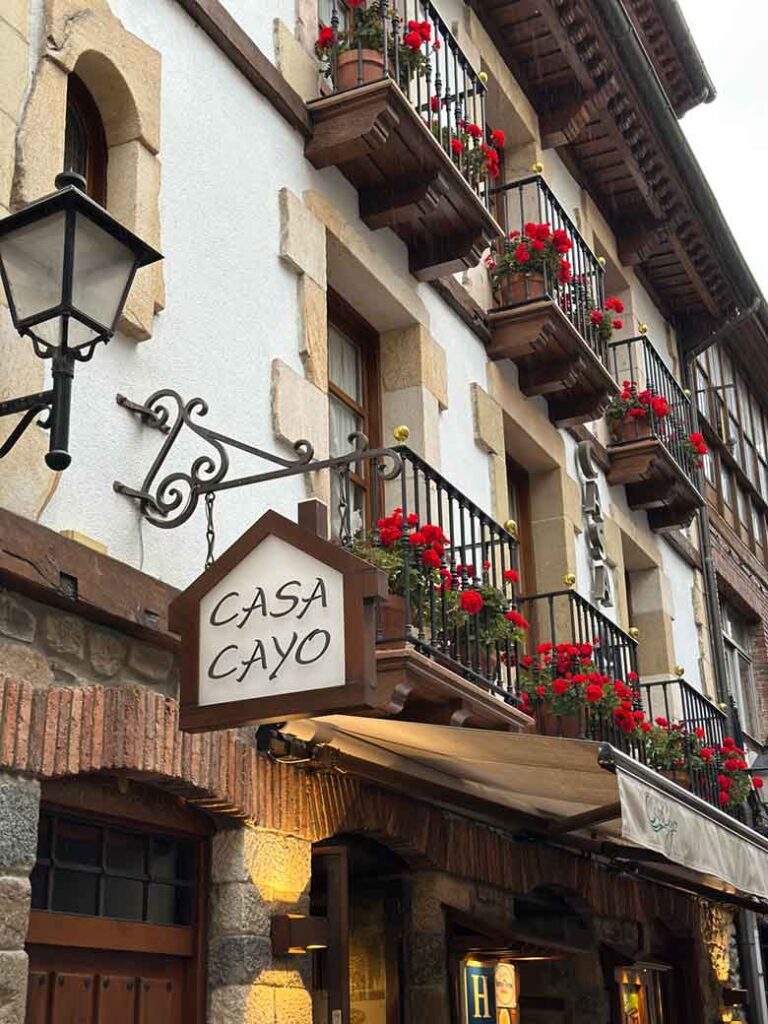
Casa Cayo in Potes and dinner at Restaurante El Bodegon; a charming atmosphere and delicious food.
Hostel Nomada in San Vicente de la Barquera has two dorm rooms; a bed costs between €25 and €30 per night, and there is a shared kitchen and bathroom. There are also lockers for your valuables.
Accessibility: San Vicente de la Barquera is accessible via Santander. From Potes, buses run back toward the coast and larger cities.
If you walk the Camino Lebaniego without working out all the logistical details in advance, you’ll soon find yourself turning to Fidel and el Camino. Fidel arranges luggage transport, transfers between stages, and all the practical details involved, but he does so in a way that remains remarkably personal. He is someone who truly knows the route, the people, and the conditions along the way. Especially on a route like the Camino Lebaniego, where public transportation is limited and stages can sometimes be difficult to combine, Fidel makes all the difference.
Why this Camino sticks with me
Some hiking trails stick in your memory because of a single spectacular day. The Camino Lebaniego is different. It’s the gradual change that stays with you. The scent of the sea slowly fading away. The first glimpse of the Picos. A deserted mountain road. A simple meal in a hamlet. The feeling that northern Spain is still surprisingly pure and unpolished here. And that is exactly why this relatively unknown Camino and this destination make such an impression.
I am an interior designer, photographer, and an avid nature hiker. I’ve lost my heart to the simplicity and beauty of hiking vacations. I also appreciate the unique experience of a stay that tells a story about local history or culture. Here, I share my stories and tips—whenever possible, with a light footprint and always with a heart full of wonder.
Nature in Central Sweden: Waterfalls, Viewpoints, and Bears Around Ytterhogdal If you drive north on the E45, you’ll pass through Ytterhogdal. Most people just drive right through here. That’s understandable—Lapland beckons. But not far from the geographic center of...
Hiking in Arouca: The Most Spectacular Hiking Trails in Portugal's Lush North 516 meters long, 175 meters above a raging river, and no turning back halfway across. That’s the Arouca 516 suspension bridge, the icon of the Arouca UNESCO Global Geopark. This geopark is...
Hiking along the Opal Coast: 3 Days on the GR120 Vast beaches, seawater in the most beautiful shades of blue, green fields. Hiking along the Opal Coast means becoming one with nature—with a touch of history here and there. In short: the Opal Coast on foot Route:...
Last September, we had a wonderful six-day hiking vacation from Bologna to Florence (Via Degli Dei). Not only was the weather perfect, but the organization also contributed to this wonderful experience. The hotels were good, and our luggage was always delivered to the hotel before we arrived. The private transfer was on time, and communication via WhatsApp during our hiking week went smoothly as well; responses were quick and clear. We can therefore definitely recommend this hiking vacation through Nature Travel Lab!
After reading the report on the “Alpenüberquerung,” we got really excited. The combination of hiking through beautiful nature and the luxury of luggage transport and a reserved hotel perfectly meets our desire to stay active but then be able to enjoy a well-deserved drink and a delicious meal. The hikes were manageable for us and very varied; some basic fitness is required, especially since we aren’t used to the elevation gain. The trip really gives you the feeling that you’re on a hiking expedition, especially since you hike on your own but meet the same fellow hikers in the afternoons and evenings at one of the mountain huts or at the hotel. Highly recommended for hikers who love unspoiled nature combined with the luxury of a hotel!
Peloponnese Hiking Tour
A really beautiful six-day hike from Bologna to Florence. Communication with NatureTravelLab and the local agent was excellent. The information packet was waiting for us at the hotel in Bologna, and the app with the route worked great. Luggage transport was well organized every day, and our bags were waiting for us each time we arrived at our new room! We covered more than 1,400 meters of elevation gain, but unfortunately didn’t always get the views we’d hoped for due to cloud cover and some drizzle. Most days had great hiking weather. It was wonderful to walk into Florence on foot and stay there an extra day.
We experienced the Walk of the Gods as a great adventure. Our start in Bologna didn’t go quite as planned because our app wasn’t working yet and we couldn’t find a single sign for Via degli Dei in the square. Fortunately, we were quickly able to join two young hikers from Florence who were also doing the hike. After a wonderful night’s stay at the beautiful Rio Verde agritourism farm, Day 2 went much better with the help of the hiking app. Along the way, we enjoyed stunning views, met some great fellow hikers, and sampled delicious local dishes. Unfortunately, the weather wasn’t always on our side, and we had a day of heavy rain, which made the trail very slippery and required us to be careful. It’s a real treat when, on the last day, you can already see Florence in the distance and walk into this beautiful city a few hours later. Thank you so much for your quick and friendly responses to all our questions.
We enjoyed the trip. We also made some changes to our itinerary, and the email correspondence went very smoothly. We started in Mantera; the next day, our first and only hike was a really beautiful one. The taxi picked us up right on time. Unfortunately, the second day’s route was almost the same when we cycled to Ostuni. The bikes were well-maintained, including panniers and helmets (these were simply included). You could even bring your own water bottle!!! We found the route very scenic and varied. There were charming little villages where we could stop for lunch or coffee. The app worked great. All the hotels ranged from good to excellent, though we didn’t think the hotel in Leuca was worthy of 4 stars. We followed your advice for the two nights we stayed there. We found Leuca a bit underwhelming for a two-day stay. We would have preferred to stay in Gallipoli or Lecce for two days. We took this trip in April and were very lucky with the weather. It’s still a quiet time of year, but we didn’t mind that. We definitely recommend it!!!
Thanks to a great tip from Nature Travel Lab, we had a wonderful week in Italy. Fattoria di Maiano, just outside Florence, was a beautiful and peaceful place. And the suggested road trips were a great guide for exploring the region. We’ll definitely check here for tips for our next vacation, too. Highly recommended!
We spent a divine week in Italy: we walked the Path of the Gods, from Bologna to Florence—about 135 km spread over 6 days of hiking. Challenging distances and climbs, amazing views, nature, and a warm welcome every time we arrived at the agriturismo or albergo/hotel. All of this was perfectly organized by the Italian company Slow Active Tours, entirely in line with Nature Travel Lab’s itinerary proposal: upon arrival in Bologna, an information packet was waiting for us, complete with a hiking map, a booklet, and passports for the stamps. And the hiking app was very practical for along the way! Our luggage was transported every day and was always waiting for us when we arrived at the next location. Communication was smooth and clear. In short, highly recommended, well worth it, and well-organized.
In September, I walked the Cammino Materano. Communicating with Madelon about the booking was a pleasure. To be honest, I was quite nervous because it was my first time doing a multi-day hike—alone and in a region I wasn’t familiar with—but I thoroughly enjoyed it. The hike to Matera was beautiful, and I was able to complete it without any trouble thanks to the clear on-site signage and the routing and advice provided by the GPS app. The rest of the organization was top-notch as well. My luggage always arrived on time at the right destination, and the hotels and B&Bs were of high quality. In addition, the organizers were easy to reach via WhatsApp if I had any questions. Highly recommended!
Slovenia was absolutely amazing. A beautiful country, friendly people, lovely hiking trails, and truly top-notch hotels. The staff at the local organization were also very easy to reach and helpful. The hiking was manageable. As Dutch people, we’re not used to high altitudes, of course, so it was pretty tough at times. But it was also a lot of fun.
We had a wonderful trip. Everything was well organized. Due to an unfortunate fall, I ended up traveling with my luggage for a day, but that was handled well, too. We really liked all the accommodations. Only the Hotel Hebe in St. Piero a Sieve was a little less impressive, but it was still okay.
Looks fantastic! I'm definitely going to book a trip with this company... they're committed to sustainability and personalized advice. Definitely worth it.
Madelon and her team are true experts. Thanks to their years of experience and passion for travel, they manage to surprise us time and time again.
Beautiful hikes, the most picturesque spots—it’s a real treat.
I highly recommend them!
Nature Travel Lab provided us with very helpful and honest assistance!
If you’re looking for travel itineraries, the most beautiful hikes, and destinations, you can find it all here. You’ll find endless inspiration for your next trip. Beautiful cities are interspersed with nature. You’ll find everything you need to know about practical matters. Plus, there are plenty of tips for sustainable travel. That way, you’ll get the most out of your trip.
45
Get inspired
Are you looking for the most beautiful hiking and biking routes? Or do you want information about traveling by train or advice for the most beautiful road trips through nature. Get inspired for your next trip in green; ideas for planning your own trip or opting for an organized trip.
Om je de beste gebruikerservaring te bieden, gebruikt deze website cookies. Door toestemming te geven ga je hiermee akkoord.
Functional
Always active
The technical storage or access is strictly necessary for the legitimate purpose of enabling the use of a specific service explicitly requested by the subscriber or user, or for the sole purpose of carrying out the transmission of a communication over an electronic communications network.
Voorkeuren
De technische opslag of toegang is noodzakelijk voor het legitieme doel voorkeuren op te slaan die niet door de abonnee of gebruiker zijn aangevraagd.
Statistics
The technical storage or access that is used exclusively for statistical purposes.De technische opslag of toegang die uitsluitend wordt gebruikt voor anonieme statistische doeleinden. Zonder dagvaarding, vrijwillige naleving door je Internet Dienst Provider, of aanvullende gegevens van een derde partij, kan informatie die alleen voor dit doel wordt opgeslagen of opgehaald gewoonlijk niet worden gebruikt om je te identificeren.
Marketing
De technische opslag of toegang is nodig om gebruikersprofielen op te stellen voor het verzenden van reclame, of om de gebruiker op een site of over verschillende sites te volgen voor soortgelijke marketingdoeleinden.