
Gratis gids 10 verborgen natuurplekken in Europa
Gratis gids 10 verborgen natuurplekken in Europa. Meld je aan voor onze nieuwsbrief en ontvang inspirerende reistips en routes voor je volgende groene reis.

After a 3.5-hour drive from Barcelona, I arrive. At an elevation of 1,210 meters, in a hamlet in the Val de Lleida in the Spanish Pyrenees. Seurí. Yeah, just look at the map below—I couldn’t find it either. It’s also sometimes called Saurí.
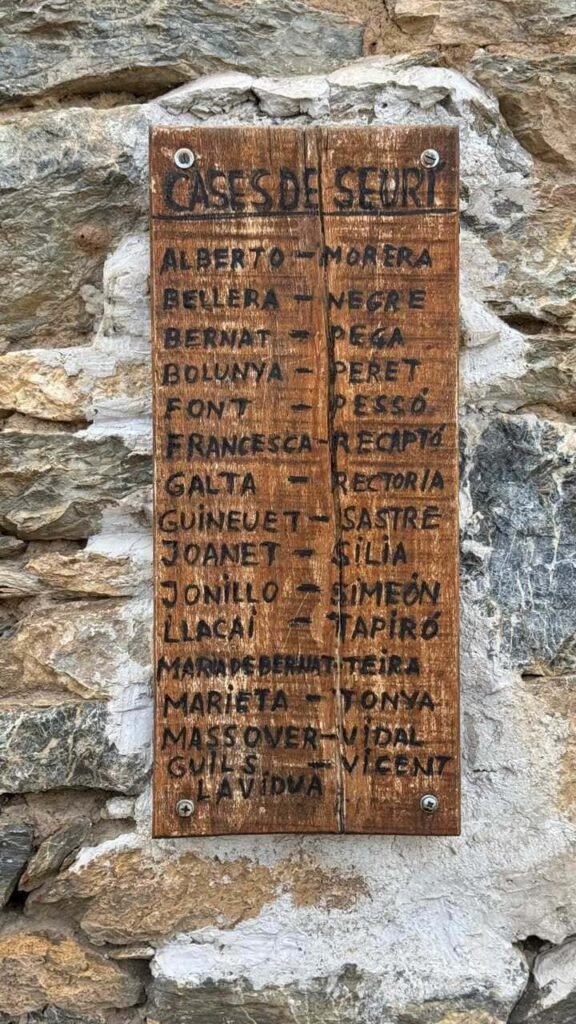
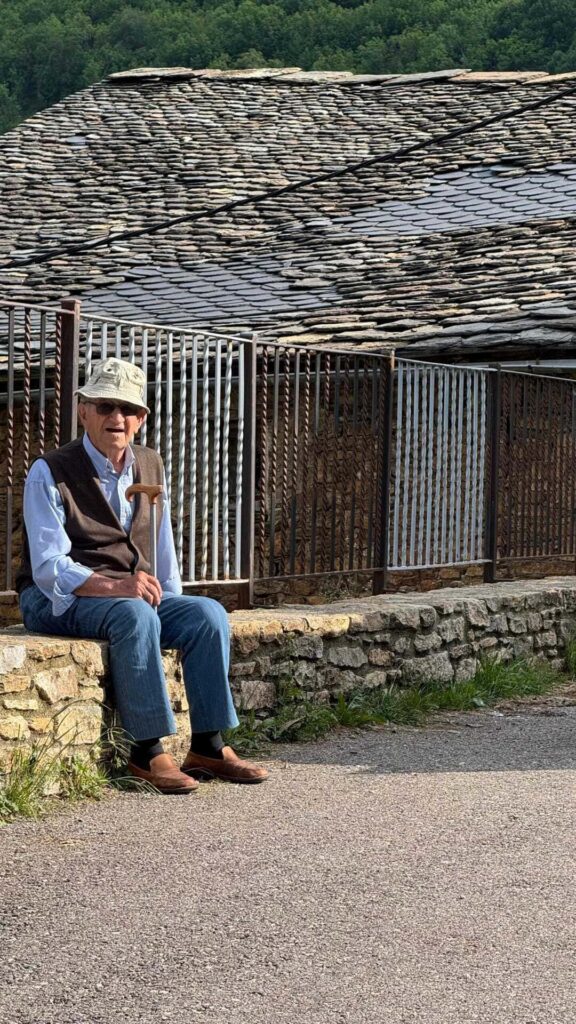
An old man with a cane and a hat is sitting on the edge of a low stone wall. “What a beautiful photo,” I think immediately. You can almost hear the silence. The village seems deserted. The names of the 15 residents are listed on a wooden sign attached to a building’s facade. A steep path leads further up into the medieval village. This seems like a place where time stands still.

And then I arrive at the destination of my trip: the 12th-century church Església de Sant Víctor. Unremarkable from the outside, but inside…
The guide is already waiting for me in front of the church and immediately begins telling me about the unique art project that began here 11 years ago. The church had been severely neglected. Cracks in the walls, moisture problems, peeling plaster. The idea arose to ask Santi Moix to undertake a restoration. Not just any artist, but someone who had spent his childhood in the village.
Moix hesitated at first, but decided to take on the project. In 2015, he began a radical transformation of the interior. He used traditional fresco techniques and achieved a complete metamorphosis in thirty days. And you can feel it the moment you walk in.

I step inside, and… I’m completely overwhelmed. Brightly colored frescoes of flowers, plants, people, and animals dance across the walls. No religious icons or saints—just pure nature. Tears roll down my cheeks. The guide nods: “That happens quite often.”
This is not a museum, nor is it a tourist trap. It is a place where art and nature come together in pure simplicity. The combination of the desolation, the light, and the unexpected beauty leaves a deep impression.
The guide explains that Antonio, the old man sitting on the bench at the bottom of the village, keeps an eye on her whenever she comes to Seurí. That’s how he knows there are visitors, and he waits on the bench to see how people react when they return from the little church. I understand why.

For Moix, nature is the foundation of his work. Inspired by the teachings of Francis of Assisi, he shows how every aspect of the natural world has meaning and value. His frescoes depict insects, flowers, flowing water, and stars. Every detail contributes to a sense of harmony—a connection between people, nature, and something greater.
Hanging in the center of the church is a 250-kilo ceramic flower, the symbolic heart of the work. It is a tribute to creation itself and a sign of new life after death.


Not only is the concept beautiful, but it’s also exceptionally well painted. The longer you look at it, the more you discover. Santi Moix wants the space to help enrich your inner world, spark your curiosity, and bring about harmony. In my case, it certainly succeeded.
The village of Seurí is located in a remote corner of the Catalan Pyrenees, surrounded by meadows, mountains, and old farmhouses. The church had long been forgotten. Thanks to Moix’s work, it has become an obscure yet awe-inspiring art venue—and a reason to visit this valley.


A guided tour lasts about an hour and is highly recommended.
Santi Moix was born in Barcelona in 1960. After spending his childhood in Seurí, he moved to New York at the age of 26, where he established his career as an artist. He still has a home in the village. His work, ranging from painting to sculpture, often explores the relationship between humans and nature.
His choice of the fresco technique at Sant Víctor is a nod to the Romanesque artistic tradition in this region. It is a complex technique that requires great skill: painting on wet plaster, without the possibility of making corrections, using natural pigments.


I actually wanted to keep it a secret. But some places are just too special not to share. As far as I’m concerned, Moix’s frescoes in the church in Seurí are one of the most impressive artistic experiences in Europe. And all this in a little village that isn’t on any tourist map.
Let yourself be surprised. Let yourself be moved. And take the time to look. To really look.
I looked up Moix’s work online, and yes, it’s for sale. I’ll keep saving up for a little while longer.


Fresco painting is the technique Santi Moix has chosen to ensure the work’s durability and to pay homage to the great masters of Romanesque art, who brought light and color to many of the churches in the Pyrenees.
It requires collaboration between the artist and the plasterer. The painting technique is applied to a surface covered with two layers of lime mortar: a thicker layer consisting of slaked lime, sand, and water; and a second, thinner layer consisting of marble dust, slaked lime, and water.
The pigment is applied to this final layer while it is still damp. This means the painter must work quickly, within a few hours of applying the mortar. The greatest difficulty with this technique is that corrections are not possible, because once the pigments are applied, they are immediately absorbed by the surface. Furthermore, you must anticipate the resulting color, as the shade changes as it dries.
This technique was used extensively in the church. A synthetic material that adheres to the lime mortar was also used for the flowers and plants. The central flower in the church is made of terracotta and porcelain.
Read more here about beautiful, undiscovered spots in Spain.

With a passion for travel and photography and over 30 years of experience in the travel industry, I love to share my special nature travel tips. Travel is wonderful and important, you meet new people and cultures and it opens your view of the world.
Just twenty minutes past the coast lies a completely different Málaga Twenty minutes by car from Málaga Airport, the highway turns into a winding road leading into the mountains. The coast disappears behind you, and ahead lie olive and almond trees, karst rocks, and...

Aachen Off Track: A Green City Trip Featuring a Forest, an Organic Garden, and Charlemagne A city with an imperial history, surrounded by forests stretching all the way to the Belgian and Dutch borders. Aachen cannot be taken in at a single glance: its historic...
Get inspired
Are you looking for the most beautiful hiking and biking routes? Or do you want information about traveling by train or advice for the most beautiful road trips through nature. Get inspired for your next trip in green; ideas for planning your own trip or opting for an organized trip.