Gratis gids 10 verborgen natuurplekken in Europa
Gratis gids 10 verborgen natuurplekken in Europa. Meld je aan voor onze nieuwsbrief en ontvang inspirerende reistips en routes voor je volgende groene reis.


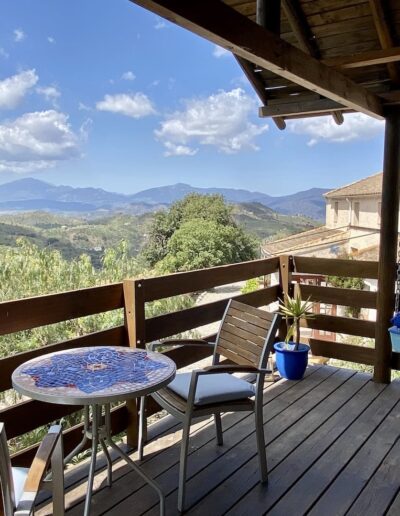
Twenty minutes by car from the Málaga airport, the highway turns into a winding road leading into the mountains. The final few kilometers take you along a sandy path up 500 meters, winding through olive and almond trees, until the coast is behind you and all you can see are the Guadalhorce Valley and the mountains of the Sierra de las Nieves.
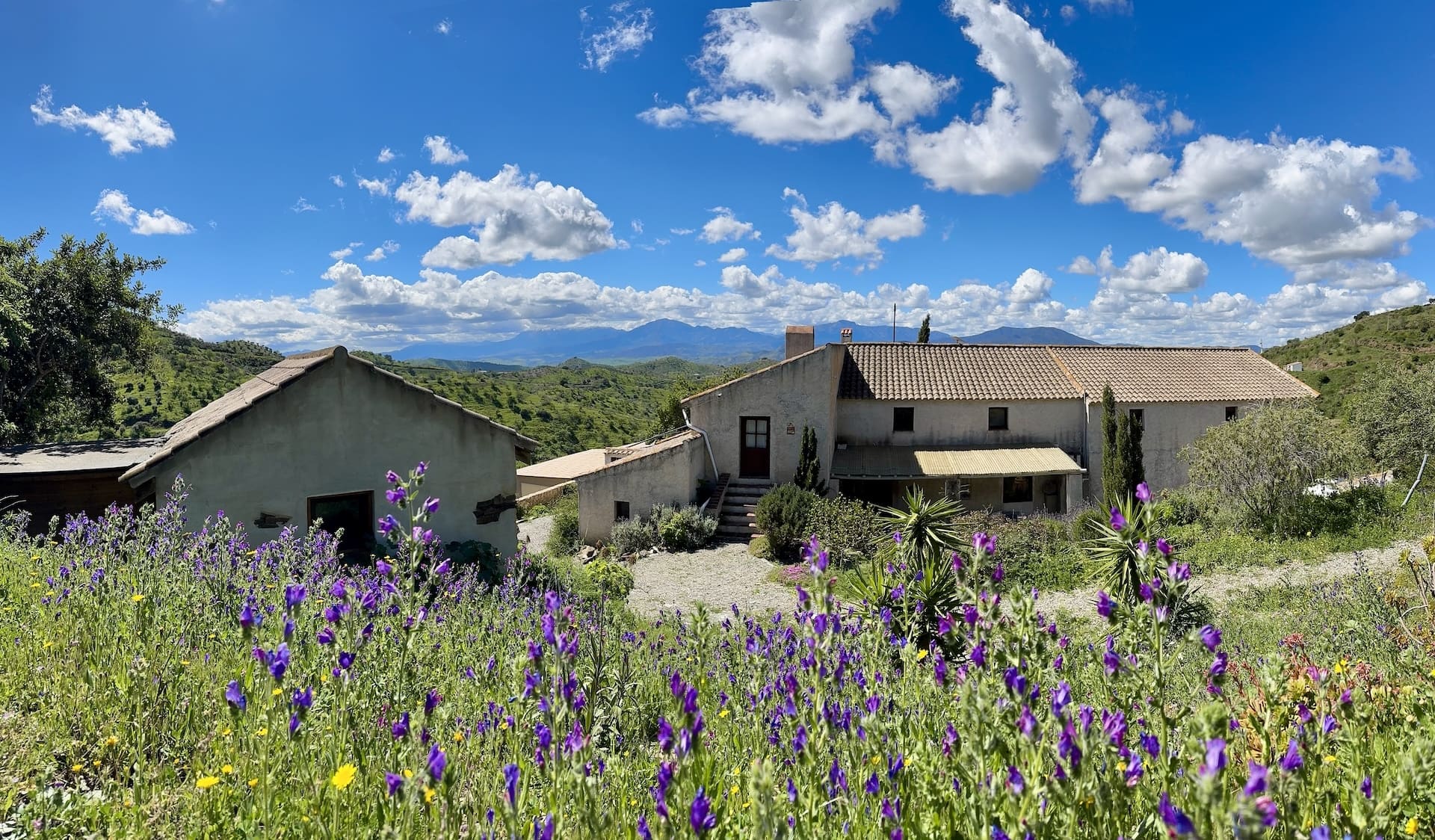
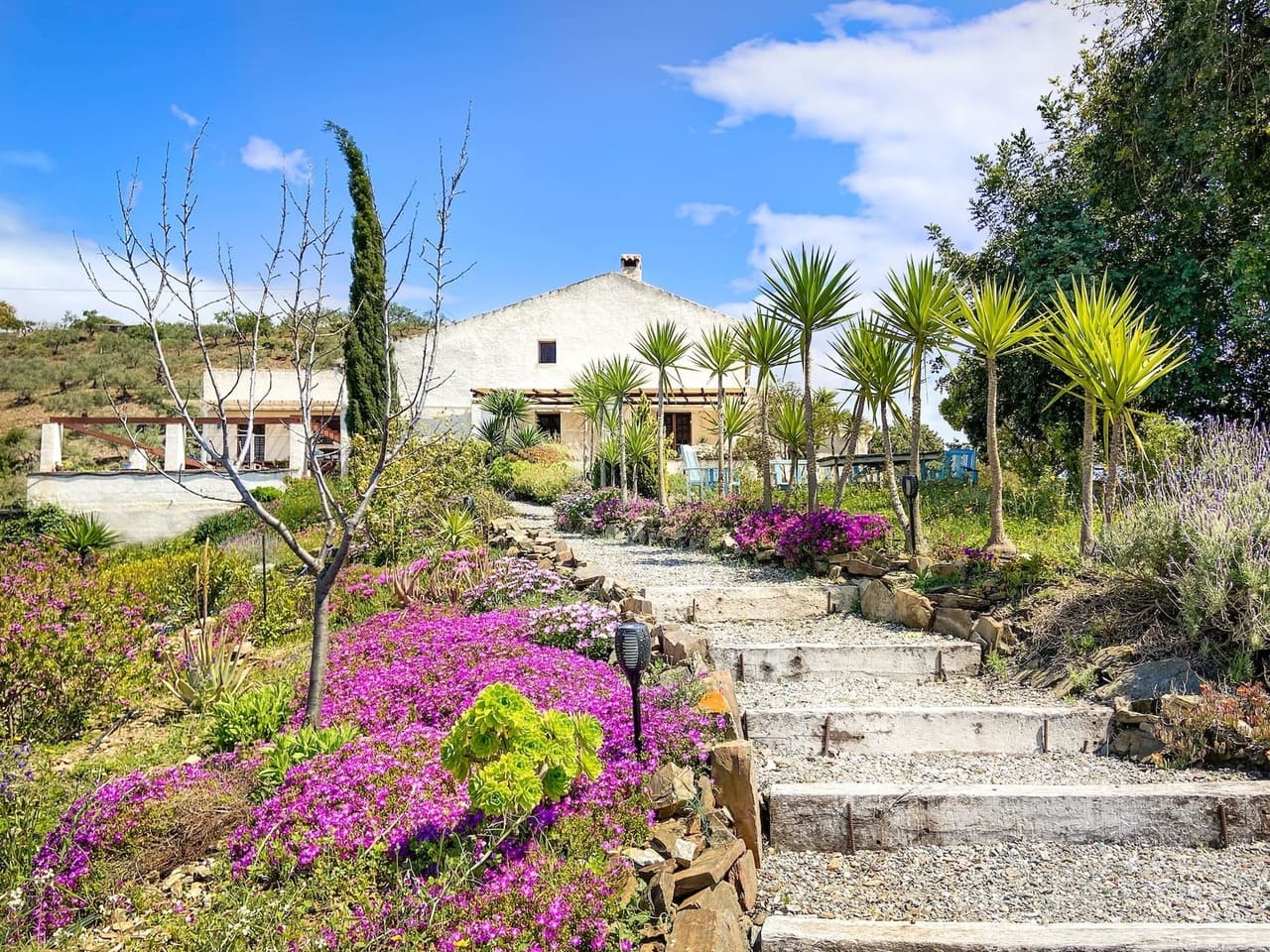
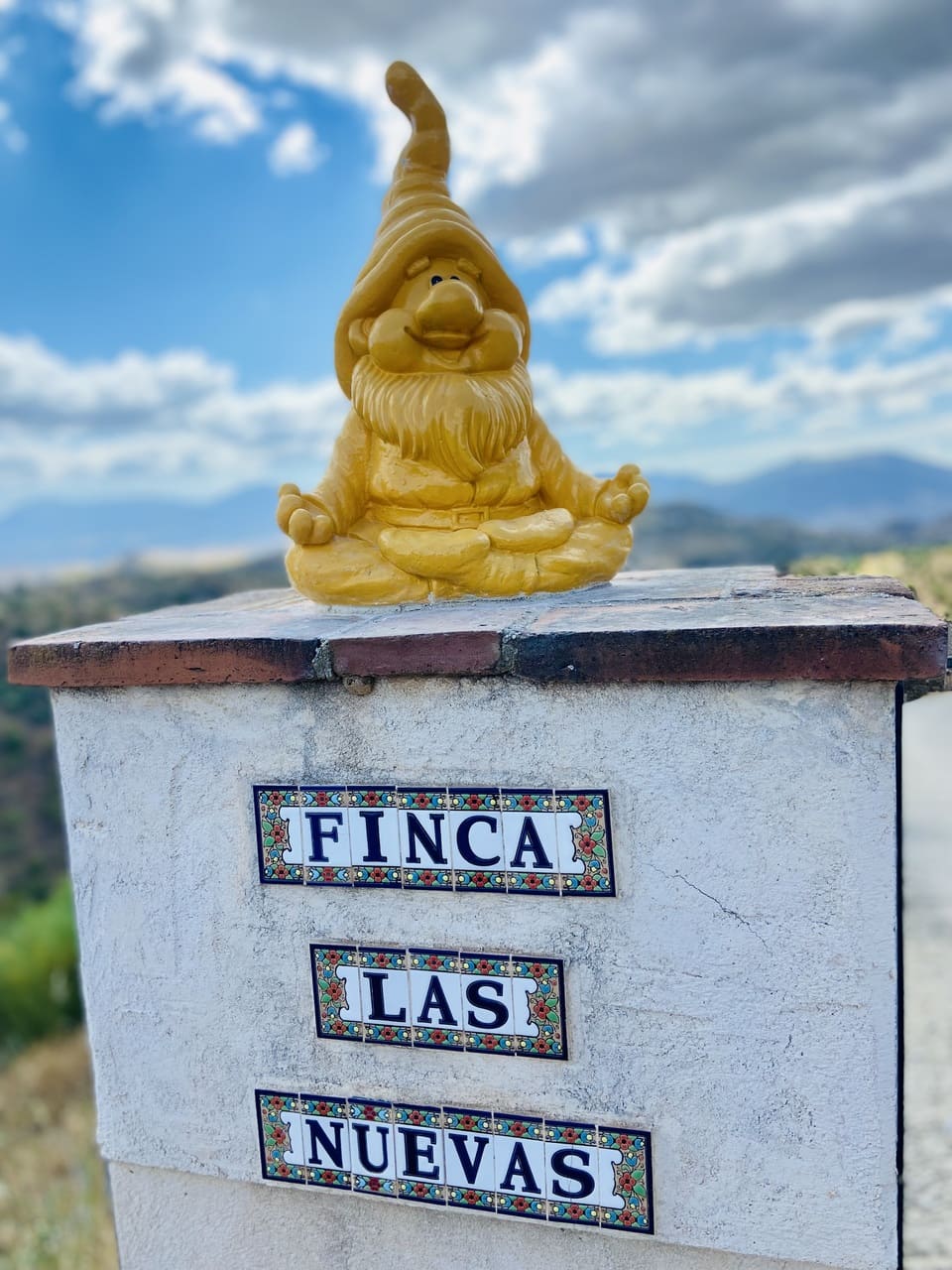
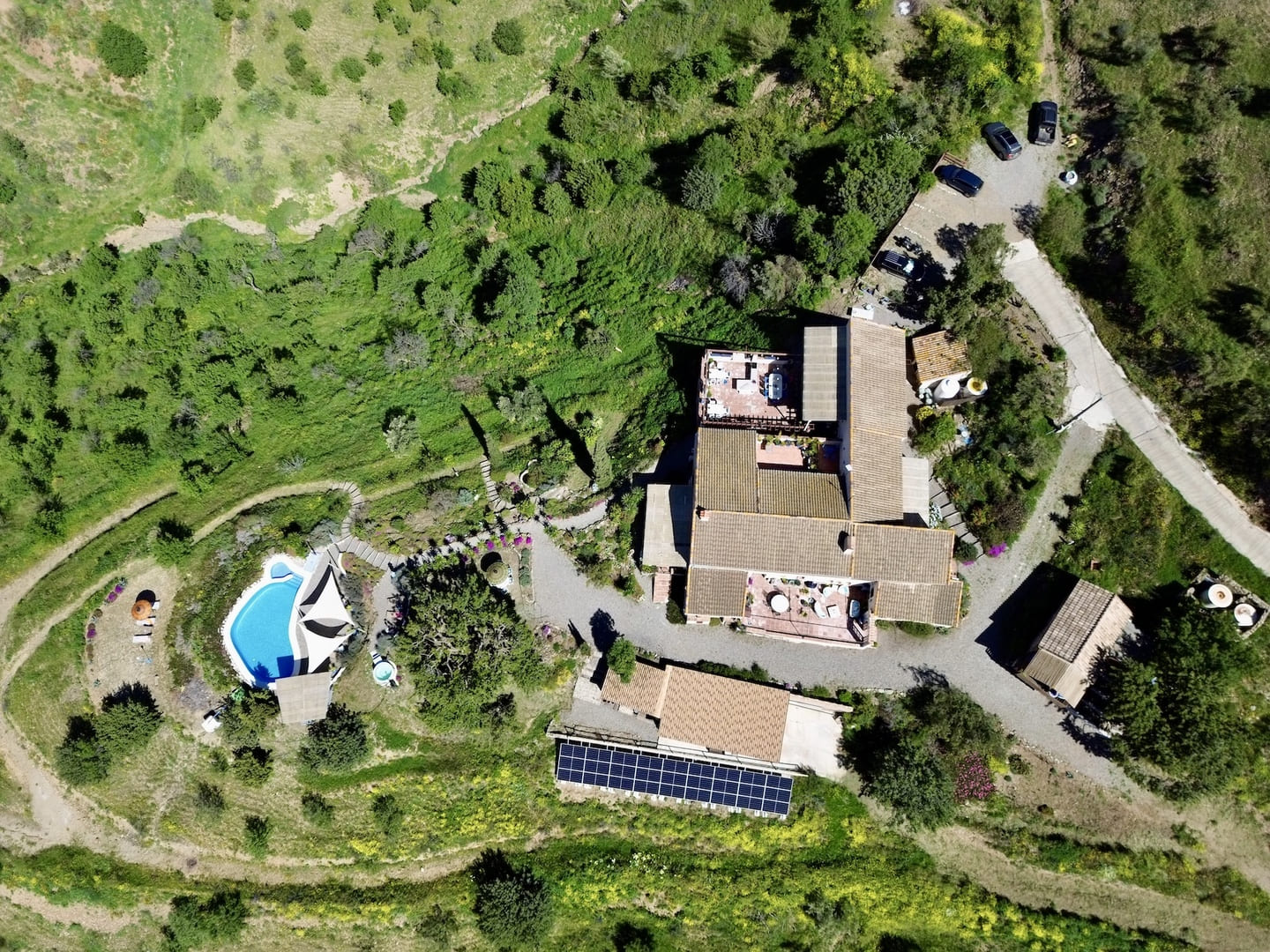
Here, between the villages of Álora and Cártama, lies Finca Las Nuevas: a century-old olive farm with several vacation homes, a shared pool, and—during the winter months—a wood-fired hot tub.
No major access roads, no traffic. Just cicadas and, at night, a starry sky the likes of which haven’t been seen in the Netherlands for a long time. And you might spot some rare birds, such as the bee-eater, hoopoe, griffon vulture, short-toed eagle, and European canary.
After traveling all over the world, Robert and Pascalle have fallen in love with this beautiful region. They run Finca Las Nuevas as a small family business, and you can really feel it: personal recommendations about the area, genuine hospitality, and a pace that naturally slows down the moment you step out of the car.
Most visitors to this corner of Andalusia come for the coast. But if you drive a few kilometers inland, you’ll find yourself in a completely different landscape: a patchwork of olive and almond trees, karstrocks, and white villages that seem to be clinging to the mountainsides. Álora is one such village, an authentic white mountain village about a twenty-minute drive from the finca, known for its castle ruins and as the gateway to the Caminito del Rey. Here you can read more about the area around Álora and the Guadalhorce Valley.
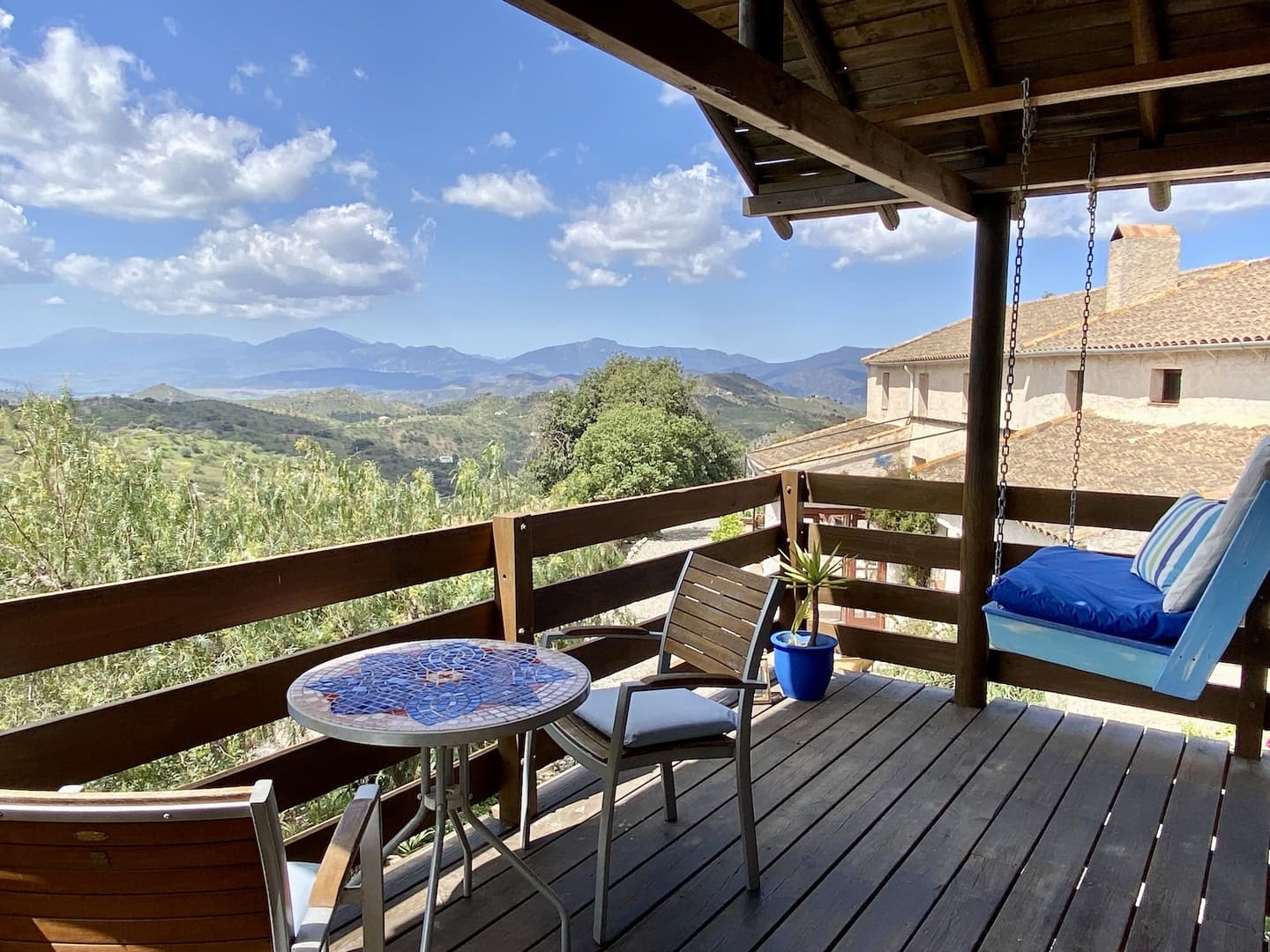
Finca Las Nuevas is situated in the heart of this landscape, overlooking the Guadalhorce Valley and the mountains of the Sierra de las Nieves. Next to the driveway stands a circular threshing floor (an “era” in Spanish), a reminder of the time when grain was grown and dried here. Today, those same hills are mainly home to olive and almond trees.
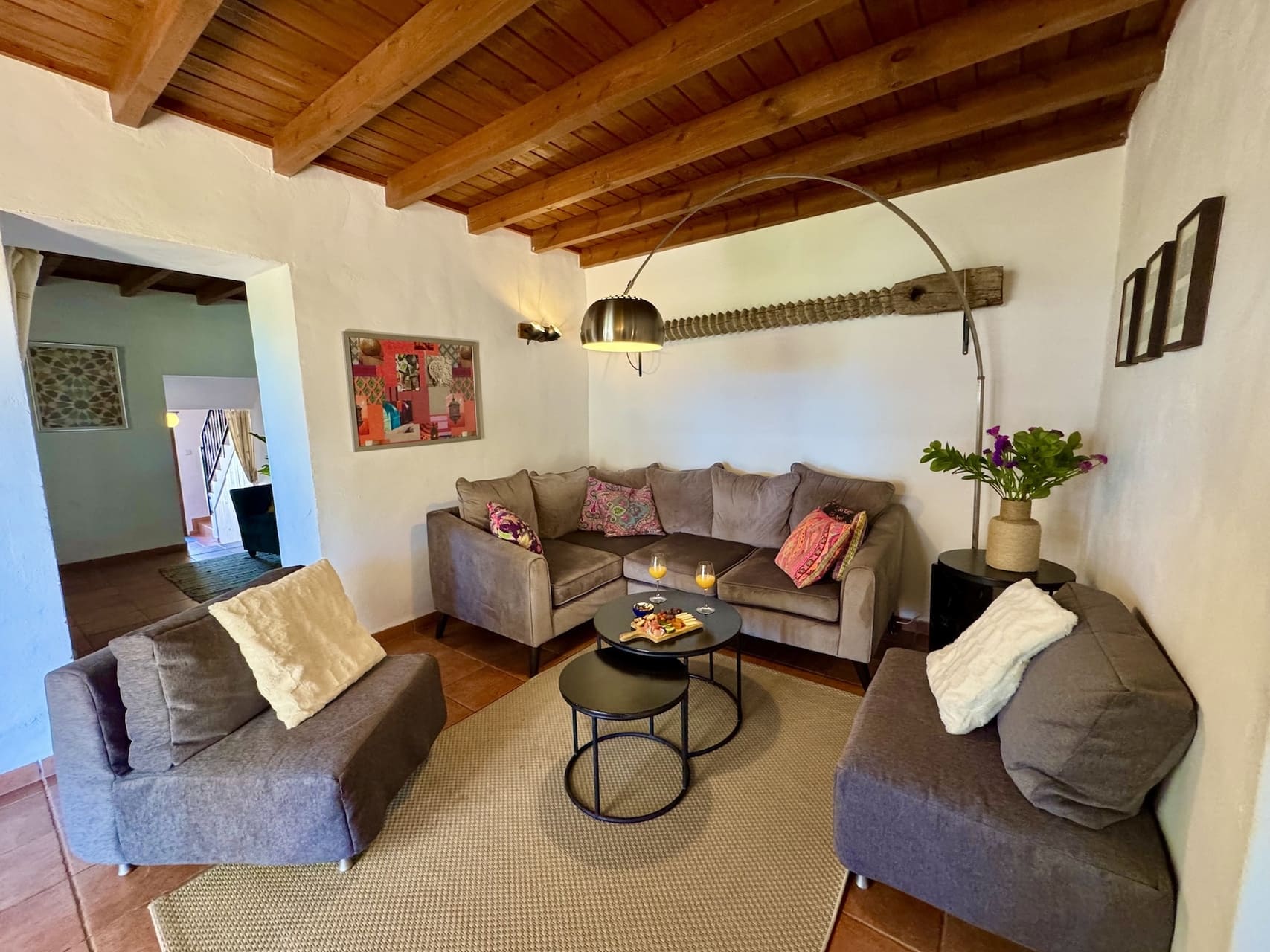
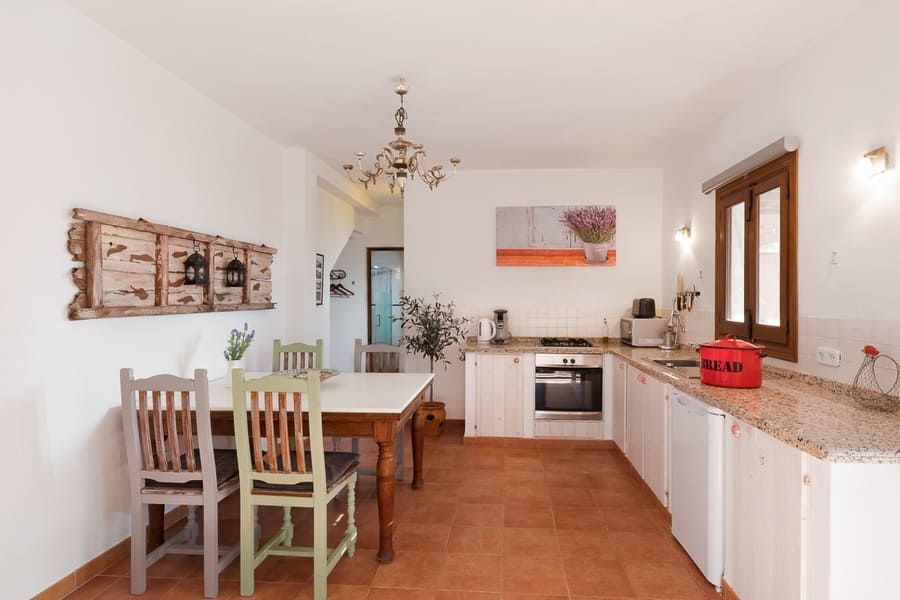
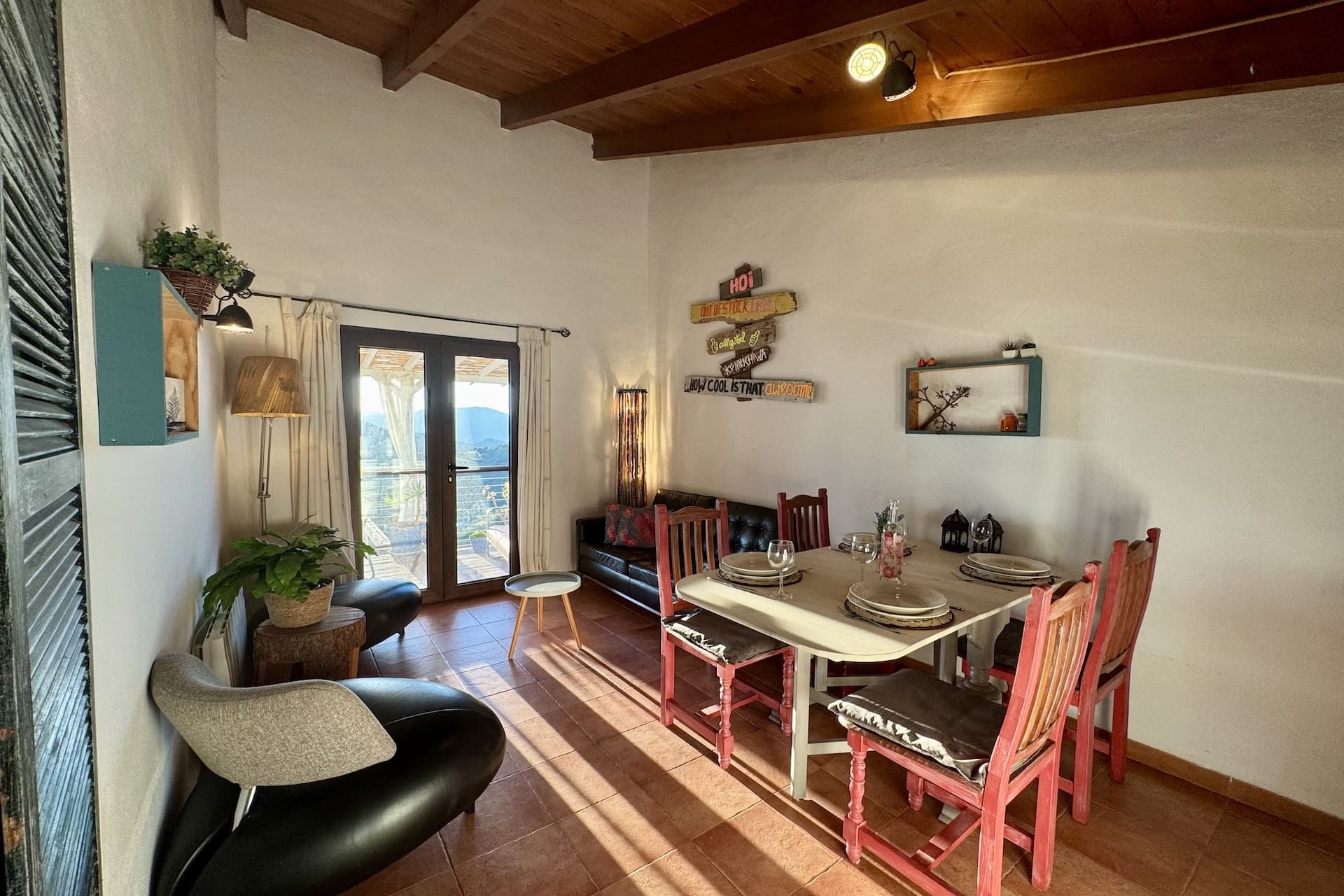
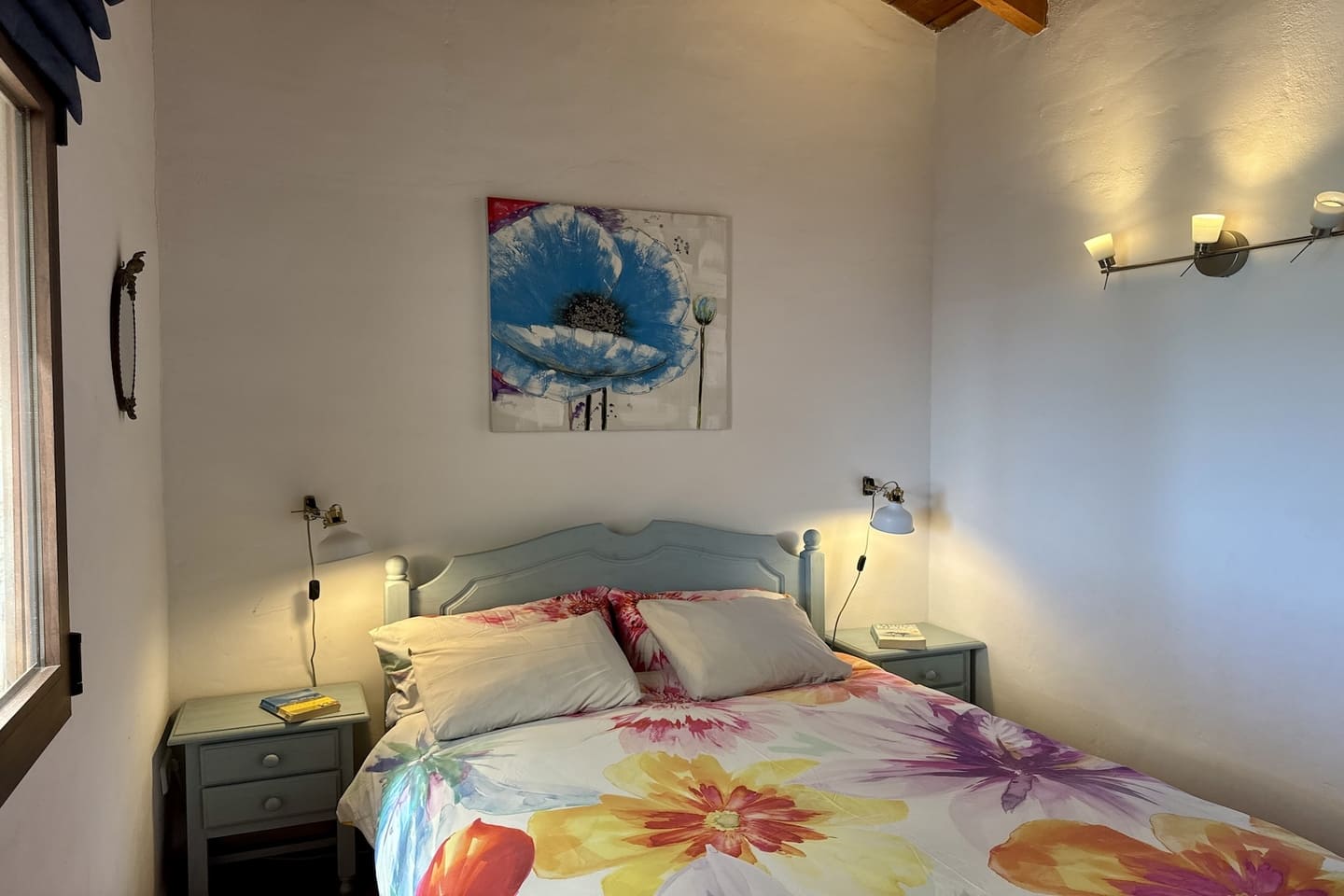
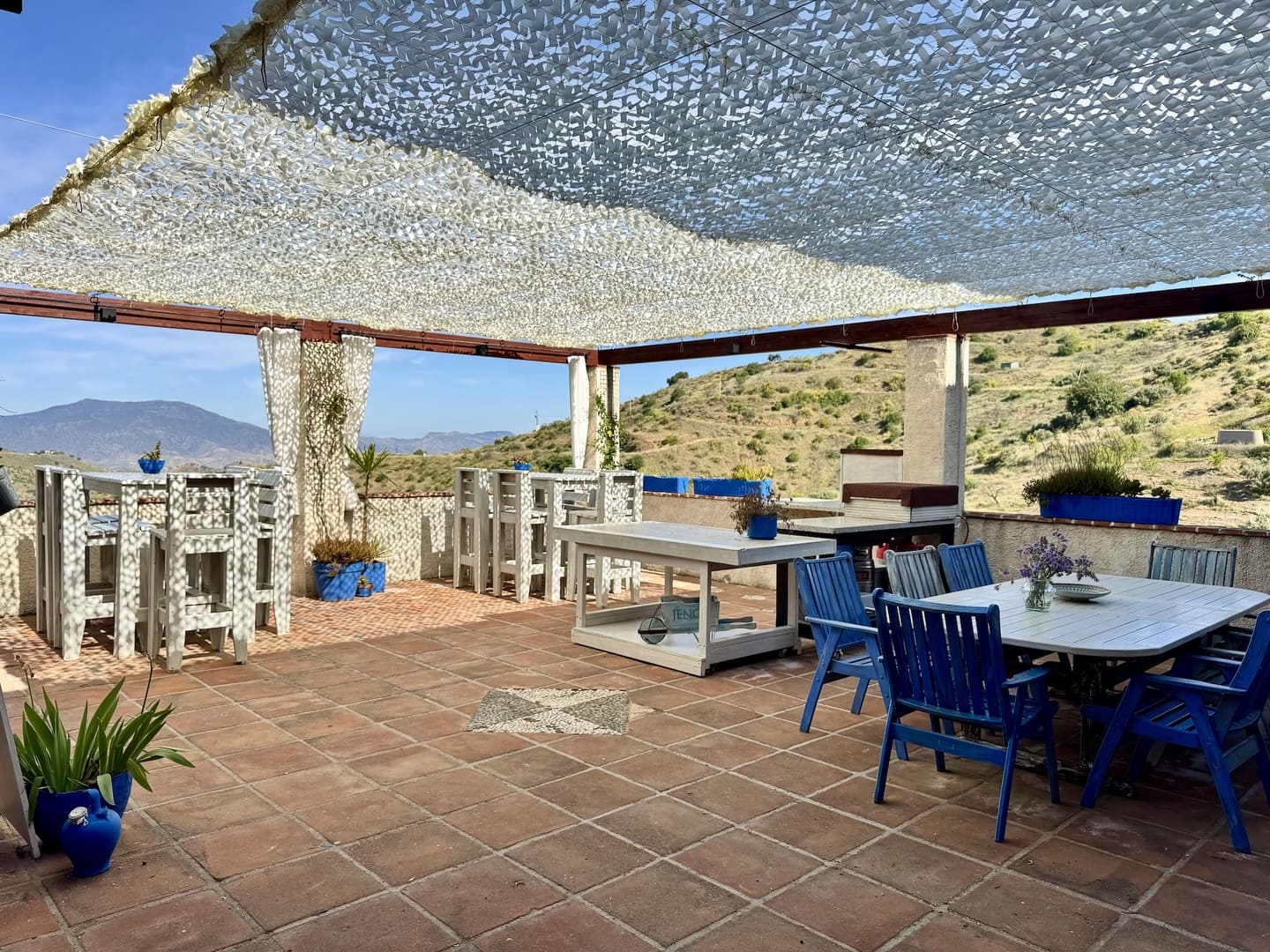
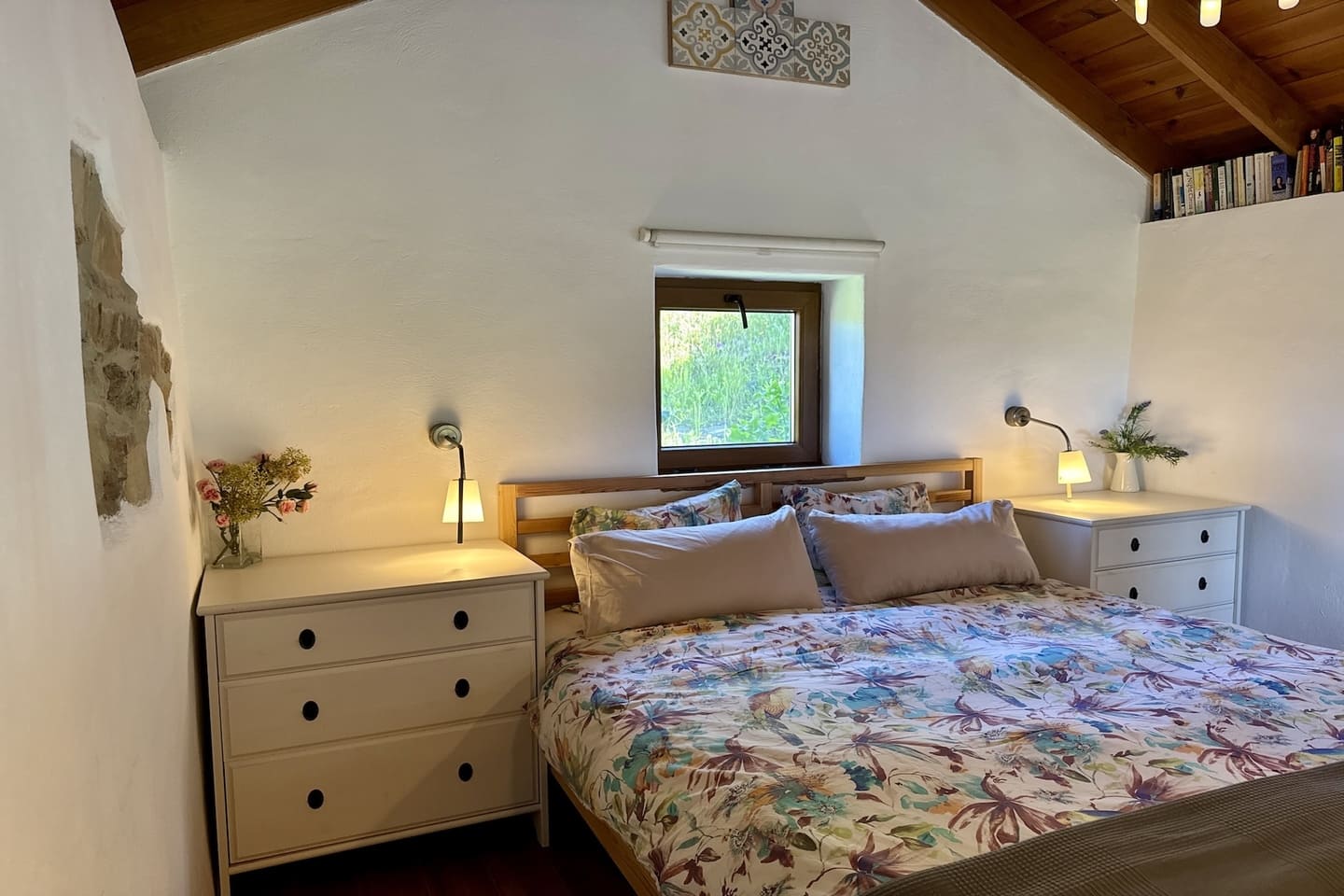
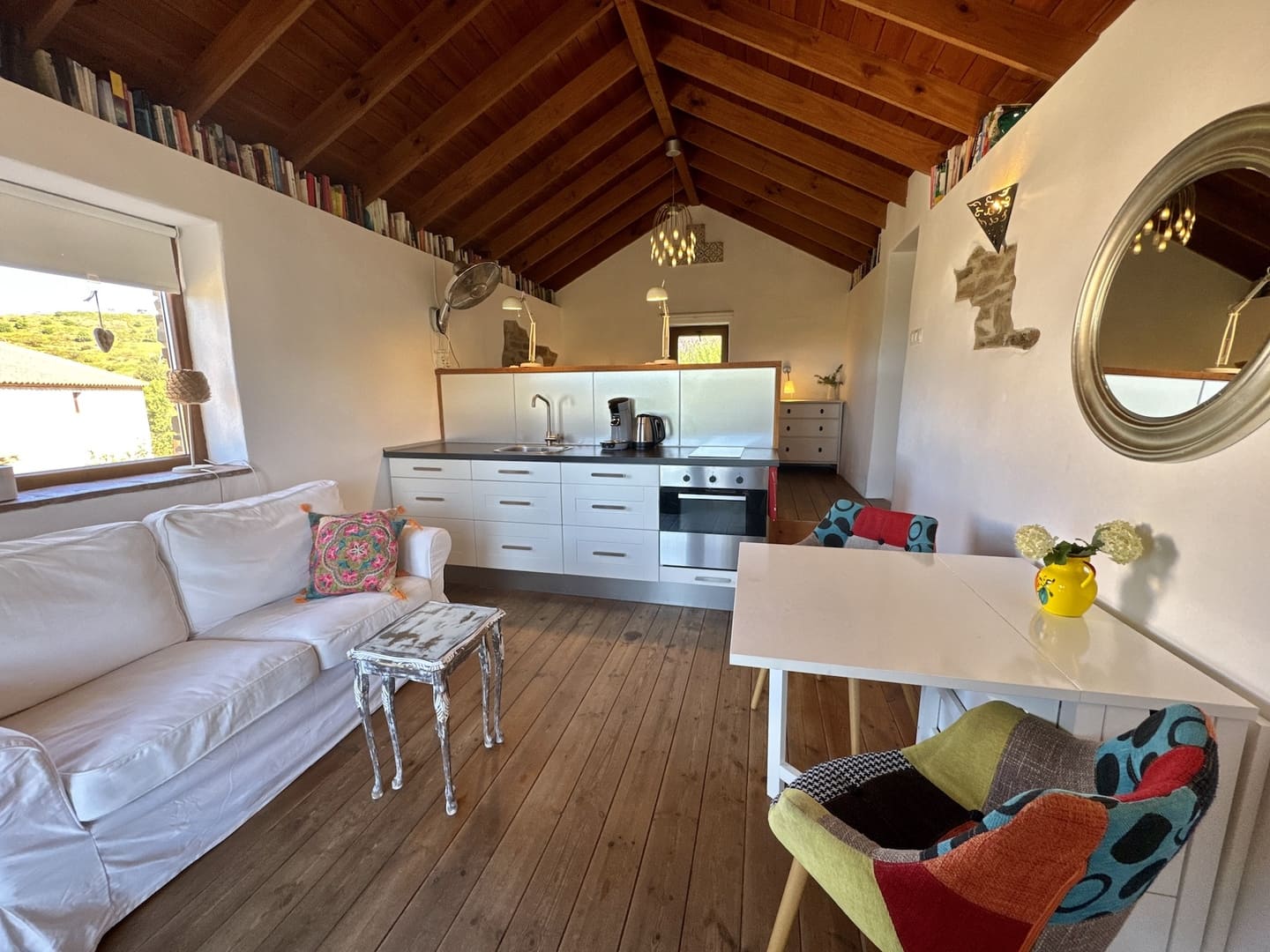
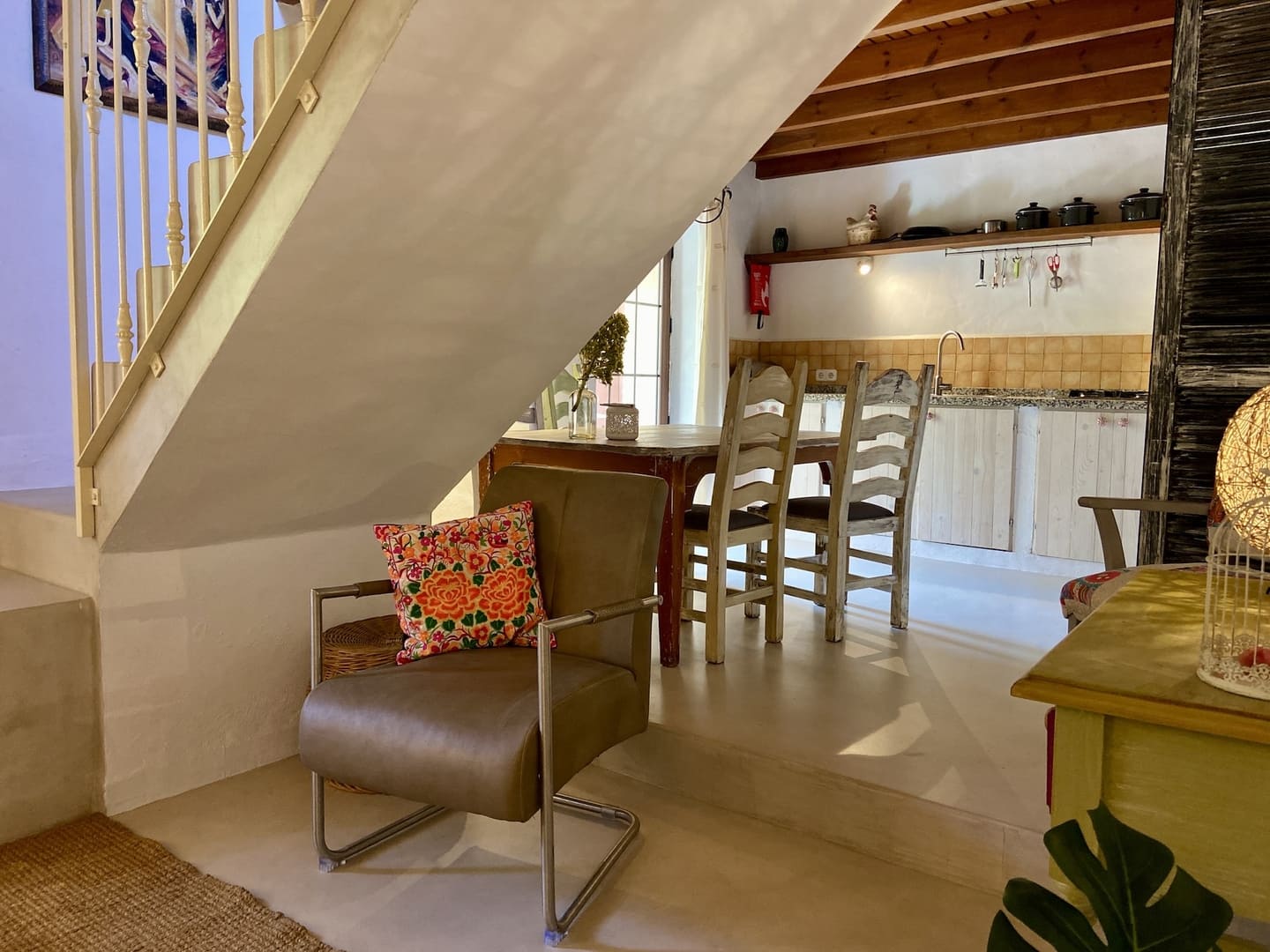
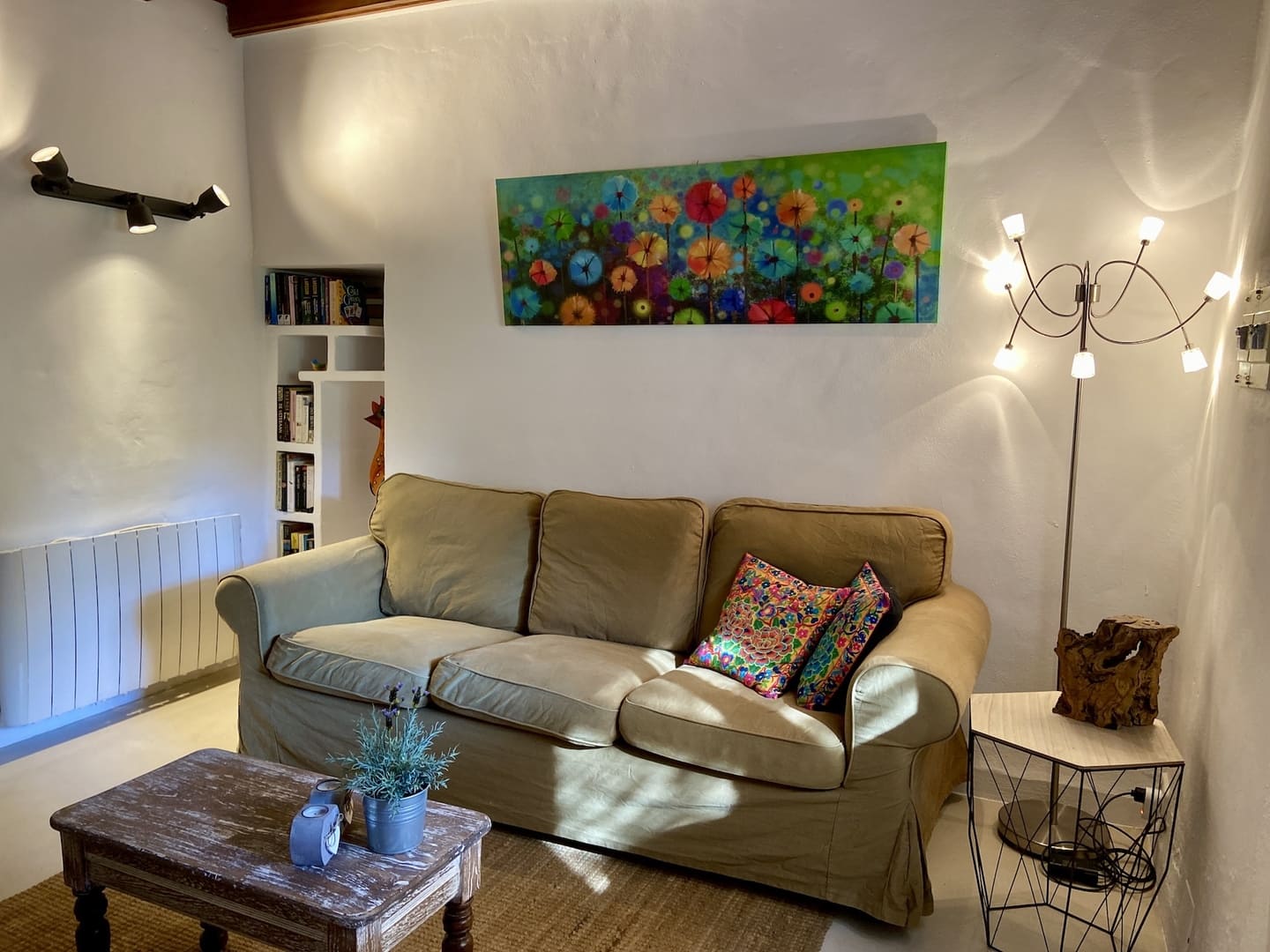
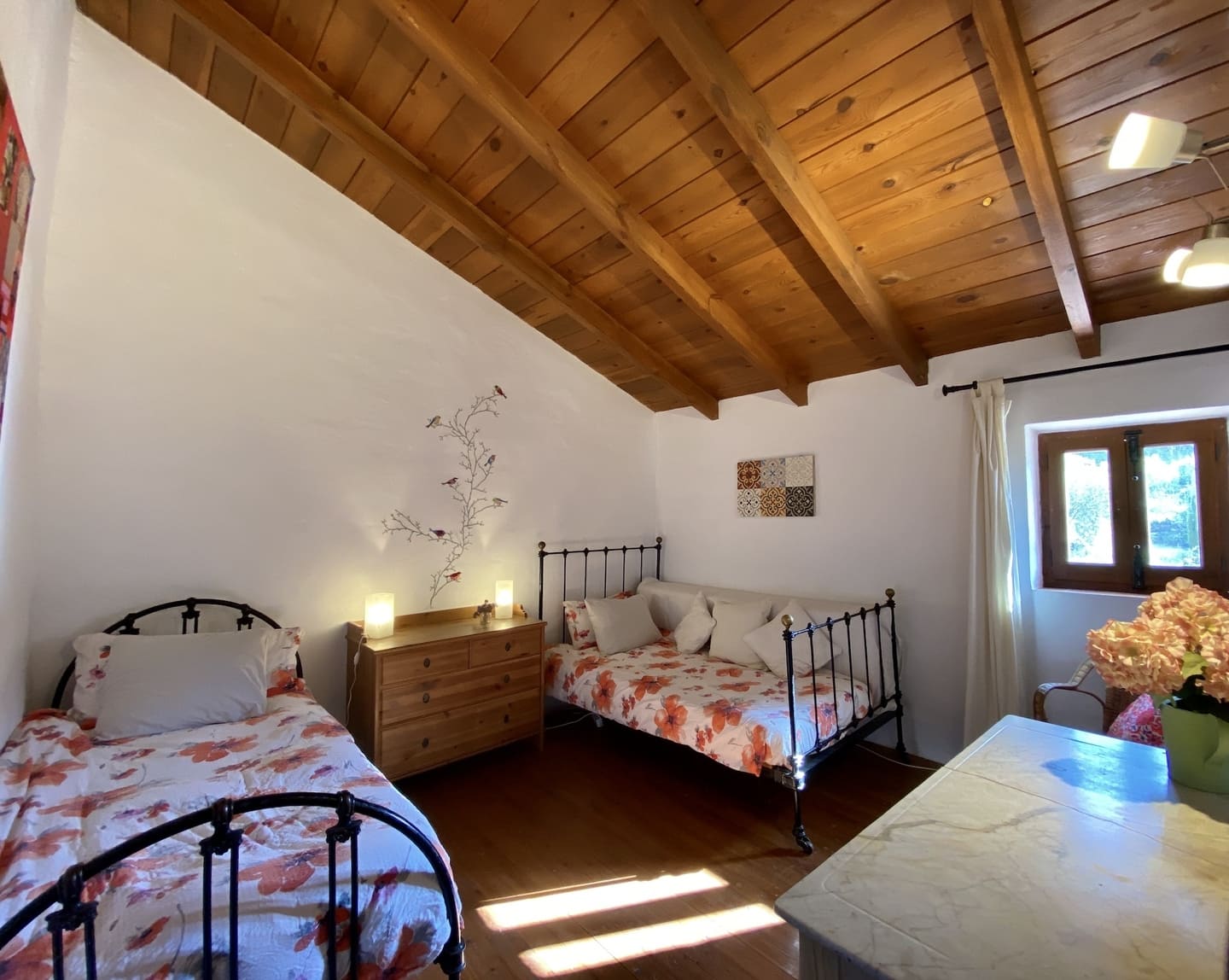
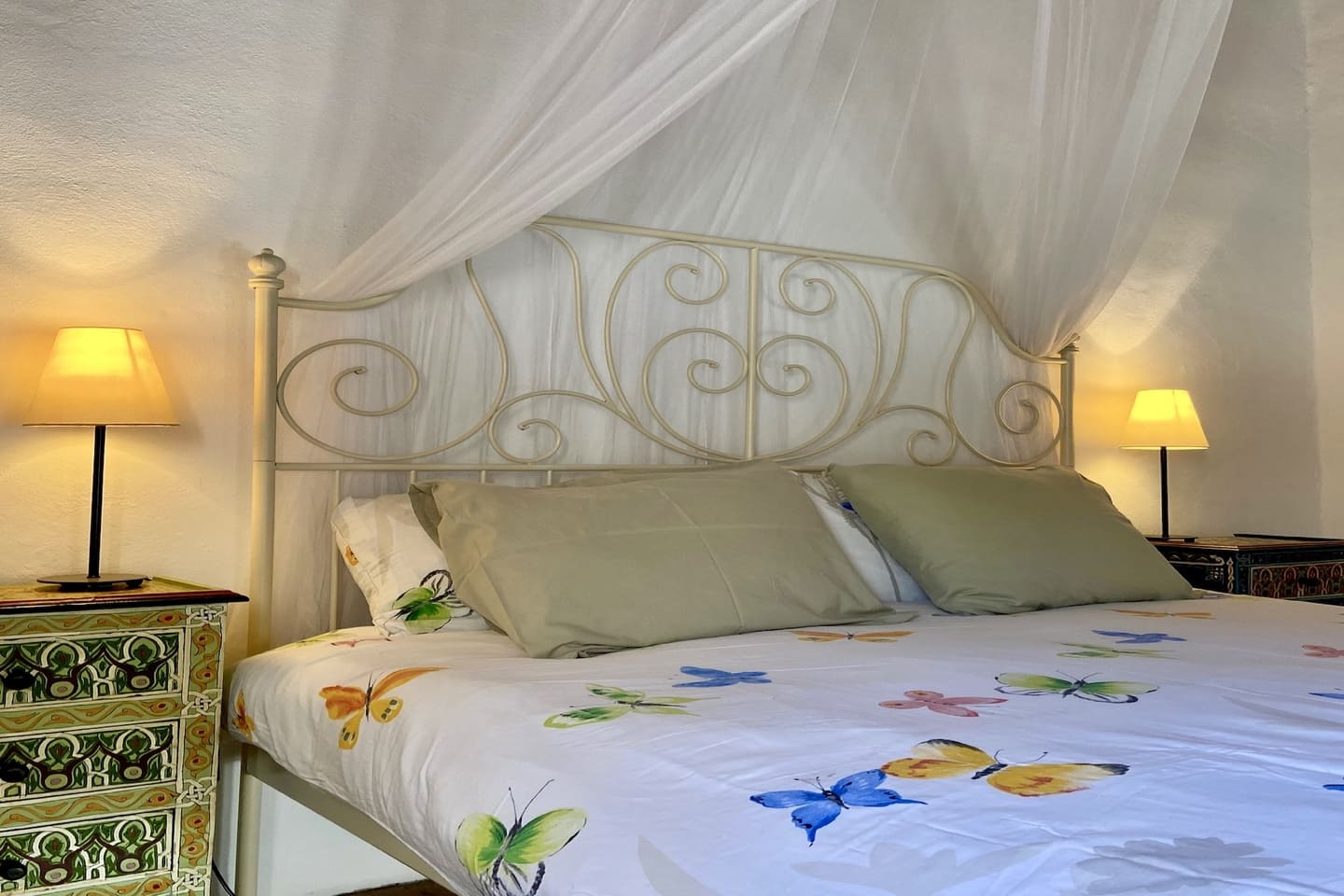
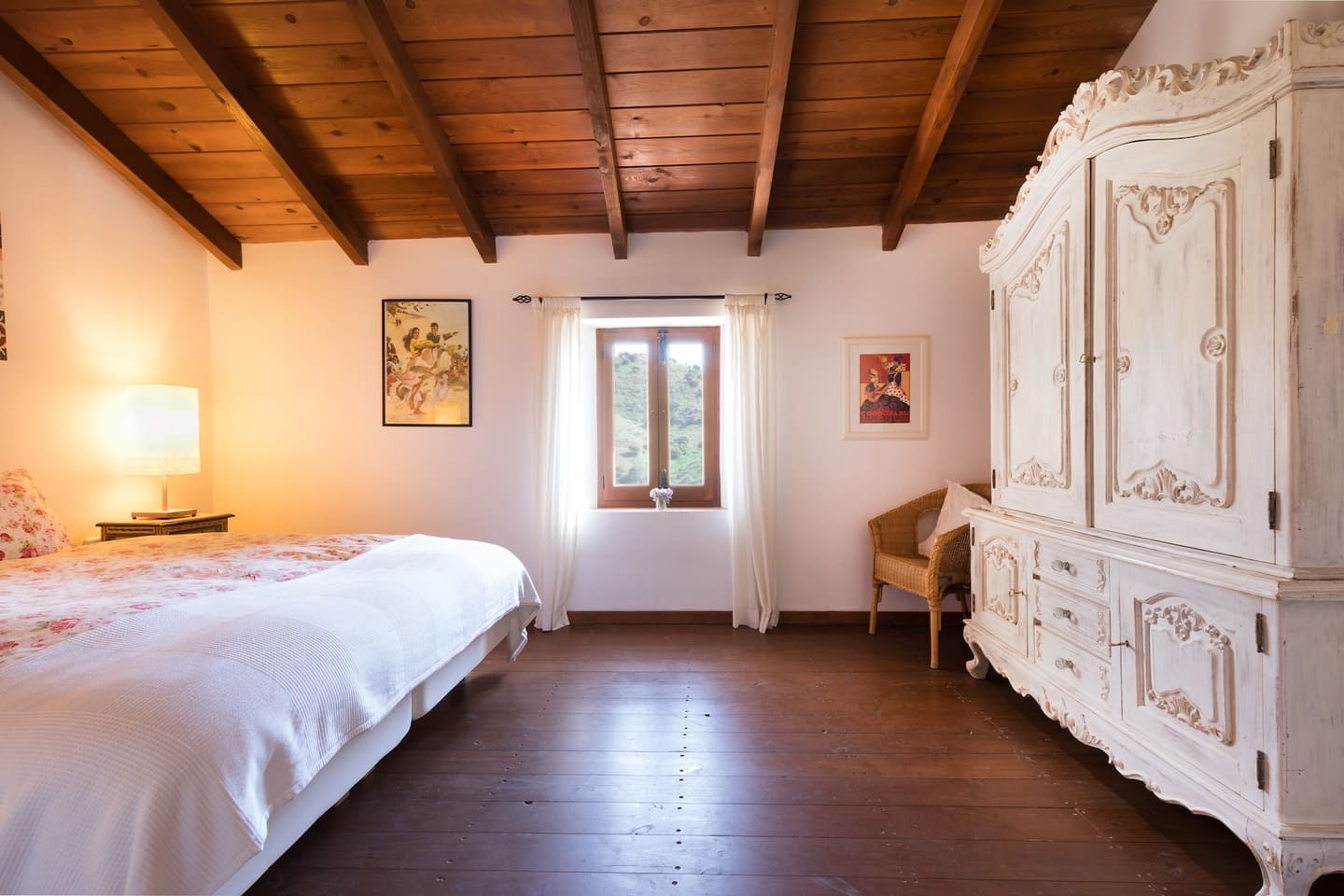
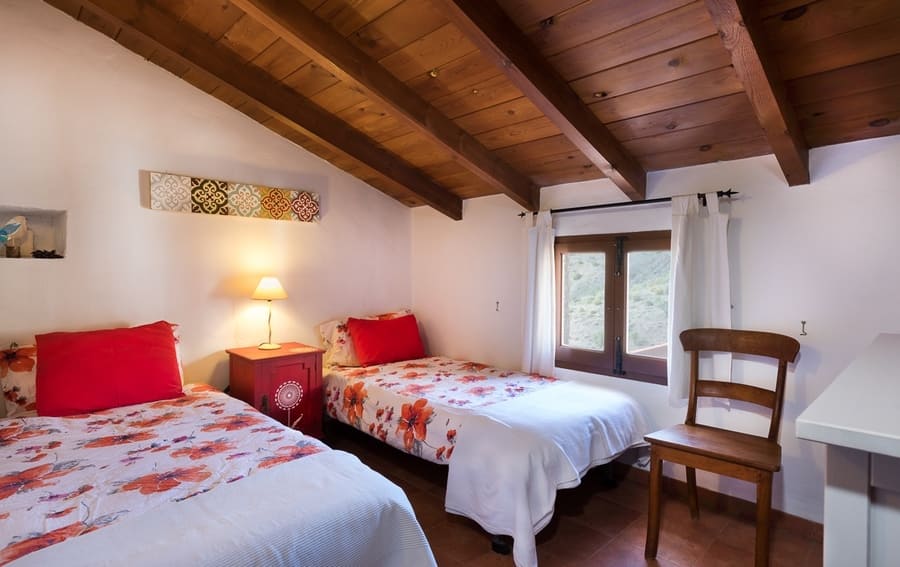
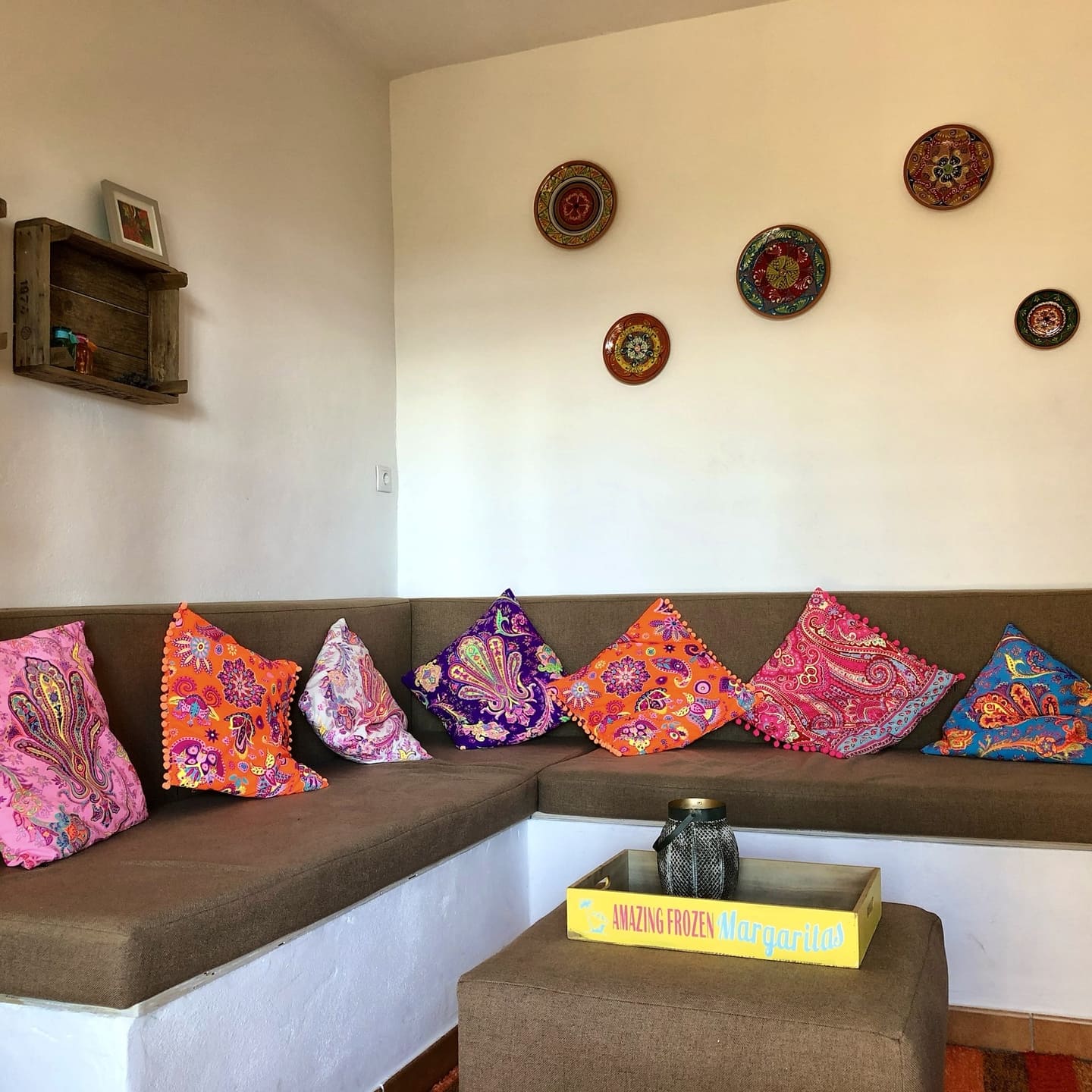
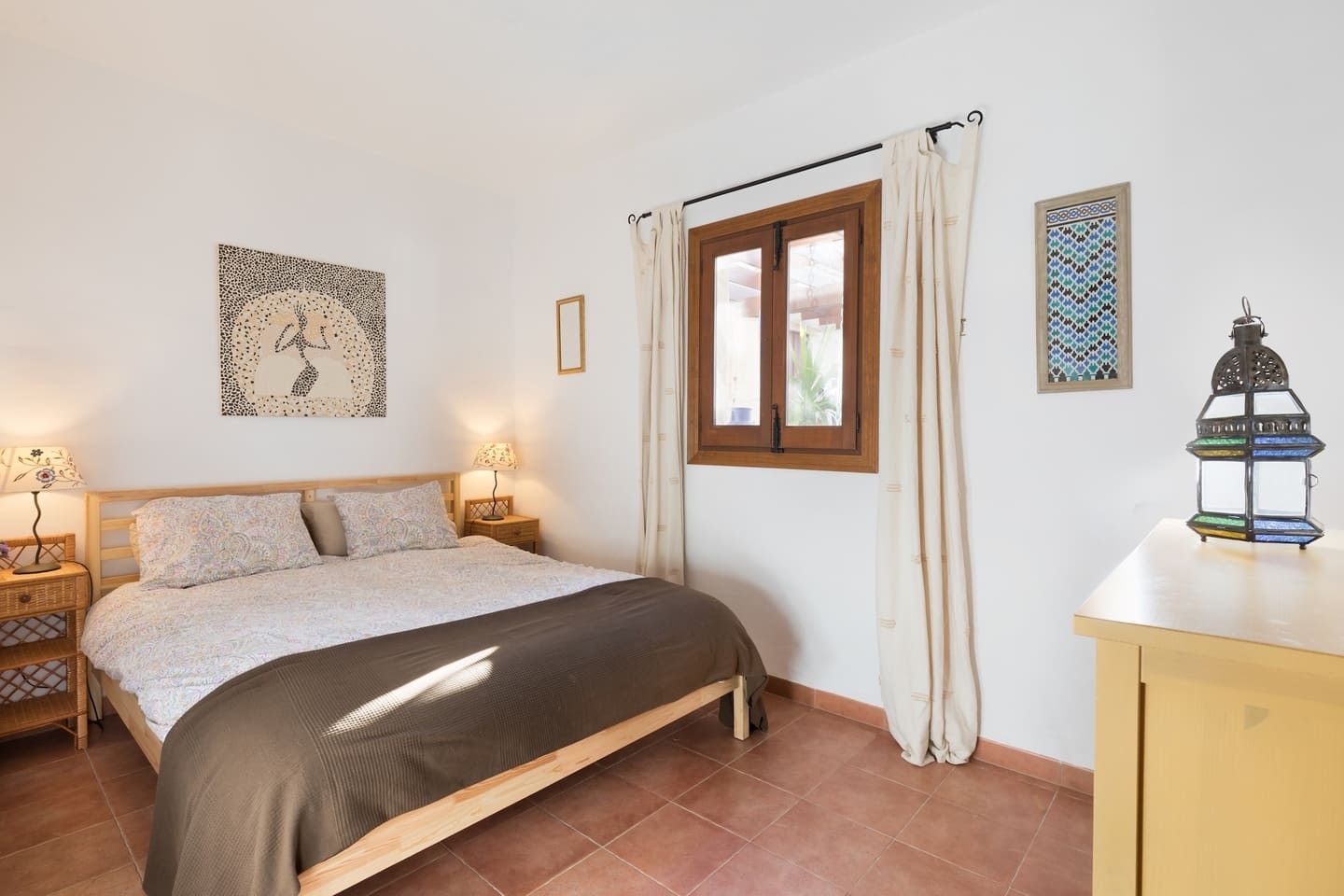
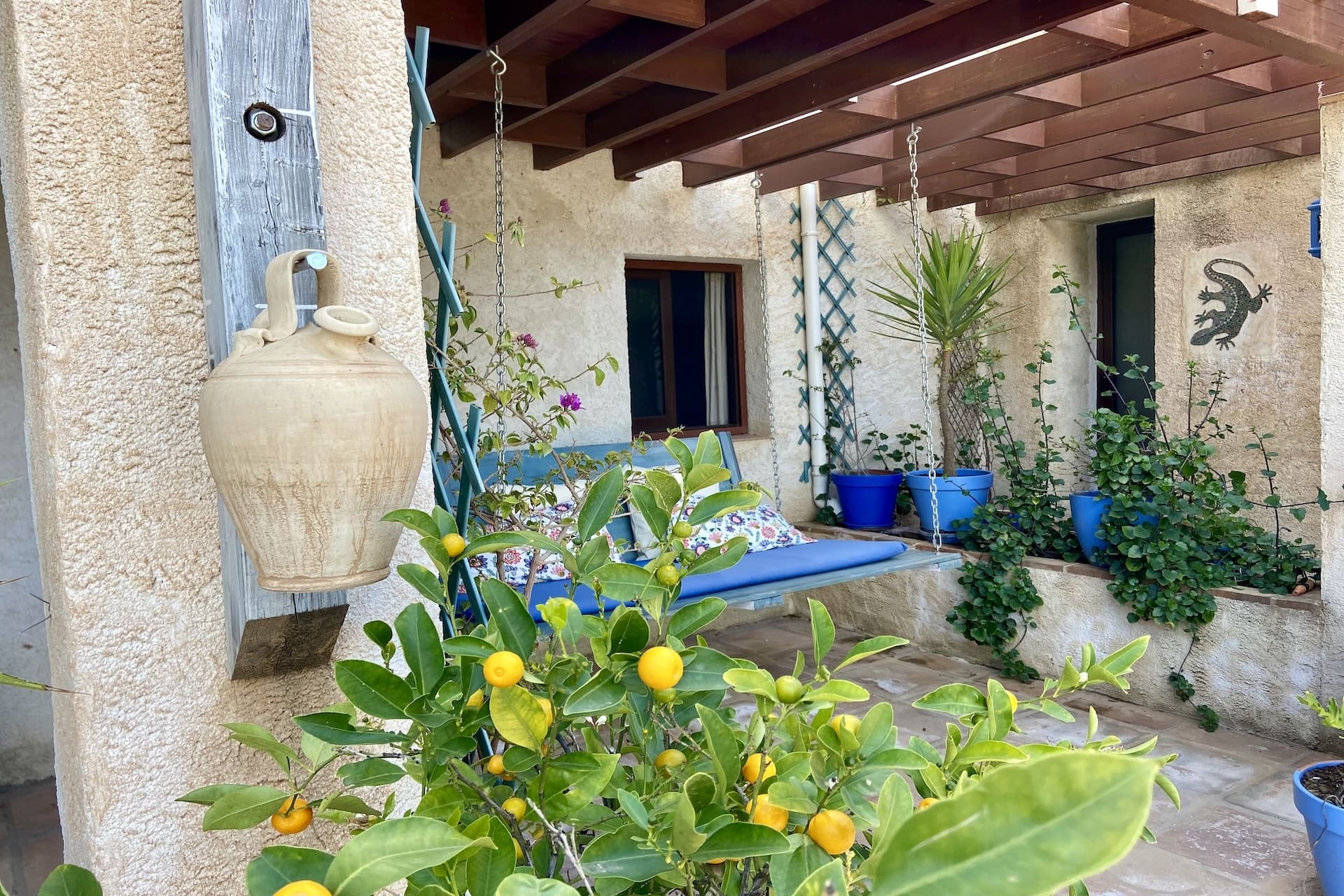
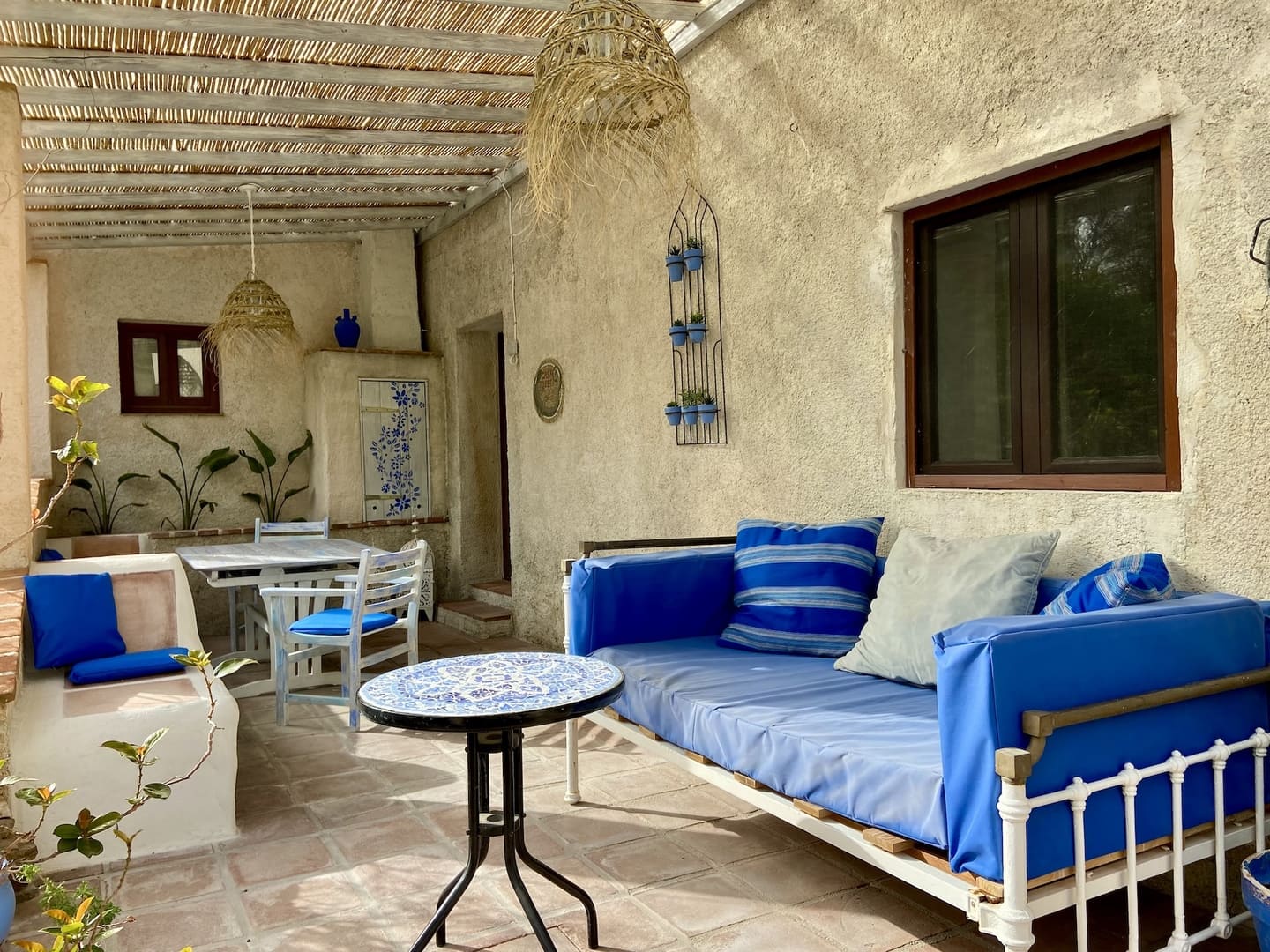
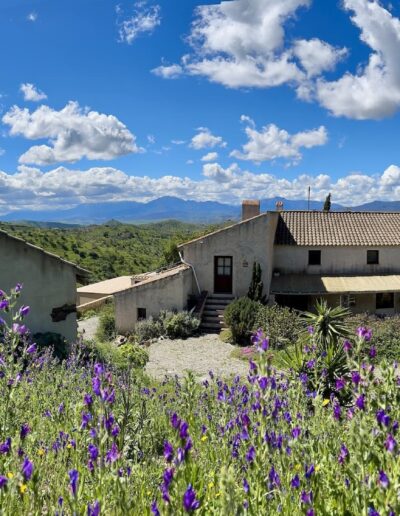
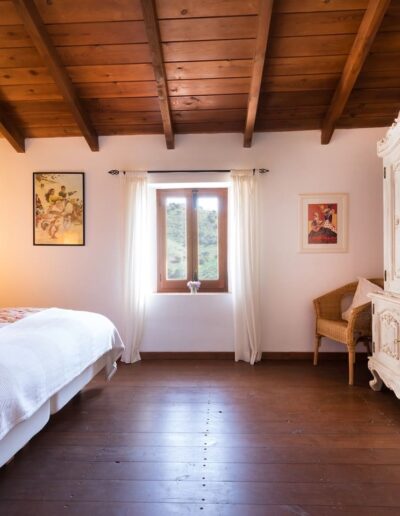
The finca consists of a hundred-year-old Andalusian farmhouse, recognizable by its thick walls and small windows that keep it cool in the summer. Four different vacation homes have been furnished in and around this main building, each preserving the original features and Spanish ambiance. Each house has its own terrace or balcony.
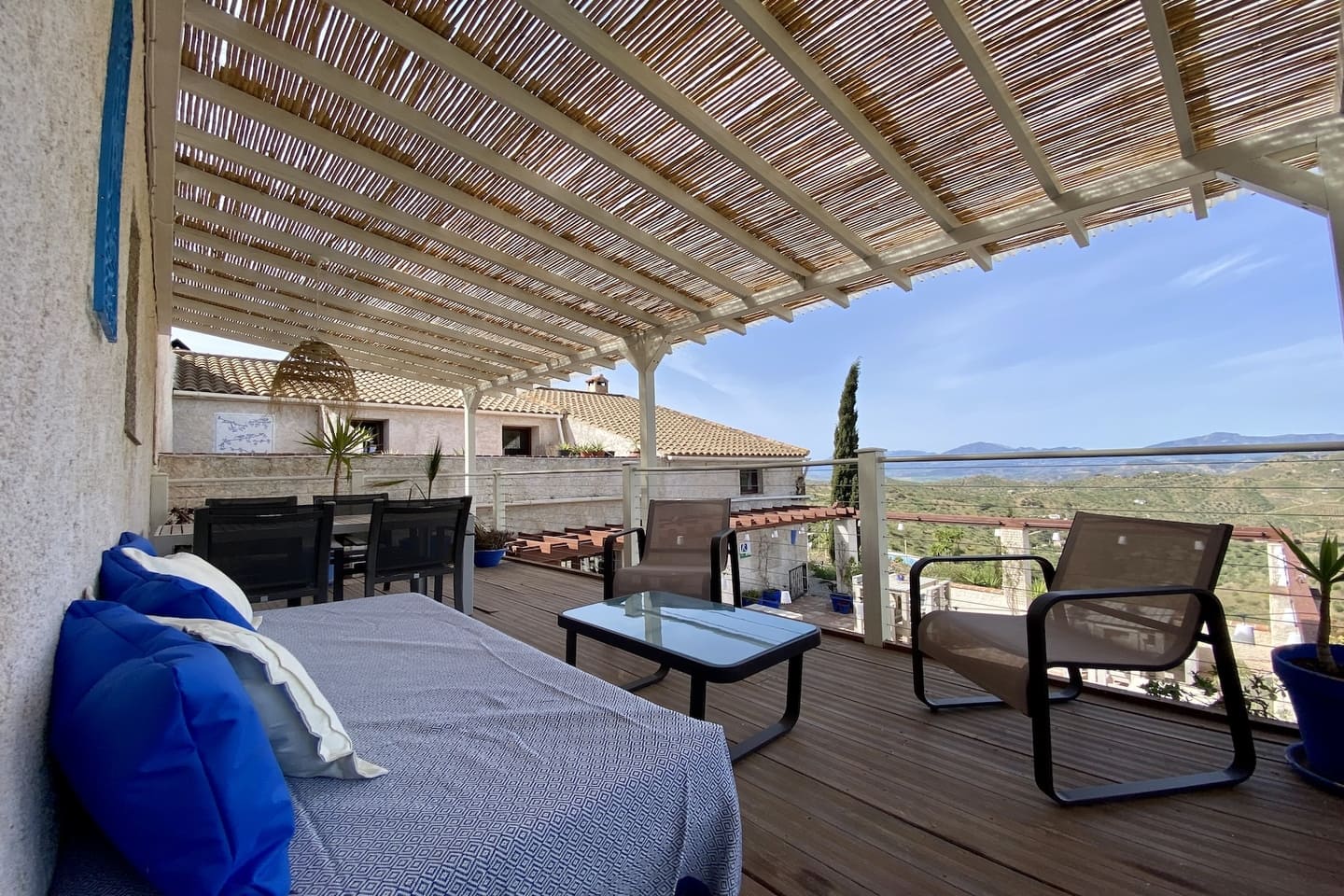
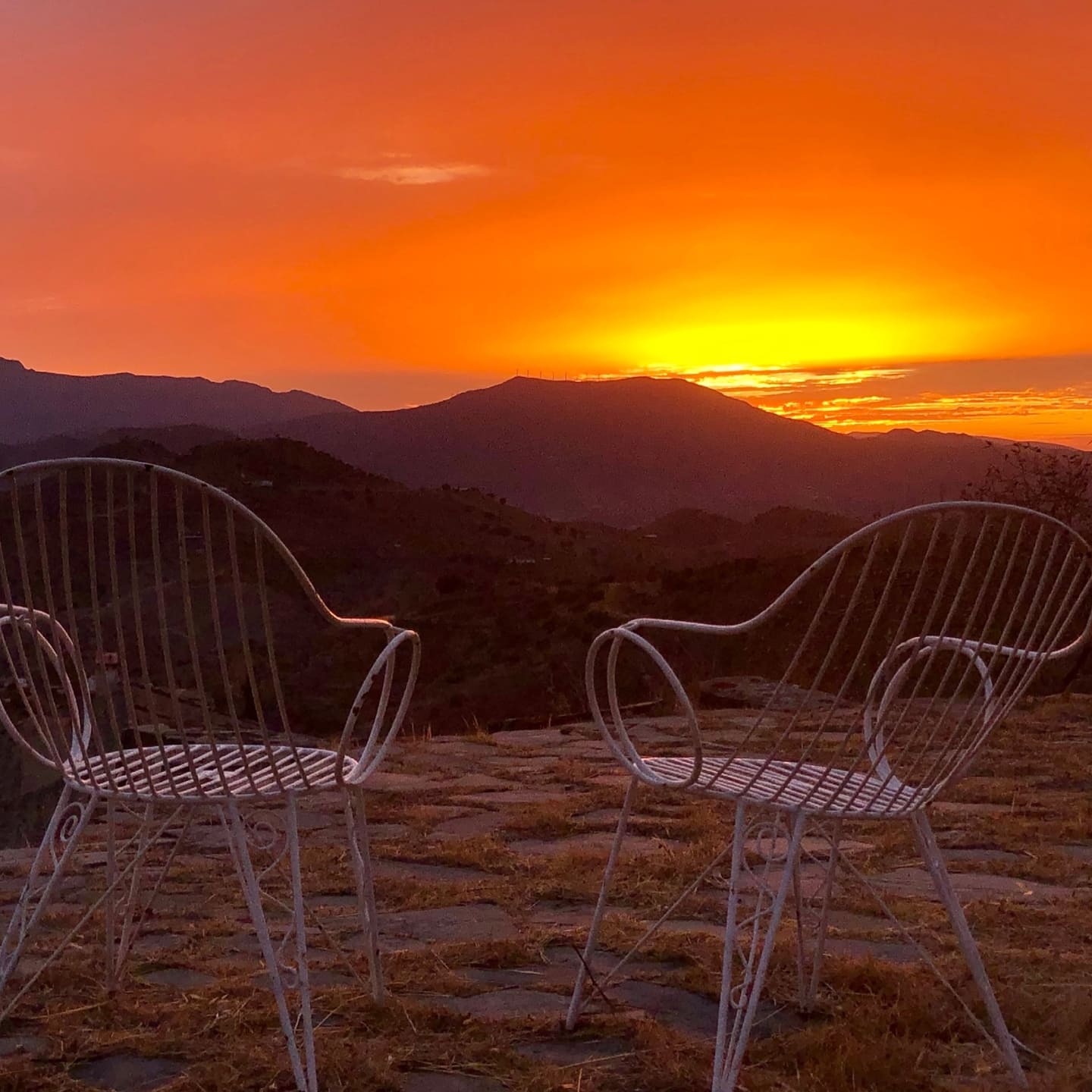
A romantic, compact vacation cottage for two people, housed in a converted hay barn next to the large farmhouse. From the balcony, you can look out over the hills dotted with olive and almond trees—a favorite spot among guests for watching the sunset paint the sky with color.
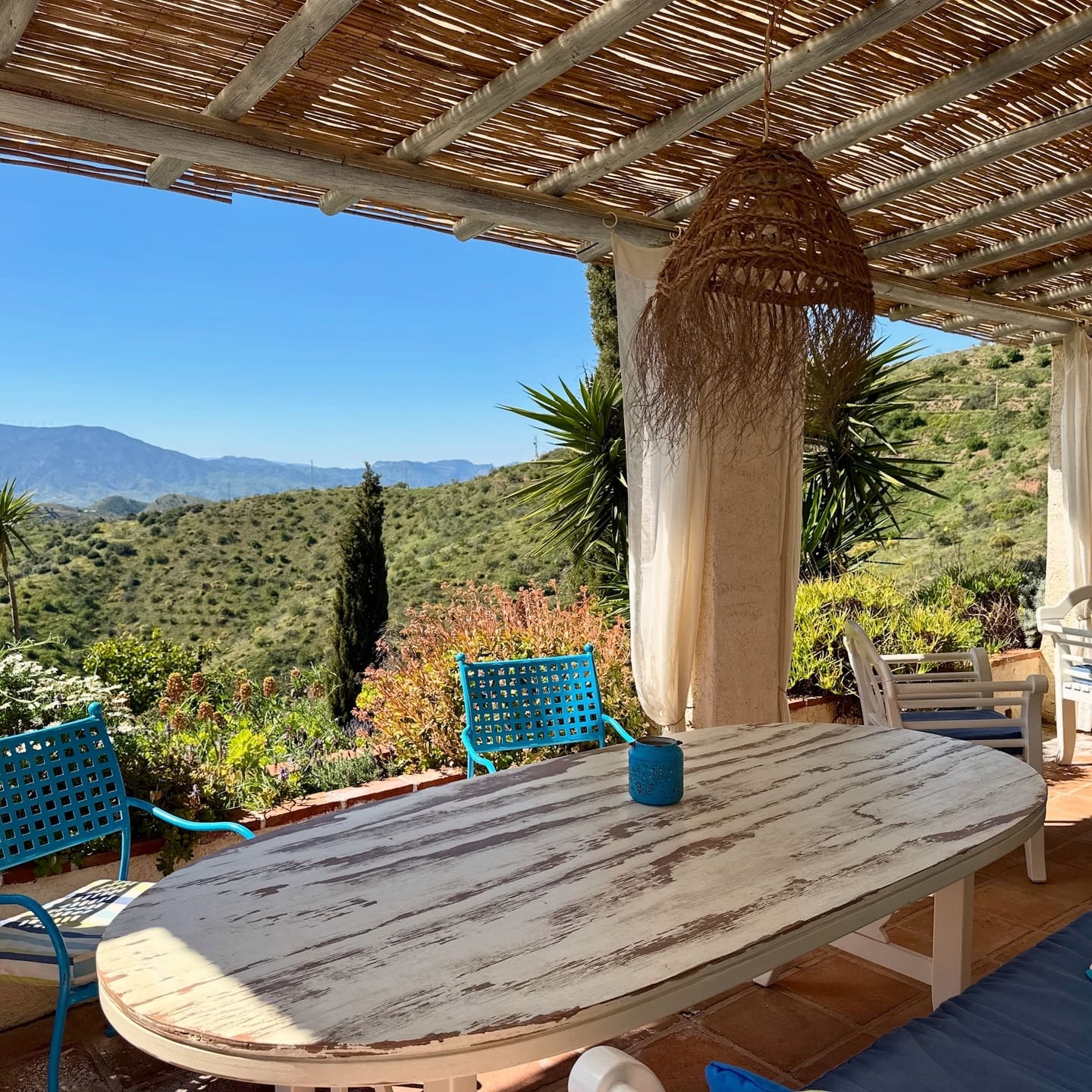
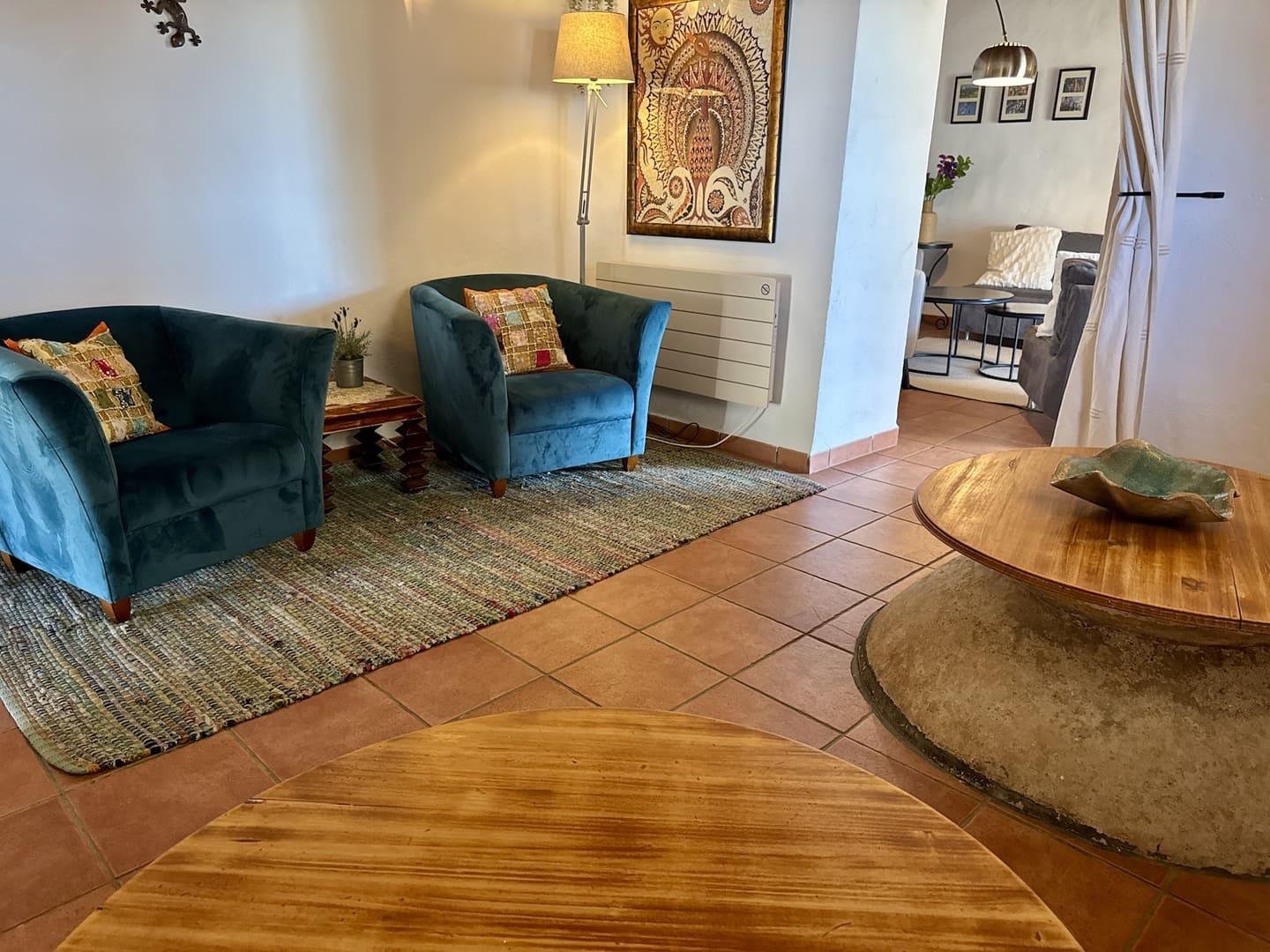
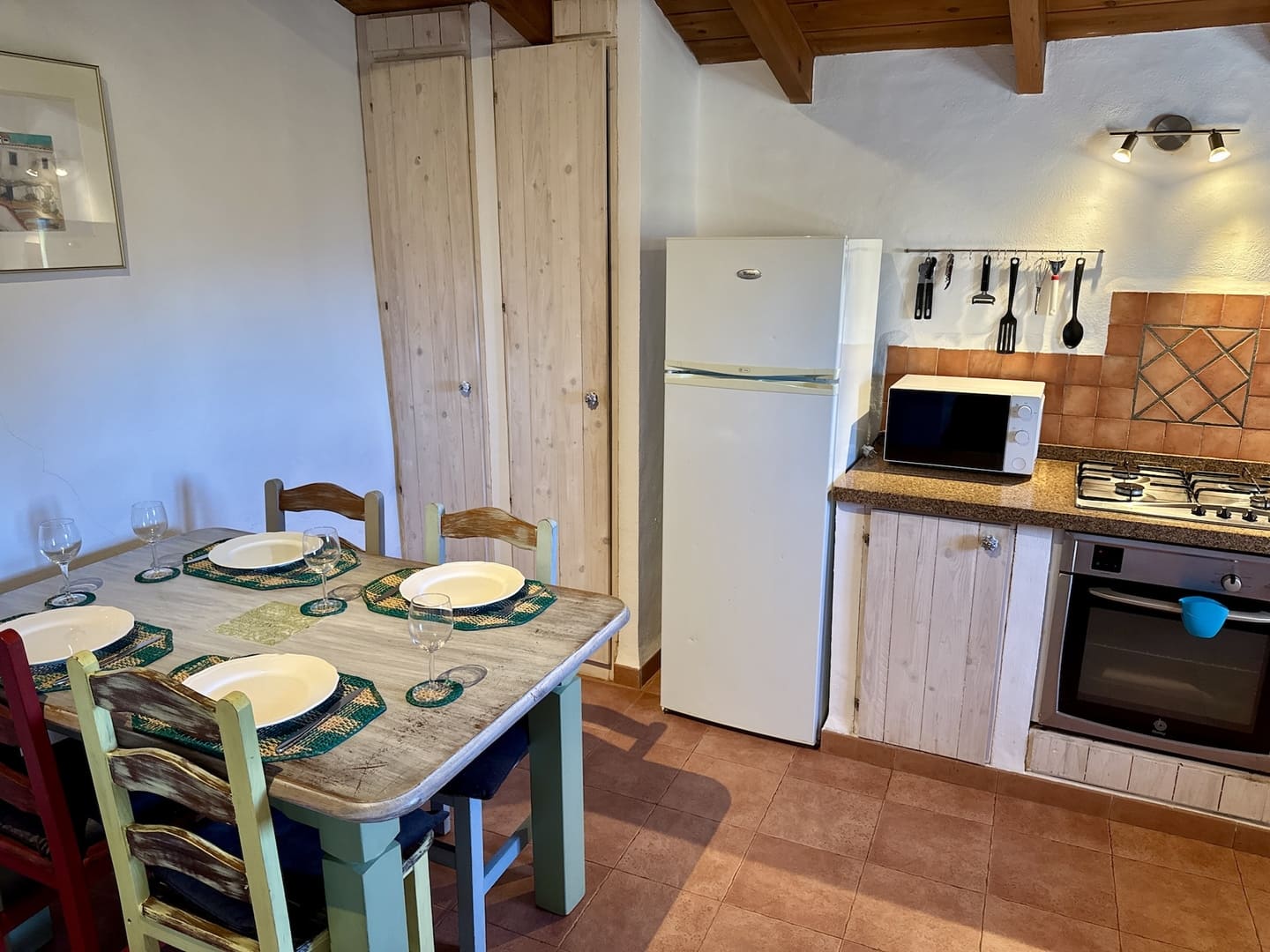
The largest house on the finca, accommodating up to five people and a baby, with two living rooms (one with a wood-burning stove) and a spacious kitchen-dining area. Olives used to be pressed in this house; the original amphorae in which the olive oil was stored are still inside. The large terrace overlooks the garden and the hills.
A two-story house, suitable for one to six people. Casa Maria Arriba (upper floor) and Casa Maria Abajo (lower floor, for up to two people) can also be booked separately, each with its own living-dining-kitchen area and bathroom. Ideal for two groups traveling together but who want their privacy.
A cozy house (1–4 people) with an open kitchen and two bedrooms on the first floor. Josefa has a lovely terrace that gets morning sun and a balcony that gets afternoon sun.
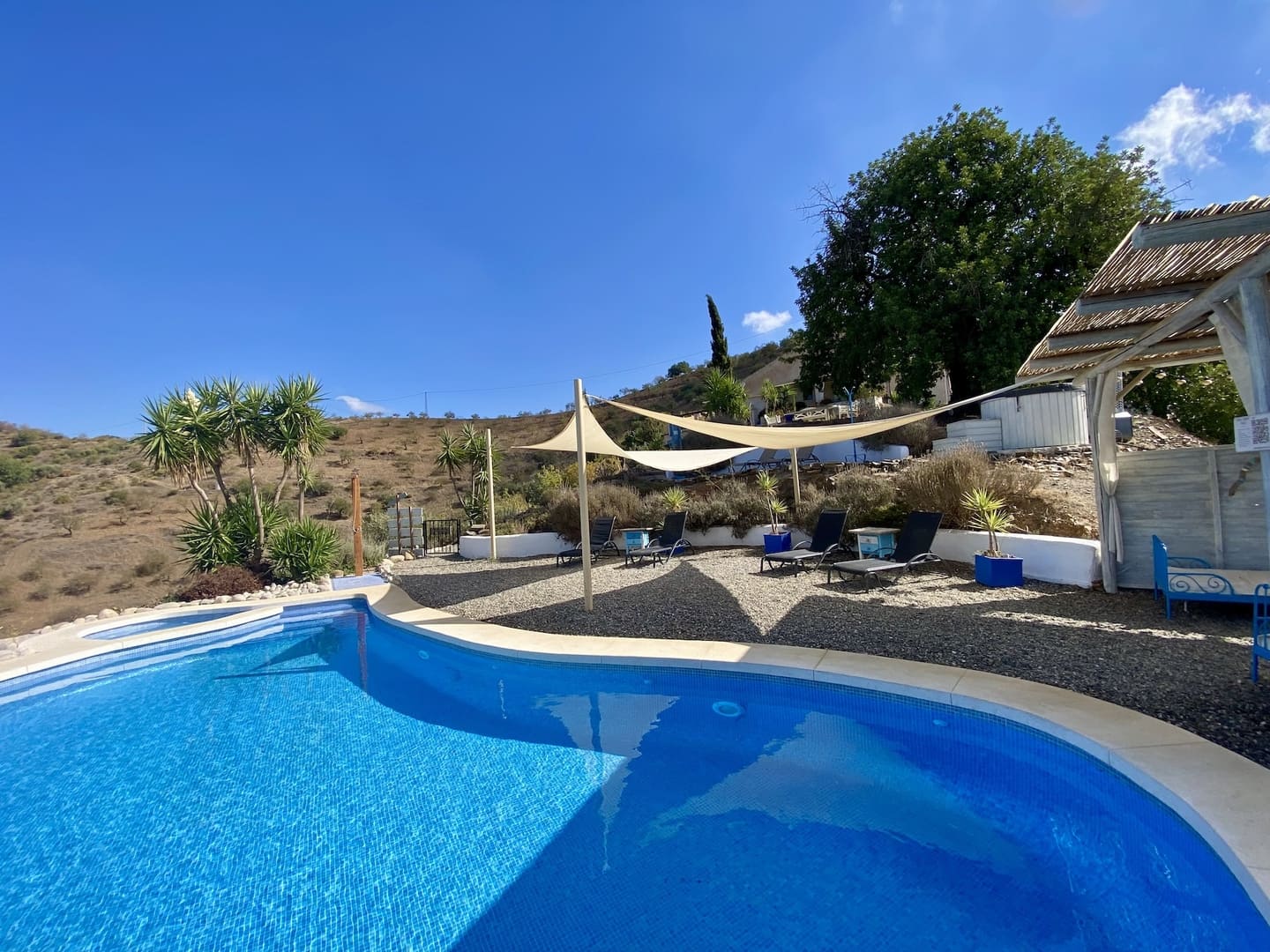
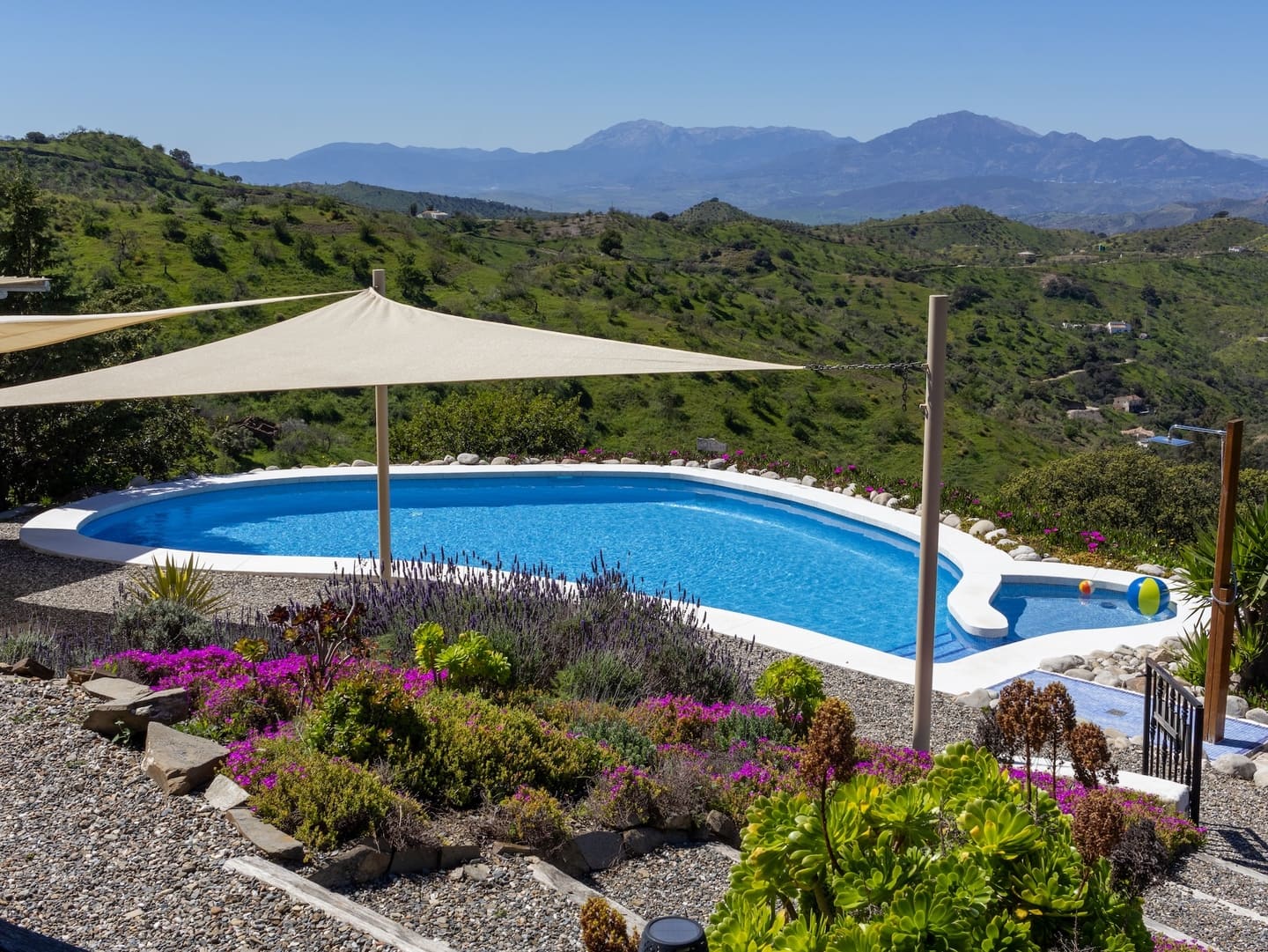
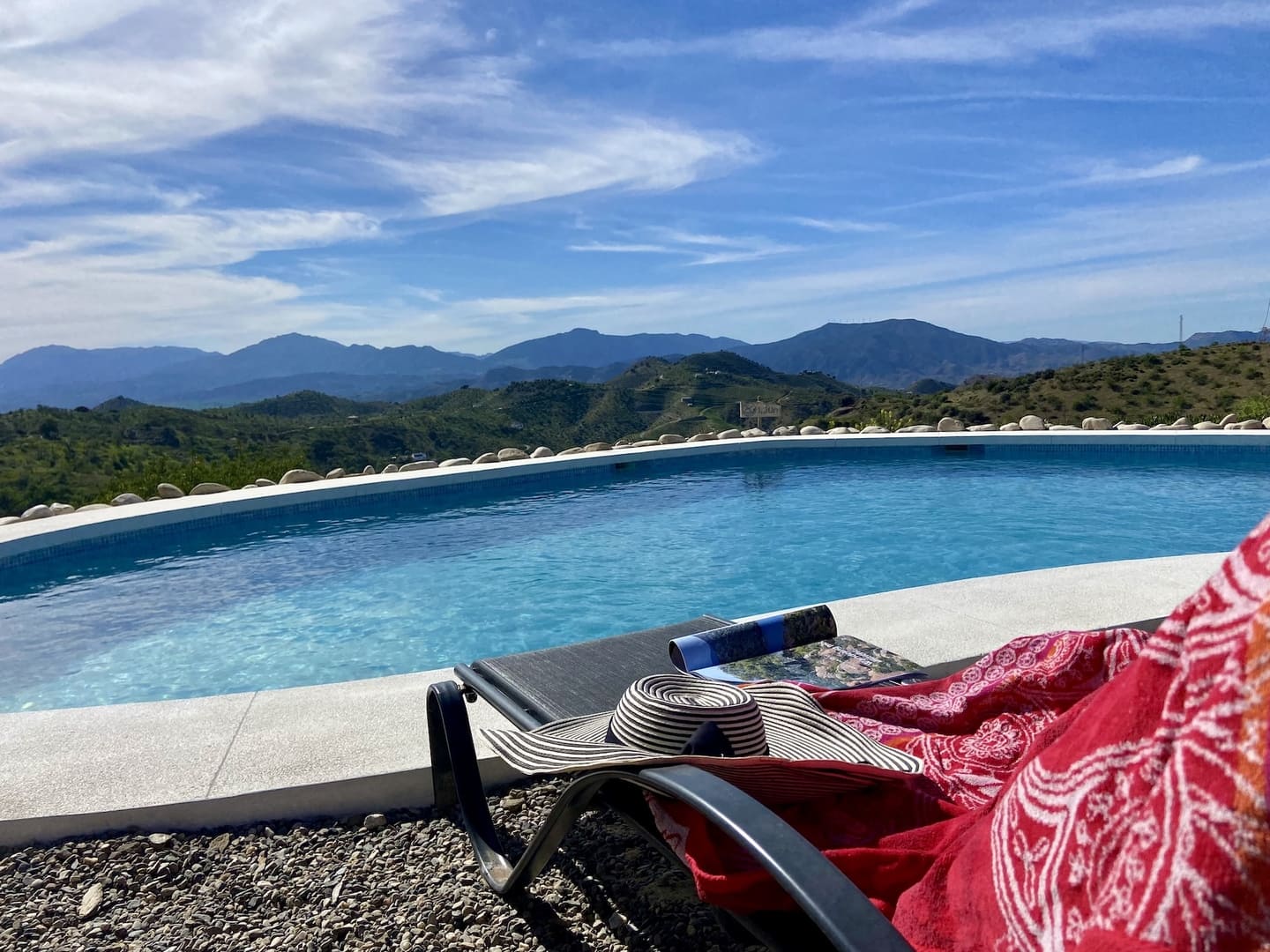
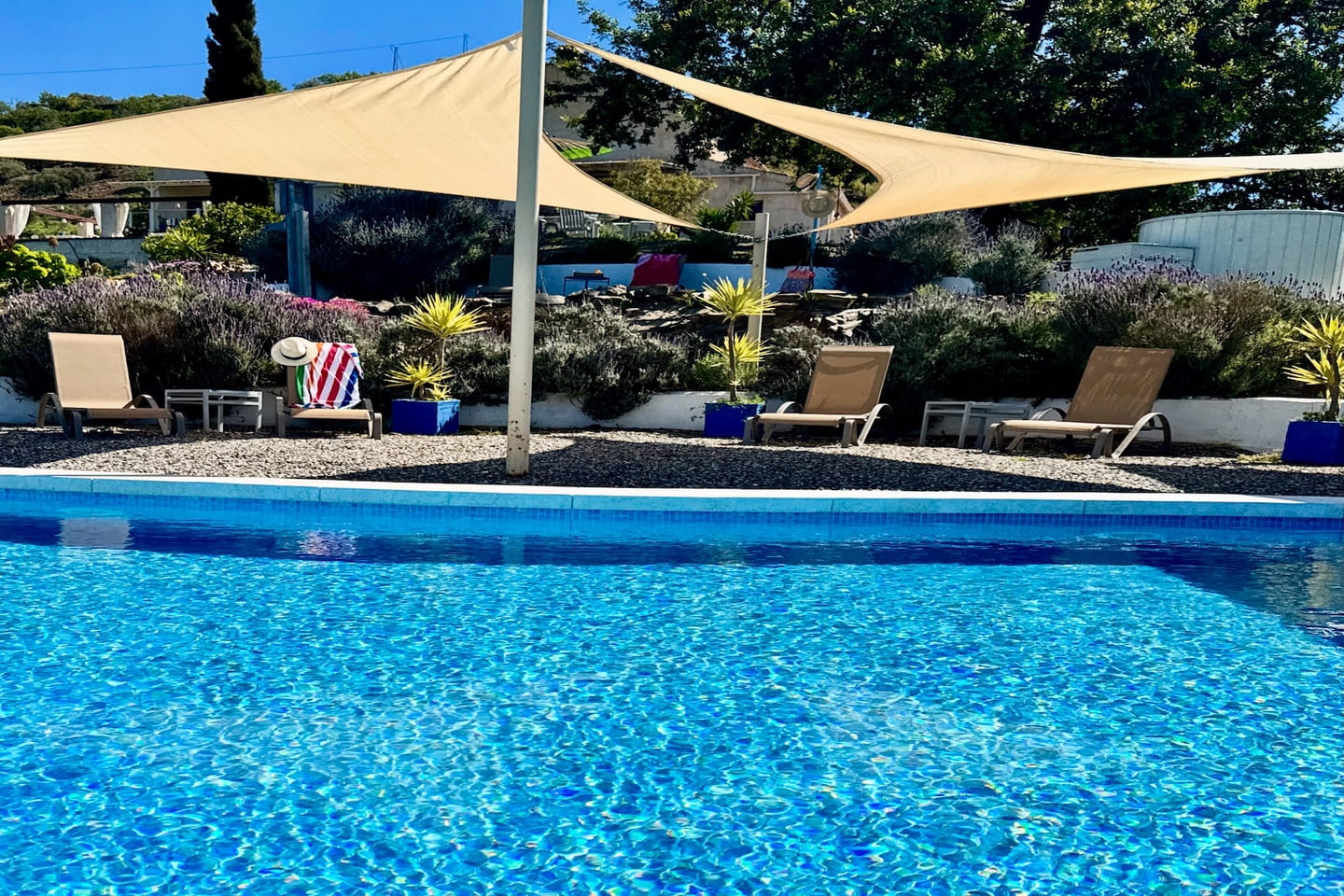
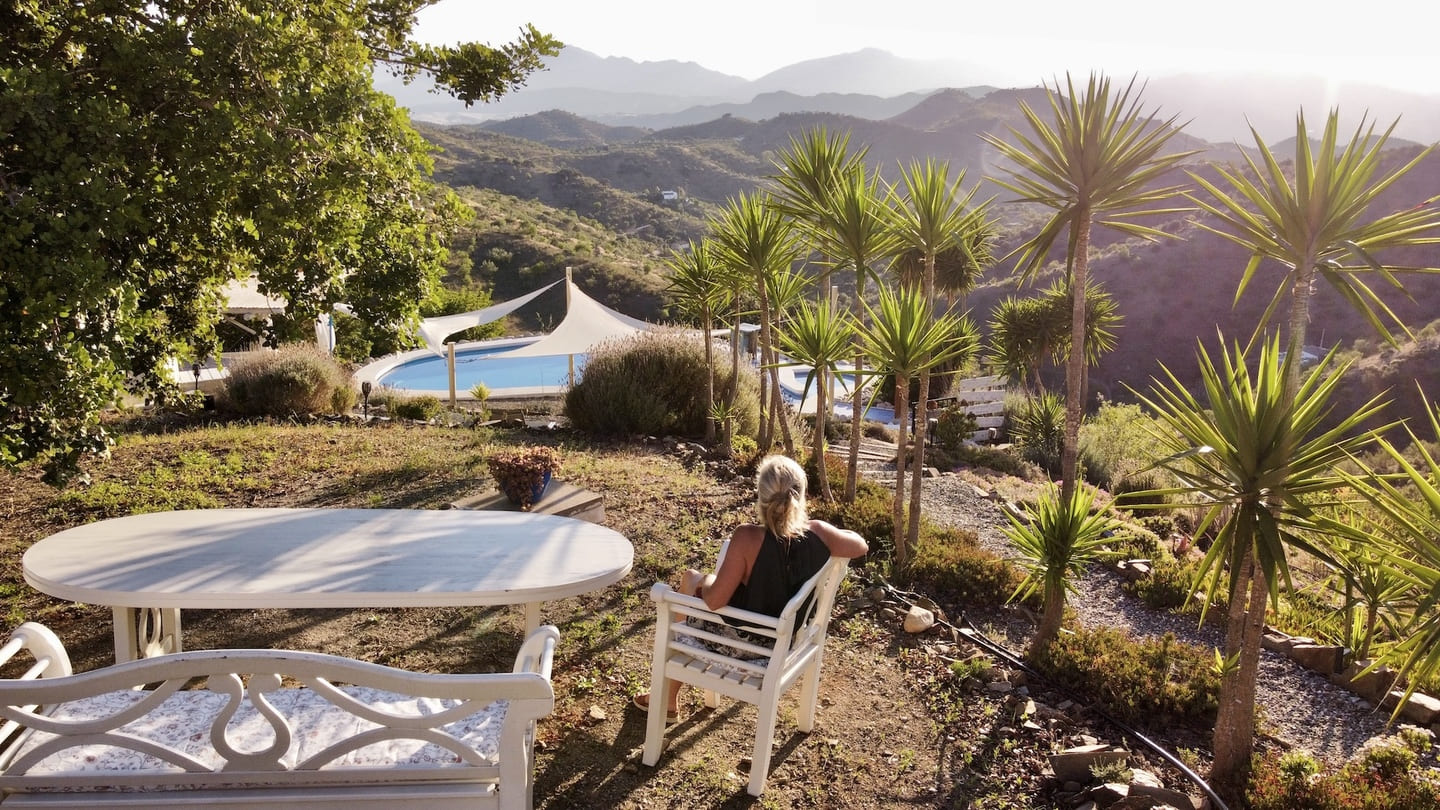
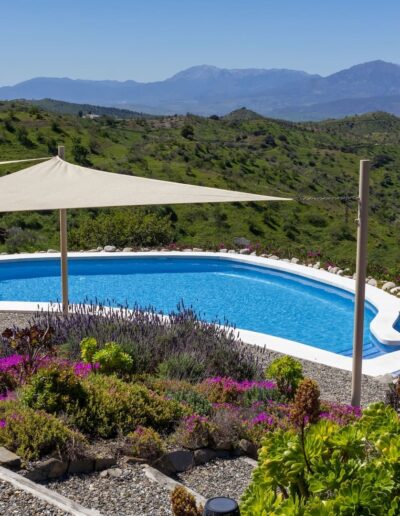
As a guest, you’ll have access to the pool in the garden, which features lounge chairs, a canopy for shade, and a separate, shallow children’s area. It’s a saltwater pool, open year-round, but unheated; as a result, the water may be cold for swimming from October through April.
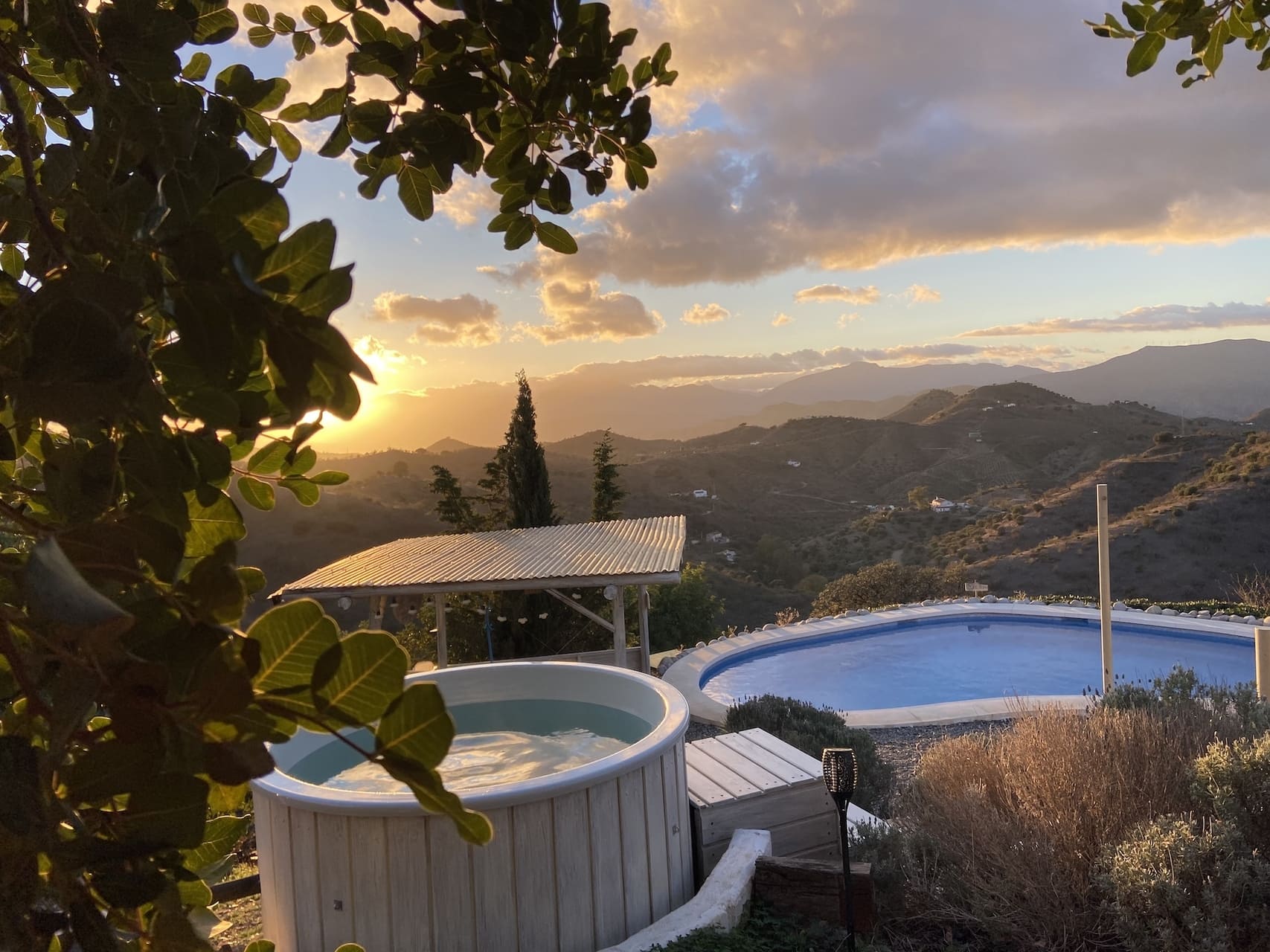
From October through March, a wood-fired hot tub is available as an alternative—for a small fee and with a four-hour warm-up time—just in time to take over when the pool gets too chilly.
The real star of the show is the view: from the terrace and the pool, the sky turns orange over the Sierra de las Nieves at sunset, and at night it gets really dark.
Finca Las Nuevas is a centuries-old farmhouse that has been renovated while preserving its original features. This means minimal new construction and a property that blends seamlessly with the surrounding landscape. Pascalle and Robert manage the estate responsibly and farm the land without chemical pesticides.
Finca Las Nuevas is just a stone’s throw away from one of the most beautiful nature reserves in southern Spain. The Sierra de las Nieves National Park has been a UNESCO Biosphere Reserve since 1995 and officially designated as a national park—the third in Andalusia—since 2021. The mountain range is best known for the pinsapo, a rare Spanish silver fir found almost nowhere else in the world, and for the many birds of prey and ibex that live there. Around the villages on the edge of the park, such as Tolox and Yunquera, there are hiking trails for every skill level.
Equally well-known is the Desfiladero de los Gaitanes with the Caminito del Rey, a spectacular hiking trail along the cliffs of a deep gorge, about a 45-minute drive from the finca. Closer by, starting right from the finca, sandy trails wind up into the hills toward the El Torcal karst mountains; some are flat, while others are quite steep. A bike ride through the Guadalhorce Valley or to the coast is also an option, with the bike in the trunk of the car.
For those who prefer swimming to hiking, the Embalse del Conde de Guadalhorce near Ardales—about a 40-minute drive away—is the place to go. This turquoise reservoir is located near the Caminito del Rey and is a popular spot in the summer for swimming, stand-up paddleboarding, canoeing, and pedal boating.
At the Zona Recreativa La Isla, for a small admission fee, you’ll find shaded picnic tables, barbecue areas, and a kiosk; if you prefer a quieter spot, you’ll find smaller, less crowded areas further along the water. In July and August, there’s often a floating obstacle course in the lake (fun for teens and adults).
Nearby are also the Moorish ruins of Bobastro and the Ardales Caves, known for their ancient rock paintings.
Cyclists will also feel right at home at Finca Las Nuevas. Sand and gravel trails lead directly from the property into the hills, winding through the olive groves—perfect for a mountain bike ride. If you prefer to ride a road bike, the Guadalhorce Valley is ideal for rolling, less steep rides past Álora, Cártama, Pizarra, and Alhaurín el Grande, with plenty of opportunities to stop for coffee or a tapa along the way.
For the more avid climbers, the road from Cártama to the finca itself is already quite a challenge—a climb that’s also well-known among local cycling clubs for its steep gradient. On the way to the Ardales Lakes, you’ll also cycle partly along a route that was once part of the Vuelta a España.
Álora and Cártama de Estación are the nearest villages for grocery shopping, restaurants, and outdoor cafes, about a 20-minute drive away. If you want to drive a bit further: Mijas Pueblo is a well-known, touristy white mountain village overlooking the Mediterranean Sea, while Casarabonela is a similar white village that attracts far fewer tourists. From the Ermita de las Cruces, not far from the finca, you can see all the way to Málaga and the sea.
You’ll need a car to explore the area properly: the finca is intentionally located in a quiet area with no through traffic, and the nearest train station is in Álora or Cártama, a twenty-minute drive away.
Yes. The finca is located near the Sierra de las Nieves National Park and the Caminito del Rey, and there are also hiking and biking trails that start right from the property. For more distant destinations, such as Ronda or El Chorro, a car is recommended.
The pool is open year-round, but it is not heated. From October through April, the water may therefore feel too cold for swimming. During those months, a wood-fired hot tub is available as an alternative for a small fee.
No, pets are not allowed at Finca Las Nuevas. The owners have a dog of their own, which is one reason why guests’ dogs cannot stay.
Expect a drive of about 40 minutes from both the city of Málaga and the airport. A car is necessary, as the finca is located in a quiet, rural area with no direct bus service to the door.
The finca is open year-round. Spring and fall offer the most pleasant temperatures for hiking and biking, while summer is best for those who want to enjoy the pool. In the winter, the hot tub is a nice alternative to the unheated pool.
Yes. Sand and gravel trails for mountain biking start right from the property, and the surrounding Guadalhorce Valley is popular with road cyclists because of the rolling roads near Álora, Cártama, and Pizarra. Avid climbers can try the climb from Cártama to the finca, a route that is also well-known among local cycling clubs.



You can find more information about the icons here
Take a look