
Gratis gids 10 verborgen natuurplekken in Europa
Gratis gids 10 verborgen natuurplekken in Europa. Meld je aan voor onze nieuwsbrief en ontvang inspirerende reistips en routes voor je volgende groene reis.

You step off the train in Locarno, and the first thing you see is a palm tree. No cow with a bell, no smell of fondue, no wooden chalet—just a palm tree. Welcome to Ticino, Switzerland’s southernmost canton, where they speak Italian, drink espresso in the piazza, and the mountains are reflected in lakes that seem more at home on Lake Como than in Bern.
I traveled to Ticino by train and used only public transportation while I was there. No car, no hassle. That might sound like a sacrifice, but in Ticino, it’s actually one of the most enjoyable ways to get around. More on that later.

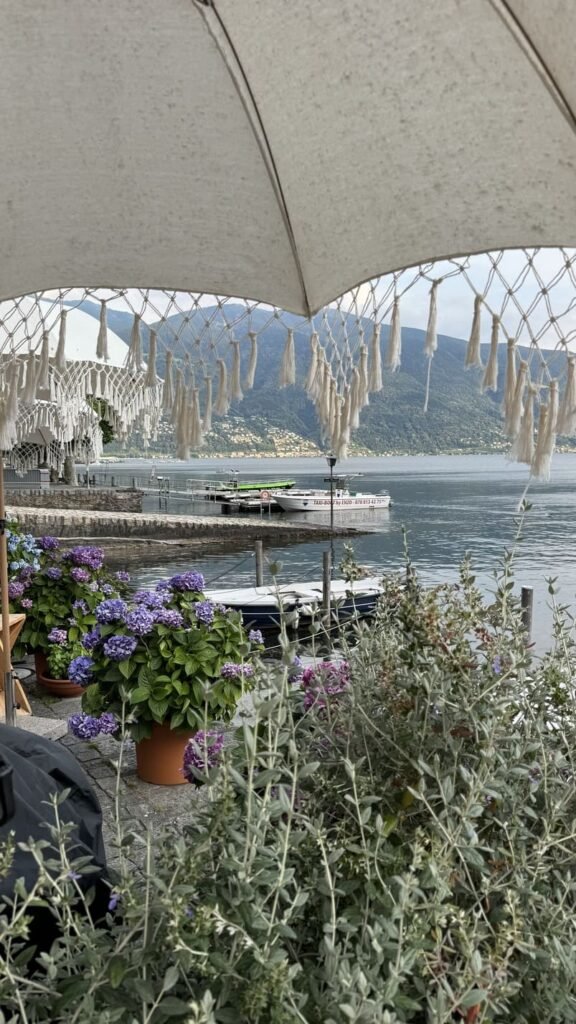
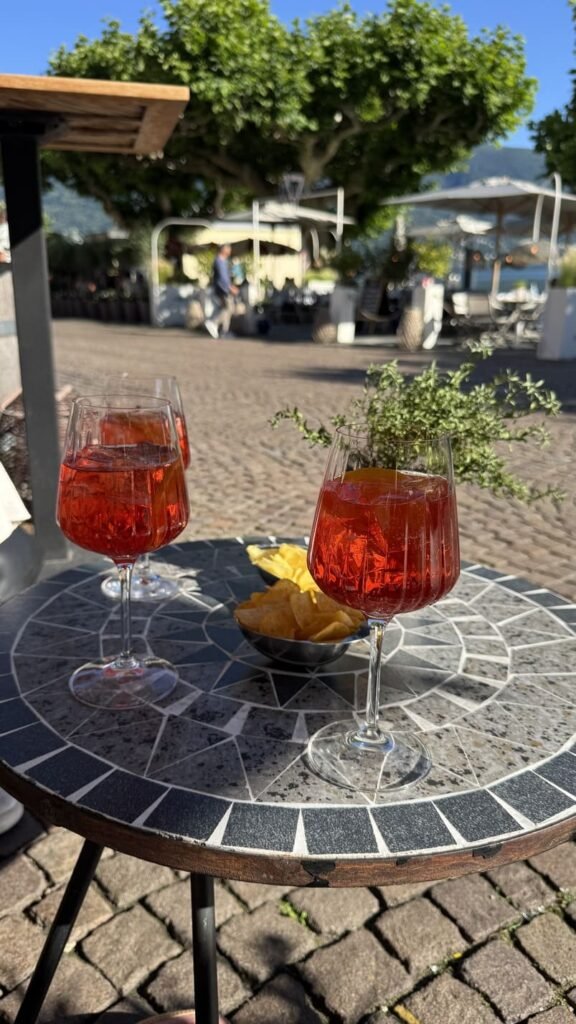
It’s the sunniest corner of the country and, at the same time, one of the wildest. Within a single canton, you go from snow-capped peaks over 3,400 meters high to citrus trees by the water. Three-quarters of Ticino is nature, and large parts of it remain undiscovered by mass tourism. And that’s why it’s a place we love.
Ticino is called Tessin in German and French, but that name hardly matters once you’re there: over eighty percent of the residents speak Italian, and you can hear, see, and taste that everywhere. The canton lies on the sunny side of the Alps, south of the Gotthard Pass, and borders Italy to the south.
This results in a strikingly mild, almost Mediterranean climate. Palm trees, fig trees, and citrus trees grow along the shores of Lake Maggiore and Lake Lugano. As you head inland, the landscape changes rapidly: narrow river valleys, dense forests, and above them the Ticino Alps, with the Rheinwaldhorn (3,402 m) as their highest peak, on the border with Graubünden.
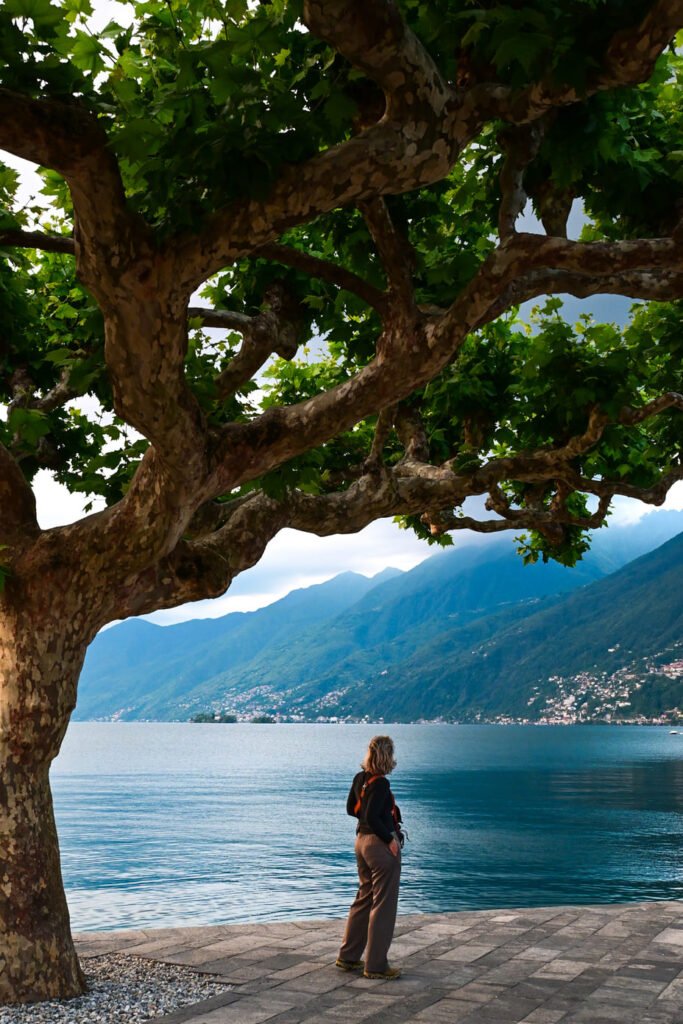
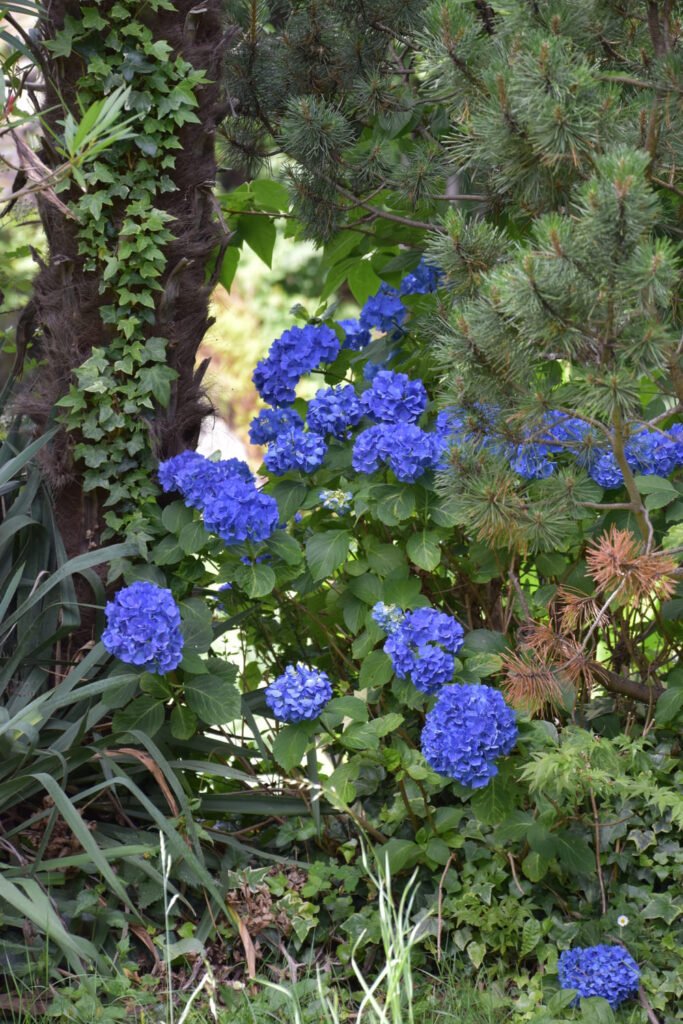
Palm trees below, glaciers above; and in between, 4,000 kilometers of hiking trails.
The most famous mountain valleys fan out from Locarno. They’re characterized by crystal-clear river water, centuries-old stone villages, and nature that’s still largely left to its own devices. Three favorites:
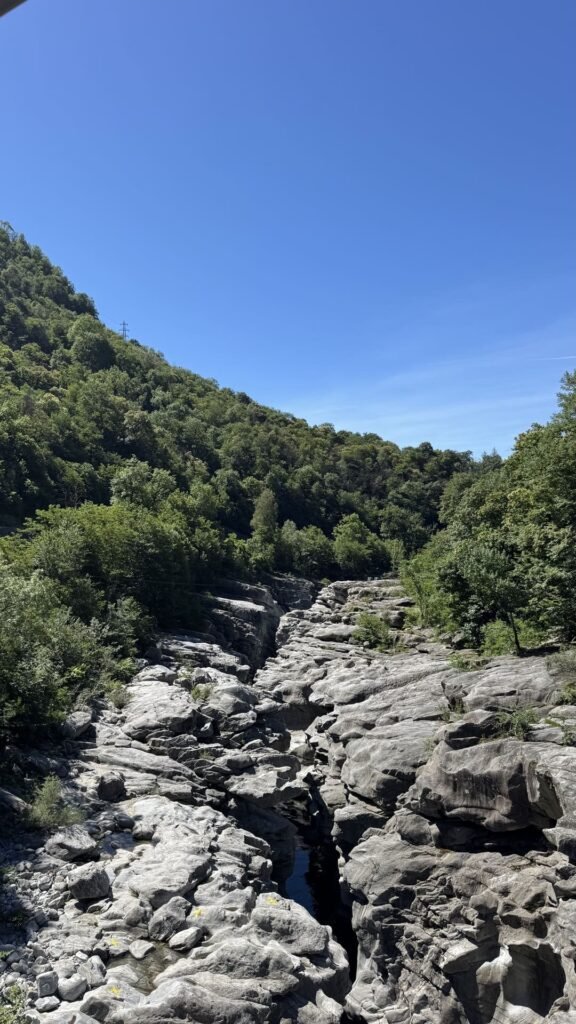
The Verzasca is perhaps Switzerland’s best-known river, even though most people don’t know its name. Near Lavertezzo, the emerald-green water has carved out jagged rocks, spanned by the Ponte dei Salti: a 17th-century double-arch bridge. It’s one of the most photographed spots in the country. Further along, near the Verzasca Dam, the opening scene of the James Bond film *GoldenEye* was filmed.
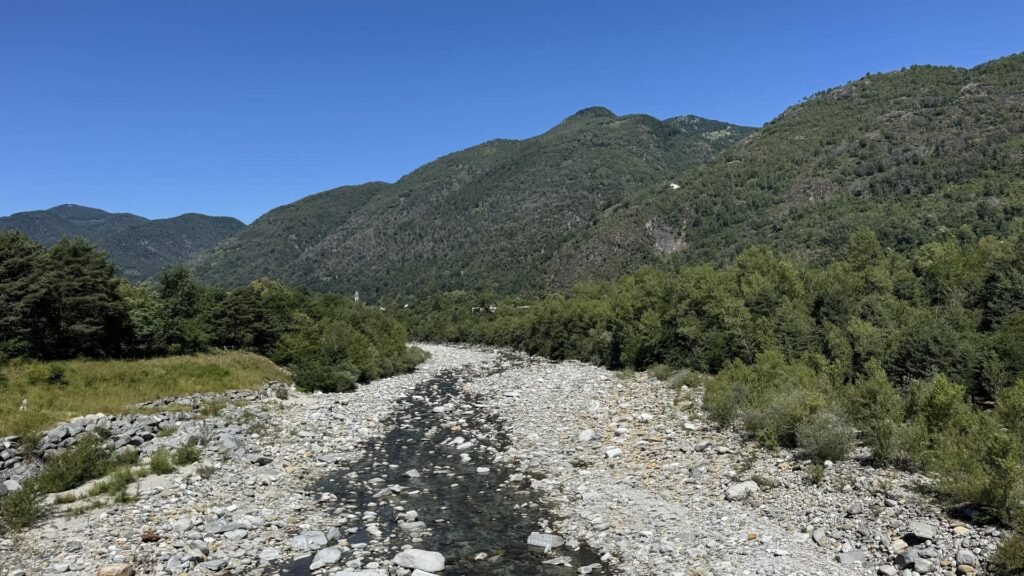
The Maggia winds its way through the mountains for over sixty kilometers before flowing into Lake Maggiore. The valley is green, wide, and branches off into countless side valleys. We explored it by bike, with a guide. You can read more about that in our separate article on the Valle Maggia. Near Lodano, you can hike through ancient beech forests that have been on the UNESCO World Heritage List since 2021.
A side valley of the Maggia—and perhaps the most unique one. The hamlets of Val Bavona are deliberately without electricity. You’ll walk past stone cottages nestled against giant boulders on your way to the Foroglio waterfall, which plunges more than a hundred meters, right behind a small village with a 15th-century chapel.
TIP
The Valle Verzasca and Lavertezzo get crowded on summer weekends. Want to experience the same atmosphere without the crowds? Then choose the Val Bavona or the quieter Valle di Muggio, or visit during the shoulder seasons (May or October). Quieter, cooler, and just as beautiful.
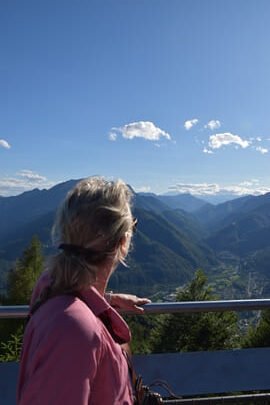
Since most of Ticino lies at a relatively low elevation, the trails are often already free of snow when the rest of the Alps are still covered in a blanket of white. This means you can hike here earlier in the year without necessarily having to rely on gondolas. Here are just a few of the highlights:
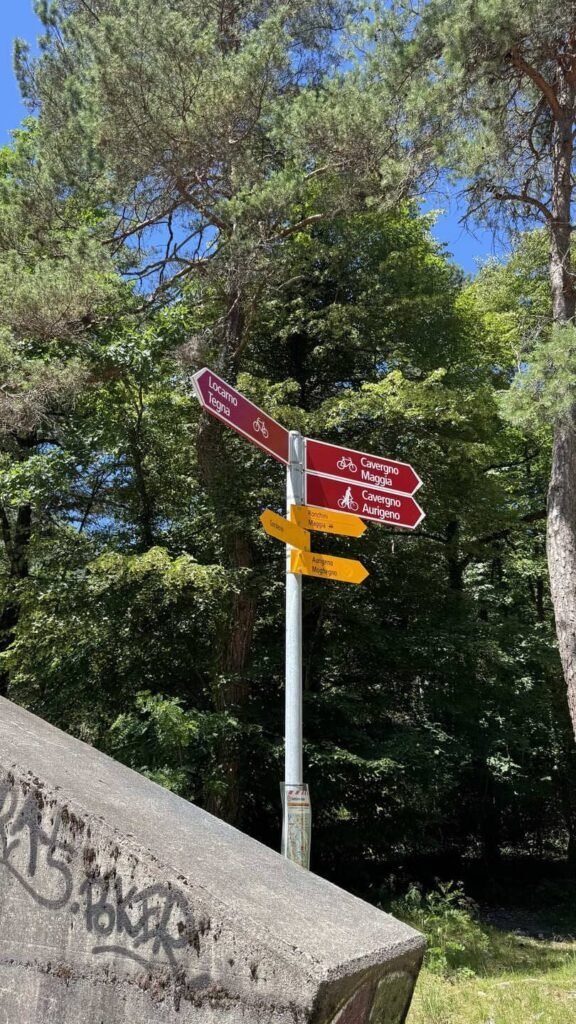
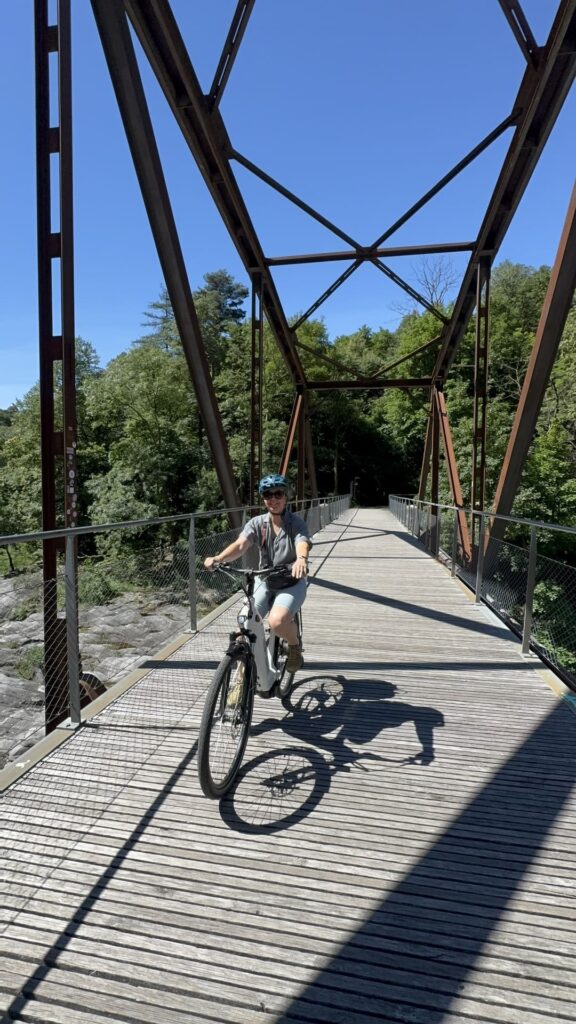
Cyclists will also find plenty to enjoy: the guided bike tour through the Valle Maggia follows the river into the valley, and the Valle di Blenio is known for its leisurely routes and local cuisine.
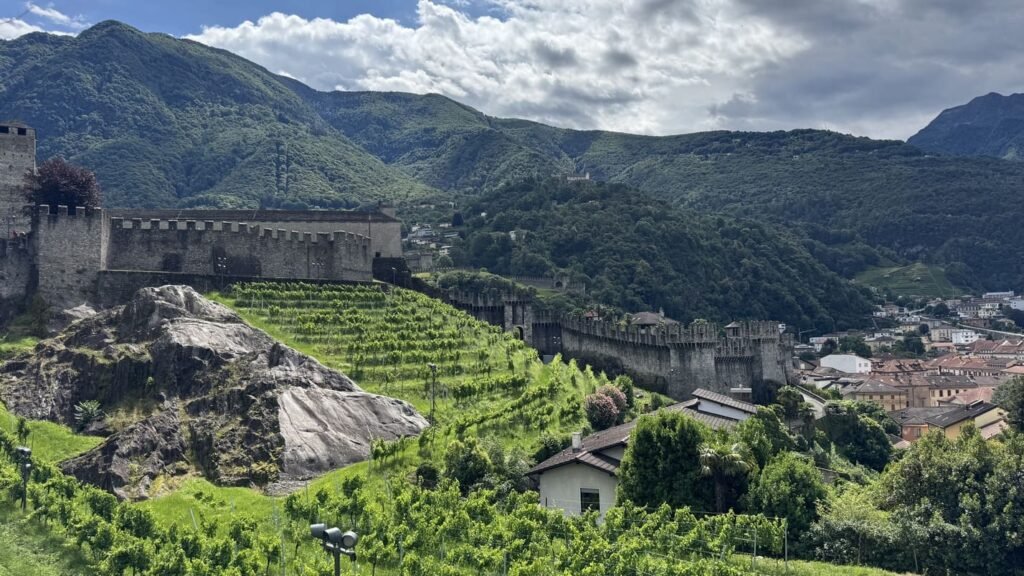
Ticino doesn’t have any truly large cities, and that’s precisely what gives it its charm. In Bellinzona, the cantonal capital, we climbed up to the three medieval castles: Castelgrande, Montebello, and Sasso Corbaro, which, together with the city walls, are listed as a UNESCO World Heritage Site.
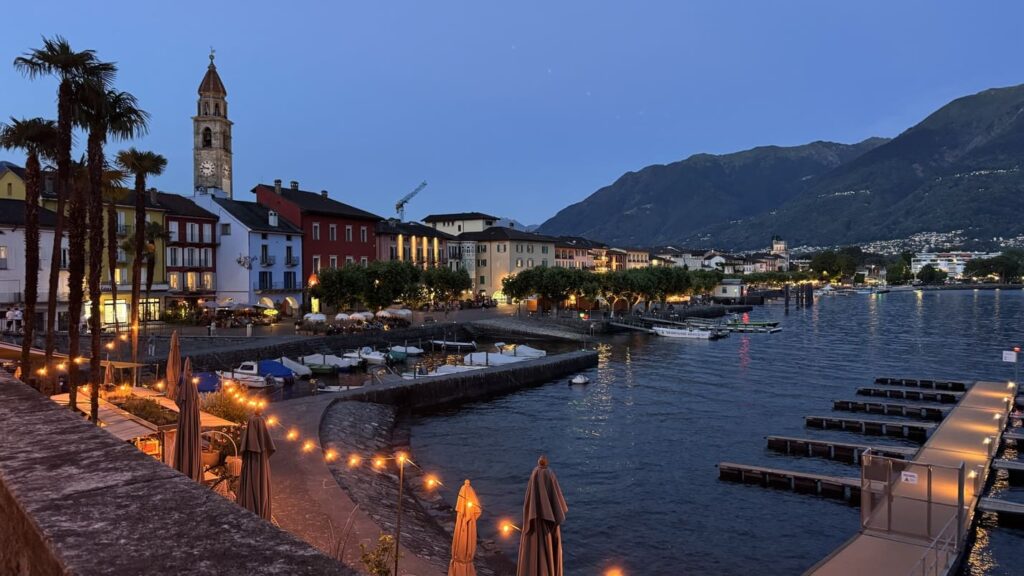
On Lake Maggiore lie Locarno, with its spacious Piazza Grande and annual film festival, and the glamorous Ascona, where we spent the night in the historic center at the Charme Hotel al Torchio. Just off the coast lie the Isole di Brissago, two small islands with a botanical garden full of subtropical plants. A surprisingly tropical excursion by boat. And Lugano, the largest city, lies on the lake of the same name, with the picturesque villages of Morcote and Gandria within easy reach.
No visit to Ticino is complete without an afternoon in a grotto. Originally, these were cool stone cellars carved into the rock to store cheese, meat, and wine; today, the term refers to simple, down-to-earth restaurants. Often tucked away in the woods or along a river, they’re where locals gather for polenta, risotto, and a glass of Merlot. Because, yes: in this little corner of Switzerland that feels like Italy, they actually make their own wine.
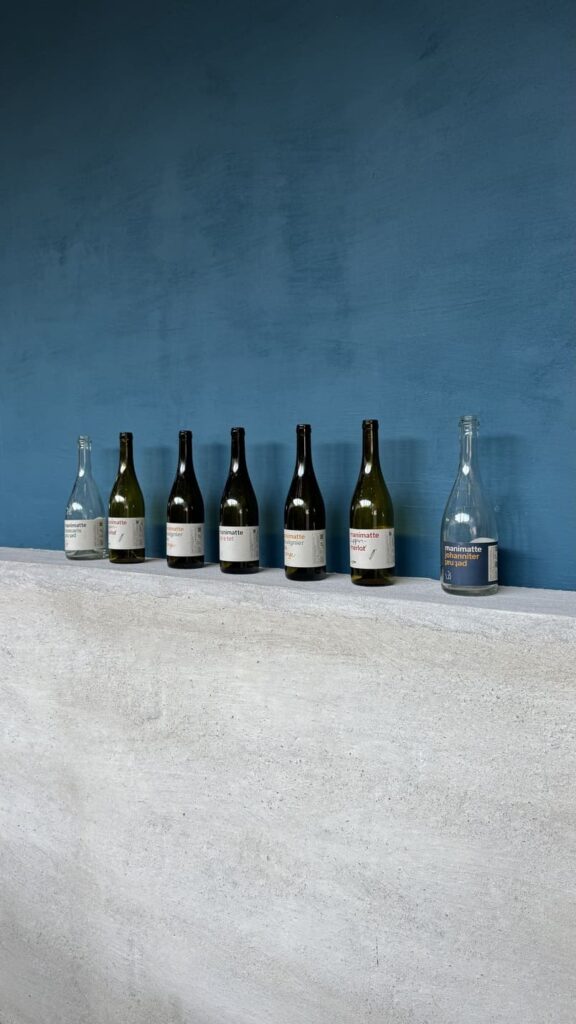
In the hills near Gudo, just outside Bellinzona, Anna Maspoli and Luca Locatelli produce natural wines on terraced vineyards under the name Manimatte. These are called “heroic vineyards” because of their steep slopes. They work with hardy, old, native grape varieties, allow their wines to ferment spontaneously, and describe them as “alive”: an expression of the grape and the soil. Every Wednesday evening, they host open tastings in their cantina. We tasted their wines and immediately understood why you don’t come here for a quick drink.

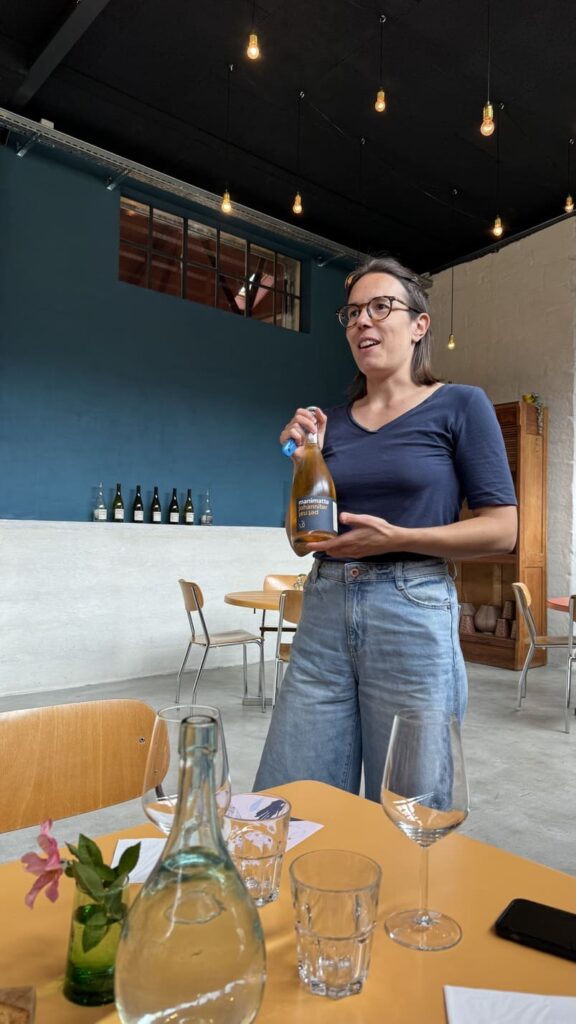
If you want to take it a step further, you can forage for your own lunch. In the Centovalli village of Intragna, gastronome Milo Bissegger will teach you which wild plants are edible—a story in its own right, which you can read about in our article on Intragna.
Ticino is the perfect destination if you’d rather avoid the crowds and the high season. Because the landscape is relatively low-lying, the best months to visit are actually spring (April–June) and fall (September–October): pleasant temperatures, snow-free trails, and significantly fewer people than during Switzerland’s peak months.
If you’re staying at a hotel, hostel, or campground in Ticino, you’ll receive the Ticino Ticket for free: unlimited travel on all public transportation in the canton, plus discounts on cable cars and boat tours. We left the car at home and used the ticket to travel effortlessly deep into the valleys.
And you don’t even have to fly: I traveled by train from the Netherlands, through Switzerland and along the Gotthard Route. You can read all about what that’s like—and how to do it yourself—in our separate article on Ticino without a car. Add to that the spread-out flow of visitors: choose the quieter valleys like Bavona, Blenio, or Muggio instead of the crowded hotspots, and you’ll have a trip that’s more enjoyable for both you and the destination.
| Location | The southernmost canton of Switzerland, bordering Italy (Lombardy and Piedmont) |
| Language | Italian (spoken by over 80% of the population); English and German are understood in tourist areas |
| Best time to visit | April–June and September–October for hiking and biking; July–August for the lakes (and busier) |
| Back and forth | By train from the Netherlands via Switzerland (Gotthard Route); on-site with the free Ticino Ticket |
| Local Transportation | Excellent public transportation; no need for a car |
| Highlights | Verzasca Valley, Maggia Valley, Bavona Valley, Lake Maggiore, Lake Lugano, Bellinzona, Ascona, Cardada, Brissago Islands |
| Highest point | Rheinwaldhorn, 3,402 m (on the border with Graubünden) |
The best months for hiking and biking are April through June and September through October. Because Ticino is at a relatively low elevation, the trails are usually snow-free during those months, and the temperatures are pleasant. If you’re mainly interested in enjoying the lakes, July and August are warmer, but also more crowded.
In Ticino, Italian is the main language: over 80 percent of the population speaks it. In tourist areas, you can usually get by with English or German as well.
Yes. Ticino has excellent public transportation, and with every overnight stay, you receive a free Ticino Ticket that allows you to travel freely by train, bus, and boat throughout the canton. I made the entire trip without a car, from the Netherlands all the way to the valleys. Just be sure to check the regional bus schedules, as they don’t always run very frequently.
By train, you can travel through Switzerland (toward Basel/Zurich) along the Gotthard Route to Bellinzona, Locarno, or Lugano. It’s a sustainable and scenic alternative to flying. By car, you can drive south through the Gotthard Tunnel.
For the iconic turquoise river and the famous Ponte dei Salti, head to the Valle Verzasca. For more space, variety, and quieter side valleys—such as the Val Bavona with the Foroglio waterfall—choose the Valle Maggia. If you have the time, visit both—they’re right next to each other.

With a passion for travel and photography and over 30 years of experience in the travel industry, I love to share my special nature travel tips. Travel is wonderful and important, you meet new people and cultures and it opens your view of the world.
Cycling the Lake Route: 227 kilometers through Switzerland at a leisurely pace The first thing you hear isn’t traffic, but a cowbell. You’re standing in Vevey, on the shores of Lake Geneva; you’ve just dropped off your suitcase at the baggage counter, and for the next...
Lübeck & Travemünde: a green city break along the Baltic Sea Sleeping in an old Kellogg’s grain silo, having breakfast without cornflakes the next morning, and a day later searching for kingfishers on a river that once ran right through the Iron Curtain. Our short...
Europe's Most Beautiful Hidden Natural Spots: Request Your Free Guide The spots you won't find in any travel guide. Curated for free by a nature travel specialist. What would you do if you knew of a place where nature still thrives as it always has? Without parking...
Get inspired
Are you looking for the most beautiful hiking and biking routes? Or do you want information about traveling by train or advice for the most beautiful road trips through nature. Get inspired for your next trip in green; ideas for planning your own trip or opting for an organized trip.