
Gratis gids 10 verborgen natuurplekken in Europa
Gratis gids 10 verborgen natuurplekken in Europa. Meld je aan voor onze nieuwsbrief en ontvang inspirerende reistips en routes voor je volgende groene reis.

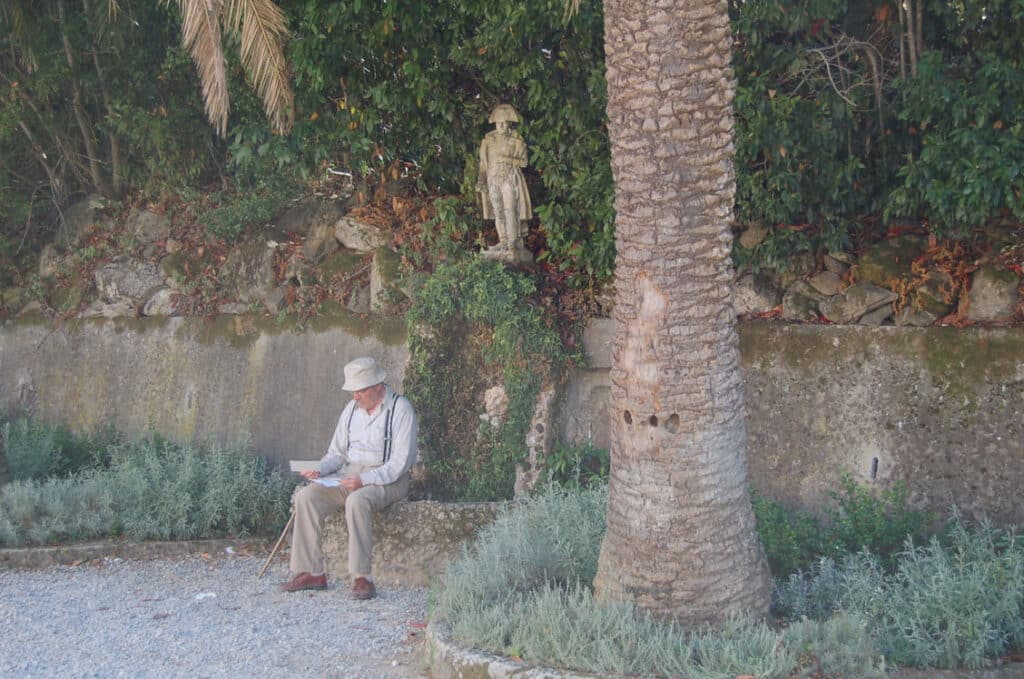
Napoleon was already familiar with the island. In 1814, he was exiled to Elba and spent nine months at Villa San Martino, overlooking the same maquis-covered slopes that hikers on the GTE still pass today. He left the island without having crossed it entirely. You can do better than that.
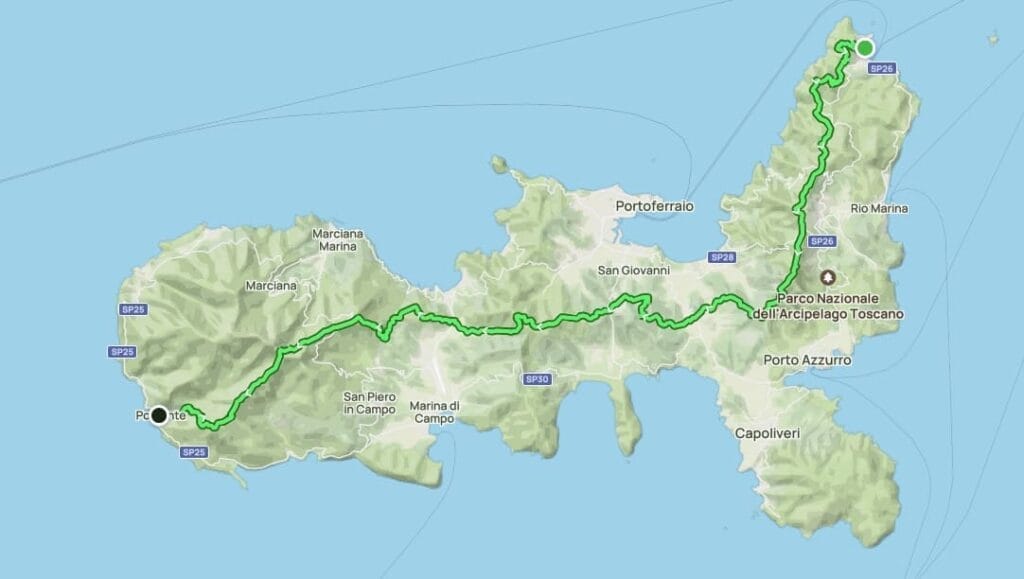
The Grande Traversata Elbana, also known as the GTE, is a classic long-distance trail that cuts across the island from east to west: from Cavo, the northernmost village near the mainland, to Pomonte on the rugged west coast. Over the course of eight days, you’ll hike through vineyards and olive groves, past Mediterranean scrub and rocky granite formations, with views of the sea stretching all the way to Corsica, Montecristo, and Pianosa.
You can book the trip directly through Nature Travel Lab with our local specialist. They’ll arrange accommodations at agriturismos and small hotels, luggage transport, and a detailed road book. You just walk.
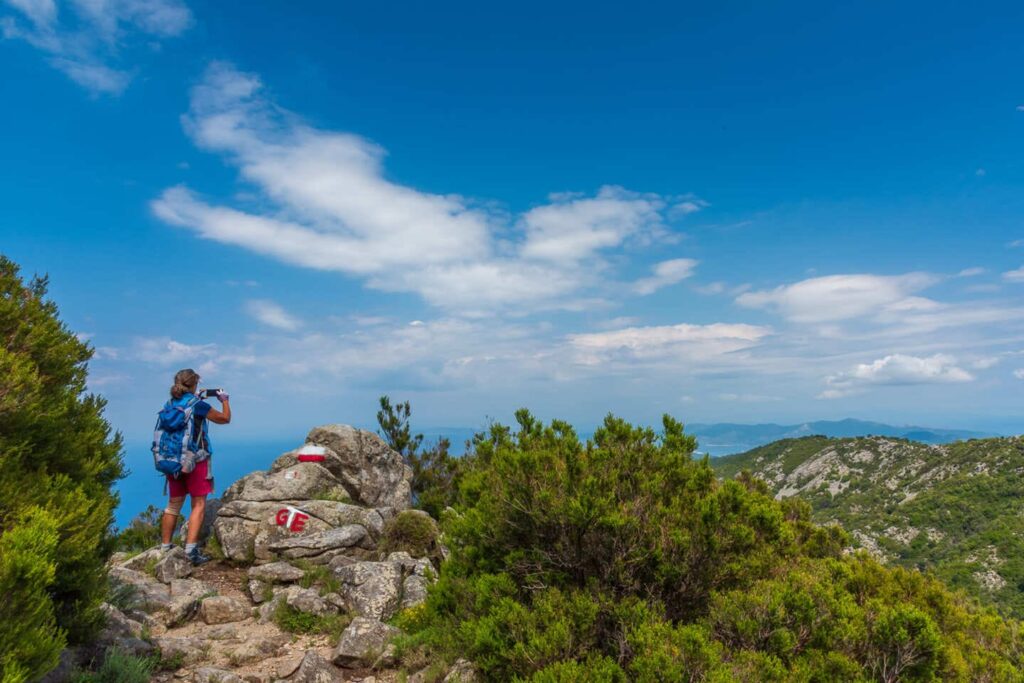
Elba is the largest island in the Tuscan Archipelago and the third largest in Italy. But for most visitors, it’s a summer beach destination. If you explore on foot, you’ll discover a completely different island. The interior is mountainous and green, crisscrossed by ancient trails that locals used to travel from village to village. The highest point is Monte Capanne (1,019 m); the route takes you past fortress walls, mining towns, botanical gardens, and abandoned chapels.
The GTE has existed in its modern form since the 1980s, as described by Renato Giombini and Mario Ferrari. The trail combines two worlds: the quiet, rugged nature of the interior and the cultural history of an island that was successively ruled by the Etruscans, the Romans, the Medici, and Napoleon. You can tell this at every viewpoint: someone has already been here before you.
Important to know: The GTE is best hiked from April through mid-June and from September 10 through October 15. During the summer months, it’s too hot, and there are hardly any places to get drinking water along the way. In the winter, most accommodations are closed.
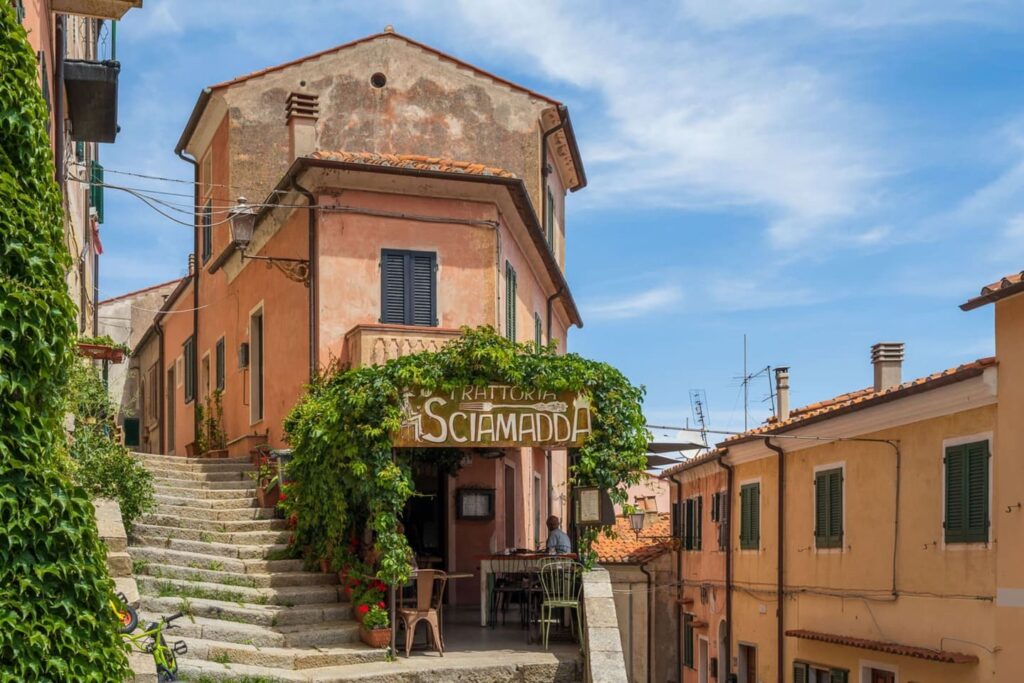
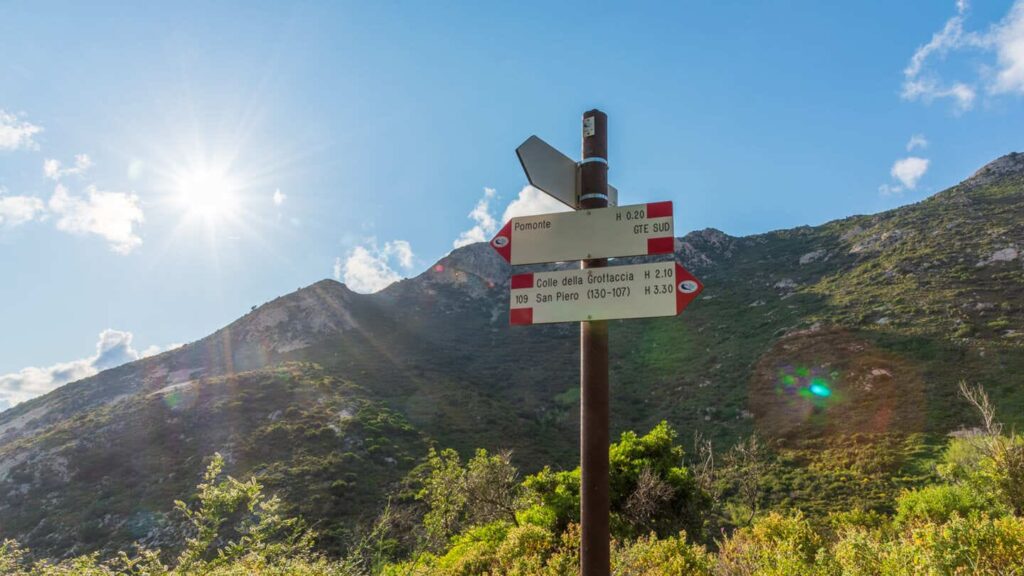
The trek lasts eight days, including four active hiking days and two rest days. The daily distances are substantial (up to 20 kilometers with significant elevation changes), and the terrain is technically challenging: narrow trails, steep ascents and descents, and rocky ground. Good physical condition and sturdy shoes are not just recommended—they are required.
You’ll travel to Elba on your own. During peak season, there’s a direct ferry to Cavo; otherwise, take the ferry to Portoferraio and then the bus to Cavo (about 1.5 hours). If you’re coming by car, you can also drive on to Pomonte (the final stop) and park your car there. Our partner will then arrange a transfer to Cavo on the day of your arrival.
Overnight stay at the 3-star Hotel Maristella or similar. Dinner at a nearby restaurant.
20.6 km | ±970 m
The longest and toughest day of the trip right on day two—that’s the GTE in a nutshell. But it’s also the day with the most impressive panoramic views. The route starts in Cavo, the northernmost village on Elba, and quickly climbs toward Monte Grosso. At the summit: a sweeping view of the sea back toward Cavo and the three small islets of Topi, Palmaiola, and Cerboli.
Along the way, there are two detours worth taking: to the Tonietti Mausoleum (Elba’s only Art Nouveau monument) and to the Church of Santa Caterina with the Orto dei Semplici botanical garden. The trail then runs above the former mining town of Rio nell’Elba, culminating in the dramatic ruins of the Volterraio rock fortress. It towers like an eagle’s nest above the bay of Portoferraio.
Overnight stay at Agriturismo Montefabbrello or Hotel Gli Acquerelli in Schiopparello. The agriturismo serves dinner made with produce from its own farm and offers its own wine.
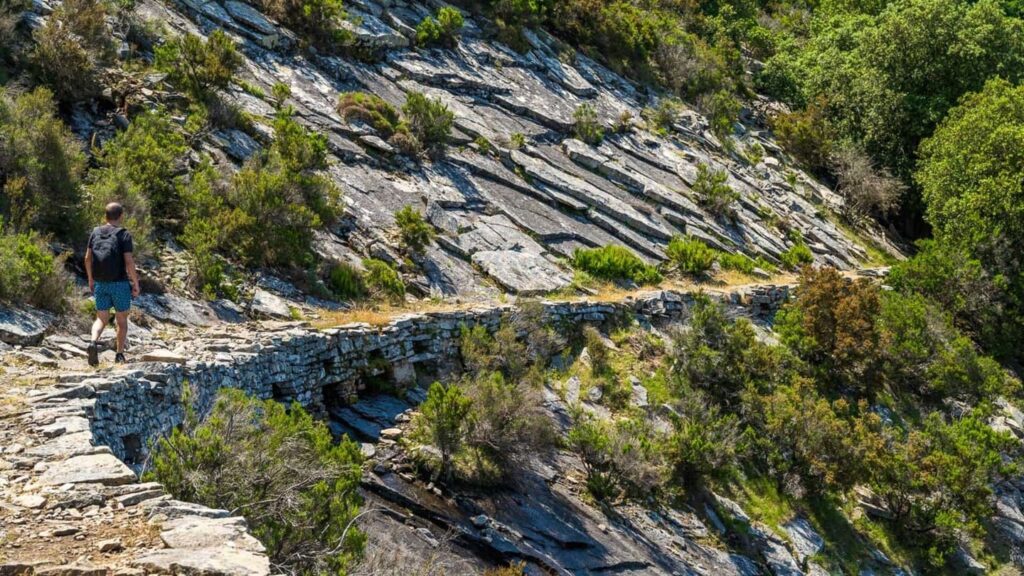
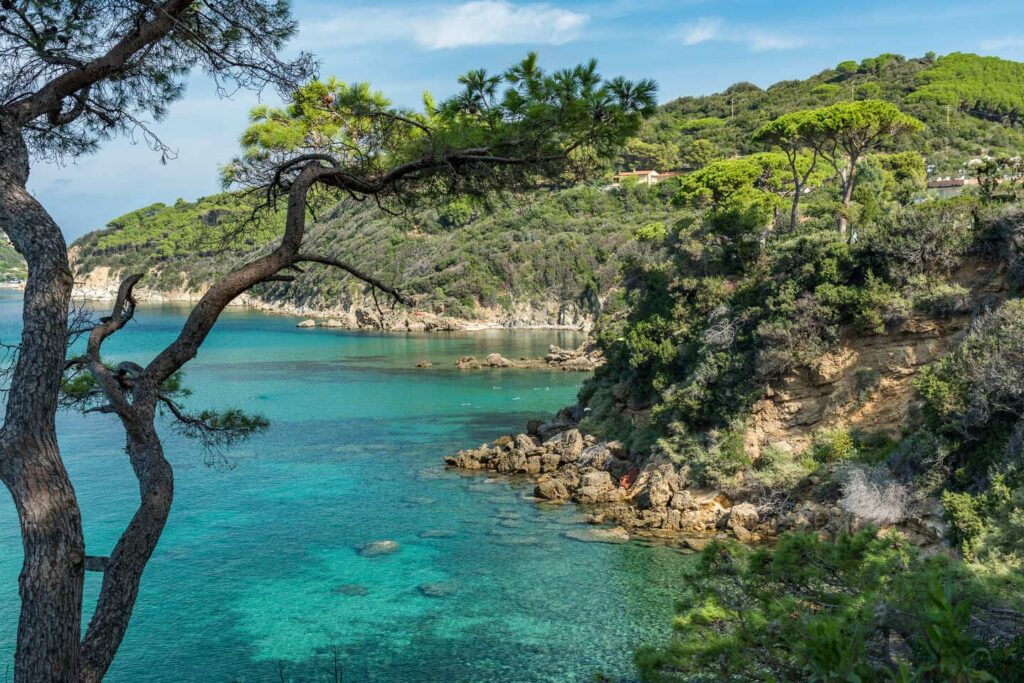
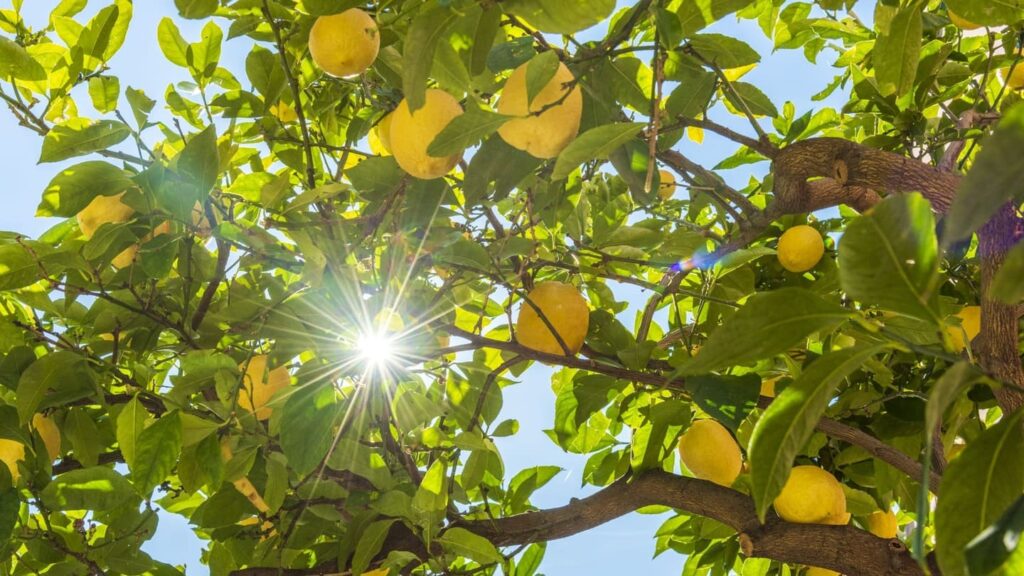
16.5 km | ±500 m
A shorter and shadier day. The trail winds through vineyards, olive groves, and gardens, then climbs through beautiful pine forests near Monte Orello and, passing through fragrant macchia, reaches the seaside village of Procchio on the north coast.
Along the way, you’ll pass the only source of drinking water on the entire GTE. Be sure to bring plenty with you! A detour of about 30 minutes leads to the ruins of the Church of Santa Lucia, which was a place of pilgrimage for centuries and later became a target of the pirate Barbarossa. A little further on stand the imposing ruins of an old windmill (Molino a Vento) with views of both the Gulf of Portoferraio and the Gulf of Lacona. Exactly 100 meters to the west stands a boundary stone from 1579 bearing a carved Maltese cross, once placed to mark the border between the Medici territory and the Principality of Piombino.
If you’d like, you can also take a longer route via Villa San Martino—the famous villa where Napoleon stayed during his exile on Elba.
Overnight stay at Hotel Brigantino or similar. Dinner at the hotel.
8.6–18.3 km
Today you’ll face a choice that will determine the rest of the trip. You can spend the night at Agriturismo Fonte di Zeno (a small family-run agriturismo nestled in the heart of Elba’s natural landscape, with a unique butterfly garden right next to the hiking trail) or at a hotel in Marciana Marina by the sea.
At the agriturismo, Day 5 is shorter and Day 6 is longer; at Marciana Marina, it’s the other way around. If you choose the hotel by the sea, you’ll leave the main GTE route (which runs at an elevation of 400 meters here) and descend to the coast; the next morning, you’ll head back up, either on foot or by bus. Our agent will let you know which option is available when you book. Either way, the section between Poggio and Marciana Alta, just below Monte Capanne, is one of the most beautiful stretches of the entire route. You really shouldn’t miss it.
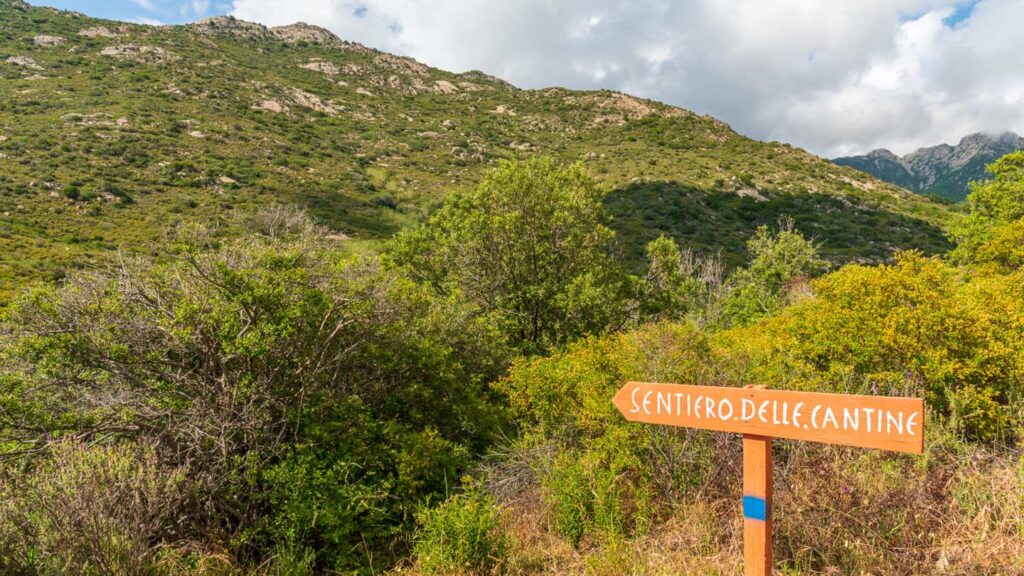
A full day of rest surrounded by Elba’s natural beauty. No obligations, no distances to cover. Read, swim, or go for a walk in the immediate vicinity—or simply soak up the silence. The agriturismo serves meals made with its own produce.
14.4–15 km | +1,200/−900 m
The most spectacular day of the hike, and also one of the toughest. The trail winds past granite rock formations that sometimes resemble mythical creatures and past the Caprili—ancient stone shelters that goat herders built here centuries ago to protect themselves from bad weather. The views are indescribable: Pianosa, Montecristo, and Corsica on the horizon.
After a steep descent, you’ll reach the fertile valley of Pomonte, where wine was once grown on terraces and the ruins of old wine farms still dot the landscape.
Overnight stay at the 3-star Hotel Corallo (2 nights, half-board).
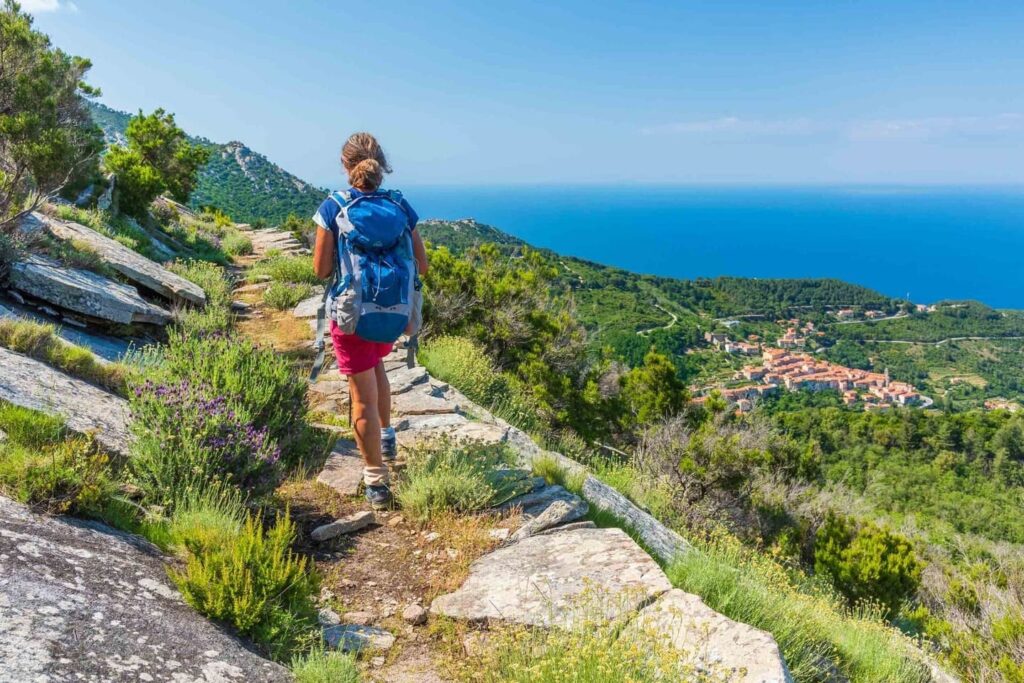
Pomonte is a small, quiet village on the west coast. Swim in the sea, explore the valley on foot, or walk on to the beachside hamlet of Fetovaia. Give your legs a rest; the island has more to offer than you can see in eight days.
After breakfast, the tour ends. If you don’t have your own car, the agent can arrange an optional transfer to the ferry terminal in Portoferraio.
One of the major highlights of this trip is the variety of accommodations. You won’t be staying in identical hotel rooms, but in charming places that blend seamlessly with the landscape: an agriturismo that makes its own wine, a family-run hotel with a butterfly garden, and a rustic hotel on the western beach.
All accommodations have a private bathroom. Breakfast is always included; if you choose half-board, you’ll also receive a three-course dinner (drinks not included). Lunches are not included. At the agriturismo, you can order a packed lunch the night before (for an additional fee). Be sure to always bring plenty of drinking water with you: there is only one drinking water source along the entire route.
Please note: For bookings that include Easter (April 3–6), April 25, May 1, or June 2, a surcharge of €30 per person applies. Prices include Italian VAT.
When you request a quote, we’ll forward it to our local partner, who will confirm the price and availability directly with you (in English). If you agree, you confirm the trip. You’ll pay a slightly lower price than if you booked directly. You’ll handle the rest of the booking and payment directly with the local provider (with whom we have a good working relationship and established agreements). We’re always available to answer any questions you may have.
"*" indicates required fields
Best time to visit: April 1–June 25 and September 10–October 15. During the summer months, the heat is too intense and there aren’t enough places to get drinking water along the way. In the winter (November–March), most accommodations are closed.
Sturdy hiking boots with ankle support and good traction on rocky terrain are essential. Recommended: hiking poles, enough drinking water for the day, sunscreen, and a lightweight rain jacket. After booking, you’ll receive the roadbook with all the practical details.
The GTE is technically more challenging than, for example, the Norwegian routes in our selection. The trails are narrower and rockier, the ascents are steeper, and there is less signage. Experience with mountain hiking is required. If you’re used to long day hikes with significant elevation gain—such as multi-day routes in the Alps or the Pyrenees—this is the right choice for you.
Yes. There are bus connections from each overnight stop to the next one. The road book also includes phone numbers for local taxi companies. However, our agent recommends walking the section between Poggio and Marciana Alta in any case: it’s the most beautiful part of the entire route.
You can park your car in Cavo (starting point) and return after the hike. Or you can drive to Pomonte (end point), park there (public parking or hotel parking), and our partner will arrange a transfer to Cavo on the day of arrival. That transfer is not included in the tour price.
Absolutely. The itinerary is completely self-guided and perfectly doable on your own. Just be aware that the single-room supplement is quite steep. There’s also a middle ground: a single room at a reduced rate if you’re traveling with at least one other person (even if you’re not sharing a room).
The most common way to get there is by ferry from Piombino to Portoferraio (about 1 hour). During the high season, there is also a direct ferry to Cavo. From Portoferraio, a public bus runs to Cavo (about 1.5 hours). Our partner provides specific instructions for your trip to Elba in the travel documents.
May and the first half of June are ideal: pleasantly warm, with the vegetation in bloom, and the busy summer months not quite here yet. September and early October are also excellent: quieter, cooler, and with beautiful autumn morning light. Avoid July and August because of the heat and the lack of drinking water along the way.

With a passion for travel and photography and over 30 years of experience in the travel industry, I love to share my special nature travel tips. Travel is wonderful and important, you meet new people and cultures and it opens your view of the world.

Slow Food Puglia: Tasting Mussels and Clementines in Taranto Starting in the summer of 2026, in the province of Taranto, in the far south of Italy, you can literally sample what small-scale local producers have to offer. At the same time, during these excursions,...
Gitschberg Jochtal: Hiking in the Summer, Skiing Away from the Crowds in the Winter Eight villages, no well-known name, and yet 300 kilometers of marked hiking trails in the summer and 55 kilometers of ski runs in the winter: that’s the Gitschberg Jochtal, on the...
Get inspired
Are you looking for the most beautiful hiking and biking routes? Or do you want information about traveling by train or advice for the most beautiful road trips through nature. Get inspired for your next trip in green; ideas for planning your own trip or opting for an organized trip.