
Gratis gids 10 verborgen natuurplekken in Europa
Gratis gids 10 verborgen natuurplekken in Europa. Meld je aan voor onze nieuwsbrief en ontvang inspirerende reistips en routes voor je volgende groene reis.

What’s it like to hike for days along ancient pilgrimage trails to Trondheim? During a trip through Sweden and Norway, I hiked several sections of the St. Olavsleden. From the open border mountains near Skalstugan to the final kilometers along the Trondheim Fjord and the arrival at Nidaros Cathedral.
Here you can read about my experiences from a week-long trip in September covering several stages of the St. Olavsleden, the pilgrimage route that runs from the east coast of Sweden to Nidaros Cathedral in Trondheim. I didn’t walk the entire 564 kilometers—that would take about a month—but I did walk the sections between the Swedish-Norwegian border and Trondheim, using transportation for the stretches in between.
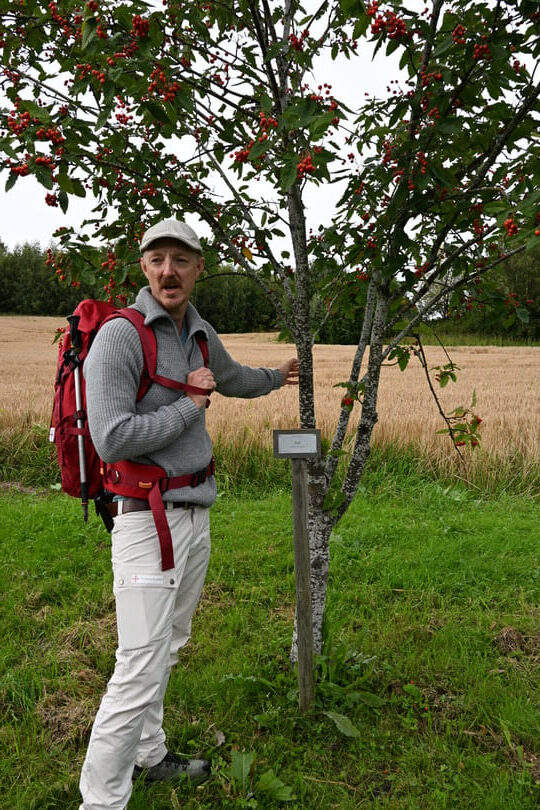


What was particularly striking was how quiet the trail was. Although it was early September, we were the only pilgrims in this beautiful, varied landscape, aside from the occasional local passerby. For me, even though we were in a small group of seven and the trip lasted only one week, it felt like a real pilgrimage. Meaningful conversations and encounters with strangers provided many insights and a sense of togetherness.
For the full history and route, please see my general article about the St. Olav Trail. This is the story of what I saw, heard, and ate along the way, and of the people who told that story.

We’ll start with a local lunch at Ersgard near Trondheim, a farm that has been in the same family for generations, and then continue on to Duved. We get our first pilgrim stamp in our booklet. Along the way, with our guides Mattias and Janna, we take a practice hike along the Solstigen/Blomsterstigen trail just across the Norwegian border in Sweden—test passed. As it turned out, this was actually the most challenging hike of the entire trip.
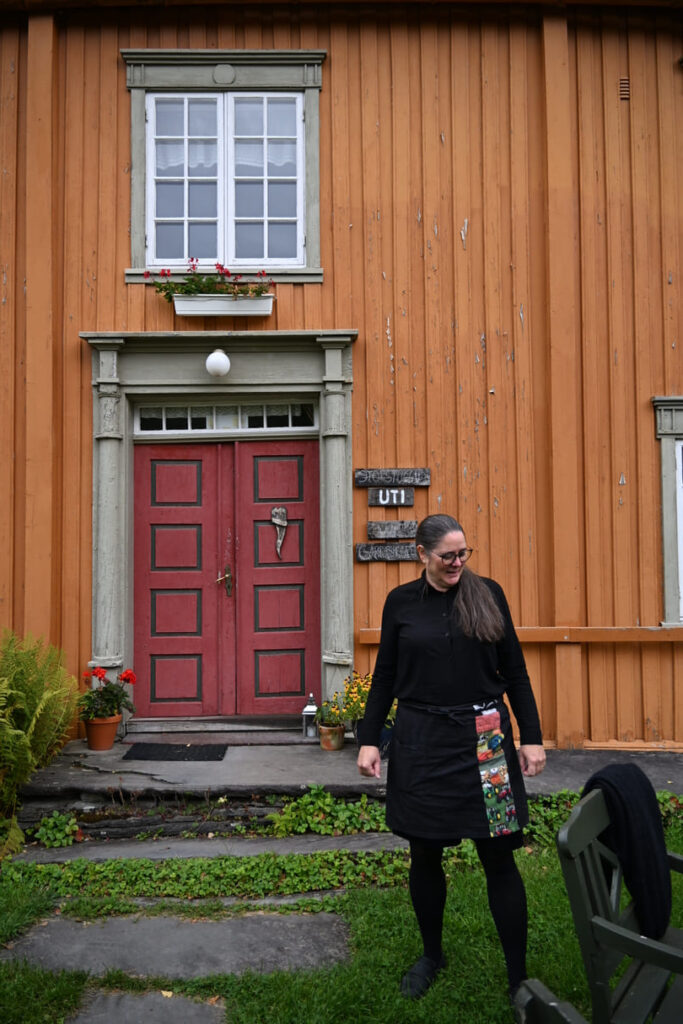

What stands out most to me on this first day is a casual remark by our guide, Mattias: in the 16th century, pilgrimage along this route was banned following the Lutheran Reformation in Norway. In the 20th century, pilgrims began returning to walk to Trondheim, and it wasn’t until 1997 that the entire infrastructure was built to support the route—from stamped pilgrim passports at each overnight stop to a season that runs strictly from June through early September.
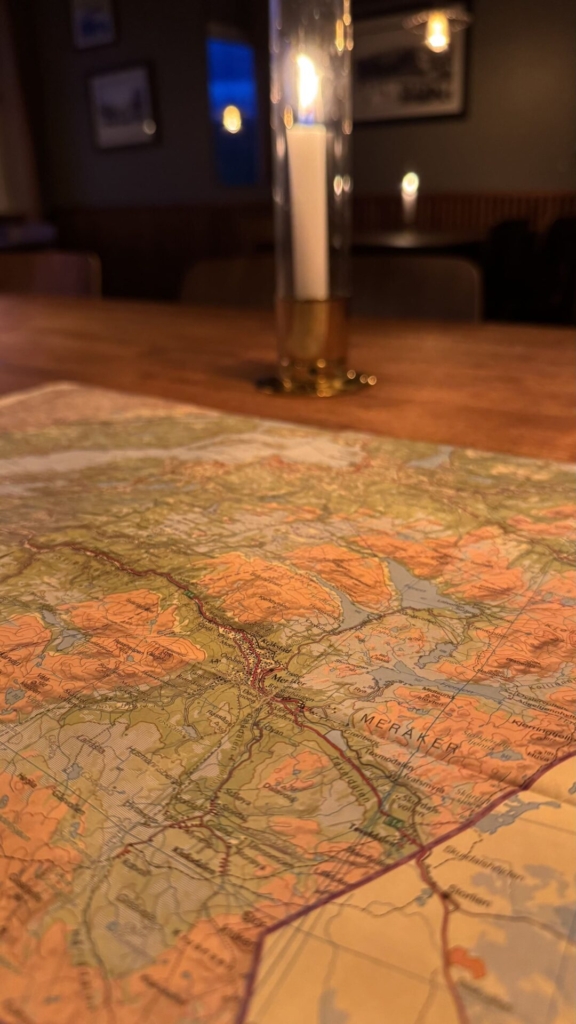
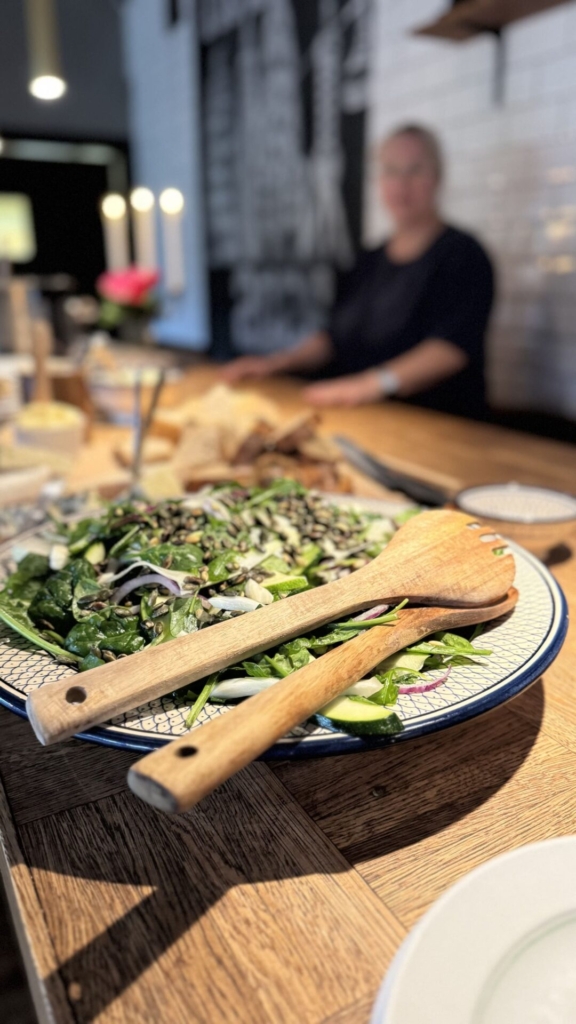

We’re staying at the Mullfjället guesthouse, a cozy 19th-century building that used to be a customs station. The rooms are great, with shared bathrooms. A delicious evening meal of bread, soup, and cheese gets us ready for the next day. The first leg of our hike toward Norway, with a packed lunch for the road.
18 km hike (about 7–8 hours)from Skalstugan to Sul
On the second day, we’ll hike the section for which the route is famous: eighteen kilometers along Kong Karls Johans veg, a wide road that was once built for a royal visit and runs straight across the barren highlands between Sweden and Norway.
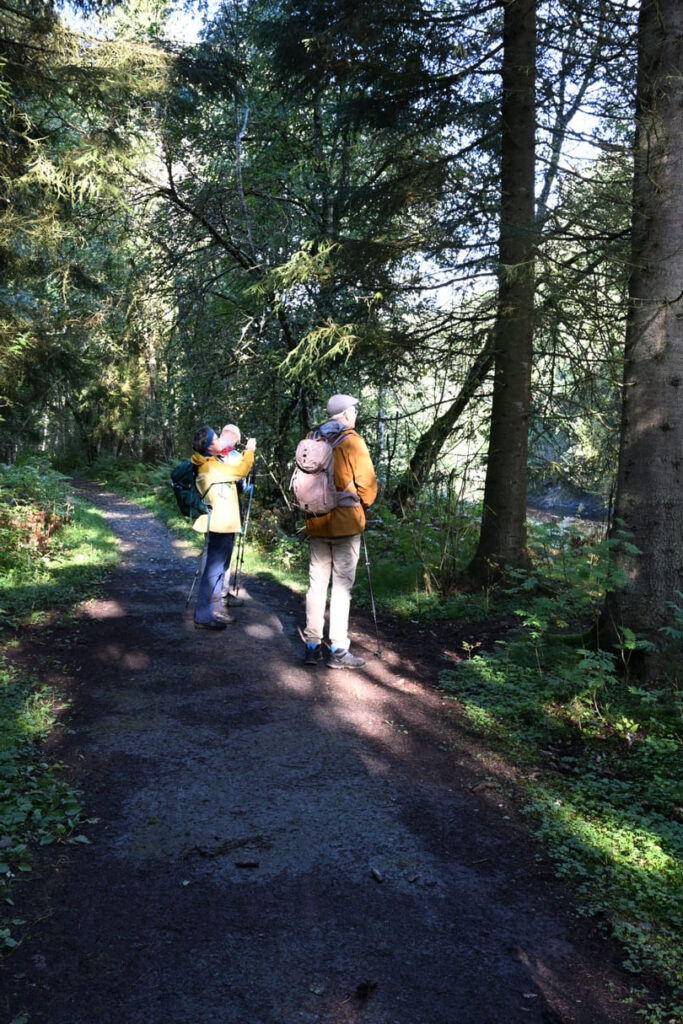


We’ll start with a visit to Sweden’s largest waterfall: Tännforsen, near the winter sports village of Åre. Then we’ll hike from Skalstugan up past the tree line and descend on the Norwegian side back toward Sul.

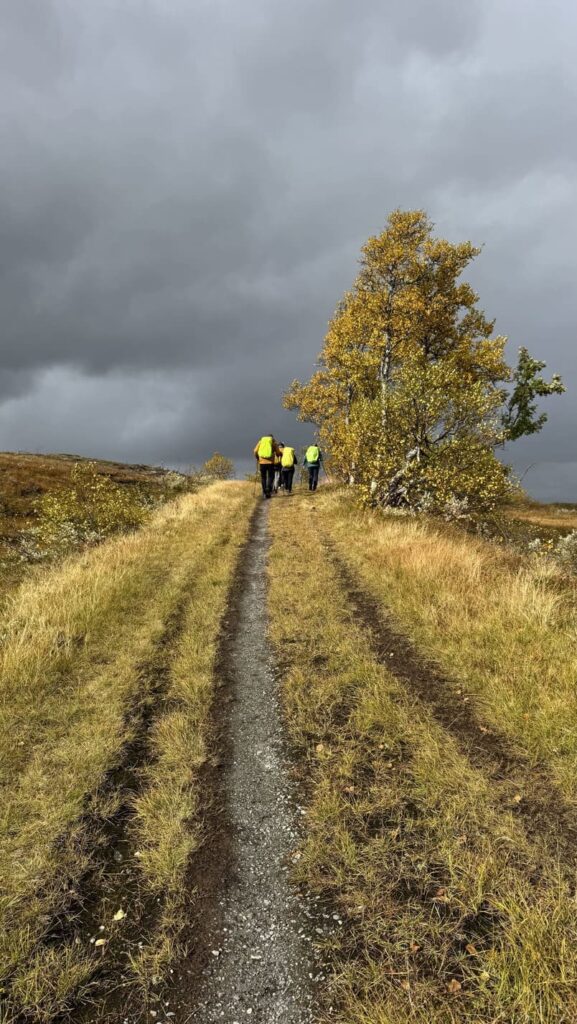

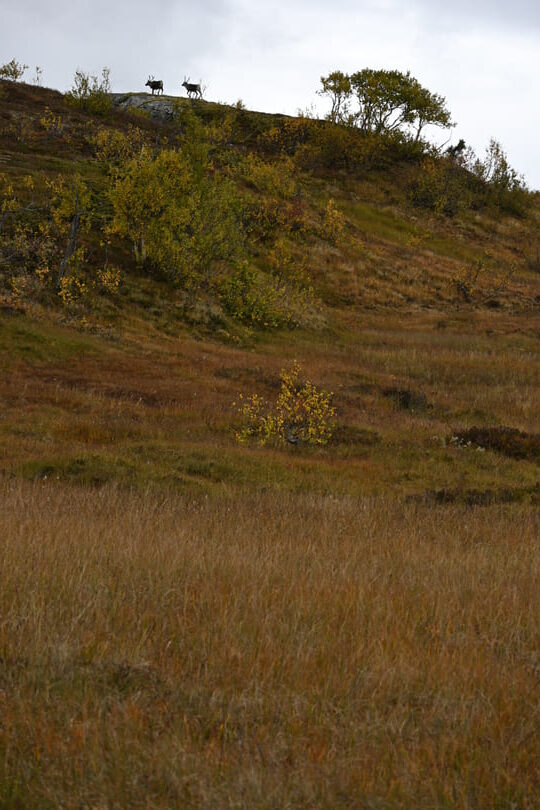
To be honest, I thought this was one of the most beautiful routes. The diversity of the landscapes is impressive. Along the way, we see beavers in the water and reindeer feasting on reindeer moss—which, technically, isn’t moss but a lichen: a symbiotic relationship between a fungus and an alga. Here and there along the trail, sensors are installed to monitor both nature and the number of visitors.


We’re spending the night at Ådalsvollen Pilgrim Lodge, in a cabin right on the water. The building was once (in 1938) a grocery store, and later served as a bus station and a bird-watching station. Now it offers lodging for twelve pilgrims, with the option to cook for themselves.

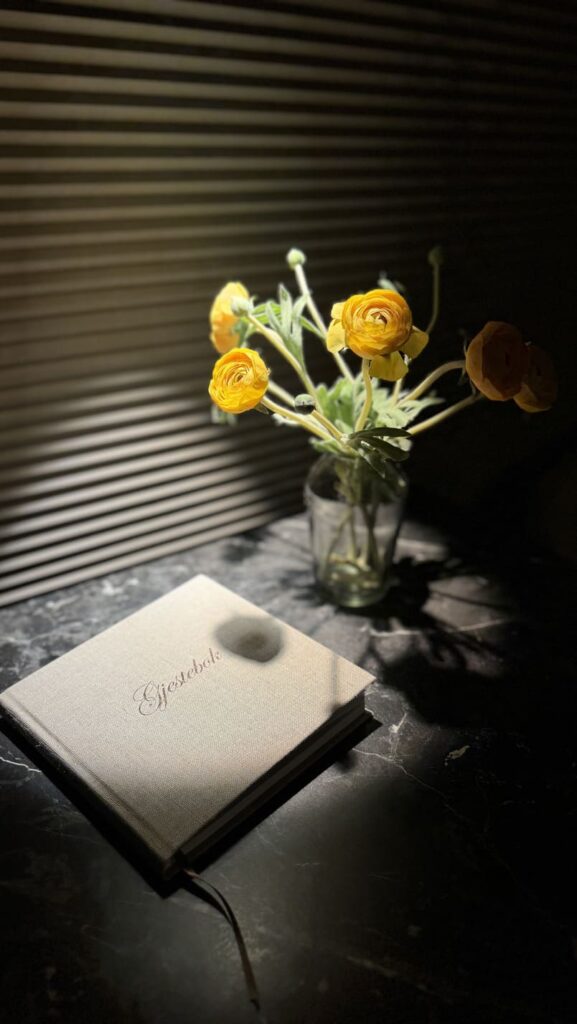
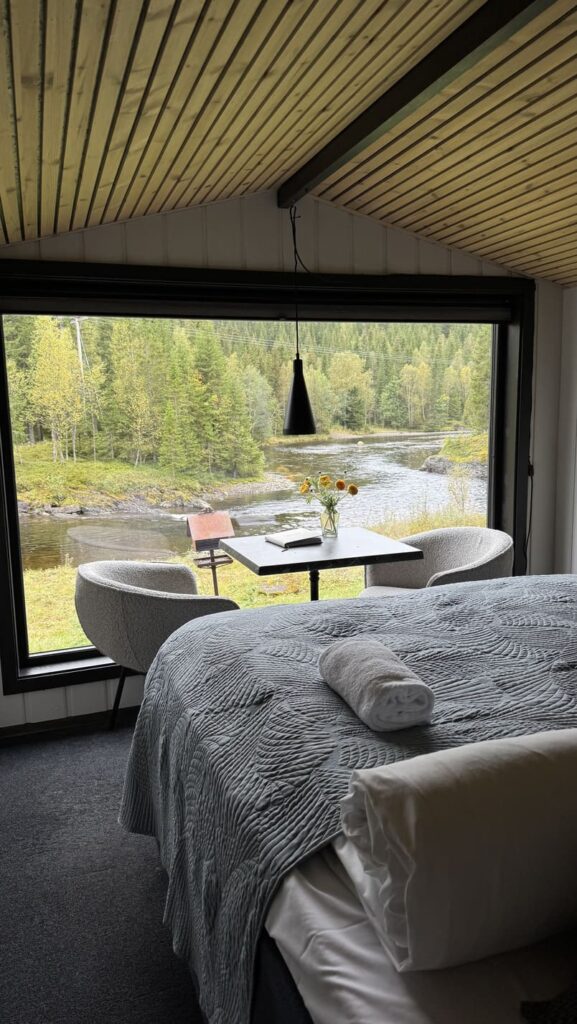
I’m lucky enough to sleep in a private cabin with a view of the water and a birdhouse outside the window. Little songbirds fly back and forth. The rest are sleeping in rooms or in a dormitory with bunk beds. The warm hot tub is a pleasant way to unwind after a long day of hiking. Dinner, featuring soup prepared by the hostess, is a delightful way to end the day.
12-kilometer hike (about 4 hours) along King Karl Johan Street and 2 kilometers from Vuku to Auskin Center
From Sul to Vuku, a twelve-kilometer walk through the woods; we stay on the old Koningsweg, which here features dry-stone retaining walls along a small stream. We take a break at the Stongbakvattan lookout point, which has its own fire pit. Further on, we pass sheep that are kept within their pasture by electronic collars that deliver a mild shock, and a suspension bridge where an old map still shows the original walking route.


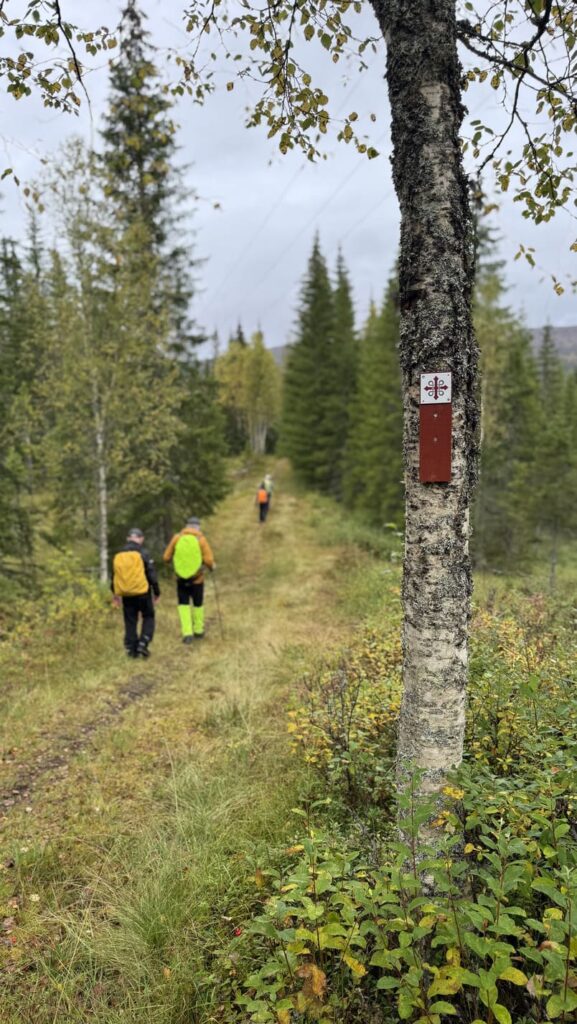
It’s a rainy day, but it hardly gets in the way. In the forest, the trees provide plenty of shelter. Along the way, we observe an impressive minute of silence during King Harald’s funeral. I learn about the different types of berries: the creeping blackberry, the blueberry, and the lingonberry. The fall colors are beautiful.
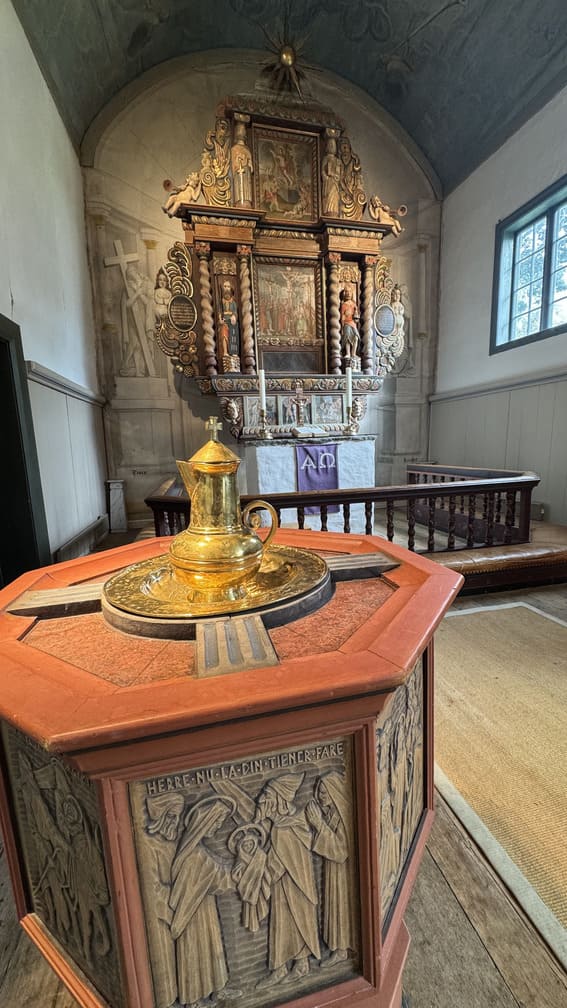
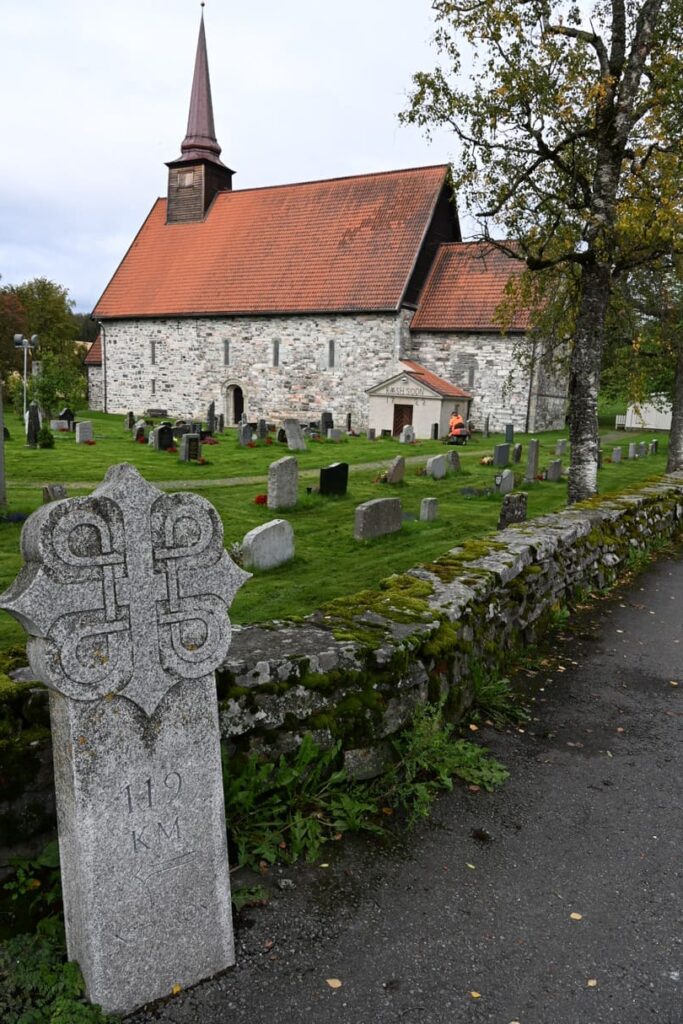
A minibus takes us from the end of the hike at Kleivdalen to the church in Vuku. This church dates back to 1654 and was once destroyed by fire and rebuilt. Vuku is also the place where Olav Haraldsson rested one last time before going into battle, which explains why there is a church here. From the church, it’s just under 2 kilometers to our next overnight stop.

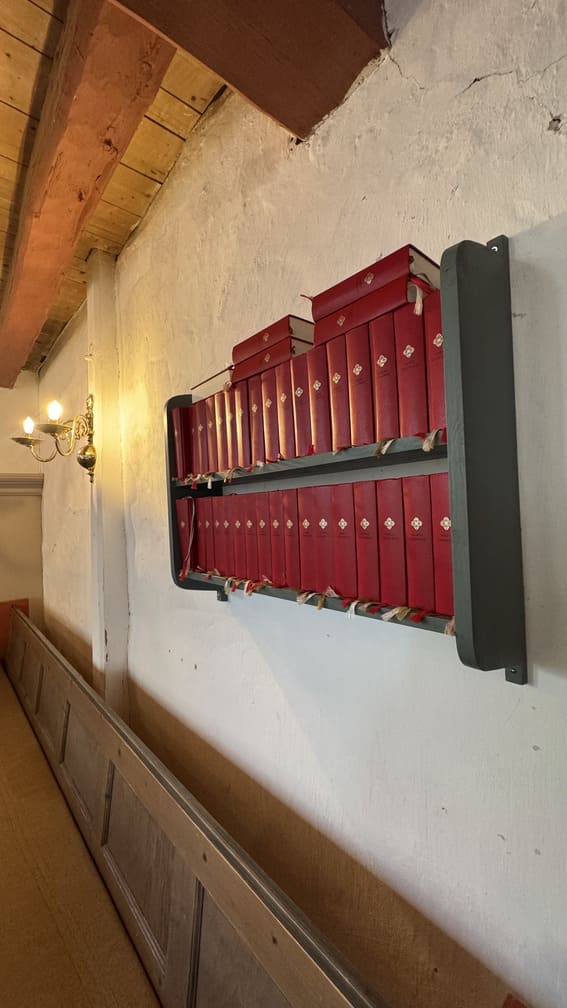
We’re staying with Mona at the Auskin Creative Center, just a stone’s throw from the church. And Mona is an inspiration. Together with her husband, she designed and built the “Viking longhouse” in Stiklestad. She teaches woodworking and painting classes to locals, and is currently restoring the doors of the main entrance to the cathedral in Trondheim.


In the evening, Mona shows us her workshop, where she is working on the design of the cathedral’s doors. Another piece is an early, Byzantine-inspired depiction of Jesus without the marks of the Passion. It wasn’t until two hundred years later that the customary image of a suffering Christ on the cross emerged.



Auskin has underfloor heating and is made almost entirely from recycled materials. Only the frame of the old hay barn remains standing; the rest had to be replaced by the fire department, though the original hay drying room above it is still intact. The rooms are spacious and airy.
In the morning, we make breakfast together; Mona calls it“dugnad,” which literally means something like “collective effort.” It’s a beautiful word that was once named the Norwegian Word of the Year. I’ll definitely be coming back to this place.
A 6-km hike from Stlklestad along the Verdal River and a 6-km hike from Skgosjale to Munkeby
On the way to Stiklestad we pass a lookout point overlooking the valley where Norway’s largest landslide, the Verdalsraset, occurred in 1893—at night—claiming many lives. Mattias explains that such mudflows occur more frequently when the soil doesn’t contain enough salt, and that climate change is increasing the risk of new landslides, with recent incidents near Oslo and Bergen.
Further on, we walk through a wetland area where migratory birds spend the winter, and where there is currently debate over the construction of oil platforms in the vicinity.

Stiklestad itself is a museum, hotel, and national cultural center all in one. It’s definitely worth taking a guided tour of the Viking and cultural center. Guide Arnstein brings Olav’s story to life with a precision that reveals he has told it hundreds of times—and still means every word:
Olav came to power in 1016 and wanted a single law for all of Norway, with Christianity as the only permitted religion. In doing so, he stripped the established powers—spread among local chieftains who still worshipped the old gods—of their authority. They sided with the Danish King Canute. Olav fled via Sweden to Kiev in present-day Russia. When he returned a few years later to reclaim his kingdom, he avoided the coast, which was guarded, and marched inland to Stiklestad, where he thought he could count on allies. There were none, or too few: his army, partly supplemented by mercenaries from the area around present-day Belarus, was too small. He was quickly defeated and killed there in 1030.
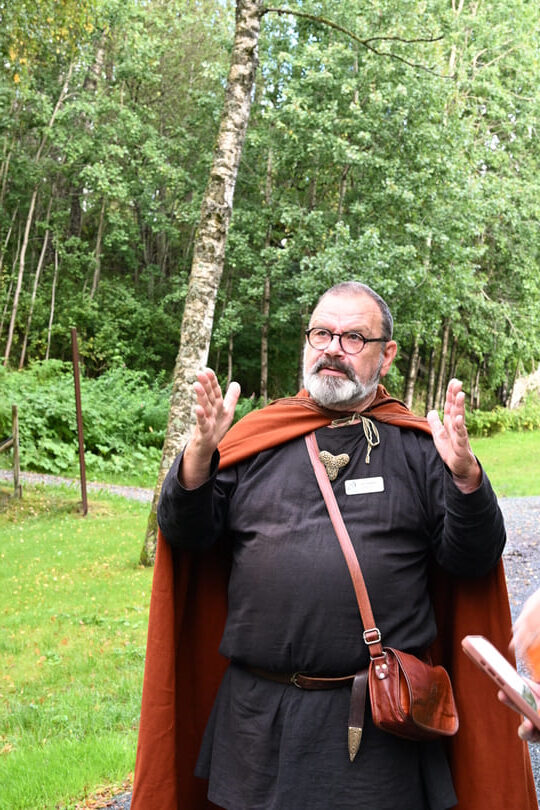

The reconstructed Viking longhouse (designed by Mona) is 36 meters long, which, according to the guide, is still smaller than some Viking ships from that era. Here we learn how a chieftain’s authority worked: anyone who accepted a gift from him was henceforth under his protection and owed him a debt of gratitude.
We also hear some lighter facts, such as that the fork became common throughout Europe within seventy years of its introduction in Italy, that drinking glasses were made with bumps so that greasy fingers wouldn’t slip while eating with their hands, and that the horned Viking helmets are a nineteenth-century invention, not a Viking reality.
You can spend the night here at the hotel (which also serves as a cultural center) or in one of the beds at the Viking House. The guide explains that most Dutch pilgrims start at the Baltic Sea in Sweden and take about three and a half weeks to walk to Trondheim.

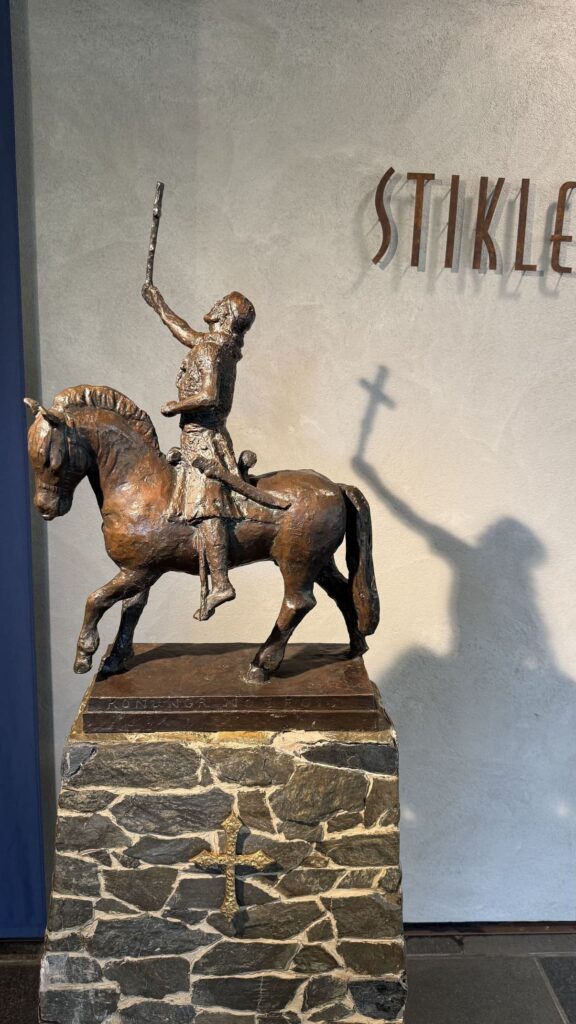

What is particularly striking is just how little is still known about everyday life back then. There are many gravestones here, but almost nothing is known about who is actually buried beneath them. After his death, Olav himself was initially buried along a river, not in a church as is often assumed. It was only later that the veneration of him shifted to Trondheim, and it wasn’t until 1513 that this region became Protestant.
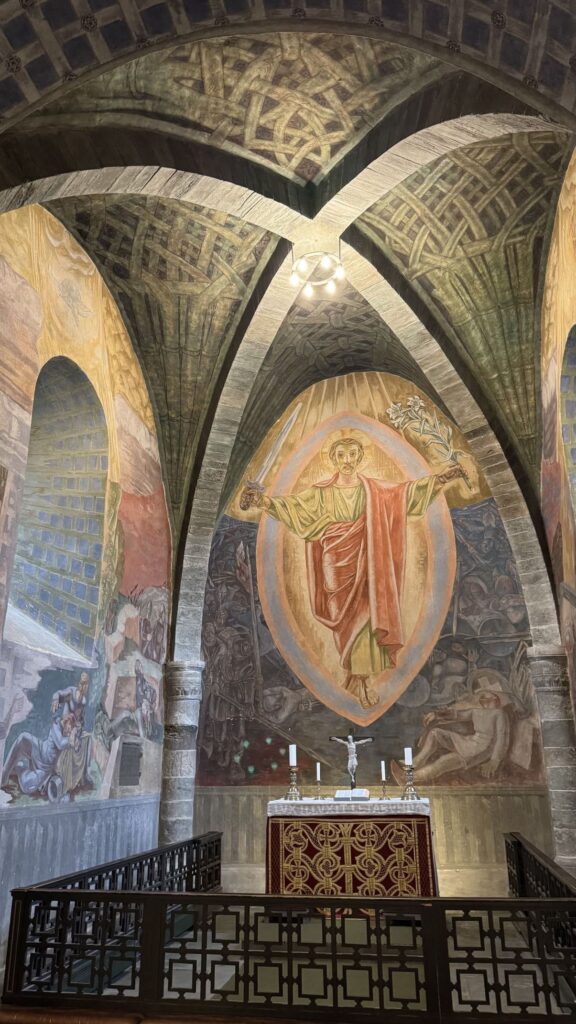

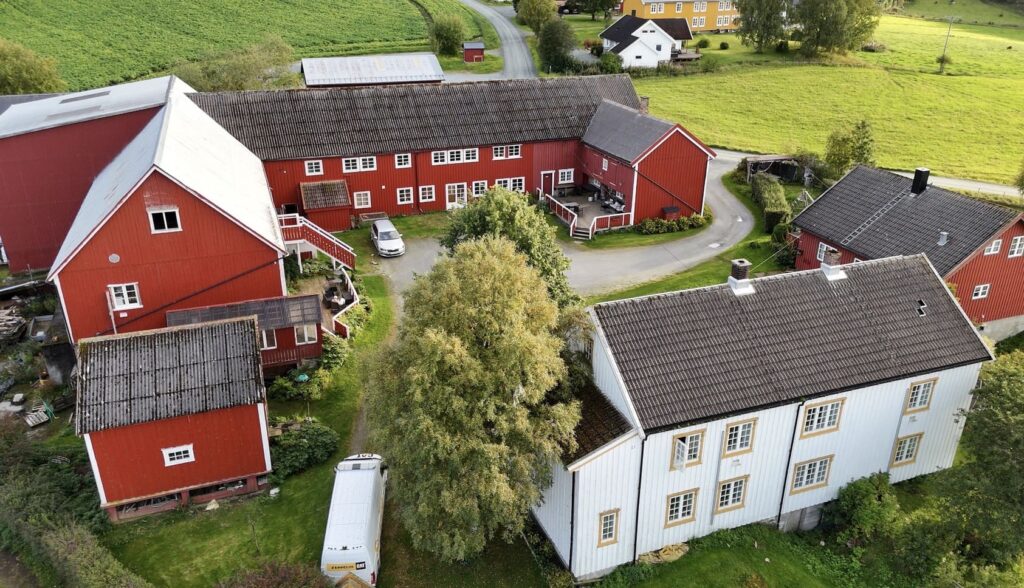
That evening, we’ll spend the night at the Munkeby Inn, a farm with red buildings near the monastery ruins.
A 15-kilometer hike from Munkeby via Levanger to Alstadhaug
We walk along the Levanger River, where many salmon swim in July (fishing is not allowed), back past the ruins of the Munkeby monastery (dating from the twelfth or thirteenth century). The monastery was in use for only 10 years. It burned down and was never rebuilt; it proved to be too damp so close to the water.


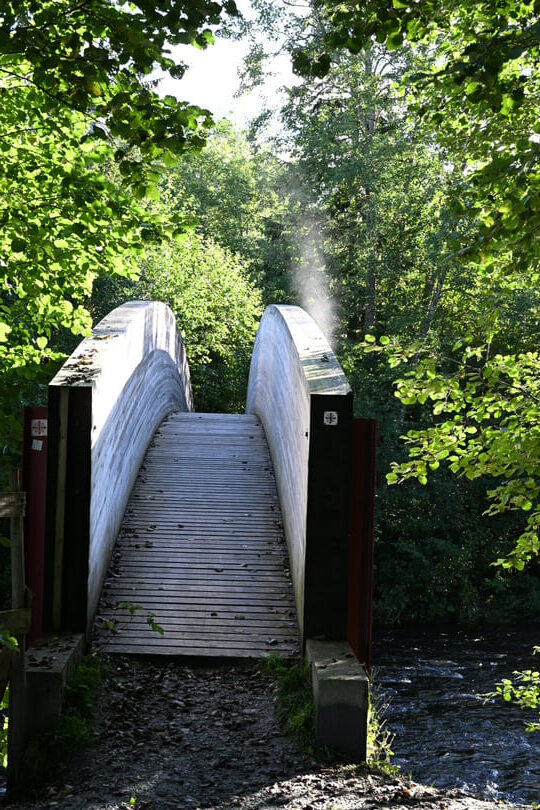
Farmers from the surrounding area used to store their seeds there. At the newly rebuilt monastery, 1.5 kilometers away, you can still spend the night with the monks, who sell homemade cheese—though that’s for men only.
In the town of Levanger, through which the old royal road runs, we visit the Levanger Kirke, built in 1902, designed by architect Karl Norum in the Art Nouveau style and constructed of stone. This is the third church on this site after its two predecessors burned down. A local organist plays for us on the Romantic-style organ from 2003 and also demonstrates the older organ from 1876 with a folk hymn called “Sunshine.”


We walk down Hilsegata Street—which literally means “Greeting Street”—and actually strike up a conversation with a man from Levanger who is genuinely interested in our pilgrimage.


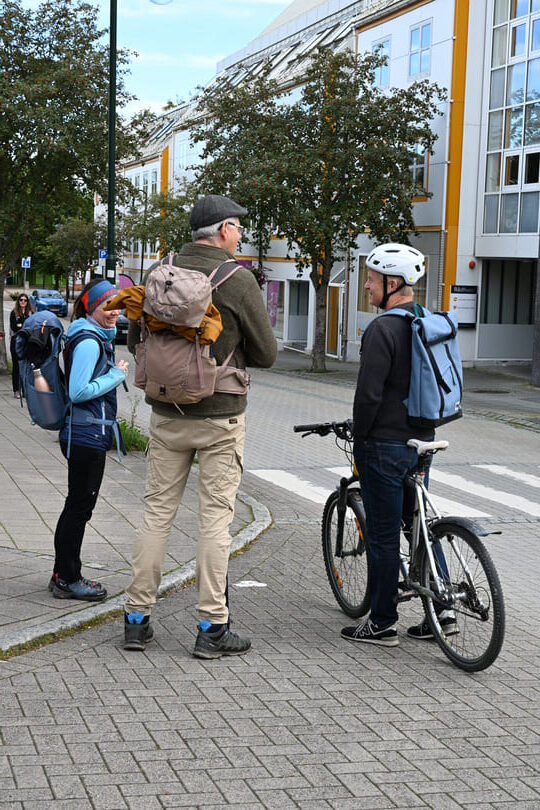
From here on, the river water is salty, and it doesn’t freeze in the winter. The landscape sometimes looks more like Tuscany than a part of Norway. There is a mix of grain fields, apple orchards, and rolling hills.

A little further on, we come to the church at Alstadhaug, with its tower dating from 1170 and an Iron Age burial mound, situated side by side.


The day ends at Ersgard, where we also started Day 1. Now the owner tells us the whole story of the farm: the estate dates back to 1840 and was split in two by a river in 1864. His parents bought it, and the farm has been part of the pilgrimage route since 1997.
Stones and foundations from the Viking Age and the Middle Ages have been found on the property—presumably from malt drying houses—and this legacy lives on in the annual beer festival that the farm now helps organize. For dinner, there’s delicious salmon on the table, and Trøndelag flatbread with the soup—exactly the kind of simple, locally sourced food that the entire route seems to revolve around.

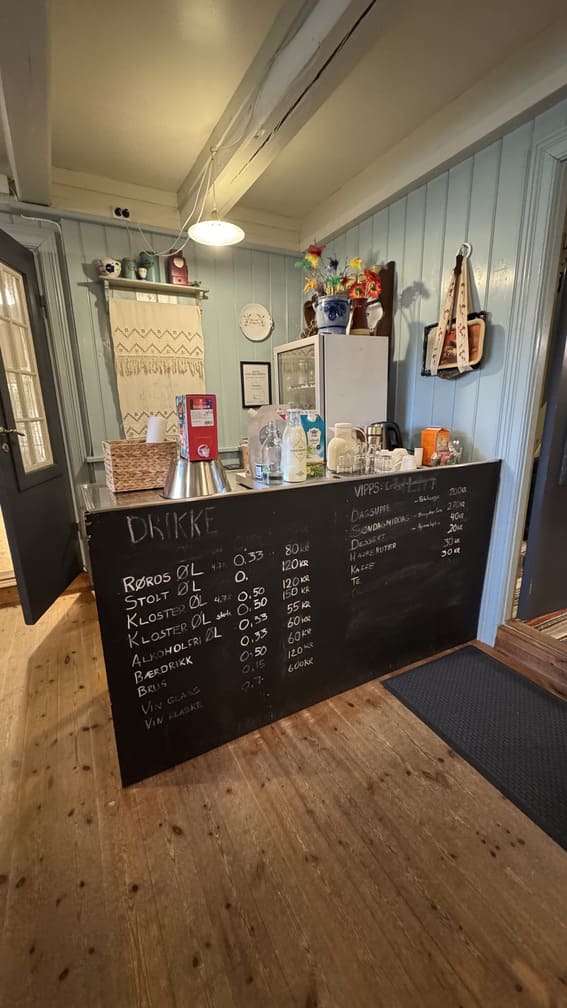
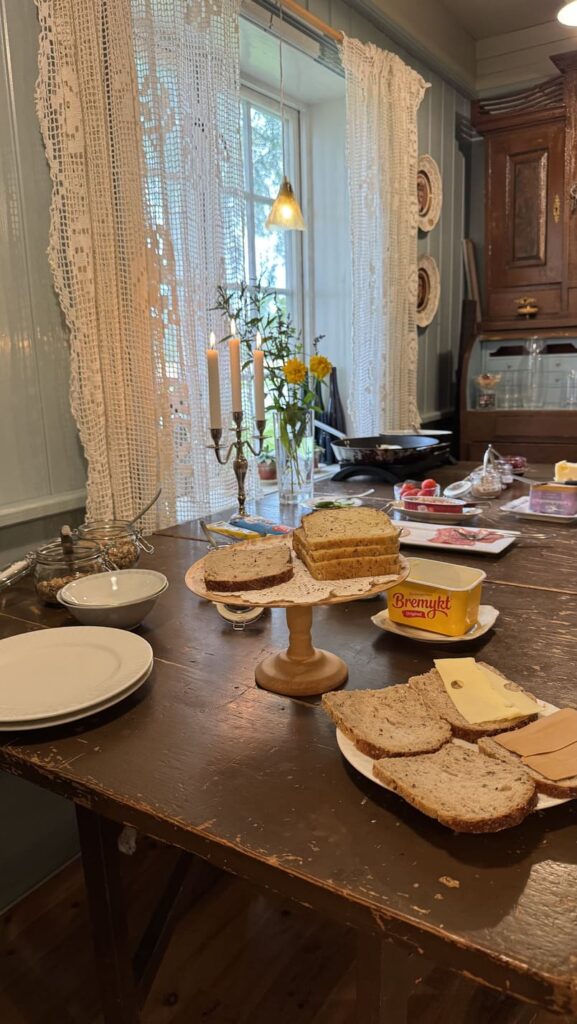
A group of 26 collaborating farms along the route near Ersgard, united under the name Route 26, organizes its own beer festival in the fall, among other events. The route brings culture and income to remote farms and helps spread tourism away from the crowded cities. Some host families also use the route to help new Swedes—immigrants who have just moved to the region—integrate, for example by picking berries together.
We drive past the town of “Hell,” which literally means “overhanging rock,” but which provides international visitors with hilarious photo opportunities. We begin this final day of hiking in Ranheim, at a branch of the Trondheim Fjord. Part of the route takes you past residential neighborhoods near the water. At Leangenbukta, the trail curves around a bird sanctuary.


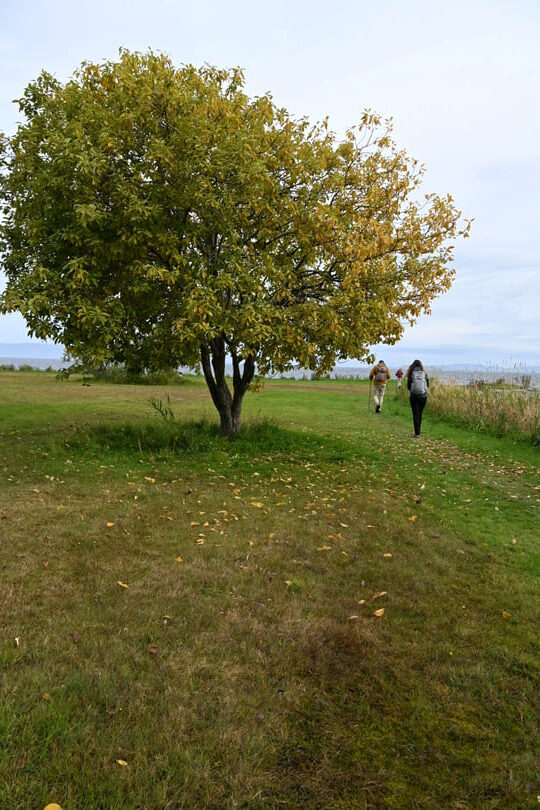
Just outside Trondheim, the route winds through a beautiful park along the fjord and across the grounds of the Ringve Music Museum. Beautifully landscaped plants, flowers, and trees, and a friendly squirrel.


The final stretch leads downhill through historic Bakklandet, across the old city bridge, to Nidaros Cathedral in Trondheim.
Our guide at the cathedral turns out to be the bishop’s daughter. She recounts the history of the cathedral’s construction as if it were a story with many layers: built starting in 1070 over Olav’s tomb, initially in the Romanesque style, then expanded in the Gothic style beginning in 1170 to allow for more light, “closer to God,” until the cathedral largely took on the form it still has today around 1320, at a time when Olav was immensely popular as a saint.


After the Reformation of 1537, the church became Protestant, and pilgrimages were banned until the nineteenth century. The exact location of Olav’s grave has still not been determined with certainty: in 2014, a scan revealed a charred cavity in soapstone, possibly the spot where his coffin once stood. Since 2017, the cathedral has also featured a Sámi altar, unveiled on National Sámi Day—a sight well worth seeing.
And then, at the doors on the west side of the cathedral—which are currently being painted red—the name comes up again: Mona, the same artisan we saw at work a few days earlier in Auskin, is crafting the doors for Norway’s most important church together with her husband.

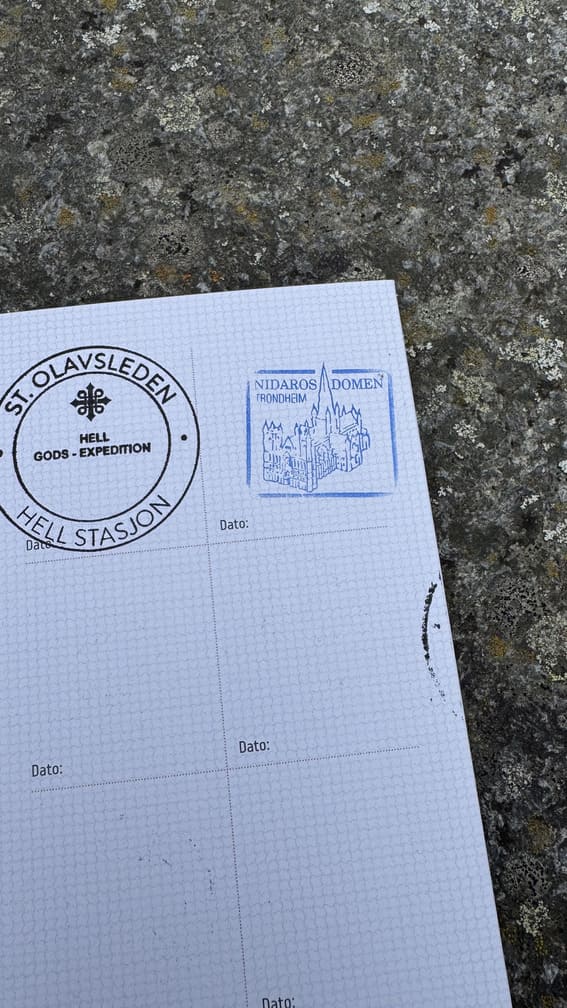

We’ll take a guided tour of the cathedral, including a special visit to the Chapel of Our Lady at the very top of the church with its beautiful stained-glass windows, where we’ll receive our final stamp and our pilgrim’s certificate. It’s the reward for all the kilometers we’ve walked. In the evening, we’ll wrap things up with a farewell dinner in Trondheim.
Hiking to Trondheim along various sections of the St. Olavsleden is largely an experience of diverse natural scenery and encounters with wonderful people. The places to stay are interesting because of the stories behind them. Don’t expect the long lines of people you find on other pilgrimage routes. Here, you’ll mainly be walking with yourself and your fellow pilgrims. Read here for more information about the entire St. Olavsleden.
This hike is also perfectly suitable for solo hikers. Keep an eye on the weather and make your lodging arrangements in advance. You can always contact the St. Olavsleden organization.

With a passion for travel and photography and over 30 years of experience in the travel industry, I love to share my special nature travel tips. Travel is wonderful and important, you meet new people and cultures and it opens your view of the world.
Hiking the St. Olav Trail: Route, Stages, and Tips A thousand years ago, Olav Haraldsson traveled this road northward in search of his crown. He met his death at Stiklestad and was canonized three years later. Since then, pilgrims have followed the same route: from...
Just twenty minutes past the coast lies a completely different Málaga Twenty minutes by car from Málaga Airport, the highway turns into a winding road leading into the mountains. The coast disappears behind you, and ahead lie olive and almond trees, karst rocks, and...
Get inspired
Are you looking for the most beautiful hiking and biking routes? Or do you want information about traveling by train or advice for the most beautiful road trips through nature. Get inspired for your next trip in green; ideas for planning your own trip or opting for an organized trip.