
Gratis gids 10 verborgen natuurplekken in Europa
Gratis gids 10 verborgen natuurplekken in Europa. Meld je aan voor onze nieuwsbrief en ontvang inspirerende reistips en routes voor je volgende groene reis.

Are you looking for a quieter, more authentic part of Portugal? Then the Alentejo is a great destination. This vast region in southern Portugal is often overlooked by tourists who head straight to the Algarve. And that’s exactly what makes it so special to me.
The region has a long history of foreign rule. Much of this history is still visible in the towns and in the region’s current architecture. What’s more, the region boasts fantastic cuisine and delicious wines. It’s a combination of stunning natural beauty and wonderful people who understand what the rest of the world seems to have forgotten…
I’ll take you to Alentejo—also known as the “Tuscany” known as Portugal. Read about the most beautiful places in Alentejo:
Here, you’ll travel at a leisurely pace, mindfully, and with an appreciation for nature—the perfect destination for Slow travel.
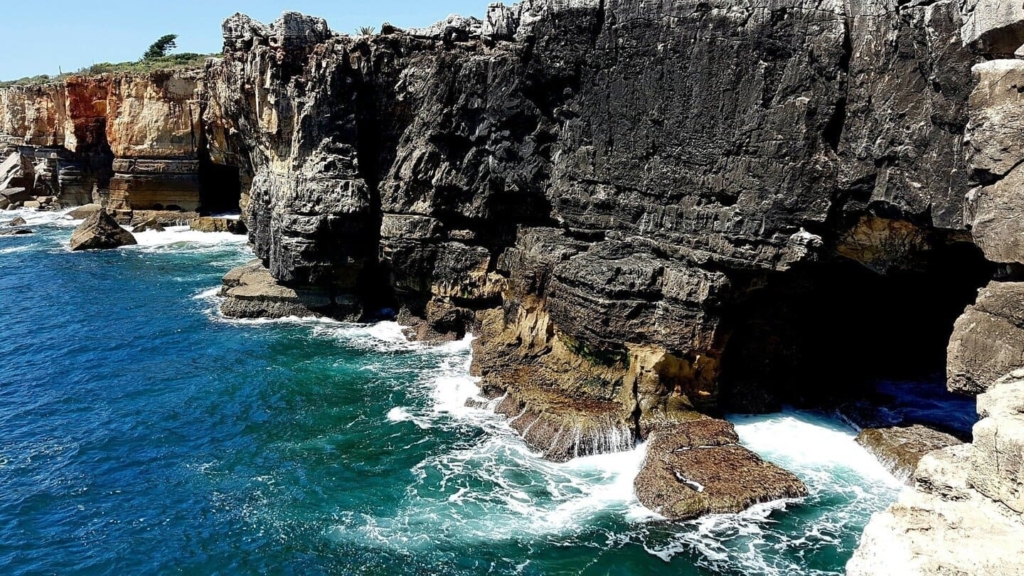


Europe’s best-preserved stretch of coastline, with steep cliffs, quiet coves, and fishing villages. The Rota Vicentina (Fishermen’s Trail & Historical Way) runs along the ocean here. Expect stork nests on the rocks, dunes full of flowers (such as the endemic Plantago almogravensis), and spectacular sunsets.
Tip: Plan 1–3 stages, and travel outside the high season to enjoy peace and quiet and help preserve nature.
The Serra de São Mamede Natural Park is located around the city of Portalegre, near Marvão and Castelo de Vide. It features rocky peaks, valleys, rivers, chestnut forests, and cork oak forests. There is a wide variety of flora and fauna. It’s a wonderful place for walking, hiking, biking, and birdwatching.


To plan and navigate hiking and biking routes, download maps and routes from the Wikiloc app so you can use them without an internet connection:
Between Redondo, Estremoz, and Borba, granite hills rise up, dotted with cork oak forests and offering sweeping views. It’s ideal for hiking and mountain biking. Here you’ll find wineries, quiet country roads, and well-marked trails. It’s a wonderful place if you want to get away from the crowds.


Accommodation Tip in Serra d’Ossa: Convento de São Paolo
The Castro Verde grain steppe is a mosaic of ecosystems home to rare birds such as the Montagu’s harrier, the black-bellied sandgrouse, the common crane, and the Iberian imperial eagle. It is also home to wild rabbits and the Iberian lynx.


TIP: Birdwatching in Mértola
In Mértola, you can spot falcons, swallows, and jackdaws nesting in the historic castle walls. Bring binoculars and respect the nesting areas.
Around the Lake Alqueva you’ll find one of Europe’s darkest night skies. Monsaraz is a beautiful fortified village overlooking the lake. It’s perfect for a stargazing tour at the observatory. During clear months, you can see the Milky Way with the naked eye; with a guide, you can observe nebulae and planets.
Tip: Plan your visit for the new moon and book a small-scale tour.

About 15 kilometers from Évora lies the Almendres Cromlech, one of the largest megalithic complexes in Europe. The oldest stones are believed to have been placed there around 5,000 B.C. This magical place is nestled among cork and olive trees and is open to the public. Please respect the site: stay on the trails and do not touch the stones.
Cromlechs are vertical stones that support another horizontal stone in a distinctive circle.

Évora is a city rich in Roman, Moorish, and Portuguese influences. With a UNESCO-designated historic center, a beautifully preserved Roman temple, the Capela de Ossos, and a wonderful museum, Évora is well worth a visit. It is one of the best-preserved medieval cities and has been on the UNESCO World Heritage List since 1986.


Wines from Évora and the surrounding area are world-famous. The town has several wine bars and shops, as well as a tasting room where you can sample the wines. Traditional reds, whites, and rosés are all grown here. Cartuxa Winery is a well-known Portuguese wine producer in the city; as a nonprofit organization, it reinvests its profits back into the community.
Estremoz is one of the “marble towns” of the Alentejo and is famous for its marble quarries. The marble is used in buildings, church interiors, and sidewalks; the town is also known as the “white city.”


Estremoz is a charming, historic town with a history dating back more than 700 years. The town originated as a fortress in the Middle Ages, strategically located between Portugal and Spain. Here you’ll see the typical Alentejo-style white houses with ochre-yellow accents.
There is an upper town and a lower town, with old city walls, a castle, shops, and the famous traditional Saturday market.


The Bonecos de Estremoz are colorful clay figurines that have been on UNESCO’s list of intangible cultural heritage since 2017. Stop by the small workshop in town: Centro Interpretativo do Boneco de Estremoz. Handmade and hand-painted.


Berardo Museum: a museum in the center of Estremoz, housed in a former palace overlooking the castle. It features one of the largest private collections of tiles in Portugal. Here, you can learn more about Portuguese azulejos and their evolution.
Have you already visited and seen everything? Then stop by the Michelin-starred Legacy Winery restaurant in Estremoz, located just outside the city on the Herdade das Servas estate. A culinary experience in an intimate setting.


Marvão is located near the Spanish border, on a granite cliff at an elevation of about 860 meters. It offers breathtaking views of the surrounding hills and plains of the Alentejo. Hike up to the13th-century medieval fortress, which offers panoramic views stretching far into Spain. Narrow streets lined with white houses, local cuisine, and delicious Alentejo wines. Do you love hiking, tranquility, nature, and history? Then Marvão is the destination for you.


An annual historical festival dating back to the 9th century in honor of the founder of Marvão. A blend of Islamic, Jewish, and Christian influences. Reenactments include encampments, sword duels, archery, and a market featuring plenty of music and dance.
Want to explore Marvão in an adventurous way? Rent a sustainable EZ Raider. Take a tour on four-wheeled electric vehicles through the surrounding countryside, past megalithic monuments, the Sever River, and the old Beirã train station. The longest route takes about 3 hours.


This old former railroad station connected Portugal with Spain. It remained in use from 1880 to 2012. On the EZ Raider tour, you’ll pass by this beautiful building with its azulejos. The old restaurant area has now been converted into accommodations for travelers. You can stay here in rooms or apartments.


The Lagar Museu of António Picado Nunes is an olive oil museum in Galegos. António produces olive oil here from the local Galega olive. The family business has been in operation since 1953. The museum showcases traditional olive oil pressing methods using antique equipment. You can take guided tours of the olive groves, the museum, and, of course, taste the oil.


The restaurant serves delicious food prepared with its own olive oil. It is produced 100% naturally, without any added chemicals.
Baixa Alentejo is a subregion of Alentejo in the southeast. The “city” has been named the European Wine City 2026, with a focus on both traditional techniques and innovative, organic viticulture. Numerous events, festivals, and tastings are planned for 2026.
Alentejo literally means “across the Tagus,” or “além do Tejo.” To the north of Alentejo lies the Centro region, and to the south, the Algarve. It is Portugal’s largest region—roughly the size of Belgium—but not yet as well known as a vacation destination. Vast, forested hills and countryside. The coastline is rugged and rocky, interspersed with wide sandy beaches.


The Alentejo has the largest cork production in the world. The trees can be recognized by their orange trunks. You’ll travel through“montado” landscapes(cork oak savannas), olive groves, and vineyards. Once every nine years, the bark is harvested by hand. In addition to wine corks, it is used to make bags and shoes.
Taste local wines (red, white, and rosé) in and around Évora and visit small producers who work with drought-resistant grape varieties.


The region is located exactly between the Algarve and central Portugal, and it depends a bit on which part of the Alentejo you want to visit. You can fly to either Lisbon or Faro with airlines such as Transavia. By car, it’s just over 2,000 kilometers.
The distance from Lisbon to Évora is about 150 km (a 2-hour drive). You can also easily take the train from Lisbon to Évora. From this medieval town, you can easily explore the region.
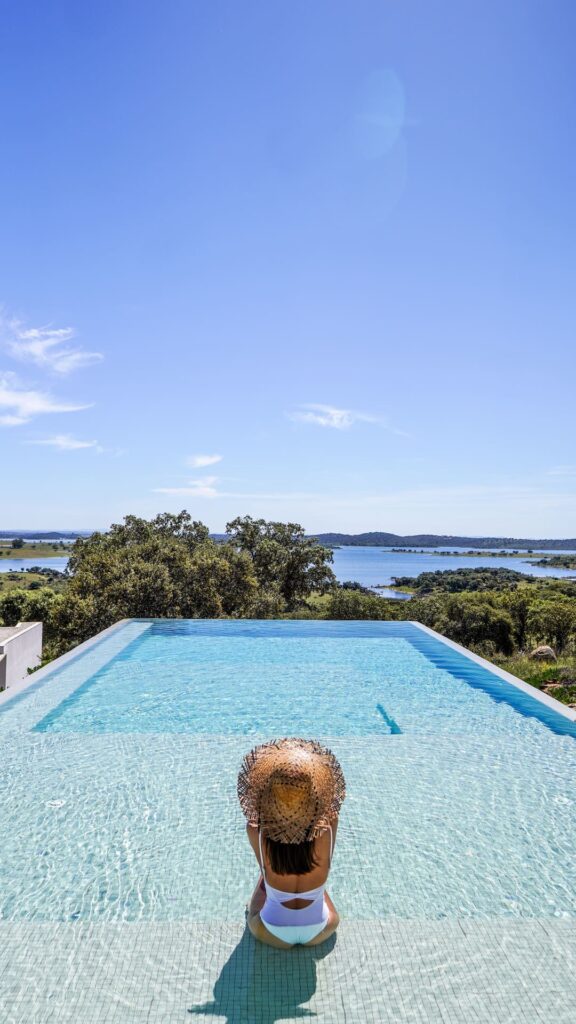
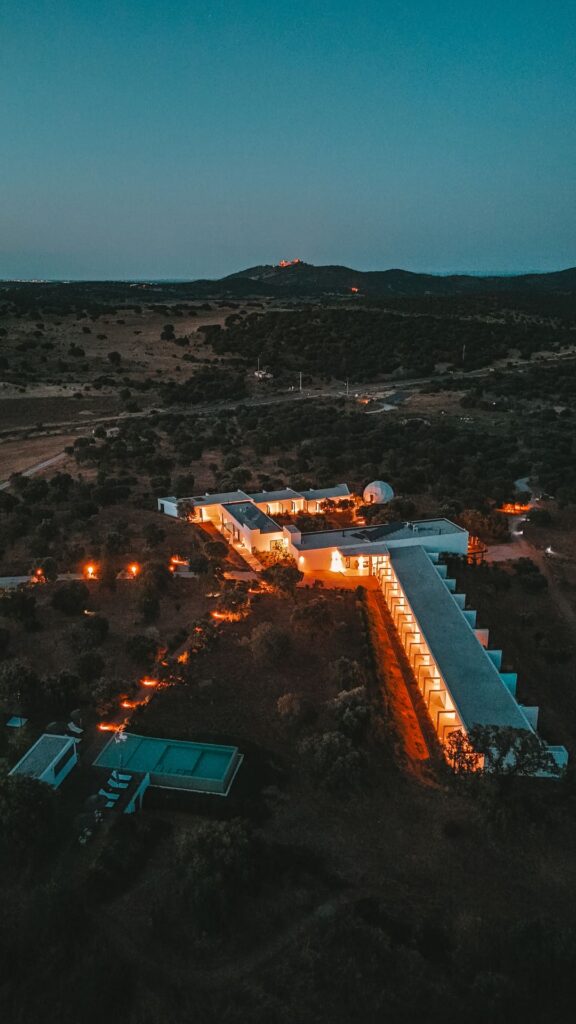
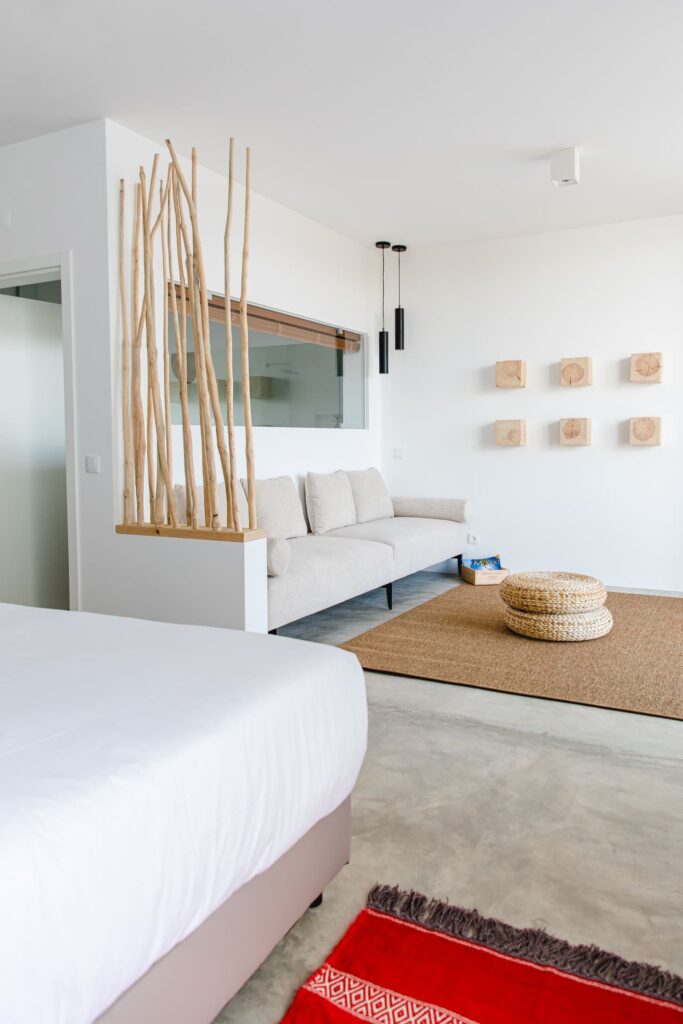
Craveiral Farmhouse is a wonderful nature stay surrounded by nature, with all the comforts you need.


Montimerso Skyscape Countryhouse is located in the Dark Sky Reserve, surrounded by the natural beauty of the Alentejo.


New highways make the old EN roads quieter: ideal for cyclists. Flat terrain alternates with rolling hills.
No fewer than 686 km of bike paths (of which approximately 155 km are marked), three entrances with service points (repair, bike wash, changing rooms). Routes range from easy to challenging. Click here for more information.
The EuroVelo route—from Norway to southern Portugal—runs along the entire Atlantic coast of Portugal. You’ll cycle through beautiful protected Nature reserves. Read more here about the different sections of the EuroVelo route in Portugal.
One of the most beautiful yet little-known train journeys in southern Europe is “A Raia” (the line). CP’s Raiano train runs twice a day between Entroncamento and Badajoz in Spain—or vice versa—a beautiful journey of about 300 kilometers.
The route runs along the Tagus River and takes you past castles such as Almourol, charming villages, rugged streams, and cork forests on a drive that lasts about 4 hours. You can take this trip for less than €13.
The train connects the Portuguese rail network to the Spanish border. From Entrocancamento, you can take the train on to Lisbon, and from Badajoz, you can travel to and from Madrid in Spain. Click here for the train schedule.

With a passion for travel and photography and over 30 years of experience in the travel industry, I love to share my special nature travel tips. Travel is wonderful and important, you meet new people and cultures and it opens your view of the world.
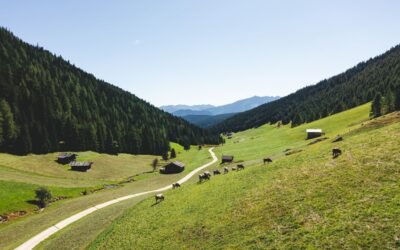
Gitschberg Jochtal: Hiking in the Summer, Skiing Away from the Crowds in the Winter Eight villages, no well-known name, and yet 300 kilometers of marked hiking trails in the summer and 55 kilometers of ski runs in the winter: that’s the Gitschberg Jochtal, on the...
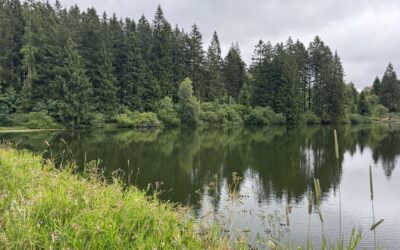
Hiking in the Harz Mountains: From the high moors to the summit of the Brocken In early July, I went on a trip to the Harz Mountains—my first visit to this forested region in central Germany. I drove from Goslar toward the Harz Mountains. We managed to squeeze in our...
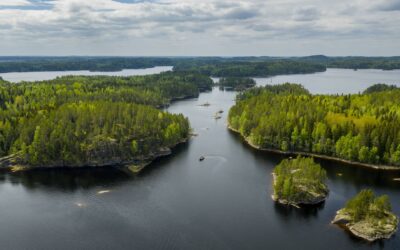
Hiking Around Saimaa: The Most Beautiful Nature Trails and National Parks Near Mikkeli Nowhere else in the world can you find the “Saimaa seal,” a freshwater seal that became trapped in this labyrinth of lakes after the last ice age and has since evolved into its own...
Get inspired
Are you looking for the most beautiful hiking and biking routes? Or do you want information about traveling by train or advice for the most beautiful road trips through nature. Get inspired for your next trip in green; ideas for planning your own trip or opting for an organized trip.