
Gratis gids 10 verborgen natuurplekken in Europa
Gratis gids 10 verborgen natuurplekken in Europa. Meld je aan voor onze nieuwsbrief en ontvang inspirerende reistips en routes voor je volgende groene reis.

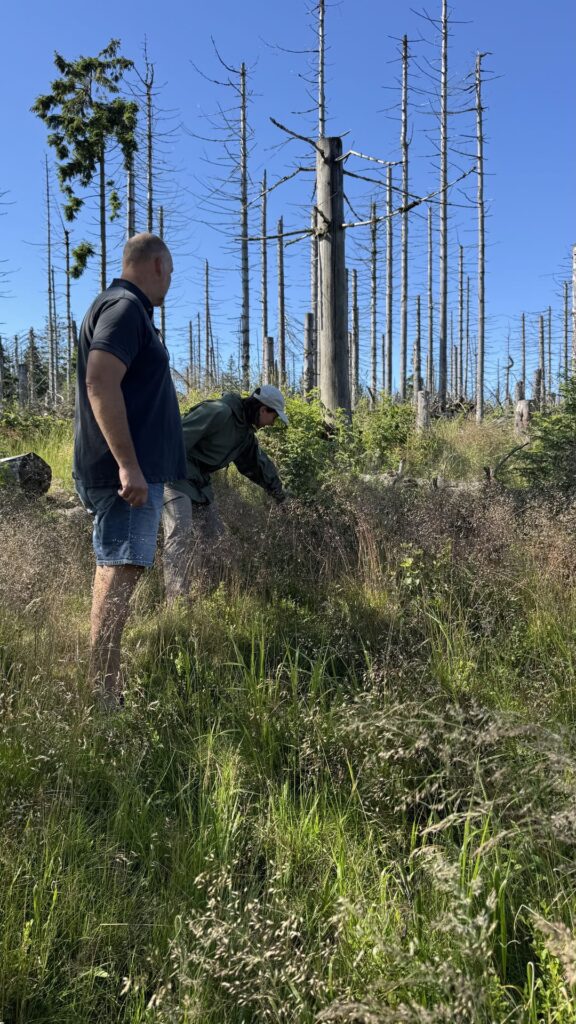
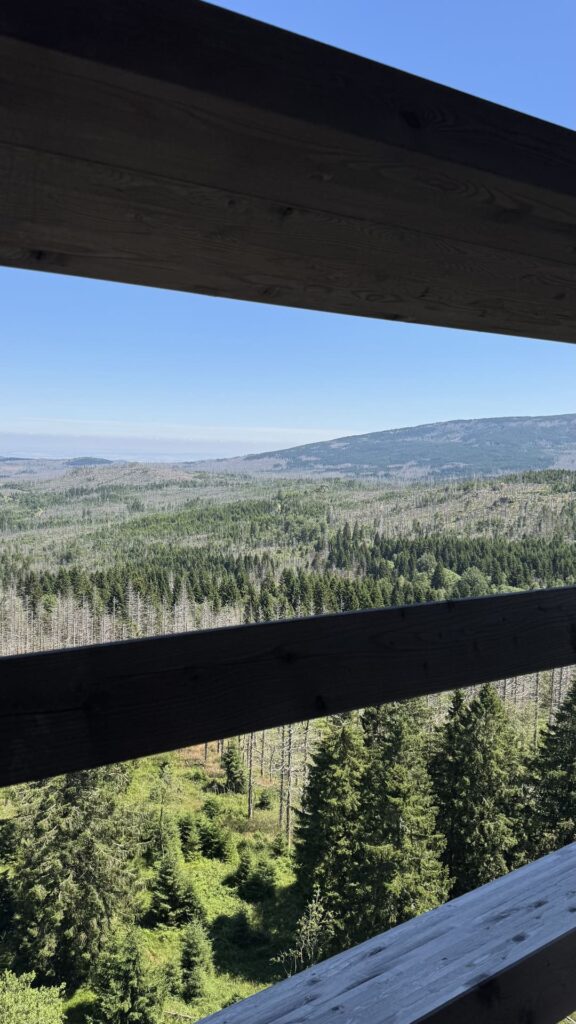
“What a somber entrance,” I thought as I drove into the Harz National Park. The densely forested area gradually gives way to a sort of lunar landscape. The dismal sight of the many hectares of dead trees sends a shiver down my spine. Rows of desolate gray sticks that look as if they were placed there like matchsticks.
Climate change is the first thing that comes to mind. I realize that something completely different is going on here—and that it actually has a positive twist—as I walk into the national park with Anika, our guide and biologist.
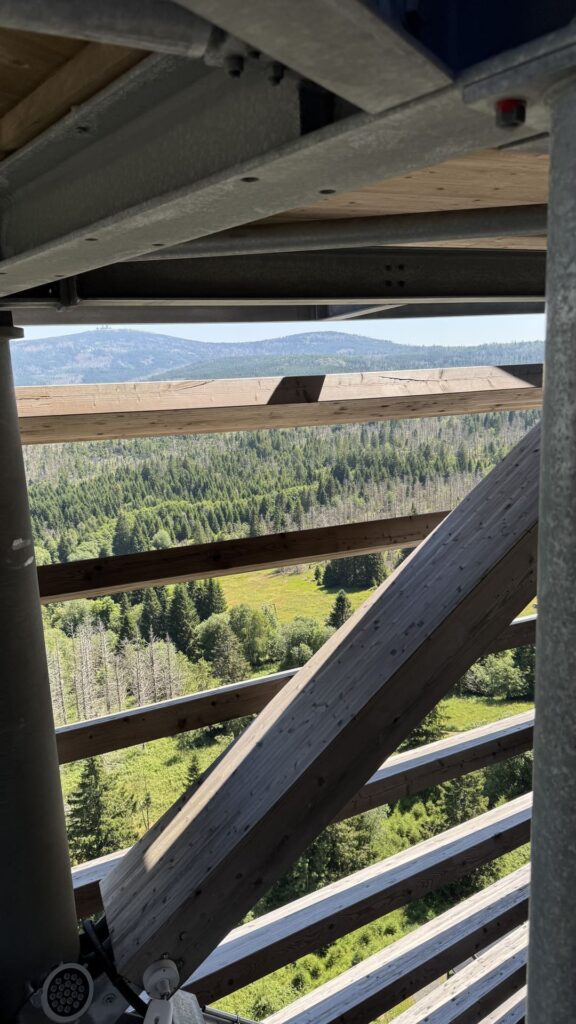
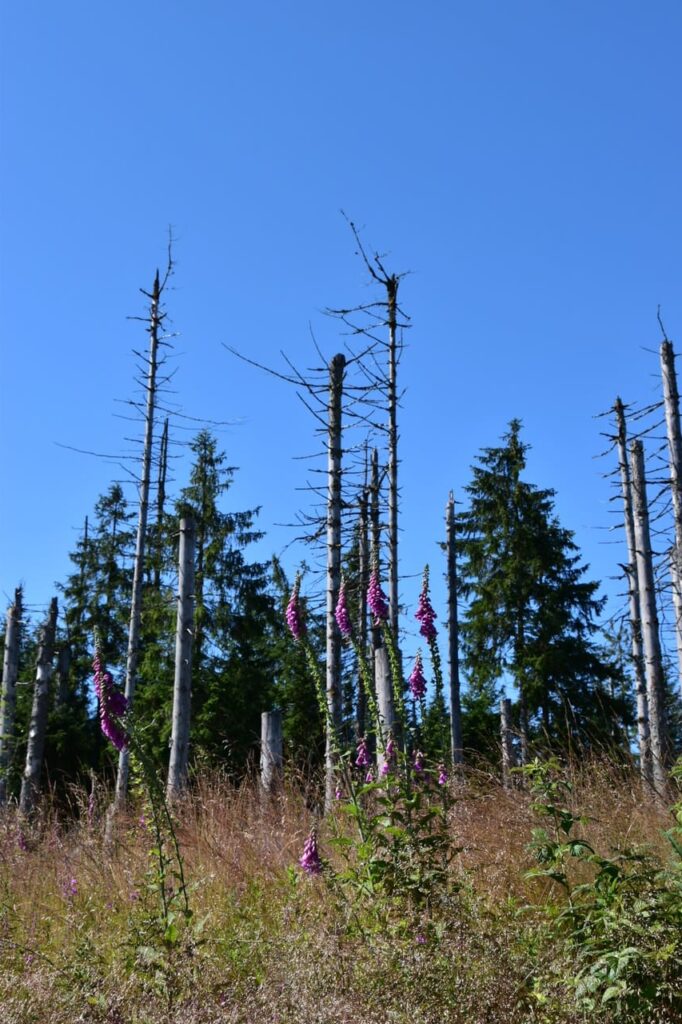
What strikes us as we walk into the forest is how quiet it is. Not the tranquility you’d expect from a hike, but a kind of silence that belongs to a place where something has gone wrong. Rows of bare, gray spruce trees, without needles, without life, as far as the eye can see. My first reaction was disbelief: is this what a national park is supposed to look like? Anika, a biologist and guide at the Harz National Park, lets that question hang in the air for a moment before helping me see the same forest with new eyes.
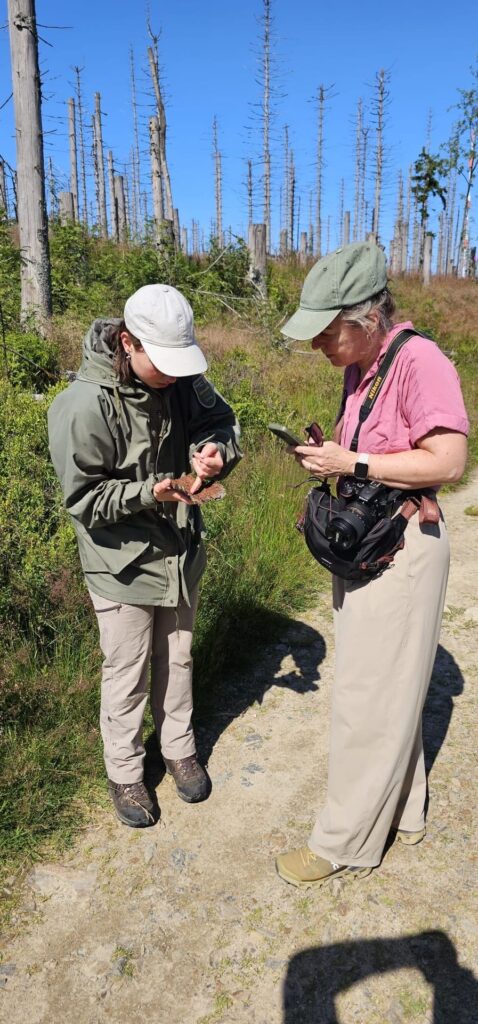
We’re not walking for the kilometers now, but for the story. Anika has been working in the park for some time and knows every patch of forest we pass, including the history behind it. Her sense of wonder at every bit of greenery that’s blossoming anew here gives me hope. For directions, I refer you to the hiking article about the Harz.
This is about what you see along the way, and why things look the way they do now. If you look further ahead and walk more slowly, you’ll see marshes with (carnivorous) plants, streams, flowers, birds, and insects—as well as new plants and trees taking root on the dead trees beneath them.
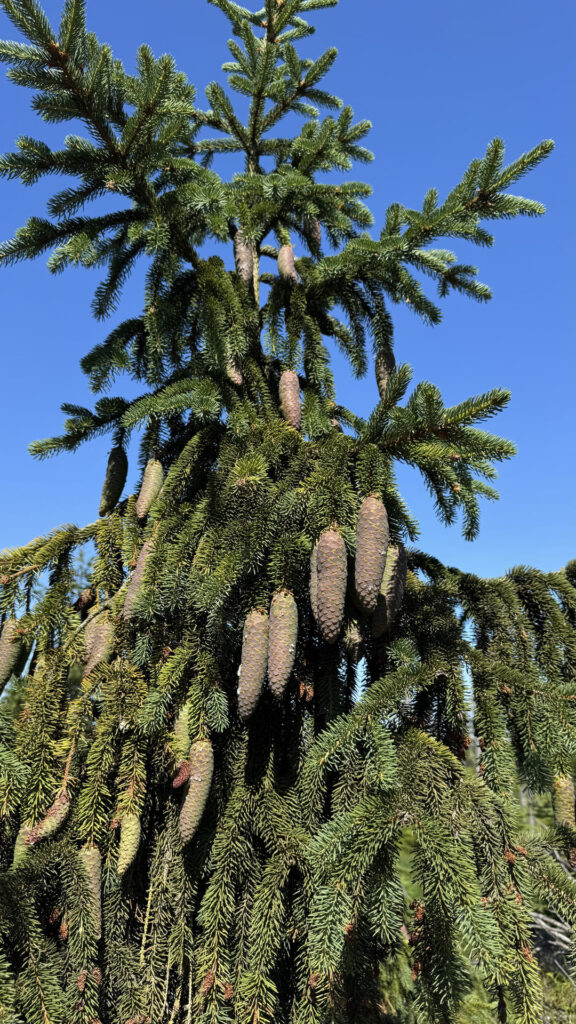
The answer to my question doesn’t start with the bark beetle that is literally eating away at the trees, but with the years following the war. A lot of wood was needed, so there was extensive logging, and trees were replanted with what seemed to be the best choice at the time: spruce—fast-growing trees that yield usable wood in a short time. The result was a vast forest consisting mainly of a single species, all of the same age, growing close together. There was little biodiversity, little variation in age or species, and therefore little resilience.
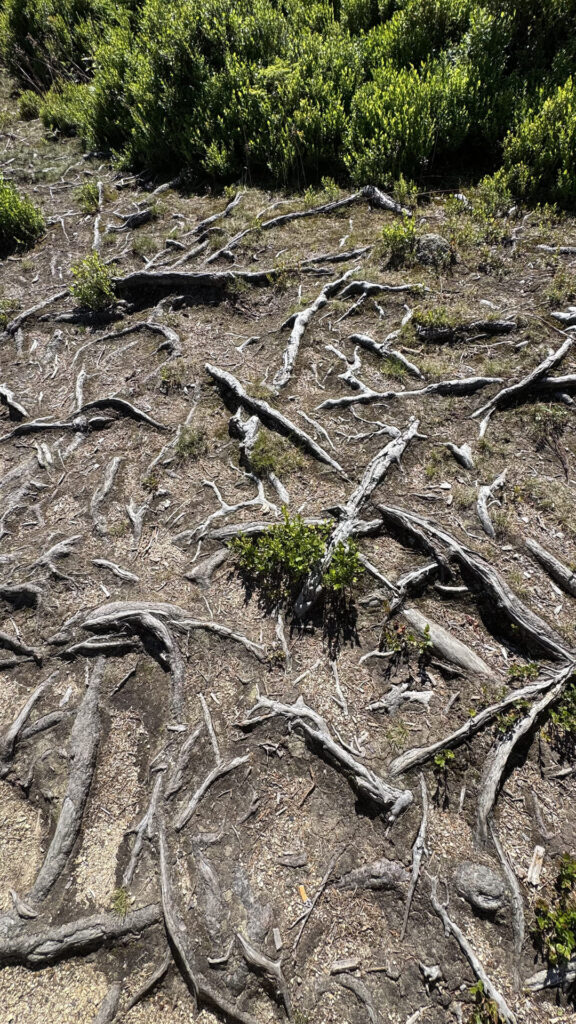
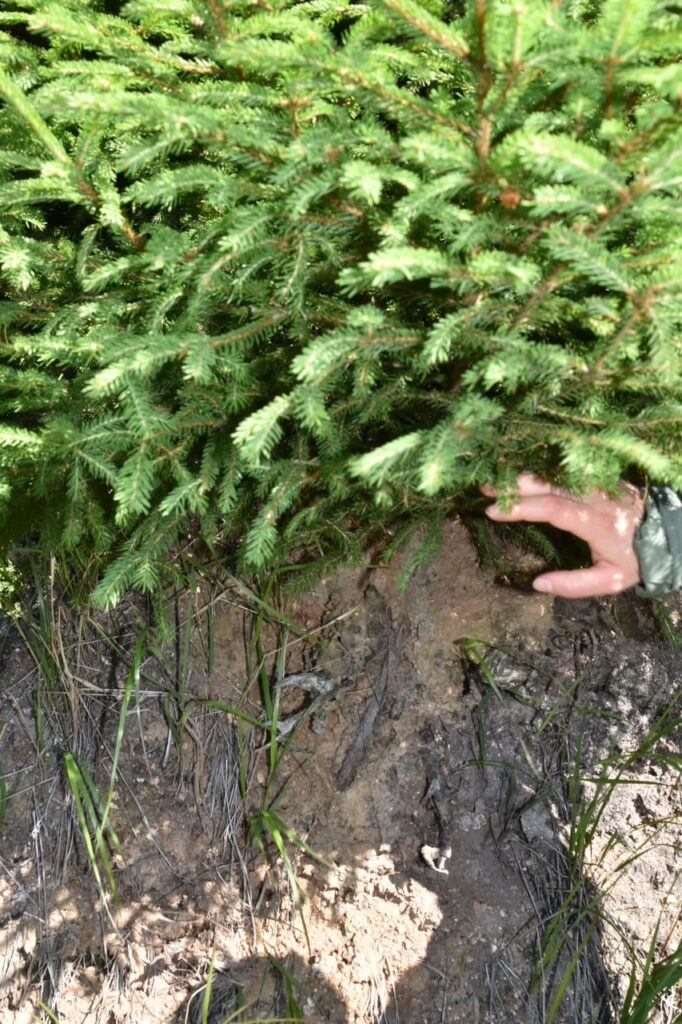
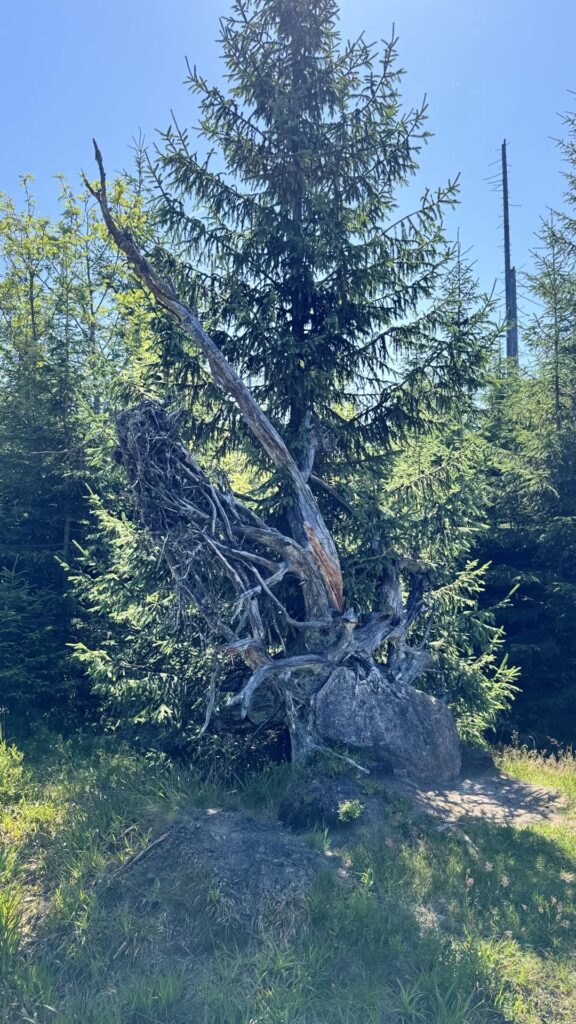
The spruce itself exacerbates the problem. It is, as Anika puts it, a poor rooter: its roots grow horizontally, just below the surface, instead of deep into the ground. Under normal conditions, that’s not a problem. But during droughts—which the Harz region has experienced with increasing frequency in recent years—it certainly is. The trees simply can’t reach the water deeper in the soil and grow weaker.
A weakened spruce is an open invitation to the bark beetle. The beetle detects the tree’s illness through its scent and gets to work. It bores grooves into the bark and lays its eggs there. The larvae that hatch then eat their way through the bark, and that is what ultimately kills the tree. It’s not a dramatic attack from the outside, but a slow process that begins with a tree already weakened by drought.
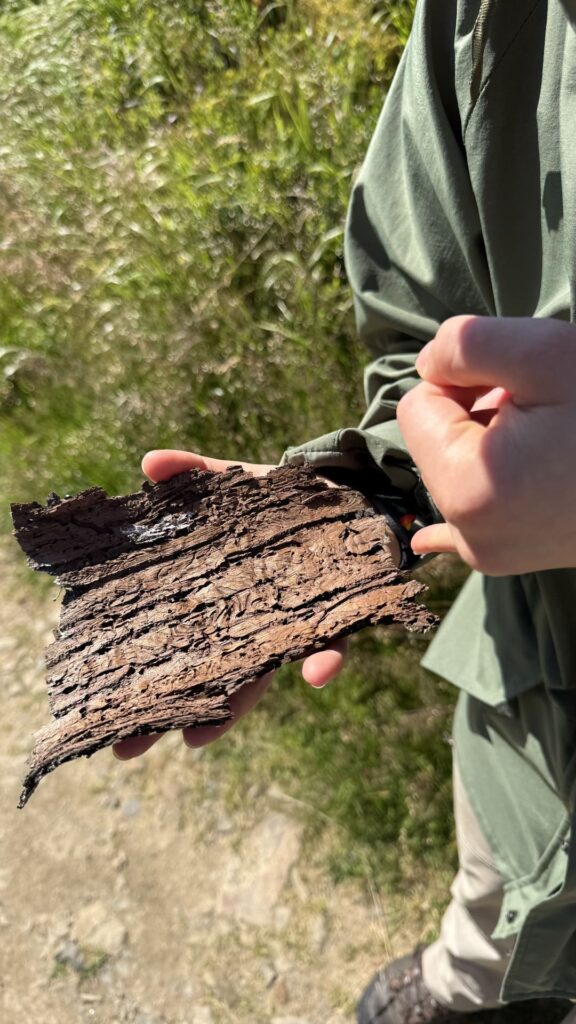
“This,” Anika explains, “was the subject of the biggest debate about park policy for years: what do you do with a forest that looks so desolate? Cut it down and replant it, like after the war? Or something else?”
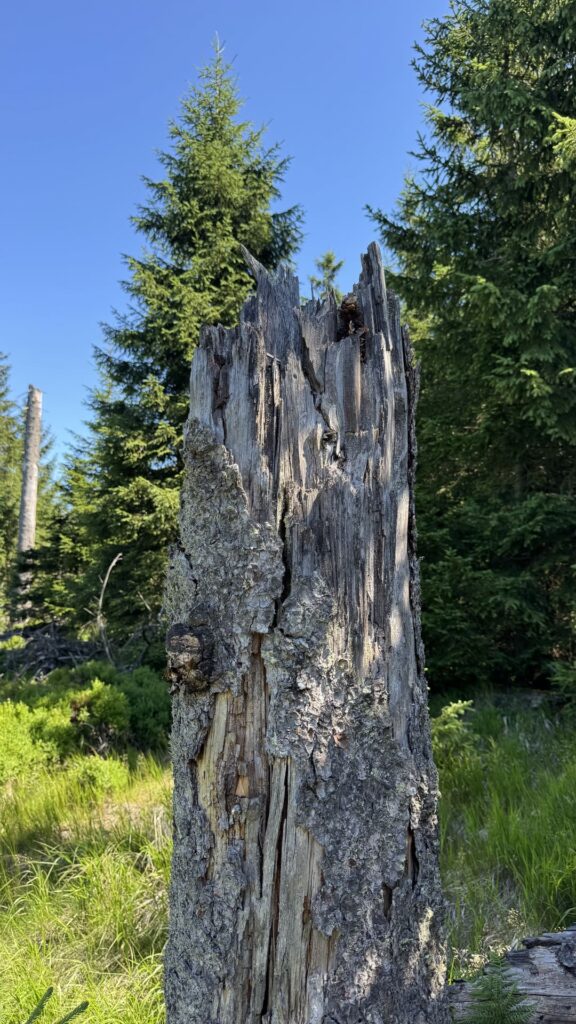
The current policy is clear: the dead trees will remain standing. Only trees that could pose a danger—for example, along trails—will be topped. No clear-cutting, no replanting with the same monoculture that caused the problem. At first glance, it looks like neglect. But with a biologist or guide like Anika by my side—who knows exactly where to look—that impression changes.
New life is emerging on and around the dead trunks: she points out young trees and plants that naturally belong here—species that would never have had a chance under a dense spruce monoculture. The forest is recovering, precisely on the barren remains of the dead spruce trees—though not in a way that looks hopeful at first glance. It is a process spanning decades, even generations.
Perhaps the clearest sign that the park once again supports wildlife is the return of two large predators. The last lynx in the Harz was shot in 1818, after which the species disappeared from the area for decades. A reintroduction program has been underway since 2000, and it has proven successful: the animals have spread throughout the entire Harz region, are well established, and natural reproduction has been observed on multiple occasions. It began with 25 animals, released as the first project of its kind in Germany. Anika has spotted one on one occasion.
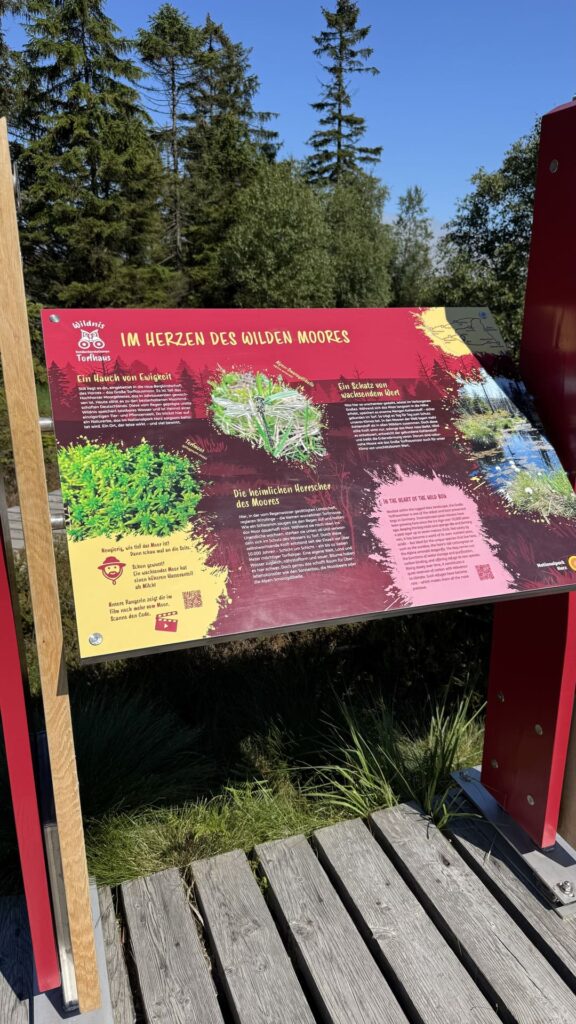
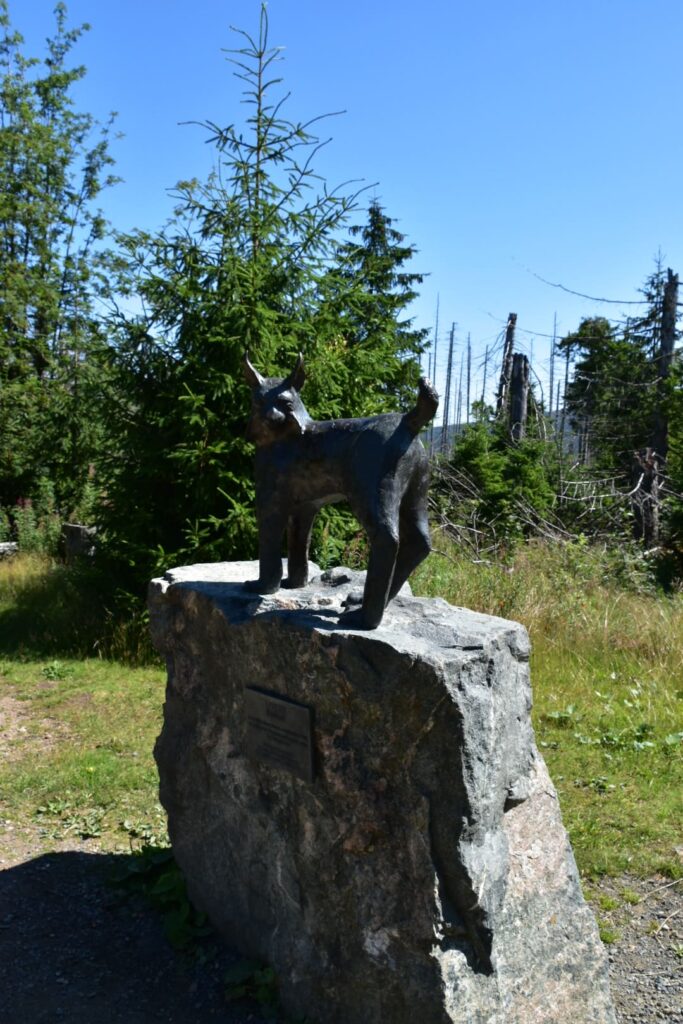
The wolf returned in a different way: not through reintroduction, but on its own from Poland, via the usual route that wolves have taken throughout Germany and the Netherlands in recent decades. Large predators such as the lynx and the now-returning wolf demonstrate that the Harz Mountains once again offer suitable, largely contiguous habitats for species with high ecological demands.
Two animals, two different stories, but the same conclusion: a forest that provides a habitat for lynx and wolves is a forest that functions well, even if things sometimes still look bleak along the way.
I hope that when you walk through the Harz Mountains and see the bare spruce trees, you’ll look at them differently than I did at first. Not as a forest that’s falling apart, but as a forest that, after decades of human intervention, is getting the chance to rebuild itself.
That’s exactly what I believe in: nature that isn’t managed until it looks picture-perfect, but is instead given the space to develop on its own, including the messy, less photogenic phases.
More tips for your vacation in the Harz Mountains can be found here.
It’s about a 500-kilometer drive from Utrecht.
After the war, the forest was largely planted with fast-growing spruce trees, a monoculture that proved vulnerable to drought and the bark beetle. The park has now made a conscious decision to leave the dead trees standing, so that a more natural, diverse forest can develop.
The lynx is shy and hard to spot in the wild. If you’d still like to see them, you can visit observation areas such as the one near Bad Harzburg, where lynxes live in a large, naturally fenced-in area.
Wolves actively avoid humans, and it is extremely rare to encounter one while out for a walk. If you do happen to come across one, be sure to keep your distance and follow standard safety guidelines, such as staying calm and not running away.
At the Harz National Park visitor center, you can find a wealth of information about the current state of the forest, its history, and its future. For a guided tour or excursion, it’s best to contact the Torfhaus visitor center directly.

With a passion for travel and photography and over 30 years of experience in the travel industry, I love to share my special nature travel tips. Travel is wonderful and important, you meet new people and cultures and it opens your view of the world.

Aachen Off Track: A Green City Trip Featuring a Forest, an Organic Garden, and Charlemagne A city with an imperial history, surrounded by forests stretching all the way to the Belgian and Dutch borders. Aachen cannot be taken in at a single glance: its historic...
Wolfenbüttel: A Small Town with Big Secrets From Braunschweig , I cycled (on a real old-fashioned bike) to Wolfenbüttel, a lovely ride of about 12 kilometers that ended with lunch at the Beach Club on the Oker. Along the way, I realized why this little town looks so...
Braunschweig: From Five Cities to the Fishing Ponds of Riddagshausen On the way to Braunschweig from the Harz , I stopped at Wöltingerode Abbey, a monastery that now doubles as a hotel and where you can enjoy an excellent cup of coffee before continuing your drive. It...
Get inspired
Are you looking for the most beautiful hiking and biking routes? Or do you want information about traveling by train or advice for the most beautiful road trips through nature. Get inspired for your next trip in green; ideas for planning your own trip or opting for an organized trip.