
Gratis gids 10 verborgen natuurplekken in Europa
Gratis gids 10 verborgen natuurplekken in Europa. Meld je aan voor onze nieuwsbrief en ontvang inspirerende reistips en routes voor je volgende groene reis.

Monferrato? This region in Piedmont is much less well-known than the neighboring Langhe. The same goes for its wines. But it’s no less beautiful, and the cuisine and wines are delicious. That’s why this part of Piedmont is also considerably more affordable and pleasantly quiet. Read on to find out why you’ll want to see and explore this lesser-known corner of Piedmont.


The area is actually the lesser-known counterpart to the neighboring Langhe region in Piedmont. It lies southeast of Turin.
The “Langhe-Monferrato-Roero” are not separate provinces of Piedmont, but are distinguished from one another only geologically. The Monferrato region is located in the provinces of Alessandria and Asti. Are you still following? The best way to distinguish them is actually by the different wines produced there.

The rolling hills of the region, reminiscent of Tuscany, are every bit as beautiful as the more famous Langhe. Hills covered with vineyards, walnut trees, and forests alternate with medieval villages and castles steeped in centuries of history.
Once a kingdom, the region became a county in the 11th century. You can still sense its noble atmosphere in the many villages and castles. The residents are proud of their land and are committed to preserving its heritage through annual events.
Monferrato is a large region that—along with the Langhe and Roero—forms the heart of Piedmont. Its main city is Asti. Other major cities include Acqui Terme and Ovada.


The city of the famous writer Vittorio Alfieri, singer Paolo Conte, and the Palio di Asti. It’s not as well-known a horse race as the one in Siena, but it is the oldest in Italy and a still very vibrant annual tradition.
Asti is a charming medieval town that once had more than 100 towers, 12 of which still stand today. The taller the tower, the greater the family’s wealth. The city has several city parks. With a Smart Ticket, you have access to all 8 museums in the city.
The smallest town in Italy and once the capital of the County of Monferrato. Moncalvo is surrounded by historic villages that served as the backdrop for battles against Asti, the House of Savoy, and the bishops. A beautiful region with hundreds of hills that slope down into the Vercelli Valley with its rice paddies.


This wine region is an open secret in Piedmont, but it’s not as well known among foreign tourists. They tend to opt for the better-known Langhe region, because of its famous wines like Barolo. Yet Monferrato is also a region for gourmets and wine lovers. All the more reason to discover its wines.
The region produces several DOCG* wines. The best known are probably the Asti Spumante DOCG and the Moscato d’Asti DOCG, made from 100% Moscato grapes.
Among the red wines, the Barbera d’Asti Superiore DOCG is the most important, but the Barbera del Monferrato Superiore DOCG, Dolcetto d’Ovada Superiore DOCG, and Ruche di Castagnole Monferrato DOCG are also well-known red wines.
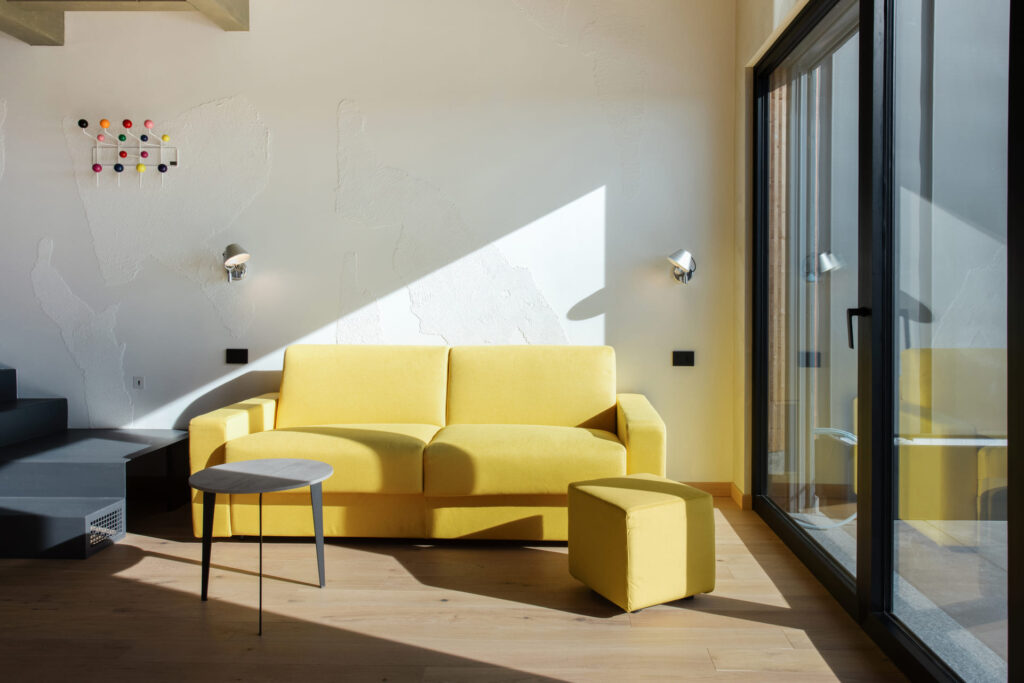
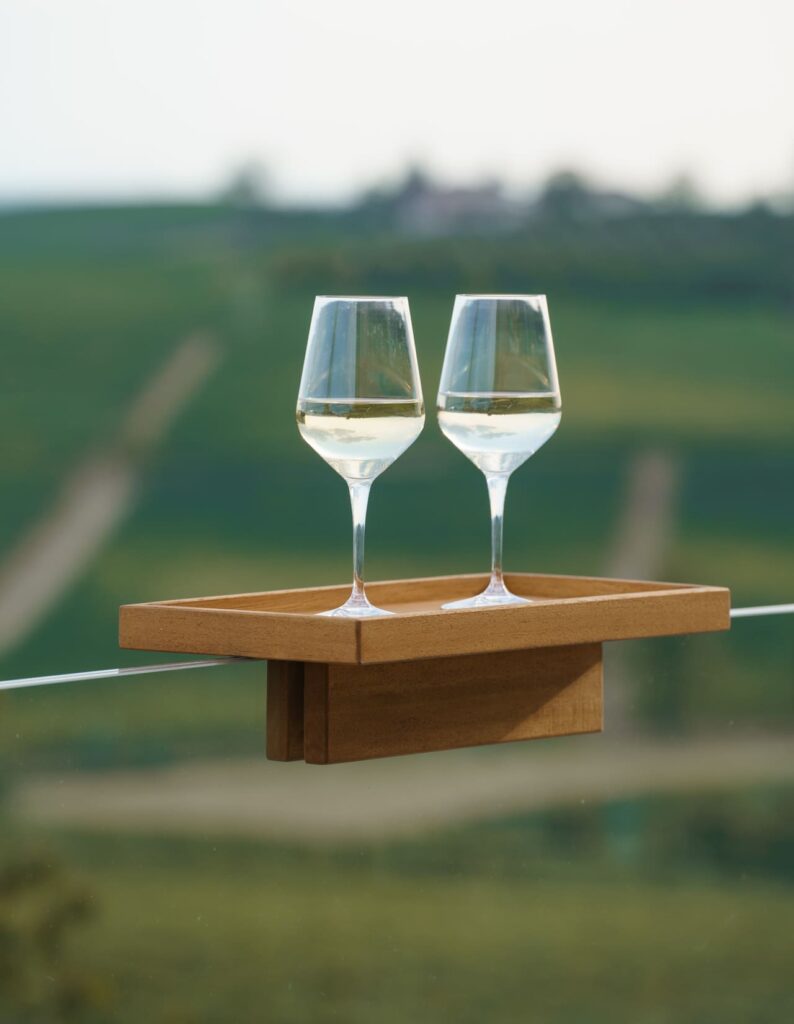
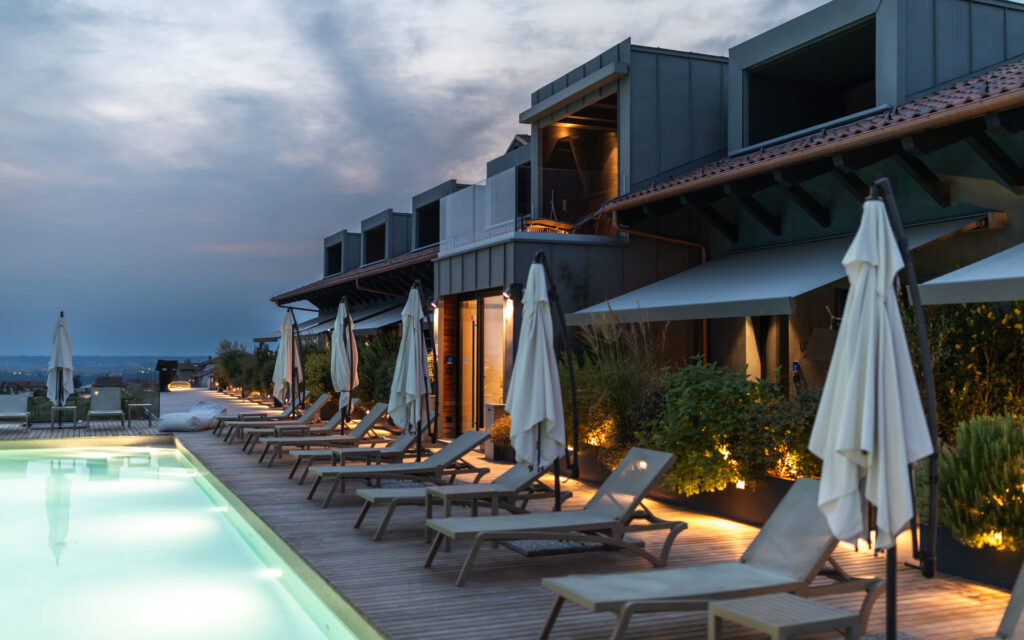
TIP: Want to spend the night among the vineyards? At Monvirelais, you can spend the night among the vineyards. This organic winemaker recently built a beautiful guesthouse on a hill in the middle of the vineyards.
Monferrato owes its designation as a UNESCO World Heritage Site since 2014 not only to its landscape but also to the “Infernot”: ancient underground cellars carved into sandstone (“Pietra da Cantoni”). Here, wine bottles are stored at a constant temperature and humidity. The sandstone is a remnant of the seabed that characterized Monferrato between 5.5 and 3 million years ago.
The tunnels, sometimes meters deep underground, are remarkable and functional works of art, built in the late 19th and early 20th centuries by local masons with no knowledge of architecture or science. They are all different and unique. You can find the Infernot in several villages, especially between Asti and Casale Monferrato. In fourteen villages in Monferrato, the Infernot can be visited (by appointment).

Actually, all the villages and small towns in the area are worth visiting.
Just like in Tuscany, Piedmont also has its own “Strade del Vino.”
The routes are marked with distinctive signs.


In addition to the wine routes, the route through the villages and towns listed below is also recommended:


The Langhe-Monferrato-Roero landscape has been a UNESCO World Heritage Site since 2014, just like that of Valdobbiadene in Veneto. Every 6 to 10 kilometers, you’ll come across a medieval village. In addition to its UNESCO-designated landscape, cultural events and gastronomy play a major role in the region. Piedmont’s cuisine is world-renowned. The“slow food” traditionwas first initiated in Bra. Monferrato also has its own unique cuisine, with “bagna cauda,” truffles, agnolotti (stuffed pasta), and “bunet” (a chocolate dessert) being delicious examples.
TIP: Picnic in the vineyards. Are you going for a walk or bike ride in the area? Order a picnic from Giovanni. Fresh lunch and a wide selection (including vegetarian and gluten-free options). Delivered to your desired destination.


Monferrato is a beautiful area for hiking. It features a varied landscape of vineyards, forests, and meadows, as well as plenty of good restaurants for a break along the way. The most famous hike is“Il Grande Cammino del Monferrato,” a food-and-wine trail that forms a loop totaling 382 km.
The route is divided into 18 stages. You can take a one-day or multi-day trip by linking the different stages together.
The Cammino runs from Casale Monferrato to Asti, Vignale Monferrato, Castagnole delle Lanze, Canelli, Ovada, Gavi, Nizza Monferrato, Acqui Terme, Montemagno, and Lu Monferrato, among other places. In total, it passes through no fewer than 65 interesting villages and towns.

The hilly region is also ideal for a relaxing cycling or e-bike vacation. The roads are quiet, and in some places there are even bike paths. You can enjoy beautiful rides from village to village or even mountain bike through the vineyards.
Bike route I took starting from Agriturismo Tenuta la Romana:
Nizza Monferrato, Castelnuovo Calcea, Mombercelli, Vinchio, Vaglio Serra, and back to Nizza Monferrato. This is a ride of about 30 kilometers. The roads are quiet and gently rolling. In some places, there are even marked bike lanes or separate bike paths.
Another beautiful bike route, for example, runs along the Tannaro River from Asti to Alessandria: from Asti to Azzano d’Asti, Rocchetta Tanaro, Masio, Oviglio, and finally to Alessandria. Click here for even more beautiful bike routes.
Here, you can rent e-mountain bikes or book organized tours.
Just outside Asti, you can enjoy beautiful hikes in this nature reserve, perhaps with a guide. The area is of great value due to the discovery of fossils and shells dating back millions of years.
A predominantly forested area in the hills south of Asti, around Vinchio. A nature reserve established only in the 1990s (by local residents) to protect the area from further exploitation. Ancient oaks, wild orchids, historic huts, and paleontological finds and fossils from the Pliocene make this area particularly special. Preserving the area also ensures that the Barbera wines produced here are safeguarded and protected.
A 120-hectare forest just south of Asti, home to oak trees as well as centuries-old beech trees. It is home to unique flowers and as many as 40 species of breeding birds, including the green woodpecker, the lesser spotted woodpecker, and the tawny owl. Guided hikes are available here. Reservations can be made through Asti Paleontologico.
A protected nature reserve along the Neirone River. The park has only one trail, set amid nature. The anemone with purple flowers has been blooming here since ancient times, starting in late February. You can reach the park from Gavi. The trail is easily accessible, though conditions may vary depending on the weather. How do you get to Monferrato?
From Utrecht, it’s about 1,140 kilometers by car.
You can reach the area via Paris by train (and bus) in about 17 hours.
You can fly to Milan, Turin, or Genoa.
May and June, in particular, are attractive in terms of temperature and blooming. Late summer (September and October) is interesting not only for its colorful landscape but also for the grape harvest, truffles, and local festivals. It gets very hot during the summer months.
At Vineho in Barolo (Langhe), you can stay in luxurious two-person vacation homes nestled among the vineyards.

With a passion for travel and photography and over 30 years of experience in the travel industry, I love to share my special nature travel tips. Travel is wonderful and important, you meet new people and cultures and it opens your view of the world.
Dovrefjell in the Fall: Musk Ox Safari from Oppdal A musk ox doesn't run away. If danger threatens, it either stands its ground or charges right at it. That works against a wolf, but not against a train. That's what our guide, Hannes, tells us as we walk across the...
Hiking to Trondheim along ancient pilgrimage trails What’s it like to hike for days along ancient pilgrimage trails to Trondheim? During a trip through Sweden and Norway, I hiked several sections of the St. Olavsleden. From the open border mountains near Skalstugan to...
Hiking the St. Olav Trail: Route, Stages, and Tips A thousand years ago, Olav Haraldsson traveled this road northward in search of his crown. He met his death at Stiklestad and was canonized three years later. Since then, pilgrims have followed the same route: from...
Get inspired
Are you looking for the most beautiful hiking and biking routes? Or do you want information about traveling by train or advice for the most beautiful road trips through nature. Get inspired for your next trip in green; ideas for planning your own trip or opting for an organized trip.