
Gratis gids 10 verborgen natuurplekken in Europa
Gratis gids 10 verborgen natuurplekken in Europa. Meld je aan voor onze nieuwsbrief en ontvang inspirerende reistips en routes voor je volgende groene reis.

A musk ox doesn’t run away. If danger threatens, it either stands its ground or charges right at it. That works against a wolf, but not against a train. That’s what our guide, Hannes, tells us as we walk across the plateau of Dovrefjell National Park near the train station.
The animal survived the Ice Age in Greenland and North America, became extinct in Scandinavia, and did not return here until after World War II. Every animal you see today in Dovrefjell is descended from a handful of calves that arrived by boat from Greenland.
In mid-September, I spent three days traveling through Oppdal and Dovrefjell, in southern Trøndelag. A burial ground with hundreds of Viking graves, a full day in the mountains searching for musk oxen, and a morning of canyoning in a narrow gorge. Below, you can read about what I saw, what I learned, and what you need to know if you plan to go yourself.
Prefer the snow? Read about our 7-day winter tour through Central Norway, where we’ll go snowshoeing in search of the musk ox.
Oppdal is situated in a wide valley, with the Dovrefjell mountains to the south and Trollheimen to the west. The town itself doesn’t have much charm, but it’s the ideal central location for outdoor enthusiasts. In winter, it’s a ski resort. The rest of the year, people come here for hiking, biking, fishing, rafting, and canyoning. The village lies along the Dovrebanen, the railroad line between Oslo and Trondheim. From Trondheim, the train ride to Oppdal takes just over an hour and a half.
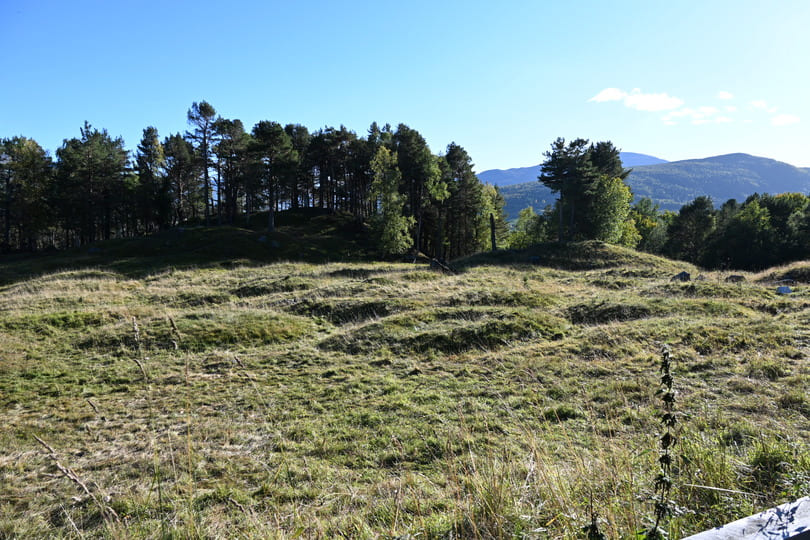
The first place I visit in Oppdal isn’t a mountain but a cemetery. The Vang burial ground, a 15-minute drive from downtown, is one of the largest burial grounds in Northern Europe. Scattered among the birch trees are nearly 900 burial mounds from the late Iron Age, most of which date from the Viking Age (800 to 1000 AD). Excavations in 1999 also uncovered artifacts from the Migration Period (400 to 600 AD).
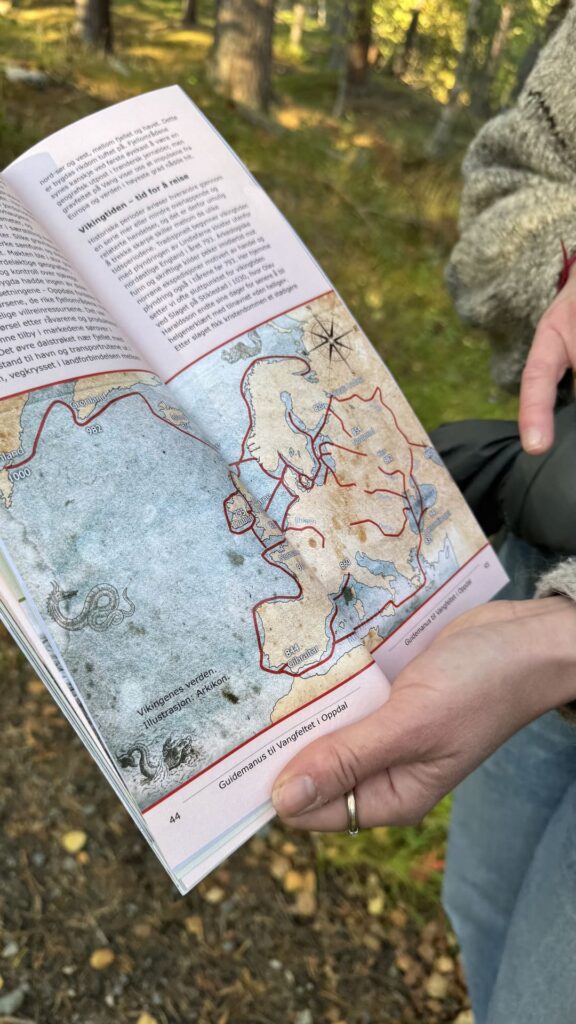
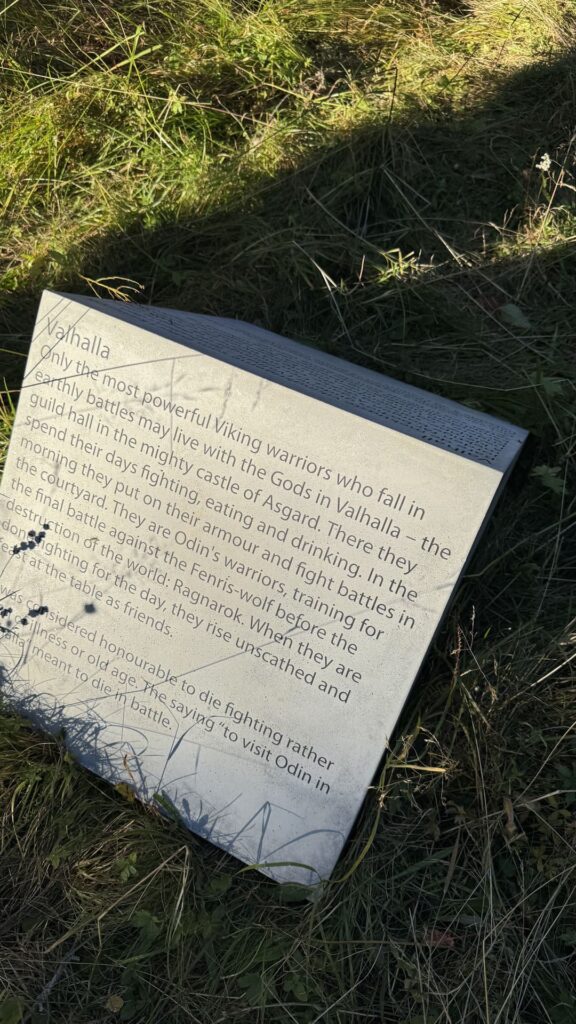
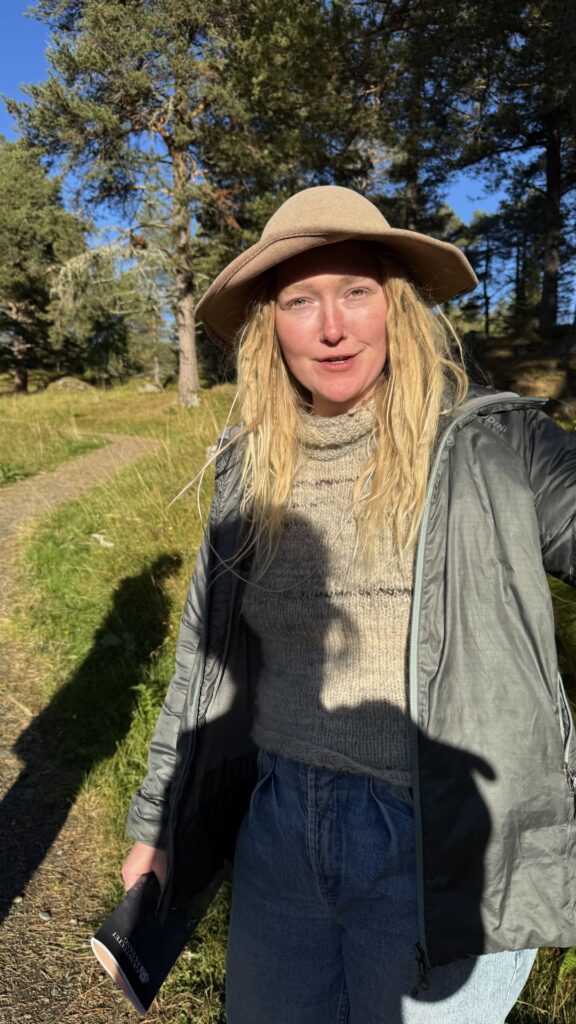
On its own, you don’t see much besides the hills when you walk around here. But thanks to guide Anna’s stories and the signs along the trails, the story really comes to life. It’s a beautiful spot surrounded by nature. Unfortunately, a violent storm knocked down many trees. The area has been open again since the summer of 2026.
Anna explains that Oppdal played an important role in international trade with the British Isles and countries further south in Europe during this period. Many horse bones, swords, and jewels have been found in and around the graves. Women played an important role during the Viking Age. In addition to managing the household, there is ample evidence that they also went out as warriors.
A guided tour takes about an hour and a half and is definitely worth it. Admission to the burial ground and parking are free. You can also get a comprehensive guide to the burial ground .
The next morning, we’ll depart from the meeting point at Oppdal Safari at Grønnbakken for a full day in the mountains. Before we’d even really gotten going, a beautiful red fox crossed the path.
Our guide, Hannes, decides to drive about a kilometer further after all, and we start our hike at the Kongsvoll train station. There have been incidents here in the past involving musk oxen charging toward a train. Hannes stays in touch with other guides by phone to get updates on the muskoxen’s current locations, but decides to follow his own path anyway—which turns out to be a wise decision.
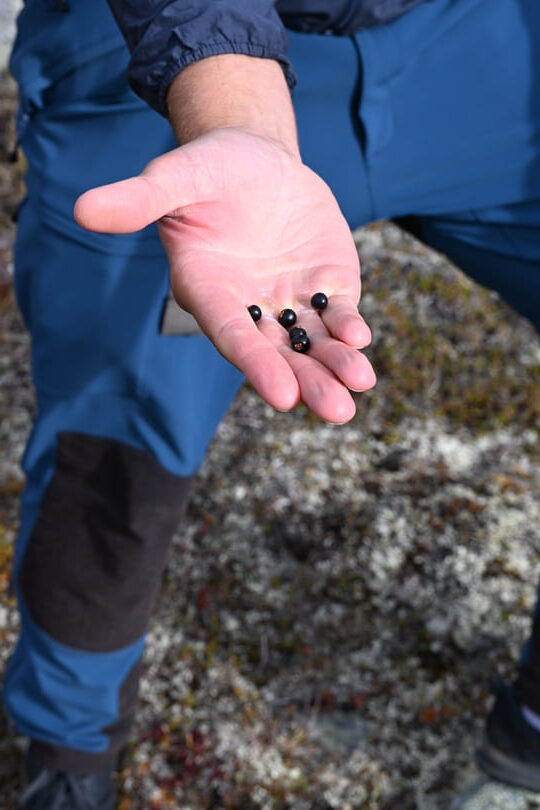
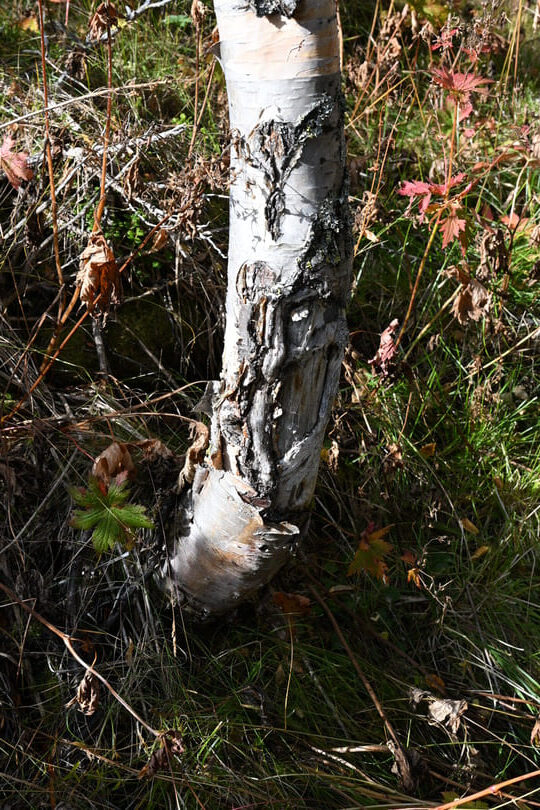
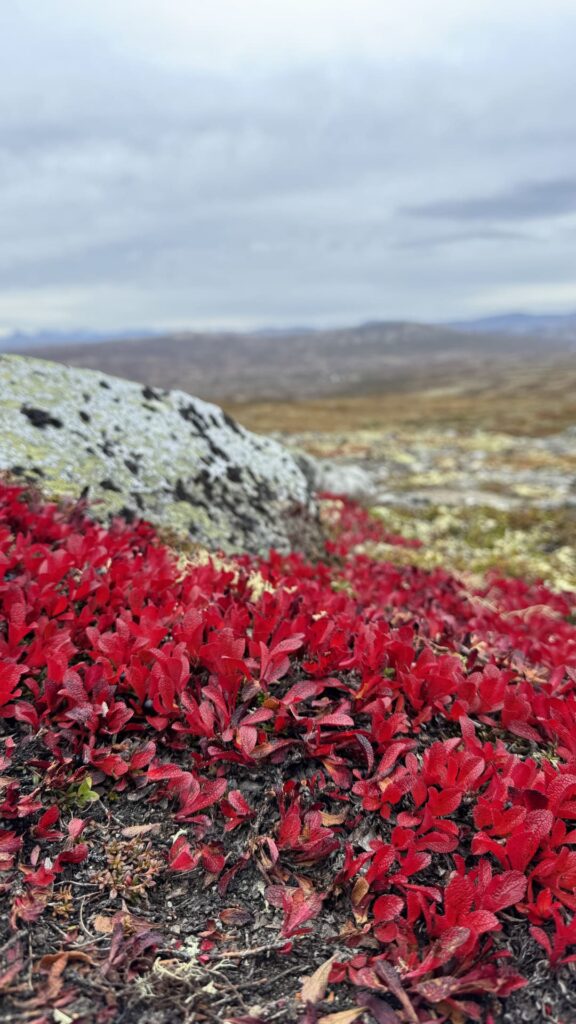
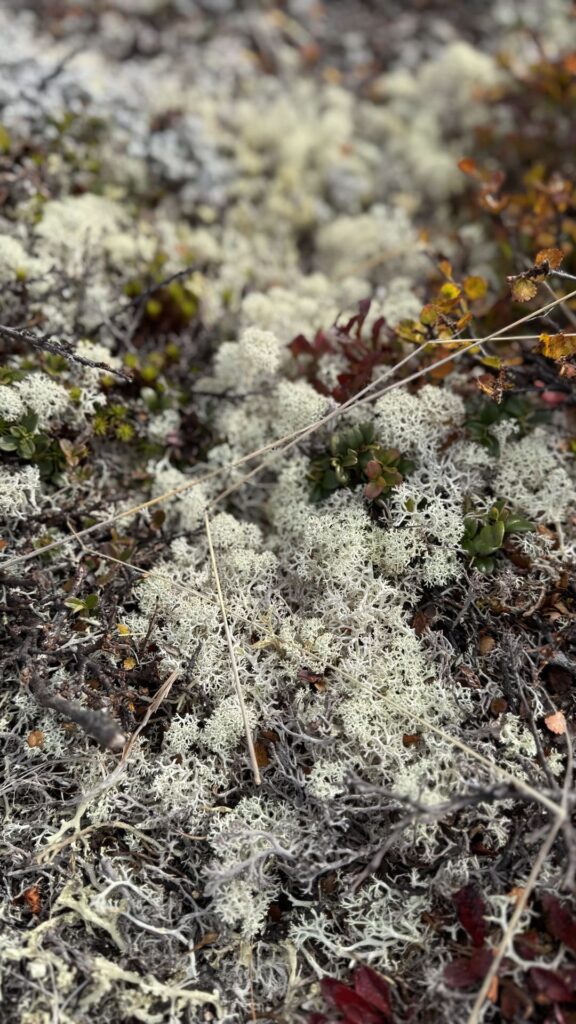
We’re hiking uphill, and the wind is blowing hard. Along the way, Hannes spots birch trees with damaged bark. They’ve definitely passed by here. We’ve strayed from the main trail and are hiking through the mountainous, lunar landscape. The colors are stunning—the red of the plants, the grayish moss, and the green shrubs. We taste the wild blueberries and learn about the vegetation. A musk ox safari requires patience.
Suddenly, Hannes stops and peers through his binoculars. He’s spotted one. It’s invisible to the naked eye, so we look through the telescope. A moment later, we spot another herd of as many as five musk oxen. I never would have been able to find them on my own, because their color blends completely into the landscape.
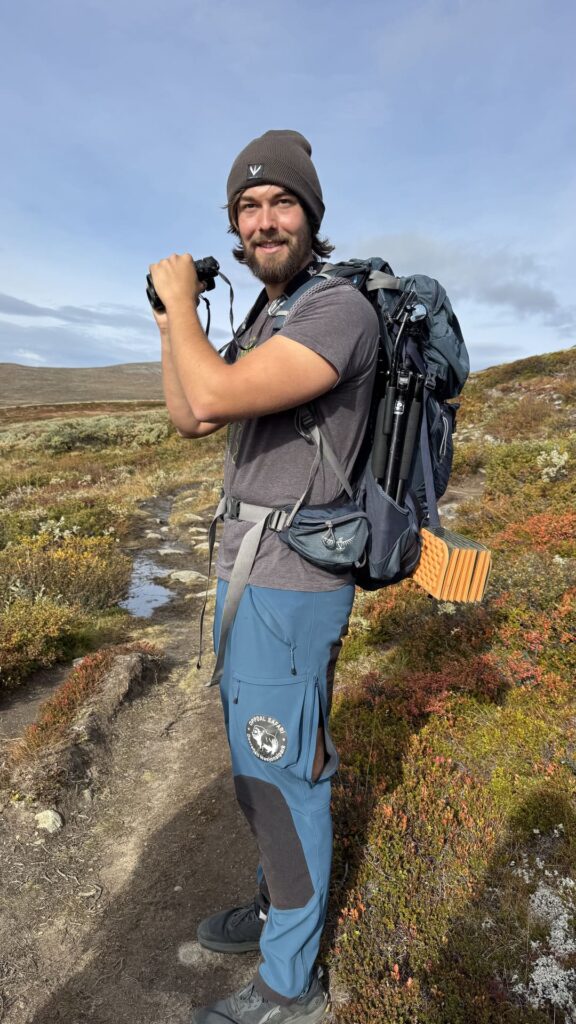
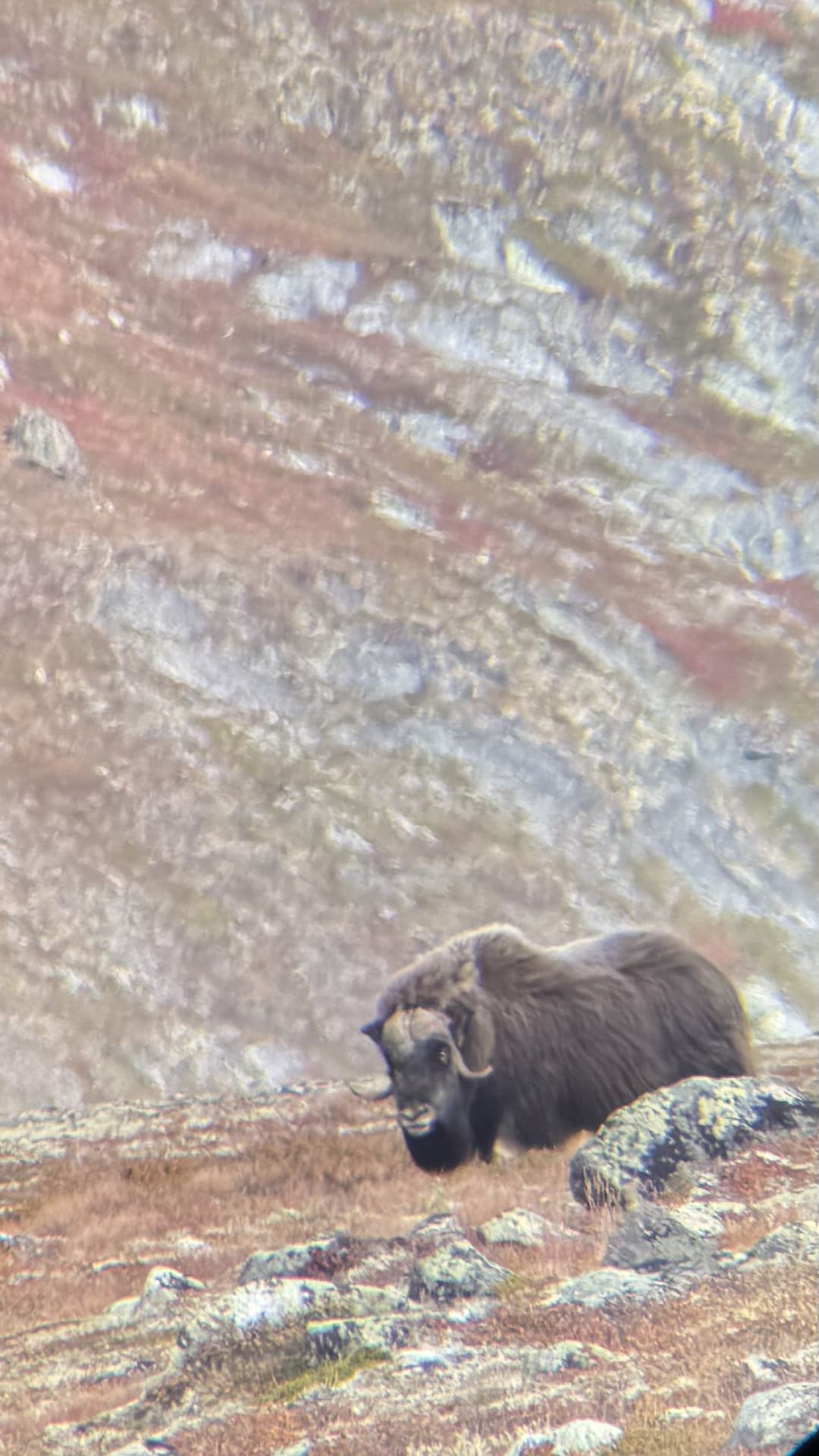
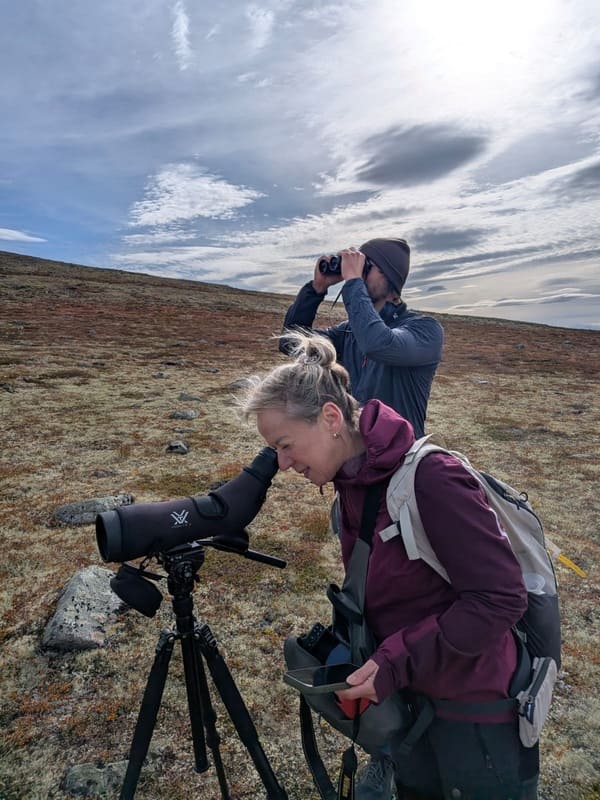
You’re allowed to enter Dovrefjell on your own, as long as you keep your distance. Still, I highly recommend taking a guided hike. The area is vast, and the herds are constantly on the move. There are only about 200 of them. What at first looks like a rock in the landscape turns out to be a massive animal weighing about 400 kilos. Hannes knows where they’ve been spotted in recent days, reads their behavior, and explains the ecosystem of the plateau.
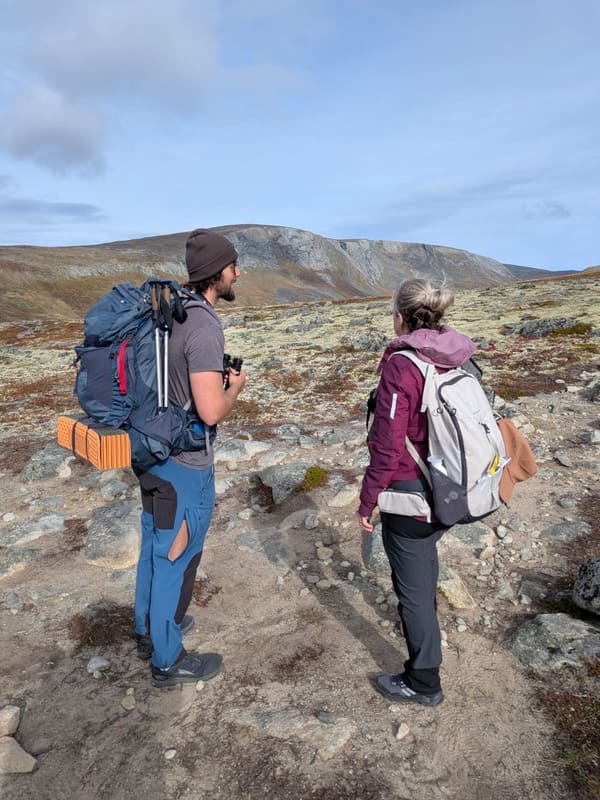
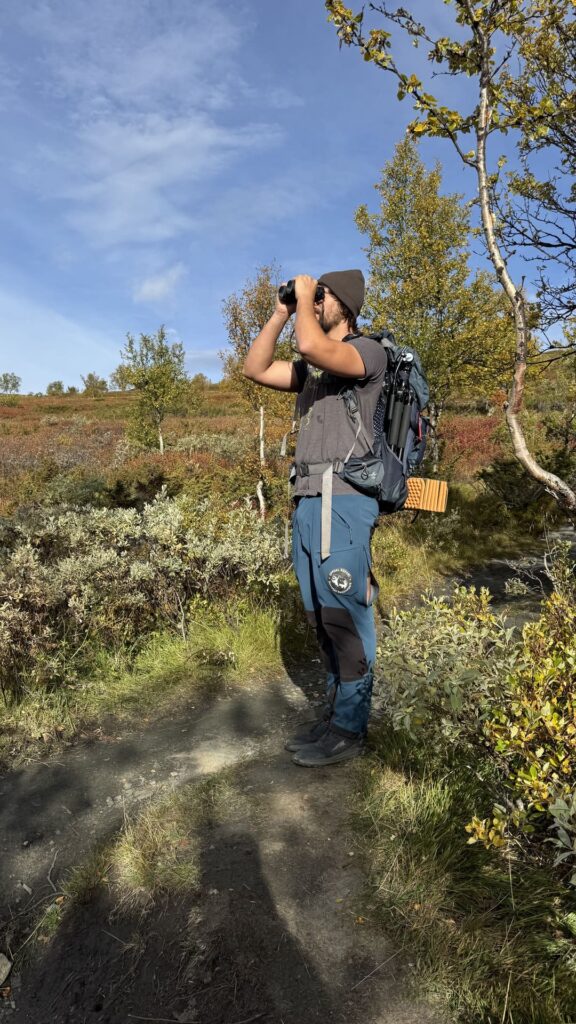
Without a guide, we would never have found them—or at least not seen them. Plus, with a guide, you can keep a safe distance and stay out of harm’s way. We were only able to get a good look at the musk ox and take pictures of it through the telescope. This is also because it’s mating season.
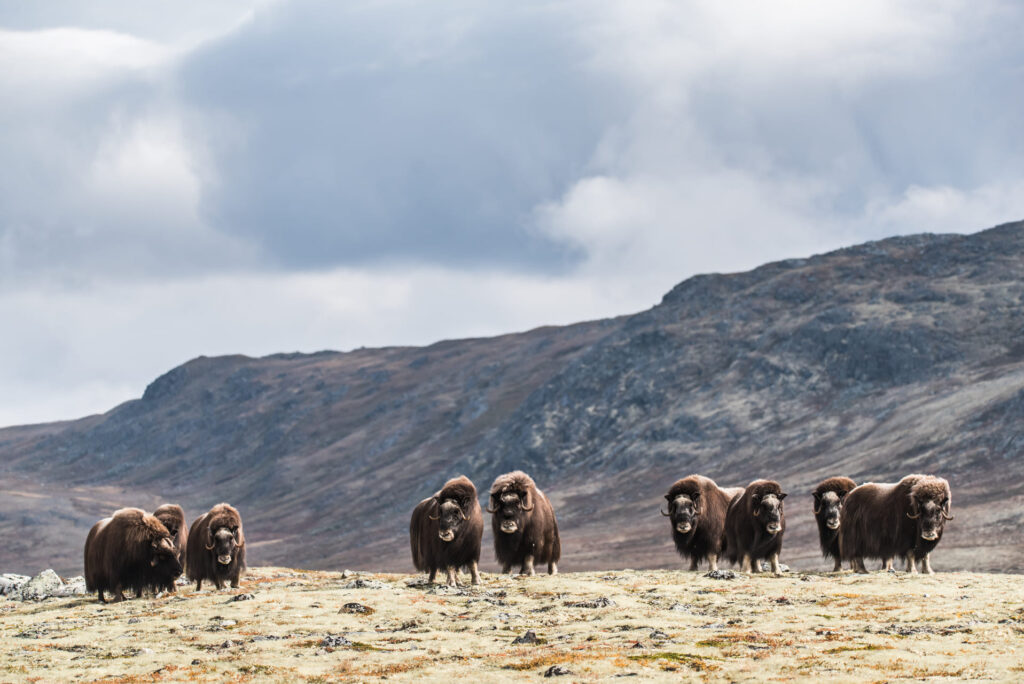
Rutting season is in September. The bulls are restless and react aggressively to anything that comes too close. Keep a minimum distance of 200 meters. If a musk ox does come toward you, walk away calmly. Don’t stop to take that one photo: a musk ox is faster than it looks. It can reach speeds of up to 60 km per hour, and it won’t back down.
The animals are counted every winter, Hannes explains. In the 2026 count, there were at least 220. The management aims for a population of about 200 animals, so that the fjell isn’t overgrazed and the musk oxen don’t come into conflict with people or wild reindeer. If the herd grows too quickly, culling takes place. In such cases, they cull an entire herd at once to avoid causing fear among the remaining animals. According to Hannes, a musk ox lives an average of about 10 to 15 years.
If you want to find the musk ox, you have to go up. The animals seek out the cold and live here at an elevation of around 1,200 meters. They eat grasses, herbs, and lichen. With their thick coats, they’re built for wind and frost, not for a warm late-summer day.
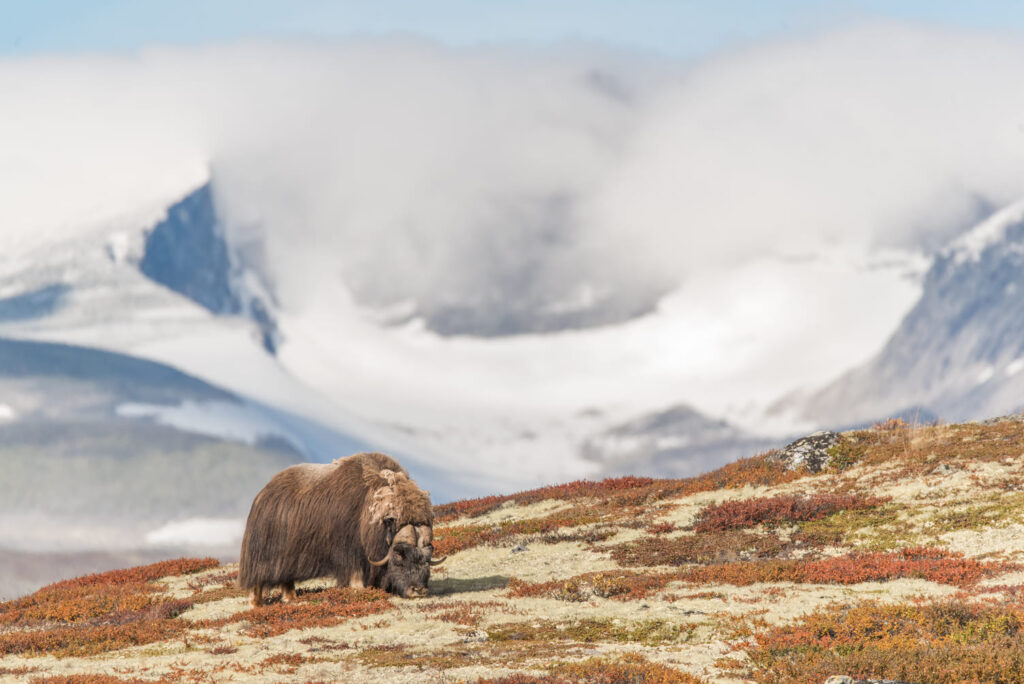
Musk oxen lived in Scandinavia 30,000 to 100,000 years ago, but did not survive the last ice age here. In the 1930s, the first animals from Greenland were released near Hjerkinn. That herd disappeared during the war. Between 1947 and 1953, a second attempt was made with 27 young animals from Greenland. Due to disease and accidents, there were likely only ten left by August 1953. The current herd has grown from that small group.
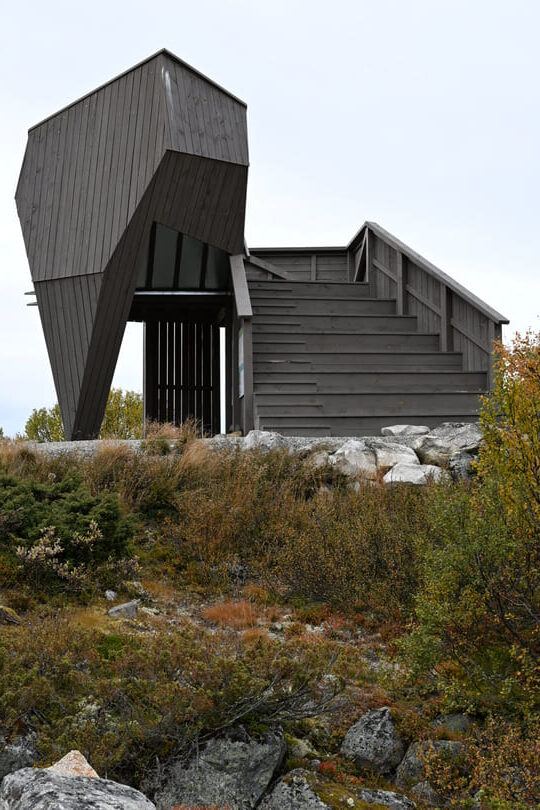
Rising above the plateau is Snøhetta, which, at 2,286 meters, is the highest mountain in the national park and the highest in Norway outside of Jotunheimen. For a long time, Norwegians believed this was the country’s highest mountain. If you don’t want to climb to the summit, you can walk from Hjerkinn to Viewpoint Snøhetta in half an hour—a lookout point designed by the architectural firm of the same name.
The Kongevegen (Old King’s Road) runs through the same landscape; it was built in the early 18th century as the first public road across a high mountain range in Norway. Pilgrims on their way to Trondheim still follow parts of this route today.
Tip from the guide: Kongevegen (also in Oppdal) is a great spot for spotting moose, especially early in the morning or in the evening. I went moose-spotting with my camera, but didn’t see any myself—I think it was already too dark.
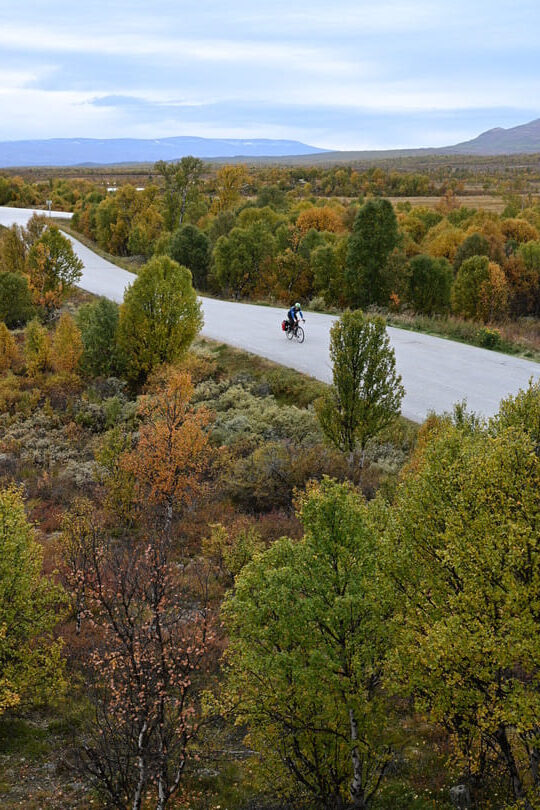
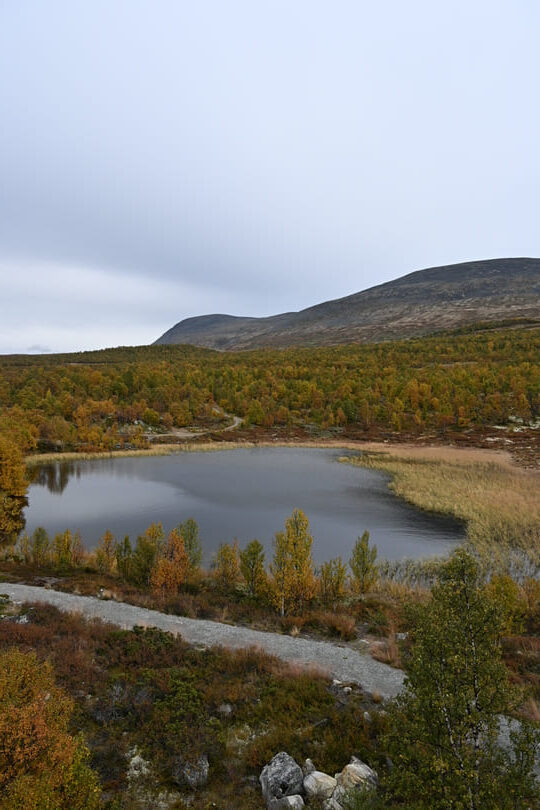
Tip: Along the main road (E6) is the Rullesteinen viewpoint and hiking spot. Here, you’re on the border with Rondane National Park, and you can hike through the beautiful landscape along a small lake.
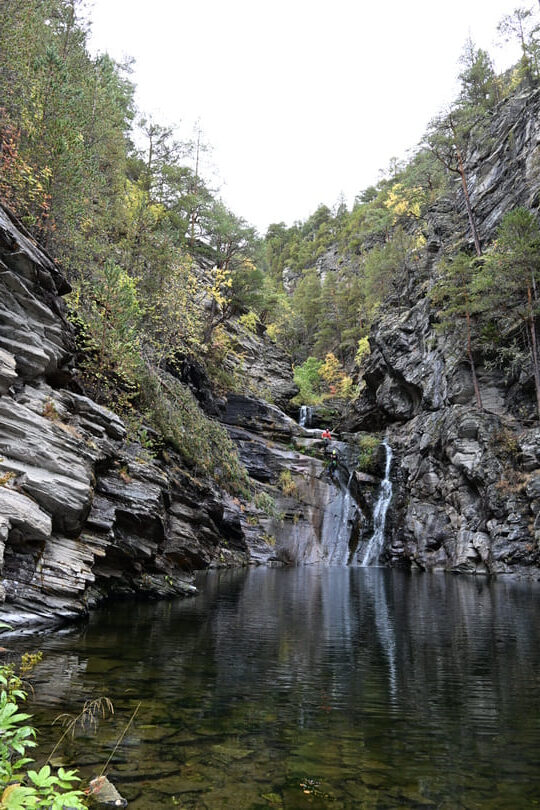
On our last morning, we’re heading into the water. Or rather, I offer to take the photos from the other side of the water. From Breesgård Turistsenter, a campground half an hour from Oppdal, we’ll go canyoning with Opplev Oppdal for over two hours. You’ll be provided with a wetsuit, life jacket, helmet, and climbing gear. You’ll jump from a height of about 9 meters—if you dare. I’ll take the photos. The water is cold despite the wetsuit, but it’s definitely an experience for thrill seekers.
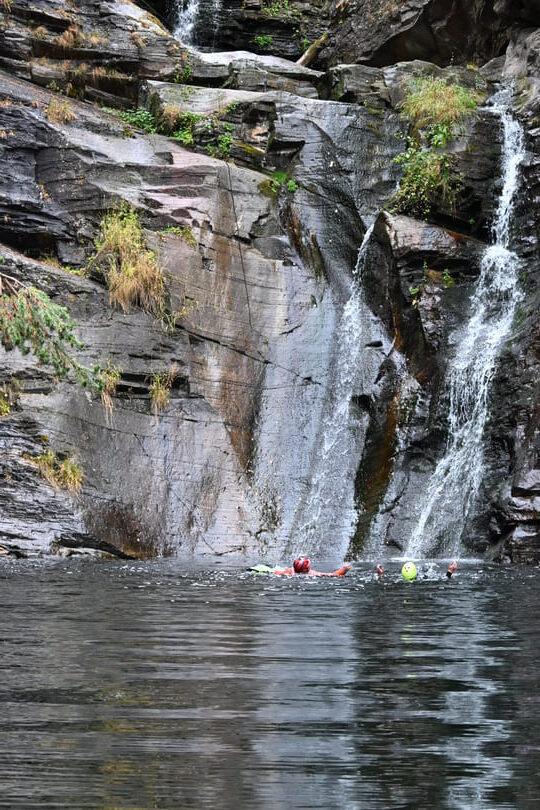
What to bring: something made of wool or synthetic fabric to wear under your wetsuit (no cotton), wool socks, a towel, a bag for wet clothes, and preferably shoes that can get wet.
Do you, like me, prefer to get into the water without having to climb? You can also go rafting in Oppdal.
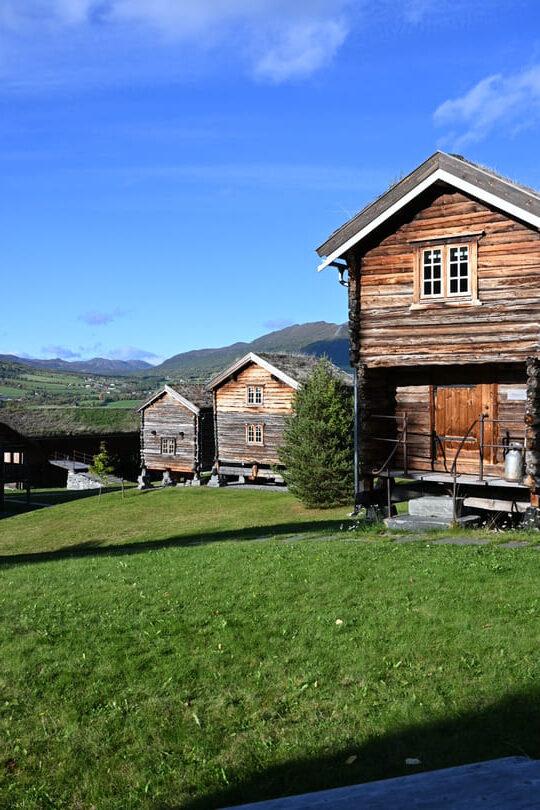
I stayed at Bjerkeløkkja, a historic building just outside the center of Oppdal. It has 35 rooms, including cabins and standard rooms. They serve a delicious, hearty breakfast, and if you’re planning a day in the mountains or in the gorge, you can put together your own packed lunch here during breakfast.

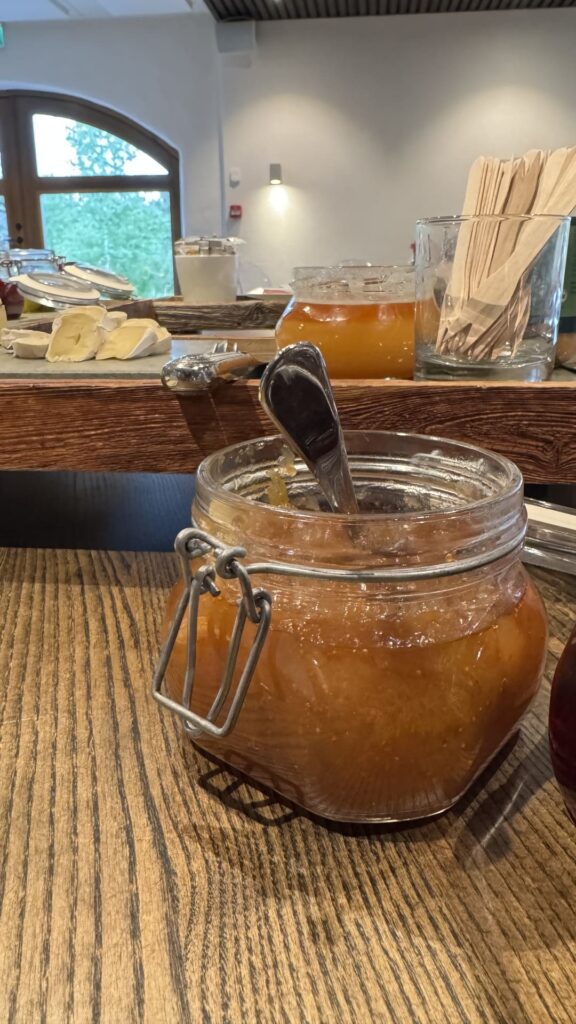
It’s no coincidence that Trøndelag calls itself a food region: the area is home to more than 200 local producers and was named the European Region of Gastronomy in 2022. In Oppdal, I ate at Det Sorte Får in the town center, known for its lamb, and at Oppdal Turisthotell next to the train station.
Please keep in mind that the weather in the fjells can change quickly. Even in September, snow can fall on the high plateau.
This trip was made possible by Explore Trøndelag and Visit Oppdal. The content was written independently.
In Dovrefjell-Sunndalsfjella National Park, in the municipalities of Oppdal, Dovre, and Lesja. It is the only place in Europe with a viable, wild herd of musk oxen.
Keep a distance of at least 200 meters, especially during the fall rutting season. If an animal approaches you, walk away calmly.
It’s not required, but it is recommended. A guide knows where the herds are and understands their behavior, which increases the chances of a safe encounter.
From June through the end of September, you can hike up the fjell. In the fall, you’ll see the fall colors, it’s quieter, and the musk oxen are active during the rutting season. In the winter, you can go on a snowshoe hike.
Oppdal is located on the Dovre Railway between Oslo and Trondheim. The train ride from Trondheim takes just over an hour and a half.
Trøndelag is an interesting region in Central Norway. In addition to its nature parks, Trøndelag has a significant place in Norway’s history. For example, St. Olav was killed at Stiklestad. In the year 2030, his death will be commemorated during the national anniversary. Today, the St. Olavsleden pilgrimage route runs past this town on its way to Trondheim.

With a passion for travel and photography and over 30 years of experience in the travel industry, I love to share my special nature travel tips. Travel is wonderful and important, you meet new people and cultures and it opens your view of the world.
Hiking to Trondheim along ancient pilgrimage trails What’s it like to hike for days along ancient pilgrimage trails to Trondheim? During a trip through Sweden and Norway, I hiked several sections of the St. Olavsleden. From the open border mountains near Skalstugan to...
Hiking the St. Olav Trail: Route, Stages, and Tips A thousand years ago, Olav Haraldsson traveled this road northward in search of his crown. He met his death at Stiklestad and was canonized three years later. Since then, pilgrims have followed the same route: from...
Get inspired
Are you looking for the most beautiful hiking and biking routes? Or do you want information about traveling by train or advice for the most beautiful road trips through nature. Get inspired for your next trip in green; ideas for planning your own trip or opting for an organized trip.