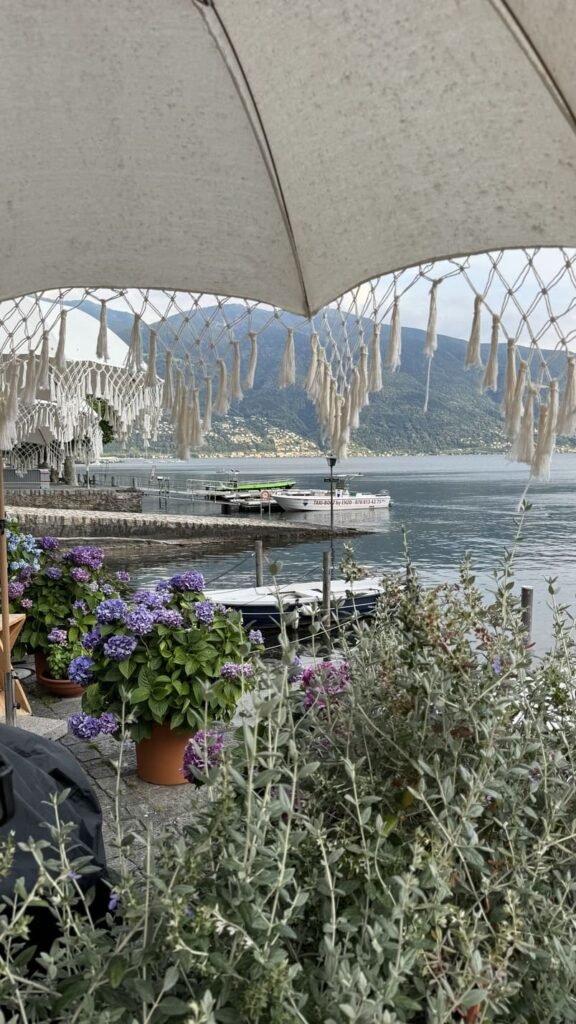
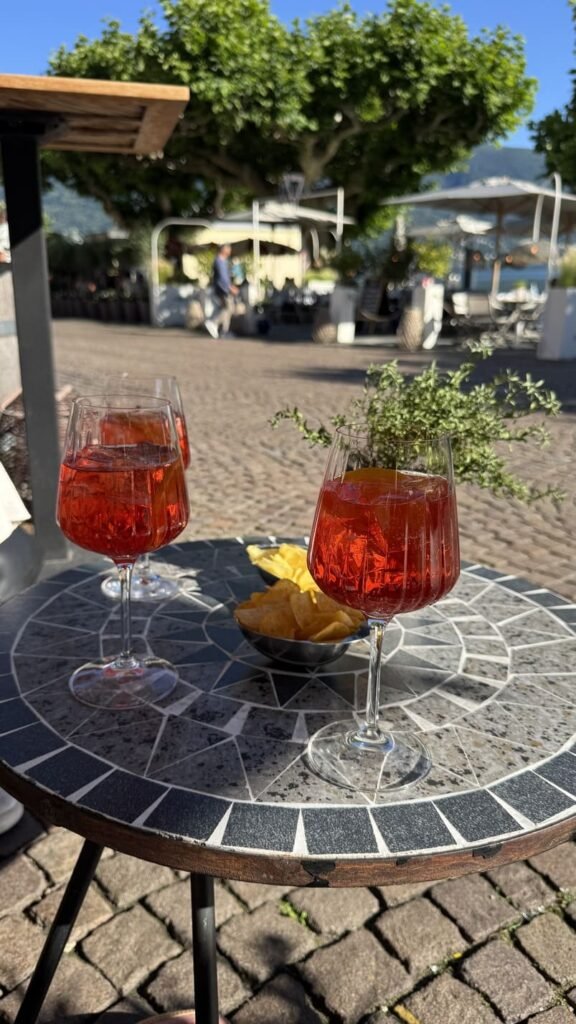
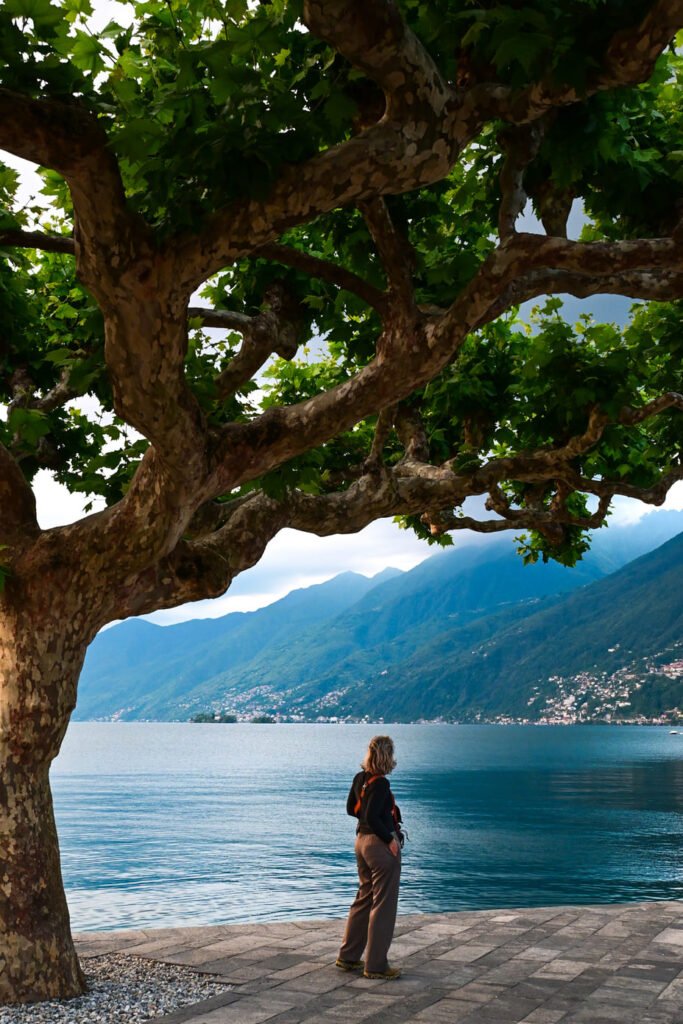
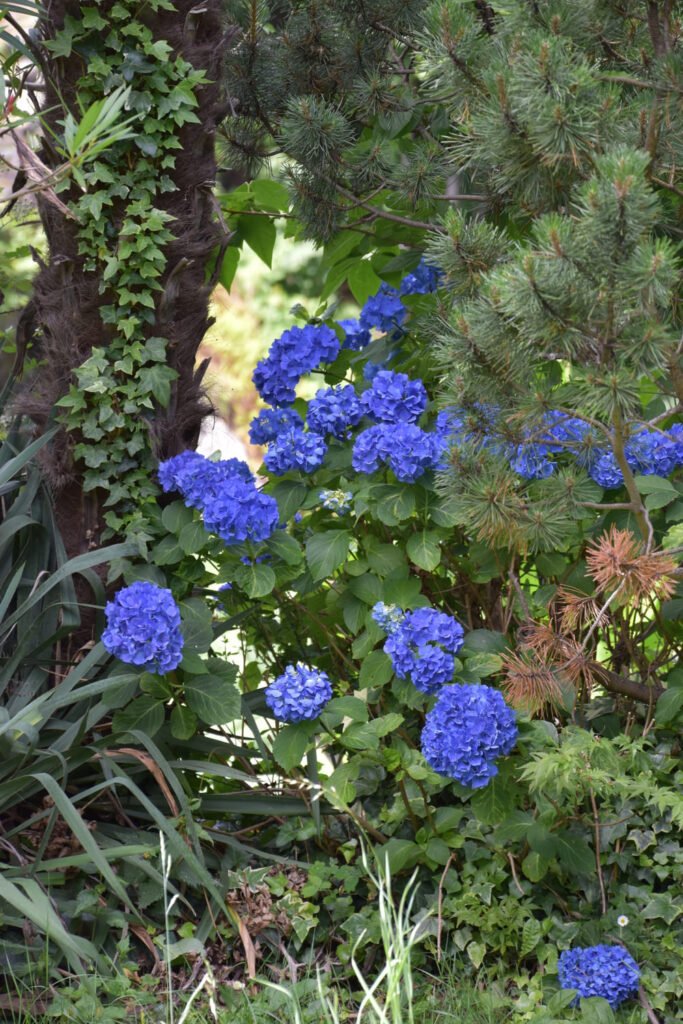
You step off the train in Locarno, and the first thing you see is a palm tree. No cow with a bell, no smell of fondue, no wooden chalet—just a palm tree. Welcome to Ticino, Switzerland’s southernmost canton, where they speak Italian, drink espresso in the piazza, and the mountains are reflected in lakes that seem more at home on Lake Como than in Bern.
I traveled to Ticino by train and used only public transportation while I was there. No car, no hassle. That might sound like a sacrifice, but in Ticino, it’s actually one of the most enjoyable ways to get around. More on that later.
It’s the sunniest corner of the country and, at the same time, one of the wildest. Within a single canton, you go from snow-capped peaks over 3,400 meters high to citrus trees by the water. Three-quarters of Ticino is nature, and large parts of it remain undiscovered by mass tourism. And that’s why it’s a place we love…
Italian-speaking Switzerland: sun, palm trees, and glaciers
Ticino is called Tessin in German and French, but that name hardly matters once you’re there: over eighty percent of the residents speak Italian, and you can hear, see, and taste that everywhere. The canton lies on the sunny side of the Alps, south of the Gotthard Pass, and borders Italy to the south.
This results in a strikingly mild, almost Mediterranean climate. Palm trees, fig trees, and citrus trees grow along the shores of Lake Maggiore and Lake Lugano. As you head inland, the landscape changes rapidly: narrow river valleys, dense forests, and above them the Ticino Alps, with the Rheinwaldhorn (3,402 m) as their highest peak, on the border with Graubünden.
Palm trees below, glaciers above; and in between, 4,000 kilometers of hiking trails.
The Valleys: The Wild Heart of Ticino
The most famous mountain valleys fan out from Locarno. They’re characterized by crystal-clear river water, centuries-old stone villages, and nature that’s still largely left to its own devices. Three favorites:
Verzasca Valley: turquoise waters and the famous bridge
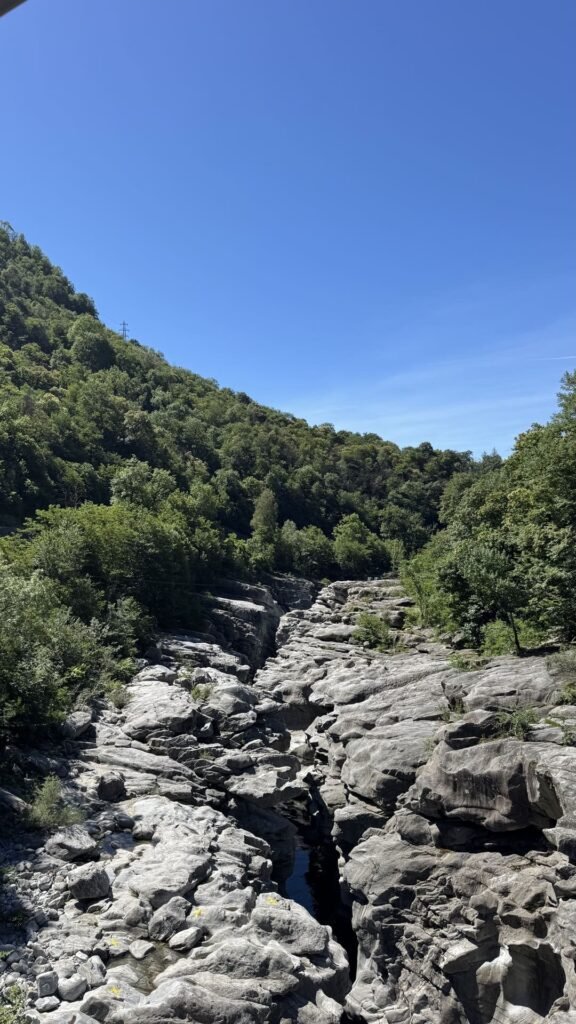
The Verzasca is perhaps Switzerland’s best-known river, even though most people don’t know its name. Near Lavertezzo, the emerald-green water has carved out jagged rocks, spanned by the Ponte dei Salti: a 17th-century double-arch bridge. It’s one of the most photographed spots in the country. Further along, near the Verzasca Dam, the opening scene of the James Bond film *GoldenEye* was filmed.
Valle Maggia: the largest valley, full of side valleys
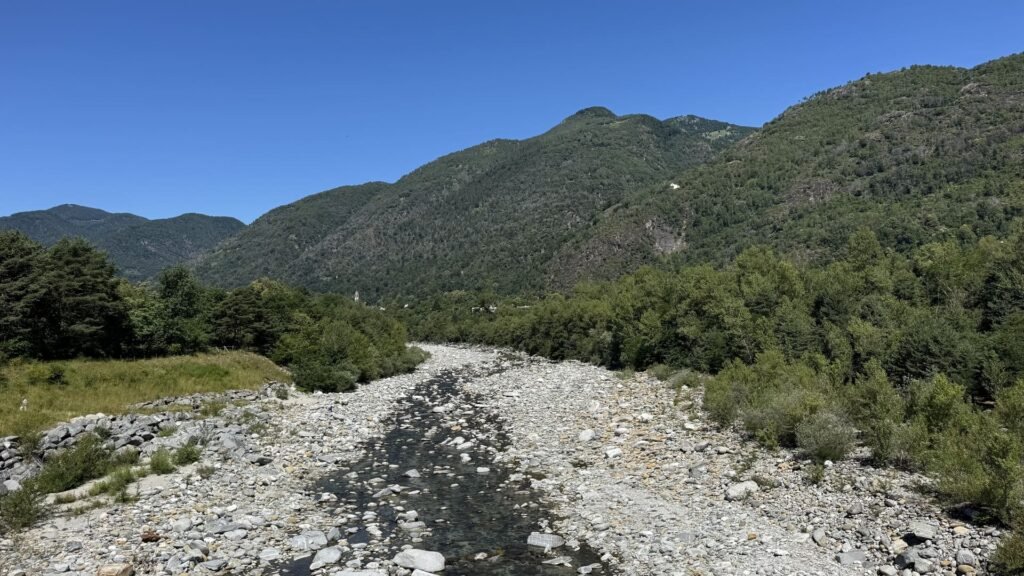
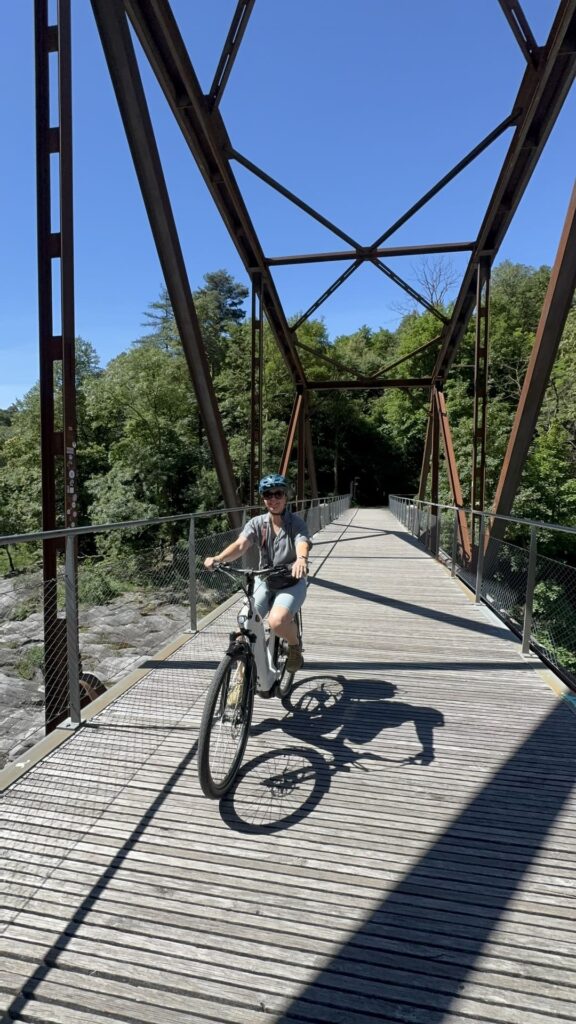
The Maggia winds its way through the mountains for over sixty kilometers before flowing into Lake Maggiore. The valley is green, wide, and branches off into countless side valleys. We explored it by bike, with a guide. You can read more about that in our separate story about the Valle Maggia. Near Lodano, you can hike through ancient beech forests that have been on the UNESCO World Heritage List since 2021.
Val Bavona: stone villages without electricity
A side valley of the Maggia—and perhaps the most unique one. The hamlets of Val Bavona are deliberately without electricity. You’ll walk past stone cottages nestled against giant boulders on your way to the Foroglio waterfall, which plunges more than a hundred meters, right behind a small village with a 15th-century chapel.
TIP
The Valle Verzasca and Lavertezzo get crowded on summer weekends. Want to experience the same atmosphere without the crowds? Then choose the Val Bavona or the quieter Valle di Muggio, or visit during the shoulder seasons (May or October). Quieter, cooler, and just as beautiful.
Ticino,Hiking and Biking: 4,000 kilometers of trails
Since most of Ticino lies at a relatively low elevation, the trails are often already free of snow when the rest of the Alps are still covered in a blanket of white. This means you can hike here earlier in the year without necessarily having to rely on gondolas. Here are just a few of the highlights:
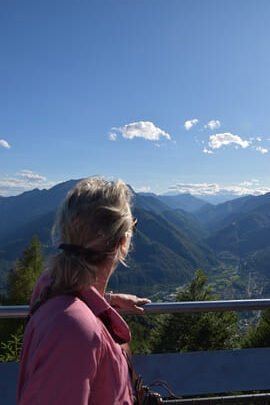
Cardada-Cimetta: Locarno’s local mountain, accessible by gondola from downtown, featuring a suspension bridge and sweeping views of Lake Maggiore.
Monte Generoso: accessible by a cogwheel railway dating from 1890; from the summit, you can look out over the Valle di Muggio, Switzerland’s southernmost valley.
Monte San Salvatore & Monte Brè: Lugano’s two local mountains, both accessible by cable car and featuring scenic trails.
Monte San Giorgio: A UNESCO World Heritage Site due to its world-famous Triassic fossil finds.
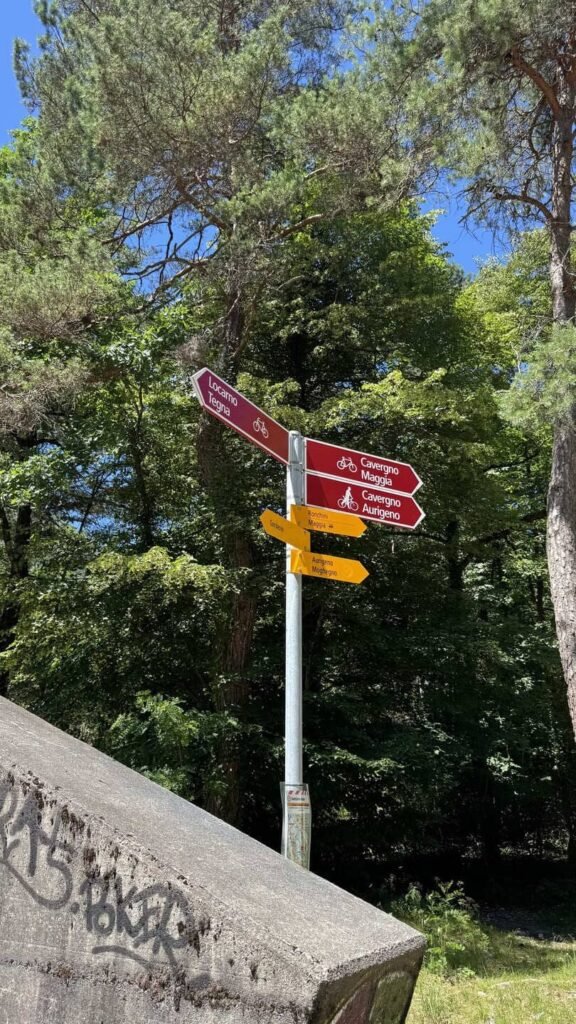
Cyclists will also find plenty to enjoy: the guided bike tour through the Valle Maggia follows the river into the valley, and the Valle di Blenio is known for its leisurely routes and local cuisine.
Cities with the dolce vita: Bellinzona, Lugano, Locarno, and Ascona
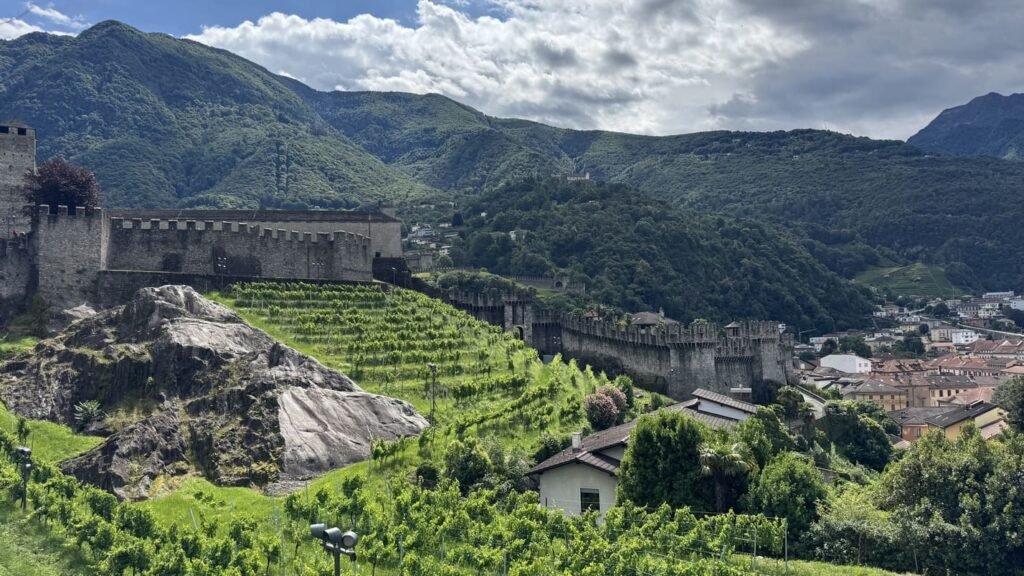
Ticino doesn’t have any truly large cities, and that’s precisely what gives it its charm. In Bellinzona, the cantonal capital, we climbed up to the three medieval castles: Castelgrande, Montebello, and Sasso Corbaro, which, together with the city walls, are listed as a UNESCO World Heritage Site.
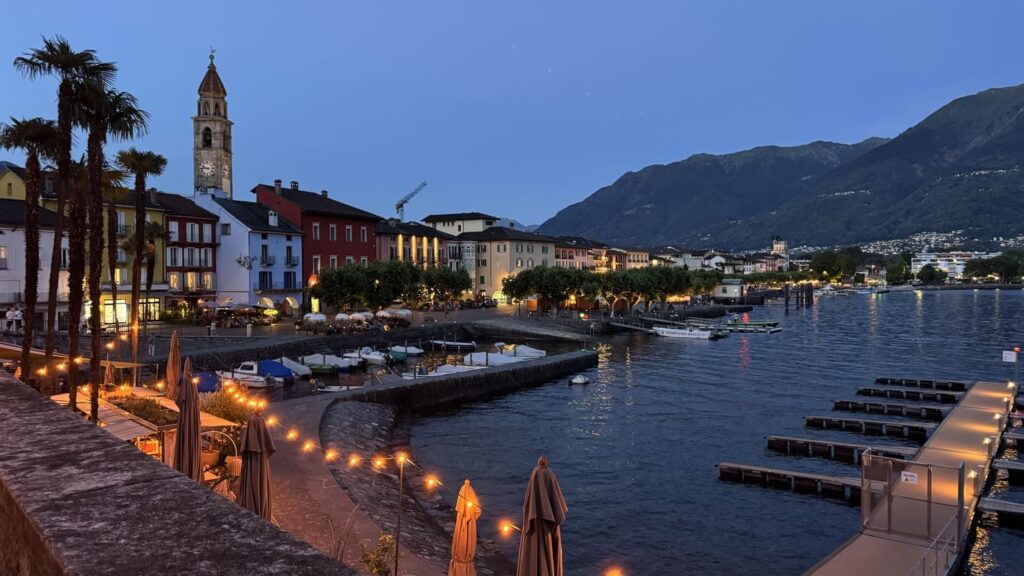
On Lake Maggiore lie Locarno, with its spacious Piazza Grande and annual film festival, and the fashionable town of Ascona, where we spent the night in the historic center at the Charme Hotel al Torchio. Just off the shore lie the Isole di Brissago, two small islands with a botanical garden full of subtropical plants. A surprisingly tropical boat trip. And Lugano, the largest city, lies on the lake of the same name, with the picturesque villages of Morcote and Gandria within easy reach.
Tasting in Ticino: Grotti and Natural Wine
No visit to Ticino is complete without an afternoon in a grotto. Originally, these were cool stone cellars carved into the rock to store cheese, meat, and wine; today, the term refers to simple, down-to-earth restaurants. Often tucked away in the woods or along a river, they’re where locals gather for polenta, risotto, and a glass of Merlot. Because, yes: in this little corner of Switzerland that feels like Italy, they actually make their own wine.
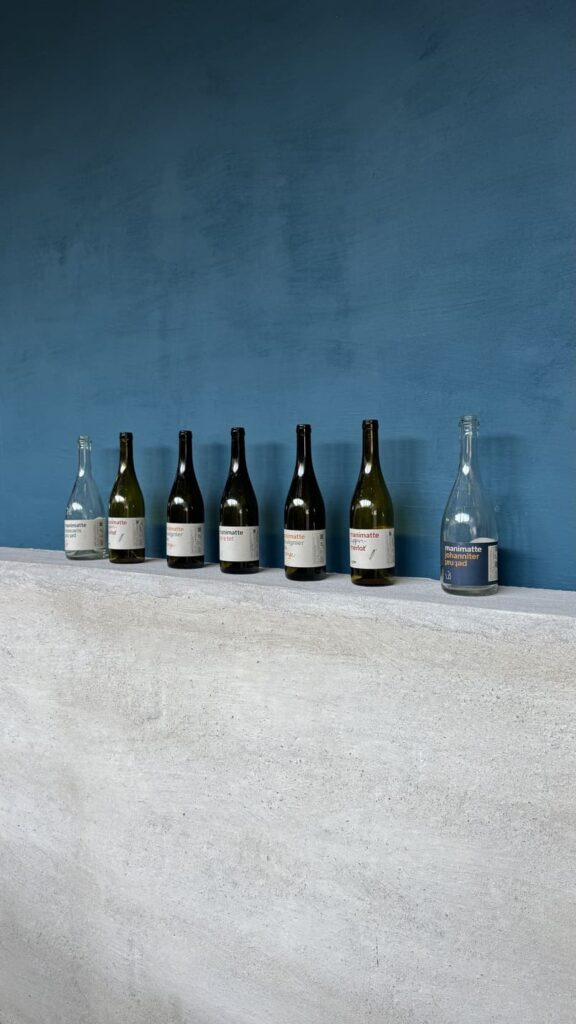
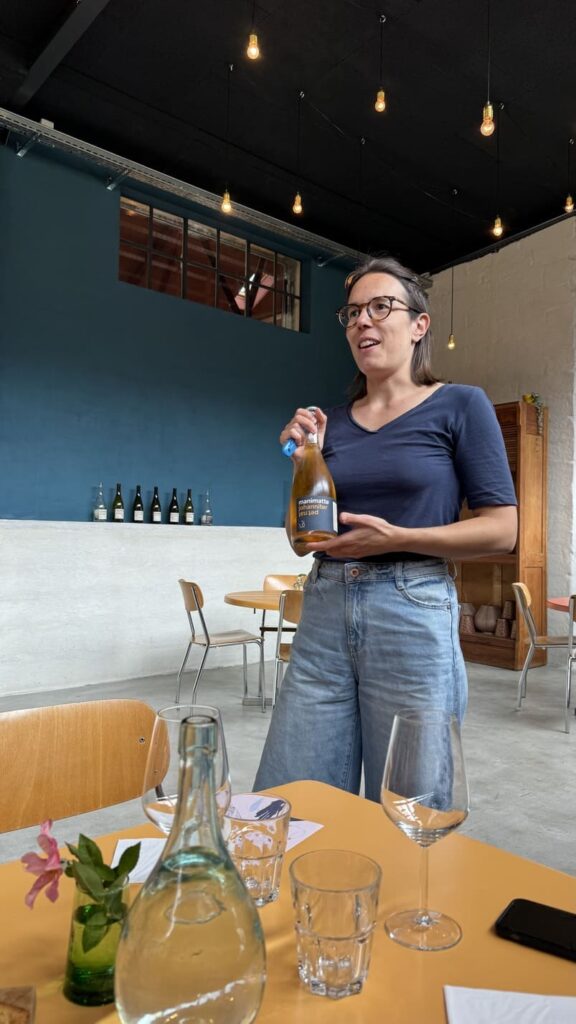
In the hills near Gudo, just outside Bellinzona, Anna Maspoli and Luca Locatelli produce natural wines on terraced vineyards under the name Manimatte. These are called “heroic vineyards” because of their steep slopes. They work with hardy, old, native grape varieties, allow their wines to ferment spontaneously, and describe them as “alive”: an expression of the grape and the soil. Every Wednesday evening, they host open tastings in their cantina. We tasted their wines and immediately understood why you don’t come here for a quick drink.
If you want to take it a step further, you can forage for your own lunch. In the Centovalli village of Intragna, gastronome Milo Bissegger will teach you which wild plants are edible—a story in its own right, which you can read about in our article on Intragna .
Sustainable travel in Ticino
Ticino is the perfect destination if you’d rather avoid the crowds and the high season. Because the landscape is relatively low-lying, the best months to visit are actually spring (April–June) and fall (September–October): pleasant temperatures, snow-free trails, and significantly fewer people than during Switzerland’s peak months.
The Ticino Ticket
If you’re staying at a hotel, hostel, or campground in Ticino, you’ll receive the Ticino Ticket for free: unlimited travel on all public transportation in the canton, plus discounts on cable cars and boat tours. We left the car at home and used the ticket to travel effortlessly deep into the valleys.
And you don’t even have to fly: I traveled by train from the Netherlands, through Switzerland and along the Gotthard Route. To find out exactly what that’s like—and how you can do it yourself—read our separate article on Ticino Without a Car. Add to that the spread-out flow of visitors: choose the quieter valleys like Bavona, Blenio, or Muggio instead of the crowded hotspots, and you’ll have a trip that’s more enjoyable for both you and the destination.
Much of what we recommend here (traveling by train, booking direct, and traveling outside the high season) aligns perfectly with Swisstainable, Switzerland Tourism’s sustainability program, where you can search for participating businesses by destination and level.
Practical Information: Ticino
Location
The southernmost canton of Switzerland, bordering Italy (Lombardy and Piedmont)
Language
Italian (spoken by over 80% of the population); English and German are understood in tourist areas
Best time to visit
April–June and September–October for hiking and biking; July–August for the lakes (and busier)
Back and forth
By train from the Netherlands via Switzerland (Gotthard Route); on-site with the free Ticino Ticket
Local Transportation
Excellent public transportation; no need for a car
Highlights
Verzasca Valley, Maggia Valley, Bavona Valley, Lake Maggiore, Lake Lugano, Bellinzona, Ascona, Cardada, Brissago Islands
Highest point
Rheinwaldhorn, 3,402 m (on the border with Graubünden)
Frequently Asked Questions About Ticino
When is the best time to visit Ticino?
The best months for hiking and biking are April through June and September through October. Because Ticino is at a relatively low elevation, the trails are usually snow-free during those months, and the temperatures are pleasant. If you’re mainly interested in enjoying the lakes, July and August are warmer, but also more crowded.
What language do they speak in Ticino?
In Ticino, Italian is the main language: over 80 percent of the population speaks it. In tourist areas, you can usually get by with English or German as well.
Is it easy to get around Ticino without a car?
Yes. Ticino has excellent public transportation, and with every overnight stay, you receive a free Ticino Ticket that allows you to travel freely by train, bus, and boat throughout the canton. I made the entire trip without a car, from the Netherlands all the way to the valleys. Just be sure to check the regional bus schedules, as they don’t always run very frequently.
How do you get to Ticino from the Netherlands?
By train, you can travel through Switzerland (toward Basel/Zurich) along the Gotthard Route to Bellinzona, Locarno, or Lugano. It’s a sustainable and scenic alternative to flying. By car, you can drive south through the Gotthard Tunnel.
Verzasca or Maggia: Which valley should I choose?
For the iconic turquoise river and the famous Ponte dei Salti, head to the Valle Verzasca. For more space, variety, and quieter side valleys—such as the Val Bavona with the Foroglio waterfall—choose the Valle Maggia. If you have the time, visit both—they’re right next to each other.
With a passion for travel and photography and over 30 years of experience in the travel industry, I love to share my special nature travel tips. Travel is wonderful and important, you meet new people and cultures and it opens your view of the world.
Aachen Off Track: A Green City Trip Featuring a Forest, an Organic Garden, and Charlemagne A city with an imperial history, surrounded by forests stretching all the way to the Belgian and Dutch borders. Aachen cannot be taken in at a single glance: its historic...
Harz National Park: Seeing the Forest Through Different Eyes "What a somber entrance," I thought as I drove into the Harz National Park. The densely forested area gradually gives way to a sort of lunar landscape. The dismal sight of the many hectares of dead trees...
Cinque Terre by Train from Levanto: Train Schedules, Tickets, and Tips The railroad through the Cinque Terre dates back to 1874 and is still the only practical way to connect the five World Heritage villages. Cars are hardly welcome there: the streets are too narrow,...
Last September, we had a wonderful six-day hiking vacation from Bologna to Florence (Via Degli Dei). Not only was the weather perfect, but the organization also contributed to this wonderful experience. The hotels were good, and our luggage was always delivered to the hotel before we arrived. The private transfer was on time, and communication via WhatsApp during our hiking week went smoothly as well; responses were quick and clear. We can therefore definitely recommend this hiking vacation through Nature Travel Lab!
After reading the report on the “Alpenüberquerung,” we got really excited. The combination of hiking through beautiful nature and the luxury of luggage transport and a reserved hotel perfectly meets our desire to stay active but then be able to enjoy a well-deserved drink and a delicious meal. The hikes were manageable for us and very varied; some basic fitness is required, especially since we aren’t used to the elevation gain. The trip really gives you the feeling that you’re on a hiking expedition, especially since you hike on your own but meet the same fellow hikers in the afternoons and evenings at one of the mountain huts or at the hotel. Highly recommended for hikers who love unspoiled nature combined with the luxury of a hotel!
Peloponnese Hiking Tour
A really beautiful six-day hike from Bologna to Florence. Communication with NatureTravelLab and the local agent was excellent. The information packet was waiting for us at the hotel in Bologna, and the app with the route worked great. Luggage transport was well organized every day, and our bags were waiting for us each time we arrived at our new room! We covered more than 1,400 meters of elevation gain, but unfortunately didn’t always get the views we’d hoped for due to cloud cover and some drizzle. Most days had great hiking weather. It was wonderful to walk into Florence on foot and stay there an extra day.
We experienced the Walk of the Gods as a great adventure. Our start in Bologna didn’t go quite as planned because our app wasn’t working yet and we couldn’t find a single sign for Via degli Dei in the square. Fortunately, we were quickly able to join two young hikers from Florence who were also doing the hike. After a wonderful night’s stay at the beautiful Rio Verde agritourism farm, Day 2 went much better with the help of the hiking app. Along the way, we enjoyed stunning views, met some great fellow hikers, and sampled delicious local dishes. Unfortunately, the weather wasn’t always on our side, and we had a day of heavy rain, which made the trail very slippery and required us to be careful. It’s a real treat when, on the last day, you can already see Florence in the distance and walk into this beautiful city a few hours later. Thank you so much for your quick and friendly responses to all our questions.
We enjoyed the trip. We also made some changes to our itinerary, and the email correspondence went very smoothly. We started in Mantera; the next day, our first and only hike was a really beautiful one. The taxi picked us up right on time. Unfortunately, the second day’s route was almost the same when we cycled to Ostuni. The bikes were well-maintained, including panniers and helmets (these were simply included). You could even bring your own water bottle!!! We found the route very scenic and varied. There were charming little villages where we could stop for lunch or coffee. The app worked great. All the hotels ranged from good to excellent, though we didn’t think the hotel in Leuca was worthy of 4 stars. We followed your advice for the two nights we stayed there. We found Leuca a bit underwhelming for a two-day stay. We would have preferred to stay in Gallipoli or Lecce for two days. We took this trip in April and were very lucky with the weather. It’s still a quiet time of year, but we didn’t mind that. We definitely recommend it!!!
Thanks to a great tip from Nature Travel Lab, we had a wonderful week in Italy. Fattoria di Maiano, just outside Florence, was a beautiful and peaceful place. And the suggested road trips were a great guide for exploring the region. We’ll definitely check here for tips for our next vacation, too. Highly recommended!
We spent a divine week in Italy: we walked the Path of the Gods, from Bologna to Florence—about 135 km spread over 6 days of hiking. Challenging distances and climbs, amazing views, nature, and a warm welcome every time we arrived at the agriturismo or albergo/hotel. All of this was perfectly organized by the Italian company Slow Active Tours, entirely in line with Nature Travel Lab’s itinerary proposal: upon arrival in Bologna, an information packet was waiting for us, complete with a hiking map, a booklet, and passports for the stamps. And the hiking app was very practical for along the way! Our luggage was transported every day and was always waiting for us when we arrived at the next location. Communication was smooth and clear. In short, highly recommended, well worth it, and well-organized.
In September, I walked the Cammino Materano. Communicating with Madelon about the booking was a pleasure. To be honest, I was quite nervous because it was my first time doing a multi-day hike—alone and in a region I wasn’t familiar with—but I thoroughly enjoyed it. The hike to Matera was beautiful, and I was able to complete it without any trouble thanks to the clear on-site signage and the routing and advice provided by the GPS app. The rest of the organization was top-notch as well. My luggage always arrived on time at the right destination, and the hotels and B&Bs were of high quality. In addition, the organizers were easy to reach via WhatsApp if I had any questions. Highly recommended!
Slovenia was absolutely amazing. A beautiful country, friendly people, lovely hiking trails, and truly top-notch hotels. The staff at the local organization were also very easy to reach and helpful. The hiking was manageable. As Dutch people, we’re not used to high altitudes, of course, so it was pretty tough at times. But it was also a lot of fun.
We had a wonderful trip. Everything was well organized. Due to an unfortunate fall, I ended up traveling with my luggage for a day, but that was handled well, too. We really liked all the accommodations. Only the Hotel Hebe in St. Piero a Sieve was a little less impressive, but it was still okay.
Looks fantastic! I'm definitely going to book a trip with this company... they're committed to sustainability and personalized advice. Definitely worth it.
Madelon and her team are true experts. Thanks to their years of experience and passion for travel, they manage to surprise us time and time again.
Beautiful hikes, the most picturesque spots—it’s a real treat.
I highly recommend them!
Nature Travel Lab provided us with very helpful and honest assistance!
If you’re looking for travel itineraries, the most beautiful hikes, and destinations, you can find it all here. You’ll find endless inspiration for your next trip. Beautiful cities are interspersed with nature. You’ll find everything you need to know about practical matters. Plus, there are plenty of tips for sustainable travel. That way, you’ll get the most out of your trip.
45
Get inspired
Are you looking for the most beautiful hiking and biking routes? Or do you want information about traveling by train or advice for the most beautiful road trips through nature. Get inspired for your next trip in green; ideas for planning your own trip or opting for an organized trip.
Om je de beste gebruikerservaring te bieden, gebruikt deze website cookies. Door toestemming te geven ga je hiermee akkoord.
Functional
Always active
The technical storage or access is strictly necessary for the legitimate purpose of enabling the use of a specific service explicitly requested by the subscriber or user, or for the sole purpose of carrying out the transmission of a communication over an electronic communications network.
Voorkeuren
De technische opslag of toegang is noodzakelijk voor het legitieme doel voorkeuren op te slaan die niet door de abonnee of gebruiker zijn aangevraagd.
Statistics
The technical storage or access that is used exclusively for statistical purposes.De technische opslag of toegang die uitsluitend wordt gebruikt voor anonieme statistische doeleinden. Zonder dagvaarding, vrijwillige naleving door je Internet Dienst Provider, of aanvullende gegevens van een derde partij, kan informatie die alleen voor dit doel wordt opgeslagen of opgehaald gewoonlijk niet worden gebruikt om je te identificeren.
Marketing
De technische opslag of toegang is nodig om gebruikersprofielen op te stellen voor het verzenden van reclame, of om de gebruiker op een site of over verschillende sites te volgen voor soortgelijke marketingdoeleinden.