
Gratis gids 10 verborgen natuurplekken in Europa
Gratis gids 10 verborgen natuurplekken in Europa. Meld je aan voor onze nieuwsbrief en ontvang inspirerende reistips en routes voor je volgende groene reis.

Cycling in the Langhe, Monferrato, and Roero—it sounds like a poem. These three neighboring, hilly wine regions in Piedmont, in northern Italy, are collectively listed as a UNESCO World Heritage Site. In late September, I took a gravel bike trip—albeit with pedal assistance—through this beautiful region. Read my tips and discover the spots you absolutely can’t miss.
Do you enjoy good food, seeing where it comes from, and being outdoors in a peaceful setting? Then the Langhe region, Monferrato and Roero region is the perfect destination for you.


The region is like a postcard, but it’s also a landscape that unfolds beautifully as you cycle through it. I explored it on an e-gravel bike, which was the perfect way to do it because of the many small climbs and the numerous gentle slopes.
At the end of September, I set out from Monforte d’Alba, with its narrow streets winding up the hill like ribbons. On a gravel bike, it takes some effort; on an e-bike, you really have to pay attention. Incidentally, the streets are so steep that you’re better off exploring them on foot. The combination of vineyards, medieval houses, and panoramic views makes this one of the most beautiful parts of the Langhe region. You’ll quickly realize why you want to discover Italy off the beaten path.


Once at the top, the historic heart of Monforte d’Alba unfolds—a village that rightfully belongs among “i borghi più belli d’Italia” (the most beautiful villages in Italy). Amid the pastel-colored houses, you’ll find small trattorias. Next to the bell tower stands the Horszowski Auditorium, an open-air theater with grassy steps that serves as the backdrop for Monfort-in-jazz in the summer.
From Monforte d’Alba, we slowly climb up into the hills. Here, Nebbiolo grapes grow on marl and clay, in a microclimate that together forms the terroir —that unique combination of soil, climate, and tradition that gives wine, cheese, or olive oil their character.
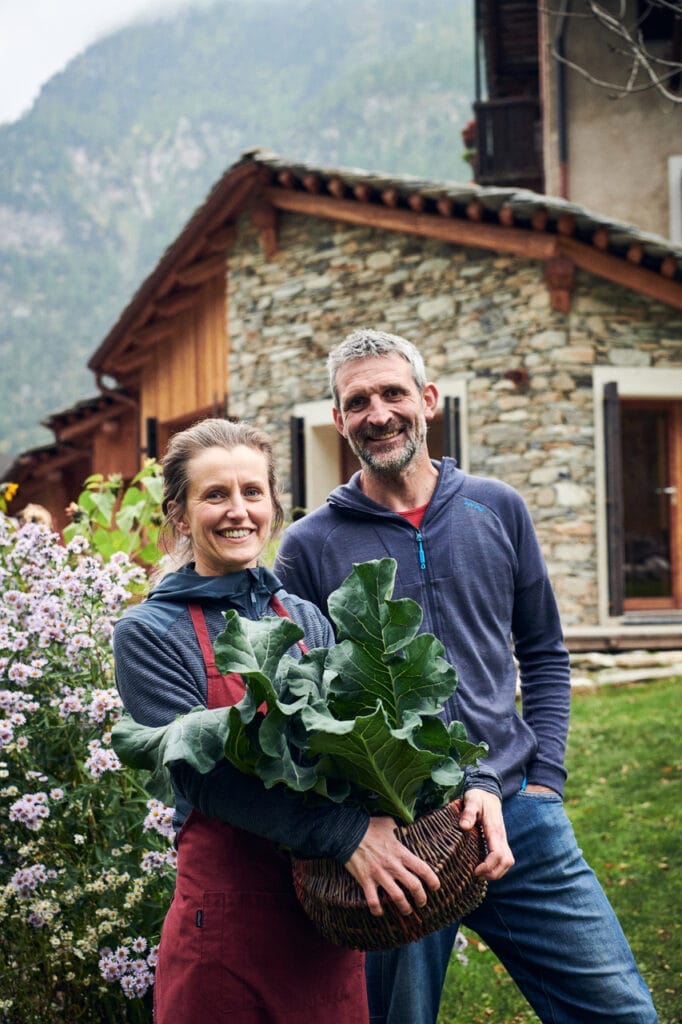
The route winds through small villages, their squares quiet on a weekday morning. In Bossolasco, lunch awaits at the Drogheria di Langa: owners Stefania and Fabrizio traded Turin for the tranquility of the Langhe. The restaurant is a tribute to simplicity and flavor. The cuisine embodies the soul of Piedmont, featuring regional dishes made according to grandma’s recipes and using seasonal ingredients. The atmosphere exudes craftsmanship and attention to detail. The homemade grissini (breadsticks) epitomize this perfectly: crispy and fragrant with olive oil, a tribute to the Piedmontese tradition where this bread first originated. I’ve never tasted them this good before.


After lunch, we’ll climb to Mombarcaro, the highest village in the Langhe at 896 meters. Although the village itself isn’t much to speak of, the road leading there is beautiful and winds through hazelnut groves and farms. After all, the rolling hills of Piedmont are at the heart of one of the world’s most famous hazelnut-growing regions.


The hazelnut played a key role in the success story of Ferrero, the family-owned company from Alba that became world-famous for products such as Nutella, Ferrero Rocher, and Kinder. To this day, many of those hazelnuts still come from these hills.
That evening, I’ll have dinner in Cissone, a small village perched on a hill in the Alta Langa, where life moves at a leisurely pace among its 100 residents. From the village square, you can look out over a sea of vineyards and forests that change color with every season. On clear days, you can even see the Alps on the horizon.
There are a few restaurants, and quiet walking trails wind around the village, passing by old walls and little chapels. At Locanda dell’Arco, Andrea and Marcos are breathing new life into a place where tradition and fresh energy go hand in hand. Andrea is in the kitchen, offering a contemporary take on Piedmontese classics, while Marcos sets the tone in the restaurant with his relaxed hospitality. A young, passionate duo that lets the soul of the Langa shine through in every meal: pure, local, and bold. It’s usually quite crowded on Thursday evenings, so be sure to make a reservation.

The next day, the scenery changes. Not far from Mondovì, in the town of Vicoforte, stands the impressive Santuario di Vicoforte, also known as Santuario Regina Montis Regalis. This monumental church is famous for its enormous elliptical dome—the largest in the world—but its origins lie in a folk legend.
According to the story, a hunter accidentally shot an old statue of the Virgin Mary in the woods here in the 16th century. The statue of Mary with the infant Jesus began to bleed, which was seen as a miracle. Out of reverence for this miracle, the Duke of Savoy later had a large sanctuary built there, which grew to become one of the most important pilgrimage sites in Piedmont.


From medieval Garessio, on the Tanaro River, we cycle toward Valcasotto, a hamlet in the Ligurian Alps. At first glance, the village appears to be inhabited, but the silence is striking. Narrow streets, little traffic. Alessandra Ingenetti, a member of the Slow Food Alliance and chef at Locanda del Mulino—where I’ll have lunch later—explains that Valcasotto was nearly abandoned decades ago. Many houses fell into disrepair. It wasn’t until cheese maker Beppino Occelli bought a large number of the buildings to use them as storage and aging cellars that new life returned to the village.
Today, Valcasotto is a blend of tranquility and bustle. Few people still live there, but the presence of a restaurant, a mill, and cheese cellars makes it an interesting stop along the route.


Beppino Occelli started in the 1970s, when many farmers were switching to industrial production. He did the opposite: he went back to milk from local cows, goats, and sheep, and back to natural aging. The cellars in Valcasotto are the result of that choice. Here, time is the most important ingredient. Some cheeses age for months; others for years. Every week, they are turned and tended to by hand.
The aging cellars are cool rooms, carved out of stone, where some 15,000 cheeses are left to rest: Tuma, Testun, and Robiola. The smell is heavy and complex—ammonia, moisture, and earth. It’s impressive—a confrontation with the physical reality of cheese-making.
During lunch at Locanda del Mulino, I taste a cheese that has aged for over a year. Salty, nutty, with a hint of hay and chestnut wood—layers of flavor that immediately evoke the surrounding area. The concept of terroir literally comes to life here.


Nestled among the dense forests of Valcasotto lies the Castello di Casotto, once a Carthusian monastery and later a summer residence of the House of Savoy. The castle, tucked away at an altitude of over a thousand meters, can be reached via a winding road that’s perfect for a challenging climb.

Up above, an impressive building awaits—half monastery, half palace—surrounded by silence and the scent of pine. Inside, the furnished rooms and chapel can be viewed during a guided tour, though the castle is not open every day. A visit therefore requires some planning, but once you’re up there, you’ll understand why the Savoy family sought refuge here.


We end our day of cycling here and head back to the hotel to have dinner that evening at Il Balcone sulle Langhe in Cissone—a meal in which local products once again take center stage and which proves to be yet another fantastic culinary experience.
The Slow Food movement found its academic home. The University of Gastronomic Sciences trains new gastronomes with a focus on sustainability, short supply chains, and food culture. Students and researchers gain knowledge directly from the region and through fieldwork placements around the world.

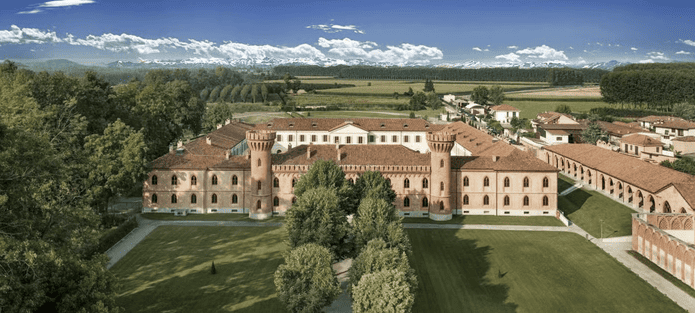
The heart of the village is the Albergo dell’Agenzia, a beautiful nineteenth-century building made of warm red brick. During the reign of the House of Savoy, this was not a monastery or palace in the traditional sense, but a royal agricultural experiment: a model farm ahead of its time, where King Carlo Alberto had new methods of viticulture and livestock farming tested.
Today, the complex has been brought back to life as a hotel, restaurant, and wine bar, and it still embodies the same spirit of care, expertise, and taste. It’s worth a visit: you can stay the night, or simply enjoy an aperitif in the garden as evening falls over the hills, followed by a dinner featuring local cheeses, seasonal vegetables, and a glass of Barolo, served with the story behind the wine. This is how the Slow Food philosophy comes to life.
What sticks with me from these days isn’t a single view or a single meal, but the succession of experiences: cycling to Mombarcaro, dining in Bossolasco, the cellars of Occelli in Valcasotto. Each moment reveals a different facet of Piedmont, a region not meant for quick consumption, but for those who want to slow down and take it all in. Read our blog here about cycling in the Cuneo Alps, also in this region.


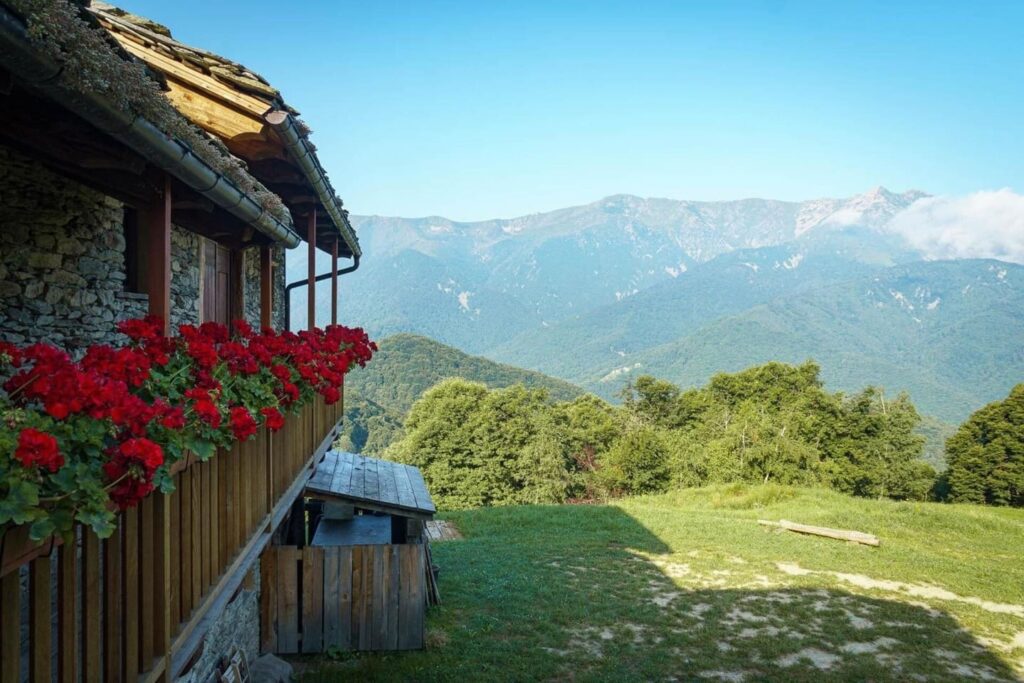
A list of nature-based lodging options in the Piedmont region, a handy starting point for planning your trip:



The driving distance from Utrecht to the Langhe/Alpi Liguri region (province of Cuneo, Piedmont) is approximately 1,100–1,200 km.
For bike rentals in the region, check out Bicinlanga (in Alba). They offer bike and e-bike rentals, tours, and support—ideal if you want to ride an e-gravel bike like the one described in the report. Don’t forget to make a reservation in advance, especially during peak season.
Would you like to take an organized hiking trip through this region with luggage transport, GPX routes, and accommodations arranged? Read more about this 8-day hiking tour through the Barolo wine region.
More information about the Langhe Monferrato Roero region, the tourism office.


Mieke Tacken
I am an interior designer, photographer, and an avid nature hiker. I’ve lost my heart to the simplicity and beauty of hiking vacations. I also appreciate the unique experience of a stay that tells a story about local history or culture. Here, I share my stories and tips—whenever possible, with a light footprint and always with a heart full of wonder.
Cycling or taking public transportation along the Romantic Road: a road trip through Bavaria without a car Cycling or taking public transportation along the Romantic Road sounds like a contradiction: after all, the word “Strasse” practically screams “car.” Yet this is...
Hiking across smoking volcanoes: an organized hiking tour of the Aeolian Islands On Vulcano, you know you’ve arrived before you even set foot on shore. The sulfur already hangs over the harbor. A smell that hovers somewhere between a match and a boiled egg—and one you...
Cycling the Lake Route: 227 kilometers through Switzerland at a leisurely pace The first thing you hear isn’t traffic, but a cowbell. You’re standing in Vevey, on the shores of Lake Geneva; you’ve just dropped off your suitcase at the baggage counter, and for the next...
Get inspired
Are you looking for the most beautiful hiking and biking routes? Or do you want information about traveling by train or advice for the most beautiful road trips through nature. Get inspired for your next trip in green; ideas for planning your own trip or opting for an organized trip.