
Gratis gids 10 verborgen natuurplekken in Europa
Gratis gids 10 verborgen natuurplekken in Europa. Meld je aan voor onze nieuwsbrief en ontvang inspirerende reistips en routes voor je volgende groene reis.

The best way to get to Ticino is to take your time getting there. First, Germany glides by the window; then the train climbs into the Alps; and suddenly (after a long tunnel), the rooftops are orange, there are palm trees on the platform, and you hear Italian. No rental car, no parking stress, no traffic jam at the Gotthard Pass.
I traveled by train from the Netherlands and used only public transportation once I arrived. It works just fine, and it’s more comfortable than it sounds. With the right app and pass, it’s not expensive either. Here’s how to do it.
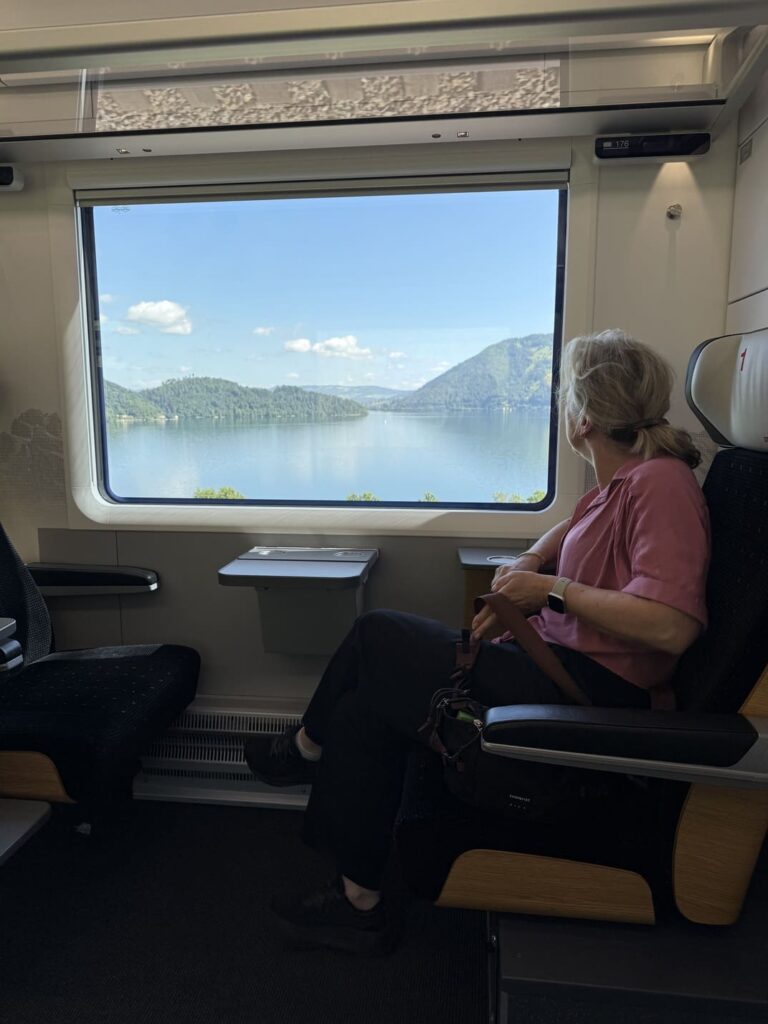
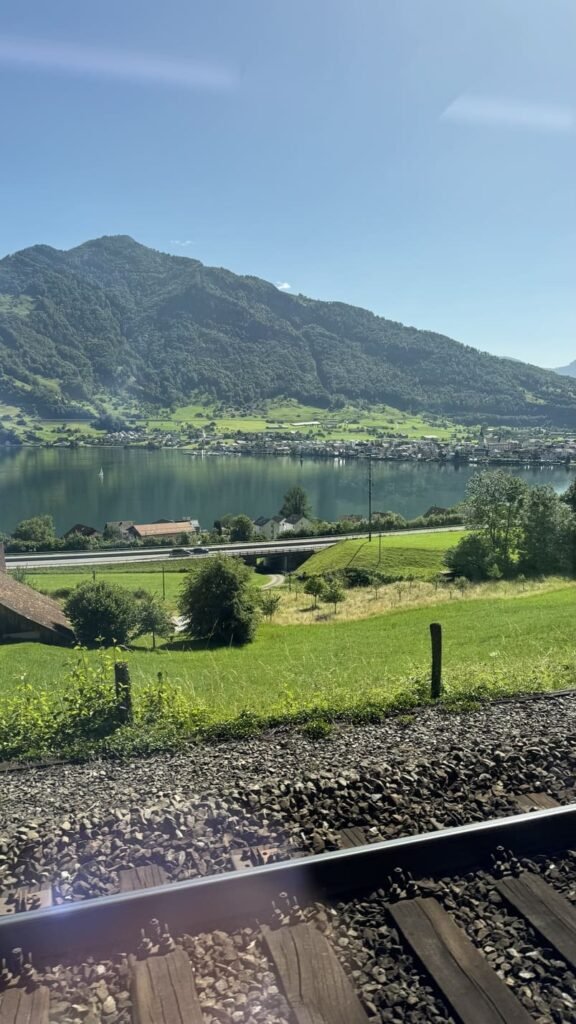
There is no direct train from the Netherlands to Locarno or Lugano; you’ll always have to change trains at least once along the way. But the journey itself is an experience. Three ways:
The easiest way to book is through NS International or Nightjet.com. An added bonus: the Swiss railways run largely on renewable energy, mainly hydropower.
For international trains, the earlier you book, the cheaper it is. The cheapest tickets (the Supersparpreis Europa fare) are limited in number, sell out quickly, and go on sale about half a year to a year in advance.
So book as soon as you know your date—preferably online. That will save you booking fees.
Traveling on a weekday or in the evening is often cheaper; for a weekend trip, it’s better to choose Saturday, Sunday, and Monday rather than Friday, Saturday, and Sunday. For the Swiss portion of the trip, buy Supersaver tickets as soon as they appear in the SBB app, preferably during off-peak hours.
On the way there, I boarded the train early in the morning in Amsterdam, with quite a few transfers. In Mannheim, I missed my connection due to a delay, but I was able to take the next train just half an hour later. At the station, I was able to rebook my reserved seats. And grab a quick cup of coffee.
On the way back, I had fewer transfers and traveled from Locarno to:
Once you’re in Switzerland, Ticino is surprisingly close. The Gotthard Base Tunnel (at 57 kilometers, the longest rail tunnel in the world) takes you from Zurich to Lugano in about two hours. And since the Ceneri Base Tunnel opened in 2020, the trip between Locarno and Lugano takes just 22 minutes. Distances within the canton are therefore short; you don’t need a car to get from the lakes to the valleys. We explored the Valle Maggia by bike from Locarno and Intragna by the Centovalli train.
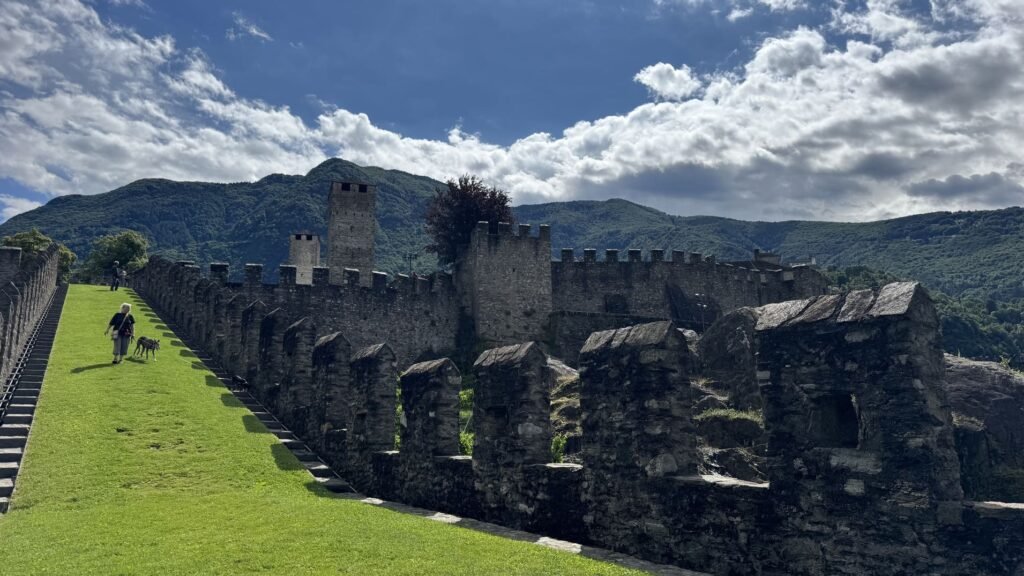
And the best part is: what’s true for Ticino is true for all of Switzerland. The same extensive SBB network, the same Swiss Travel Pass, and the same scenic trains will take you just as effortlessly to the Bernese Alps, Graubünden, or the lakes of Central Switzerland. As far as we’re concerned, Ticino is the perfect first stop on a longer train journey through Switzerland. If you transfer in Bellinzona instead of getting off, the rest of Switzerland is wide open to you.
One app takes care of virtually your entire trip within Switzerland: SBB Mobile. It’s a door-to-door trip planner that includes buses, boats, trams, and cable cars, allowing you to buy a single ticket for a trip involving multiple carriers. You can see real-time platform information and delays right away. A few things that make a difference:
Tip: On busy days, reserve a seat for long rides, especially if you have luggage.
This is often a source of confusion, because there are three different tickets, and they overlap to some extent:
If you’re staying at a hotel, hostel, or campground in Ticino, you’ll receive the Ticino Ticket for free with your accommodation. It gives you unlimited travel on all public transportation in the canton, plus discounts on cable cars, boats, and attractions. It’s ideal if you’re based in Ticino. I had no trouble using it to get all the way into the valleys.
A national pass: unlimited travel by train, bus, and boat for a set number of consecutive days (3, 4, 6, 8, or 15), free admission to over 500 museums, and discounts on most mountain tours. In 2026, it will start at around CHF 254 (3 days, 2nd class). It’s especially worth it if you’re traveling extensively throughout Switzerland or taking the scenic trains.
You also have the Swiss Travel Pass Flex , which lets you choose your own travel days within a month for travel by train, bus, and boat. Choose from 3, 4, 6, 8, or 15 travel days within a month.
The pass that grants access to over 500 museums throughout Switzerland. And here’s where the misunderstanding lies: that museum access is already included in the Swiss Travel Pass (you automatically receive the Swiss Museum Pass with it). If you don’t travel much but mainly want to visit museums, you can also purchase the Swiss Museum Pass separately as an annual pass. So it’s not the Ticino Ticket that grants you access to the museums.
Do the math
Often, the smartest combination is the free Ticino Ticket for all your local trips, supplemented with individual Supersaver tickets for long-distance travel. For a trip that takes place mainly in Ticino, this is usually cheaper than a Swiss Travel Pass. If you’re traveling all over Switzerland, the Swiss Travel Pass becomes the better value. The SBB app helps you compare the options.
| Round trip (day) | ICE via Germany: Amsterdam/Utrecht/Arnhem – Frankfurt – Basel (approx. 7 hours) or Zurich (approx. 7.5 hours), at least 1 transfer; then via the Gotthard Pass to Ticino |
| Round trip (overnight) | Nightjet (ÖBB): departs Amsterdam in the evening, arrives in Basel/Zurich in the morning; seat, couchette, or sleeper cabin; transfer to Ticino |
| Scenic | Gotthard Panorama Express: Lucerne – boat – panoramic train – Bellinzona/Lugano (approx. 5.5 hours; not on Mondays; mid-April – mid-October; reservations required) |
| Within Switzerland | Zurich – Lugano: approx. 2 hours (Gotthard Base Tunnel); Locarno – Lugano: 22 minutes (Ceneri Base Tunnel); Locarno – Ascona: 15 minutes by bus (Bus 1) |
| Books | NS International or Nightjet.com (international trains); SBB Mobile / SBB.ch (within Switzerland) |
| Ticino Ticket | Free with an overnight stay in Ticino; free public transportation in the canton & discounts on attractions |
| Swiss Travel Pass | Nationwide; 3–15 days; includes access to over 500 museums (Swiss Museum Pass); starting at approx. CHF 254 (2026, 2nd class) |
| Best time | April–June and September–October; that’s when Ticino is at its most beautiful and least crowded |
Read here about our cycling trip along the Lake Route in Switzerland.
You might come across it: Swisstainable, Switzerland Tourism’s sustainability program, which now includes more than 2,200 tourism businesses. The idea is simple: to provide guidance amid the maze of sustainability labels. And the funny thing is: you’re already doing a lot of what it encourages on this trip anyway—traveling by train, using public transportation, staying a little longer, and booking direct.
If you want to choose your lodging carefully, you can filter the official list by destination and level. Keep in mind that the “committed” (Level I) designation represents a commitment to becoming more sustainable, while “engaged” (Level II) and “leading” (Level III) signify a documented strategy and internationally recognized certifications. The higher the level, the stronger the evidence.
Yes, that’s right. You travel by train to Ticino and use public transportation once you’re there; if you stay overnight, you’ll receive the free Ticino Ticket, which allows you to travel freely throughout the entire canton. Thanks to the base tunnels, the lakes and valleys are close together.
During the day, the ICE will take you to Basel or Zurich in about seven hours, and to Locarno or Lugano in about nine to ten hours total, with at least one transfer. With the Nightjet, you travel at night and arrive well-rested; you’ll also transfer in Basel or Zurich.
Not necessarily. For a trip that takes place mainly in Ticino, the free Ticino Ticket plus individual Supersaver tickets is often cheaper. If you’re traveling extensively throughout Switzerland or taking the scenic trains, the Swiss Travel Pass becomes a good option. Calculate the cost in the SBB app.
Yes, through the Swiss Museum Pass. It gives you free admission to over 500 museums throughout Switzerland on your travel days and is automatically included with the Swiss Travel Pass. So it’s not the Ticino Ticket, but the Swiss (Travel/Museum) Pass that grants you that access.
The Gotthard Panorama Express, featuring a boat ride on Lake Lucerne and a panoramic train ride across the Gotthard Pass to Bellinzona and Lugano. It runs from mid-April to mid-October, except on Mondays, and seat reservations are required.

With a passion for travel and photography and over 30 years of experience in the travel industry, I love to share my special nature travel tips. Travel is wonderful and important, you meet new people and cultures and it opens your view of the world.
Cinque Terre by Train from Levanto: Train Schedules, Tickets, and Tips The railroad through the Cinque Terre dates back to 1874 and is still the only practical way to connect the five World Heritage villages. Cars are hardly welcome there: the streets are too narrow,...
Cycling or taking public transportation along the Romantic Road: a road trip through Bavaria without a car Cycling or taking public transportation along the Romantic Road sounds like a contradiction: after all, the word “Strasse” practically screams “car.” Yet this is...
Cycling the Lake Route: 227 kilometers through Switzerland at a leisurely pace The first thing you hear isn’t traffic, but a cowbell. You’re standing in Vevey, on the shores of Lake Geneva; you’ve just dropped off your suitcase at the baggage counter, and for the next...
Get inspired
Are you looking for the most beautiful hiking and biking routes? Or do you want information about traveling by train or advice for the most beautiful road trips through nature. Get inspired for your next trip in green; ideas for planning your own trip or opting for an organized trip.